• Radio
  • Interviews
    • Music Reviews
    • Live Reviews
  • Features
  • About Us/Contact
  • Search
Menu

Lonesome Highway

Street Address
City, State, Zip
Phone Number
Hardcore Country, Folk, Bluegrass, Roots & Americana

Your Custom Text Here

Lonesome Highway

  • Radio
  • Interviews
  • Reviews
    • Music Reviews
    • Live Reviews
  • Features
  • About Us/Contact
  • Search

Brinsley Schwarz Interview

December 4, 2025 Stephen Averill

The precursor to the mid-'70s explosive punk and new wave scene in the U.K., ‘Pub Rock,’ as the music press christened it, offered punters an alternative to the overblown prog scene or the flamboyant glam rock in the early 1970s. Securing a weekly residency at the Tally Ho in Kentish Town, American band Eggs Over Easy were the torchbearers of live roots music until their visas expired and they had to return home. Following in their footsteps were numerous U.K. bands, with Brinsley Schwarz the first to grasp the opportunity to deliver their roots-based music to pub masses equally eager to revel in live accessible music. Other U.K. bands that played the circuit were The Count Bishops, Ducks Deluxe, and Eddie and The Hot Rods. Cutting their teeth in London pubs before moving on to the larger venues were Dr Feelgood and Ian Dury, the latter tested the waters with his band Kilburn & The High Roads before morphing into the hugely successful Ian Dury & The Blockheads. The most prolific band at that time, recording-wise, was Brinsley Schwarz, who released six albums between 1970 and 1974 before disbanding in 1975. Schwarz and Bob Andrews both joined Graham Parker and The Rumour, recording and touring until 1981 when Parker pulled the plug on the band. They also both hooked up with Parker for a reunited Graham Parker and The Rumour in 2012. Schwarz also enjoyed a parallel career as a luthier before his writing, playing and recording mojo was reignited in more recent years, resulting in three solo albums, the latest SHOUTING AT THE MOON being released on the Fretsore Records label recently.

You cut your teeth as a band playing in the Pub Rock scene in the early 1970s.

Yes, up to that, there wasn’t really anyone playing in pubs. In fact, there wasn’t much music in pubs except for maybe a piano in the corner or some light jazz on the weekends. We stumbled into playing in pubs, and it came as a big surprise how much fun it was compared to what we had been used to before. There wasn’t very much going on at that time; you played in colleges and had to contribute to the PA if there was a main band on after you. It wasn’t particularly exciting, so finding a place where we could play what we wanted to play was great and, to a degree, saved the band from breaking up. 

The American band, Eggs Over Easy, were the trailblazers for that scene when they secured a residency at The Tally Ho in Kentish Town.

Yes. Our manager, Dave Robinson, and our bass player, Nick Lowe, were out one evening and stumbled into The Tally Ho and saw them play. They came back to our house and said, ‘You really need to see this, it’s the answer.' We went down the next time, and they were playing the kind of music we played, which was known then as roots music, but maybe not as aggressively as we did.

How was the band formed initially?

Nick (Lowe) went to the same school as me. We got Bob (Andrews) from an advert in Melody Maker; there weren’t too many people playing organ like him at that time. Billy (Rankin) lived close to me in Southeast England; he was the only rock-and-roll drummer in the area. There wasn’t any magic about the band; it just came together.

You were booked to support Van Morrison at New York’s Fillmore East in 1970. Was that a case of ‘too much, too soon’ for the band?

It may have been. We had known one way or another that we still had a lot to learn, but after that trip and supporting Van Morrison, who was seriously good in all kinds of ways, that kicked in. We played four shows with him, which was a real lesson. When we got home, the desire to be better kept us together, so we rented a large ten-bedroom house, built a rehearsal room in it and played for ten to twelve hours every day, playing anything, we wanted. We loved it.

That resulted in six albums over four years, a phenomenal output.

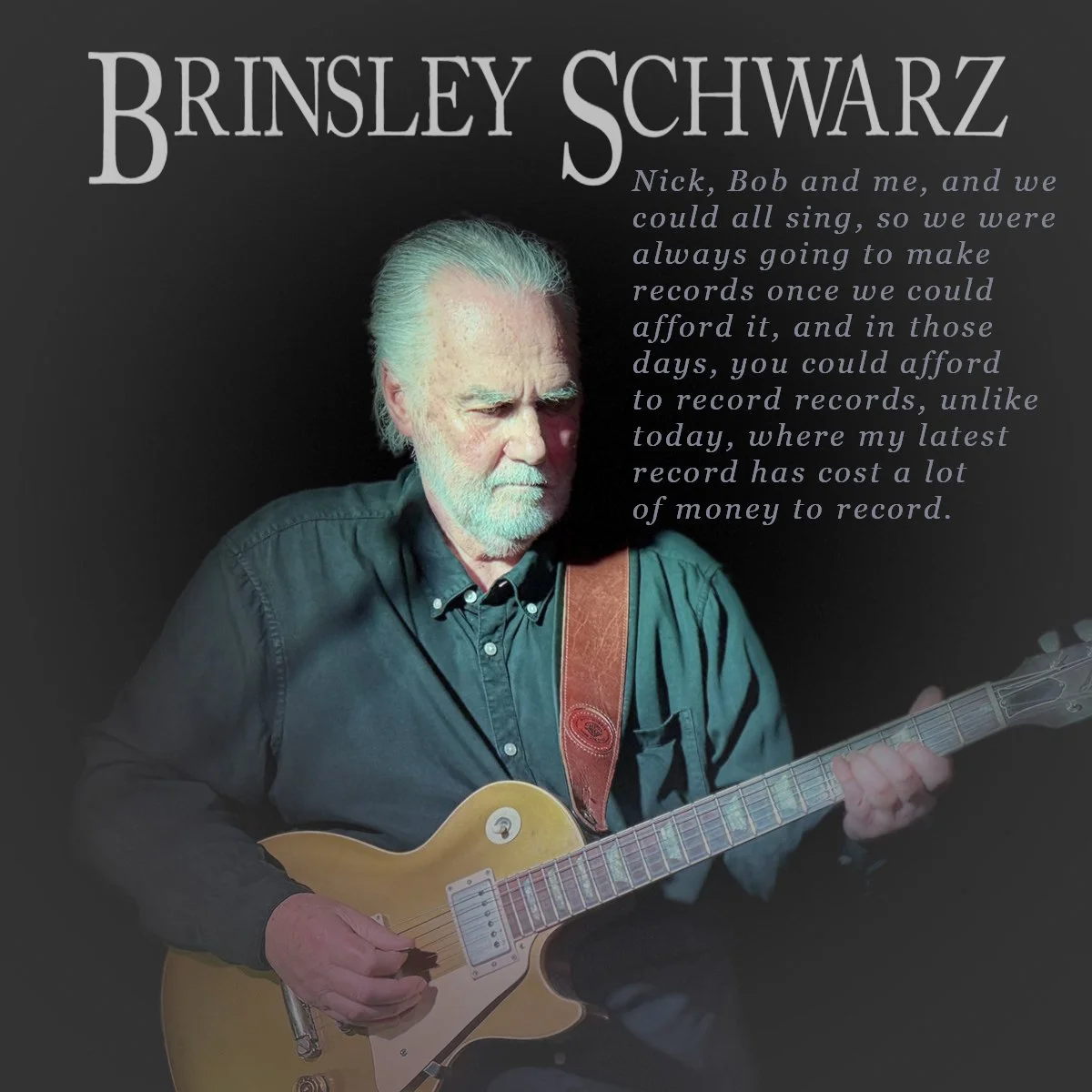
We didn’t have anything else to do, really, and were working hard. We had two or three people who could write songs, Nick, Bob and me, and we could all sing, so we were always going to make records once we could afford it, and in those days, you could afford to record records, unlike today, where my latest record has cost a lot of money to record. 

Of those albums, which one particularly stands out for you?

NERVOUS ON THE ROAD would be my favourite album, and possibly PLEASE DON’T EVER CHANGE also.

The label ‘Pub Rock’ wasn’t a fair reflection of the quality of the bands playing that circuit at that time.

I don’t call what we were doing pub rock. The definition of pub rock is ‘music that bands play in pubs.’We stopped playing pubs in 1973. The press, without railing against them, called what we were playing ‘pub rock’ and we didn’t like that label, or any label in fact. The day that we read in The Melody Maker that ‘Pub Rock was here,’ we left that scene. We were starting to get into soul and R’n’B, which in those days was becoming a bit more musical and grown-up.

Bob Andrews and you went on to be members of Graham Parker and The Rumour.

Graham Parker and The Rumour was quite democratic as a band with simple rules; there was never a leader as such. We had simple rules, three great vocalists in the band, I wasn’t a particularly great singer at the time. But eventually the cost of keeping Graham Parker and The Rumour together had got out of hand. We had made two albums as Graham Parker and The Rumour, and one album when Graham packed it in. The four of us, me, Steve (Goulding), Andrew (Bodnar), and Martin (Belmont), carried on as a band and toured with Carlene Carter, made an album and did some touring ourselves before it fizzled out.

You then effectively retired from performing to pursue another career.

I had already done a bit of work at a guitar store in Richmond; they agreed to let me work there repairing guitars and be a member of staff, while allowing me to go on tour or record as well. It was a loose arrangement, but I spent about twenty-five years repairing guitars, which I loved doing. I loved guitars right from the beginning when I first heard Hank Marvin and The Shadows. As well as playing in a band, repairing guitars was the next best thing for me.

That also kept you in touch indirectly with the music industry.

It did, and we also had an American agent and manager when Graham Parker and The Rumour were touring in America, with whom I got on well. I was looking for work in America, and he contacted me to say he had bought an old loft in New York and wanted it converted into a suite of offices. I told him that I could do that, and he offered to put me up and supply me with two guys to do the heavy lifting and help. It took me eight and a half weeks to put it all together. Nothing to do with music or bands, but one of the greatest satisfactions in my life followed. Rodents tended to eat through the plastic lining on the wiring, exposing the copper wiring and leading to numerous fires in New York. We did all the electrical wiring to English standards; I had done that before working with my dad as a kid. The Chief Officer of the New York Fire Service came to inspect the work to certify it and asked who did the work. When I confessed to having carried out the work, he complimented, ‘You guys in England have high standards; this is as good as I’ve seen in my forty years of inspections.’

Did you look for work as a musician in New York at that time?

Well, I also had an interview and rehearsal with a band in New York that was amusing. I read an advert in one of the local music papers that read ‘Wanted guitar player, must be into Brinsley Schwarz.’ I called them up, and they asked for my name, to which I replied, Pete. I went to the interview the next day, and they recognised me, fell about laughing, but thought I shouldn’t be in their band.

What was the catalyst that kick-started your performing career once more?

Working at the guitar store, I was around guitar players all the time, all kinds, good and not so good, kids and learners. It rubs off on you, and that got me back into playing. My family and I had moved house down to the south coast of England, and I was working in the house, doing it up and decorating. I had just come home with a load of Ikea bedroom and kitchen cabinets. I managed to get them all into the house and was completely stressed out when the phone rang. It was Graham (Parker) phoning me to tell me that the band was reforming, making a film or a documentary, and that everyone else was on board except me. He knew that I didn’t like flying, but that they would all love to have me back in the band. So, despite my fear of flying, I heard myself immediately saying, ‘I’m in.’ The prospect of being in the band again and going to America to make a movie did it for me, and I got over ten years of fearing to fly.

Since then, you have recovered your mojo for writing, resulting in three albums: THE UNEXPECTED (2016), TANGLED (2021) and your recently released record, SHOUTING AT THE MOON.

Well, I have a workshop at the end of the garden where I repair things, and when TWO AGAINST NATURE, the Steely Dan album, came out, I was hooked. I’d always been a fan of theirs, but when I got that album, I couldn’t listen to anything else for months. I was zoned entirely into it. I was driving around one day when a lyric came to mind, and to my surprise, I started writing a song. Before I knew it, I had written ten songs and couldn’t stop writing. It all just happened without rhyme or reason, and as I had played so many guitar styles in the shop, things musically also seemed to open up for me again.

The Steely Dan influence comes across on the breezy song Nothing Is What It Seems from the new album and Falling Over Backwards has that Van Morrison soul and blues to it. You also include a Graham Parker cover on the album.

Yes, Watch The Moon Come Down, my favourite of Graham’s songs. I also covered another favourite of his songs, Love Gets You Twisted, on my last album, TANGLED.

You hooked up with producer and multi-instrumentalist James Hallawell to work with you on the albums.

James played with Graham Parker and me when we were recording Graham’s album MONA LISA’S SISTER. He then came to the Graham Parker and The Rumour reunion gig in Shepherd’s Bush. We had a chat backstage, and he invited me down to his studio. I had a song called Seal It With A Kiss that was a wedding gift for my niece-in-law, and I wanted to record it. They subsequently played it at the wedding. When I was recording at James’ studio, I played a few other songs, we recorded backing tracks for three or four others, and I had the material for an EP. It then ended up with enough songs for my first solo album, THE UNEXPECTED, and eventually, as we had enough songs, we made TANGLED. Because I was writing so much, I then started working on the new record, SHOUTING AT THE MOON. I still have enough songs for another album, if only people would buy physical records, artists would have enough money to make records.

Interview by Declan Culliton

SHOUTING AT THE MOON is available at https://www.fretsorerecords.com/brinsley-schwarz/

Chris Eckman Interview

November 29, 2025 Stephen Averill

Founding member of Seattle band, The Walkabouts, songwriter, musician, producer and founding member of Glitterbeat record label, Chris Eckman’s latest solo album, THE LAND WE KNEW THE BEST, is arguably his most celebrated work to date in a career spanning four decades. As was the case with his 2021 record WHERE THE SPIRIT LIES, rather than self-produce, Eckman delegated the duties to Alistair McNeill, who crafted a sonic landscape that fully supported and enhanced Eckman’s haunting and often brutally confessional lyrics. With a heavy workload as label manager, producer, songwriter and recording artist, Eckman’s enthusiasm remains unabated. ‘I've always been extremely grateful and very happy to have spent a life around music, whether it's my own or someone else's,’ he tells Lonesome Highway.

Moving to Slovenia and establishing the Glitterbeat record label in 2012 was a brave move. What was your vision for the label?

We started it as a modest experiment. I had been travelling in West Africa and had gone back to Maili several times, meeting some artists there. At first, it was more of an educational experience for me; I felt a bit burned out by what I had been listening to and wanted a different perspective on music. It succeeded at that but eventually became something I was involved in at the production level. After I had produced a couple of records, I was licensing them to other labels and a friend of mine, who at that point owned a label called Glitterhouse, suggested we start a side label to handle these records. We started with three or four records, and now, thirteen years in, we've done one hundred and eighty records and are still moving forward.

Did the move effectively spell the end of the road for the Walkabouts, and was that regrettable?

I think we were at a turning point. I'm not sure it was the death knell for the Walkabouts, but it was a contributing factor, that's for sure. What became clear to me was that I would have less spare time to maintain the band, which was a bit out of reach. I think if the Walkabouts had been a multi-songwriter band, and there were other people who were contributing material, it’s highly conceivable that we could have continued. But that aspect of it just really rested on my shoulders. So, I was just very honest with everybody and just said, I think we're at a turning point here. Yeah, there was a lot of regret about that, but we had also been doing it for a long time. And I think maybe what was even more important is that the record we had released in 2011, TRAVELS IN THE DUSTLAND, and the touring that we did on the continent of Europe, had gotten lots of sold-out shows. And I felt like, well, this would be a good time to stop, too.

Did you feel that The Walkabouts were underappreciated in America, given how Europe embraced the band?

I guess there was an element of that. I tried to keep the bitterness out of it because we had so many arms opened to us, and we worked hard to get that. But on the other hand, the level of success we achieved in, let's say, Germany or Holland and Belgium, and places like that, was kind of beyond what we ever expected to do anywhere. So, what we had done was quite satisfying. And I did think about it sometimes, but for the most part, I just said, ‘You know, you go where people want to hear you.’ And there was always an element in America that we were well received by, and we had a pocket of a fan base.  The problem with America is it's just so damn large; it's really hard to connect all those disparate dots.

You were also competing with an enormous grunge scene in America at that time.

That was it, too. We were fighting a very big tsunami, yeah.

Since the move to Slovenia, how has the environment that you live in there influenced your songwriting?

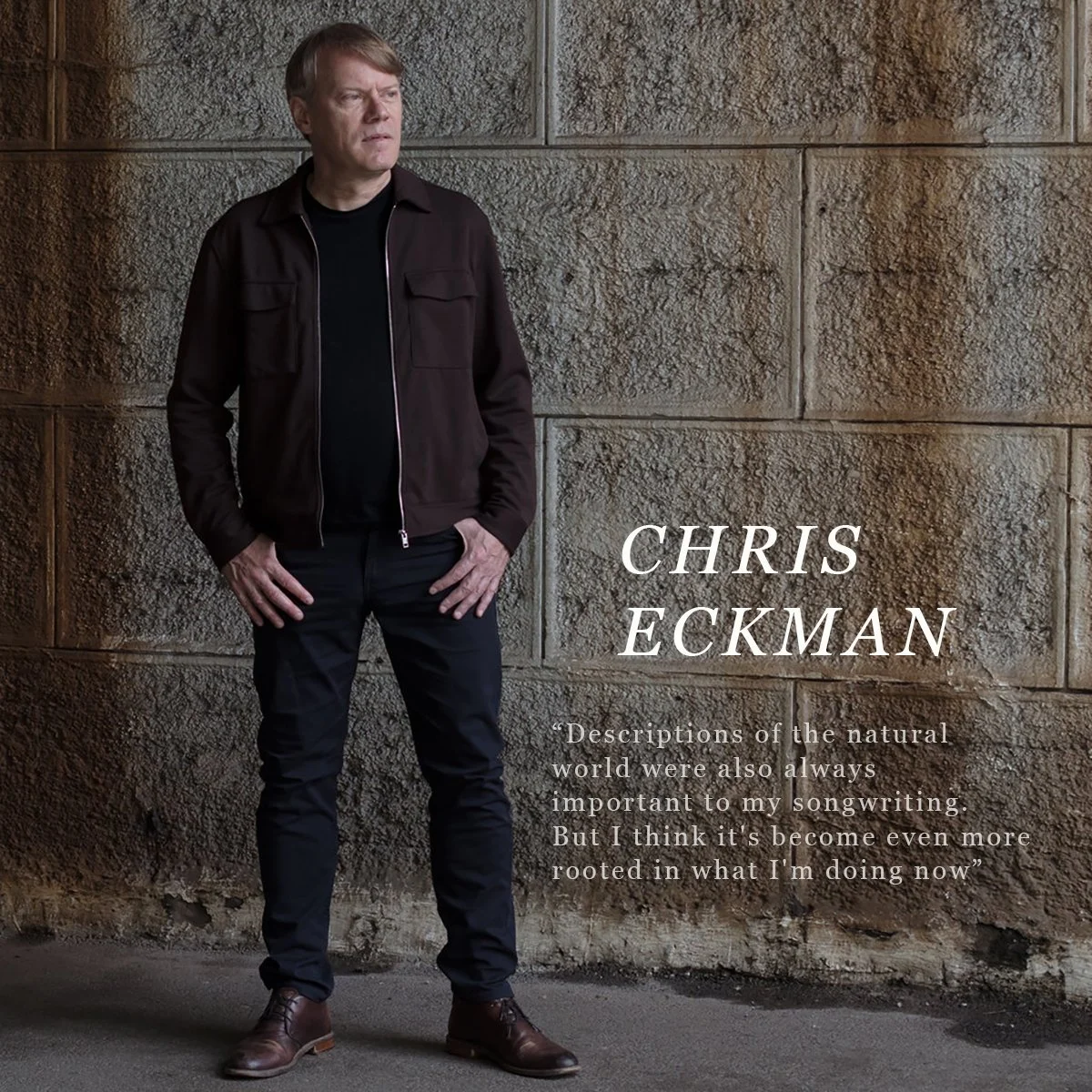
I don't know. It's something I don't give a lot of thought to, but it probably has had some effect. What has happened with my writing and just making music, because I run the label, it's ended up being something I just do. I wouldn’t say it is a part-time thing; it still applies to the centre of my identity, but I have less, let's say, available time to do it. So, I've accepted that I will be less prolific, which is fine. And what I think has also happened to me in the last five or six years is that I've really realised that I do live here. It's not just a place that I have a flat, I’ve developed a life here that sustains itself, something that's important to me, emotionally, spiritually, at all levels. So, I think that starts to change my writing to some degree. A lot of things came together with that. I really reacquainted myself with nature and hiking and walking, something I had previously done a lot in my life. But then there was a period when I wandered away from that, and in the last few years, it's focused me. Descriptions of the natural world were also always important to my songwriting. But I think it's become even more rooted in what I'm doing now.

That also comes across strongly in the artwork for your recent record, THE LAND WE KNEW BEST and in WHERE THE SPIRIT LIES from 2021. How important is the artwork as part of a complete package with those albums?

It's very important. The photos on the record covers and inside the records are all photos I took myself. That's another element of what I'm doing now, I can imagine these songs visually. I also look for photos that I took that help narrate that.

There are obvious comparisons for me with both albums, though THE LAND WE KNEW BEST has a fuller sound to it. Did COVID and the lockdown influence the writing and the somewhat stripped-down feel to WHERE THE SPIRIT LIES?

At this point, there are tens of thousands of COVID records, and, yes, WHERE THE SPIRIT LIES, it is one of these. It was a record not just recorded during that period but also written during a period, when I had, let's say, some personal upheavals and I was suddenly living on my own. I had wandered away from playing the guitar as frequently as I would have wanted to, and there was suddenly a large amount of time available. And I took advantage of that quite tentatively at first. In fact, I played the first three or four of those songs to a very good friend. After we got out of lockdown, they seemed a little bit different to me, but I was happy with them, even if I didn’t ever release them. And my friend said, ‘You're crazy, you've got to release them.’ I had this flush of nervousness, because I think the songs felt probably more personal than a lot of things that I've written, more deeply personal, because you're not necessarily always the narrator when you write. These songs became more of a narrative thing for me.

CTFD, the final track on WHERE THE SPIRIT RESTS, has me hitting the replay button every time. Tell me about that song?

I wanted to put that song last because it's less dark than some of the other songs on that record. In fact, that record really moves from darkness to light, without getting too grandiose with the metaphor. The darkest track is the first one, Early Snow. CTFD, it's about slowly coming to terms with new realities in one's life and new love and things like that. It’s about like trusting somebody again, the person that whispers in your ear and says, ‘calm the fuck down,’ and instead of rebelling, you actually listen to that. Because that can sometimes be the best advice.

Rather than self-produce that album and the new one, THE LAND WE KNEW BEST, you handed control over to Alastair McNeil. Was your intention to gain another sonic insight, and did you give him complete control?

Yes, to those questions. Basically, I knew Alistair, who also lives in Ljubljana. In similar circumstances to mine, he came here because he had a relationship that also dissolved for him, but he stayed here. He started in rock bands in the 90s, but he studied things like sonic arts and experimental music, and I knew him from the very small scene of that here in Ljubljana.  I knew he had a really cool, but also very cosy, small studio. And, you know, on one hand, I was thinking I can relinquish control in a way and allow somebody to bring some different ideas to what I do. And it felt very, very liberating to me, also not to have to do the faders and mix it myself and struggle with all of that. There was enough going on in my life at that point in time. It really worked well the first time with WHERE THE SPIRIT RESTS, which was a really strange experience. His studio was less than a mile away from my flat, but after the original recordings, we went back into lockdown here in Slovenia. So, it was all mixed by him, just sending files back and forth, which is something I've done in the past, but usually with people who are a thousand miles away, not somebody who's only a mile away. It was a really good experience, and I also knew that the next record should have some differences to it, and I said to Alistair ‘Let's expand the palette. It doesn't have to be as austere; let's open the windows in the room a little bit. But other than that, I left a lot of it in his hands.

The album title THE LAND WE KNEW BEST is taken from a line in the opening track, Genevieve. Is that a reference to a location or a shared mindset?

I think it was both. I was talking about relationships; they don’t exist in a vacuum. Relationships also have context. One context is the land, the landscape, the physical place that people live. But the lyrics twist a little bit, because it's not really the land we knew best; it’s actually referring to the heart. There is the line that says, ‘The heart, the land we knew the best.’  So, it wasn't just this physical land that we knew best, but this landscape at the heart of the relationship itself.

You close the album with Last Train Home, which plays out like a continuation of that opening track both lyrically and sonically. Was that intended in the sequencing?

Yeah, I think I knew pretty well that that was going to be the final track. I didn't always know that Genevieve would open the album. Even when I suggested that to Alistair, he thought it was a little bit radical. But again, we started the previous record with Early Snow, an odd opening song, too. So, let's continue the tradition. The sonic connection was more accidental, but these kinds of things are never purely accidental. The different songs talk to each other in different ways. And the minute we first set up the sequence, we thought it was clear how these bookends worked, but it wasn't. We weren't so smart to see that from a long distance away, we had to get our hands dirty and start moving stuff around till it actually fell into place.

The songs work very well collectively. Was that a result of them being written over a short period of time, or did you have some of them on the top shelf waiting to be used?

I wrote them in a very short period of time, four or five months. But there was a final outpouring in a couple of weeks, when I collected fragments and put them together into something that resembles what they are now. That’s the way I started writing on the previous record, also because of just downtime and complete boredom during lockdown. I was picking up the guitar, strumming for long periods, and writing kind of unformed, incoherent things, and I would record them anyway, like auto-writing. Just sing some lines and talk some lines, and a lot of what ended up on WHERE THE SPIRIT RESTS came out of those fragments, and I continued that onto this new record. There are some songs where a whole verse would just come spontaneously, with maybe one or two words changed. It wasn't all written like that, but this was always the impetus. I always started with this, and I didn't start with a blank page in a book, writing things down.

The lines ‘And then that the rage is gone and the fear is calmed’ from the song Town Lights Fade. Is that a reference to coming out of lockdown, or is it more personal than that, a kind of rejuvenation or personal rebuilding?

It's the second. It was written after my divorce was finalised, and there were more positive things happening in my life after that. It's a reflection on that and not to get bogged down in bitterness or vindictiveness, but to rebuild a life. Even if you're not a young guy, you can still do it.

Is the song Haunted Nights a distant relation to Drinking In America from the last album?

Yes, but I think Drinking in America is probably less autobiographical. It's more of a poetic construction than a narrative construction. It's a lot of fragments floating around, which come together in the chorus. Haunted Nights is more of a classic narrative song. Also, I was listening to a lot of Kris Kristofferson over the last years. I think if you’re going to steal from somebody, he’s a pretty good one to steal from.

Even back to your Walkabout days, you have been heavily influenced by artists like Kris Kristofferson and Townes Van Zandt, yet your writing and presentation are quite different.

That's the key. You can be deeply influenced by somebody, but you don't want to turn it into mimicry. What strong influences do for people is that they help open doors.  You hear something and are devastated by it because it's so damn beautiful. At the same time, you think I should never write another song after hearing that. But that dissipates once the ego takes over, as you got poked by it, and got a little bit of a shove in the right direction.

Your widespread influence was laid bare on the Walkabouts’ covers album, SATISFIED MIND, back in 1993, featuring songs written by The Carter Family, Gene Clark, John Cale, Charley Rich, Patti Smith, and more.

That was a terrifying record to make because we had never really played that slow, that quiet. It was like it was aspirational, that we could play like that, or to find out that we can. We had very little time to do it, but it was really trial by fire, and to have ghosts of all these songwriters that we love so much dancing around in it. I remember the guy who owned Glitterhouse Records at the time; he sent me a fax asking how it was going.  I stared at the fax for about three days, thinking, ‘I don't even want to answer because I don't know if this is good or if it's just the worst thing we ever tried to do.’ For me, the most enjoyable part of that album was curating it. Carla (Torgerson) and I were sitting there and listening to songs for weeks. We started with probably a couple of hundred songs and whittled them down and down. And that was just pure joy.

Do you revisit the Walkabout music these days?

It's interesting because I recently went back to them. A friend mentioned a specific Walkabouts song, so I dug out that record and listened to it. I then found myself wandering around for a few days, revisiting the albums. It's not like a painful thing for me, because I feel proud of what we did, but I've also never been a very nostalgic person. I think that that's something that has always kept me with a little bit of a tentative relationship to what I've done in the past, like you don't want to look at it too closely, you don't want to give it too deep an embrace, because you want to move forward. You want to be looking for the next thing to do.  

Your current writing style embraces sadness, despair, loss and detachment. Is that what motivates you and brings the best out of your writing?

I guess so. I think that when I was younger, I was thinking that ‘I want to write this kind of song, or that kind of song, and if I adopt this narrative technique, wouldn't that be interesting?’ At this point in my life, I’m just following my mood, or what I really feel connected to. What comes out is what matters; that's why this kind of auto-writing that I've integrated into my songwriting process is important. The thing is, it's not filtered. There are lines in these last two records that I would have never, ever put in a song before. Sometimes they're not even good lines; you think that you can write a better line than that, but I'm thinking, ‘That’s what came out.’ Sometimes that stripped back to honesty in writing is really what you want.

Record label manager, producer, songwriter, musician, and performer. Which gives you the greatest satisfaction, or is it the perfect balance for somebody with a career in the arts?

It's a good balance, although sometimes it becomes too much. But producing and running a record label really plays to this fan side of me. I've never been someone who didn't listen to other artists; that's a joy in itself for me. My old turntable just collapsed, and I got a new one last night and stayed up until almost 2 am just listening to records. It was such a joy to spend those many hours, five, six hours, listening to records. I don't get a chance to do that very often, but I've always been extremely grateful and very happy to have spent a life around music, whether it's my own or someone else's. I love advocating for other artists; the label gives me a chance to do so. Producing has given me a chance to do that. So, it plays to the different sides of my personality.

Recording-wise, do you have anything in the pipeline?

Yeah, I've got a record I'm going to do with Jana Beltram, the woman who sings on THE LAND WE KNEW THE BEST. We're going to do a dual record that we've been planning for a while. We'll record it in the spring. It'll be very simple, just a couple of duets.  I wrote a couple of songs for it, and she has a couple, and we'll do a few covers. What I don't want to do is spend five years not making a record. I’ve really got into making records again, and so I'm going to keep it going.

Interview by Declan Culliton

Chris Eckman will perform at Kilkenny Roots Festival in May 2026 https://kilkennyroots.com

Paul Burch Interview

November 18, 2025 Stephen Averill

Paul Burch is something of a creative powerhouse with more than twelve album releases under his own name and others with such like-minded bands as The Waco Brothers. He has worked as a producer as well as a musician with numerous other acts such as Lambchop alongside his own WPA Ballclub comrades. He is also the author to the recently published novel Meridian Rising, which is a conceptual imaging of the life of the iconic country singer and songwriter Jimmie Rodgers. I have had the pleasure of meeting Paul on several occasions, here in Ireland, and always been captivated by his performance and personality. So, the release of his latest album, Cry Love and the aforementioned book provided a perfect opportunity to put some questions to him about his opinions and thoughts on related topics.

You were instrumental in bringing the ethos of traditional country and early rock ’n’ roll back to Lower Broadway in the early '90s. It was then considered a pretty rough area then that was to be avoided. Conversely, the same may be true of the area now for very different (often musical) reasons. How do you reflect on those changes in the area and beyond?

First, thank you to Lonesome Highway for welcoming me again. You're kind to offer me credit for helping to bring back some spark to Lower Broadway. But if I had any impact, maybe I should apologize. I went to see Elvis Costello at the Ryman this summer, and when I walked out after the show, I felt like I was in the film It’s A Wonderful Life when Jimmie Stewart’s character George Bailey goes to sleep in Bedford Falls and wakes up in Pottersville. Broadway was a rough area in my time, but there was some code among thieves. Today, it’s a fair reflection of how Western celebrity culture has gone amok. It feels like a deeply cynical place where everything—even your safety—has a price tag and the buyer has no value beyond the transaction.

When I came to town 30 years ago, Lower Broadway was so quiet at night you could hear the creak of the Ernest Tubb Records sign as it turned. Today, there’s no space between the notes. But sure as you give up on it, a true believer will emerge.

I have friends who knock around Robert’s Western World still. That hasn’t changed much. What’s really changed is that in most clubs, the musicians are told what to play. There’s no chance to harden your shell and hone your craft.  I think musicians are at their best when it’s up to them to entertain whatever humanity the wind blows through the door. When we were down there, the music meant everything to us and the people who came to see us. That was our bond. But that’s the breaks. Like Col. Parker once said of Elvis: Nashville had a million dollars’ worth of talent. Now it has a million dollars.

You recently released a new album, Cry Love, with your friends and bandmates, the WPA Ballclub. The enthusiasm and pleasure of making music are apparent in the recordings. This is obviously still something that still inspires?

Yes, the WPAB still inspires me very much. This was a hard year for me personally, and the band was very sustaining.   They are wonderful musicians and wonderful people—which I appreciate most of all. They seem to like what I write and trust me to keep them on their toes. And I trust that they’ll find the heart and soul of what I’m doing and help me make us something beautiful.  They are gallant knights in my book. Something unique happens when we play together. They keep themselves turned towards the outside world, which is difficult for many musicians. We also share a love for recording live with no headphones, face to face. And there aren’t a lot of opportunities to do that typically. I hope they see the band as a place they can be themselves. When we’re on a roll, I don’t know an outfit anywhere that could cut us. And as Fats Kaplin has said himself: I’d like to see them try.

As a writer, singer, musician, and producer, you have added author to that list with the publication of your novel, Meridian Rising. Jimmie Rodgers is, I know, something of an iconic artist for you, so can you tell me something of the genesis of the book?

The genesis of Meridian Rising was gradual, mostly because I had no idea what I was doing, if I could finish it, or even how to get published. The big spark that led me to take up Jimmie Rodgers’ story again came when I read an interview with Howlin’ Wolf, where Wolf said as a young man he knew Jimmie and took yodelling lessons from him. I started to think of Jimmie as a town square where all my favorite musicians could meet. I also was inspired by how funny, bright, and self-aware Jimmie was. Meridian Rising became a musician’s On the Road. Musicians live a life flying low to the ground.  They probably meet more people in their lifetime than any politician. You have to be quick-witted, forgiving, and self-aware to survive. As I got deeper into the novel, I thought the story could also give voice to my friends who make their living on the road. The difference I see between the album and the book might be that the album was for me—my personal adventure as a songwriter. Whereas the book was for Jimmie, the artist, and my artist friends. I don’t know if I was successful. But my aim was to show the value in being serious about what you love. Jimmie worked very hard. The best artists do.

In the past, I have spoken with some people who were known as songwriters who went on to write prose/ fiction, and they pointed out how different the disciplines were. How did you find the process?

The process found me. I knew the transition from writing songs to fiction would be awkward at first. But finding a place to start seems—in retrospect—harder than writing. 

The only model I had was an interview Ernest Hemingway gave to the Paris Review in the early 1950s. Hemingway was in a charitable mood. I think he had just won lots of acclaim for The Old Man and the Sea. And he spoke about how a writer must set aside the same amount of time every day and write until they were almost empty.  So, I tried my version of that. My discipline was writing at least 20 pages, double-spaced, for about two or three hours. Often, I had no idea what I was doing.  But I kept at it, every day, and usually –sometimes even in the last 5 minutes when I couldn’t wait for the session to end--something would arrive in my imagination that made the other 18 pages work. Songwriting has a similar process, but overall is much sweeter and collaborative. For instance, you can have a rehearsal that’s absolutely shambolic.  But you don’t have to relive it. Whereas no matter how good or bad your writing session is, you will have to read it again and spend hours fixing punctuation and adjusting sentences and all that stuff just to make it legible.

If you have a rough mix of your record, you can put it on in the background while you’re eating dinner and see if anyone notices. You can learn a lot about how you’re doing when you’re listening at low volume.  But no one wants to read your unfinished novel. Songwriting also typically comes very quickly. I tried to imagine Meridian Rising as a long Irish ballad that didn’t have music. There are moments where other people in Jimmie’s life get to speak, looking back on their times together. Those moments were like being in a band where you give someone a solo.  I may try it again, but at the moment, I’m relieved to be back in the world of music.

Will you continue in that direction, perhaps expanding the subject matter of your fiction?

I don’t know. If I can get lost again in a story with as much abandon as I did with Jimmie, I would write something else. I’d like to see some aspect of Meridian Rising go to film or stage. In songwriting, I try to write my very best for whatever situation I’m in.  One time, a very big manager wanted to sign me to a label and asked me to write “10 more ‘Isolda’s” because he thought that was a song that could get on the radio. I told him I can’t do that. The one I wrote –for all its flaws and strengths—was about a particular time and place. Meridian Rising arrived during a special time and place. I still don’t walk around thinking that I’m an author. But if I get seized by an idea, I’ll try. There’s nothing wrong with just writing one good book. It seems like a lot of writers go mad if they keep at it.

I have encountered some artists who are of the opinion that it is no longer feasible to physically release an album or even to record one, even though the process of home recording is more sophisticated these days. Where do you stand on that?

I still love making records. I’m not going to stop. But I agree: on paper, it is no longer feasible to do almost anything in music! The business is kaput. It was sold out for pennies.  I’m very lucky that I had some interest in the technology behind making records. And since I’m in Nashville, I’ve had the help of a lot of great engineers. If I could afford it, I’d rather do most of my work in a proper studio. I still think a great studio and a great producer or partner is the ideal way to make a good record. There are a lot of good records out now that could probably be great records if the artist didn’t have to do all the work.

You have also worked as a DJ in recent times. Has that in any way changed your perspective on listening to music?

I love being a DJ. But like my music, the station I broadcast from, wxnafm.org, is very unique in that we can play what we want. My model, both in college and now, was to have a show like John Peel’s, where you might hear something made 90 years ago or something made last week. I’m not sure how it’s impacted my listening. I’m sure being a DJ has impacted my musicianship. I try to get to the point and get out, as John Lennon used to say. And that effort to be impactful has been informed by discovering a lot of music in the DJ booth. I tend to play artists I’ve never heard of before.

In these days of online listening and the seemingly vast amounts of music available to the casual listener, is this a good thing? In that light, I often think that a person like John Peel was a person you could trust to keep you in touch with good music from many different genres and understand where he was coming from without being elitist.

It's not terrible to have so much music available if you know what to look for.  But for people who feel music deeply, I would imagine discovering new music is still a personal adventure they would like to see happen organically. No one likes to be told what to do or who to listen to. Peel and a few other DJs in the western world were really wonderful. They loved music and felt a responsibility to give artists a chance, whether they had any promotion behind them or not.  I think kids in their teens and 20s are especially wary of the current industrial machine taking over their social life. It’s a new beat generation. They’re very aware that there’s a feeling of emptiness in almost everything. The baby boom generation is taking a very long time getting off the stage.  But it just takes one or two great bands to come out who refuse to play the game.  That’s what I’m counting on.

With the many changes in the way Music Row has and continues to function, do you find that Nashville is still a good base to work from?

I do. The musicianship and technical know-how are world-class. We’re all on the same life raft. There is still some funk left. I wish we could just all move to Memphis. I don’t think Nashville would miss us if the musicians left, frankly.

You were a frequent visitor to the UK and Ireland in the past. Do you have plans to return, or has the current travel situation led to a change in how the independent artist can tour, both abroad and at home?

I would love to tour more. Unfortunately, there just isn’t any demand or funds to do it. But if anything changes, I’d play as much as I could.

What are the sources you draw from to write, and do you do so regularly, and store material up, or is it best to write for a particular project?

Everything—truly. I’m not too conscious or specific about where I go for ideas.  I still love bookstores, record shops, and drawing and painting. I don’t feel the pressure to be in the business. But I do have a small seat at a big table and I still love the company of people who—like me—are making records and recording.  I still get a thrill out of releasing a new record and starting one—whether it’s mine or a friend.

You have been doing shows with the WPA Ballclub and introducing guests and having people join you onstage. How appealing is that open-ended, unscripted process?

I love it. I enjoy a set list—I’ve got nothing against them. But I learn the most by having some element of a show be unscripted. If you’re on the road, it’s important to have some structure not only for your peace of mind but for all the people working on your behalf. It’s a great feeling to see a good set list get better and better over many shows. When we play close to home and it’s more casual, it’s more fun and educational to see what happens when you can shake things up a bit. Often, I realize the artists I love are full of surprises once you get them on stage.

What are your plans for the next couple of years, or do you think that far ahead?

I do tend to think a little bit ahead. I have a number of songs that are profiles of people or places and at that moment-that feels like a very natural album. When the paperback version of Meridian Rising comes out, I’d like to re-release a shorter version of the album on LP but perhaps add some new instrumentals—perhaps read from the book, too.  Fats Kaplin and I have a lot of instrumentals that would make a nice album. So yeah—it seems like I do think far ahead!  But I’m also open to being surprised.  Our time is finite. And there’s no time for waiting around anymore.

Is there any other course in life you could and perhaps would have followed in different circumstances?

I never wanted to do anything other than make records. I feel like my life overall is miraculous, and my ability to make music is miraculous.  I’m a musician who probably wouldn’t impress anyone if I were just noodling on my own. But I come to life when I’m playing with good people. So, I’m very thankful that the few things I can do ok managed to attract –even for a moment—the great people in my musical life.

What have been the events and people that have stood the test of time for you?

There are so many. I’m not sure I can answer that very well. Coming to Nashville at the behest of my friends certainly changed my life.  I was with my wife Meg for 25 years, and she passed away from cancer in January.  That loss will reverberate and echo without end. As a musician, it’s probably pretty common to say the small events stand out the most. If I hadn’t met a particular person or gone to a particular club on the right night at the right time, my life could have taken a very boring turn or no turn at all.  You know, Ralph Stanley didn’t find the audience he deserved until he was in his 80s. John Prine became a superstar in the last decade of his life.  At some point, you have to trust that your work will lead you where you need to go and where you deserve to go.

Interview by Stephen Rapid and photography by Chad Cochran

Alex Pianovich (Greazy Alice) Interview

October 25, 2025 Stephen Averill

Curiosity and observation are closely connected in both science and the arts, so Alex Pianovich's early career ambitions as a herpetologist may have pointed him toward his current calling as a professional musician and songwriter. The current lineup of his band, Greazy Alice, finds Pianovich working with vocalist Jo Morris in what amounts to a modern take on the classic boy/girl country duet. The band’s debut EP, JUST ANOTHER ONE was released recently, to be followed by another EP, CIRCLES next month and a full-length album in early 2026. Signed to Loose Music, Greazy Alice are visiting our shores next May to perform at the Kilkenny Roots Festival.

Is your career as a herpetologist still current or in the past tense?

That’s past tense now. I studied biology in college, but at eighteen years old, I didn’t really know what I wanted to do. I fell into that and ended up working in this very cool herpetology lab for a couple of years and got to travel around a bit doing that. I lived in the woods for a while, and that’s when I started playing the guitar and writing songs. I’ve been retired from the herpetology game for over a decade now, but I still keep in touch with all those people. Once in a while, they will have a convention in New Orleans; they’re party animals, but great scientists and lots of fun to be around. I go for long walks every day, and I found a snake in the park the other day, that’s the closest I’ve come to herpetology in a while, but I do a bit of snake identification for my friends. You have no snakes in Ireland; Saint Patrick got them all out.

Given that the band has been in existence for a number of years, is the current configuration of Greazy Alice a second coming?

I would have previously categorised my music as just solo shit, but to avoid confusion and competing with myself, it's easier to package something under one name, so since Jo Morris and I started working together, it has been more of a consolidation than a second coming. It’s strange because I have my own definition of what Greazy Alice was, but I’ve learned to lean into anything that I’m making, and it will come under this moniker at least for now.

 You perform as both a duo with Jo Morris and as a full band.

Greazy Alice is a very collective thing, but at the core of it are Jo and me. We’re all very excited about coming to Ireland. I’ve never been there. We played the U.K. in August, just Jo and me as a two-piece. We had a blast doing that. We’ll have the full band next May for Kilkenny and for whatever else happens. 

You took the band’s name from a character in the 1975 Terry Allen album, JUAREZ.

Yes. That’s a classic record; my friend played it for me about ten years ago when I was jamming with the guys in the first iteration of what was to become Greazy Alice. I didn’t have a name for the band, and we were playing the album and track four on it is Border Palace, and as soon as I heard him say, Greazy Alice, in that song, I said, ‘There you go, that’s the name.’

In the review of the JUST ANOTHER ONE EP, I referenced a cross between Mark Lanegan/Isobel Campbell and Lee Hazlewood/Nancy Sinatra, and that also comes across on the CIRCLES EP to be released next month.

That was so cool, I’m really flattered by the comparison.I never would have thought that, but I’m really happy about that. I have not heard that from anyone before. I love Lee and Nancy, but it's not something that I listen to all the time. It’s probably been kicking around in the back of my mind.

When did performing for fun become a professional option?

It was just for fun at first, but as soon as I started making money and got paid for the first time, I said, ‘I’m doing this.’ When I was twenty-one, I moved to New Orleans because the guitar player in my college band told me it was a great place to play music. I’m very lucky at this point that the majority of my income comes from playing my own stuff and gigs with other people. I’ve also worked all kinds of crazy jobs for the past fifteen years, but it’s finally beginning to work out for me. It takes a long time.

Where are you from originally?

I’m from the northeast in Pennsylvania, and a lot of my family is in the Philadelphia area. New Orleans feels like home, but Pennsylvania does too. I’ve been spending a bit of time back there, my dad’s a dentist back there in Central Pennsylvania, in the middle of nowhere. He’s retired for a few years and had a family practice there that I’ve been slowly trying to outfit into a recording space. I’ve been spending a bit more time up there to be close to my family. I’m from a town of about a thousand people in the middle of nowhere, and I do like being there, but if I want to be in a city, I want to be in New Orleans.

The magic and risks of relationships are drilled into in the song and title track of your first EP, JUST ANOTHER ONE.

It’s the recognition that anytime you give yourself over fully to something, there is a potential for massive hurt to occur and the potentially negative side. That runs through that whole record.  

Will the full album, due to be released early next year, include all the material from the two EPs?

It will be the two EPs, JUST ANOTHER ONE and CIRCLES, minus a couple of tracks and six more tracks that will not be released in any form until the album comes out. So, it’s six tracks from the two EPs and six more. It may be a weird way of doing it, but that’s the way Loose and I decided to do it, so let’s see how this goes. We have done a limited run of cassettes with the full tracks to have something with my label here in New Orleans.

I understand that you recorded both EPs using a basic reel-to-reel Tascam recorder.

We recorded both EPs that way, except for a few bonus tracks that my buddy and I recorded from an earlier session.

Did that take the pressure off having to decide which to run with among multiple recordings?

Absolutely, I hate that workflow of trying to piece things together. It’s a nice tape machine, a sixteen-track one-inch. I prefer to go in there with guys who can play and try to get it right in the room. We did the reverbs and compression with outboard gear and did some minimal mixing on ProTools, but what came out on the tape was very close to what was released. We were very cognisant of what we were doing at the front end and very precise with that because I hate mixing, I’m not good at it and don’t have the money to pay anyone else to do it. That is the way everyone did it for a long time, and to me it’s more fun.

Where did the countryfied aspect of Greazy Alice’s sound come from?

I came to it the way a lot of people do. You listen to The Rolling Stones, find they’re hanging out with Gram Parsons, and then check out all of Gram Parsons' influences. That’s how I got into country. I liked some of the country that was happening in the 90s, though my father hated country music. He had the country channel on our TV blocked, so that when he was flipping through the channels, he wouldn’t accidentally land on it. My mom liked Mary Chapin Carpenter, and that was often playing in the car when I was growing up. I hadn’t remembered that, but my mom tells me that when I was two or three years old, I’d want Passionate Kisses and He Thinks He’ll Keep Her on in the car. I actually listened to that album COME ON COME ON a few months ago and I knew every song; they must have been living in the back of my brain for thirty-five years.

Interview by Declan Culliton

Greazy Alice play https://kilkennyroots.com/ in May 2026.

Kirsten Adamson Interview

October 18, 2025 Stephen Averill

DREAMVIEWER, the second solo album by Kirsten Adamson, drills down deeply into matters of the heart. Spurred on by real life and personal issues over a given period, the album confronts emotionally raw terrain yet closes on a note of positivity. Daughter of Stuart Adamson of The Skids and Big Country fame, Kirsten and her band, The Tanagers, travelled to London to record the album at producer Joe Harvey-Whyte’s Karma Studios. Despite the soul-searching depth of the material, the sound is often upbeat and always enthralling, with Kirsten’s delicate vocals perfectly placed in the mix. ‘These songs just came out because of things that were happening in my personal life; they're real songs,’ Kirsten told Lonesome Highway when we recently chatted with her.

Early memories of what drew you to music?

My dad was a musician and songwriter, so I was kind of subconsciously immersed in it from such a young age. And I think when you're young, you don't even realise how much of an effect that has on you.  I was taken to gigs at the Barrowlands, Glasgow as a child, and I still remember those gigs clearly and the atmosphere.  Seeing bands live from such a young age, it must have been really influential for me, although I didn't know it at the time. I then got really into doing musical theatre as a child; I was a singer. I've always been a singer since I can remember.

Had you dipped into songwriting in those younger days?

No, but when I was sixteen and my dad passed away, I picked up a guitar for the first time, and I started to write my own songs. I'd been in Nashville for three or four summers, staying with my dad. So not only had I been immersed in music, but I’d also been immersed in country music from twelve or thirteen years old as well. I started hearing all these country artists across there in the late 90s, like Gillian Welsh and Faith Hill, and that's the kind of music that I felt I connected to. So, when I started writing my own stuff, it came out with a bit of an American tinge to it.

That led to the formation of your first band.

Yes, I started writing songs at about sixteen. Then I moved to Edinburgh and formed my first band, The Gillyflowers. We were an eight-piece country-rock band. We played for quite a good few years, and we recorded an album, but it never saw the light of day; it didn’t make it out of the studio before the band ended up separating. I found myself on my own, and I put out a solo record, more of a sort of pop-style record. I think that was a bit of a product of people telling me what they thought I should do and not just going by what I felt.  That was back in 2015, and I then went on to create a sort of country harmony duo called The Marriage, which is me and a songwriter called Dave Burn from London. We're still together; he is in my band, of course, but the distance between us as a duo meant that it never really worked.

And your solo career then followed.

Yes, when lockdown hit, I really started getting back into writing, just mainly by myself. In 2023, when my record LANDING PLACE came out, at that point, I think that the way I wanted to communicate, via music, started to come out properly.  I first toured that record with my guitarist, John Mackenzie, and then we toured it again with my band, The Tanagers. The grouping with the band really worked, not just in a studio setting, but also live. We went out on tour and started playing some of the newer material I had, and some of those songs ended up on the new album, DREAMVIEWER.

DREAMVIEWER is very much Kirsten Adamson, a reflection of what you really wanted to write and record.

Yes, LANDING PLACE was a personal record in terms of the song content, but DREAMVIEWER is even more so, because it's about the last few years of my life and the stuff that's happened to me. When I go to write, there’s no day job to distract me from what I'm feeling and thinking, so these songs just came out because of things that were happening in my personal life; they're real songs. They're not scenarios, and they've come from a place of grief, even though some, a lot of them are quite upbeat.

Joe Harvey-White produced the album. How did that connection come about

I had met Joe Harvey-Whyte a couple of times over the years through my friend Dave Burn, and we reconnected when I was down at the Americana Awards in January of 2024.  I'd gone because My Father's Songs, from LANDING PLACE, had been nominated for Song of the Year. I had a brief conversation with Joe, and he said he’d love to produce the next record. And that was it, really, and I just thought, yeah, that sounds like a great idea. I love Joe's playing; he is an incredible multi-instrumentalist, and he has his own studio, Karma, in London. I tend not to overthink these things, because I feel like these little meanings are signs that you should follow. So, we went down to Karma Studios in October, which is pretty much a year to the day today, and we started recording DREAMVIEWER.

How long did the recording take?

We had already done some of the pre-production ourselves; all the arrangements were kind of already in place, really. With the three boys from The Tanagers and me, we recorded the record in about five days, and most of it was recorded live.

I particularly love that you always sing in your own natural Scottish accent.

People often comment, ‘We were expecting me to sound like someone else, but you don't.’ That is a massive compliment for me, because it would be very easy to try and imitate something else, but it's harder just to be yourself and put your own identity out there.

There is a natural flow to the album’s stories, starting with the candid My Life and followed by the bittersweet In The Next Life. But you do sign off with the title track, which offers hope and optimism in the future.

When I went to pick the songs for the album, I had about thirty-five to choose from. About half of them went on EPs that were released over the year. Those eleven tracks that are on the album were carefully selected in terms of how they flowed musically and how they shaped the story of the album. With a lot of records these days, they're imagining that people are just going to listen to the tracks separately on Spotify or something like that. I don't really like to do that; I like to have the record shaped and formed into something that people can create a story in their head or connect with some form of flow.  I decided to place many of the more uplifting songs at the start, make the middle a bit more reflective, and finish with DREAMVIEWER, which I think is a bit of a sad song. Still, it was also quite hopeful because the story is left open.  That's the point I reached in my life when I wrote that track; the story hadn't been resolved. But I was hopeful that it was going to be resolved, and that's what proved to be the title track.

The song Backseat Driver does not have a happy ending, but that might be for the better in the long run.

That song came from a situation that wasn't really that pleasant. But, again, I was hoping that things were going to be fine in the end and that someday we were going to take off on this imaginary highway, and that there wasn't going to be anyone in the background. It came from a frustrating situation, and I felt helpless, but I still could see what might be on the other side of that.  So, it was therapeutic for me to write that song because it gave me hope. Hopefully, that's how it comes across.

Another open-hearted song that I love is Perfume. It speaks of childhood memories; did motherhood have an input into the song?

One of the lines in the song is the ‘time to forget the bad side of me.’ I think that's been the effect that growing up with a father who committed suicide had on me and feeling like I really didn't get the chance to be a teenager. I was only sixteen when that happened, and it affected me for a long time. I didn't even really realise how badly it affected me until I had my own child and started looking back. Having children can trigger things in yourself you've almost forgotten about, and so after I had my little one, I started really reflecting on that, and quite literally. I still have all these perfumes but spraying them on would transport me back to something dramatic. So, the song is about ‘why do we hold on to these things that remind us of bad times that we've had? And maybe it's time to just kind of throw them out and be free of the burden.’

You mentioned your dad, and I often wonder how offspring in the arts deal with having a famous parent. How do you react to being mentioned as Stuart Adamson’s daughter in the media?

My dad had such amazing fans that years ago, I kind of tried to shy away from it all. But after being on the road, going through Covid, and receiving support from a vast number of his fans, I realised the importance, so I tend not to shy away from that connection now.  It might be because I've felt like I have reconnected with my dad through covering some of his songs during lockdown on my live streams, but also, I've connected with a lot of his audience, both online and through live gigs. I just feel like, for me to heal and be proud of my heritage, it's important to keep that connection with them. But that's only something I've realised over the past few years; I never would have even mentioned it ten or fifteen years ago. I don't know if it does me any favours in the press or gig booking, but I think it's just important to keep that heritage going.

Congratulations on DREAMVIEWER. It’s a great listen, and I understand you have recently been signed to Renaissance Records in Arizona to reach a greater audience in the United States.

Yes, the head of SGO Music, who publishes my songs, had posted a tiny clip on his Facebook Page, and Renaissance Records commented on it, asking if they could represent me. We chatted with John Edwards from the label, and they are going to distribute the album globally.

Interview by Declan Culliton Photograph by John Mackiec

Grey DeLisle Interview

October 16, 2025 Stephen Averill

Grammy-winning and Emmy-nominated comedian, voice actress, and singer-songwriter Grey DeLisle cites Cindy Walker as her foremost musical influence. With over five hundred songs recorded over five decades, four hundred of which made the Top 40 country or pop charts, Walker’s songs were recorded by household names like Bing Crosby, Bob Willis, Roy Orbison, Ray Charles and Elvis Presley. She passed away, at the age of eighty-eight, on March 23rd, 2006, just nine days after Willie Nelson released the tribute album, YOU DON’T KNOW ME: THE SONGS of CINDY WALKER. Nearly two decades later, having discovered that Walker’s childhood home was in disrepair, Grey has acted as executive producer on another tribute to Walker titled IT’S ALL HER FAULT: A TRIBUTE TO CINDY WALKER, primarily to raise funds to assist The Cindy Walker Foundation in the restoration of the house in Mexia, Texas. Grey enlisted an all-female cast of established and emerging artists to contribute (complete listing below). This project is not only a worthy fundraiser but is also likely to feature in many end-of-year listings as the finest compilation album of 2025. We spoke with Grey shortly after the album’s release about how the project came about and the hugely positive reviews that it has been receiving.

Was music your first love ahead of acting or comedy?

Music was definitely my first love. My mother was in a Beach Boys and Beatles cover band when I was young. My grandmother raised me, so she was a big influence. She sang with Tito Puente, so she always had music around the house. I would get her stage wear out of a big trunk and put them on when I was little. Also, my father was a big fan of the Carter Family, Hank Williams, and Patsy Cline. He played their music all the time. He was very into the outlaw country movement, too.  So, I heard a lot of Waylon and Willie growing up. 

You are in the ideal position now that you can pursue acting, comedy and music.

The acting and all that pays for the music because the music doesn't pay very well, but I love it so much.

When did that love of music develop into songwriting?

I've been writing songs since I was probably five years old, I thought that everyone wrote songs. It wasn't until I was maybe eight or nine that I realised that that's not something that everybody does.

Did you rebel during your teenage years and get into heavier music?

Oh, I absolutely did. Yeah. I remember Suicidal Tendencies were playing, and my grandmother was like, 'What is that?'  I loved goth stuff, The Cure, and Depeche Mode. I got into that pretty heavy in high school, but then I came right back. I've always loved old jazz standards too. I had a Billie Holiday cassette that I got at some truck stop with my dad, and I wore that thing out.

Apart from your own busy recording career, you undertook the Cindy Walker Tribute album, which has deservedly been receiving excellent reviews.

I'm so pleasantly surprised at what a great reception it's getting. I follow The Cindy Walker Foundation page on Facebook, and they were saying how her childhood home was falling apart. And I thought to myself that somebody should do something about that. And then I had my grandma's voice in my head saying, 'Well, you're somebody.' Every time I say someone should do something about anything, I always hear her voice saying, 'you're somebody.'

How did it evolve from an idea into a fully blown project?

Ray Benson, from Asleep at the Wheel, asked me to co-host a television show with him for RFD TV, and he had all these amazing artists coming in. So, I started meeting Brennen Leigh, Melissa Carper, Ginny Mac, Katie Shore and others, which gave me the idea to go ahead and hopefully get them on board. I got a bit nervous at the idea of doing this record, even with all these people being put in my path. I was just going to get everyone to do a track and then pull them all together. My spirit was right but my musical prowess was not as adept as it could have been. Fortunately, and thank goodness for our musical producer, Edward Clendening, who said, 'We have to have a cohesive sound. We'll have great musicians, ask them what key to do the songs in, record them and then send them to artists to record their vocals. So, we did four days of recording with the band and then sent on the recordings to all the artists.

You got the perfect mix of established artists like Rosie Flores, Gail Davis, Mandy Barnett and Kelly Willis, to name but a few, alongside emerging artists like Kimmi Bitter and Summer Dean.

I really feel like it was divine intervention. I just happened to meet all these incredible people around the time that I was trying to put this thing together.

You got Gail Davies out of retirement to contribute.

Yes. I hired the great Chris Scruggs to be the steel player. I had a meal with him in Nashville, and his mom came too. I was like, 'Oh my god, Gail Davies is eating with us, I love her so much.' And I asked Chris if he thought he could ask his mom to be a part of this. It was touch and go for a while because she had hurt her leg and told us to go ahead and get somebody else. I told her that we had time, and even if it's a week before the pressing, we would wait. She was so lovely.

Had you previously known many of the other artists?

I met Mandy Barnett through Andy Paley, pretty much at his bedside when he was very sick with cancer, and she has become a dear friend.  I opened for Kimmi Bitter here in Los Angeles and became friends with her. I knew Amythyst Kiah was a cartoon fan, which is so crazy. She's a fan of this show called Avatar: The Last Airbender, which I worked on, and she had been standing in line to get my autograph. I was like, 'Aren't you Amythyst Kiah, and did you stand in line and pay for my autograph? You're getting your money back.' We stayed in touch, and because I wanted to contact her but be professional, I reached out to her manager, Dolph Ramseur, and she came on board.

Did you select the songs for the artists or allow them to choose?

The only song that I had selected ahead of time was, You Don't Know Me. I wanted to hear Rosie Flores sing that one. I said, 'We have got to give it to the Queen first,' because I knew others would choose it. After that, I just asked everyone to please email me their favourite Cindy Walker song, something that resonates with them. I was hoping that they wouldn't be all ballads, because we can't have an all-ballad album. There were a couple of people where I said, 'What about this one? This one might lift the feel the album,' but for the most part, it was just whatever song really connected with that artist. I think that's why the album is resonating so much with people, because each woman is singing something that really rings true to her and has touched them personally.

You make your own vocal contribution on Brennen Leigh's selection; You've Got My Heart Doing A Tap Dance.

I wasn't to sing any song on the album, but I had sung scratch on all the songs. When I sent the song to Brennen with the scratch vocal, angel as she is, she said that we must make the song a duet, and I wasn't going to argue with her.

Was it always going to be all women recordings?

Yes, it was important to me to do an all-female album. Not to be sexist, but enough men have sung Cindy Walker songs and not enough women; men have all had hits with her songs. I have dear men friends who are wonderful country artists, and were saying, 'Hey, aren't you doing a Cindy tribute? And I'm not on it.' But no, it's just the girls, all women, I told them.

Given how it is shaping up so far, the project is going to be a serious fundraiser for The Cindy Walker Foundation.

I thought it couldn't be a failure. Even if we raised $10, that could put a shingle on that roof or something. I just had the best intentions, and I am pleased that it might actually fix the entire house. It's doing pretty darn well. So, I encourage people to get it on Bandcamp, because that way all the proceeds will go toward the restoration. And, once the house is restored, they want to have songwriting camps there for singer-songwriters and to have a museum where you can see the office where Cindy wrote You Don't Know Me, and the mailbox where she sent off Dream Baby to Roy Orbison to be recorded.

It stands on its own two feet as a great album and hopefully introduces a whole new and younger audience to Cindy Walker's songwriting.

It's so true, I was on a date with this man who loves country music. And he said, 'Who are your favourite songwriters?' And I said, 'Oh gosh. Rodney Crowell, Dolly Parton, Harlan, Howard, and Cindy Walker, of course.' And he goes, 'Cindy Lauper.'  He didn't know her, and I named off ten of her songs. He was like, 'You're kidding me. I can't believe that I missed that.' And I thought more people need to know about Cindy Walker.

Interview by Declan Culliton

  • Details of how to purchase the album and help with the fundraising mentioned above alongside a full list of contributors can be found through this link:

https://greydelisle.bandcamp.com/album/its-all-her-fault-a-tribute-to-cindy-walker 

Kashena Sampson Interview

October 7, 2025 Stephen Averill

A member of the bohemian East Nashville artistic community, Kashena Sampson has recently released her third studio album, GHOST OF ME.  If her two previous records, WILD HEART (2017) and TIME MACHINE (2021), signalled an artist comfortable in the Americana music genre, her latest record explores the darker indie sounds that were closest to her heart during her younger years. It’s very much a ‘this is me’ project both sonically and lyrically, with Sampson’s multi-octave vocals offering torturous reflections on failed relationships alongside textured stories about survival in an unforgiving industry. It’s her most ambitious project to date and also, without doubt, her finest.

Where did you spend your early years?

I was born in Seoul, Korea, and then I moved to Hong Kong. I was there until I was about eight years old, around third grade. And then my family moved to Greenwich, Connecticut. Right before high school, we moved to Las Vegas, where my family still lives. I've lived in a lot of places, including Los Angeles, which is where my parents are both from and then in 2011, I got a job singing on cruise ships. I did that for three years, and after that was done, I moved to Nashville in 2015.

Did you get formal voice training?

Yes, I started taking vocal lessons when I was in third grade, after moving to Connecticut on and off, and then to Las Vegas as well. But it was when I lived in Los Angeles that I found a teacher who changed my life and changed my voice. It was the way he would explain things to me that made me feel like he really believed in me and my voice. I still use the warm-ups he taught me to this day before every show

That work on a cruise ship must have been interesting.

That was my first real paid gig as a musician. I have always sung; I grew up in a musical family; both my sisters sing and write music. In my late teens and early 20s, I was rebelling against it and didn’t want to sing with them. I wanted to do my own thing. I really started taking my singing and music seriously and sat down to teach myself how to play the guitar, because I could play a little, but I never really practised. And I started practising every day and working on writing my own songs. After a year or two, I got the job on the cruise ship.

What music were you expected to perform on the cruise ship?

It was interesting. We did have a set number of shows that we were contracted to perform. We had an Abba show, a Motown show, an opera show, and then a Beatles show, which was my favourite. We also had to do our own cabaret performances, just a solo performance, and I would do a lot of 60s and 70s folk music. It was a small cruise ship, 300 passengers, and it was a very lovely experience. I was supposed to do it for seven months, but I ended up doing it for three years because it was a lot of fun. And I got paid to see the entire world, almost 70 countries or more.

What was the draw from the high seas to Nashville?

I had never really thought about Nashville, but while I was on the cruise ship, many people and guests would mention that I should check out Nashville. So, it was kind of like a nugget in my brain. And then when I went back to Las Vegas, there were a lot of people in Las Vegas who were also telling me I should check out Nashville. I had a friend there with who I was writing songs with, and he was going to be moving out to Nashville. He introduced me to another girl who was writing songs and needed someone to record a song that she had written. They called me into the studio to record it, and the band that was in the studio were the backing band for Olivia Newton-John, because she was doing her residency in Las Vegas at the time. They were all from Nashville, and they were also telling me that I should check out Nashville and that I'd really do well there. And so again, it was a little nugget. Six months after that, the girl who had asked me to sing her song told me she was moving to Nashville and was looking for roommates. I thought, 'Why not? I'll be a roommate.' I'd never been there before.

You ended up in the bohemian musical environment of East Nashville.

Yes, musically, I landed in the exact right location in East Nashville. We were renting a furnished room from her mutual friend, and I've never left East Nashville since then. I didn't really know what to expect, so I went online and saw some actual videos of East Nashville. I remember at that time seeing videos of my now best friend, Erin Rae, and I thought, Oh, she does some nice music. She's in East Nashville. We ended up being roommates. I think I moved in with her about six months after I moved here.

And how did you find being integrated into that community?

Financially getting my footing in and figuring out, how I was going to pay my bills and survive while I'm trying to chase my dreams was a difficult start, but then, I think it was around the same time, about a month or two after moving here, I got my job working at the Basement East and I've been there for 10 years.

Has working in a music venue been helpful for your artistic career?

Yes, having my job at the Basement East has helped me tremendously, as many people have just come in there and recognised my face. I got my first gig at a New Faces night, and the booking agent at Basement East booked me for my first real gig there. He heard me singing to myself while I was working there and booked me.

Did you feel drawn towards Americana in terms of writing and recording, given its popularity at that time?

When I was learning to play the guitar, I used country songs with basic three-chord progressions. My favourite singer of all time is Linda Ronstadt, and I was listening to her and Emmylou Harris, and using their songs in my show on the cruise ship. When I moved to Nashville, at that time in my life, in my 20s, that was the music I was listening to. Previously, during my teenage years, I listened to a lot more rock music, and The Beatles were always there.

If your first two albums, WILD HEART and TIME MACHINE, came from Americana leanings, your new record, GHOST OF ME, has an altogether rockier sound. Is this a more accurate reflection of a sound closest to your heart?

I didn’t want this record to be Americana.  I have very diverse tastes in music, and as I was writing these songs, I started listening back to a lot of the music I grew up with. I'm not poo pooing my previous albums, because I think they are both beautiful, and I worked hard on them; they were an evolution of my songwriting and ability as I was learning and growing as a songwriter. I really pushed myself in the songwriting aspect of this record and in my choices in production. With my first two records, I would write a song, but I wouldn't rework it. I had the amazing musicians Jeremy Fetzer on guitar and John Radford on drums for my first two records, and I worked with John Estes, who also produced the new record. They would play music to the songs in the studio, and I'd be like, ‘That's amazing.’ Looking back at the first two records, there were a lot of things that I wish I had pushed more for, but I didn't do that. But now, as I have developed as a musician and a songwriter for this record, I took a lot more time crafting my songs. I reworked a lot of my songs. I would bring something to John (Estes), and he might say to change the chorus, and I might find new chords and chord progressions as well.

In addition to the fuller sound, the songwriting is more direct, hard-hitting, and at times dark. There are few upbeat moments. Was that intentional?

I don't know if it's a conscious choice. I do remember when I was writing these songs, and when I brought them to John, he did say, ‘Maybe write a happy song.’  It's just the emotion of where I was at that time in my life, and sometimes I look at it as therapeutic, in a way, of me writing about how I'm feeling so that I can move forward with my day and have some joy. I do have a lot of songs about relationships, and I guess they haven't been all that great yet. Sometimes I think that if I had a nice relationship, I might write some happier songs.

Despite that, you sign off GHOST OF ME on an upbeat note with the song Thick as Thieves.

I remember sharing this album because I've been sitting on it for two and a half years now with some of my close friends. One of them commented that he loved the record, but it's weird that, suddenly, at the end, there is this nice love song. That's not exactly what it is. It is a love song to a best friend, but it's a love song of reminiscing about that time in our lives, and me driving in my Ford Explorer, and her always being there by my side.

On the opening and title track, you sing ‘Struck in the same place, same routine.’  Is that a reflection of regret or comfort?

I don't know if it's regret or comfort. It's really just frustration.  Granted, I have a great job working in a music venue, and you I can learn a lot from that, but it comes from my frustration of working there and watching people on the stage, and me wanting to be on that stage and not understanding why I haven't been able to get the help that I've needed to further my music career.

Your sister, Jolana, receives co-writing credits on a few of the songs on the album. Is she your bouncing board?

Yes. She and my older sister have been writing songs since they were about 10 years old. I didn't start writing till much later in my life, until my mid-20s. We've co-written many songs together for all my records. I also pushed myself with this record to branch out and start co-writing with other people, besides my sister. I met with a few other people in Nashville to do some co-writes, although none of those songs really ended up on the record, except the ones written with Caroline Spence.With her, it just clicked. I’d have these ideas scribbled on a bunch of pages in a journal, and she is structured and get them organised. I love writing with her.

One of the songs you wrote with Jolana, Awakening, is particularly striking.

That song came from an experience I had in a relationship six years ago. It was a toxic relationship, and I learned a lot from it, but there was just a lot of gaslighting and emotional abuse. In a way, I guess that song came from the ending of that relationship and having what I would call a spiritual awakening. It is pretty heavy, yeah, and I'm comfortable because it serves as a jumping-off point for growth. Growth comes from seeing what isn't working and realising that I don't actually have control over anything I think I have control over.

The song God is also powerful.  Would you consider yourself religious in any way, or is that kind of like a cry for help?

No, I'm not religious; I consider myself spiritual, and I do believe in a God and a higher power. I grew up Jewish; my family were spiritual, but I don't remember being very religious. That song stemmed from a setup of the Sistine Chapel over at Opry Mills in Nashville a couple of years ago. I went with a bunch of friends to take a look at it. I don't really know much about religions and other religions and what the beliefs are, but some of the stuff they were telling me rubbed me the wrong way, to be honest, like women are born of sin, and then you must work your way through your life to remove that sin. That doesn't work for me. I believe that we are born of light and that the world itself and other people's beliefs get put on us, and as we go through this life, and it's our job to remove them back to that light. So, I wrote that song about a relationship with God.

Finally, how essential is the relationship between fashion and art to you?

I think it's very important. I'm very visual, and I think it is a part of a show. I see the difference even at work when someone gets up in their blue jeans.  I’m not saying ‘don’t get up in your blue jeans,’ but, for me, it makes a difference when you have an outfit that goes with your sound. Light the stage lighting; it’s part of the show.

Interview by Declan Culliton

Petunia Interview

September 24, 2025 Stephen Averill

Back in 2013, Lonesome Highway made this comment on seeing Petunia and The Vipers: "You need a powerful presence to front a band like the Vipers, a very talented bunch of players. In the man called Petunia, they have an equally striking frontman, one who can step back and allow his players their time in the spotlight. Petunia cut his teeth as a busker who discovered classic country along the way and currently hosts a show that mixes his own songwriting talent with classic country songs that distil the essence of what is good and vibrant about the music." On his own website, this has been noted as "Louis Armstrong was once asked what his favourite kind of music was, and his response was simple; Good Music! which in this case can mean Hank Williams on acid … Tom Waits meets Elvis at Woody Guthrie's Hobo junction … Avant-Country night club scene music. Which is to say that his music has antecedents in the past, with an intuitive grasp of the future. Petunia kindly answered some questions for us while currently on tour.

At this point, after performing and recording, are you still in tune with your original musical vision for your material?

I believe so. I like to try and be like George J., who said, "Try to recall how you felt when first singing and writing the song".

For this album Callin' Me Back, you expanded your sound to include a bigger brass section. Was this a natural progression or something you wanted to do for some time?

Both actually. I had been toying with horns in song arrangements for a while, as far back as the Petunia and the Loons album in 2009. This has what are perhaps my first attempts at horn arranging.

It was also a natural progression since I had been playing weekly in Vancouver with a horn section of on and off players, from around the Vancouver area for a couple years, which ended up coalescing into loose arrangements, with some guidance.

We should mention the supporting players who have been with you for some time in The Vipers. How much of what you do have they been?

Huge. It cannot be overlooked, and I'm glad that you asked. Thank you for asking.

Jimmy and Stephen of course used to play with Ray Condo. They were 2 of his 4 Ricochets (Ray Condo and the Ricochets). I suppose that the whole band sound therefore, has foundations in their playing. You know, as band "leader" one is always trying to capitalize on one's assets, one's strongpoints, what you got, you know? I had Jimmy and Stephen, perhaps the best duo in the country at their sort of game. So, I played into that. We used their style of playing (Rockabilly/Western swing) to break into the U.S. West Coast scene, in Ray's footprints, so to speak. He had already built up a huge fanbase along the U.S. West coast, so we just tried to tap into that, initially, which was mildly successful.

Back then, Marc L'Esperance was our drummer. He helped record some of the Ray recordings and ended up co-producing with Phil Sgriccia and I, on our first breakout album, Petunia and the Vipers. That was also a big contribution that cannot be overlooked since that album has awarded us much acclaim. Not only that though, Marc did all of the bookings (tour dates and hotels), promotion, and most of the driving. Also, a very big part of any indie touring band. Without that stuff you don't really have a touring band. Not for long anyways. All that stuff I had to take over when Paul Townsend took over in 2013 and has been the drummer ever since.

We went through many bass players (and still do). First, there was Tony Labourie and Sam Shoichet, followed by James Lillico, then Patrick Metzger, who ended up playing with us for a number of years. Patrick passed it off to Joseph Lubinsky-Mast, who plays on this recording and the one before (Lonesome Heavy and Lonesome from 2018). There's gotta be perhaps 10 local bass players in the rotation these days, so you never know who you'll see on Vancouver dates. That may be said for the rest of the band as well. On this upcoming tour, it'll be close to the OG band with Jimmy Roy on lap steel and electric guitars, Stephen Nikleva on electric guitar, Paul Townsend on drums and first tour for Cyrus Wylie on upright bass.    

Has it been an issue trying to hold together such an exceptional set of musicians?

Yes and No. On the one hand, you want to but can't always take the dream band out on the road, so you are forced to improvise. On the other hand, in improvising and creating different band combos, I've been able to play with interesting sonic combinations that I wouldn't otherwise have tried out. Who knew that playing with a punk rock lap steel player (Liam McIvor) and a trad jazz clarinettist (Joe Abbot) could provide such an interesting sound? That's the most obvious and recent example, since we toured for 3 months together last year across the USA, although there are other lesser examples.

This album was delayed due to the onset of the COVID-19 pandemic. How difficult was that for you?

Hmmm … well, to be honest, I needed a break from touring. That feeling made itself apparent in the first 9 months of lockdown. I put down my guitar - I didn't have to play for the first time in over 20 years. I could experience the seasons for the first time in 20 years, in one location. I went camping a ton and LOVED it! … When I eventually did pick up my guitar to play and sing again, 9 months later, it was the feeling of being inspired that led me to play and sing. It was a genuine thrill to pick it up and play. I wrote 30 songs in this first 3-4 months of playing again, and most of them, I feel like are pretty good.

Since I play in a way back time machine kind of lens, or at least that's how I imagine people see us … I feel like the album is as timeless today as it would have been 5 years ago.

You have mentioned that from listening to and playing some songs written by others in the past has help you shape how you write your own material. Does that imply that writing is a difficult process?

Maybe if one is trying to write a song, it can seem difficult. I feel like I intentionally do not try. I wait. Or perhaps "live" is a better word. I live my life, and songs come to me. They come more abundantly and with a greater urgency if I'm also learning new material. I think that learning, in and of itself, can be a great life-giving force. Learning is a sort of gift. Perhaps it's that feeling that you get when you've learnt something new and are thrilled that you now know about that thing, or how to do that thing, or it makes you think differently or gives you a different perspective. It makes your step a little lighter, and springier for a time, learning does. Remember what it was like to first learn to ride a bike?! That first ride!!

Has the fact that you were able to play in Ireland and across Europe in the past changed due to cost and logistics?

Indeed. We are experiencing tougher economic times than ever. 1st world problems though. Most of us still have a roof over our heads, clean drinking water, food and a semblance of "culture".

Also, with an expanded lineup from the new album, is there a difficulty in getting that number of players on the road, or do you, for practical reasons, tour with a smaller combo?

Yeah, we tour as a 5 piece band. Whereas the album often has 9 to 11 players per song. I have toured for brief stints with the horn section, just before recording, in order to get the arrangements up to speed and sounding closer to what I wanted them to sound like. But yeah, it's too expensive for us at this stage in the band's history to tour as much bigger than a 5 piece. 

There is obviously a passion in you to continue writing and performing your music, but is that harder in these times?

Yup. Tougher all the time. Builds bigger muscles though.

Can you surmise what attracted you to play your hillbilly influenced material?

A very sophisticated, classy and complicated lady, Sheila Gostick. A genius. We fell in love. She had a suitcase full of hillbilly music. I ate it up, learned to play and sing, and never looked back.  

When did that particular music act as a catalyst?

Over 20 years ago. I haven't talked to Sheila in ages.

Your production partner Steve Loree, with his own musical background (Jr Gone Wild - a punk/country band), seems an unlikely pairing, but it obviously works.

Works great. He has a very farm ethic and that works for me too. No nonsense. He grew up, after all, farming and ranching in southern Alberta, so perhaps it's not as unlikely as it may seem. Steve is very hillbilly. And eccentric. And wonderful. And his musical sensibility is really varied, which helps a lot. He's a great host and has an excellent bedside manner almost all the time. He's even been our steel player at times, while on tour.

How have the changes in releasing music changed for you now from when you started?

Oh my gosh. So much has changed. You used to be able to sell your albums to fans at shows. People would buy CDs. I know, it seems crazy now, but you used to be able to recoup your recording costs through album sales. It was a beautiful thing. And promoting an album's release used to not be so nefarious. You'd spend money on a publicist and you'd be able to measure their success in articles that came out talking about your album in printed media. Now it's a giant algorithmic mysterious playlisting nightmare. It's become a lot closer to rocket science imo. There was a small window of time when the music industry had less of a grip on the market, where more DIY artists could thrive, but we've been moving backwards from that time for at least a decade now. I suppose there's always an ebb and flow of this sort. The people at the top with their fingers in the pie always want more, after all. That is the corporate world we seem to be living in. I digress. 

Have you any particular career highlights that stand out?

So many! The first 3 to 5 years of hitch hiking around Canada were filled with adventure and too many highlights to recall. Busking and the life of an itinerant musician. Every day was a new adventure. I found a severed hand on the side of the road for God sakes … Finding my first car on the side of the road, without a license or registration or insurance, for $350! Sold it a few years later, in a bar after the show … for $350 … Going overseas was great, but I'd already had way more fun doing that before I played music, when I was just wandering around Europe and Africa for the sake of wandering. THAT was fun … Starting my first band was a highlight. Then I got banned from the Cameron House bar in Toronto, and the band split from me. They carried on playing there without me, calling themselves The Backstabbers … Starting my first band with drums! That was a fun ride too. That was in Fredericton, New Brunswick. Matt Carter had been the leader and orchestrator of the drum core of the world-famous Fredericton Pipe band. Yes, they won competitions all over Europe. He had rudimental chops up the yin yang and became our drummer. We almost burned the house down while recording our first and only album. For real. A guy had to come over while we were recording, and cut out a portion of the wall in the wooden cabin that we had turned into a recording studio. With a chainsaw. In the winter with 4 feet of snow. In the middle of the night. Cause that's when you record a lot of the times … Meeting Wanda Jackson who told me, "meeting people is my job", when I was trying to be scarce, coz I figured she wanted peace and quiet in a shared dressing room. Playing with Phil Alvin and Exene Cervenka in a roots band in LA when we'd tour there for a spell. Starring in The Musicianer , a 22 min narrative episode directed by Beth Harrington (The Winding Stream - From The Carters to the Cashes, Women of Rockabilly), like actual acting, not a documentary. Super clown fun. Most recently, touring through Argentina with Angry Zeta.  

What is your vision for the future?

Action and adventure, romanticism, loneliness, being haunted by my own self, meeting awesome new people all over the world, making better and better music. Or at least, getting closer and closer to a less is more approach when recording songs. Recording on records, like vinyl records, most of my repertoire would be fantastic if that could happen. I'm proud of many of the songs that I can play, the people that I've learned from, the people that I get to play with and how we play those songs together. But then again, just playing music together with other people is a great reward. Reg Hartt once told me that, "The artist life is it's own reward".  

Interview by Stephen Rapid

Callin' Me Back is out now and the review can be read in our album review section.

William Prince Interview

September 12, 2025 Stephen Averill

Canadian Americana artist William Prince spoke to us when he came to Belfast with Midland’s recent UK tour, where he was the opening act. He talked extensively about the production (by fellow Canadian artist Liam Duncan, aka Boy Golden) on his upcoming fifth album, FURTHER FROM THE COUNTRY, due for release on Six Shooter Records in October. He also chatted about his First Nations heritage, his musical influences, intergenerational trauma, songwriting, the current state of the music industry and his golf obsession.

I'm fascinated generally by the producer/artist relationship, and I'm interested in your choice of producer, Liam Duncan, for this new album. We're familiar with his work as Boy Golden, of course. So how did this collaboration come about? I know you're both on the same label, Six Shooter Records, and you're both Canadian ...

Yeah, just like that. We're neighbours, essentially, just down the road from one another and being on the same label helps, and I'm just such a fan of Liam, and Boy Golden, of course. He's a brilliant mind, and I just wanted to work with somebody who, like all the great producers I've worked with, just feels music in that special way. We kind of warmed up to it, you know, we did a couple of songs together for Spotify, and then we ended up doing some Christmas music together, and then it was kind of natural to make a record together. We went that route, and it was really great. He's such a huge part of why this record sounds the way it does, he really was the glue for it all.

Unfortunately Lonesome Highway haven't had access to the full new album FURTHER FROM THE COUNTRY yet, but I understand from the couple of tracks that I've heard that it differs significantly in sound from your previous recordings?

Yeah, I was thinking more volume and a little more speed, a little more flash. I think the opening (title) track would kind of answer all that. You know, as you get to these places in the world, you kind of want songs that will move a crowd this size, and it's just opened my eyes to leaning into more influences. I grew up on rock and roll and country rock and as much as I love Johnny Cash and Kristofferson and all those guys, Dwight Yoakam was in there too ... and there's a little bit of everything on this record. It leans into all my influences, rather than tries to shutter them away or anything. It's a natural progression. Everybody around me is saying it's a very different record for me, but I honestly feel it's the most authentic to me that it's ever been.

Liam's own sound is obviously very different from yours and I would never have put the two of you together. Does he have a background in music engineering or production?

Those kids come from the school of making their own music, and so you naturally become an engineer, you become more knowledgeable, and all that stuff. And he's made all his own records and plays a lot of the parts on them, and he's just so cool. I wanted a bit of that to come and challenge my writing a bit, so I brought him all the completed songs. And then from there, we kind of chose different pieces of clothing for them to wear. So it's a very stylish record. We're looking for the next generation of audience that is gonna keep standing at the show and keep coming out to the show. I can't bank on what's left. I was hoping to fall in the same category as all my heroes, like Willie Nelson, but Willie is 90 years old, and there'll never be another Willie. There can only be me, myself, as William, and so Liam really helped me explore all that kind of stuff and keep it interesting. Having written a couple of hundred songs, I got to the point where my hands, my body, my mouth, everything just wants to do something different. If you're a good writer like that, you'll naturally seek something more interesting. So, it's really trying to impress myself now on album number five, that's always the first box to tick. Do I like this? Am I passionate about this? Are we gonna be happy singing this for the next two years?

And earlier in your career, would you have not felt the same way? Would you have taken a back seat and been led by producers or record labels? I imagined you would always have had control?

Yeah, I've always had hands on the wheel. And, writing all the songs helps with that. This record, I think I had a big inclination towards the natural tones of everything, so it was kind of like Hank Williams - let's put a mic in the middle of the room and capture this as naturally, as organically, as 'log cabin' as possible. But at same time, it's 2025, and the way to make music, and what you can do with music, is as involved and advanced as it's ever been. And so, I wanted to explore some different sounds, like electric guitars. It's kind of in the same vein of, well, not even that radical, but it's the year of 'Dylan goes electric', Highway 61. There's still storytelling at the heart of it, though. These are stories of my origin. I'm in a lot better place now, I'm happier, my career is in a much better place. And I just got married, I have a nine year old son that I love. So, on the personal front, I'm really satisfied. I'm really healing, more and more.

So you've been through hell and come out the other side?

Yeah and so the shit you've been through, you can kind of look back and comment on, with almost a layer removed from it. A big theme around the new track, For The First Time, is it don't break me like it used to. The whole idea is that I can go back and talk about some of these things. The concept of FURTHER FROM THE COUNTRY is realizing where I come from, a small community, the Peguis First Nation, to where I am in my life now, to looking to where we want to be - like in Midland's shoes here tonight, playing this room, playing all the rooms that they've played, and bringing a band and a crew. There's so much further to go, there's still a great distance in which to travel. I want to make music that's going to help warp speed us there a little more. And that's what I think this record will help do. And it really adds to the live show dynamic. It picks up the pace, injects a little boogie, a little blood. That's what I want. I want to feel alive when I'm out there. I'm in a very special place that I, for a short time, can help people escape and so those core songs about family and love and grief and gratitude, it's still all there. It's just painted in a different kind of texture. It gives me something to look forward to, knowing how far I have to go.

You've got great stagecraft, you're well able to hold an audience in the palm of your hand. Has that always been there, or has that been something you've had to work at, just by playing out over the years?

Like I say, you put your 10,000 hours into something, and it slowly starts to look more natural to the passerby and it comes from a lot of hard work, by playing the cafes and always writing and performing. But, you know, I had a great teacher. My dad was a very confident speaker and he was also a chairman of Alcoholics Anonymous. Then he got back into preaching, to bring our family back together, to get our lives back on track. My parents went through a lot and separated for a short time, and no one really knows this. So the church was a way to kind of bring us back together. And then I just wanted to be with him in the country band. I always wanted to impress him and live up to his expectations because he was my best friend, and he was a great, great dad. And so I was lugging amps around, tuning guitars and playing in his country band as a kid, helping them sell CDs at shows, and it really helped shape the path I'm walking today.

Can you tell me a bit more about the Peguis First Nation? Was it pretty unusual for members to become Christian? (William proceeded to give me a pronunciation lesson - it's 'peg-wis'!)

The whole Christianity thing and its relationship with First Nations people, Indigenous people, in Canada is very complicated, as you might know. I can't fault what those kind of institutions can help people get through, when you have nothing, when it feels like you're out of options and there's somebody in the universe to turn to to make you feel less lonely. I can't knock that because I've lived in that spot for a long time. My grandfathers were all preachers, and one of the oldest churches in Peguis is the Peguis Memorial Chapel. It stems from my namesake, my great-grandfather Chief Peguis, and he met Queen Victoria in the late 1800s when they were signing the treaties of 1871. He had four wives at the time, and took on this new face of Christianity, changed his traditional name to William King, the King of the Indians, and from that, he asked Queen Victoria 'what do you call your sons'? And she said, 'Well, all my sons are princes', so the surname Prince stemmed from that meeting. So Chief Peguis, aka William King, chose one wife, who was my grandmother and made a family, and that's where the lineage of chiefs from the last 50-60 years came from:- it's my grandfather Albert Prince, William Prince, Edward Prince, George Prince and so forth. And then with democracy, they decided to bring about the public vote so that the community could elect their leader. That was good foresight, I think.

What size nation is it currently?

The land mass itself is 75,000 square kilometers, and the actual number of people that would be affiliated is pushing 14,000 by now, but only 7,000 - 8,000  live on the reserves. I'd say it's about a 50:50 split now of people living off reserve. They have to do that to find better housing, to find better jobs, education, these things are not readily available in the community where I'm from.

Did your father speak the native language?

He spoke pieces of traditional language from his parents and my great aunt, so once in a while he would say a phrase or a word and teach me a little bit.

But there are still people speaking it?

For sure, but it's definitely a dying language. So, it's up to this very interesting new generation to harbour that responsibility. I don't know if it's gonna last.

How do you look after your voice when you're doing a lot of touring and generally playing out? Do you have to avoid late nights and alcohol?

Well, I'm very lucky that my voice has held up with not the best care! I have some bigger moments in a couple of songs, but I go out there and it's mostly just the elevated version of my speaking. Hydration, you know, boring as it gets and you just gotta sleep and take care of it.

I can have one whiskey night, one or two, no more than that. I won't try to push it more than that  because I start to notice my voice thins out a bit. And I quit smoking cigarettes coming up on six years ago now, and I'm so thankful that I stopped and it's helping.

I know you play a lot of golf. I suppose you don't get to play when you're touring?

Well, just just recently in Canada, we found a couple rounds. I've golfed way up in Dawson City in the far vast corner of Canada, and the Top of the World Golf Course, and I went to Yellowknife and golfed. Just recently in Ontario I managed to squeeze in a few holes with my my guitar player. But I would love for that whole system to happen where we pull into town, get a good sleep, and we can be on a tee box by 8:30am, and then back in time for sound check after nine holes. You're in the land here, Rory McIlroy is home-grown!

You say you're in a really good place now. How does that affect your songwriting? Does that mean we're going to get nothing but boring happy songs from William Prince from now on?!

Funny how happiness is ‘boring’ ... unless you're swimming in pain, unless you're unless you ARE drinking five nights a week, or you ARE out there missing your family? I don't believe that suffrage makes great art. Being happy is still a very active process for me and still choosing to get up, and I have all these imprinted things that I don't want to live with forever. That's just part of how I was raised, and the effects of that intergenerational trauma on my parents, mostly my dad, and his mood would affect the whole house -  that's not the kind of life or house I want to have for my wife and son.  He was a great dad, but you knew when he was upset, and he'd be upset a while, and so would we. So, choosing a happy, boring song is more work than just laying back into sad memories or why everything is so fucked up these days and really disappointing in terms of a lot of our leadership, in terms of a lot of our family connections and just how the world is spinning these days. Attention spans are getting shorter, less and less importance is being placed on the actual art itself and more on the content around it. Also the quality of song is changing because of the change in how we receive music and what music even makes money. I think about this all the time, how we're subjected to some of the most mundane, boring music on the day to day. You walk through the pharmacy, you're in the airport, you're in a popular chain restaurant, and there's a dozen artists that you're forced to listen to all day long every day, and I don't know why we can't just turn around and look inward and say, we can make this better for the future. This might be one of the shittiest generations of music there's ever been, and it's sad because of how far the technology for it has come. Pop music will always be that way. I got to be careful what I say there, because I admire and love so much music. But yeah, popular music, for sure, is not really trying hard to change things. That's why I love that nostalgia is going to save the music industry and the movie industry. Oasis and Radiohead going on tour, and Pearl Jam's still out there kicking and you see the difference in the show between actual hard working rock music icons and TikTok icons who seem to be born every day. There are children with a far more vast following than I'll probably ever have, just because there's a machine behind them, and it's cheating. I climb the battle of being First Nations, almost 40 years old, and I'm writing old country songs versus there's a pop package out there, every week there's somebody new, and it's a world driven by a lot of white supremacy and a lot of people in charge selling back to their audience representations of their core audience, and so it's tough. That's why I love where I'm at today. My songs got me here opening for this great band and being a part of this tour and us becoming friends and sharing great songs on stage. So I still hold out that good faith for it. There's a lot of great music out there too that is refusing to bend and give way, and I hope I fit in that category for all of my days.

Interview by Eilís Boland

Interview with Hunter Pinkston (The Pink Stones)

August 28, 2025 Stephen Averill

‘The band was built on reimagining tradition, on honouring the old ways while pushing them someplace new,” is how Athens, Georgia band The Pink Stones are described on their website. With their feet firmly in the traditional country music groove, the band’s third album THANK THE LORD...IT’S THE PINK STONES revisits the classic country sound of the 1960s with songs that recall the best recordings of Gram Parsons, Louvin Brothers, and Porter Wagoner. But much more than simply a tribute band, their own unique identity is stamped firmly on their material, as was also the case with their two previous albums, INTRODUCING THE PINK STONES (2021) and YOU KNOW WHO (2023). We recently spoke with band leader and songwriter Hunter Pinkston about the new album, his early influences, and his passion for artwork, as well as songwriting.

I understand that your father played in bands when you were growing up. Was that your early introduction to music?

Yes, he played drums in some bands in the late 70s. He was born and raised in Georgia and really into all the Georgia stuff, The Allman Brothers and Lynyrd Skynyrd. But he also taught me about Otis Redding, James Brown and Little Richard.

I presume you were not listening to country music back then?

Definitely not. When I was a teenager, I rejected country music. Living where I lived, you couldn’t go into a grocery store without hearing country music. It’s the same nowadays, except it’s the new kind of country music, which I still reject very much. When I was young, I wasn’t ready for country music. As a kid, the first band t-shirt I had was The Ramones, because my dad used to wear a Sex Pistols t-shirt; he loved the late 70s punk rock thing.

There are many similarities between punk and where you are now, in country music.

There are, and I’m often asked the question as to how I made the switch from punk to country. As I've grown older, I’ve found them to be more and more similar, particularly in their lyrics and music content. When you look back at how people like Bob Willis did their thing, those guys were travelling and playing every night, just as punk rockers were doing decades later. They weren’t playing the same music, but they were doing the same thing.

Was there a particular artist or band that brought you back to country music?

It was Gram Parsons’ stuff that was the big push. When I got his LPs and read on the back that RONNIE and James Burton had played on those albums, I started digging further. I heard stories about how Merle Haggard was going to produce Gram Parsons, which also opened my eyes and led me to finding older stuff that I hadn’t listened to before.

What is the current Pink Stones lineup?

We just got off the road a few days ago after a ten-day tour. The band consists of me playing guitar and singing, Adam Wayton, who has been with me since the beginning, on bass, Michael Alexander, our new drummer, and Caleb Boese playing pedal steel.

Your debut EP, JIMMY & JESUS, from 2019, was a blend of country and power pop, before you went full country with your full album, INDRODUCING…THE PINK STONES in 2021.

At that point in my life, around 2019, I was more into power pop than I am now. I still like it, but don’t listen to it as much.  I love Big Star and Teenage Fanclub, and in 2018, when JIMMY & JESUS was recorded, I was still trying to figure out what direction I wanted the band to take. The debut album steered away from rock and roll and more into cosmic country.

The new album, THANK THE LORD…IT’S THE PINK STONES, travels in a more classic country direction.

Yes, I wanted to lean more on the acoustic guitar and less on the electric guitar. Caleb Boese’s playing of the steel guitar also changed our sound and made us go further back in time. His style of playing leans more towards a 1960s sound, and when we started making the record, I thought that maybe we should go a bit more traditional this time. And I think it worked; there are still some weird moments on the record, like many of the '60s country records had. When you listen to some of Porter Wagoner’s records, there is a lot of weird stuff going on.

That’s interesting because the track on the album, Hometown Hotel, struck me as a typical Wagoner-style song of small-town infidelity.

I love all his stuff; I’ve studied him from the beginning to the end and find him super interesting. The people playing on his records are incredible; they’re so cool. He tried some weird stuff; the first one that comes to mind is Rubber Room, what a bizarre song. We played this club outside Detroit the other night, and they had a jukebox in the green room, and that song was on it.

And to think that Porter Wagoner was ‘pop music’ in the 60s, despite writing and recording a lot of very dark material.

Sure, but everything has started to regress in the modern world. Even back in the old days in Nashville, you had professional songwriters, but it was totally different from today. There was much more attention to writing good songs back then. These days, if you force something in people’s ears for long enough, they’re going to believe it, and that’s true of modern country music, too.

Returning to the new album, the cover graphic features you poised in front of a church, casting a shadow that displays a pair of devil horns. The image recalls the religious expression depicted on the album cover from The Louvin Brothers' 1959 SATAN IS REAL.

That wasn’t intentional. I’m a huge fan of the Louvin Brothers; Gram Parsons sent me down that path when I was about twenty-one. When we shot the cover with our photographer, we visited a church outside town to take the photos. We had this other vision that was going to be me in the archway of the church, and the letters of the album were going to wrap around the archway. We ended up losing light, which cast my shadow, which looked cool. So, it was a case of scratching the first idea, and Taylor Rushing, the guy who does our artwork, sent the image back to us with the devil's shadow.

The artwork on your three full albums provides a hint at what the listener can expect before listening to the records. Is that important for you?

Yes, I’m a massive Grateful Dead fan, and they are the big one for me when it comes to cool artwork. Their album MARS HOTEL, my favourite of their records, is a great example. It’s crazy and weird, and this is how that record sounds.  I want to walk into a record store and be struck by the album covers, and I will often buy the album if the artwork is interesting. I try to match the records with the artwork. It’s a different world these days with streaming, but Taylor Rushing, who does our covers, has done beautiful and striking covers. His artwork on Sierra Ferrell’s album TRAIL OF FLOWERS is amazing.

East Nashville rising bluegrass star, Wyatt Ellis, plays mandolin and adds backing vocals on the title track. How did that connection come about?

Well, we live in the digital age now, where everybody seems to know everybody. Because I’m a huge bluegrass listener and lover, I have been a fan of Wyatt for a while. Taylor (Rushing) had been doing some work for Wyatt and suggested that I try to meet him sometime. I cold messaged him and told him we were making a record and would love him to be part of it, and he immediately got on board. It worked out well for both of us because he is getting into The Byrds and Clarence White, which is where my band started, and we are now trying to do more traditional country stuff. So, it was a weird meeting of minds.

Much of the material on the album is dark, with infidelity and regret at the core of many of the songs. It’s not quite a Saturday night listen, like your earlier work.

It’s funny, we play live so much, and that comes with having to play fast to keep people dancing and excited. I was pretty laid-back while working on this record, but I wasn’t intentionally making it a slow record. With the songs I was writing, that’s just the way it ended up. I have enough material out there that rocks and is fast to mix with the slower ones.

I particularly like the track Summer’s Love (Winter’s Pain). It’s a classic heartbreak song.

We have been playing that song live for a while, and it was one of the earliest songs written for the album. It took me back to summer love, with acoustic guitar and 60s pedal steel. It was going to be one of the first singles, but when I had written, Real Sad Movie, Big Jet Planes and we had finished recording, we ran with that song instead.

Where did you record the album?

We made it at the same studio as the other two albums. Henry Barbie, who produced all the records, has a home studio in Athens called Chase Park. We trust him, he’s a great engineer, and I love the way his studio sounds. 

Interview by Declan Culliton

Kathleen Edwards Interview

August 26, 2025 Stephen Averill

For her sixth studio album, BILLIONAIRE, Kathleen Edwards headed to Tennessee to work with two of Nashville’s current-day biggest hitters, Jason Isbell and Gena Johnson. The production and recording experience with them may have drawn Edwards out of her comfort zone, working with two individuals with reputations for a fast turnover. The result was a triumph, resulting in an album that is arguably her finest to date. We spoke with a hugely enthusiastic Edwards on her record release day about the album and her joy of getting back on the road with her full band.

Firstly, happy record release day.

Oh, thank you. Yes, my phone has been lighting up today, and I feel very, very lucky about it all.

Where are you at present?

I'm in Halifax, Nova Scotia. I have three shows here, opening for one of my favourite Canadian musicians, a guy named Matt Mays.

Do you have a band with you for the shows?

Yeah, I am playing with my five-piece band, which is lovely. I did a lot of duo and trio shows in the last two years at some of these smaller venues to sort of revisit places I hadn't been in a long time, but now I really want to do a rock and roll show, so I'm travelling with a big group these days. 

You are spitting fire on a number of the songs on the new album, BILLIONNAIRE. Are the songs directed at specific individuals?

I was saying to somebody earlier today because they asked me something similar. You know, it's like when you're walking down the street and someone says something rude to you and you don't think of a good comeback until twenty minutes later, and they'll never hear it. And with songs, I have time to ruminate and to carve out my thoughts, and sometimes you use metaphors and storylines to soothe yourself from an experience or a conversation or a person.

Your writing has always been deeply personal.

My songs are always pieces of me, even when I think I'm writing about somebody else, for sure.  I think a lot of people have found the last five years to be very challenging in that it really tested people's idea of what they thought their world looked like. For me, I’ve always been an independent, self-sustaining, entrepreneurial person. I had a career in music very early on, and that was because I wrote songs and toured, and if I didn't show up, no one wrote a cheque. And you know, as small as that cheque might be, that's just the reality. The same was true about opening a coffee shop. No one opened it for me and handed me the keys. I did it and I paid for it, and I'm the one who chose the flooring and the equipment. I'm the one who had to pay for it when it broke down. This record started out from that place. That's one of the big things that I confronted early on when I was writing this record. I'm in my mid to late 40s now, and I think that you confront some hard truths about your willingness to accept certain things even from friends or family, or even from yourself, and drawing lines in the sand become easier to do when you get older. You're prepared to give less of a fuck when someone has a problem with you, because you know yourself better. So, it's all those things mixed up together when my little teeth come out.

Is the title of the album an effort to highlight the contradiction that the term BILLIONAIRE can suggest?

Yeah, absolutely. Everyone says, you know, billionaires shouldn't exist. Well, you know, everyone sure loved ordering something to their door in the last five years. People sure did want to save the world and drive electric cars. Another billionaire successfully made that possible. The truth is, many wealthy people in this world also give a lot of their wealth back. No issue is black and white, and in my life, I've decided that what right do I have to judge another person about the choices they make that are best for them or their families?

You worked with two big hitters on the production this time, Jason Isbell and Gena Johnson.

Well, Jason, so generously and incredibly offered to produce my record, and when we listed the broad strokes of how that might happen, he proposed that he bring the people that he works with to the project. And of course, I was thrilled and very willing to let him take me wherever he wanted to go. Gena comes with Jason because she's such an accomplished and exquisite recording engineer and mixer and ended up co-producing the record. Her contribution continued to be more than just a recording engineer. She came into Jason's life through Dave Cobb, who produced some extraordinary records, including many of Jason's early ones. She was part of Dave Cobb's team, went out on her own, and is now considered one of the top people in her field, particularly in Nashville. She's amazing to work with. This will be my sixth record, and it was the first time I worked with a woman engineer, a woman mixer and a woman co-producer, and my God, was it a revelation. It was wonderful. It was a lovely, lovely thing to do.

They both have a reputation for working quickly.

They do, and that was really hard for me. I think the biggest challenge was accepting that we wouldn't spend months tweaking and working on things. I had previously made a lot of records in that way, and Jason has a very busy calendar. And I learned that even though there were times where it really pushed me outside of my comfort zone, I learned a tremendous amount about how you can waste a lot of time worrying about details that don't matter. Jason and Gena really did teach me that, and I'm incredibly thankful for that, because it was not always easy for me; to be honest, it was hard. It was like, What do you mean? We're going to make a record in a week? That's insane. So, kudos to him for that approach, and I may or may not enlist that approach going forward, but I learned that despite being very uncomfortable when it was happening, it was truly a great approach.

I love the lyrics' you can get blisters from your favourite shoes' on the track Say Goodbye, Tell No One. It says so much in so few words.

I think it's true that just because your favourite shoes give you a blister doesn't mean you still shouldn't put them on.  I think it's often true in friendships, you know, your closest friends are the ones that can also hurt you because they know you so well. It doesn't mean that you're not still going to have them there in your corner. I think that's one of the things that's hard about friendships, family and relationships, people who love us the most are the ones who are also the ones capable of hurting us the most, and I think that's what I was trying to say.

I particularly love the track Need A Ride. Its tempo and emotionally charged lyrics remind me of another favourite of mine, Goodnight California from the ASKING FOR FLOWERS album.

When we recorded Goodnight California, it was just a moment in time, and when you record a song, you never know which ones will endure, and the songs that take on a new life as you play them live and get to know them. And Goodnight California, we play almost every night. I've had many people tell me, either online or in person, that it was the first song of mine they heard, and they were entrapped.  It was just a little bit of a coincidence that Need A Ride sounds like that, but it ended up being like that, and it just felt like the right way to present the lyrics that I wrote originally. I had written the song as a very John Prine sort of folk, sort of a humorous takeaway. But I really wanted to feel the weight of the Les Paul Jr, and the drums and the bass, because it's a song that I was angry when I wrote it, and so it felt like the right instrumentation for it.

I do recall you restarting Goodnight California in Dublin some years ago because someone in the audience was talking. You told him to 'shut the fuck up' if I remember correctly.

Well, I did fly all the way to Ireland to play music. So maybe that's not too unfair.

As well as Gena Johnson, you also engaged two other powerful-willed women on the album, sisters Allison Moorer and Shelby Lynne. Had you known them previously?

Yes, Allison and I became acquainted when she was still married to Steve Earle, and she has always just been so generous and complimentary about how much she liked my work. And Allison is very profoundly interesting, and she has a lot of gravitas from her life, and I respect her tremendously. She became somebody I remained close to in different times of our lives. We had some really similar things happen to us, we were both married to musicians who were a lot older than us, and we just had a lot of friends in common. I really wanted someone to sing on the record, and needed some vocals, and asked her, and she made herself available, which was so generous of her. She's a very generous friend. I admire her tremendously, and she enlisted her sister, whom I obviously hold in such high esteem. There is no one like Shelby Lynne, and her voice is unique. The work that she's done is unique. Their story as sisters is so unique and beautiful and also heartbreaking. They are survivors who have persevered, and the fact that they're on my record blows me away.

You didn't have the opportunity to tour the last album, TOTAL FREEDOM, due to COVID. Are you excited about getting on the road with BILLIONNAIRE now?

You have no idea, yes, tremendously. Everyone had things they had planned to do that they had to put on a shelf somewhere. You work for several years, and you spend a lot of money to make a new record. When TOTAL FREEDOM came out, it was hard to realise that it would be years before we would be out playing again. I said to a friend years ago that it was kind of like you had to grieve this thing that you put two years of work into, that you just knew you weren't going to see it through in a way that you had spent many hours preparing yourself for. So, I am very hungry to be on tour and to be playing these songs with my band. I feel like I've arrived at the best version of myself musically, and my capacity to sing. I've taken voice lessons, I have a world-class band, and it's so lovely to get on stage with people you love playing with and that you know you're putting on your best show with. It's fun.

You seem to come alive on stage. Is that hard work, or does that just become natural to you?

I think it must just come naturally. I don't tell myself that I'm going to become somebody different when I go on stage. There is that feeling of adrenaline that you're excited to show people what you can do. Even when I was little, my mom had me in violin lessons, and until I finished high school, I performed classical violin. I was in orchestras; I did music competitions. You do your grades, so you perform at the end of every year to get a score on your grades, and in music, and I was always very, in some ways, very comfortable being on stage. But the difference with playing your own songs is that you wonder if they will land, and you may have to have that armour when you go on stage for being vulnerable in front of others.

How has success and stardom sat with you over the years? Are you comfortable with it?

I don't see myself in that way, but one of the things that was incredibly healthy, not just for my ego, but for my soul in general, was to run a cafe for eight years. I was the person behind the counter, the person who cleaned the toilets, and the person who made the sandwiches, not in that order. It really allowed me not to always be the person who was engaging with a stranger because they knew my music, and I really enjoyed that tremendously. I built relationships with people based on me just being there every day and making coffee and running a business, instead of being the person who was put up on some pedestal because they bought a ticket to my show.

Is this your career going forward, or might you take a left turn again and do something else other than music?

No, I don't think so. I have enough songs to do another two records. I was not a prolific writer before, but in 2023 and the last year, I've written more than I ever did for the sake of just writing songs. And I'm excited to do another record or two like tomorrow, but I'm thrilled about this record, and I'm excited to play it, and so I don't really have any other things I want to do. And the truth is, I moved to Florida a couple of years ago, and so I feel a little bit like when I'm home, I'm on vacation, because that's what my surroundings look like. So, I feel like I've got a better life balance. I want to play music, and then when I'm home, I really have time to recover from it, and it's a better balance overall.

Do you recall your first shows in Ireland at The Kilkenny Roots Festival in 2003?

Yes. Do you know who I met that day? I'll never forget it. I met Laura Cantrell and her husband, Jeremy Tepper, who was on tour with her. It was the first time I met them. Jeremy went on to become the executive producer of Sirius XM outlaw country, which became a huge part of my world, the people that I loved, and I was welcomed into the outlaw country family, which was incredible, and played the outlaw country cruise. I just saw Laura recently at the opening of Lucinda Williams' new bar in New York City. She performed that day, and we both reminisced about the day we met in Ireland, and how I've thought about that day many times since.

Interview by Declan Culliton

Jesse Lovelock Interview

August 5, 2025 Stephen Averill

It is interesting and perhaps symptomatic of continuously changing times that one of the best albums releases this year is a contemporary take on a classic sound in country music  - The Nashville Sound (also known as Countrypolitan) - because I when stared to listen to traditional country it as the stripped-down hardcore honky-tonk and Bakersfield sound that drew me in. The music of the mainstream had little appeal at that time. But although it was railed against at the time by many, it has achieved a place and understanding in my listening experience. I still find it too saccharine in many examples, but the best is a sound unto itself. In recent times, there have been a number of exponents who have worked with the elements of that sound to create something of lasting integrity. Jesse Lovelock is one of those people, if not the best to date, and has released a single, Misty Blue online, while his debut album can be listened to on certain platforms too. It will doubtless be available to download and buy in time. We at Lonesome Highway took the opportunity to ask Jesse some questions about his and the album’s background.

Can you tell us a little about your background growing up?

I was born at home in Jamul, CA, in 1987. When I was three months old, my mother took me on a trip to visit my grandmother, but ended up abandoning me in Big Sur. Luckily, housekeeping found me and contacted my dad, who came up to bring me back. Since then, I haven’t seen my mother. My dad struggled on his own. My sister and I spent time in foster care while my dad worked to get his life together. He eventually managed to do so, but fell in and out of darkness along the way. I grew up fast, but I grew up right. There were good times and very bad times. I’m not the only one with that story.

What were the influences, country or otherwise, that shaped you at the time?

During that period in music, the bar was set incredibly high. We’re all trying to catch up now. While I may not have reached that bar, I definitely reached for it. I drew inspiration from artists like Pete Drake, Jean Shepard, Faron Young, Jim Reeves, Slim Whitman, and Ronnie Dove, to name a few. I have a ton of records. While you may not hear it in this project, I’ve also been heavily influenced by blues and soul singers. I was listening to the Four Tops, The Platters, and Jimmy Ruffin back in fifth grade. You might catch some of that influence in the future.

When did you begin to carve out your musical path, and what motivated you?

I believe it started as my form of escapism - trying to create beauty to mask the challenges of a broken home. I immersed myself in the arts, both visually and audibly. I remember humming melodies during my 40-minute walk home from school, zoning in on the cracks in the pavement as I hummed and whistled. Honestly, I absolutely disliked school.

When did you become drawn to the countrypolitan sound, and what specifically about it appealed to you?

Jim Reeves, Slim Whitman, and Ronnie Dove were not just my favourite singers; they also had my favorite arrangements. My aunt Cindy gifted me a jukebox for my 18th birthday, filled with those sounds. I found it to be the most compelling sonic experience in country music. She wouldn’t let me take the jukebox home until I had a permanent place for it, and I finally got it 20 years after.

The production on the album is very detailed and carefully thought through. How easy was that?

I had a vision and I could hear it before it was done. I’ve had this vision for a very long time, 2010 … or so. I waited for people ... I don’t do that anymore. I brought in a few people who could help me with that vision. That was easy. The hard part was coming in and trying to sing after welding and grinding all day. You can hear the fatigue in my voice. It was also my first time recording my voice in a real studio environment, so there’s that.

Who were the players involved in the recording?

Reggie Duncan, Jake Duncan, Mark Lewis and singers Ashley Rose and Sandy Cruz

Was there any aspect you would have changed aesthetically or because of financial restraints?

Absolutely. Oh yeah. It fell short in my ears on a couple of levels, but overall, I’m happy with what I created. I produced this record myself.

What is your thinking now that the album is out there about how to get it across to its potential audience?

I’m not good at that part. That’s for data people and number crunchers. I’m just going to try and write better songs, stay authentic and build relationships with good people.

Have you any thoughts about doing some live performances?

I have an idea of what that would look like. It’s not going to be what anyone would expect, that’s all I’ll say!

Is this the direction you’d like to explore further, or are you considering a different course for future releases?

Definitely more in this vein!  But I want to see what else emerges from me. I’m also excited about the possibility of collaborating with new people.

There has often been a negative reaction to artists who try to recreate the music of an earlier era, with the belief that the classics already exist, so there’s no need to do it again. What’s your take on this?

I understand that perspective. In many ways, I agree. The goal should be to create inspired work from those influences, and I hope that’s what you’re hearing on this record. It’s abstract traditionalism, really. Or at least that’s what I’m hearing. 

In many ways the album speaks for itself and offers something that may not have been on a listener’s radar before. Was that the intention, or was it something closer to home to simply record something that you loved for yourself?

Both, but like I said, even though I wasn’t putting myself out there for all these years, it doesn’t mean I wasn’t onto something early when it comes to this style of music. I had a conversation with Lou Reed when I worked at the Standard Grill in Manhattan and he gave me advice to do my work “quietly like snow” I liked that. Check this picture out below!

Picture of Lou Reeds pancakes after the advice he gave me just a few months before passing

Which current or more recent artists do you admire?

I haven’t followed contemporary artists for quite some time, but recently I’ve come across a few I really admire. Will Worden, Phil Hollie and Erik Shicotte are a few of them. I also have to mention Joel Alme from Sweden; his 2010 album, WAITING FOR THE BELLS, is truly incredible.

Do you think it’s a good time to release music in the age of streaming?

Absolutely ... I believe it’s the best time for independent artists to share their work.

What does the immediate future hold for Jesse Lovelock and the Velvet Voices?

I prefer not to speculate on things that may not happen, but if I get the chance to work with the person I’ve been in discussions with, it’ll be truly remarkable.

Interview by Stephen Rapid


Interview with Kaston Guffey of My Politic

June 17, 2025 Stephen Averill

My Politic are back with a new album and it is a real cracker. Over their previous nine releases this artistic duo have been releasing music of great insight and inspiration and their creative output continues on this impressive addition to their elegant Folk and Roots musings. Kaston Guffey is the creative source behind the songs and he is ably supported in every way by the talents of Nick Pankey. Their music gives pause for breath, a chance to ponder on the grand scheme of things and the passage of time. If you take the sentiment of Woody Guthrie and cross it with the drive of Billy Bragg in seeking social justice, and you throw in the razor sharp observations of John Prine, then you will enjoy what this under-rated duo have to offer. Lonesome Highway caught up with Kaston Guffey recently as he returned from a tour and asked about the new album, the inspiration behind the new songs, and his take on the passage of time. 

Congratulations on the release of the new album SIGNS OF LIFE. Have you been happy with the media response so far?

Thank you, Paul. Thanks for giving the album a thorough listen and for the wonderful review of it.  I did all the PR myself which is … not my favorite job of the many, many jobs a songwriter has these days.  But there have been lots of nice things said about the album and we always appreciate folks giving it a proper listen.  It’s a lot of work putting an album together and it’s nice to have people give it a shot.  We’ve been writing/performing these songs over the last 2 years and the response has been great. I think folks are excited to have the whole collection out there.

There are thirteen songs included and once again you brought in the talented Josh Washam to engineer. What does he bring to the creative process?

We love working with Josh. He’s been a friend for a long time and this the 3rd album we’ve done at his place. He really sets a nice peaceful, playful tone and can play a ton of instruments just the way we like ‘em played. Nick and I record our parts live together and Josh has a great sense about how to capture that.  It’s always a joy to make stuff with Josh! Also want to mention the incredibly talented John Mailander who played strings & Mandolin on the album and Steve Peavey who put some pedal steel, dobro and electric guitar on the album.  Super talents, the lot of ‘em!

You write all the songs and they seem to be a natural follow-on from the previous album, MISSOURI FOLKLORE, with a look back at younger days, finding perspective, and moving forward with guarded optimism. Was this apparent to you in the writing?

Yeah, it becomes apparent at some point along the way.  The themes start to reveal themselves and with SIGNS OF LIFE it was pretty early on I figured I’d write about moving from Nashville to Pittsburgh.  But other themes like exploring “time” in different ways showed themselves pretty early in the writing of this one. The last album, MISSOURI FOLKLORE ended up being very reflective batch of songs and so we centered them around back home in Missouri. This new album ended up being a lot more about the present. I moved to Pittsburgh a couple months before the previous album was released and just started to write about the move and the world that I found myself in. It was pretty clear what track I was on and I just stayed open to all of it.  Nick and I sent songs back and forth via this free app called Bandlab and worked them out on the road.  We were on the road a lot in ‘23 and ‘24 and would play through the songs as much as we could in the hotels & houses before shows.

You left Nashville a few years back and have relocated to Pittsburgh, PA. How has thetransition been for you?

The move from Pittsburgh to Nashville has been pretty much incredible. We could’ve never guessed how well we would fit in here! My wife started a music education non-profit called “You Be You Inc.” and I’ve been teaching kids and adults guitar when I’m not on the road.  We’ve made a whole bunch of friends, joined a baseball league full of awesome folks and we couldn’t be happier! It’s been very inspiring to explore a new place. I am on foot and bike a whole lot more and I’ve been able to spend almost all my time on music in one way or another. We’ve really gotten to know the neighbors and feel very connected to the community here.

I Took All the Pictures Down is a song that suggests these new beginnings?

Yeah, I started that one while we were packing up in Nashville. We lived in this house we called “the Mad Valley Lodge” where we would do house concerts the third Saturday of the month for 8 years before covid shut it down. I was thinking a lot about those times and how they weren’t really possible anymore and that song started to form.

Looking back at your time in Nashville, what are the key take-aways that resonate with you from the music environment that you experienced there?

I think the best thing we ever did there was doing those house concerts and trying to create an organic, genuine sense of community around music, songwriting and storytelling. All that has always been important to me and I think those years really solidified that. We were never spending our time chasing after the typical “Nashville thing.” Just kept trying to get better and stay curious and center the important stuff. Nashville can be a hard place to do that and I think the challenge of it was helpful in keeping our values close.

Your music partner Nick Pankey still lives in Nashville. So, in a way you have a foot in two cities to cover all the bases. Is there a strong music community in Pittsburgh?

It does make things a little easier when it comes to tour planning, being able to leave out of Nashville or Pittsburgh. The last couple years have been kind of strange being in two different places and relatively far from one another but we’ve made it work pretty good and it makes the times we are working on new stuff on the road feel extra special. Pittsburgh has a fantastic music scene. I fell in with a bunch of singer songwriters when we first moved here and it’s been a great time getting to know everyone and their songs. Shout out to Mr. Smalls Monday open-mic’s in the neighborhood! That was huge help in finding music folks in town.

Do the new songs reflect your personal journey over the last few years?

I think so.  I’ve always been interested in writing in the space where personal meets universal and I think this album is no different.  I think it’s a pretty philosophical set of songs that reflect some of the big questions I’ve been wrestling with about time and how we spend it, what's really important in life, what's at the bottom of all this, the nature of reality.  I think there are little glimpses into all that and lots of other thoughts in this batch of songs.

You also recently got married I believe. Has domestic bliss impacted your songwriting?

Yeah, we got married at baseball practice and then ran out and got home plates tattooed on our ring fingers. Whole thing cost $80 and that was mostly for the Quaker marriage certificate. It’s been wonderful to really settle in together here and start building a life.

There is a strong sense of optimism in songs like Who Could Ask For More? and Still Growing Today. Your default is one of hope for the future, and what fuels your optimism these days?

Oh, that’s nice to hear. I don’t always feel that way.  I think the songwriting process and the learning process are the things that steer me into the optimistic direction.  The inevitability of change is actually a deeply comforting notion to me and trying to stay curious and open to it are things I like to work on. Having teaching become more a part of my life has helped me see this even more clearly.  I think I’ve been inspired by all the exploration of this new place and places on the road as well.  It’s a tough time for optimism and hope when you look out at the world. So, I kind of feel of two minds a lot of the time about things. I feel really excited that we seem to have found a place we really fit in and about the local community.  It feels purposeful. On the other hand, the national/global level feels like a nightmare.  It’s hard not to feel helpless in it all.

You give thanks to your bohemian lifestyle on A Funny Place To Find Yourself and pay tribute to your tribe; the fans and friends who sustain you in the creation of your music. Are house concerts your main revenue stream these days when you take to the road?

We love the house shows and the listening rooms we get to play on the road. I started that song after a show DC a couple years ago. We ended up staying at a place in PA we have stayed in a bunch of times over the years and I was reflecting on that very unique bond you get with folks when you play in their house. I had eaten some “special” cookies and the first couple verses just kinda fell out that night. The House Concert/Listening Room circuit is certainly our main focus. It’s what has allowed us to lean into our idiosyncrasies and weird little passions/obsessions because folks really listen and appreciate nuance. So, I wanted to try and capture the uniqueness of those shows and kind of thank all the folks that have welcomed us into their homes and allowed us to be our authentic selves. It feels like we are a part of this underground circuit where we get to meet the most interesting, caring people in town wherever we go.  I love talking to folks and getting to know how they feel about the current state of things, how they feel about living where they live, what they do, all that stuff is really interesting.

Other songs, Lonely 21st Century and Living Lean take a look at the disorientation in our lives during these challenging times. A pervasive sense of isolation and having to live within tight budgets. Do you see a widening gap between the privileged and those who struggle to cope with our need to stay ahead of the debt posse?

Oh, without a doubt.  The rich get richer and continue to play the extraction game and its feeling like there’s not much left to take from the rest of us.   You look at the healthcare industry or the fossil fuel industry and you see a handful of people willing sell out the futures of the poor, working, middle class people so they can keep making money hand over fist. This behavior is rewarded.  The internet feels full of hucksters and charlatans doing their selling and messaging to the masses. I just want out from under all that and I want to continue to think for myself and encourage folks to do so through the characters and stories in the songs. In uncertain times I think people tend to gravitate towards certainty and I just don’t trust anyone selling that.  Things are complex and messy and uncertain.

You tackle environmental issues and the blinkered denial of greedy capitalists on From the Early Days. You witnessed the gentrification of Nashville and the increasing cost of trying to live there. Do you see the same trends developing in Pittsburgh?

I think it’s happening everywhere in this country. I feel very lucky to live here because there are pockets of community and we want to keep working at that. The greed seems to never end and its tiresome. The systems here reward greed most of the time. And now you’ve this administration taking money out of the hands of people trying to help their communities. They are taking money from scientists doing incredibly important research. It’s fucked up but also not a surprise. Authoritarians tend to spark and inflame anti-intellectual movements. Here we are again.  It seems a radical thing to simply keep your wits about you in times like these.

Will We Ever Make It Out Of Heaven Alive? tackles bigotry and inequality with a scathinglook at America today. You sing ‘Everything and everyone’s for sale here, All the time.’ Is there a way out of this swamp?

I really have no idea. I know I want to be around folks that are curious and interested in learning.  People interested in empathy and understanding. Community folks that are interested in solutions and relating to each other not trying to convince and force people into thinking/feeling certain ways.  Sometimes it feels like we are off-loading the hard work of independent thought and reasoning onto unqualified internet brands, corporations and people who are just walking commercials for whatever bullshit ideas they are selling. I do not feel optimistic about this on a large scale.  On the other hand, I certainly feel lucky to live where I do and feel like a part of a community.  The house shows around the country are full of good folks to share space with too. Again, a lot of being of two minds about things these days.

The message on No Other Way seems to point at taking everything a day at a time and slowing down that process of overthinking everything. Is this the new philosophy that folks should adopt when looking down the road in America over the coming few year?

I’m in no position to tell anyone what to do/think.  I am very proud of how that song turned out and keep telling folks at shows that it’s probably the best thing we’ve ever made. I do think it gets at some of the complexity and uncertainty. It feels like a meditation on acceptance and ultimately celebrating the full spectrum of life’s good parts and bad parts. Trying to stay open to it instead of shutting down or trying to block certain unappealing aspects.  That song touches on something I like to explore in the work which is meta-cognition. Thinking about the way we think and trying to write about it in interesting ways.

Both perspective and self-reflection are important aspects in your songwriting and how do you agree that memory and the past is not linear; it’s an integral part in the circle of life that surrounds us daily?

Yeah, that sounds plausible. I think people carry their past with them and you hope you learn things that make the future a little brighter somehow. We are able to pass information from generation to generation and build on it, that’s one thing humans can really do well.  I just want to be a good link in that. I want to think hard & deeply about my role in that and try my best not to pass on corrupted material, so to speak. Reflection and perspective feel like important tools in that endeavor.

Is there anything else that you would like to leave with our readers?

I just want to say I really appreciate the thoughtful questions and the fact that you and Lonesome Highway have always championed our little art projects. We really appreciate it and would love to get over to Ireland and do some shows. I really hope that can happen sometime.

Interview by Paul McGee

Sam Stoane Interview

June 11, 2025 Stephen Averill

Few modern country artists can boast enjoying a ‘hands-on’ agricultural career alongside their art. California-born Sam Stoane is one of the exceptions and surely the only songwriter, musician and agricultural worker living in the Nashville area.  Her debut full-length album, TALES OF THE DARK WEST, was inspired by her passion, from an early age, for the outdoor life, the experiences she has gained from that, and her love of poetry and storytelling. We spoke with Sam recently about the album and the influences that her outdoor activities had on the record.

You come from a genuine ranching cowgirl background in California. Was that family-related, or was that purely work-related for you?

I grew up horse riding with my whole family, but I really took an interest in horsemanship and working with animals that just required different kinds of attention and special attention. Through high school, I started getting really involved in that. And I would leave school and go to the barn. It kind of became more like my thing versus my whole family. But we would go ranching every summer into Tehachapi, I have a song on the record about that. And then, from there, I took over more of the horsemanship stuff, and that's what I still do now. It's fun.

Did that kind of Western background influence your musical tastes growing up?

Yeah, I would say so, especially in my adulthood. Growing up, I listened to a wide variety of things, and I've always loved to keep a diverse palette with music. However, in my writing, I tend to write in a more Western-influenced style because that's just what I'm familiar with. And it's what I love and what I'm most passionate about. I think that how I choose to do music definitely shows its inspiration, for sure.

And what country artists would you have been listening to growing up?

Growing up, I loved all the classics, such as Johnny Cash, Patsy Cline, and Loretta Lynn, two women in particular, as well as Tammy Wynette. But what inspired more of my music in the modern day would be like Colter Wall and Tyler Childers. Those two are probably at the top of that list.

When did Sam, the listener and enthusiast, become Sam, the writer and performer?

You know, I think it's all kind of one big thing. I'm under one big umbrella with both. I am the same person in every aspect of my life.  I started writing back in high school. I loved poetry. And so that's kind of what got me into songwriting, and then I just picked up a guitar and started self-teaching myself and merged the two things together. High school is when it started, and then it was perfected throughout my 20s.

Had your formal training in either vocal or guitar playing?

No, my parents put me in a guitar class in junior high, middle school and I got kicked out for talking too much.  I never really like learned anything on guitar. My grandpa had given me his guitar, and that was special to me; I just wanted to pick it up and play it because it was his. I came from a classical piano background, which a lot of people actually don't know. I don't talk about that much, but I love piano. I think coming out of that, it's easier to pick up any instrument, not any, but guitar at least, and kind of just navigate there, especially if you have a theory background. So, I got by enough on guitar, and then I married a guitar player, and now it's super easy and fun.

Had you been performing in California before moving to Nashville?

No, not really. I didn't really do a lot of performance with music in California. I left California when I was 18, and I went and studied in Sydney, Australia. I studied theology and songwriting. That's where I got my feet wet with performing and getting comfortable with that. And I actually struggle through quite a bit of stage fright. So, it's really funny that I picked this career choice, and it's the one that, you know, the Lord put on my heart. But it wasn't until I got to Nashville that I started performing and doing more of that.

So, the move to Nashville wasn't 'stars in your eyes' to follow a musical career?

I don't know. I just couldn’t shake the feeling of Nashville, and that's where I was supposed to be. And that started when I was probably like 16 or 17. And then, by the time I graduated, I wanted one more year of some type of schooling. And I loved theology, and I loved songwriting, and so I went to do that. And then I was like, 'All right, a year is all I want to do, and then I want to go to Nashville.' So, yeah, it was definitely like a dream come true. But it's taken a long time; I've been here for nine years now, carving my way and discovering who I am. I kind of grew up here, in a way. Throughout my 20s, I've discovered who I am and made that a part of my branding. I've put a lot of focus into defining my sound and who it appeals to. And, yeah, so it's taken time. But it definitely was a dream come true to move here.

Are you still working hands-on with animals as a parallel career?

Yes, I've been doing farm management for several years here and working for other people, exercising and training horses as long as I've been here. But I'm actually seven months pregnant right now, and I haven't really been doing as much of that recently. I'm trying to get more rest and slow down, which is really hard for me.

Is the work you do close to Nashville?

Yes, I've lived in Franklin, actually, as long as I've lived here. I love Franklin. I love the history here, and it's really neat. It's about 20 minutes south of Nashville. I've worked in areas heavily populated with horses and agriculture all around here.

Has hands-on working with animals and roughing it out created a very strong work ethic?

Yeah, a thousand per cent.  I think that has built a lot of character in both my husband and me. And so that's something we want to pass down in our family, for sure.

Where had you been playing venues-wise in Nashville?

My regular is The Listening Room. I just played at the Bluebird Café for the first time, which was awesome; it was a very intimate setting. I don't really set foot on Broadway. My favourite is getting on the road with people when I can.

You got Pat Lyons on board to produce your album TALES OF THE DARK WEST. Was that based on his work with other artists who have a similar style to yours?

Yeah, I would say so. I worked with a few producers before who were great as well, but I never felt like they fully understood my sound and what I was going for. I just don't like things to sound super polished. I love if I can get a vocal take in one and singing all the way through, then I keep it. And that's what I try to do. I'd like the same thing with music: the instruments not to be overly perfect and polished. I was talking with my agent at lunch about production. And he said, 'You would love Pat.' Like, you really should meet Pat. And I was like, who's Pat? He told me that Pat had done this and that and to shoot him a message and kind of go from there. So, I did, and he's a really kind, hardworking, blue-collar guy, and he just loved my sound.

Did he also play on the recordings?

Yes, he plays almost everything; he's super talented. We put our heads together and got a really small little studio crew together. He had me play rhythm guitar, and then we had an upright bassist and then drums, and that was our live studio crew. From there, we overdubbed fiddle and harmonica, along with a couple of other instruments, such as accordion. But he's amazing to work with. I love to watch his brain work, and just the things he hears are super unique and kind of different.

I love the instrumental guitar intro that opens the album. It creates a campfire type vibe. Was that your intention to give that kind of Western feel from the get-go?

Yeah, I told Pat I think I want an intro and an outro.  I love ending the record with 'When My Time Comes' and thought of what intro would fit hand in hand with that. The intro was Pat's thing, and so he did that, and it was perfect. It reminds me of the true American West and a time that was long before my time. I was nostalgic for my childhood and the way I'll always see it. I love the little intro; It's one of my favourite tracks on the album.

Is there an element of writing from personal experience in the song Diesel?

Oh yeah, Diesel has a really fun story.  That track is really special. People love that one because of the storyline. I was dating someone for about a year and a half, and I was working with a couple of his mom's horses; Diesel was one of them.  I was riding with her; we were running barrels together, and he was what they call a blown-up barrel horse. He would just give you hell on the barrels, and getting through the alleyway, he would fight it. We have very similar personalities, and his mom paired us together, and she said, 'I think you guys would get along great. You need a horse; he needs a rider. You're both stubborn.' So we started working together, and I just fell in love with him and kind of ended up falling in love with him more than the guy. I loved his mom, too; she's phenomenal. I ended up breaking up with him after about a year and a half, and that was after quite some time of working with Diesel. We grew very fond of each other, and his mom called me and asked if I wanted to buy Diesel. I always tell people that the moral of the story is to dump the guy and buy the horse. He's virtually throughout the whole record, and he's a big visual piece. He and my dog, for sure, are threaded throughout the whole record.

The songs Tehachapi and When My Time Comes suggest a degree of homesickness for California.

Oh, for sure, yeah. I think Tehachapi takes me back; one of the lyrics is 'sepia memories.' My mom took photos of us as kids, and they are printed in a sepia tone. Looking back at the photos makes me feel really nostalgic, and it reminds me of those times. I can almost still feel the wind on my face, the scenery around me, and the tall grass. With When My Time Comes, the older I've gotten and the longer I've been away from home, because I'm 28 now, I am grateful for where I come from. I think going back and doing any kind of trips out West and working with horses out West and stuff like that, to this day, it makes me realise how I love where I'm from. And if I could be buried here, I'd love it. So that's where the record ended, and it was my handshake to where I'm from. 

Although quite upbeat in tempo, Calico Coal, is a fairly introspective song that explores human tragedy.

I wanted to write a song that was just more upbeat. We were getting to the end of the record, and we had most of the songs pieced together. I think 'When My Time Comes' and 'Calico Coal' were two of the last ones, and we wanted two that were upbeat and you could dance to. I wrote Calico Coal with my friends Colin Healy and Maddie Lenhart. I thought it'd be cool to write about Calico ghost town and tell the stories that once lived there. Maddie did the research to find some true stories that we laced through the song. But that song's actually having a pretty good moment right now. People are really loving that one, and the dual fiddles make it so fun and fancy. I'm proud of that one. That was probably the one I didn't see coming, and it's doing well.

You also included a strong murder ballad, Pretty Poppies, which has dark overtones as well.

Yeah, Pretty Poppies is my clear murder ballad. It's unmistakable. And I had that title sitting on my phone for a while, and I didn't know what to make of it. I took it to a couple of brilliant writers, Jessica Cayne and Chris Raffetto.  I think it was Jess’s idea to use a double entendre with the idea of pretty poppies being where someone was buried. No one would think about seeing something so ugly in such a beautiful place. That one was fun because I got to stack so many vocal parts, and they're kind of subtle, but if you listen through, you can hear them.

Over what period of time were the songs written?

Over many years, it started with the song Dead Man's Alley. That was the one that got the thought process going for me. I just loved the feel of it. It felt very similar to an occulter sleeping on the blacktop, something like that. Initially, when I spoke with Pat (Lyons), I said it'd be cool to do four to five songs and piece together a really strong visual, almost like an old Western with this. As we started creating and doing more, I called him and said that I feel like this wants to be a full record.  And so, we just kept going; I started writing more and looking back into my catalogue. I put a lot of intentionality into making sure that each song was well-threaded into the next and that it painted a compelling story. I wanted each song to work well together and be cohesive while also standing well on its own. And I think that we did a good job of that.

You had your album launch recently at Skinny Dennis, the latest country music venue to open in East Nashville.

Yeah, that was incredible. The amount of people that showed up was amazing and overwhelming in the best way. So that was awesome. The environment at Skinny Dennis is cool; I love the open floor space, and it feels like an old cowboy bar. So that was really special. It was awesome to play the songs live for the first time with the band that I recorded them with. That was really special to me. It was very sentimental.

Interview by Declan Culliton


Lisa Cerbone Interview

June 3, 2025 Stephen Averill


At Lonesome Highway we like to introduce new artists to our readers, and our strong focus has been to champion important talent that perhaps goes unnoticed in the busy whirlwind that is social media these days. Lisa Cerbone has been creating music since she was a teenager growing up in New Jersey and her debut album appeared as far back as 1993. Subsequent releases built upon a growing reputation as an insightful songwriter and a vibrant talent, with her 2008 album WE WERE ALL TOGETHER attracting great media praise. Lisa has always written songs of real depth and has created an atmosphere around the arrangements that is very much considered and spacious in the delivery. Contemporary songwriting doesn't come any better than witnessed on her latest album WE STILL HAVE SKY. It is without doubt one of the strongest albums to surface at Lonesome Highway this year and we took some time out to chat with Lisa to discover more about her interesting journey and how she creates her superbly nuanced songs. 

Congratulations on the release of the new album. Have you been pleased with the media reaction to date?

Thank you. Yes, I have been really surprised. I jumped back into recording with a “let’s see how this goes” mentality. I just wanted to have fun recording, which was my goal. In fact, I didn’t even realize that it would end up being an entire record of songs. I hoped it could be. Everything happened in such a natural way. So, any kind of attention it has received has gone beyond my expectations. The people who have taken the time to listen and review it have really done a deep dive and written about it so beautifully.

There has been quite a gap since your last release, WE WERE ALL TOGETHER, back in 2008.  What prompted your return to the recording process after such a lengthy break?

I continued writing a lot during that span of time, but I just became so busy as a parent. I also worked on my Master's degree little by little, taking one class at a time. I think there was a period within that time when I thought, “Why continue recording?” This was a crazy thought on my part because why not do something that makes you feel really happy? I think once my kids were grown, I felt more comfortable revisiting that part of myself.

Were the songs written over a number of years or did they come together more recently?

They had been written over a number of years. I think some of the lyrics here and there changed with time and with the way I was feeling. When choosing the songs to record, I looked for songs that shared a common thread, some kind of connection with each other.

What changes, if any, have you noticed in the recording process over the gap between the albums?

I’m glad I don’t have to lug around 2-inch analog tape anymore! I do tend to like working in home studios a little more because you’re not so pressed for time, and it is more in tune with how the songs were written at home. I think recording equipment now can do so much more as far as perfecting sound, but we made a conscious decision not to use those things in order to get a more natural, organic sound. Autotune, for example, can make the recording sound like it was created by a machine, so we stayed away from that.

You collaborated with Mark Kozelek on production and he has worked with you in the past. How did you both meet?

About 25 years ago, Mark was performing in Baltimore. He borrowed my guitar because he needed an extra for his show. We went out to dinner and just talked a lot about music. I sent him some of my music, and we decided to work together. I was so surprised and thrilled that he wanted to work with me because I had been such a fan of his music. We worked on Ordinary Days in San Francisco and finished it at my house in Maryland. We remained friends through the years. We started discussing the possibility of working on another recording, and so, that is what we did last summer. He is always so patient with me, has such great ideas, and is so easy to work with.

He is well respected for his work with both Red House Painters and Sun Kil Moon. What did he bring to the new album in terms of inspiration?

He added background vocals, guitar, percussion, and banjo. One thing he could do that I have never seen anyone else do was harmonize with himself without having to hear his other harmonies. He is so gifted musically that whatever he added was done so seamlessly and quickly. He is also very supportive and has a strong work ethic, which I think we share. He made the process of recording go so smoothly.

You live in Maryland today but grew up in New Jersey. What was it like growing up in your old neighbourhood back then?

I grew up in the 70s. We had a lot of freedom then. In the summers, we would get on our bikes in the morning and go on little adventures all day. There was always so much to do: sleigh riding and ice skating in the winter, swimming in the summer. We were always playing kickball in the streets and all kinds of games. It really was a great time and place to grow up.

I believe that you were initially drawn to poetry and writing as your initial interests?

Yes, I was. I have always wanted to be a writer since I was very young. I remember telling people when I was in 2nd grade that I wanted to be a writer. I don’t think I was very good at it until I was in college. I took a lot of creative writing courses where I got some helpful feedback. I always loved music too, so I started putting the two together.

When did music appear on your radar and was there a creative environment within your family?

I remember listening to Top 40 music religiously when I was in elementary school. It was always on, and I listened so intently, really studying it. Later, I started listening to bands like Fleetwood Mac and would sit on my bed with the albums, studying the lyrics. My brothers played in bands. My older brother liked Led Zeppelin and would practice John Paul Jones' bass parts. I vividly remember him teaching himself how to play "Ramble On" in our living room. My younger brother played the drums and was in a heavy metal band that practiced in his bedroom. You could hear them practicing all the way up the street. When they would leave, I would sneak into his room and play the guitar through the amp. I had taught myself some chords on a cheap acoustic guitar I bought. There were always so many styles of music playing in our house—everything from Frank Sinatra, The Beatles, Led Zeppelin, Carole King, to AC/DC.

Who were your early musical influences when you started to write your own compositions?

I was obsessed with Joni Mitchell. I think Hejira was the record that inspired me the most. It had more of a melodic, languid sound that told a story. I also really liked Simon and Garfunkel, Bruce Springsteen, and Suzanne Vega. I always gravitated toward poetic lyrics and interesting melodies. Soon after, I discovered Mark’s music with Red House Painters and Sun Kil Moon. I heard something in the sound of his records that felt very familiar and resonated with me. Later, I discovered Elliott Smith, and I am still going through a big Elliott Smith phase. It has lasted a long time. He is another artist where I feel like we are mining some common ground, and I think his chord changes and melodies are so inventive. I also believe that many of these artists don’t shy away from quiet songs; they play more what they feel.

Your last album seemed to focus on themes of grief and personal loss, and looking for closure. Do you see parallels with the writing on the new album?

Those themes preoccupy me, probably because I find them so difficult to navigate in life. My songwriting helps me make sense of them. When we go through these things, I don’t think the feelings of grief or loss follow a linear process. It’s often two steps forward, one step back, and never completely resolved. But, I do see a progression. "Tiny Patch of Earth" from WE WERE ALL TOGETHER was solidly about grief, while "Cold Dark Night" from WE STILL HAVE SKY focuses more on realizing it’s time to move on. Over time, I learned that after my dad passed away, he would have wanted me to be happy and live my life. So, that song exists within the realms of grief and gratitude for having this special person in my life for the time we shared together. So, there are some subtle differences, I think.

Is it more challenging to create poetry or to marry a lyrical idea with a melody in song?

I think both are challenging. The process is rarely easy for me. In each case, my writing process is never the same. I just go with what works. I might start with a kernel of an idea and maybe a few lines, and then see where that takes me. Sometimes it leads nowhere. In fact, often it leads nowhere. Most of what I write never sees the light of day. But the process is important because those missteps can take you to a whole new place. That new place can be eye-opening. The process can be mysterious, but I have a sense of what works and what doesn’t based on “feel.”  It has to feel honest, even if it takes you to an uncomfortable place.

There are reflections upon starting over, and moving away from unhealthy situations, as in The Waterfront Is Safe and Home For the First Time. Where did these song ideas arise from?

For “The Waterfront Is Safe,” I was thinking of something my grandmother had said to me. After high school, I wanted to go to Maryland for college. She knew it would be good for me to leave and start fresh. She was very supportive in that way and probably the only person who understood how important it was for me to go. I had a former student in mind from my days as a public school teacher back in the 90s when I wrote “Home for the First Time.” I thought about how she had absolutely no family support, lived in a house without running water, and struggled in school; she had to rely on others within the school system to guide her. Everyone worked together, including the guidance counselor, the principal, her teachers, and even the truancy officer, who sometimes picked her up when she didn’t come to school. From that support, she found her voice and moved past the things that held her back. She is doing really well now and helps others in similar situations.

Moving on from abusive relationships, and redefining  past traumas are also referenced in other songs like Wrong About Me and Written In the Stars. Was this a conscious decision and topics that you wanted to address?

I think these songs really speak to how the process of dealing with a past trauma is not a linear path. When someone experiences trauma, they often tend to blame themselves or doubt themselves when relationships become difficult. “Wrong About Me” is about the realization that, hey, maybe I’m not to blame. Maybe it is possible that the other person is at fault too. It is a little glimmer of light that brings a person closer to the truth. “Written in the Stars” explores that sense of shame that does not belong to the person in the song, but it follows him around as if it does belong to him. I was thinking about intergenerational shame, the idea of breaking a cycle, and how difficult that can be when you feel like you own someone else’s sense of shame.

Your ability to capture an emotion, a moment in time, is so finely tuned. There is great space and mood that weaves through the songs. How do you create this atmosphere in the studio?

I think that is where Mark’s expertise comes in. I think he is really good at letting songs breathe without bogging them down with too much instrumentation. They were written in a very solitary space, so I think he wanted to keep that essence.

Your songs can paint pictures that stand like memories, frozen in time. Do you have a specific process when creating song ideas?

That makes me feel good that you see them that way. I watch a lot of movies, so I think I am trying to make the songs into little movies that someone can see in their mind’s eye. I try to begin with a central image and have everything that floats around it connected to that image in some way.

The writing can be quite bare and I wonder how challenging it is to place personal vulnerability on show to the listener?

For these songs, I honestly didn’t think anyone would ever hear them other than my family. I wasn’t sure I would ever record them, so I just threw caution to the wind when writing. When you write from that place, it is easy to be free. I do feel very vulnerable when I am performing. If it isn’t a good situation, it can be uncomfortable. But if people are there to listen and like the kind of music I write, it can be very cathartic. Hopefully, it is something that moves them too.

Healing of past wounds can be a balm, and a song that really gripped me was I’ve Got To Get Myself Back To You. Your lyric speaks of getting close to the wound, and having to protect it. Can I ask you to expand on what is this wound for you?

It was funny how that word made it into the song. It was one of those rare moments when it just wrote itself, and it felt right. I thought about how we can sometimes be so misguided, prioritizing things that do not serve us well. But we get so used to doing something a certain way; it can be a difficult habit to break because it’s the kind of thing that once helped us survive. If you’re not careful, it can sabotage a really good thing.

There is a song about the grief of revisiting the past in Cold Dark Night and is this feeling of dislocation something that resonates within you?

I see this song as hopeful and bittersweet. It is about realizing that it is okay to let someone go and to feel grateful for the time shared on this earth. I think it came from the realization that my dad, who the song is about, would want me to lead a happy life and move on. He wouldn’t have wanted me to be so sad about losing him.

You teach English to international students at a local university in Maryland. This led to one of the songs on the new album Song For Susanna. Can you let us know how this song evolved?

I teach international students at a seminary, but before that, I taught immigrants, many of them undocumented, learning English at the community college. They shared their harrowing stories of coming to the United States with me. Often, they are leaving violence and gangs that threaten their family members’ lives. They seek asylum here. They miss their countries and their family members, but they know they cannot stay there. Right now, under the Trump administration, immigrants are vilified and dehumanized. There are some that have been disappearing from the streets, including those who are U.S. citizens. It is a horrible situation. The students I taught are here trying to make a better life for themselves and their families. So, I wanted to show the difficulties they faced.

Bittersweet and layered with both compassion and empathy, your songs are ultimately woven with hope. The title song is an expression of this hope and the freedom we have to live with positivity. Is this the ultimate message of We Still Have Sky?

After seeing me perform, this very nice person came up to me and said that she thought this song was like a “big hallelujah.” I was so moved by her perspective. I don’t think it is good to live in a place of anger or helplessness, but there are things that we have that, no matter what, cannot be taken away from us. I try my best to remember that.

Thank you for taking time with these questions. Is there anything that you would like to leave our readers with as you move forward?   

Nothing I can think of other than I hope to do more recording this summer. Thank you so much for the interview.

Interview by Paul McGee

Will Worden Interview

May 16, 2025 Stephen Averill

An internet trawl is unlikely to yield much information about Will Worden. His website displays the message 'We're cooking something up…….' Whether intentionally creating a degree of mystique or not, Worden's full-length album THE ONLY ONE & ALL THE OTHERS is a throwback to the classic Countrypolitan sound of the late '60s and early '70s. With nods in the direction of Lee Hazlewood, Glen Campbell and Jerry Reid and with a glorious co-production credited to Worden and Chris' Dixie' Darley (Father John Misty), it's a superlative effort and more than simply a recreation of that golden era. The songwriting is very much from the heart and lyrically arresting as Worden articulates his emotional journey across twelve songs. Far from creating any element of mystique or air of secrecy, we found Worden to be wholly engaging and charming while explaining the background of an album that continues the recent and growing resurgence of classic country music.

You are originally from Texas. Was the move to California career-related?

The move from Texas to California was music-related. I've played guitar and sang since I was five, which makes it twenty-two years since I've been doing it. I told myself that I didn't want to pursue music and went to business school at the University of Texas, but I quickly realised that my priorities were not in business. I left Texas for California and came here with a mission.

What are your earliest memories of music that left a lasting memory for you?

My youngest influence was Elvis Presley; my father gave me a greatest hits album. I was six or seven years old, and it always stuck in my head, and I wondered how it was possible to sing like that. I would passionately explore how to sing like that, which was very influential at my young age. When I moved to California, Merle Haggard and Gram Parsons opened up the traditional country world for me. Also, they fed into my homesick blues of leaving Texas and my manifest destiny of moving here. That opened a giant rabbit hole into Willie Nelson, especially his sixties records, and Roger Miller, Marty Robbins, Buck Owens, Chet Atkins, Jerry Reed and a lot of the countrypolitan RCA Nashville 60s scene. Bakersfield lends itself to much of the sound of my live show, but as far as recording, which is my first passion, I love being in the studio and creating something that is tangible and digestible to whoever wants to listen to it. That's why I wanted to incorporate strings on the record.

I don't expect that you were playing 60s country in your first bands.

I wish it were that picturesque, and I could say I was playing bass from Johnny Cash records when I was nine. It wasn't that sweet, although I did have a musical upbringing, even though none of my family was involved in music. I was heavily involved in the church growing up, and I played every instrument in the church band, singing and singing harmony. That was me cutting my teeth, playing all the instruments, and learning music theory. Many of the great '60s country guys grew up in the church, and I'm very thankful that I wanted to be there. I felt spirited being part of that. That's where my musical beginning started, making music with other people.

There is not much to research online about you. Was this a deliberate move to create a mystique?

I'll be honest, it wasn't super intentional, I don't have time to create conspiracies behind myself. I've been in California for seven years and only started writing that record in June of 2022 and recording it from February 15th through February 17th in 2023. February 13th was the first time I actually played my original music, so the journey for my own music and my own record has not been that long. There are a number of beautiful catalysts that come before that in other bands that I have played in during my time in California. Maybe I should be a little pleased that there is a little mystique behind me, but maybe this is the best way to tell my story by being asked directly rather than overly explaining by writing a whole memoir or bio on my website when it's only my first record. I also tell the whole story in the record, everything is true, and the story that I have painted is something that is very raw. That's why I hadn't written anything before these twelve songs because I hadn't experienced anything real enough to myself to bring out that creative energy.

Are you, therefore, happy to describe it as a concept album?

I think so, definitely. It's also conceptualising my own journey into creating my own music. Prior to this, I had recorded a duet cover record with an artist named Lady Apple Tree; she recorded as Haylie Hostetter in the record we did together; that was the first recording that I sang on, and only a year and a half later, I wrote and recorded, sang on and produced THE ONLY ONE & ALL THE OTHERS . I love the studio and production, and I love singing and this album is me really figuring it out. This is my humble guinea pig item, and I do think it has a concept to it. I intentionally didn't put on a cowboy hat for the cover shoot because I wanted it to have that Capital Records and Countrypolitan general feel. I owe some of that to Chris Dixie (Darley), from Father John Misty, who co-produced the record with me. He had a keen ear for the Phil Spector approach on the tracks Lovin' You Forever and Broken Wings that bring about more of that Lee Hazlewood and Glen Campbell feeling and a cinematic and sonic landscape that isn't necessarily pedal steel, drums, and me singing like you would hear on a 50s country record.

Is the thread of the album based on personal 'lost love'?

Absolutely. First love and to become unrequited and a loss of mine, my journey to California and taking my path on my own. I think the song Pines In The Wind tells the story best. All these songs poured out of me because of how real they were; the streams of feelings became this river of rushing currents. Having not written anything before, I wrote fifteen songs in seven days and narrowed it down to twelve songs for the record.

Your previous singles, Moonlit and Shut Your Eyes, were country music from an earlier era than the 60s.

Yes, they were actually written and recorded after the full-length record was written and recorded, but they were released first. They were a collaboration with Nick Waterhouse, a tremendous artist with whom I came on tour to Ireland, UK, Scotland and France in November of 2023. It was a different aspect, and I really enjoyed his production style of those songs. The full length was recorded live with a full band, and then I overdubbed some of the songs vocally.  Moonlit and Shut Your Eyes were done completely live with a trio and me singing live, Sun Records style. I have to give Nick most of the applause for his production and creativity, whereas, on everything else I've recorded, I have been very much on each side of the glass as far as performing, turning knobs and mixing. When Nick and I wrote those songs together, I knew I could hand over the reins to him, and it turned out very well. That should explain why the forty-fives and the full-length record have a different feeling and characteristics.

Where did you record the songs?

I recorded the initial live band recordings at Savannah Studio on the east side of Los Angeles. We cut thirteen songs in three days there with a crack band. The majority of the players I picked, including Chris Dixie, who has been a mentor to me and spent the last ten years playing guitar with Father John Misty, brought Roger Manning Jr., who is probably the most valuable player on the record. Roger Manning Jnr. has been the musical director for Beck, and Chris shared my demo recordings, which I made on a consumer-grade mellotron called an optigan, which was made by Mattel. I wrote all of the demos for the record on the optigan. Roger is a keyboard guru, and he loves all those old keyboards, which got him intrigued and on board. I then took those recordings down to a twenty-four-track tape machine in Tustin, California, at Voyager Records, where I did vocal overdubs, mixing and mastering with Chris Dixie and Chris Sikora.

The song Broken Wings has a distinctive border sound enhanced by Molly Lewis' atmospheric whistling.

Absolutely, I don't know who else I could have called up for that. Dixie and I were sitting around, thinking that we needed something else in the song, and we agreed to get Molly along. It gives the song a great call-and-response feeling.

Loving You Forever has echoes of a Jimmy Webb and Glen Campbell combination.

I love that description and really appreciate the Jimmy Webb reference; he's an American master of songwriting.  When Dixie heard the song, he thought that the song should have some Glen Campbell-styled production behind it.

Do you recreate the studio sound in your live shows?

I did a record release show here in L.A. on the day that the record came out and had a distinguished array of players up on stage, including Roger Manning Jnr. on piano and mellotron. Sometimes, I like playing the songs exactly as they sound on the record, but other times, I like reinventing them and bringing a new life to them.

Is this going to be your style in the future? 

Great question that I have not been asked before. I do have fifteen more songs already done and to be released that I have just finished. The influences of Johnny Paycheck and George Jones were prominent when I was writing THE ONLY ONE & ALL THE OTHER ONES, I had only been listening to downloads of two 1965 records of theirs when I was writing the songs in Alaska with no internet. They created a mindset and an influence on what I was going through, a big change in my life. There is a lot of creative freedom once you close the lid, hold the record in your hand and say, 'It is finished.' I have been listening to a lot of early 60s Merle Haggard and Willie Nelson; there are a lot more jazz influences in my live set that were not incorporated in the record. I have also been experimenting more with falsetto, yodel and baritone on the upcoming record; there will be more vocal range in general. I want to delve more into the country 'crooner' sound that isn't really being done now; everything is more 'outlaw' than Countrypolitan at present.

The 60s Countrypolitan sound is being recreated more regularly in very recent times.

Yes, and maybe for teenagers or others who have not heard the old stuff from the 60s, it sends a rabbit hole back to the real deal old stuff that will always last and influence. A lot of music today does not inspire me, and we will see if it stands the winds of change, which I don't know if it will.

I understand that you can boast about sharing a stage with Willie Nelson.

Yes, under a divine circumstance. I went to Maili in December of 2023 to play with my friend Lily Meola, who grew up in Hawaii with Willie and his family. I was playing in Lily's band and was sitting side stage in seats close to where Willie Nelson and his wife Annie were sitting. Sitting next to Annie, she said she had seen me singing on a video with Lily. Earlier, before we played, I had to drum up every inch of my courage to walk up to Willie's green room, poke my head in, and say, 'Hi.' I would have kicked myself if I got back on a plane to California and had not done that. Fast forward, and Lily and I were sitting side stage and the Gospel revival conclusion to Willie's set, which entailed Will The Circle Be Unbroken and I'll Fly Away. Willie decided to ask all the people who had performed that day. Standing right behind him on stage, I soaked up that moment; it was a big bucket list for me.

Declan Culliton


Caitlin Cannon Interview

May 1, 2025 Stephen Averill

When reviewing THE TRASHCANNON ALBUM, the debut record released by Caitlin Cannon in 2020, we described the songwriting as ‘Washing your dirty linen in public is never pleasurable, particularly when your laundry basket is overflowing.’ The Nashville-based artist tackles personal issues head on in her writing with a sardonic and often wistful eye, incorporating wicked humour alongside heartache and tragedy in her songs. Her latest album LOVE ADDICT finds her changing her style somewhat from her debut recording. On a similar template to her four track EP BEGGAR from 2024, her sound is less frenetic drawing the listener into the stories she has to tell. The album has nods to the classic 60s Countrypolitan sound without being strictly a country record and is Cannon’s most sophisticated work to date. We chatted recently with the ever-engaging artist about her latest project.

Is Nashville now home for you in the long term?

Yes, it's the first place that has actually felt like home to me. Part of it is the climate because I was born in Alabama. When I left there, I thought I would not come back to the South because, generally speaking, I don't like the politics. Nashville is a very productive city, and when I moved here, I felt like I was home, which has a lot to do with the air quality. It may be gross, but I like it when it's so hot that you're stuck to the plastic of your car seat. Nashville is pretty liberal, but compared to certain places I have lived in, you feel like you are in a bubble, similar to living in California or New York, which is also like living in a bubble.

Your 2024 EP, BEGGAR and the new album LOVE ADDICT are somewhat distanced from the more full-on sound of your debut record, THE TRASHCANNON ALBUM.

THE TRASHCANNON ALBUM was a snapshot in time. When I started working with my new producer, Misa Arriaga, the way that I produce music changed. I had fewer resources with THE TRASHCANNON album, but I had a reference check with every track, and my producer Megan Burtt was like, 'Sure, I can do that.' The producer is very important, and on a lot of records, the producer is the sound. On my records it is usually collaborative because I need to have my hand in every part of it, but on this record, I let the musicians do whatever they wanted to do. If you include the BEGGARS EP, we tracked and made the fourteen songs at the same time that I was touring with my other project Side Pony. I would come off the road, get the band together and track the new songs that I had written. It reached the point where we had to figure out what songs to put on the record and which ones to leave off. The first song that we recorded was Amarillo and Little Rock, which ended up on the BEGGARS EP, and if we had recorded that song last, the new album would have sounded much different. The songs on the new album, Love Addict and Jesus is My Lover, which are very different to the first songs we recorded for the album, for me, have more of a confidence about them and maybe for the next record I might lean back a little bit.

If I were to ask you to name other artists similar to yourself, who might you name?

I don't know; I often think I don't sound like anyone else; maybe I'm too close to it. I probably sound like I'm giving myself a real high, but if you like Jason Isbell's type of songwriting, you might like my writing, complex and emotional stuff. If you also like tongue in cheek writing, you might like my thing, but my sound, I don't know. If you like Kristina Murray's new record, you might like mine because we have the same producer and are similar songwriters, though Kristina is more of a traditional country songwriter. Also, if you like Kiely Connell, you'll probably like my stuff; it's like a 'birds of a feather thing,' who am I hanging out with right now?

Is it an advantage or disadvantage being difficult to categorise?

I think people have a hard time wrapping their heads around me. 'We don't really know what you are doing,' I often hear that. That is probably because I'm not just one thing, I think I am pretty dynamic as a human being. I'll go into a prison and take in a songwriting programme, the Lord's work, and then I'll write a song called Jesus Is My Lover and make candles with Jesus' head and the song title on them that no one will buy. People probably can't decide if I'm serious or not or if I take myself seriously.

Where was the album recorded?

In Misa Arriaga’s Music City Studio B. It is called that because Misa and Ryan Anderson Keith had a studio called Music City Studio A. During the pandemic, they shut down the space, moved all the equipment into Misa's house, and ended up setting up the studio there. Every room in the house is used, there is no isolation booth, and there is something very organic about how he records. He is one of the last purists and has changed my sound. I'm less 'coming at you' and 'drilling this into you,' I've pulled back on that, and my sound is more honest right now.

Did Misa arrange the musicians to play on the tracks?

Yes. When you work with Misa, he will want to use his guys. I remember him telling me that a well-known Nashville-based artist asked him to produce her record. She wanted to use her own band, and he told her that she would not get what she wanted from him doing it that way. Misa's guys are so good we got most of the recordings on the first or second trackings.

I expect that the track Jesus Is My Lover has raised a few eyebrows. It's not likely to be played on country music radio.

None of my songs are, but that song is actually being played on WMOT. There is no cursing in it; I tell people it's a church song; you could probably play it on Christian Radio (laughs).

The title track, Love Addict, certainly won't get radio airplay. It's a shame because the melody is addictive and tells a great story.

I have been asked for a radio edit of that song several times, but I just couldn't do it. How can I make a radio edit out of that song? Even if I did, I would never get Misa to do it.

My Own Company is a co-write with Kiely Connell and was the title of her last album. I detect similarities between your writing and hers.

I met Kiely when I first got to Nashville at a songwriter's hang, and we instantly hit it off. I am drawn to people who are really good singers, and Kiely's talent, like Alice Wallace, is undeniable. She can write, sing and play, and the first time I asked her to co-write, she said 'no,' because she doesn't do a lot of co-writing. We wrote another song called My Irish Goodbye, which I will probably put on my next record.

Are you personally comfortable co-writing?

I'm ok with them. They help me to be less precious about my writing because the other person is likely to come up with something that you don't agree with, and the chances are I'm just going to let it be there rather than  fight. It's not that I'm giving up; it's more about 'maybe I'm wrong.'

You also included classic country songs like I'm Losing You and Let It Hurt Some on the record.

Let It Hurt Some is the first country song that I wrote. At that time, I had a house in Hermitage that I was selling, and because Alice (Wallace) and I were touring so much with Side Pony, I didn't have anywhere to live. When I'd come off the road, I'd move into Misa's house because I knew that I could expedite what we were creating by doing that. I would stay up until five or six in the morning, getting this classic country music education I had missed before. I had the Hank Williams thing, but for me growing up, I was listening to The Judds, Alabama and Hank Jr. at that time. I then got into the alt-country thing and needed to go back to what influenced that music and learn about traditional country music. I had previously listened to all the Connie Smith albums on vinyl, but when I listened to them at that time, I didn't feel anything. The thing about traditional country music is if you go back and really listen, the reason why it can just wash over you is that it is so simple. But if you actually listen carefully to the words on, say, Willie Nelson songs, they are so deep and concentrated, every song has a modulation, they really hit you. I then started listening to the great country singers like Dawn Sears and early Lee Ann Womack records and wanted to write a country song.

There is a lot of reality alongside the humour in the song Dr.Dealer.

Yes, because I'm on all these pharmaceutical meds to straighten my mind out, and I can't get off them. I probably could get off them if I were to go to a rehab, where they would teach me to do some cognitive behaviour therapy.

Are you writing songs primarily for yourself?

I really appreciate how you worded that question. All of my songs, every single one of them, are about something that I am trying to figure out for myself, like some puzzle. The writing of the song clarifies what that is, and once I've done that, I can decide if I want to be entirely truthful about it or if I want to augment the story.

Interview by Declan Culliton. Photograph by Stacie Huckeba

Kristina Murray Interview

April 18, 2025 Stephen Averill

Georgia-born artist Kristina Murray has been a leading light in the underground East Nashville traditional country music scene for over a decade. From performing at the legendary dive joint downtown, Santas Bar, or being one of the earliest artists to perform at, and put Honky Tonk Tuesdays at The American Legion on the map, she has remained steadfastly true to country music. LITTLE BLUE is her third full album and will be released on the Normaltown/New West label on May 9th. Kristina worked with two producers on the record, Rachael Moore (Robert Plant, Hayes Carl, Alison Kraus, Bob Dylan) and Misa Arriaga (Kasey Musgraves, Lillie Mae, Joshua Hedley), and the album features many of her close friends from the East Nashville community. The saying ‘the cream always rises to the top’ comes to mind on multiple spins of our review copy of the album, which should result in a hugely wider profile and audience for one of the most authentic country vocalists and songwriters of the past decade.

You had the new album completed last year and were patiently waiting for the correct time to release it. Since then, Normaltown / New West have signed you, and it's due for release on May 9th.

A lot of patience, a lot of 'long time coming' stuff but I'm so glad to be with New West and Normaltown now. They're great folks and have an incredible artist roster and legacy, and I'm very happy to be a part of that family now.

What does getting signed mean to you having been an independent artist up to this point?

I don't come from money or have mommy and daddy wealth, which often has a lot to do with being able to pay for people to hear your music. Up to this point, I've been a DIY musician, basically doing everything myself. Previously, I would have had to pay out of my pocket for publicity, social marketing, help with digital streaming and radio promotion. That is all being done inhouse now by the label and with their reach, reputation, stamp of approval and history of excellent artists, hopefully that will get me beyond where previously I have been able to on my own.

You worked with two producers, Misa Arriaga and Rachael Moore, on the new record LITTLE BLUE. Was that by design or logistically?

Logistically. Misa had worked on the two cover tracks I did in 2021, and I had been chatting with him in 2022 about working with me on this record. I met Rachael through my boyfriend Cory, who, like Rachael, was working with T Bone Burnett. She came and saw me play with my band and said she'd love to do some tracks with me, had some studio time available in Muscle Shoals and asked if me and the band wanted to come and see what we could work out. So, I ended up having this group of songs I did with Rachel in Muscle Shoals that I thought were album-worthy, and I already had the tracks from the project with Misa. The two groups of songs just came together and were sonically cohesive and were able to become an album rather than two EPs. I had a little bit of luck as well as a little bit of calculation.

Where in Muscle Shoals did you record?

We recorded at a historic studio there called East Avalon Recorders; it's an old 1970s house studio. It was early February 2023, in the middle of winter, and my whole road band was free at the time, it was cool to get out of Nashville and do some recording there. We went down for two days and recorded for seven or eight hours each day, packed up and returned home.

The playing on the album is top-notch, and the musicians who contributed were a collection of your band members and close friends.

For my last full album, SOUTHERN AMBROSIA, I had amazing session musicians like Fred Eltringham, Kris Donegan, Rob McNelly and Michael Finne. I'm glad to have experienced that. I've been in Nashville for a long time now, and many of my friends played on this record, including Frank Rische, who sang on my last record; he plays guitar and sings on the new record. Eddy Dunlap plays pedal steel and my road band members James Mitchell is on guitar and Jonathan Beam on bass. Dominic Billet, who I first started playing with when I moved to Nashville, plays drums.

Given your history of playing downtown at Santas Bar and being one of the earlier artists to play at Honky Tonk Tuesdays and helping it become an institution, have you felt any resentment that other artists were signed to labels while you remained independent?

The short answer is yes, but a huge lesson for me is understanding that it is not all about the artist and the music; it is about the business. The business creates competition, there is no inherent competition in art. Making a career out of your art is a business and if you are not business minded, which I'm finding out that I have not been for the past twelve or fifteen years. Success is defined differently from person to person, and many deserving artists have incredible careers. I also see other artists and wonder why their music is so popular, maybe they have an incredible booking agent or just get signed to a label. I can't do anything about that except put my head down, keep writing, making good music and connections in my community and learning to be a better musician and writer in my own right and hope that the wonderful people who have championed me all these years continue to do so and continue to spread that gospel.

Were there times you felt like packing your bags and moving out of Nashville?

Living in Nashville as a musician is great, being able to go out and listen to live music and make connections with other artists is a huge bonus of living here, though I'm not sure if I would live in Nashville if I wasn't a musician. Like anyone who dedicated their life to this very difficult art form, you sometimes think about quitting. It's such a mountain of a thing to deal with, the tic-toking, the algorithms, Spotify; it's very heavy when all you want to do is continue writing and making good music, country music in my case. Wouldn't it be great if I could have a mortgage with that? That's not the case right now. It might sound corny, but I didn't come this far to only come this far; that is how I've been feeling for the last few years.

You stuck to your guns, playing and recording 'real' country music, as is the case with the new album LITTLE BLUE. Were you ever tempted to dumb it down and go in a more mainstream direction?

I'm never going to be a commercial country artist and I'm fine with that. What I hear on country radio is not for me at all, it's so far from the country music that I love and is almost indistinguishable from pop music. That's fine for people who like that music, but being a commercial country artist was never on the radar.

Your patience has paid off as classic country music is gaining popularity year on year.

There is a hunger for the country right now. For me, classic country is the 50s and 60s, true writing and that sonic sound of the fiddle, pedal steel or dobro. It's funny, when I think of 90s country these days, often being described as a classic country. Now people see Trisha Yearwood, Alan Jackson and Mark Chestnutt as classic country, whereas, for me, that was 90s country with its own sound. That sound is now in a renaissance with some of the newer acts like Zack Top, which I love because it means people are hungry for a more traditional sound and authenticity. Country music is having its moment now with even Beyonce and Post Malone bringing out country albums, but when that moment passes, and it will, I'll still be here making country music.

Over what period were the songs on LITLE BLUE written?

The oldest song on the record is the co-write with Logan Ledger, Get Down To It, which we wrote just before the pandemic. For my first two records, it was a case of recording the ten songs that I had at that time; luckily, they felt cohesive as a collection of songs. For this record, I could choose from a large collection of songs I had written over a five-year period. I was able to pick nine songs that are thematic and work well together, and it feels good right now because I have a head start on album number four, with a number of songs that were passed over for this record.

Is the album's title a reflection of your mindset at the time of writing?

Yes, you're spot on. There is a through line throughout the record of deep sadness like in the track Fool's Gold, when the music business was making me crazy and also Has Been, and Watchin' The World Pass Me By. You Got Me is a love song, and also sprinkled across other songs is a fight to find the light even though you might be experiencing a low-level depression, which I can honestly say happened.

Watchin' The World Pass Me By is obviously also autobiographical. It's not difficult to pick up the frustration in the song's lyrics.

I wrote that one as an exercise to myself to get things out of my system. I was trying to write a Waylon-type outlaw song, and it moved more toward the Texas songwriter Jerry Jeff Walker's direction. It ended up being very autobiographical; I was writing out of frustration and whoever I was mad with at the time, which seems so silly now.

Fool's Gold would have been a completely different song had it ended at three and a half minutes. The additional minute and the arrangement in that space are exceptional.

You're right; I'm so glad you said that because that, to me, is the standout track on the record, and I hope it gets recognised as that. The guitar playing, pedal steel, and piano on that track are great examples of how the melodic musical component complements the lyrical component. It was a magical moment when we heard how the track's ending all came together.

I also love Just A Little While Longer; it's classic country through and through.

Yes, Frank (Rische) sings on that one. That one with Frank and Fool's Gold with Erin Rae singing have some of my favourite vocal combinations. For me, the second verse of that song has some of my best vocal work. It is way down on the track listing, but for people who love listening to full albums, it's a hidden gem.

How difficult was the sequencing on the record?

Sequencing can be really tough; it's really an art form. We knew we wanted You Got Me and After Midnight Special near the top of the album. I also love the idea that the song You Got Me starts the record with the word 'and.' I love starting a whole album by bringing you in mid-sentence to the story I'm about to tell.

Phenix City tells a weighty story; is it based on fact or fiction?

It's a story song, not necessarily based on anyone I know. I was in this small town in Alabama when I got the idea and the hook line for the song. Although I wrote it about this small town in Alabama, it's very applicable to many small struggling towns in America right now. It's a sister song to Slow Kill from my last album, about desperation, hopelessness, and pervasive drug use, which is a huge part of American culture right now.

Your album launch show at Skinny Dennis in East Nashville takes place on the actual day that the album is released.

Why did I do that to myself? It's going to be a big blow-up party.

Will you get to Europe in the near future?

I had such a blast when I got over there last year and would love to get to Europe every year. I have been getting good traction with the singles from the album over there, and I hope that gets to the point where I can get back there.

Interview by Declan Culliton

Pug Johnson Interview

March 15, 2025 Stephen Averill

When we spoke with the Beaumont, Texas-born artist Pug Johnson in 2023, he had just released his debut album, THROWED OFF AND GLAD. That record found him checking in on his past with brutal honesty as he navigated himself through some personal adversity and prepared to move on. That moving on included Johnson and his wife Mindy selling their house, purchasing a motorhome and relocating to San Antonio. His new album, EL CABRON, released on the Break Maiden label and distributed by Thirty Tigers, plays out like an update on Johnson’s affairs and finds him abandoning some of the Southern Rock edges of his debut album in favour of a more country approach. The album straddles both the music Johnson was introduced to growing up alongside the influences of his current place of residence. The playful sensibility that featured heavily in his debut album has not been abandoned, and the album more than lives up to the promise of his earlier work.

It's been two years since we last spoke. You were moving to Hill County close to San Antonio at the time and buying a motorhome. Did that all happen?

Yes, we are north of Canyon Lake, about an hour further west than the last time when we spoke, and we're in the motorhome right now.

I presume your wife Mindy is still managing you.

Yes, she is sitting right here making sure I don't say anything stupid.

You have a record deal with Thirty Tigers now, which must be very helpful in advancing your career.

We reached out to a lady named M.J.McDonald, who has a boutique label that is aimed at young artists who are trying to get their first album out, which I  really didn't qualify for. She liked what I did with the first album, and she distributes through Thirty Tigers, who have taken a personal interest in me.

How helpful has that been? Has it raised your profile?

I'm getting much more press, and because of the record deal, I'm now with the international talent agency, UTA; one of their offices is in Nashville. That's how I've been getting these runs with Midland, Clint Black and Steve Earle. Everything has been just going up and up.

Your debut album, THROWED OFF AND GLAD, was credited to Pug Johnson and The Hounds. Your new album, EL CABRON, is simply Pug Johnson.

There was a bit of confusion, including the band name. People thought that The Hounds was a specific group of guys, whereas my band, although still called The Hounds, is a revolving group of characters when I'm playing with a band.

El Cabron translates into English as badass, dude or bastard. Is there something autobiographical in that title?

It is a little bit autobiographical; I've been called a bastard many times, but the title is also a blend of different characters that I admire. There is a nod to Hunter Thompson and Gus McCrea from the novel Lonesome Dove. Terry Allen's album, JUAREZ, was also a big inspiration. I had just found that album when I was starting to put my track list together for the album, and I realised I needed some more songs. Mindy and I were in South West Texas, where I am from, and we were moving further west, where you get a lot more Mexican and German culture and where a lot of the border music was born. The album mirrors the life moves that Mindy and I were making at that time; it's a continuation of where we are now, wrapped up in a kind of bullshit narrative since THROWED OFF AND GLAD.

There is less Southern Rock on this album than the last album.

Yes, it's more country and more based on the border music vibe. You also have a South Texas root thing where we dip into a little bit of Cajun music and a Swamp-poppy vibe with the song Believer.

I'm getting a real Memphis sound from that song Believer. Given that it's a romantic song, did you feel that the introduction of horns and a big production on the song suited that sentiment?

Yes, I write that song with the horn arrangement in mind. The song was going to have a lot of space in it, and I wanted to fill that space with some good horn parts. My guitarist and co-producer, Paul ‘Sweet P’ Walker, what he is playing on that track is wonderful.

How many sessions did you spend recording the album in the studios?

We tracked the bulk of the record in four days, and I had four or five other sessions where it was just me and my co-producers Ryan Johnson and sometimes (Paul) Sweet P (Walker) to touch up some guitar parts or lay a backing vocal. Ryan has worked with me on everything I have put out, and I found Sweet P over here after we had moved to the hill country area where we are now; he came to one of my gigs and sat in and played lead guitar with me. He can play almost anything and was able to find top-notch Austin musicians to play on the album. We also added some ancillary instruments by guys who couldn't make the sessions, but for the most part, it was tracked in that four-day window.

It plays out like a confessional lifestyle update for me. Songs like Last Call and Change Myself Today suggest moving away from an edgier lifestyle and settling into a more relaxed lifestyle.

That is true, but I'm personally actually less relaxed now than when I was putting out THROWED OFF AND GLAD because my career has got a bit of momentum to it now, whereas when we put the last album out, I didn't have very much going on. I haven't yet had a huge amount of success, but the demands are going higher.

The 'tears in your beer' Hole In Me is a regular honky tonker, and you include a cover of Moon Mullican's Pipeliner Blues.

You have to have at least one honky tonker on a country album, and that is Hole In Me on this album. I learned Pipeliner Blues from Johnny Bush's album GREEN SNAKES. My dad had that album when I was a kid, and when he would come home from work and wanted to dip into the whiskey a little bit, he would put that album on. Dad has a certain dance that he does with a whiskey glass in his left hand, and his right-hand points a pistol finger out. That is a memory from my childhood, and I always want to tip my hat in the direction of people who are not that well known or maybe are forgotten about. Pipeliner Blues has a driving, smoking-hot rockabilly beat. That was done live in the studio with everybody in the same room, Caleb Melo, who played the pedal steel, just tore it in the studio.

Are you nervous about the album's release and how it will be received?

Absolutely, the album might take off or do nothing whatsoever, and I don't know which one scares me more.

You are returning to Nashville later in the month for shows at The Basement and 3rd and Lindsley. Are some of your friends still down there, or, like you, have they moved?

Most of the guys I hooked up with when I was there are still in Nashville. One of my buddies is a tech for Kane Brown and has been working with Travis Tritt for a while, and another buddy is playing bass for Hailey Whitters. I'm the fool that came back home and didn't want to stick around (laughs).

Interview by Declan Culliton. Photograph by Lyza Renee.

Dean Owens Interview

March 8, 2025 Stephen Averill

Since we last spoke with him almost three years ago, Edinburgh-born Dean Owens has not let the grass grow under his feet. At that time, he had released SINNER’S SHRINE, a collaboration with Joey Burns and John Convertino of Calexico. His latest album, SPIRIT RIDGE, was also born out of Owen’s love of travel and experimentation. Having encountered the desert sands and burning skies of Tucson, Arizona, for SINNER’S SHRINE, he ventured to the hills of Emilia Romagna in Italy, the land of his ancestors, where he worked with producer and band leader Sacri Couri, Don Antonio, to record SPIRIT RIDGE. It was an inspired chapter in Owens’ globetrotting career, as he explained to us when we recently chatted with him.

How did you end up recording your latest album, SPIRIT RIDGE, in Italy?

I had been introduced to the producer Don Antonio by John Convertino from Calexico. One night John and I had been talking about Italian heritage and I remembered this Italian band that Calexico had done some work with called Sacri Couri. I had one of their albums and was asking John about those guys, he knew Don Antonio, made the introduction and the next thing was I was invited out to the studio in Italy where Antonio works. When I went out there on my first trip, I discovered that it was the area that my ancestors had come from. Antonio had recently lost his mother and my mother was poorly at the time and it got me thinking about my own life now that I’m in my fifties, not necessarily consciously but a lot of SPIRIT RIDGE reflects the move from the city to the country for me and my wife. I was born and bred in Edinburgh and we moved out to the Scottish border a few years ago where there is a lot more nature, wild life and solitude. For me it is a very spiritual record without being in any way religious.

There are parallels to be drawn between your work with Don Antonio and previously with Calexico.

I think so, we are all probably digging in the same hole. I got a connection listening to Don Antonio’s band Sacre Couri’s instrumental records there is a strong cinematic landscape to them similar to Calexico. I have been drawn to that sound for many years and was lucky enough to work with Calexico, one of my all-time favourite bands. To then find Antonio and discover that we had strong musical connections was a real added bonus. He is seeped in and has such knowledge of American music and has worked with a lot of American artists.

Your great-great- grandfather was a lion tamer in that part of Italy which reads like something out of a John Irving novel. Were you aware of this prior to going to Italy?

Yes. There is an album of mine called INTO THE SEA where I sing about my grandmother who came from a circus family. The circus was called Salvona Circus started by my great-great-grandfather; a lion tamer named Ambrose Salvona. There has been a similar thread of family on all my records since INTO THE SEA. In my early days doing music and in interviews when I started to get a little bit of success people would ask if any of my family were in the arts. I would have to say no, I knew my granny liked to sing but that was as far as the arts went in my family as far as I knew. It wasn’t until I made that album that I started to research the family tree that I discovered that I come from all these freaks and circus acts, it’s hilarious. One of my ancestors was a clown, one was a lion tamer, I think I fall somewhere in the middle.

You followed the same pattern with SPIRIT RIDGE as your previous record SINNER’S SHRINE by releasing a trilogy of EPs prior to launching the album. Was this simply a case of having recorded so much material for both albums?

It’s simply that. THE DESERT TRILOGY seemed to go down so well, I just had so much material. When you’re making a record, it is really hard, I usually start off with about thirty songs and then whittle it down to the ones that we are going to record, which is usually fifteen or sixteen. For SPIRIT RIDGE, myself and Antonio picked the ones that we felt sat nicely together. But then there were the other songs that I loved and felt that since THE DESERT TRILOGY worked why not try the trilogy option again. People seem to like it; it includes stuff that’s not going to be on the album plus a little taster of what is to come. There is always a big wait between recording and putting the album out and it’s like little flares that you put up to let people know that I’m still here and it works well as a model for me. I’ve noticed that quite a few other artists are doing the same nowadays.

Travel and displacement appear to be a regular feature in your writing and recording.

Yes, its probably in my DNA, the traveller and the troubadour, I love travelling. When I meet people and they say ‘you must come and visit me or work with me,’ I always warn them that I will actually come. That’s how I ended up working with Will Kimbrough, the guys from The Mavericks and Calexico.  I try to say ‘yes’ to most opportunities and I also like being displaced. It helps to keep me focused. When I’m working on an album I tend to go away for three or four days at some point and be in a cabin or somewhere like that and write songs. I could easily do that here at home but there are distractions, everyday things. Whereas if you go and isolate yourself its easier to stay focused.

Had you written and finished the songs for SPIRIT RIDGE prior to going to Italy for the recordings or was the writing influenced by your time spent there?

The simplest things can inspire me. When I knew I was going over to Italy the first time just to look at the place, Antonio sent me a link to Cranile Studio, which is a six-hundred-year-old farmhouse that sits up on a hill. Crinale means ridge in Italian and I was looking at its website and there was a beautiful photograph on the website. Within in a few minutes I had this song written called On The Ridge, which ended up on one of the trilogy EPs. Antonio is very much rooted to that area, Emilia Romagna, and when I went out to Italy on the recognisance trip and one of his friends said something to me that really stuck. I was trying to arrange a meeting with a mutual friend in Bologna and his friend said ‘I don’t think you will be able to get Antonio away from his beloved hills.’ Bingo, I had another song title, My Beloved Hills. Things just seemed to be falling into my lap. I got a line from graffiti on a wall outside Bologna, it may be from a poem, it just said ‘free the spirit, let it go.’ I jotted it down in my notebook and it found its way in the song My Beloved Hills. Its amazing, the tiniest things that can inspire a song. You just have to keep your antenna up all the time.

Lyrics aside, did Antonio inspire the musical content for the album.

Yes. Antonio runs the show in that studio, it is full of his Italian analog instruments and recording gear. When I was going to work with Calexico in Tucson, I knew exactly what sound I was going for, that’s why I was there. Working with Antonio there were a lot more colours to choose from, it was endless, I would not have been able to do it without him. I generally credit myself with the production on my records but with this one it was very much a co-production; Antonio carried a lot of the weight.

You ended up with Antonio’s players on the album, was that intended?

No, when I went on my first trip there, to my surprise, Antonio had a couple of his musician friends there, who ended up playing on the album. They just happened to be there working in the studio and Antonio suggested we just have a little jam. I’m not really a jamming kind of guy but we went into the studio room and the drummer Piero Perelli and the guitar player Luca Giovacchini was there. We started to jam and it felt really good instantly and I knew after a few songs that it was exactly where I needed to make a record.

Given the location, music aside, I can visualise evenings outdoors feasting on wild boar, rabbit and local cheeses accompanied by generous amounts of red wine.

Antonio’s family have a vineyard and I was only there about twenty minutes when red wine and cheeses appeared. Even during the recording sessions Antonio would say ‘Do you mind if a few friends come around this evening, we’ll still be recording. ‘It ended up that there was about thirty people around, there was a long table and everybody brought food. There was all this cooking and a great family gathering atmosphere created just outside the studio. Antonio and I were still recording and slipping out for some wine, it really felt as if I was been welcomed into a family. It was certainly a different experience to any other recording experience that I have had.

My favourite song on the album, My Beloved Hills, which you previously referred to, has a noticeable family theme running through it.

Yes, and it has taken on a different meaning and dimension for me now. There is a line in it ‘I can hear my mother, her voice in the wind,’ which I had written thinking of Antonio’s family. Since I recorded it, my mother passed away last September so when I sing it now, it has a completely different meaning for me.

Tame The Lion is obviously directed towards your great-great-grandfather.

My father worked up in the highlands for many years, he was a civil engineer and the company he worked for built one of the main roads through Scotland, the A9. He was up in the Inverness area for three or four years and we used to visit him when he was working there. I used to roam the hills when I was there and it turned out that Ambrose Savona spent the days of his last years there and that is where he is buried. Whether you are walking in the highlands of Scotland or in the hills of Emilia Romagna, you may be walking with the ghosts of your ancestors, without even knowing it.

You went all funky on Burn It All. That caught me on the hop, it wasn’t what I had expected.

It wasn’t what I had expected either. That one was contentious as to whether or not it would make the album because it felt like such a curve ball. When we started working on that song and playing it that is just how the guys fell in, I think the recording is the first time we played it and for me it had a little bit of The Stones’ Miss You in it. Since it has come out a number of people have mentioned The Average White Band and that Scottish connection, so it is the ‘very’ Average White Band. It’s quite nice to throw a little grenade into an album to mix it up a wee bit.

I actually got a Scottish vibe with Light This World. For some reason, for me, it sounded that it would not be out of place on the Trainspotting soundtrack.

That’s really funny, I’ll make sure I send that to Irving Welsh, we’re good pals and he has been very supportive of me and my music. That song was inspired by a lot of my favourite records when I was younger. Albums like The Waterboys’ THIS IS THE SEA which for me was very spiritual and I was trying to get across that ethereal quality with that song like The Waterboys and Talk Talk, on their later albums. Another connection with Antonio and me is that we are huge Mark Hollis fans, and other points that we connected on were Tom Petty, Bruce Springsteen and Tom Waits.

Interview by Declan Culliton

Older Posts →

Hardcore Country, Folk, Bluegrass, Roots & Americana since 2001.