• Radio
  • Interviews
    • Music Reviews
    • Live Reviews
  • Features
  • About Us/Contact
  • Search
Menu

Lonesome Highway

Street Address
City, State, Zip
Phone Number
Hardcore Country, Folk, Bluegrass, Roots & Americana

Your Custom Text Here

Lonesome Highway

  • Radio
  • Interviews
  • Reviews
    • Music Reviews
    • Live Reviews
  • Features
  • About Us/Contact
  • Search

Time spent in the company of Native Harrow

October 15, 2019 Stephen Averill
Harrow1.jpg

Native Harrow’s first trip to Ireland hasn’t exactly gone to plan. A shattered windscreen in their hired van was inflicted courtesy a of disturbed individual, randomly throwing stones at the oncoming traffic, shortly after their arrival at Dublin Port. Most certainly, not the traditional Emerald Isle welcome. Their arrival also coincided with the best part of two months rainfall crammed into six days.  To add insult to injury, they also had to cancel the last date of their tour, due to the arrival of the tail end of Storm Lorenzo, preventing their intended trip to Derry. Despite the unexpected setbacks, both Devin Tuel and Stephen Harmes are in splendid form when we meet for coffee in Alan Hanna’s Bookshop and Bark Coffee in Rathmines, close to where the couple are staying for their few days in Dublin.

 An invitation to perform at The Long Road Festival at Stanford Hall in Leicestershire in September, opened the doors for an extended seven week stay on this side of the pond for the duo, playing dates across the U.K and Ireland. It also offered the prospect of performing material from their most recent album Happier Now, which has been enjoying stellar reviews since its release a few months back. 

Native Harrow could be the nom de plume for former ballerina and classically trained singer Devin Teul. Equally it could refer to the two-piece band featuring Tuel and her musical partner Harmes. ‘’ It’s both of us but we’re never clear about it! I prefer it to be unclear as I don’t like to be put in a box and maybe having to stay there forever. Since the beginning of Native Harrow I’ve played music by myself and Steve has played music with a bunch of my friends. We started off playing music together in shows around town and eventually we decided we were good together and it worked. So, we came up with Native Harrow. It doesn’t really mean anything, just two words that sounded unique, which we thought would stand up.  I simply sing to Stephen and he builds from there. I might say,’ here is what I’m hearing the bass doing’ and he’ll translate that. It’s a joint effort and a duo first and foremost, even if I happen to be the front person. Native Harrow will always be the two of us, even if we add members to it. We’re in it together we do every part of it ourselves’’

The duo had two albums under their belt – Ghost (2015) and Sorores (2017) and had written Happier Now, prior to attracting the attention of Loose Records in the U.K. who subsequently offered them a record deal in support of the excellent Happier Now.  ‘’ We knew of Loose for the past couple of years through Carson McHone and Courtney Marie Andrews, who are both signed to the label. We lived in Nashville for a few years and had also heard of them there. We came to the UK in March of this year just to say we’re here and we have a new record. Let’s play some shows and see what happens. Stephen had invited Tom (Bridgeman) and Julia (Grant) to come to our show in London. We played a really quick set in London right before a really loud rock band. Stephen didn’t tell me until after our set that Loose were there and we spoke with them briefly. We played a few more shows in the UK and Tom asked us to come into their offices and chat about a few things which we did. And they offered us a record deal, which I’m still surprised by! So, it’s been a dream come true to come to a place where you’re not from and see your album in record shops and having the most supportive and wonderful people come to our shows’’

A prolific songwriter - thirty-seven songs grace their three albums to date - Teul’s writing especially excels when composing sorrowful and sombre songs, a trait which was influential in securing the deal with Loose. ‘’ Hard to Take is the saddest song on Happier Now and it’s oddly the song that helped to get us signed to Lose Records. It’s Tom Bridgewater’s favourite song!’’

It’s just one of many distressing yet beautiful songs in her back catalogue, using her art to confront testing issues, encounters and relationships. It’s also in contrast to the bubbly and self-confident individual sitting across the table from me. ‘’ It reflects a very private part of my personality. I like sad songs and think that songs are a place where we can grieve things that we aren’t comfortable to grieve openly. Not to say I don’t also write happier songs but I think just being happy in real life is far easier for me than being happy in song. Songs are not for me a place to always portray life as being perfect. A lot of artists that I’ve met and talked to would say they are happy people and music or dance or poems are places they go to when dealing with things that are maybe not so pleasant’’

Notwithstanding the content of her writing, the pace of Tuel’s writing and her ability to practically write on tap is impressive. Hard To Take was written in the studio during the recording of Happier Now when Stephen Harmes and drummer Alex Hall were on a coffee break! Harmes explains ‘’ What I’ve noticed with some of Devin’s songwriting and that song and a few more songs than usual on Happy Now, is how she writes songs very quickly. I’ve actually never seen her take more than literally twenty minutes to write a song. She’s experiencing something and attempting to deal with it and uses the song as a method to deal with it. Once she’s written the song, she no longer feels that way, but the song exists forever after that. And in one sense it may be funny to get up on stage and deal with these emotions every night and maybe that’s where actor training comes in. Then the other thing that I think is that if anyone else has to deal with their version of how it feels in that particular situation it can be very useful that that song exists and happy people or indeed people that tend to be sad most of the time can experience how she felt at the time that she wrote that’’

Tuel considers this, sips her peppermint tea and replies ‘’ I’m comforted by that; I think that’s why many people like music. There’s an element of feeling a bit hurt and misunderstood with something you felt totally alone in. That’s why some songs just hit me and I feel wow how am I able to capture that feeling thinking perfectly that I’m the only person that ever felt that way. And I like the idea of something existing that people can just go and be honest with themselves and feel sad or whatever’’ 

It’s not too easy to categorise Native Harrow’s sound. Comparisons to early Laura Marling, Judee Sill and Laurel Canyon are reasonable benchmarks. ‘’ The Laura Marling and indeed Laurel Canyon references are high praise as I’m highly influence by the 60’s and early 70’s so its high praise that those influences come through.’’

 They’ve even found shelter under that widening umbrella which is Americana ‘’ No harm having The Americana tag - it’s a catchall for the underdogs, we don’t make the same music as a lot of artists that are considered Americana, but we may end in the same box.’’ They lived in East Nashville for a while. Currently celebrated for its burgeoning Americana scene, I somehow wondered if their sound might not have been the best fit there.  ‘’ Stephen plays double bass, that’s his first instrument and we moved there as Stephen was doing a bunch of studio work there and was touring with other musicians living there. I found it really difficult in Nashville based on my sound and different tunings. I didn’t feel intimidated just sad that I didn’t feel accepted. I felt like an outsider. I would go to peoples shows and tried to branch out but it’s a hard nut to crack. The sound there is often Americana or country and the stuff that is not those is psychedelic rock and punk. Its highly competitive there which also drives a lot of the social situations and I struggled with that. I had so much competition in the dance world growing up that I thought ‘I’m done with that’. I just don’t have a competitive mindset. There’s room for everybody in my mind, music is for good and competition creates bad.’’

Music and dance have been foremost in Tuel’s world since an early age and despite the frustrations and challenges a career in the Arts entails, it appears impossible for her to shake off.

‘’I started ballet when I was three and danced all through elementary school and High School and even a little bit in University afterwards. I studied ballet and modern dance mostly. The singing came into play in High School, I started doing choir and taking voice lessons and doing musical theatre as well.  I got tired of in being in a rigorous ‘you have to do it this way’ sort of thing and I wanted to do it on my own terms. When I started taking voice lessons I definitely wanted to be on Broadway and wanted to do musical theatre’’

AD21A22E-371C-498E-A887-8AB120EC862D.JPG

Her vocal training is clearly in evidence when Native Harrow perform at their Dublin gig in The Underground later that day. Each song is delivered note perfect and true to the studio recordings. There’s also a discipline and symmetry to her vocals, coupled with intense concentration, that bears witness to her proficiency to record in a couple of takes in the studio environment. I wondered if her dance training had also been beneficial to her now chosen career.

‘’Yes. You know I really have accepted that the training is so imbedded in me as a person. Because I started so young, I have a lot of discipline, I have become a perfectionist which sometimes is a problem but I think now as an adult I’m trying to bring more of the dance skills to my performances, whether it be the grace or more movement around the stage. Before I would have stood still on stage where now I’m letting myself relax more. Dance has allowed me get to a point where I can master my craft more freely and be more present in my body than beforehand. From an early age learning to be on time, work really hard at things, get things done and be your own critic but also perform.  It let me know that I can do anything I really want to do.’’

That discipline and structure also factors in dealing with the downside of the musical career. Rejections, unanswered emails, self-management and torturous touring, all the obstacles facing the professional musician. ‘’I’ve written about being absolutely exhausted from touring and choosing the life of a performer a number of times. I feel I’m almost destined to do as if I don’t really have a choice. No matter how many times I quit touring I’m just drawn back in. And on a really long tour you get to the point where you just feel absolutely isolated from everyone and everything other than the road and it’s a lonely and tiring place. It happens at every level, we have friends playing arenas and we have friends playing coffee shops and they say the same, it’s a really hard life. We know, we toured for a year living in our van sleeping in Walmart parking lots. It’s not something that we dwell on a lot but when things improve and you get signed to a record label you think about the nights not been able to sleep because of the cold But it’s what we have to do to make money and there’s day that really go well, where you feel on top of the world and this is why I do this and you have a run of  days that are just  awful, the highs are so high and the lows so low, but you’re just pulled back in every time.’’

So how has the touring experience in U.K. and Ireland been. ‘’ On this tour we had people come up to us and ask why we were playing at certain venues and that this is the worst place for you to play. But we’d never been here before and nobody else would answer our emails so it’s hard. Also knowing that there are other people making thousands of dollars when we are struggling. This is our first time here so we’re learning this time, travelling four thousand miles from our home. So, on the first time over we just go to the gigs hoping for the best and often expecting the worst. The flip side is people often come to the gig, they’re excited to see us, they dislike the venue, they tell us where we should play, their friend is a promoter and put us in touch. We had to come here this first time make the contacts and prove that we will come and do the work.’’

Some artists have long term goals, others survive by avoiding looking beyond the next tour or album. I get the impression that both Tuel and Harmes probably favour the former. ‘’Short term game plan is we go home from this and this is the first time we’ve been home for fall which is my favourite season. I’m looking forward to silly things at home, pumpkins and eating apple cider doughnuts and hanging out with my family. We’re also in the process of working on a new record, writing songs and figuring that out. Stay local for shows during the rest of the year and back to the UK/Europe twice next year.’’  Harmes considers her response, scratches his chin and replies. ‘’I have a ten-year kind of plan, with different options depending on how things go. We’re at the point where we want to be working with other people more, maybe not doing all of the booking ourselves and all of the other admin. In the UK we now have Loose to support us. In the States we self-released our records and we work with record stores there otherwise it’s all us. We’ve done over two hundred shows in both 2017 and 2018 and the booking takes a lot of time, it leaves very little time for anything else.’’ 

Written by Declan Culliton


Joe Nolan Interview

September 25, 2019 Stephen Averill
JoeNolanIntro.jpg

Canadian Joe Nolan was very much the wild card at Static Roots Festival in Germany earlier this summer. An artist unknown to the many of attendees, his solo showcase set was mesmerising, delivered to pin drop silence to the packed hall. Far from being an industry newcomer, the Edmonton Alberta resident has been recording albums for over ten years, including Goodbye Cinderella which was nominated for Canadian Folk Music Award Emerging Artist of the Year in 2011. After a gap of five years he released Cry Baby in 2018, the material in the main performed by him at Static Roots. Lonesome Highway met with the engaging young man in Germany back in July and more recently at AmericanaFest in Nashville to get the low down.  

Your performance at Static Roots Festival in Germany a few months back was thrilling. You appeared to be in another world on stage?

In moments like these I never really remember the performance, I remember getting on the stage at the beginning and off the stage at the end. Everything in between is almost like a trance. 

You told of being inspired to write a song the previous evening following witnessing John Murry play on stage. Tell me about that? 

Yes, John Murry’s vibe and performance transported me somewhere, I hadn’t seen real, true rock n roll like that in a long time. His pure artistry alone was so strong that it compelled me to run back to the hotel and write a song. “How I Used To Be”.

 Is the song a stayer? Will it be recorded?

 It’s a stayer, and I’ve already recorded it. Will very likely be on my new “secret” record

The music industry is a minefield at present for emerging artists. With such meagre financial pickings on offer, how difficult is it for an artist like yourself to essentially self manage, promote, write and perform. And do you have available support to assist and advice you?

 As Tom Waits says, it’s like riding down the river, in heavy currents, on the back of an alligator. There aren’t enough hours in the day to manage it all, I’ve got some help, but mostly I’m operating the majority of the ship myself.

 Your current album Cry Baby reads like a diary of a difficult and turbulent period in your life. An exorcism of sorts? 

It is a diary in many ways, and delicate to talk about, that’s why I like to put it in the music, sometimes it’s my only path of expression and freedom to release whatever is going on internally. The album is a statement album about coming out of a long, dark period of my life where I couldn’t see any light. Climbing out of the water… It also reveals many of my colours, I love blues, rock and roll, soul, punk, and sad sad songs. My vision was to create a story that could highlight all of those sides of me within one album.

You had a huge amount of material to choose from when selecting the songs that would make the cut. Is there a Cry Baby 2 in the offering or will those songs stay on the shelf?

We cut 15 songs when recording Cry Baby, so there are 5 songs that never made the cut. I’m not sure if I will ever release them, maybe they will be B-sides someday. In terms of carrying them over to another album or a Cry Baby 2, I don’t see that happening. My next album will take a different and new direction

The track Music In The Streets features Lydia Loveless. How did that come about?

I used to spend a lot of time in Toronto, I would pretend I was a university student and break into the prestigious music school where they had private rooms with grand pianos in them. I wrote this song on the piano one of those few days before getting busted. Lydia and I toured Europe together probably 6 years ago now, I did about 30 shows opening for her and her band. It was one of the greatest times of my life and Lydia is one of my all time favourite writers and performers, she is the real deal. After Music In The Streets was recorded, I asked her if she’d like to sing on it and she gladly agreed to do it. 

Your set in Germany featured a poetry reading, an art form less common by musicians today than it was some decades ago. Is this a feature you generally include on stage?

 It all depends on the vibe, the room, and how I’m feeling that day, but It’s definitely something I want to include in my shows, I’ve got lots of prose!

Tell me about the track Another Dead Poet?

This song is about my own personal experiences, feeling lost in the music industry for years, after being in a terrible record deal, a toxic relationship and drinking way too much. It’s a song for any misplaced artist, poet, painter, dancer… any flower in the concrete. I won’t get into it much more… 

Canada continues to produce outstanding artists in the folk/ Americana genre. There appears to more financial support there than most countries through agencies like Factor. Has this been of benefit to you? 

We are very lucky, although it is still very difficult as an independent artist to be approved for most of this available funding. I have been fortunate enough to receive some help a couple of times.

You recently performed at a The Edmonton Folk Festival. A dream come true? 

A dream come true, as a kid I always envisioned myself being on that stage, so it happening was pretty surreal.

You appear to be in a much better place presently. What inspires your song writing these times? 

I don’t have an answer for this, it’s never changed regardless of the situation, you always have to be open to a song, if it’s flowing through you, no matter what.

What artists currently performing do you most admire, or do you get the time space to listen to others?

 I’ve been really digging another couple Canadians at the moment - Andy Shauf and Leif Vollebekk. Jeffrey Foucault, Chuck Prophet are a couple that have been on heavy rotation this tour.

You have recently got your visa to perform in The States for a year. How do you intend spending the time there, primarily touring or are you considering recording there? 

I’ve had the greatest time here, I’ve got one more show left with The Long Ryders tonight in Washington, DC. Then I drive home to Alberta, 42 hours, in my 2003 dodge caravan with a makeshift bed in the back that I built. 

You most certainly turned heads with your showcase in Germany. Any plans to return to Europe and Ireland in particular? 

I’ll be returning to Europe in February and March 2020 with the release of the the 7 songs I recorded in Sweden this year. It will be a limited edition run on 10” inch Vinyl. I’m also hoping to return for some summer festivals, I’m truly hoping to make it to Ireland for Kilkenny Roots at some point.

Interview by Declan Culliton

Kevin Kinney (Drivin' n Cryin') Interview

August 24, 2019 Stephen Averill
Intro pic.jpg


No sign of taking the foot off the gas for Atlanta Georgia rockers Drivin N Cryin. Over three decades on the road and they’re still raising hell! Their recent release Live The Love Beautiful is their 19th studio recording and it’s a gem! Front man Kevin Kinney has also released nine solo albums throughout his career and remains as committed and enthusiastic to his art as ever. Drivin N Cryin play a number of showcases at AmericanaFest in Nashville next month and we caught up with the passionate Kinney for a whistle stop journey across an accomplished and continuing career for him and his band.


It’s incredible to think it’s 33 years since Drivin N Cryin first performed, yet you’re still going as strong as ever. How does the industry weigh up today for you by comparison to your early career? 

I prefer it in a lot of ways. I love the one or two-hit wonders. I love the sixties bubblegum era. There are so many fantastic options out there right now.

The caliber of musicians is out of sight!!I liked having a record company behind us, and I thought if we ever lost that, it would be over. Island Records was a dream come true for me. They helped us develop our music by paying for all those early recording sessions where we spent a week getting drum sounds! But I think not having a company behind us for the last 25 years has made us strong and independent.

I don’t really love paying for our recordings, but I love not having to ask somebody about what they think about our art.

Like so many artists, you often name-check The Ramones as being hugely influential in your chosen career. Was it their simplicity and rawness that drew you to them?

Well, growing up in Milwaukee in the seventies was tough. The Ramones were a breath of fresh air and inspiration for me. There was no way I was ever going to play like Jimmy Page. On July 3, 1977, I saw The Ramones live at Summerfest in Milwaukee. I had their records, and I think Leave Homejust came out.

Their simplicity was so beautiful, especially in juxtaposition to all the guitar solo bands on the bill. They walked on stage and were fucking terrifying!!

1-2-3-4!!Nobody but bikers and hoodlums wore leather jackets back then.

Just amazing!A few years later, I became friends with Arturo Vega and Johnny. We traded baseball cards, and I would always drive him around looking for movie posters and cards. I didn’t have a band. I was just a construction worker, but I got a great insight watching them. I learned a lot about merchandising, lighting, and graphic design from Arturo. I learned a lot about fans and discipline from Johnny. I remember one night, I was standing on Johnny’s side of the stage, and he came over to me between songs and kind of scolded me. “Shows out there! “He liked it when I would give him a review of the sound, the people, and how the setlist was going. I miss them all. 

MC5 also appears to have had an impact on you? 

The MC5 was from just one state away from where I grew up. The late ’60s and early ’70s were very political in Milwaukee, Chicago, and Detroit. In 1978, I was a roadie for a band called The Haskels.They were a working-class, socialist-leaning band.

They turned me on to a whole new library of music: New York Dolls, Mott the Hoople, Buddy Holly, and definitely MC5.Milwaukee was a socialist city from the ’40s to '60s.

So, the MC5 combined my interest in social discovery and rock ‘n’ roll, which was very much a blueprint for what we are now.

When you moved to Atlanta you were personally toiling by day at a sewage treatment and playing folk clubs at night. Was it an easy decision to kick the day job and follow your dream?

It was. I was really into Dylan at the time, specifically “The Times They Are a-Changin’.” I kind of gave up trying to be a professional artist, but then, something happened. Tim ( Nielsen) quit his popular Atlanta band along with his drummer, and we started this thing. Rock ‘n’ roll with words about how I saw the world.After the first show he handed me $300!!!It was easy to quit my job after that!!!

The underground music scene in Atlanta appears to have been vibrant when you guys were cutting your teeth as a young band. Did you consider yourselves part of a ‘movement’ at that time, even though your sound distanced itself somewhat from the alt-rock and grunge scene at that time? 

We had a lot of friends in the Atlanta scene, but there weren’t really any that got signed back then. Athens was really a bigger deal.Atlanta was never really accepted in a lot of scenes in the mid-eighties. It wasn’t really until the late ’80s, early ‘90s that The Black Crowes, Collective Soul, and others brought more attention to the city.

We were fortunate enough to kind of create our own treehouse of sorts.We got a lot of help from the REM office and band about how to maintain your independence and still cooperate with a company.

You swiftly developed a large local following in Atlanta. Was it record company pressure your personal ambition to break out and seek national recognition?

It was our own pressure to break out, but the tour support really helped! We all have that wanderlust in our bones. We’ve known where every great coffee shop and book store is since 1987! We know we are different. Nobody said it would be fair. They warned you before you went out there. There’s always a chance to get restarted to a new world; a new life, scarred but smarter. It’s special. You’re not just singing about some sort of “getting drunk” situation. You’re trying to enlighten yourself, and someone else getting inspired is a byproduct of that.

Fly Me Courageous, released on Island Records, was a commercial success and a huge seller back in 1991. In hindsight, were you comfortable signing to a major label and did they influence your musical direction at that time?

MTV, MTV, MTV. I guess the video really helped with that one and the gulf war timing as well. It was a perfect storm of sorts. But I think the effect on us musically wasn’t what I wanted; there were too many cooks for me. I don’t love being in the studio. I had no clue as to how things were working, so I just said yes, a lot! I was from a working-class neighborhood and family, so I did what the boss wanted mostly. The last 25 years have been much more like I wish the first ten could have been. It was rare to have a record deal, let alone a major, so I felt an obligation to all the musicians that would not have had that opportunity. I should have been more honest with myself. Everything is so much easier now that I’m not worried about other people taking my place in line. There is no line. There is no place. There’s just art.

Throughout your career, you’ve always been involved in side projects, whether it be solo albums or diversions such as Sun Tan Angel Revival. Were these both vehicles to allow you to create music outside the Drivin n Cryin signature sound?

I write a lot, and sometimes I just run out of space on Drivin records. But I am Drivin N Cryin. Drivin N Cryin is me. I think it’s funny when it gets so separated, at least as far as the LP’s go, but live shows are different. If Tim is not playing bass, it’s not Drivin N Cryin. But, I need the solo ventures I do to enhance the effect on the band. I have tried out a lot of arrangements in my solo bands and tours, and these arrangements are now staple parts of our show.

Given the current resurgence in folk music, have you any ambitions to record a stripped back solo album in the future?

Maybe in a couple of years, but right now, I’m just doing the band. There’s always plenty of time for me to strip down, but right now, this line up with Tim, Dave, and Laur is making me really happy. I WANT to play, and it wasn’t always like that.

I have a couple of unreleased solo projects I might release in the upcoming future. One of them is an EP from the EP series called Mac Dougal Blues Revisited, which is a record produced by Scott McCaughey. The series features new versions of songs from MacDougal blues. I love it. I’ll try to bring you a copy.

Tell me about the rationale in recording your three EP’s/Mini Albums between 2012 and 2014. Was it your objective to frame three individually themed albums?

It was a deconstruction thesis. I wanted to offer the fans an opportunity to create their own playlists from the four different eras we showcase - all of our roots. Psychedelic, punk, folk, Zeppelin, Stones, Archie’s, Dylan. I just loved recording five songs at a time. It’s much easier to complete a short story arc that way.Live The Love Beautifulis more of a movie, whereas the EPS were more of a series of short films with different directors and cities. Ardent in Memphis was my favorite studio!

You’ve rightfully earned a reputation as a killer live band. You’ve never lost that enthusiasm, whether performing in arenas or smaller clubs. Do you still get the same buzz playing live?

Every show is my last first and every show is my last ...so that keeps me thinking

Your recent release Live The Love Beautiful is business as usual for Drivin n Cryin.  It comes across as a recording by a bunch of happy people! Were all the songs written since the EP recordings or were some rescued from your archives?

Just a couple of the songs were from the original demo recorded on 9/10 the day before 9/11 - one of the songs is this song called “Spies.’’ I think it’s a great garage type of song, but I did not want to release it in the climate of America and shelved it. To this day, I’m a little trepidatious about it. America is a very strange place right now; it’s a place I never thought it would be. I can’t wait to write new songs when this hurricane has passed. It’s hard to write songs and not add in topical situations. The reference to those situations may not exist in 20 years. Like I’m glad I didn’t write about Ronald Reagan because people don’t really care about him anymore. Overall, I am very happy and satisfied. I think we’ve got a good thing going, and I’m glad that it sounds like you can hear that.

Springsteen and Mellencamp are references that often feature in describing your writing. I’ve no doubt this must be personally satisfying, but do you ever think a ’’Kinney on Broadway’’ run would be more welcomed - and a nice pension pot - than all the accolades?

I thought about that years ago, but I think I would be more inclined to have a Kinney and Broadway puppet show. The music will be live, the stories will be live, but there will be puppeteers acting out the improv. I think that would be fun and relative. I loved the “Springsteen on Broadway,” but I think my Broadway stay might only last one weekend!!!!

You’re hitting the road once more for months of touring the album. That life energy seems to be in your veins. It is a case of touring because you want to or touring because you have to at this stage?

If I don’t want to play, I won’t play. I want the audience to know that I’m there because I want to be. I really love this version of the band, but I’m trying to warn audiences that I love to play the new songs. I will play a few songs that you know, of course, because I’m not here to test people, but I love the fact that I can do new songs that are as good as the first tour we ever did. That’s what I love about SXSW.I only play the new songs. If people hate the eight songs that I play, so be it. That’s what brand new bands that go there have to deal with. We are no better than anyone else. We are all artists trying to share.

Bands like yourselves got great exposure across local and college radio stations when you were kicking off your career. How difficult is in today's market to get radio exposure and survive with ever reducing physical album sales?

We have an advantage that people know us from those days, and they come to see us. Unlike the old days, when people had to witness the show and then venture to a record store (because it was unheard of to sell your own records at your show), it’s kind of a relief that we are not only the record company, but we are also the record store. It was a relief when iTunes came around and rescued a lot of, not only mine but also my friends’ early recordings that, when they were cut out on vinyl, were very difficult to find. You actually had to spend gas money, travel around, and hope that some record show would have one of my albums from 1987.I love the world as it is now for recordings.

For me, if one word best describes Kevin Kinney, it is ‘integrity’. Any regrets looking over your shoulder? 

In all honesty, not really. I think I’ve been very honest with myself, kept my expectations reasonable. I’m very proud of who we are and what I am. I look forward to 10 more years of recording and singing and sharing live music when possible. I’m also satisfied when I sit in my chair, put up all of my albums on top of the fireplace, and look at all of them!!!Good lord, that’s a lot of miles and shows!!!What was I thinking!!???

Live The Love Beautiful

What’s Wrong With Being Happy

Free is Not Free

Love is Not Free

But Freedom is Love

I don’t know who said it first, but, if you love something, you could set it free. I like it that I’m not holding onto this, hoping that this rock ‘n’ roll life will save me from anything. It’s entertainment. I’m singing to myself, and if you want, you can listen.

I don’t want to be your favorite band necessarily, just one of the 30 bands you might see in a year would be fine with me. Just give us a chance if you will. We’re different. If you want to make a difference, you got to be different. That’s the deal.

Interview by Declan Culliton


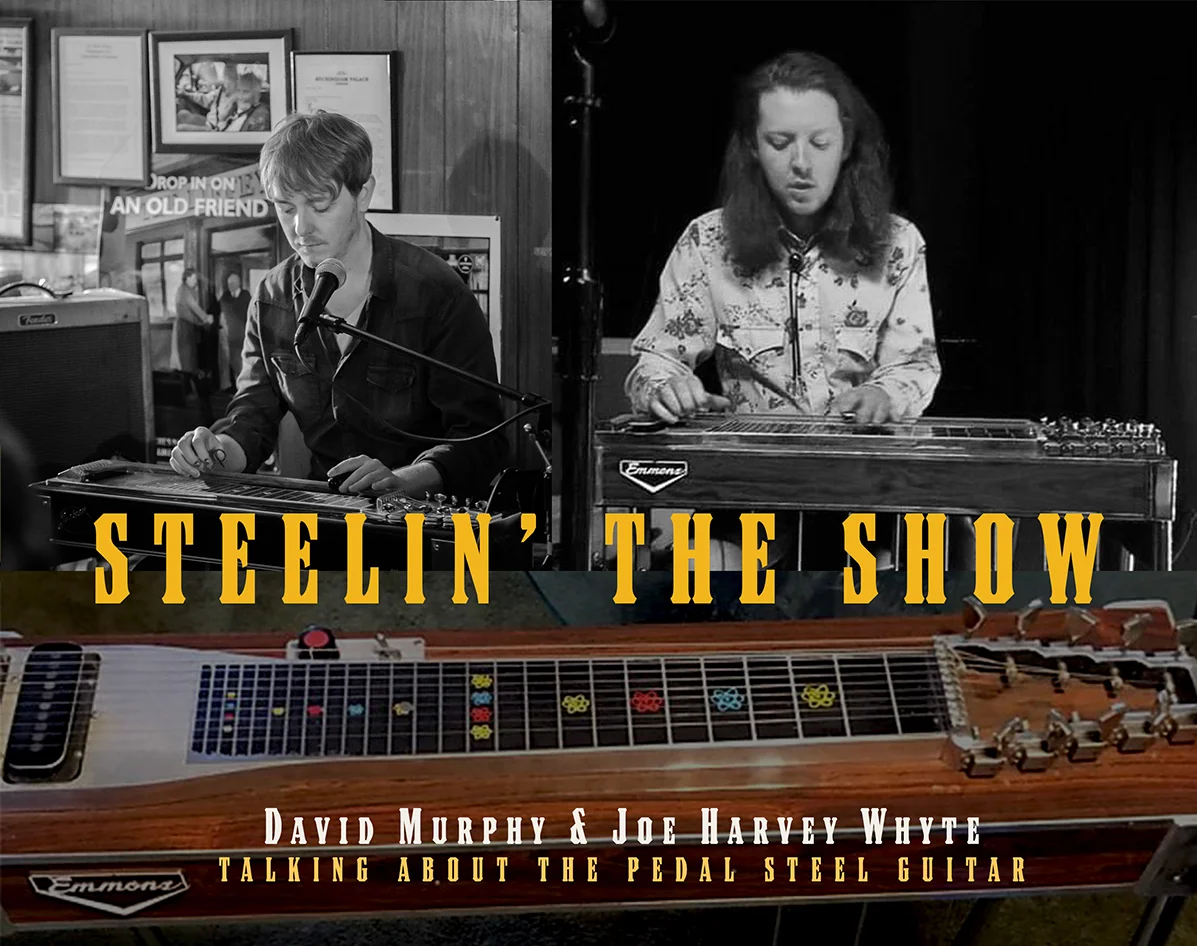
Joe Harvey Whyte & David Murphy Interview

August 20, 2019 Stephen Averill
David Murphy (left) photographed by Richie Tyndall

David Murphy (left) photographed by Richie Tyndall

With origins dating back to the 19thCentury, the steel guitar found its way to Hawaii by courtesy of Mexican settlers. Originally played on the lap, the instrument was a modification to the Spanish guitar, whereby the strings were raised by a half inch, creating what was at that time a quite distinctive sound. Joseph Kekuku is given credit for the invention and his relocation to America at the turn of the 20thCentury introduced and taught the instrument to a host of enthusiastic guitarists. Tours of Europe followed, where Kekuku brought the instrument to the attention of large audiences in both London and Paris. 

Over the next two decades the instrument became a feature in both Western Swing and Country music. Still played on the lap at that time, it eventually evolved into a console unit. As Country music merged into Rockabilly and Rock’n’Roll, the pedal steel guitar continued to play a pivotal part. A statement of the versatility of the instrument has been its capacity to crossover into a host of genres outside its traditional home. Jazz, pop, rock, gospel, Indian, folk, Americana and African music have all been graced by its characteristic sound. 

Requiring the co-ordination of two hands, knees and feet, it’s considered to be one of the most difficult musical instruments to master. Committed students of the instrument in America enjoy the luxury of available tuition from the many accomplished players and teachers. Not so fortunate in U.K. and Ireland, where keen to develop playing skills, pupils were often restricted to manuals to self-teach the instrument. 

Most encouraging are the new generation of players close to home who have championed the instrument, despite the somewhat limited market in Europe. Our own David Murphy and U. K’s Joe Harvey Whyte are two examples of players whose determination to master the pedal steel has gained them both reputations are two of the finest players in Europe. Despite their expertise, they both still consider themselves as students of the instrument as they recently explained to Lonesome Highway.

Pedal steel is not generally the first instrument to be picked up by young budding musicians. Did you start your musical journey on another instrument?

JHW:I think the pedal steel would be an incredibly difficult instrument to start out on.  I definitely benefited from having played guitar since age 10 and from messing around on lap steels for a few years before picking up the pedal steel.  

DM:I had a deep love of music from a very young age – my parents had a pub/dancehall when I was very little and so I couldn’t even avoid music if I’d wanted to. When I started school, I learned piano as well as joining the local brass band. I got into playing guitar when I started secondary school and that was it, I was gone on a lifelong quest! Blues, rock, folk, country, bluegrass – all the great recorded folk music of the last 100 years - consumed me. I played a lot of fingerstyle acoustic – John Fahey, Leo Kottke, Bert Jansch - and from here experimented with open tunings and eventually I started to get more curious about slide guitar in particular. This was the gateway to lap steel guitar and dobro and very soon pedal steel guitar specifically.

Your first memory of hearing the pedal steel and was it love at first sight?

JHW: You know what, I think it was hearing David Lindley’s lap steel solo on “These Days” by Jackson Browne that really turned me on to the sound and emotional power of slide instruments.  The way he makes that instrument scream and cry at the same time just did something to me.  The first track I remember hearing pedal steel on though was probably Linda Ronstadt’s version of “It Doesn’t Matter Anymore”. I think the steel player was Sneaky Pete Kleinow. That sound he makes just pulls at your heartstrings. A friend once described it as chrome tears.  

DM: Growing up in 1980’s north county Cork, there was a lot of country music around; I’m sure subconsciously I was hearing the instrument all the time, without knowing what it was. I can remember seeing it on TV and it was intriguing and somewhat mysterious; that crying, swelling sound was instantly emotive and stood out. When I discovered it properly as I was diverging and exploring as a guitarist, it certainly became a deep fascination of which I just had to explore more.

Were you influenced initially by country music or particularly by the instrument itself?

JHW:By the sounds of my answer to the last question, yes.  But it wasn’t specifically the genre that grabbed me, it was the sound of the instrument itself.  My obsession with pedal steel has taken me on some really interesting listening adventures.  From Daft Punk’s Random Access Memories record to a hip-hop collaboration between Aphex Twin’s Luke Vibert and BJ Cole.  Over the years though, I’ve ended up listening to and being involved in creating a lot of country music. Though that is mainly because the genre is often when you find the most pedal steel.  Deep down I’d like to follow in the footsteps of players like BJ Cole, Geir Sundstøl, Johan Lindström and Greg Leisz who take the instrument into new areas, opening up the possibilities for pedal steel. 

DM:  Probably more by the instrument itself. I was always into cinematic and instrumental music growing up and that’s how I became interested in pedal steel firstly. In the early 2000’s I was really getting into bands and artists like Calexico, Richmond Fontaine, Neko Case, Daniel Lanois. A lot of their records featured the instrument in a very tasteful and minimal context in the arrangements yet could be very stirring and exotic. It can be evocative and a beautiful texture when used sparingly and subtly and that was how I came to like it initially. Once I was listening out for pedal steel, it emerged more clearly to me on so many classic records that I was already familiar with by artists like Joni Mitchell, Led Zeppelin, Bob Dylan. This then became the gateway for me to delving into a lot of the classic country and western swing from which it first emerged and was in its hey-day and that is really where you get an education on all the best players of the instrument.

What model did you first play?

JHW:My first steel was a double neck Sho Bud Pro III. The thing was a monster. I only wanted a single neck steel but in this country pedal steels are hard to come by. I found it up for sale on the British Steel Guitar Forum. At the time I knew nothing about pedal steels, they seemed so intricate with hundreds of moving parts; I was scared of buying something that had issues.  Fortunately, I’d just met an experienced steel player called Matt Park. He very kindly offered to drive me up to Birmingham where the steel was located and check that it worked ok. His first words were, “she’s a bit of a beast!”. It was 35kgs. I’d never lifted anything that heavy. But it sounded amazing! I was sold.  Matt and I drove it back home, he made some adjustments to make it easier for me to play and I was off! I used that steel on everything I did for the first two or three years of playing.  

DM:My first pedal steel was a beginner-model Carter Starter that I bought in 2005. It was a fantastic instrument to learn on – it was reasonablyaffordable and also had the configuration and setup common to most pro models. I had that for 4 years before I bought my current guitar which was built for me by David Jackson, son of the great Harold ‘Shot’ Jackson of the Sho-Bud guitar company. Along with Buddy Emmons in the 1950’s and 60’s, they pretty much standardised the instrument and were the first to mass produce pedal steel guitars. I’ve had the same guitar since and it’s been serving me fairly well.

Tell me about your initial learning process with the instrument? 

JHW: I’m lucky enough to have started playing pedal steel in the Internet age. I’ve heard stories from older steel players that in the past finding anything to do with pedal steel was like finding a needle in a haystack. I’ve been able to find so much literature on the steel, tuition videos and recordings of the instrument, I couldn’t possibly go through it all in a lifetime.  Matt Park, who I mentioned earlier was a real help. He gave me a few simple exercises to do which helped me get over the initial shock of playing an instrument which requires you to play it with all 4 of your limbs! But for the most part I’ve been self-taught. There also used to be a little group of pedal steel players who’d meet at the back of a pub in south London every few months. It was organised by a steel player called Jon Shaklock. We’d sit around taking it in turns to play along to a backing track and swap notes. Those afternoons were so enjoyable and useful to me as a new player.  

DM: When I bought my first pedal steel, YouTube didn’t really exist and so playing along to records and learning from books was my first foray into getting to grips with the instrument. There were no teachers around either. There is a very good online community and network of pedal steelers around the world on the Steel Guitar Forum, which is a huge resource. This proved to be invaluable to me when it came to learning about tunings, maintenance of the instrument, pickups, playing techniques or just learning new songs and discovering artists and players new and old. There was then also just the simple case of getting out there and playing as much as I could in a live setting, seeing how best to accompany singers, play alongside other musicians and start to think like a pedal steel player.

With so many variations in playing, there does not seem to be a gospel or guide to playing the pedal steel. Does this make the learning process particularly arduous?

JHW:There’s a saying amongst the pedal steel community: “There’s as many ways of playing pedal steel as there are players”. I think that’s true. I certainly have my idiosyncrasies which I always remind my students about. Jeff Newman started a steel guitar school in the USA the 80s I believe. He has some set ways of playing which I’m sure I’ll regret not learning. But for some reason I’ve always resisted the idea that there’s only one way to do something. Sometimes you figure out really interesting things by doing them ‘wrong’. 

DM:It is quite daunting starting off, for these very reasons. It is a bit of a minefield. As well as being a rare instrument to come across, it can be awkward to move around and setup. Given that the string tension is being manipulated, raised and lowered with every move, tuning it can be very challenging. Mechanically, the whole instrument is a series of compromises essentially. It’s then a complex instrument to get to grips with operating: it literally involves both hands, both knees and both feet. It’s very sensitive and nuanced physically to play. You need to have your wits about you – it’s not the best for playing with a few pints of stout on board! As well as all this, there are not that many players in Ireland – certainly not outside the showband scene or south of the border – and so it took me a while before I discovered any other players in these islands who I could get to know. Even then, it’s not unusual to find that some players play slightly different variants or configurations of the instrument and so will have different styles. This makes it all the more interesting though, I think.

Do you still consider yourself a student of the instrument? 

JHW:Definitely. I don’t think you ever stop learning. The instrument is always teaching you something. The different tunings and pedal/lever combinations allow for multiple ways of approaching the same notes or scales. I knew virtually nothing about music theory before I started playing pedal steel. Following the internal logic of the instrument was like taking a crash course in chordal theory and harmony. I’ve been playing about 5 years now and when I sit down at the steel, as long as I’m open to it, new things emerge.  

DM:Absolutely – there is no end to learning. I’m always listening to players new and old and seeing what I can learn or pick up. It’s a challenging instrument. I had formal lessons for the first time last year and it proved to me that really the pedal steel offers up new things that are always waiting to be discovered. I also play the earlier incarnations of the instrument – the acoustic dobro which is a 6-string square-neck resonator guitar used in a more bluegrass setting as well as 8-string lap steel for more traditional Hawaiian and western swing music. They all use different tunings and approaches but come from the same family essentially. Playing different styles of music and accompanying within different ensembles ensures that I’m kept on my toes!

What period do you reckon to be the golden era for the instrument?

JHW:That’s a hard question. If we’re talking about a golden era of people listening to and appreciating pedal steel, I think that’s got to be a period stretching from the late 50s to the early 70s. The instrument had been born in the early 50s with players like Alvino Rey and Bud Issacs who added pedals to regular (straight) steel guitars. And by the 60s it was really starting to take hold. Back then if you were in a country band and didn’t have a pedal steel it wasn’t really country. Then the rise of great players like Buddy Emmons, Lloyd Green, Red Rhodes, Curly Chalker and so many others helped to put pedal steel on the map.  But…. if we’re talking about a golden age of pedal steel being used in new and inventive ways. I think that’s happening right now. There are players like Susan Alcon using pedal steel in Avant Garde Jazz and like I mentioned earlier, BJ Cole and others have paved the way for other genres to consider pedal steel as an expressive tool beyond country music.  

DM:I suppose the 1950’s and 60’s were transformative and really set the bar high in terms of the invention and creativity of the players of those times. They were absolute pioneers and trailblazers in the evolution of the instrument. What was most impressive was how the mechanics developed often in isolation – for example, a guy in Texas could be adding a pedal to his steel guitar whilst another in California was adding a lever of some sort – with neither of them aware of the other’s work. It’s fascinating to think about! It was a time of amazing singers and songwriters and the standard of players needed to match that. By the turn of the 1970’s, it’s nice to see that the instrument didn’t just die off as being out of fashion but that it found its way into country rock with the Bakersfield sound… appearing on plenty classic coming out of Laurel Canyon... Jimmy Page using it on the early Led Zeppelin records to nice effect and so it lived on. Whilst it probably won’t have quite the same impact culturally ever again, it is here to stay and will always have its place, I think. 

Are your favourite players current performers or from bygone times?

JHW: I have favourites from the past and from now. Buddy Emmons always blows me away. His command over the instrument is unrivalled by any other player past or present, in my opinion. He can play jazz on that thing like it’s a sax. Curly Chalker was pretty damn good at that too. He put the steel through a Leslie which I love the sound off. Speedy West also!  As for living players. Greg Leisz has been a favourite of mine for a long time. He has such a subtle touch. He always serves the song. There’s a live version of Hickory Wind by Gillian Welch and Dave Rawlings, Leisz doesn’t make the steel sound country, he just makes it drift in and out like waves. BJ Cole too. He always comes at things from an angle you didn’t even know existed. 

DM:A mix of both definitely. There is so much to be learned from the older players as they really set such a high standard. Buddy Emmons (the Hendrix of pedal steel arguably), Pete Drake (Bob Dylan/George Harrison amongst so many others), Lloyd Green, Speedy West are some of my earlier favourites. Of today’s players, I really like Paul Brainard (Richmond Fontaine, M.Ward), Paul Niehaus (Calexico, Iron and Wine), Eric Heywood (Tift Merritt, Over The Rhine), Spencer Cullum (Caitlin Rose, Steelism), Tucker Jackson (The Delines). Russ Pahl and Greg Leisz have taken the instrument to really interesting new places. Recently I’ve discovered a guy named Rich Hinman whose playing has absolutely blown my mind. He plays with kd lang and Vulfpeck amongst others but has a really interesting and beautiful approach to playing the instrument that’s very much in a contemporary manner.

One player who is overlooked enormously and was pretty much undiscovered is Vance Terry who died about 20 years ago after having lived an extraordinary life. He only made one record (as far as I know), a sort of live bootleg album called ‘Brisbane Bop’. He and a guitar player named Jimmie Rivers played amped-up western swing and country jazz – or hillbilly bop – as residents in a fairly rough nightclub in San Francisco in the early 1960’s, a time when the whole genre was pretty much past its prime. His playing is some of the most amazing I’ve ever heard. It’s somewhere between New Orleans jazz and Texas country and Chicago blues and they tackle some big-band standards too with a small ensemble. He makes the instrument sound like a whole orchestra at times – the chords and melodies and voicings he summons up are mind-blowing! I don’t think anybody before or since has played pedal steel quite like it. That record really is like something from an alternate universe! Check it out, you won’t be disappointed!

Is there one particular player whose style has predominately influenced your playing?

JHW:I think Greg Leisz and BJ have had the biggest impact on my playing. I’ve had to fill his shoes a couple of times which was daunting! He played pedal steel on a record made by a Norwegian artist called Susanne Sundfor. I ended up playing some shows as part of her band and I was so honoured to be giving my own take on Greg Leisz’s steel parts. The album is called “Songs For People in Trouble”. It’s a beautiful record and Greg Leisz playing is enchanting. I met BJ Cole just as I started learning pedal steel. I had a couple of ‘lessons’ with him. Most of the lessons consisted of us talking about the instrument, players, tunings, albums. Very little teaching (in the traditional sense) actually took place. But somehow, I always came away having learnt something new, or having had some new ideas. He introduced me to some incredible music and played me LPs is never even heard of. One of my favourites was Buddy Emmons playing pedal steel through a talk box on a Ray Price song called “Burned Fingers”. It wasn’t just Pete Drake that did that. Saying all that, I reckon the biggest influence BJ had on me was when he came to see one of gigs and fell asleep. If that doesn’t change the way you play, I don’t know what will.  

DM:The LA-based session player Greg Leisz has probably had the biggest influence on my playing. His contributions to so many amazing records over the past 20 years have been, to me, a textbook example of how the pedal steel can be so effective when applied sparingly and organically, enhancing a song or recording without showboating. He plays the song as opposed to the instrument and it’s always the right notes in the right places with the right tone and feel and nothing more. His playing with Bill Frisell is on another level altogether and is a benchmark of modern pedal steel playing, I think.

Mentioning U.K. player B.J. Cole, has worked in pop, jazz, ambient and experimental music notwithstanding roots and country over the past forty years. Are there still opportunities for you outside roots and country music?

JHW: If you listen to B’Js ambient records or his work on The Apollo album by Daniel Lanois, Brian Eno and Icebreaker, you get a sense that there is real potential for the pedal steel outside of country music. You get that with Geir Sundstoel, Johan Lindström and some other non-traditional players too. For me the instrument has always had this ethereal, other-worldly sound to it. It’s sustained and searching notes have tended to resonate more deeply with me than the chicken picking type playing. Don’t get me wrong, I love that, it’s fun! But when you slow things down and use the instrument in an ambient context it really begins to open up new doors. 


DM:I’d like to think so. I’m a big admirer of what BJ Cole has done over the years. I’m interested in so many different genres of music although I don’t get approached generally by artists too far from the folk and roots scenes. It’s something I’d love to change as I’m keen to forge new roads in pedal steel as both a main instrument as well as accompaniment. There have been some good European players emerging in recent years who deserve to be heard and are making new and interesting music on pedal steel that is a world-removed from its country-music origins – Maggie Bjorklund from Denmark, Geir Sundstol from Norway, Joe Harvey Whyte from the UK are some that come to mind. Pushing boundaries and exploring new terrain is important I think for the development of the instrument.

Which style do you feel most comfortable in, rock, country, electro, classical or ambient music?

JHW: I’m lucky enough to get to play with lots of different acts with different styles. One day I could be on a traditional country gig and the next, or even later that day it might be a folk / singer-songwriter gig. Then maybe the day after I’ll be playing ambient sounds as background music for a life drawing class. I love this instrument so much that I’m just happy playing it in whatever context or genre I find myself in and connecting with the music and the other musicians. But if I had to choose one… I think improvised ambient/experimental music is where I feel most at home. Playing that kind of music like dreaming whilst still being awake. 

DM:I’m probably most comfortable in a traditional rock’n’roll band setting but I like to be challenged. Playing as part of a duo, for example with an acoustic guitar, ensures that you need to be on top of your game; there’s nowhere to hide. I’m pretty comfortable in that setting too. Playing in a bigger band setting allows more breathing space for definite. I’ve been recently working on my own music again after a long spell, incorporating pedal steel into modern classical and ambient compositions along with piano, synths and strings. It’s very interesting and it’s nice to be writing with pedal steel in mind. I’m curious to see where it goes and of course am cautious that it doesn’t step into dull or boring ‘fusion’ territory – it’s a fine line!

Is there sufficient demand in Europe to generate enough work for you and have you considered moving to The States to further your career?

JHW:A lot of people ask me about moving to the US. And yeah there’s probably plenty of work out there. But...I kinda like it here. I like being in Europe (and whatever happens with Brexit I will still be considering myself a European citizen) There’s definitely enough work to go around here. There’s a wealth of talent in the U.K. and also in mainland Europe, plus North American acts come over all the time and often need a steel player.  On top of all of that, in the US there’s kids about 15 years old who can shred on steel better than I’ll ever be able to!  

DM:I don’t play full-time for a living and so I can afford to be selective when it comes to choosing what projects or artists I get involved with. I considered moving to the US when I finished college – I applied for a green card – but it never materialised. I don’t regret it, especially considering the way things are there at the moment politically and socially. There does seem to be a more open-minded approach to pedal steel in Europe too which doesn’t exist on the same level in the US, I think. It can be pigeonholed very easily there. Separately to that, I do think Ireland produces some of the finest artists and musicians on the planet considering our small population – we always have done. Culturally, I don’t think there is a richer place than Ireland for music. So, I’m more than happy to live here and be able to work with some of these great singers and songwriters and musicians.

Have you visited Nashville to check out the talent and styles there and what did you learn from the experience? 

JHW:I went to Nashville a couple of years ago and it really changed me. The level of playing there is off the chart.  I almost wanted to give up.  I ended up coming back to London and setting up a Honky Tonk night to try and recreate a bit of that Nashville sound. I met Lloyd Green when I was out there and that was pretty amazing. I went to his house, we had a chat about The Byrds, Jonny Paycheck and then he sat down and played his original Sho~Bud steel flawlessly. He’s over 80 now too! Along with JD Maness, Lloyd Green played on Sweet Heart of The Rodeo. He’s a seriously good country player. But when I was there he played an instrumental composition he’d just written called “Venus Moon”. Not country at all, who knew he was taking the steel to outer space too?  

DM:I first visited Nashville in 2007, around the time I first got into playing steel. Having seen some amazing players in the flesh, I was motivated even more to dedicate myself to the instrument. I have since been back a number of times over the years and always make sure to check out what is going on in terms of pedal steel. Most recently, I was there last year having received an Individual Artist Bursary Award from Cork City Arts Council to develop and enhance my playing. I had one-on-one tuition with two great teachers and players, Buck Reid and Pete Finney. It was invaluable as I’d never had any formal lessons ever before and what I learned has undoubtedly improved my technique as well as the artistic approach I have to the instrument.

Your most memorable playing experience to date?

JHW:That’s a real tough one. A few years ago, I got to play at The Royal Albert Hall opening up for Jools Holland with an amazing singer and friend, Beth Rowley. I remember seeing Jackson Browne and David Lindley there as a teenager. That’s pretty up there! Recording at Abbey Road studio 2 with my good friends The Magic Numbers was pretty wild too. That room is such an inspiring place to be in. The sounds that have bounced around those walls. I didn’t feel worthy to be on such hallowed ground. But the most memorable experience has to be performing at Union Chapel in London as part of Tony Visconti’s life in music concert. I did a solo version of a Brian Eno and David Bowie ambient song called Moss Garden. It was the first time I’d ever played a solo piece on steel and it was in front of about 1000 people. And in this beautiful old church too. It was pretty magical. Later in the set I played pedal steel with Tony Visconti, Stuart Copeland, Bob Geldof and Imelda May. The whole thing was being filmed for a Sky Arts TV programme too so I was nervous as hell!  

DM:I’ve been very lucky to play with some wonderful singers, writers and musicians. A really warm reception for John Blek and The Rats’ first show at Kilkenny Roots many years ago was a highlight for me personally, being a long-time attendee and friend of the festival. Headlining with both ‘The Rats and Richmond Fontaine in the Set Theatre a few years later stands out too, given how much an influence Richmond Fontaine were during my early years learning pedal steel. I’ve had some great experiences to date with The Delines as well as with Willy Vlautin as part of his book tours. I’ve been lucky to get to tour and record with some of the finest artists Ireland has produced in recent times – John Blek, Anna Mitchell, The Lost Brothers, Malojian, The Remedy Club, Greenshine are some that spring to mind.

Are you working on any interesting projects at present?

JHW:I play regularly with a cosmic country band from London called The Hanging Stars. We’re just about to put out our third record and I’m really excited for people to hear it. I think it’s our best yet.  I also run a Promotions company called Jambalaya Events. We recently put on a concert at an amazing old Victorian music hall here in London with a collection of great songwriters. It was a live tribute concert to the 70s music doc Heartworn Highways which features Townes Van Zandt, Guy Clark and Steve Earle.  The Magic Numbers played, as did Zak Hobbs who’s the grandson of Richard and Linda Thompson. Some other lesser known but no less talented singer-songwriters performed too. It was a very special night and I’m hoping to do a lot more of this kind of thing with this collection of artists in the future.  

DM:The most recent recording projects I have been involved in include the forthcoming album from The Remedy Club which was produced by the legendary Ray Kennedy who was behind so many great country rock and roots albums of the last 20 years. They are a superb duo with top class songs. Another recent project is a new album for The Lost Brothers, coming out next year. I probably can’t say too much about that one just yet but it features a pretty world-class cast of backing musicians and turned out really well! I also recorded some pedal steel lately for the soundtrack of the novel ‘#Zero’ by the journalist and writer Neil McCormick, which was very interesting.

The beauty about the instrument seems to be that the players appear to be as much in demand in their sixties as their twenties! Musically, where do you see yourself and the instrument a few decades down the road? More of the same or crossing into new musical genres?

JHW:Oh God. I don’t know. All I want is to still be enjoying playing the instrument. Still be enjoying recording and putting on gigs. Feeling the connection with people I play music with. Experimenting. Still discovering new things. As long as I’m doing those things, I know I’ll be happy. Anything else that comes along will be a bonus.

DM:Crossing into different genres is where I’m most interested in going. It can be challenging given that the sound of the instrument is synonymous with America and its various landscapes - conjuring up imagery of expansive deserts and dusty plains etc. It’s also not a very rhythmic instrument as such and so it will always play more of a textural and melodic role in that regard. At the same time, I think it’s easy to fall into the trap of playing the instrument as opposed to playing music. I look towards artists like The Gloaming or The Unthanks who prove that with the right ingredients you can take ancient forms of music and traditional instruments and present them in a manner that is wholly fresh and reinvigorated. I’m keen to create new music featuring pedal steel with that kind of spirit and present it in a new light. We’ll see what happens!

Interview by Declan Culliton

Terry Klein Interview

July 24, 2019 Stephen Averill
Photograph by Valerie Fremin

Photograph by Valerie Fremin

Confession time first. Up to three weeks ago Texan singer songwriter Terry Klein was unknown to us at Lonesome Highway. His second recorded CD, simply titled Tex, arrived at HQ for review some weeks back and caught my immediate attention on the outstanding opening track, Sagamore Bridge. On further investigation it came as no surprise to find lavish praise being directed at Klein by both Rodney Crowell and Mary Gauthier. The album is a story book full of tales that instantly capture the imagination, with lyrics at times uplifting and joyous and on occasions as painful as an open wound.
Lonesome Highway chatted with Klein about the album, his influences and more.

You are described as a ‘recovering lawyer’. I’m reminded of a classic quote from a former Police Officer and Attorney. ‘’ I’d prefer to stand on a street corner in a short dress waving at cars than practice law again’’. Does this ring a bell with you?

It rings lots of bells. Practicing law wasn't for me. And there's some honour, at least, in standing on a street corner in a short dress!

Was the musical career always an ambition for you or how did it come about?

It was an ambition when I was very young, until I was about twenty. Then I left it behind and practiced law for fifteen years. I started falling in love with country and folk and singer-songwriter music starting around 2011. And in November of 2013 I wrote my first song. From there I wrote lots of bad songs - one or two or three a week - until about the middle of 2015. But I have to say, almost from the instant I wrote that first bad song, I was saying to myself, that's what I wanted to be spending my time doing. Thank goodness I didn't end being horrible at it.  

Were you an admirer of the classic Texan songwriters growing up?

Interestingly, no. My tastes growing up were reliably boring and/or based on a surplus of adolescent testosterone: Van Halen, Hendrix, Zeppelin, the Red Hot Chili Peppers, the Beatles, U2, Sting, the Police.

What was your musical history either as a punter or performer prior to recording your debut album Great Northern in 2017?

Well, first of all, I was in a thrash funk/heavy metal band in Los Angeles in the early 1990s. We were pretty good, too. We played at places like the Whiskey A Go Go and The Troubadour. That band fell apart and I didn't play music for people hardly at all until about five years ago. I played my first open mic in Boson in the summer of 2014 and then kept popping into open mics intermittently until the beginning of 2016, when I really jumped in with two feet. I played three to five open mics a week in Boston from January to June of 2016. Then we moved to Austin and I started getting gigs pretty quickly, which was immensely gratifying. When you start playing gigs, people ask if you have anything recorded. It's embarrassing; I didn't have some massive creative vision associated with the first record. I just wanted to be able to say "yes" when people asked me if I had an album or was on Spotify.

That album got some notice from some serious hard hitters such as Rodney Crowell and Mary Gauthier. How satisfying and confidence boosting were those acknowledgments?

Both Rodney and Mary nurture songwriters who they think have promise. To be in that category still means a lot to me.

I believe you attended one of Mary Gauthiers song writing workshops in Nashville?

I did. It was one of the most meaningful experiences I've ever had in my life. Anyone who wants to write songs that mean something needs to do a workshop with Mary. Scrimp, save, borrow, steal. Whatever it takes. Just go. 

How structured and disciplined are you as a writer. Can you work nine to five or do you wait for a storyline or lyric to come from left of centre?

I'm pretty disciplined when I'm in writing mode. I take the Flannery O'Connor approach. I try to write, or revise, or stare out the window wondering why I haven't written anything good for what feels like forever, for three hours in the morning, from about 9 until about noon. Real life gets in the way of that from time to time. But when I'm in that rhythm, after about a month or so of writing things I think are good, I'll start writing things that are actually good. Writing good songs takes time. Writing good anything takes time. 

Are personal experiences a springboard for your writing?

One hundred percent yes. But I borrow liberally from the experiences of people I know and love or who fascinate me. 

You have the capacity to pack the maximum backcloth with the minimum amount of words. Do I detect a voracious reader or simply a vivid imagination? If you are a reader, what authors impress you?

I read a lot. I think that's an indispensable important part of being a good writer. My favourites are Dickens, Hemingway, Willa Cather, Edit Wharton, Flannery O'Connor, Vonnegut and David Foster Wallace.

Moving to your current album Tex, which is hitting the Lonesome Highway sweet spot. You have again worked with Walt Wilkins, who produced the album. How did you hook up with him and get him on board giving that he seems to be continually in motion?

I met Walt at a songwriting retreat hosted by Kevin Welch in October 2015. We connected right away and kept in close touch. Like Rodney and Mary, Walt doesn't let his insane schedule get in the way of nurturing writers and artists he believes in. When he offered to produce the record, I was shocked, flattered, excited, scared to death. Working with him and Ron Flynt, who engineered both records, felt easy. All they ask is that you come in ready to work. By the second record, it was like the three of us had one brain. I'd hear something and before I could even say anything about it, Walt would say "did you hear that?" I feel immensely fortunate that Walt and Ron are in my life, both as friends and as artistic collaborators. 

The song writing on the album often deals with real life and every day issues, ones that are often swept under the carpet. The opening track Sagamore Bridge is particularly insightful, the privileged and the bare survivors living side by side in a parallel universe. Where did the story line come from?

I lived in Boston from 2000 to 2016 so I spent quite a bit of time on Cape Cod in the summers. There are three verses in the song and each verse has two parts, so six total parts. And each of those six parts is pulled from real life, real experiences I've had along the way. It sure has been interesting to me how that song has resonated with people all over the world who have never set foot on the Cape. 

There’s a lifetime and more of personal experiences on Tex. Should we envisage Terry Klein in some of the landscapes?

No! The power of a good song is that when you use the first-person pronoun, the listener envisions him- or herself in the landscape. I'm boring. I want people to picture themselves.

The family, in various forms, get a lot of coverage in the songs. The wayward and drifting son returning to his mother’s funeral in Oklahoma is compelling. Daddy’s Store features the pull between emotional family attachment and the draw to let go and leave the nest. Which of the brother will be most fulfilled and will both have regrets as time marches on?

Well, to be alive is to feel regret. But goodness, I hope both of those guys experience some fulfilment after the song ends. In Oklahoma, I hope the narrator gets to his dad's house and they sit and have a beer or a glass of whiskey together and laugh a little and maybe cry a little and miss the person they've lost. I hope that's what happens. In Daddy's Store, I hope the narrator at some point perceives the fact that he's imposed this obligation upon himself, that what his dad wants more than the store staying in the family is for his son to lead a happy, fulfilled (that word again) life. I actually feel like there's less of a chance of that than there's a chance that the narrator in Oklahoma finds his way back to the living. I'm not sure why. 

Too Blue To Get That Far is a difficult listen, laced with despair and regret. Was it a difficult song to compose or do you detach yourself from the subject matter?

It was one of the easiest songs to write that I've written. It just poured out of me. Sharing it with people I love, well, that was the hard part. And they don't like it when I play it. But I sure do hope that it makes folks out there who struggle with depression feel a tiny, little bit less alone. I've had a lot of people ask me "are you okay?" And I am. I have good days and bad days. We all do. 

I sense a love of the blues and jazz on your part in patches of the album. The closing track Steady Rain has a jazzy crossover feel to it?

Yes! For a little while after the heavy metal band broke up, I studied jazz in New York. I practiced 7 hours a day and all of that. But you know that song really owes a debt to the Beastie Boys. There's a song on their record Check Your Head called "Something's Got To Give" that was what I heard in my head when I wrote it. What's crazy is that I didn't even have to tell that to the players on the song, Bart De Win (keys), Bill Small (bass), and John Chapman (drums). The groove was self-evident, I guess.

The haunting sound of a pedal steel guitar is the perfect accessory to semi spoken lyrics. Kim Deschamps, who has played with the best, contributes steel to five tracks on the album. Tell me what he brought to the table. I get a sense of ‘less is more’ with his input, which is most affecting?

I love Kim. I love him as a person and as a player. He played on both records and we've played shows together, too. He's a compassionate, conscientious musician. The song comes first. He's not sitting there champing at the bit waiting for a chance to play a solo. He's listening to the lyrical content and the melody and he's adding textures that draw out the song's emotional content. On "Oklahoma", it's grief. On "Straw Hat" it's jubilation. On "Daddy's Store", it's wistfulness. I love steel guitar so much. Sometimes I wonder if I write the songs I do just so I can have a steel player play along with me. 

The albums out there and getting positive feedback. Is it practical for you to tour the album with a band or do you intend performing the material from it solo?

This is a tough, tough business. I love playing with a band and I do it a handful of times a year in Austin. But when I tour, I do it solo. Now, I just played a week of dates in Holland and Bart De Win lives there and he played with me. Playing with Bart is what I imagine it'd feel like to drive an extremely, extremely fast car. I'm glad we rehearse just so I'm emotionally prepared to be blown away during the show. Playing with Kim is the same way.

Are there sufficient opportunities to promote it in Texas or do you intend heading farther afield?

I just did three weeks in the UK and Europe and I get up to the Northeast (Boston, New York, DC) two to three times a year. And I try to work in one or two other regions a year. But I do love playing in Texas. The venues here, especially the dance halls and the older bars and taverns, there's just some magic in the walls. And if I could live my dream of fronting a pure, old school honky tonk band, I could make a wonderful living and never have to leave the state. But alas. That'll have to wait until I'm done writing the songs I'm meant to write.  

Interview by Declan Culliton

SAM OUTLAW INTERVIEW

June 27, 2019 Stephen Averill
Photograph by Matt Wignall

Photograph by Matt Wignall

You have recently moved from Los Angeles to Nashville. How has that affected your musical direction and your family life?

Compared to Los Angeles, Nashville is a much more affordable city in which to raise a family, so that’s been really nice. We were able to buy a house and it’s already starting to feel like home. Not sure my time here has affected my creative juices too much yet but we’ll see where it takes me.

Did you feel that Nashville was a better base to work from?

Yes! Touring out of Nashville puts you within reach of several more markets compared to LA. Plus I’ve finally started doing co-writes with other writers and that’s largely thanks to me being based in Nashville.

The new EP of three new songs and three audio skits seems to work well and suggest a another dimension to the way the song are presented. Was that the intention?

The Hat Acts EP became this strange little ‘concept' record but the songs didn’t start with that intention. The idea to record the skits popped into my head after the songs were recorded. I envisioned a storyline that would tie together the three songs then wrote and recorded the skits.

Can you tell me a little about the production details and what was involved with the performances?

I co-produced the songs with Kelly Winrich (Delta Spirit). Two of the songs and the skits were recorded in Southern California. The final song “Humility” was recorded in Nashville. My friend Molly Parden is the female voice that appears in the first two skits and Kelly is the voice of the Uber driver in the final skit. The voice of the street heckler is actually me, so I’m literally putting myself down in that one. Haha.

Is Hat Acts an interim download release prior to a new album? Will you end up putting these songs on a physical release or have you other plans?

Not sure yet! 
Have you come to terms with the different means of releasing product these days between download, CD and Vinyl? Have a preference?

I think my preference is to record and release single songs and short albums. I’m also pretty sure that releasing single songs is more in-line with how people are listening to music these days. Recording a song or two or three at a time gives me a chance to better focus on the songs and create artwork that compliments the music. 

Do you think that the slight move back towards a more traditional sound will help you reach a wider audience?

Hmmm… No idea. But I’m pretty sure that a traditional sound is not what most country music fans are looking for these days. Haha. Either way, a lot of the new music I’m writing is more of what’s considered “pop” and “rock”. So we’ll see if the fans who like the traditional sounding songs will hang in there for the new stuff. 

You have been making steady inroads into the UK and that seems to be paying off. Why do you think more artist don’t look to Europe more often?

I’ve been very lucky to work with a fantastic booking agent in the UK. Paul Fenn at Asgard has been instrumental in the growth we’re seeing overseas. Thanks Paul!

How do the economics of touring effect you? There seems to be a need to make arrangements to play solo, duo or as a full band depending on the size of venue and the subsequent fee.

Money plays a crucial role in every aspect of being a performing musician. If the money doesn’t make sense the tour isn’t going to happen.

What are your favourite aspects of being an artist? Do you feel more at home on stage or in the studio?

The studio is definitely my happy place. And while I absolutely love performing, every touring musician knows that the nightly performance is just a fraction of what takes up your time while on the road. Over 90% of touring is NOT performing. And most of it is pretty taxing.

Love Is On A Roll the most recent single was a cover of as Don Williams song. Was that a particular favourite?

Yes - that’s been a favorite of mine that I’ve been covering at shows for years so it made sense to finally record it. The song was co-written by John Prine. 

The sound of the production is different to Hat Acts but equally suited to your voice. It has a little Jimmy Buffet in there. Do you try and suit a particular sound to an individual sound especially for a single?

The original Don Williams recording features an electric guitar mimicking the sound of a steel drum. We took it one step further by having a pedal steel mimic that sound. I think it makes for a cool effect and definitely gets us at least to the city limits of Margaritaville. 

Does the title Hat Acts refer to an ears when pretty much any new act deemed country was know (sometimes cynically) as a Hat Act? Of course nowadays your upcoming “country” act is likely to ear a backward baseball hat and dress like a hip-hop artist.

Hat Acts is a riff on the 80s term for what was then the “new” breed of trad country artists. I’d consider myself a “hat act” since I’m not a cowboy. I don’t typically wear a western hat these days unless I’m on stage. The hat is for style.

In one of the between track scenarios the character likes hip-hop and real deal country. Is that true for you too?

Oh yes. I probably listen to more hip hop, rap and pop music these days than any other genre. But god knows I love country music too.

Do you write from a character stance or do you look to your own experiences for new songs?

It’s almost always a mix. I grab some stuff from my own experience, the experiences of others, and fantasy. 

You seem to like the opportunity to play with image in your cover or press photography. Is that another aspect of the process you enjoy?

Any chance to create something - whether it’s music or photography or art or video - all of these things are important to me. I love creating the stuff that surrounds the song as much as I love creating the song. And I only wish I had more money to make all my dreams a reality. 

You haven’t managed to make it to Ireland so far have you any plans to try to tour here?

I KNOW. I can’t believe I haven’t played Ireland. And I honestly have no idea why this hasn’t happened yet. But I promise you it will happen. And hopefully before too long.

Interview by Stephen Rapid

J.D. Wilkes interview

June 20, 2019 Stephen Averill
Photograph by Kaethe Burt O’Dea

Photograph by Kaethe Burt O’Dea

There are a number of live performances that stand out vividly for me one would be The Clash in Trinity College. Another would be The Legendary Shack Shakers in Paris Texas in Kilkenny at the Rhythm and Roots Festival. Both were hi-energy visceral performances and both Joe Strummer and JD Wilkes were compelling and vital frontmen. Since that time I have been a fan of Wilkes and his various musical endeavours as well as his writing and illustrations. After his recent solo appearance in Dublin Lonesome Highway asked him a number of questions which he graciously answered.

You have led the Shack Shakers since their inception. How has your vision for the band changed since then?

I reckon at first I just wanted a jump blues band to play in, one with a group of “brothers” who’d go tour with me. But it wasn’t long before we were switching genres to Western swing and losing a couple members to marriage and babies. The genre changes and old band members are now too myriad to number. But I’ve always just gone with the flow and let things unfold naturally as I go. I satisfy my musical ADHD and see who wants to join me next.

How deeply was that vision routed in the myths, legends and hillbilly and blues music of the South.

I’ve been writing about “local color” since the get-go. In our first demo, there was a local tavern, a cockfight club, some regional superstitions, etc. But I delved into the myths and legends more right around Cockadoodledon’t.

A lot of musicians have passed through the ranks. Does that allow you to bring something new to each edition of the band as every musician is different?

Yes. I cater the band’s sound to highlight their strengths.

This also brings ups the question of how the music industry has changed since you began performing and recording?

The major label opportunities went away right around the birth of Napster. Downloads killed everything. Fans bragging to my face about how they bootlegged my music online was particularly annoying. They acted like I should high-five them. Bands at our level went from hoping to make a living selling our music to resigning to the fact that we’re more in the T-shirt business. T-shirts and helping the bar sell beer.

Was there a particular place or time that you felt that you were achieving what you had set out to do?

I have never set out to achieve any goal. I’ve never even set goals for myself. I just shuck and jive (improvise) in the moment and then see what happens. Then I shuck and jive in the moment that follows that. Et cetera. Are these questions meant to shame and depress me, ha?!

In recent times you have worked solo. Is that something you have come to love?

I do enjoy it actually. It’s taken a long time to figure out how to pull it all off. I’m still learning though.

You seem to be perfecting your banjo playing and harmonica skills all the time. Do you practice a lot?

I play banjo at home but I wouldn’t call it “practice”. I’m not trying to be an amazing musician. They’re simply tools to get the tunes across. I like playing harmonica too, but it comes more natural. I can play pretty much anything I can think in the moment. Both instruments provide me a decent bit of therapy. But I’m not out to have them play ME.

You mentioned Lee Sexton and some of the old school blues players. How has their advice helped you?

I enjoyed learning a two-finger picking style that was older than Bluegrass. Lee learned to play banjo before Bluegrass music was even invented. That I could sit down with a living time capsule like that is absolutely priceless.

The Dirt Daubers seems to be positioned to a degree between the acoustic solo direction and something more band orientated. What that the intention?

To make the ex-wife happy.

What are the immediate plans for the Shack Shakers at this stage?

Carry out our current European tour and then hit the studio next month to record our new album for Alternative Tentacles. It’ll be a straight, traditional country record for a change. Nothing weird or art-damaged about it. What’s weird about the next LSS album is that it WON’T be weird.

Given that the intention is that the Shack Shakers album will more of a straight county album what’s your opinion of what’s happening in the mainstream country and alternative Americana right now?

I’d rather listen to terrible pop country music than Americana. At least the lyrics are often funny and aren’t so up it’s own ass with seriousness. But both genres bore me really. I’d much rather listen to old dead hillbillies and bluesmen than anything today. Everything in Americana seems fake, like coffee shop cowboys writing shitty poetry with no real danger or meat in their music. All hat, no cattle

Given the number of players you have been involved with do have you a favourite line-up?

My current line-up is my favorite line-up. And I’m not saying that because I have to. Fuller Condon, Preston Corn and Gary Siperko are super cool, easy-going dudes who so happen to be some of the greatest musicians who’ve ever graced this band. If not THE best.
Is songwriting something you enjoy and find easy. Or is it more difficult?

It’s always seemed pretty easy because I’ve never set out to write a “hit”. I write about only what I’m interested in, but I’ll try to make it catchy of course. I think if I started writing about what people actually want to hear (maybe “ass”?) then I could have some financial success. Screw that, ha!

What influences do you call upon when you write?

Broadsheet ballads. Old sayings. Guys like Shane McGowan and Tom Waits. Regional references like what they use. Melodies from dreams or even some phrases from dreams. Any and all things can be sources of influence.

You have written a number of books. The most interesting and unique is The Vine That Ate The South. It seems to read, to a degree, as an extension of some of your lyrical themes and is a rewarding and interesting read. Was that a lot different from lyric writing?

It’s basically one long song in a way. I wrote it with all the same influences I just listed above. So no, there actually isn’t a whole lot of difference between the book and my lyricism. They both flow in similar rhythms and patterns, tackle the same subject matter. In fact I think that if I hadn’t had 20 years of songwriting experience, I might not have ever attempted the novel.

Are you writing any more prose at the moment?

I’m currently working on a sequel to Vine, plus a new alphabet book called The ABCs of the Southern Idiot Man-Child.

You also directed the film Seven Signs. Was that a positive and rewarding experience and is that something you want to do again?

It was fun to film, taxing to have edited remotely while I toured, disappointing to have never gotten it distributed, but still a positive experience overall. Yes, I would like to delve back into filmmaking, but this time I think I’d like to make funny short films instead.

In Seven Signs two of the featured bands were The Pine Hill Haints and Slim Cessna's Auto Club both bands you admire. They both seem to have a pentecostal/religious background. Was your upbringing similar? 

My upbringing was at first catholic and then Protestant/baptist. I did attend a charismatic church school in the 1980s though. That’s akin to Pentecostal, but without the super strict dress code.

Does religion in any form play a part in your day to day life?

It is imprinted in my world view but I don’t endlessly bemoan this in cliche like others do. I think it went like this: Nature, being dangerous, mysterious and feral, needed something to tame and explain it. Religion explained and tamed the beast within, technology eventually tamed the beast without. Then, fairly recently, technology supplanted its helper, religion by giving more accurate explanations. Now we have godlike technology yet no unifying mythologies that, though technically “disproven”, still served to lend a common social code and customs. 

So then we have Hollywood and Academe invent us up new ones. So they give us “political correctness” so we have an updated moral compass. But I wager that this hollow philosophy, invented by posh, educated fools, will ultimately fall victim to pesky ol’ Nature, as PC takes into account nothing of Darwin’s reality or world history. It’ll be our undoing.

Then as a renaissance man you are also an illustrator and painter. Do you need to pursue all these different things to satisfy your creative muse or are you just something of a restless soul?

I just get obsessed with certain subjects and I enjoy the cathartic act of, say, cross-hatching some drawing for a project on that subject. The joy comes in exploring the subject, drawing it down and then seeing the whole product come to completion. To then hold it in my hands.

Of all of these creative pursuits may stem from the one source - The South and an examination of its real culture. Are they other areas of interest that you could mine?

I like medieval saints and martyrs, reliquaries and symbols. Anything mysterious with ornate trappings. Mysticism draws my eye in all its forms and accoutrements, not just southern kind either.

How much to personal relationships feature in your work?

Usually none except for the last two main album releases. But they’re both post-divorce, so that’s understandable.

Did the lifestyle of a working musician have a detrimental effect on your marriage as you were together all the time during your relationship?

Nowadays anything at all can strain a marriage, no matter what ya do. You could wake up one day with bad breath the same moment she’s getting a “heart eyes” emoji from some hunk on Instagram. Annnnnnd … Marriage over.

The selfish disinterest in keeping your vows is what kills marriage. But then again, in our post-modern age of comfort and plenty, marriage is practically recreational anymore. Not the stuff of species survival as it was a hundred years ago. 

What does the future hold for JD Wilkes?

Beats me. But I’ll be shucking and jiving the whole way there!

Have you sensed any particular changes in attitude in your travels in terms political and non-political outlooks?

If the implication is that: as a “Christian American” from the south, has traveling the world woken me up out of all my racist notions that, by god, you KNOW I MUST possess as a southern white male ... then no, I never had those notions and if anything I have always loved art and culture and travel because my parents didn’t raise trash. But I HAVE retained and even grown in my god-given discernment and cynicism ever since traveling the world. I even have had many of my more satiristic observations, from my comics, say, quite confirmed more so over the years. 

Interview by Stephen Rapid


Allan Jones Interview

June 11, 2019 Stephen Averill
JonesIntro.jpg

Launched in May 1997, Uncut magazine was the brainchild of Allan Jones. Inspired by his frustrations at the musical directions taken by his employers at Melody Maker, Jones identified an opportunity in the market for a publication aimed at a more mature audience.  Uncut was the introduction for many to a treasure chest of new music, including a healthy focus on alt-country artists. It’s complimentary CD, which came free with each monthly issue, gave the reader the opportunity to sample music from a host of different artists. Most of these artists also had their albums reviewed in the magazine. 

Jones’s musical career dates back to the mid 70’s.  He was unexpectedly offered a position with the weekly music paper Melody Maker in 1974, having applied for a role he felt spectacularly unqualified for. The vacancy was for a ‘’junior reporter / feature writer’’ and the eligibility requirements were simply for someone no older than twenty-one, highly opinionated with no previous experience necessary. Striking the bullseye on all three counts and the possessor of an enormous music collection, Jones penned an audaciously arrogant application for the position, closing with the line ‘’ Melody Maker needs a bullet up the arse. I’m the gun, pull the trigger’’. 

To his bewilderment he was not only called for an interview but offered the position, which he willingly accepted. Within a relatively short period of time he was enjoying the company of and interviewing - seldom without incident - a host of artists from Showaddywaddy to KC and The Sunshine Band and Leonard Cohen to Lou Reed. These encounters and the mayhem that often ensued are recalled in his 2017 publication, Can’t Stand Up For Falling Down. 

Jones was invited to attend the Kilkenny Roots Festival earlier this year where he was interviewed by festival director John Cleere. The Lonesome Highway team had the pleasure of meeting with the affable and modest Jones,who happily agreed to be interviewed by us.  

Has the Americana genre somewhat lost its way? It seems dominated these days by bearded male singer songwriters trying to recreate early Neil Young albums,or soul singers jumping on the increasingly popular country soul bandwagon?

Difficult to say really. Americana was always a catch-all phrase for a lot of disparate music and some areas of it don’t interest and excite me today as it did twenty-one years ago when I compiled the Uncut CD Sounds Of The New West (The Best Of Alternative Country). Someone pointed it out to me the other day that it has reached its anniversary and asked me if I could compile a cd like that today that would have a similar impact. I’m not so sure that it would have that impact as we’ve become so familiar with the musical territory and musical vocabulary of disparate groups. I think I could put together a very good CD. I’m thinking of The Delines, Carson Mc Hone, Ruston Kelly, Rayland Baxter, Israel Nash, Ohtis. But I don’t think it would have the same passion and power of that early collection which was so fresh at that time.

There was an abundance of left of centre music on that album. Will Oldham, Silver Jews, Vic Chestnut and Willard Grant Conspiracy spring to mind. There aren’t too many coming from that direction these days?

The only group that’s recently impacted on me in a similar way to the ones you’ve just mentioned is Ohtis, whose album, Curve of Earth, I mentioned when I was in Kilkenny. There does seem a prevalence at present for very burly singer songwriters, all with kind of pretty morbid backstories, all been through the ringer a bit. I shy away from a lot of that type of music,particularly the more confessional end of it,where they get very specific about the troubles they’ve been through. All a bit groaning for me. Very samey, a lot of them have their roots in Springsteen’s starker sound, Nebraska seems a key album to a lot of people. 

Is that industry driven and a direction they feel they have to take to have any opportunity of survival?

Possibly so, I’m totally divorced from the mechanisms of the music industry these days. It just seems a very convenient and safe route. A lot of people identify with it, is it John Moreland comes to mind, look at how popular he is. I just find it a bit overbearing to be honest. There are exceptions of course,Israel Nash being one and I’ve just heard a very good album from Frankie Lee. 

The Ohtis album you mention is very confessional. How do they follow that up, if there is a next album?

I’m still coming to terms with the first one having not known much about the group. Having just seen them live I don’t think they’re going to have any problems improving. There is so much potential in that group and they are such good songwriters. They’ve chosen to write their first album with a song cycle about growing up in a fundamentalist evangelical cult, rebelling against that, getting heavily involved with drugs as an escape or an alternative, rehab and redemption. It doesn’t seem terribly embellished, a lot of it seems autobiographical. Sam Swinson, who writes the songs, seems to have such a fertile imagination and is such a good lyric writer especially. He shouldn’t have much trouble coming up with new songs that don’t necessarily exploit his own experiences. 

As a matter of interest, how well attended was that gig?

Surprisingly well attended, I thought there might be half a dozen people there, having not seen many reviews of the album. I don’t know how people even heard of them to be honest. A good full crowd, very encouraging. 

The concept of a free CD with Uncut each month was quite revolutionary at the time. How was it received by industry and artists?

Just to briefly recap. When Uncut launched, the publishers were keen to push sales a bit more aggressively. The circulation was very static at the beginning, a bit low to be honest. They wanted to galvanise sales, so we had the opportunity from a promotional budget to put a few CDs on the cover. They were compiled and presented to us by Roy Carr, who was a bit of a trail blazer in compiling mixed cassettes for both Melody Maker and NME, when he was special products editor. Roy was a great bloke but he cut a lot of corners, so we had a series of CDs which were basically the Bulgarian Symphony Orchestra performing classic movie themes.  They were awful and did nothing for our sales.  Then an opportunity came up to put another CD on the cover. I pleaded with the publishers not to land us with another run of these classic movie theme CDs, which the readers didn’t particularly like and we were embarrassed by!  I had just written a cover story on Neil Young’s doom trilogy, On The Beach, Tonight’s The Night and Time Fades Away.  I thought if I could just find some music to match the cover, music that in some way,you could say had been influenced by Neil Young. I’d been listening to the Whiskeytown album, Ryan Adams, The Handsome Family and a lot of the names you’ve just mentioned.  I said to the publishers ‘’why don’t I just go to the record companies and ask them for tracks from these albums’’. It promotes the artists who weren’t getting airplay and weren’t on TV, some hadn’t even toured the UK. I thought it was an opportunity for the record companies to give us tracks, a lot of people would hear them to the benefit of the magazine and the labels. Fortunately, most of the content I was chasing was on small labels. Loose were a classic example and the first label I went to. They immediately cleared it; City Slang were similarly great. The publicists were shocked and so was Roy Carr who’d been compiling these for MM and NME.  We got everything we looked for and then Roy pulled off a blinder by getting an Emmylou Harris track and a Flying Burrito’s track, which helped to introduce and tail end the album. And it worked. Suddenly Uncut had a very enthusiastic readership. So many people were turned on by the music they heard on that CD, to the extent that they came back for more. We then developed the CD as the best of the month’s new music and some re-issue tracks. We got a generally good response from everybody, predictably with the exception of the major labels. Occasionally EMI might give us a track if they thought it was in their interest. Warner Brothers were very iffy about it, sometimes we could get stuff from them. Rough Trade were very unhelpful, 4AD and Matador didn’t want to know about it and very rarely gave us tracks. At first, we could get back catalogue material from the major labels but very quickly there was a complete embargo from them for free music for our CD’s. The record companies saw it as giving material away and didn’t see any benefit from it.  

 Many of the artists certainly gained from it. Lambchop, Richmond Fontaine, Jim White and many, many more. It essentially launched their careers in U.K and Europe, at a time when they could hardly get a gig in the States. Many of them still benefit from that early exposure.

A lot of the bands did indeed benefit, that was the intention. I never thought of it principally in terms of enhancing our circulation at Uncut. It was more about sharing some great music with likeminded people. 

Your initial trip to Nashville to interview Lambchop, was that in your MM days?

Yes, it was June 1996. I had been pretty much disillusioned with MM for nearly a year, perhaps a little longer.  Particularly about Britpop which I hated and our publishers were very keen to the point of strict instruction, that we should feature a Britpop band on every cover, which would mean a ceaseless rotation of Blur, Pulp, Oasis, Supergrass. It went on and on, it was dreadful. It cost us significantly in terms of lost circulation. Britpop did not add readers to MM, we lost readers in fact. MM readers bought us because we championed and featured obscure left field music, they didn’t want this kind of mainstream coverage. At the time the coverage of Oasis was so ubiquitous you could read about them from The Times to Farmers Weekly! They were everywhere, the popular press, the tabloids just thrived on one new Oasis outrage after another. They had such enormous coverage that there was nothing special about a MM exclusive on them. At the height of their popularity we had two consecutive Oasis covers, one with Noel and one with Liam Gallagher. They coincided with the Loch Ness Festival that they headlined and also Knebworth, incredibly popular shows but we couldn’t give issues away. Four years earlier I put an American band called Thin White Rope on the cover, for no better reason than the fact that I thought they were amazing and it sold about 80,000 copies. The combined sales of the two Oasis covers didn’t even halfway match that, the circulation had dropped that much. So, I thought we were going in completely the wrong direction, and was further disillusioned by the publishers wanting to make MM a much younger title. They wanted to place it opposite Smash Hits and I thought that was a disastrous plan of action and was wondering what I wanted to do next. The chance came up to go to Nashville and I was so relieved because it was the European Championships. London was just full of Britpop and football, a horrible combination! So, I spent a week in Nashville and during the course of it Kurt (Wagner of Lambchop) and I were talking. He was telling me about his own disillusions and whether he should give up music, keep going or concentrate totally on laying floors, which was the job he had at the time. I confessed to him that I was equally disillusioned with my job and we started talking about it and we discussed an idea of me doing something else and he was really encouraging about it. It was during that period that I came up with an alternative to present to the publishers telling them I wanted to launch another magazine.  I could not make the changes they wanted to MM, fundamentally I thought they were going to be disastrous.  Obviously if they wanted a younger readership it was not going to pan out. I was getting older, there was going to be a distance between me and the readers which is never a healthy thing. I wanted to do this more mature thing. My first inclination was to do a film magazine and that didn’t pan out. I then accepted that I wasn’t as disillusioned with music as I thought, as every evening I’d still go home, roll up a spliff and listen to Van Morrison, Bob Dylan, Lou Reed, The Velvets. So, I thought why not do a mix of music and movies and concentrating on those older more established bands that would appeal to a more mature reader and allow us to write much longer and detailed pieces and also introduce an element of fiction in there also by including movies and books. It was to cover the three great interests I had and I was pretty sure I wasn’t alone in those kinds of enthusiasms. Fortunately, it did turn out well. Kurt’s encouraging words really spurred me on to do what I did and develop Uncut.

Interestingly at that time when you visited Nashville Kurt’s Lambchop was essentially an orchestra with a large arrangement of musicians on board. Whereas he’s now essentially recording solo, experimenting with a computer. He’s still producing great music but I wonder if he’s also experiencing frustrations with the direction the industry has taken in recent years?

Yes, circumstances have dictated that that is the way he has had to go. It must have been incredibly expensive to keep the original Lambchop line up together. To take that band on the road must have been draining financially, but I do think the direction he has taken in recent times has been absolutely fascinating. I went to see him recently in London, he did have a band, Tony Crow was with him. They didn’t really revisit too much old material. It was new, it was fresh, it did not sound like the Lambchop of old particularly, yet all the old elements were there. It was a great show.

Filtering down the albums to review in Uncut must be a complete nightmare, given the amount of music that must be directed your way?

We’ve had a series of review editors who have been incredibly conscientious. In particular Tom Pinnock, who is the current review editor and preceded by John Mulvey. They went to great lengths to listen to almost everything that comes their way, although that’s often impossible to achieve, but that was the ambition. Albums that would come my way would be principally Americana and I would listen to as much of that as possible, especially when I was compiling the Uncut CD. There were some releases that were obvious contenders for the CD, but I always liked to burrow around in the hope of finding something that was totally unexpected from a completely new group.

Thinking about music media in general. Vinyl has made a real recovery and books have survived the kindle threat. Do you feel that the printed music media can survive?

I’d like to be more optimistic, but I can’t see them surviving indefinitely. Uncut and Mojo get by on the circulation that they have at the moment. I fear that with any erosion on their current circulations, which are very low, they would soon face profound trouble. It’s just been announced that NME and Uncut have got sold to a Singapore based media and music Company. Nobody at the moment has any idea what their plans for the titles are, hopefully there will just be publishing continuity and they won’t meddle in the editorial models, especially with Uncut, but nobody is quite certain. When titles are sold on, the future does not always turn out too well for them. The simple fact is that the sales of the music monthlies are just perilously low at the moment and I can’t see where new readers are going to come from. I’m unsure what the average age of an Uncut or Mojo reader is, but it would be on the older side. I don’t know how many younger readers they are attracting, or if younger readers who are interested in the music that Uncut and Mojo write about are getting their information on those bands online, which seems to be the place they go to at the moment. There’s an entire generation that have grown up not actually reading. They were too late for the music weekly’s and hadn’t graduated on to the music monthlies. So, the problem for the magazines is whether there is going to be enough readers to sustain them over the next few years and where they go after that I’ve no idea.

Audiences for Americana live acts facea similar problem attracting a younger audience. Though interestingly, Colter Wall played a sell-out show in Dublin recently, which attracted a young crowd. He had performed at Electric Picnic last year, which is a medium sized boutique festival attended by all ages. He obviously struck a chord with the younger attendees at that Festival and they came out to see him again. It reinforces the point that if people are exposed to good music they will get on board.

Yes. The problem is always how the younger people get to hear the artists in the first place. Encouraging what you say about Colter. Last year I went to The Borderline to see Dawn Landes. She’d just released Meet Me At The River, it got a nine out of ten review in Uncut, favourable review in Mojo, I think The Guardian also gave it the thumbs up yet there were about thirty five people there. I’m sixty seven this year and I felt like a teenager in that audience! I went to see Courtney Marie Andrews last November and it was quite staggering. She’s what, early to mid-20’s and everyone in the audience was over forty or fifty.

I found the many of the chapters in your book, Can’t Stand Up For Falling Down, hilarious as well as informative. Lou Reed, renowned for his bad manners, seemed particularly tolerant of you even though you were quite young at the time and ten years his junior.  Did your in-depth knowledge of his music help to break the ice?

I think in the end he realised that I wasn’t just sent along as a token part of my job by MM. I was a huge Velvet Underground fan and was incredibly excited to meet him.  Lou Reed at that time had no tolerance for journalists, they basically didn’t exist in his eyes. His normal routine was to try and humiliate the journalists, totally disarm them, mess with their heads and be as cruel as possible to them for no great reason except that he didn’t like journalists. When he tried that on me, I just shrugged it off. If he thought he was going to be intimidating he was immediately disappointed, as this was the Lou Reed I was expecting. If I’d gone into the room and he’d been sitting in the corner eating a pastry and sipping camomile tea, then I would have been disappointed! He was just as I thought he might be, which was fantastic. I think initially he was surprised that when he said something, I contested it, I wasn’t afraid to express an opinion and I think he reckoned I was a bit livelier and alert than a lot of the people that are usually sent along to interview him. For instance, on an occasion that I interviewed him he had just released Rock and Roll Heart, which generally got panned by reviewers across the board, whereas I had reviewed it for MM and really loved it. We were talking about some of the tracks on it and I said that I particularly loved a track on it called Ladies Pay. He said curtly ‘’Why’’ and I replied that I thought the guitar solo on it is fantastic. There isn’t a guitar solo on it was his response, thinking that would be the end of the debate. I told him again that there is a guitar solo on it. ‘’The guitar kicks in before the song picks up and it’s one continual guitar piece that runs through the entire song, I call that a guitar solo’’. He just laughed and said ‘’ok there is a guitar solo and it’s probably the greatest one ever recorded’’! A combination of flattery, knowledge and detail of his work provoked a more tolerant attitude to me and dropped the prejudice he previously had. He stopped treating me like a journalist and starting treating me as someone he could have a pretty intelligent conversation with. I didn’t think I was stupid. I knew a lot about The Velvets, who influenced them, the whole Andy Warhol scene. I’d been to Art School, when he realised all these things, he warmed to me a little more. I also think he found me funny  and to my huge surprise we just hit it off and he became really friendly. I’d been told before the interview not to mention The Velvet Underground, Andy Warhol, John Cale, David Bowie, don’t talk about (the album) Berlin at any cost and whatever I do don’t mention Metal Machine Music. Of course, they were all my questions and I thought this is probably the only chance I’m ever going to get to meet Lou Reed and how can I get any conversation going without mentioning some,if not all,of the things they told me were off limits. So, I asked all the questions I’d prepared and he answered without any hesitation at all, and in incredible detail. I thought I really had a great interview. We’d drank the best part of two bottles of Johnny Walker Whiskey and I was packing up to leave. I was reeling a bit, well more than a bit, I’d only been drinking to be sociable of course (laughs), when he asked what I was doing next week and to come on the road with him. ‘’I’m on a European tour starting in Sweden and I want you there’’. I thought he was joking, but he called the head of press at Arista Label into the room, a chap called Howard Harding, and told him ‘’Allan is coming on tour with me’’. Harding looked at me and I looked at him and he said ‘but he’s a journalist Lou!’. Lou brushed him aside and told him to make sure I got air tickets and the hotel sorted and that I’ll be waiting for him at the hotel. True to his word, a week later a car turned up, whisked me to Heathrow, I flew to Stockholm, a car was waiting for me at the airport, I was driving to the hotel and there was Lou Reed in the lobby waiting for me. Absolutely amazing!  

I’m not surprised he was uncomfortable around journalists, given that he undeservedly and consistently got bad reviews for albums that have since become highly rated. Most of the press just wanted Transformer Parts 2,3 and 4. What they got was Berlin, Sally Can’t Dance, Coney Island Baby and Rock n Roll Heart, all of which have stood the test of time. 

They do sound better now than they did back at that time in many ways. A lot of people have been reassessing all those albums in recent years, albums that were dismissed largely out of hand. A lot of people, and I talked with Lou a lot about this, were just disappointed that he just didn’t die like Jim Morrison and Jimi Hendrix where his legend would be intact. He was very, very aware of that and used to go on about it at great lengths. You could say the same about Bob Dylan. His albums in the 80’s were castigated, weren’t properly listened to, but each one of them has at least one or probably more tracks that was much better than anything that was being released around that time by his contemporaries. The albums that people thoroughly dismissed, was there ever any worse reviews given out for Knocked Out Loaded, probably not. Yet the album has one of Dylan’s greatest songs Brownsville Girl, a ten-minute epic song, quite unlike anything else in Dylan’s catalogue and probably my favourite Dylan song, at least when I’m not playing Up To Me which brilliantly was the song that was left off Blood On The Tracks! (laughs) 

Your interview with Warren Zevon towards the end of his career was quite sad in many ways. He was solo in London when you encountered him?

Yeah, he had such a bad reputation within the music industry because of his drug use and massive alcohol intake, his unreliability and inability to work really. There was an attempt to revive his career when he signed to Virgin. Sentimental Hygiene didn’t sell terribly well, even with REM as his backing band and with Dylan and Neil Young on it. It just didn’t sell. The following album Transverse City cost a fortune to produce, I don’t think they actually finished the album, Virgin just released it as a bit of a Heaven’s Gate job. It nearly bankrupted Zevon and after that no major record label would go near him. He really struggled financially. Where his albums up to Transverse City had been recorded in one of the L.A. major recording studios with a stellar cast of musicians, Fleetwood Mac’s rhythm section, The Beach Boys and some of The Eagles doing harmonies.  Everybody loved Zevon, everybody wanted to contribute. But finally, he was reduced to just recording albums on his own with a drum machine and some young engineer. Warren played on most of the tracks, maybe got Jim Keltner in occasionally to help out on drums. By the time I saw him there was no budget for a band, he couldn’t take musicians on the road and it was him on guitar and keyboards. It was still a fantastic show and when I met him backstage, he didn’t look like he was exactly on his uppers, very expensively dressed, a handsome and very cool guy. He was resigned to it I think; he was very wry about the fact that he couldn’t afford to keep a band on the road. I asked him how much he would need and he replied ‘’how much have you got’’.  I didn’t even have the cab fare home so he was very disappointed that I couldn’t make an immediate investment in his career! (laughs). It’s a pretty sad story. 

Reading through the lines, I don’t expect that you’re on Sting’s Christmas Card list! 

(Laughs) From the very first time I met him; he was a pain in the arse. I didn’t dislike him entirely. I remember doing a very long interview with him for a MM cover story. It was the first time The Police headlined the Reading Festival; I think it was 1979. I spent the whole afternoon with him, got a really good interview and kind of liked him. His arrogance was immediately apparent but there was at that time a bit of a wry humility about him. It didn’t last very long and even during the course of the interview, the longer he was talking the fuller of himself he seemed to become. He almost became a different person after the interview than before.  When I went on the Far East tour with The Police, Miles Copeland their manager had really liked the piece I had written on the Squeeze tour in Australia and asked if I could write something like that about The Police in the Far East. So, we went to Bombay and Cairo before heading to Athens and Milan. It was like being on the road with a branch of the Nat West, all they spoke about was money and how much money they were going to make out of this tour. Copeland would look out at India and say ‘’there must be a market for t- shirts in this sub-continent’’. Every discussion was about money, how much they were earning, how much it was costing them to get from one place to another, could they do it cheaper. It was very waring and Sting had this terrible habit of whatever country we were in, he would immediately adopt the national dress. I nearly died when he walked into Miles Copeland’s suite in Bombay wearing a fucking turban! 

I sense that Bryan Ferry was equally ambitious, yet he comes across as not quite as self-confident as I would have assumed, reading some of your interviews with him?

Definitely. He was always very nervous, quite diffident, very different to Sting who would walk into to room and expect it to change just because of his presence. You would hardly notice Bryan (Ferry) coming into a room, which is not to suggest he was furtive. I think there was simply an inherent shyness about him and as you point out, a lack of confidence. I particularly noticed this when I interviewed him in the studio atthe time, he was finishing off his solo album, In Your Mind. He’d been in there nights on end, missing the deadline to complete the album. I was there for hours watching him work with his co-producer and engineer. They were just going over and over the same tracks and slightly modifying them each time. It suggested to me less a pursuit of perfection and more of a kind of indecision, a lack of confidence as to what should be the final mix. It was painstaking and Ferry would always leave finalising the lyrics to the Roxy Music tracks to the very last moment. The group would have no idea what they were creating or what Ferry was going to bring to it, or what his final vocals would be. It must have been pretty frustrating for the group, waiting for him to finally come up with the lyrics. He was forever polishing them or couldn’t decide.  He also always seemed very easily grieved by criticism, not in the way that Sting would be, but more deeply concerned that he’d done something that people didn’t like. It was peculiar because he was obviously so popular in the U.K. at the time, but he was always very concerned that he hadn’t cracked America. This worried him and I think slowed him down in his creative process. ‘’What did I not do to get that elusive American hit’’. Even in the U.K. when he became less popular, I interviewed him at the time he released The Bride Stripped Bare solo album. He had just released what I thought to be a terrific single called Sign Of The Times which had been absolutely castigated by the music press especially by a guy called, Chris Grazier in MM. He had used the opportunity to attack Ferry, who had been reported in the press as having stayed in some grand hotel during the recording of the album. Grazier went off on this as evidence of Ferry’s decadence, which was grossly unfair.

Allen Jones talking to the Lonesome Highway Team Photograph by Kaethe Burt O’Dea

Allen Jones talking to the Lonesome Highway Team Photograph by Kaethe Burt O’Dea

You spoke in Kilkenny about your review process for albums, the number of listens required and the word count allocated to the album. Do any albums come to mind that became favourites that you posted lukewarm accounts on their release?

Not too many. I didn’t give a good review to Lou Reed’s Sally Can’t Dance, which I almost immediately regretted but in the long run I think my first instincts are the ones I stuck to. There were certainly albums that I reviewed and dismantled that sold in their millions but their popularity and me subsequently returning to them didn’t alter my initial opinion on them. Wish You Were Here by Pink Floyd is one that immediately comes to mind. 

And is it reasonable to expect a writer to review an album in 150 or 200 words?

Well, I find it very difficult to write a review that in its first attempt doesn’t reach 3000 words! I just make notes and notes and notes, If I wrote them all up it would be completely unmanageable. I do find it very hard. For the guide page reviews in Uncut I thinks it’s now stuck at around 120 words which I find hellish. I do prefer having a much higher word count and more space to fill. But Uncut’s ambition is to review as many new albums as possible, which dictates that the reviews themselves have to be quite brief. It is difficult, especially if it’s a really good album which you think should be an album of the month, which you could write a thousand words on. You just have to accept that it’s a basic fact, not everything can be a lead review, there’s only going to be one album of the month. Some people are very deft at short reviews and find a way to convey a sense of the album very economically. I always regret there are so many tracks you can’t mention in detail and you can only give some very broad flavour of the album, highlighting maybe one or two tracks. It’s frustrating, you listen to something that’s so good and you want to write enough about it to give the album some attention and alert the reader to the nuance of it, the content, what it’s all about. You can’t get away with saying ‘’this is a great album. You have to justify it and in a hundred or hundred and twenty words, I personally find it very difficult. 

Have you any ambitions for writing Can’t Stand Up For Falling Down Vol.2? There must be a lot of untold stories waiting to be told?

There are at least enough stories left for another volume! I’m not sure if the publishers would be that interested, they haven’t expressed any interest so far and when I retired from Uncut, I had no intention of writing any books at all. Major publishers are only interested in biographies of very major stars. When I made a list of who I would like to spend two to four years researching about for a book and then writing it, it was a very short list. Nobody needs another book on Bob Dylan. A Scottish writer named Ian Bell did a two volume Dylan biography and after that nobody need bother. You can add to it, but that’s such a brilliant piece of work, what is the point. I was approached by a publisher to do Cant Stand Up For Falling Down and most of the material was already written in one way or another. I just had to revisit it and polish it up a bit. I was happy to do that but the money on offer nowadays for even a major biography is so risible. If I was in a different position and really needed to work perhaps, I would consider doing that, but spending months and years just knocking off some biography, I can’t see the point in it. 

Final question. You’re packing off to a desert island with a complete back catalogue of a few artists, excluding Bob Dylan, which ones would you choose?

Can I take their entire back catalogue (enthusiastically!)?

Yep!

 Ok so. Van Morrison, Lou Reed / Velvet Underground, Gram Parsons who’d be very close to the top of the pile, Neil Young, The Stones obviously, The Small Faces would be in there, Guy Clark, Townes Van Zandt, Warren Zevon who I love and Lambchop as well.

Interview by Declan Culliton


Steel Blossoms Interview

May 29, 2019 Stephen Averill
SteelBolssomsIntro.jpg

Steel Blossoms is the musical collaboration of Nashville residents Sara Zebley and Hayley Prosser. Originally hailing from Pittsburgh, the duo uprooted and headed to Music City to follow their dream. A brave challenge in a musical environment packed to the gills with likeminded artists, all seeking fame and recognition. They gigged in local honky tonks, dive bars and house concerts, basically anywhere that gave them the chance to perform live and develop a fan base. They recorded their debut EP, Year Number One, in 2015, followed by a full-length album, Country Enough, one year later. Jerry Salley, the multi award winning songwriter, stumbled upon the duo and was impressed to the extent that they were his first signing to Nashville’s newest Americana label, Billy Jam Records. Their self-titled album was released on the label earlier this year and has been picking up great reviews both in The States and in Europe. Lonesome Highway got the inside story from Sara and Hayley.

 Your self-titled album is getting lots of love, not only at Lonesome Highway. You must be very pleased with the reviews so far? 

We are overjoyed with the response to our self-titled album. We, of course, love the music but it’s so wonderful to see other people loving it as well.

 The subject matter and lyrics took me by surprise on some of the tracks, not what I was expecting. They’re not all ‘happy ever after’ tales. In fact, I’d be a bit nervous living next door to either of you! Did you intentionally seek out darker material for the album? 

We are safe, we swear! Most of the songs on this album are either inspired by things we have gone through or things we have seen our friends go through. Life is not always “happy ever after” tales and we felt we needed to show a deeper side of ourselves on this record. We didn’t intentionally seek out the darker material, it’s just what came from certain experiences! 

You’re The Reason I Drink could be a celebration of the enjoyment of simple social engagement or the exasperation and despair of a troubled relationship. Either or both? 

Both for sure! It's about that person that drives you absolutely nuts but they are family or a significant other, so you'll still keep 'em around with the help of a little alcohol!

 Revenge and I Killed A Man might the consequences of that opening song! Are they chapters in the same book or should we approach all the songs as individual narratives rather than instalments in the same chronicle? 

We definitely wrote each piece as its own narrative. You’re The Reason was written 4 years ago, Revenge was just something that came to us while on a writing retreat in East Tennessee with our producer and his wife. Killed A Man is what we call “our ode to our best friends ex boyfriends.” Both of our best friends came out of relationships with awful people around the same time and (trust me) if we could, we’d definitely off the guys. 

Who takes the lead in the songwriting and selects the subject matter or do you simply sit down and collectively agree on topics before developing the lyrics? 

Songwriting is different every time. That’s why we love it! Usually we have a subject matter in mind that we have already shared with one another. Anytime we start writing a song on our own, we’ll send what we have to the other person right away. Writing is always a collaborative and continuous effort shared between the two of us. 

The writing is extremely clever, more Brandy Clark than Kacy Musgraves for me (that’s supposed to be a compliment by the way!). Were you tempted to be somewhat more sugar-coated and less daring with some of the topics and lyrics? 

Thank you so much! What a compliment! This album is the most outspoken thing we’ve ever put out there and we didn’t want to sugar-coat anything. Most of our career, we’ve been seen as these cute, little girls (we are both only about 5 ft tall) and this has always been very frustrating. We’re both in our late 20’s, we’ve been through things and seen things and we felt we needed to stop “playing by the rules” and just write music that described us and fit well with where we are in our lives.

I understand the origin of your act was Hayley hooking up with Sara’s band in Pittsburgh. Were you performing your own music in that band or playing covers? 

That’s true! Sara called in 2011 and asked if I would be interested in joining her band and, at the time, I wasn’t doing music at all and was itching to get back into it. We started playing almost every weekend together and were playing both cover songs and original music. 

Relocating to Nashville was both brave and ambitious. Who is the risk taker and did it take a lot of soul searching for you both to make that move? 

We laugh and say that Hayley is the “rebel friend” because she convinced Sara to move to Nashville, but really, Sara was the big risk taker. Sara quit her full time teaching job to move to Nashville. Telling friends and family that you’re going to quit a steady pay check with health insurance and a 401K to live out of a tip bucket and try to sing for a living is not an easy thing to do. She definitely took a bigger risk with the move but, as you can see, risks can really pay off (no pun intended). 

Was there a game plan and career strategy with the relocation? Had you applied timelines and goals or simply ‘see how it goes’? 

We definitely came here with a strategy. We both worked like crazy to save up enough to live for 6 months if we couldn’t find work. We joined Rick Barker’s “Music Industry Blueprint” and would work on social media strategies for hours in the morning before we would go play in the afternoon. Every January we set goals for ourselves for the year and it’s great to be able to check them off of our list. 

Catching renowned Nashville songwriter Jerry Sally’s attention must have been hugely reassuring and encouraging. How did that come about? 

Jerry has been the biggest blessing to us. Sometimes we pinch ourselves because we can’t even believe someone of his calibre would want to work with us. It’s just crazy. Sara is the one who reached out to Jerry after seeing him sing at the National Cornbread Festival. She just messaged him on Facebook and sent him a few songs and never expected him to get back to her. Not only did he get back to her, but he said he would love to write sometime. What started as a co-write, blossomed into this beautiful friendship. He has become so much more than just a friend to us. He’s the head A&R for our label, the one we can go to for advice, car trouble, or to write a damn good song. 

Had he seen you perform live unknown to yourselves? 

Actually, no! When he did come out to see us, we were so honoured. 

Your album was the first release on his Billy Jam Record Label. I understand you already had the album written prior to his approach. Did Jerry recommend many changes to the material?

 We wrote a lot of the songs with Jerry. He has never really been one to step on the songs we already had. If he has recommendations, he’ll voice them but he’s really given us creative freedom to write what we want and arrange it how we want. The studio time with him was great because we were able to all put our ideas together and see the songs really come to life.

 It’s slick, clever, well produced, beautifully packaged and the vocals and playing are top notch. The next step is getting it out there into people’s ears and securing the rewards. How difficult is that with so much music out there? 

Thank you so much! That is so kind of you to say. It’s definitely difficult to get our name out there. We are constantly traveling, constantly calling radio stations, always playing wherever will have us. It’s a grind for sure, but when we go somewhere and do a ticketed show and see the response, it’s so worth it. 

You’re both living apart now having written the album when you were practically joined at the hip. What effect will that have in the follow up project or will you attempt to stick with a winning formula? 

We are still very joined at the hip and we always put our friendship first. We only live about 5 minutes from each other so it’s very rare that we go two days without being together. If anything, living apart has given us more writing material! We will continue to do things as we always have and stick to “if it’s not broke, don’t fix it.” 

You’re been branded as Americana in many quarters, which can be a blessing or a curse! The album is more than worthy of crossover appeal into the Country market even though it – thankfully and to your immense credit – is NOT pop / country. Do you feel you’ll be pressurised to go down a more commercial road going forward?

Absolutely not. The reason we love our label so much is because they will let us be us and make the kind of music that speaks to us. We tried the commercial route for a bit a few years ago and just didn’t feel authentic. It felt like we were trying to be someone we weren’t and we weren’t happy with that. 

Finally, I have to ask if the ‘Steel’ in your title is representative of your Pittsburgh origins or a reflection on your toughened ambitions to succeed career wise? 

Oh! I love that! It’s always been meant to represent our Pittsburgh roots, but I guess it could have a double meaning now!

Interview by Declan Culliton

James Steinle Interview

May 22, 2019 Stephen Averill
jamessteinleintro.jpg

You avoid labelling yourself as a ‘Country’ artist. A measure to avoid being stereotyped into what is currently been trotted out as ‘Country’ by a large section of the media and commercial radio?

Definitely. That’s not my scene at all. Some of my songwriting cohorts around the State of Texas have this kind of inside joke that we all write “County” Country music…which underneath the County Country umbrella you have Brush Pop, T-Post Metal, etc. It’s basically just our way to poke fun at mainstream country and kind of take the tunes back under a more focused lens. Trying to look at more specific scenarios in our songwriting but with the goal of achieving a sense of universalism that can connect with folks from every walk of life.

Is the ‘Americana’ label a better tag, or do you think that it’s become too wide ranging itself?

Americana is closer to what I’m trying to do, definitely. Americana has been around long enough to where it has evolved into a full-fledged scene. Scenes to me have always had this concept of a glass ceiling. It’s a very limiting thing. You can only take the music to a certain boundary if you want to be part of the scene, whether that be a geographic or quality threshold we’re talking about. Like you said, it’s a very broad thing because sometimes it’s hard to define. The closest thing to a “tag” I could put on it is Singer/Songwriter. If I’m riding home after a gig in an Uber at 2 am and the driver asks me what kind of music I play…I always say “I just write songs”.

I’d prefer to label you as a Texas artist, true and true. As an emerging artist, how important is it for you to continue that tradition so well represented by artists such as Guy Clark, Townes, Robert Earl Keen and James McMurtry, to name but a few?

I like that, man. That’s my ultimate goal…to be a good ambassador for the history and culture of my home State. That’s what all of those writers achieved in my opinion. The first song I can remember hearing was Robert Earl Keen’s “Five Pound Bass” …and really everything on his “No. 2 Live Dinner” album he cut at Floore’s. My parents (especially my dad) were huge REK fans so he was always in my childhood soundtrack. Also, in a bit of an ironic way, my dad hated country music for the most part. Ha-ha. Said it all sounds the same and the lyrics lacked substance…but he loves some REK. But to answer your question…it is extremely important to follow in those folks’ footsteps and try to write songs I would feel comfortable playing to them. Their art cuts you deep and changes you…and that’s the goal.

You’re among the next generation of artists following a similar musical path. We’re coming across so much talent in Texas in recent times, both male and female. Do you feel part of a collective mini crusade of torch carriers or ploughing a lonely furrow?

Oh, most definitely. Right now, on the aggregate I think we’re still stuck in a period of imitation rather than progression. Even I find myself at times trying too hard to sound a certain way. Recycling old songwriter tricks/melodies instead of just letting my voice carry the weight and innovate. But that being said, there are so many young songwriters picking their songs right now just below the surface that are struggling to break through. But they’re chipping away at it. Like the Progressive Country Movement of the 70’s…these writers aren’t really driven by fame and fortune for the most part, but rather the desire to do better and to make things right again.

 Were the Texas singer songwriter trailblazers your primary musical influences growing up?

Besides Robert Earl Keen…no. I came to the Terry Allens/Guys/TVZ’s/Prines of the world later in life…and even they were my gateway drugs into even deeper spectrum stuff like Dan Reeder, Malcolm Holcombe, Chip Taylor, David Olney, Chris Smither, Tom Waits. But before I really found my calling in life was to write songs…I listened to all kinds of stuff. Lots of Bob Marley, White Stripes, Slayer, old Black Keys. And from some of that stuff I dove into the Blues that it seems a lot of young folks interested in American Roots music have come up with (Son House, Robert Johnson, Blind Willie McTell, Lead Belly, etc.). And from the Blues I went to old school Country and Western swing. Then into the singer/songwriters. It’s been a wild ride.

I believe you spend quite a number of your younger years residing in the Middle East. What positives did that experience have on your development?

I did. My dad was dentist for an oil company over there so I spent about 9 years in Dhahran, Saudi Arabia and a year near Kaiserslautern, Germany. So, you can imagine it was a huge lifestyle shift for a country kid from rural south Texas. My mom’s family has been ranching in south Texas since the mid-1800’s…so looking back now I can’t even imagine how weird it must have been for her. Ha-ha. It was a very privileged and unusual upbringing but it allowed me to travel all over the world to the point where I was almost sick of it by the time I moved back home. It really opened my eyes and really pumped a lot of understanding into my brain. Definitely gave me plenty of shit to write about. Ha-ha.

Did music feature at all during those years?

Besides listening to it…not very much. I took piano lessons for 4 years but never practiced. Tried guitar lessons but that didn’t even last the week. Wasn’t until one of my dirt biker buds had some System of a Down tablature sitting around one day and I looked at it and was like “No shit…it tells you where to put your fingers?! I can do that!” After that I caught the bug and started shredding. Then as the angst faded over time, I filtered it down to what felt the most real to me.

You returned to Texas. Had you ambitions moving away from Texas at any stage?

Man…I’ve been spending some time in Nashville recently writing and playing a couple shows…and it only reaffirms my suspicion. I can’t spend more than 5 days there at a time. And even that’s pushing it. When I came back to Texas from Saudi, I guess that concept of distance making the heart grow fonder really kicked in. I don’t think I can ever leave Texas except for vacation or a business trip. It feels like it’s my duty to stay and hold down the fort.

Was your success in winning the 2017 Kerryville Folk Festival University Singer Songwriter Competition the final trigger and confidence booster to take the plunge and write / record your debut album South Texas Homecoming?

For sure. After years and years of playing background music gigs in college bars…winning that definitely put some gas back in the tank. I had submitted songs every year I was at the University of Texas…made the finals a couple times before that but never brought it home. But I guess they felt sorry for me on my super-senior year. Ha-ha. And getting to play the Kerrville Folk Fest where some of my heroes had played was a real trip as well.

Youhavementioned in interviews that the album might have people scratching their heads at the variety of styles on it. By contrast, I feel the album has a definitive cohesion across the twelve tracks?

Thanks a lot man. I like to keep it eclectic sonically. All those songs thematically and lyrically came from a very honest place. I know lots of folks are super paranoid about the idea of concept and a similar sonic palette…but this was more of a collection of songs from a specific time in my life rather than a complete thought. Records are hard, man.

Tell me about the title. A reflection of settling home for good having resided abroad for a long period of time?

In high school (American) Football…there’s this big game every year called Homecoming that's always a big school pride deal. Some places have bonfires and fireworks and whatnot…a big deal in small towns (especially Texas). So, the title was a play on that idea of this thing that is the center of this geographically isolated places universe. Something that in day to day life in Ireland you might never know about…just like most of the folks from my hometown probably don’t know that Rugby is a sport. Ha-ha. So, it’s definitely a nod to that…but the simpler answer is it’s about returning to my home and roots after a long hiatus spent away from there. And hence what you find waiting for you when you return. It isn’t meant to be only about Texas…more about where ever the listener has left behind.

I get the sense you put your heart and soul into the album. The selection of John Ross Silva for starters. He’s worked with a lot of big hitters like Kris Kristofferson, Hal Ketchum and Hayes Carll, together with some lesser known quality names like Jamie Lin Wilson and Courtney Patton. Was he the obvious choice for you?

Glad you can hear that. I really did. John was. Long story short…I had this high school coach named Chris King (look his tunes up) who was fresh out of Texas A&M and was teaching to fund his songwriting passion. He got me into songwriting. Every record Chris has made was made with John who was one of his closest friends. I’d always really admired John’s work. I had absolutely no intention of cutting a record. Then one day Chris, who in a crazy turn of events is now my co-worker at my day job (we refinish mid-century modern furniture at a shop in Austin), told me John was going to be leaving Cedar Creek Studios where he’d been the main engineer for 14 years kind of apprenticing under Lloyd Maines. This was stemmed from the passing of Jimmy LaFave who basically ran his record label out of Cedar Creek. So, in a nut shell, John had heard about me through the grapevine and offered me a great deal on recording there as his last project as a full-time employee of the studio. So, we just gripped it and ripped it.

What did he bring to the table that particularly impressed you?

First off…John is just a really good person. I’m not a fan of bad people, the folks that “take your money and make your record”. John isn’t that guy. If he believes in you and your stuff, he lets the words and playing do the talking and lets the players lay the foundation beneath the song. He’s a master and am very proud of what we created together.

Production aside, the playing on the album is top drawer. Tell me about the crew that provided the instrumentation?

We had some real aces on it for sure. But more importantly just great, down to earth folks. Geoff Queen did all the pedal and lap steel, Scott Davis tracked bass on our live tracks then overdubbed electric guitar, Brian Beken on fiddle, Richie Millsap on percussion, and Wade Josey overdubbed the keys. It was a stellar band and I just did my best to stay in tune and on time. Ha-ha.

You recorded the album in only a couple of days. Was this a reflection of the pace you work at or budgetary constraints?

Like I said…I had no plans of making a record at the time we went into the studio. I’d been playing all of those songs acoustic (except Zancudo Blues, which I wrote a week before we cut) in bars for the previous two years. So, when we went into the studio to cut them…I already had arranged all the parts and knew kind of how they needed to be laid out. We honestly could have cut them all in a day and a half they came together so quick. We charted them ahead of time and with the caliber of players and their work ethic…it really let us rip thru the tracks. We had three days to work with based on my budget…but that ended up not being an issue.

Over what period had the songs been written?

Give or take two years. The two years leading up to the recording of the record I was writing basically two songs a week on average…then it just came down to trimming off that fat and deciding which songs didn’t suck as much as the others. Ha-ha.

More and more artists allude to ‘needing’ to write rather than ‘wanting’ to write. Do you find the process liberating and personally essential?

I definitely need to. It has become part of my DNA. I never in a million years wanted to be a songwriter or planned on making a living as a musician. But once I felt what a well written song could do for you in hard times…I knew this is what I wanted to do. I never put a schedule on my writing and never stop writing. The sharper your mechanics (phrasing, lexicon, cadence, meter) …the more prepared I feel you are to receive and process an idea or moment when it hits you. 

What elevates much of the material to an even higher level for me, is the pedal and lap steel. Quality of the playing aside, its placement in the arrangements works perfectly.  How significant was this for you? 

I’m an absolute pedal steel junky and Geoff Queen is my favorite pedal steel player. He plays a once a month gig in south Austin at Sam’s Town Point called “Steel Monday” that Rose Sinclair (who plays with Wayne Hancock) started up. I go as much as I can and it is one of the most inspiring things. Geoff is willing to approach the instrument from different angles much like I try and do with songwriting. He’s schooled in the blues but has the fundamentals and tone of western swing and jazz down to the T. It was a no-brainer to have him on the record. Plus, he’s my good friend and one of my favorite songwriters Shad Blair’s next-door neighbor…so I knew him as a friend first and not as a hired gun. There was definitely a mutual respect between us I think and I think that translated to his best effort possible on the record. His playing was truly the backbone. Also, John really masterfully mixed the whole deal which helped a lot too.

The track Finding Who I Always Shoulda Beenis a particular standout. A statement of contentment by James Steinle at his present career vocation or am I reading too much into the title?

No, that’s totally it. I was cleaning out a backroom at my Grandma’s house in south Texas with my mom one day and we found this real old dilapidated cowboy hat box in the closet. I opened it up and it was a brand new short-brim Resistol silver belly my Grandpa had bought shortly before he passed away. Apparently, he also had a small head because I put it on and it fit like a glove. It was a real serendipitous moment since he passed away when I was three so I don’t really remember him. He was a county Judge in McMullen County for a long time and was one of those old school no bullshit Texans. They had this sign at the county line that said “Welcome to the Free State of McMullen County” …that’s because he wouldn’t let the state troopers come across the county line. Ha-ha. Just this super self-sufficient mindset and attitude that has always resonated with me. So, the experience of finding that hat and really reminiscing on where I came from and where I wanted to go yielded that track.

Fellow Texan Carson Mc Hone adds vocals on the track Sticky Nickels. You both appear to be carving out similar career paths.  How did that relationship develop?

I love Carson. She is one of the hardest working folks I know and has opened a lot of doors for me. She is one of those torch-bearers you were speaking of. I met her when I first turned 21 and could start going to shows (legally). She was doing a residency on the east side of Austin at this joint called The Sahara Lounge. It was every Monday with Chris King, Don’t Kill the Hang, Mayeux and Broussard, and her. Now all those people on that bill are basically my best friends and musical influences in town. We would swap songs here and there in the coming years and she would always go out of her way to stick her neck out for me. I owe her a whole lot. She’s just so damn great. And she absolutely nailed it on that track. Hell…we wouldn’t be having this conversation if it weren’t for Carson.

The albums out there now. It’s excellent in my honest opinion. How does an emerging artist like yourself plan to maintain momentum and get the music to an audience without the backing of a major label?

Thank you so much man. It means a lot to me you giving the songs a chance. I’m about to release a live record I recorded live and acoustic at Hole in the Wall in Austin in April. I’m going to do a short PR run and release the whole deal in late July or early August I reckon. I plan to use that to tour on in the Fall. At the end of this month I’m going into the studio with one of my songwriting heroes Bruce Robison (another Carson introduction) at the production helm to cut my second full-length studio album that we’re shooting to have out in January 2020. After releasing South Texas Homecoming completely independent with no team…I received a couple offers from booking agencies and signed on with Atomic Music Group. They’ve opened a lot of doors for me. Now I have a publicist on board as well. Labels are weird these days and I really think the only way to truly hack it and progress is to write good songs. If you don’t do that…none of the other stuff matters. So hopefully if I keep pen to paper and slowly keep adding to the team…I can keep the ball rolling and sustain myself.

Do you intend concentrating on playing Texas or setting your sights further afield and how practicable is it to get on the road with a band given the expense of touring?

I’m starting to branch out. Lots of American bands just want to hop in the car and hit the road. But going on tour before it’s your time I feel can really jade people before they even get to the point where they should be taking the operation on the road. There are plausible and fiscally doable ways of touring these days if you aren’t a label artist…but I’m still learning how to do that. I think with the release of these next two records in the coming year I’ll have a lot more mobility and purpose to hit the road. 

Ambitions to get over to Europe?

Totally man. Probably have more ambitions to tour Europe than I do the US. I speak pretty decent German, so Germany has always been a big goal of mine. I love Ireland. Some of my dad’s best friends are from Dublin and have always heckled me to come over and play my tunes. I honestly can’t wait to get to y’alls neck of the woods and it has taken a lot of patience to not just throw together some makeshift tour and hop on a plane. But it’s one of those deals like touring in the US…there's a right way and a wrong way to do it. I don’t need to make a ton of money…but it’s hard for me to justify losing money. When it’s time and I meet the right folks to help me make it happen I’m packing up and heading y’alls way. Hopefully very soon.

Finally, if you had not chosen this career how do you expect you’d be passing the days?

I’d be cattle ranching for sure. There was a point during college I was centimeters away from dropping out and moving up to New Mexico to run cattle for my dad. He’s a dentist…but his passion has always been running cattle. I grew up doing that and learning how to love hot, shitty, sweaty ranch work. If I ever get to a point where I make enough money playing music…it’s going straight into my own piece of land and starting my herd. It’s just in my blood. But for now, I’ll keep writing.

Interview by Declan Culliton

Erin Enderlin Interview

May 16, 2019 Stephen Averill
ErinIntro.jpg

If you’re not familiar with the artist Erin Enderlin it’s highly unlikely that you’ve not heard songs penned by her. Household names Alan Jackson, Reba Mc Entire, Randy Travis, Lee Ann Womack Terri Clark and Luke Bryan have all recorded songs written by her. Having said that, her capacity to create classics from real life stories for others should not overshadow her own distinguished recorded back catalogue. If you doubt my word, get yourself a copy of her wonderful 2017 album Whiskeytown Crier. With an extremely heavy workload she took the time out to fill us in on a whirlwind career that continues to blow like a hurricane!

I get the impression of an artist immensely passionate about your art with music running through your veins from a very young age.  Give us an insight of when these seeds were sown and at what age you decided that music was your life’s calling?

I’m not exactly sure why I was so drawn to Country Music at such a very young age, but I know by Grandparents H.D. And Wanda Clinton had a lot to do with it.  My grandmother and I watched a lot of TNN - The Nashville Network - Back then which had shows like the Ralph Emery’s Nashville Now and the Opry, which I adored. My grandpa was in charge of the record collection, and it one of my favourite things to go through records with him and pick one out to play. Music like the Statler Brother, Waylon & Willie, Conway Twitty, Kenny Rogers, Johnny Cash, and Tennessee Ernie Ford.  I honestly can’t remember a time before Country Music in my life.  It wasn’t really a conscience decision as much as a lifelong love. 

Was your initial passion for creating the words and stories or did the melodies arrive first?

I suppose initially it was lyrical because I was very good at playing musical instruments, thankfully I practiced a lot!

And the stories. From an inventive imagination or from people watching and eavesdropping? 

Oh, they are from both. I suppose that’s the joke about being family or friends of a songwriter? No life story is safe from being turned into a song. Ha-ha

Which gives the greatest buzz, creating the story or putting music to it?

I think it’s both. Those magical moments when everything comes together just right and you know you have a special song.  

You attended college at Middle State Tennessee. What did you study there and did the college’s proximity to Nashville have a certain appeal for a budding artist?

I studied the Recording Industry, Entrepreneurship, and Mass Communications. I 100% chose to go to MTSU because it was close to Nashville!! The program is great and I’m grateful to have gone there, but I had been itching to get to Nashville for a long time and that provided me with the opportunity. 

Did the relocation aid your creativity?

For sure. I draw so much from being surround by other creative folks and Nashville has that in Spades. I got to see so many amazing writers, artists, and players perform and was constantly inspired and challenged. 

Having your song Monday Morning Church recorded by Alan Jackson at an early age is the stuff of film scripts! Tell me how that developed? 

It sure is! And not only Alan but on top of that Patty Loveless singing harmony!!  I co-wrote the song with Brent Baxter when I was back in Arkansas over Christmas break one year.  I started playing it out around Nashville and got really great response.  I played it at an event where A&R executive Reese Faw was talking and she liked it and took it to her boss publisher Jeff Carlton. He liked the song too and paid for me to record it in the studio. Ultimately, he played for Alan’s producer Keith Stegall and the rest is history. 

You subsequently signed an artist development deal with RCA Records. What did that entail? 

Well I was given a budget to go in and record some of my songs with Jim “Moose” Brown and Frank Rogers. It was a great experience and I learned a ton. It didn’t end up being the right fit, but in a lot of ways it helped prepare me for where I am now. 

You’ve since had songs recorded by Randy Travis, Terri Clark, Luke Bryan amongst others, and my personal favourite, Last Call - co-written with Shane Mc Nally - recorded by Lee Ann Womack. With a pedigree as impressive as this, is it more difficult to establish yourself as a performer also?

You know, I suppose it’s easy to try to put people in boxes and maybe I’ve had that happen a little - but overall, I think it is really helpful. I think people get a taste of who I am as an artist through other songs I’ve written and I’ve met so many amazing people through those songs that have helped me with my artist career as well.  

The lack of opportunities for female artists in the country genre to get exposure on Country Music Radio is infuriating to us, so I can’t imagine how frustrating it must be for the artist. There appears to be an acceptance and support of females as writers, yet less so as performers?

You know my hero Reba says you’ll never lose if you try to outwork other folks. That’s what I try to focus on. What can I be doing to move forward? I also try to be conscience of supporting other artists and writers that I love that happen to be women.  There are so many incredible women out there right now writing and performing Kayla Ray, Ashley McBryde, Tara Thompson, Kimberly Kelly, Brandy Clark, Carly Pearce, Elise Davis, Alex Kline, and Emily Shackleton just to name a few. 

I get the impression of Erin Enderlin as a very structured individual in career terms and prepared to endlessly graft across various industry aspects, whether it be writing, performing, publishing and, I believe, a tour guide at Country Music Hall Of Fame. How essential is this to you to have a number of balls in the air at any given time?

I don’t know if I should, but I’ve always been the kinda person that likes to bite off just a little more than I can chew.  I love being challenged and learning different aspects of the music business. I was a tour guide at the Hall of Fame and also a Hostess at the Opry. Both were great experiences. I like being connected to the rich history of Country Music and I think it has helped me stay connected with why I fell in love with it. 

Getting back to your writing. How do you compare co-writing with self writes and which comes easier to you?

I haven’t been able to devote a lot of time to solo writes in the last few years, but it’s something I want to take more time for. I’ve written a couple things by myself recently that I’m really happy with. I love the freedom to take the story exactly where you want it. On the other hand, I also love co-writing. It can bring a different perspective and energy to a song. 

Is your strength in having to write to deadlines or do you need to wait for the moments of inspiration?

I think it’s a combination. You have to practice your craft to be prepared for the inspiration. 

And in the song writing process, is writing specifically for yourself to record, an altogether different experience?

No because I basically just try to write the best song in the room on any given day, I don’t start thinking about who should sing it until it’s done.  But if I know it’s a song I really wanna sing myself I might tweak it some to fit exactly what I as an artist want to say. 

You’re on record expressing sincerely how you find the writing process therapeutic in dealing with anxiety. It’s an area that more and more artists are making reference to in more recent times.  With the current means of communication between youngsters and teens reduced to tweets, often in abbreviated text, do you consider that more emphasis should be placed on the written word for students from a young age?

I think the written word is a great outlet for people, especially kids. When I volunteered at the Hall of Fame, I participated in a program they have to write with school kids. Some pretty powerful stuff came out of that. 

Apart from your impeccable CV as a songwriter, you can also boasts having Chris Stapleton as a housemate back some years back. His unexpected yet thoroughly deserved breakthrough in recent years must be hugely encouraging for all artists not abiding by the Nashville Music Row rulebook?

Yes!! Chris and his wife Morgane are two of the most talented and wonderful people I’ve met. They have a very large cheering section in Nashville. 

I hope you made a pact back in the day to include each other as a support act when either of you hit the big time!

Ha! No but I’d love to play with Chris again someday. He’s awesome. 

He guested on your excellent 2017 album Whiskeytown Crier?

He did! I was lucky to have so many amazing singers and musicians on that project. Chris sings on two songs Caroline and His Memory Walks On Water. 

It’s a wonderfully constructed album, with a collection of birds’ eye observations of a typical small town and the day to day occurrences. Is the concept based on real life or imaginary experience?

The concept actually came about after we recorded the songs. Jim “Moose” Brown and Jamey Johnson produced the album. Jamey got this idea listening to the songs about what if it was like a musical newspaper of this small dysfunctional town and Moose brought it to life beautifully. 

It’s in the main through female eyes and not unlike albums that have hit the big time for writers such as Miranda Lambert, Brandi Clark and Kacey Musgrave in recent years.  The main disparity being that the writing and lyrics are harder hitting and less sugar coated! Were you tempted to take the ‘safe option’ and be less direct, to attract the more commercial and conservative end of the industry market?

No, you know I was really influenced by a lot of the gritty, real-life stories in Country Music and it’s just something I seem to gravitate towards. I think sometimes I don’t even realize it.  I’m at a point where I want to make music I’m absolutely passionate about, regardless of where I think it fits in.  And who knows maybe that kinda stuff will come back around. 

There’s so much to like on the album, Caroline, Baby Sister and Till It’s Gone are particular favourites. Coldest In Town, your duet with Randy Houster is also wonderful. It recalls a similarly delivered duet Once A Week Cheaters, by Kayla Ray and Colton Hawkins, on her Yesterday & Me album.  I believe you had a hand in introducing that song to her?

Thank you so much!  Yes, I love Kayla she’s truly a legend in the making in my opinion.  A friend of mine had given me some old Keith Whitley demos and I had to share them with Kayla. That was one of the songs in that collection. 

The emergence of the Americana genre seems to be drawing in more country artists/music in recent years, more often than not artists that are being bypassed by the pop/mainstream material impersonating country music. The fear is that genuine country music like your own, may fall between the cracks. Any thoughts?

Well I think there’s room for all kinds of music in Country, but personally I’m really drawn to the more “traditional” stuff for lack of a better word. I cannot get enough fiddle and steel and songs about drinking and cheating and dying. I think there’s a lot of other folks that love that kinda music. I’m trying to do my part to carry that tradition forward and I know there are other artists out there doing it too.  I think as long as there are folks willing to work to preserve and carry forward those influences we will be in good hands, and I think they’re out there. 

You’re due to head off shortly on tour with Jamey Johnson, which no doubt will be fabulous exposure for you. Can we expect to see you visiting Europe in 2019?

 Yes! I am so excited to be out playing with Jamey. I have so much respect for what he does and it’s the kinda music I just love.  I can’t commit for sure yet, but in the words of my magic 8 ball, “chances are good” that you’ll see me in Europe this year!

Interview by Declan Culliton
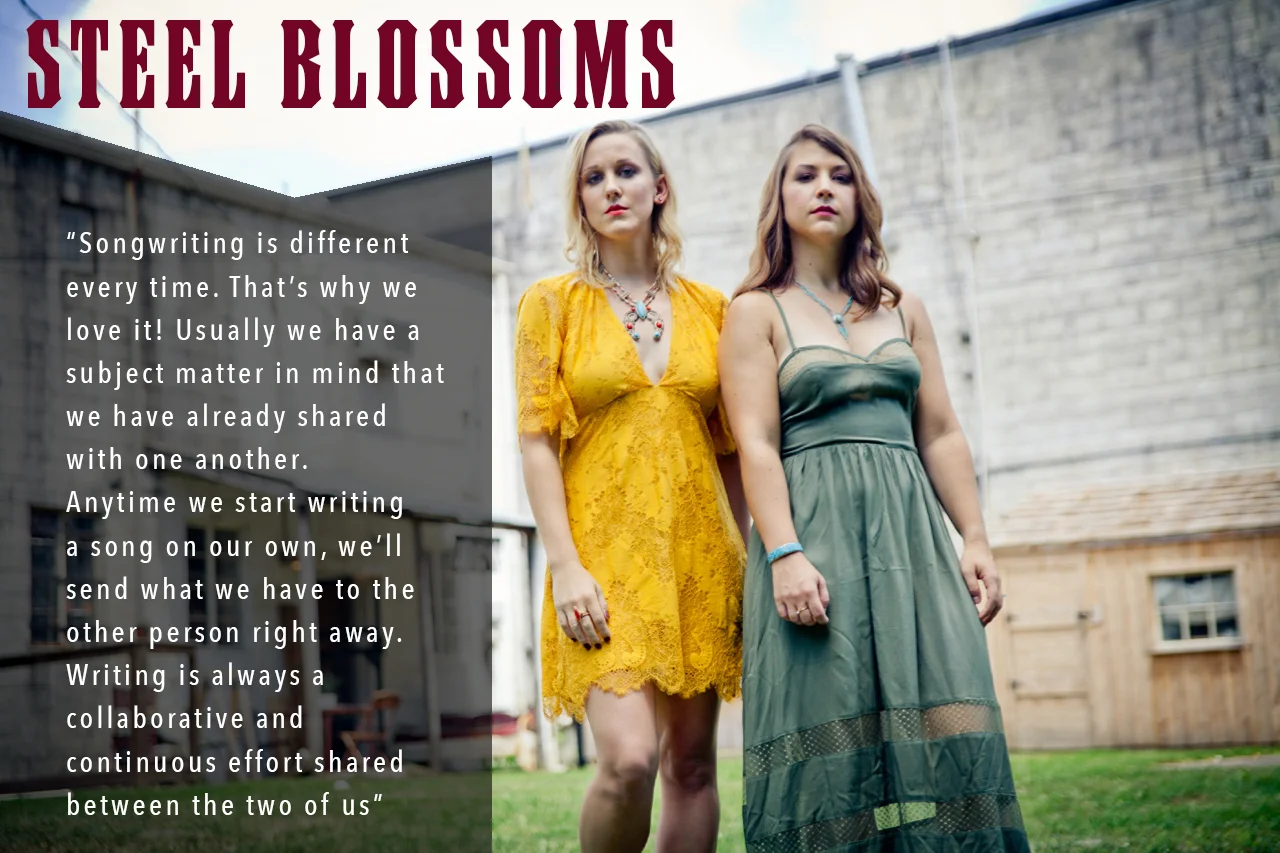
 

Boo Ray Interview

May 7, 2019 Stephen Averill
BooRay.jpg

It’s one thing having the songs and sound, and the flair to deliver them live. Not bad for starters, but hardly enough to shift units and fill venues, competing with the multitudes of artists ticking the same boxes.  The missing ingredients are old fashioned graft and energy. Enter Boo Ray. Not one to let the grass grow under his feet, the North Carolina born artist has the hallmarks of one in a constant state of motion, both in body and mind. Five albums under his belt, his fifth release Tennessee Alabama Fireworks is certainly a career highlight. Time to sit back, put the feet up and drool over the stirring industry reviews the album has earned?  Quite the contrary for Ray, who spends his time equally between Nashville, Los Angeles and Athens Georgia these days. It’s all about that ingrained work ethic of keeping the tap flowing and getting those songs out on the road and into people’s antennas. It’s often a long road to overnight success and Ray continues to travel that thoroughfare without ever looking over his shoulder.

Did your appreciation of music and its influences on your recording career as an artist evolve greatly while journeying from North Carolina to Georgia, The West Coast and eventually to Nashville? 

Yes absolutely, each geographical move led to immersion in the music and music history of the region. In Georgia, I got to soak up the mythology of the Macon scene by first-hand accounts from engineers and guys who were in the bands, and I became aware of producer Tom Dowd and his work in the genre. Extended runs and stays on the Gulf Coast were a big influence on me too. Something cool happens to a two-step when it travels south from Appalachia down to Louisiana, Lower Alabama and the Florida Panhandle. It gets a little bit relaxed and starts to swagger down there; Texas Hill Country and south of there too. In Los Angeles I discovered that the path I was on was well worn by the southern troubadours before me: Tom Petty, Jerry Reed, Don Felder, Gram Parsons, James Taylor, Sheryl Crow, and Lucinda Williams are all southern troubadours who went out to Los Angeles and found the phenomena of an indigenous sound of country music in Southern California. It embodies the spirit of the American pioneers who made the nearly impossible journey west and settled there, the first person playing a stringed instrument while they were standing in the rolling hills looking at the Pacific Ocean, the cowboy culture, Hollywood, the cowboy singers and the inseparable bond of movies and songs.   

Artists often refer to their creativity becoming unlocked and heightened by relocating to Nashville. Was this your experience?

Yes absolutely. The bar's high as hell in Nashville. It's definitely the centre of the guitar universe and probably the biggest pile of songwriters in one spot. Then there's the entire production world of top-notch engineers, great producers, legendary studios, and musicians of all kinds. It takes a minute but you find your kind and navigate. Before relocating I'd been traveling to and working in Nashville as a songwriter for a few years, written Bad News Travels Fast with Colin Linden and written Six Weeks In A Motel, so I had a little bit of information. I was already 100% committed and set on the mission of building a catalogue of real, useable, high-quality songs that I can make a living with as a troubadour, and being in Nashville I can stay immersed in the nuts and bolts of that mission continually building my catalogue. I've done 3 co-writes this week with an outstanding guitar player/singer/songwriter named Mike Mizwinski who's new to Nashville from Pennsylvania and the NYC scene. Mike and I've got Appalachia in common and have been writing about the big brick buildings cast against the mountains and mouths of rivers. My buddy, guitar virtuoso Guthrie Trapp and I surmised the other night like a couple of crows, that Nashville right now might be the greatest convergence of musical talent ever in the world. Including Venice in the late 1700's, ha-ha!   

East Nashville is generating non-commercial music by exceptional artists of a greater quality than ever. Unfortunately, the pickings seem continually to be meagre and unsustainable in terms of survival for many. How do you come to terms and attempt to overcome this?

I think what you’re talking about is the incredibly high degree of difficulty of being an independent musician anywhere in this country right now. The Texas and Red Dirt guys who're often treated like red-headed step-kids by the East Nashville clique clearly illustrate that if you have a catalogue of songs and a live show that can be realistically booked at blue-collar events like state fairs, car shows, biker rallies, rodeos, and corporate events, then you can offset some of the income that's barely there anymore. I think some of the retro/recreation type country acts could have some of that income too. Barter, trade, partnerships, and being willing to mine the silver has been essential for me. I've been working with Olathe Boot Company since 2010, I've got a western shirt line with H Bar C Ranchwear, I'm working with other independent artists like painter James Willis, Chef Sean Brock, photographer Price Harrison, and boutique companies like Vinyl Ranch, Kindercore Vinyl Manufacturing and Soundly Music.    

Is a part-time career a realistic option for artists or are you horrified by the prospect?

In my answer to the previous question, there might be a few different part-time careers outlined beyond singer/songwriter.  It's all just an unbelievable damned hustle and scarp these days. Maybe akin to the kind of hustle Ralph Stanley and them encountered when they played baseball games to solicit audience attendees for their show that night. I did a few thousand dollars’ worth of leather work over the holidays to get by and I've got my forklift license in my pocket right now if I need it.

You, like so many other artists appeared on The Billy Block Show in Nashville. Is there any suchlike outlets available in Nashville at present for artists like yourself? 

Billy Block was a wonderful and generous talent who shined like a crown jewel in Nashville. Derek Hoke's $2 Dollar Tuesday is an excellent ongoing songwriter series that carries that same intelligent, kind Nashville hospitality and quality.

Bad New Travels was your first album to get labelled Americana and the attendant exposure. Was that noticeably valuable to your career?

Absolutely. SiriusXM Outlaw Country picking me up in 2010 is one of the most important things that's happened for me.

A number of decades back your sound would be simply classified as rock and would get any amount of music press coverage and radio play. The Americana canopy continues to widen and embrace many sub-genres. Has it been generally helpful to your career in terms of exposure or is it smothering artists like yourself?

In 2010 I was able to release Bad News Travels Fast officially to Americana radio out of a halfway house for the cost of CD's, printing one sheets, Moonpies & postage. I've since had 2 Top 40 records Six Weeks In A  Motel and Sea Of Lights. Each package got a Moonpie. That's still theoretically possible today though the format has now become dominated by major labels and major Indies.   

 Your most recent release Tennessee Alabama Fireworks is a great listen, being enjoyed by us all at Lonesome Highway. In personal satisfaction terms, how does it rate with your back catalogue? 

Thank you a ton, I'm real glad you dig it. This album is a result of a series of decisions over a period of years that was defined during the recording of the previous album. Producer Noah Shain, told me while we were recording Sea Of Lights with Steve Ferrone and an amazing all-star band, "When we record the next album in 12 months, I want you to make the playing you're doing with your East Nashville band so important that I'll have to record you guys." With the benefit of executing a plan over a period of time to develop a sound, this new album is the most fully realized and best album of mine yet. The songs are passing the acid test and proving to be great live and the production of the album continues to be interesting to me. This batch of songs, the band performances, Noah Shain's production and mix, Pete Lyman's mastering, James Willis's album cover painting, Price Harrison's photography and art direction, Kindercore's amazing expert manufacturing, I think this is my best album yet.   

I believe A Tune You Can Whistle was the last song written just before the album was recorded. A breezy and instantly addictive sound which might mask the inherent social comment. Inspired by despondency and frustration by the worrying absence of empathy that surrounds us at present? 

"The worrying absence of empathy" Great writing! Yes, actually wrote that song on the 3rd night of the recording sessions and recorded it the next day. Not to go black on things, but it's just damned overwhelming and hard to believe, isn't it? Mike Judge's "Idiocracy" plays like a five-card flush right now, doesn't it? And I'm not an outside lookin' in guy either you know. I'm struggling to try to figure out how to respond to this crazy-ass world. There are a few things that I thought we really had in the damned bag, and I considered completely figured out and known around the globe as standard operating procedure for all civilized nations. Separation Of Church And State, Separation Of Business And State, Roe vs Wade, Civil Rights. Shoot man, I thought that Gospel and considered to be sacred advances in our humanity.  

It also features the album title in the lyrics. Tell me the story behind that? 

There was this huge sign for a fireworks superstore called "Tennessee Alabama Fireworks on the side of Interstate 24 between Chattanooga and Nashville. You'd come around this bend right as you began to climb the Cumberland Plateau and this enormous sign appeared like a southern gothic effigy carved in the hillside. Maybe it was kind of like Middle Tennessee's Mt Rushmore. Anyone who's driven past the "TAF" sign on I-24W can attest to the southern gothic nature of it. The other day this writer tried to compare the "TAF" sign to the "south of the border fireworks" sign near the NC/SC line and completely missed the subtlety, significance and context of the "TAF" sign for being distinguishable as a uniquely regional phenomena because the sign celebrated its location by name, giving it a literate title connected to its literal location with a lyrical phonetic sensibility. To not recognize that difference is to not understand the importance of phonetic in the name Huckleberry, or miss the entire point, style, and wit of Minnie Pearl's hat with the price tag hanging off the side, or to not understand the fellowship of humour and swagger embodied in a Nudie suit, or not know the difference between Harry Crews and Malcolm Lowry. In culinary terms, it'd equate to not being able to tell the difference between country ham and speck, or zipper peas and black-eyed peas, or chicken wings and chicken Versailles. But I digress. The "TAF" sign was a fun landmark and cool regional culture oddity that bordered just on the brash marketing side of folk-art, as does much of the visual imagery created in and around some of my favourite country music of the 60s and 70s by artists like Don Williams, Eddie Rabbit, JJ Cale, and Jerry Reed.    

You brought producer Noah Shain back on board for the album, having worked previously with him.  He has a reputation for not ‘overcooking’ in the studio. Did you have a particular sound and mix in mind getting him on board?

Yes, Noah and I planned the approach and sound of this new album while we were recording the previous record. Like you said, Noah's known for that great intersection of classic vintage top end and contemporary hard hittin' bottom end. So, we knew we weren't going to follow any hipster trends of records- no ass on 'em, you know? Our approach is experimental and our aim is a dramatic sonic experience as the setting for the songs.     

You brought Noah to Welcome To 1979 Studio in Nashville, rather than record in his studio in Los Angeles. Logistics or did that hometown studio had a particular appeal?

Both, and Noah's the one who wanted to record at '79. Since we were recording my East Nashville band it was more efficient to bring Noah to us. And Paul Ill came in from Los Angeles to play bass. But '79s an excellent studio with a warm utilitarian vibe that makes for a great creative environment that has the ability to record the performances in the best way possible...

I get the impression of Boo Ray as an individual that does not believe in downtime! I believe the album was completed in five days?

Yeah, we considered five days a luxury. The previous album was done in two days. 

 The album is packed with big songs that draw the listener in, hook, line, and sinker. Gone Back To Georgia has an absorbing melody and a killer video on You Tube to accompany it. I loved the film noir connotations and half expected a gruesome and bloody finale. Fun to make?

Thanks, that one's a keeper, right? Yeah, it was a bunch fun shooting that video. I dig production and love noir too. Unfortunately, we didn't have any fake blood for the big finale! Ha!   

Filmed at Bettys Bar & Grill I see. A genuine dive bar, I love it. Do you gig there?

Yeah, I love Betty's too. My buddies Patrick Sweeney and McKinley James have an ongoing Monday blues night at Betty's.  

Are there, in fact, many opportunities for you to get gigs in Nashville or is that a case of preaching to the converted rather than wider exposure?

We might play Nashville once or twice a month at Martin's BBQ and a few times a year at The 5 Spot and a couple of times a year at 3rd And Lindsley. As far as getting the work done of growing an audience though, we're out of town in a 9-hour radius Thursday through Sunday as much as possible. 

 Back to the album. Were the bulk of the remaining songs written and tested while on tour?

Yes, in bits and pieces I tried out different beats and different movements as I was writing the album. 

Music and its offshoots appear to be a way of life to you, not merely a career. Much more than simply a recording and touring artist, you seem to be passionate about continuity in both musical and fashion terms. Keeping the flag flying for authentic country, blues, and soul against the tide of mediocracy flooding the market. Do you feel it’s possible to stem that flow? 

As standoffish as I am of platitudes, my friend Aaron Lee Tasjan's song rings true here; "Success ain't about being better than everyone else It's about being better than your self," and he continues digging in, fighting the good fight, writing and singing real songs. And no, I don't think there's any way to stem that flow. I think there are still a few spots left in the classic American songbook and I'm aiming at that. And I know that "drug" reference songs are low blows, but I'll write one if I ever happen to come across it naturally. I think all my songs might be drinking songs though.  

Diligence and zeal seem to keep you in top gear, constantly on tour or recording.  Are you recording to tour or touring to record and which gives you the greatest buzz? 

Cool question. I see them as two different interconnected and interdependent endeavours, maybe akin to laboratory work and fieldwork. I write the songs as blueprints for the studio environment and consider the studio to be the "casting" process or the "photographing"/"filming" of the work, or the documentation. Once it's mixed and mastered on a record I consider that document to be the blueprint for the live performance piece that's then interoperated, arranged for live performance with alternate intros, extended outros, extended solos, dynamic changes, and/or breakdowns, and integrated into the show.  It's a little bit of circular process.  

 And ‘after tour’ chill out methods. What do you recommend or is there such a thing? 

Most recently I'm becoming more and more interested in "unplugging" and not being engaged in digital communication, using Google, social media or digital screen. I think I've discovered that being "logged in" compromises/interrupts/interferes with my natural ability to hold, work with, observe, and manipulate the long form narrative. 

 Jerry Reed appears to be an artist much admired by you.  Was the regard strictly based on his musical output or his versatility across the arts?

I was a fan of Snowman way before I knew Jerry Reed was the coolest picker to ever come to Nashville. The joy of his songs and performances are what strikes me. He's not singing about social order but you know without any shadow of a doubt that Jerry Reed stood for equality among all me and women, of all races, religions, and sexual orientations. I've heard from numerous first-hand reports that he was the real deal; kind, sincere, humble, full of himself, ornery, had a vocabulary that was not PG and was extremely funny and generous. 

Legendary as Merle Haggard is, do you feel history somewhat unfairly overshadows Reed’s output in favour of Merle?

 Aw shoot man, I wouldn't presume to know such a thing or have the expertise to split such hairs. I admire them both so much. Hagg and Reed mean the world to me. I think I got my taste in hats and contemporary writing from 'em.     

Finally, you’ve recorded a couple of duets with both Elizabeth Cook and Lilly Winwood. Any intentions for further recordings along those lines? 

Yes, thanks for asking! Those are part of a 7" vinyl collaboration series called "Boocoo Amigos". My buddy Chef Sean Brock and I wrote and recorded A and B-side singles called Saint Mis Behaving and Soul Food Cookin’. There are some exciting collabs currently in the works.Great questions! Thanks for taking the time!

 Interview by Declan Culliton


Talking Delines (1). Interview with Willy Vlautin

April 30, 2019 Stephen Averill
willy_interviewIntro.jpg

Richmond Fontaine were playing at Whelan’s inDublin for the first time. It was after the soundcheck that I first met their frontmanWilly Vlautin. He is someone who is interested in meetingpeople and as such more likely to want to have a casualdialogue than in doing an actual interview. He is quick to laugh and engage and is profoundly modest about his own talent as a singer/songwriter and guitarist (at that stage he was an unpublished author). He has faced and overcome his seemingly crippling shyness to function as a recognised literary and musical talent. 

At that first meeting I gave him a copy of a book by Pat Ingolsby, the Irish self-published street poet.  He became a fan and on a subsequent visit wanted to go and meet Pat on the street - such was his interest in talking with another writer. We got to continue our ongoing conversation prior to his recent performance with The Delines in Liberty Hall. 

Has the wait to finish and release the new Delines album (The Imperial) been a difficult time for you?

We did three quarters of the record and then we took a break because Richmond Fontaine was doing a tour. We were on the road when we got the call that Amy had been hit by a car while walking on the sidewalk in a car park. That started two and half years of hell for her because she was so beat up. The first time she could walk she was brave enough to get on a plane and fly up to Portland so that we could finish the record. She could barely walk up any steps or even get in or out of a car. 

It was really fun for us just to get to see her and that at the end of it she could get back to being her. We had all missed her as a friend and had put on the back burner the idea of the band. Obviously, I wanted it to continue and I loved being in the band with her, but we just wanted her to her alright.

But she kept fighting and getting a bit better and as she still wanted to be in the band. That was exciting for us and she has been improving. We were going to put the record out earlier, but she just wasn’t strong enough, but she has started to turn the corner and we have been moving on ever since. It’s exciting to be in this band and that people are liking the record is seriously a big relief for me. You’re always going worry that nobody’s going to care. 

How difficult is it writing for someone else to sing?

It’s a relief in that it’s like taking handcuffs off as I couldn’t sing the songs that Amy’s singing. If I wrote for my voice that would be a problem as I’ve always struggled with confidence, so I wasn’t writing outside things that I felt comfortable singing about personally. But now I just wanted to write the best songs I can. Classically orientated songs that would work for her. That is really fun for me. I can write bigger songs because she can pull it off. I couldn’t as I wouldn’t have the guts. He Don’t Burn For Me or The Imperial are the kind of songs that I wouldn’t have written if it wasn’t for her. I couldn’t sing them.

Is it a different discipline writing the books as distinct from the songwriting?

Writing the books and being in the band are hard because the writing takes up so much time. We’re a Mom and Pop outfit so it takes a lot of grunt work. But with writing for Amy means she can say that she is not comfortable singing a certain song so I can say okay I’ll write another one. I want to write songs that she can get behind, that she feels a part of. So, it’s like pulling a chapter out, it’s not that big a deal. You get depressed about if for a couple of hours then you move on. I think about her voice all the time and what I think she can get behind, but I don’t get hung up on the fact that I’m writing for somebody else. I love hearing Amy sing. In the van today she was goofing on Sade’s Smooth Operator and I buy into that voice. It’s a lucky break for me.

Has not being the frontman changed things for you?

Oh fuck, yeah man! I never liked being the front guy. When you’re sixteen and you’re the guy that writes and comes to practice with songs and you ask someone to sing and their like “No way man, I’m not singing” so you have to step up as you know the songs as you wrote them. I could barely go to school at sixteen as I was so shy. So, all of a sudden, I’m getting drunk so that I could go onstage. I did that for 30 some odd years. I never got comfortable with it. The guys in Richmond Fontaine, we got to have some adventures and we got to play some cool gigs and have some fun. I felt so guilty that in the first seven years nothing happened, but we didn’t quit. So, I felt that I always owed them and now I feel, not that I played them back, because I haven’t but I felt that it wasn’t a disaster either and I gave them a nice run. At that time only one of us had a passport but then we got to go to some cool places. So, I felt a little better about myself and so I thought maybe I can sing. I admired the guys in Fontaine so I always wanted to show up with a Cadillac and a big cheque just to pay them back for sticking with me - but I never could. But we were still friends and we still liked going out for a drink after the gigs and we still had fun times after twenty years together. So yeah, I like being in the back. I’m having the most fun I ever had playing.

Did the move the guitar rather than being lead singer and guitarist effect your guitar playing?

Well, I’m not a very good guitar player so I think that I’ll work on my guitar playing after I finish a song but it’s a bit like working out, so I say, ‘I’ll do that next week.’ So, I worry more about my guitar playing but luckily this is a band that is meant more for space in the songs. So, I don’t need to show off too much. I’ve always been a fan of serving the song and that’s maybe because I’m a songwriter. So, I always want a song to be good whatever way that that happens. Having said that I’m in a band with some real musicians, Freddy, Cory and Sean are real hot shot session kind of guys, so I just don’t want them to beat up on me too much. So, I try to learn my parts and not fuck up!

Amongst all this band activity how is the book writing coming along?

I have two books that are pretty rough, so I’m trying to see which one is fixable. But as I said the band takes up time as does the writing so my output will slow down until I get off the road as I’m sharing a room with someone when we are touring so I can’t write. I’m also quite tired and I’m trying to figure out the next place, so that the writing takes a back seat. You’re more worried about getting something to eat. So, I do most of my writing at home.

I love writing novels and I’m lucky enough that I get to publish them, and I’ve always liked writing the songs too.

With your writing can you also experiment with that? In The Free for instance there was some sections that were more surrealistic in some ways. 

That was really just for that guy in the book. My interest in that was to take this cool kid who gets sent by the US government to Iraq for reasons that he doesn’t understand. As Willie Nelson once said “99% of us never find the right person, that’s why there are so many sad songs.” But the character in the book had found the right woman and he was a happy guy with a good job as an electrician and he’s sent over there and comes back with a brain he can’t control, one that sees darkness and the harder things in life. He can’t escape that. It’s a brain injury - they called the Iraq war “the brain injury war.” I was interested in that so and I’ve always been interested in working class issues and working people. Mainly because I don’t know any different. Growing up I always wanted to read novels about the kind of people I saw around me. I never felt comfort from reading books about people in New York City or middle or upper middle-class people. I just felt like a loser reading those books. I didn’t want to feel that way. My novels will probably stay in the working class until I get gold teeth and making some big money!

You have had two novels made into movies and I felt that Lean On Pete got closest to the mood feeling of the book.

That was a fun experience. The director Andrew Haigh was such a nice person to me. He genuinely cared about the story and he had a lot more to lose than I did. I felt that he really tried and was an experience that I learned a lot from it. About just how to be a person as he was just a really cool guy … and I got to meet Steve Buscemi.

From what you learned would you like to get involved in writing screenplays?

No, I’m not tough enough to get involved with arguing with some kid about why I wrote a story maybe five years ago. So, I don’t really have any interest in it. Messing around in the past I have written screenplays, as I’m much more in love with the novel. With the novel you’re the king and you can put the novel out and not have to argue with some young producer. I got in an argument once about my novel The Motel Life. The guy seemed really nice and he paid me but was questioning “why does the one brother have to die. Can’t he be in a coma and wake up?” But he’s the guy paying you, so it puts you in a funny situation. So, I’d rather just stay home and write novels. Plus, as I said, I believe in the novel. A guy like Larry Brown, out of Oxford, Mississippi, made me feel normal and more comfortable in my own skin. It makes you feel less lonely when you read novels written by people, not necessarily normal people, that you can understand. 

Songwriting can serve a similar function.

The interesting thing about music is if you listen to something like Irving Berlin or those old Bing Crosby tunes, they can on some days be the most beautiful things. I wish I could write fiction like that - but I can’t. I have tried to do it. I was thinking about Amália Rodriques, the Fado singer, because you can listen to her and some days you will be transported and you can feel so much better about life. You can be walking down the street and listening and suddenly you’re in heaven. I wish I could do that, with my books especially. I’m too dark minded, I think. It would be nice to create that world once.

Having met you on several occasions I don’t really see that dark side - in conversation anyway. Perhaps in the writing though there is a tendency towards that.

I don’t want to bother anybody with that stuff. I like people. I don’t want to be a burden, or ever wanted to be one to anybody. So, by writing about the darker side of yourself, your own struggles and your own scars … at an early age I didn’t know what to do, so I just started to write stories and sometimes it’s just a sad story. In my newest book The Horse Hopper, I write about a kid going through a really rough time and you are really helping that character out because he’s not alone and you’re not alone. You get to have that friend when you’re going through a hard time. And, crazily, even if its imaginary I can get to be nice to the people around me. I might put someone through something that’s pretty tough, but I feel like I’m holding their hand through it. That takes the edge off me. The hope is that if you write it right that someone who may be feeling the same way that you feel - isolation or loneliness - they can think the there’s someone else that feels that way too. You hear that song and you think “Jesus, I’m not a freak.” Early on I planted my flag with being a musician even though I’m too shy to be one. And, as a writer, I’m not that gifted with language. It was more out of being a fan as with anything else is the reason I did it. You love records so much because they let you escape. It’s so lucky for kids today because they have their record collection with them walking down the street. I remember knowing that my songs would be waiting for me at home. Willie Nelson would be there to say “hi” to me. That was great gift for me. I got into a band as you can’t eat records and it doesn’t help you to hold them. So, you join up to show that even if you might suck at it and least, I’m in the same world a Husker Du and Willie Nelson. You’re a part of it then. That felt better to me than just being a guy who worked in a warehouse.

Do you think were you might have ended up if you hadn’t made that step to be in a band?

I think I would have been a mid-level manager in some warehouse or trucking company. Being so shy I could barely even go to the fuckin’ store. Being in a band cured me of that shit as number one you are with your friends and number two you get to humiliate yourself every night. I used to use drink as a crutch until Fontaine played a gig when I guess I was pushing 30 and no one liked us really, but we had some fans. This guy had driven 9 hours from California to Portland to see us, a working class 23-year-old kid, and I played really drunk and played bad. He was really nice but said “you were so drunk I couldn’t understand what you were saying.” We got to talk, and he said that he was going to sleep in his car for a couple of hours then drive back to work the next day. I was so ashamed of myself that I didn’t want to be that guy anymore. I didn’t want to be the Replacements guy. I’d spent all my money to go and see them and they just fell around the place. I mean that guy had driven 16 hours to see us so after that I thought you either quit or get can a handle on it. So, I started every gig sober - though I may not have ended it that way. 

The things is with being shy, and it is a burden, it will beat you if you let it. It’s one of those games that never quits and It will always take advantage if you. Playing gigs has been my ability to stand up to it so I can push it back in its place. You become a recluse because it becomes hard to go to the post office or you can only go to the grocery 10 minutes before it closes. Or you go Sunday night when no one is in there!

 Interview and photograph of Willy by Stephen Rapid

Talking Delines (2). Interview with Amy Boone

April 30, 2019 Stephen Averill
AmyBooneIntro.jpg

Colfax Avenue, the debut album by The Delines, was a breath of fresh air when it arrived back in 2014. The combination of Willy Vlautin’s unparallel story writing, delivered in a laid back and unhurried manner by vocalist Amy Boone, seemed the ultimate pairing. A limited CD, Scenic Sessions followed, only available from their website or at the merch desk during their 2015 tour. Work had commenced on their next album when an horrific accident in 2016 left Boone with two severely fractured legs that required multiple procedures. Fortunately, she recovered sufficiently for the album to be completed and, earlier this year, to embark of a U.K. / Ireland tour, which was a resounding success, playing to sold out venues. Lonesome Highway caught up with Amy at the end of the tour to hear her story.

I am aware that your sister Deborah Kelly provided backing vocals on Richmond Fontaine’s breakthrough album Post To Wire. I’m interested in hearing how your relationship with Willy Vlautin developed?

Richmond Fontaine and The Damnations did a West Coast tour together and that’s when I first met Willy and Sean. Deborah sang on The High Country record but couldn’t tour when it was released because she was pregnant, so Willy asked me to go. When we got back, he sent me a letter along with a recording of five songs, with just him on acoustic guitar. I still have the letter. It was really sweet the way he gave me an “out” in case I wasn’t interested. Out of that batch of songs I picked Oil Rigs, Colfax,” and Stateline. They were the songs that jumped out at me right away. I flew up to Portland from Austin for a rehearsal and met Jenny and Freddy for the first time. When we recorded Colfax, The Delines had never played a gig together.

The Damnations TX, with yourself and your sister providing girl-girl harmony vocals, are probably closer in style to early Richmond Fontaine than The Delines. Had you anticipated back in your Damnation days that you’d be singing lead in a band with comparisons to Bobby Gentry and Dusty Springfield?

I always loved both of those singers, but we were a loud bar band so in order to get above the amps I had to scream. My style of singing was so different back then.The Delines are very aware of dynamics and taking our time to set the mood for the story.  The hardest thing for me was to not rush the phrasing, to take my time.I had to develop a whole new approach to singing and on stage, I didn’t have my bass to hide behind. I had no idea what to do with my hands or how to just stand there.

Tell us about your musical background and influences prior to The Damnations?

There are so many different styles of music out there that I love, I wouldn’t know where to begin. I love a lot of the Stax recordings and the music coming out of Nashville in the 70’s. I love the clever language in some of the old country songs, Ray Charles, Chopin Nocturnes, Billy Holiday, classic rock, X, the list is huge.

Willy (Vlautin) has repeatably stated how uncomfortable he often is as a band leader - notwithstanding the regard that Richmond Fontaine were held – and more comfortable writing than performing. Colfax, the debut Delines album, was essentially written for you to communicate. Flattering?

 In the letter I mentioned earlier, Willy said that he wrote these songs for me to sing, flattering is an understatement, I was blown away. He has always said the nicest things; his encouragement makes me want to do my best.

I naively expected Colfax to be a one-off album with Willy moving on the other challenges after its release. If anything, The Imperial sounds even better as if you’ve all managed to perfect the country soul vibe visited on Colfax. Have you plans to complete a hat trick of albums and beyond?

 We talk all the time about the next 10 records we want to make! I don’t want it to end.

I believe you had already began working on The Imperial prior to your horrendous accident? 

Yes, that right… 

I can only imagine the trauma and pain involved in your recovery and a dozen procedures. Setting aside the enormous physical trauma how did you deal with the whole episode mentally?

 I was a mess but so many wonderful people helped me through. I had no idea what touring again was going to be like. I didn’t want to be having panic attacks in the van or on stage. I didn’t know what I was physically or mentally capable of, but this last tour was amazing. I could feel the support from the crowd and the band.

Was your musical career and an ambition to get back on stage even a consideration during this period?

Yes, The Imperial was a record we were all proud of and to not finish it would have been a shame. I was so relieved that the band was willing to wait for me. No one ever pressured me to do anything until I was ready. I love them for that.

Some concerts are magical, leaving the listener on a high for days. I know I speak for many when I include The Delines show at Liberty Hall Theatre Dublin in January, as one of those occasions.  There was something special about it, everything just appeared to flow perfectly, it reminded me of a homecoming celebration, the setting, the sound, the playing and your vocal delivery. Have good did it feel to be back on stage playing to adoring audiences?

 Wow, what a great way to describe that evening, it was so special. I walked out on stage and someone yelled “welcome back Amy, we love you” and it ended with a standing ovation. None of us will forget that night!

I recall you appearing on stage with Richmond Fontaine when they toured The High Country back in 2011 and how apprehensive you first appeared on stage. Watching you perform so confidently and relaxed that night with The Delines was a transformation. Has your struggles and recovery over the past few years changed your perspective as a performing artist? 

The High Country tour was fun, but I was really nervous about being the new person in the band and not wanting to mess up, plus I’m not Deborah.  I was worried that the R.F. fans wouldn’t like me. These past few years have changed me. I realized I’m stronger than I thought and I’m tired of being afraid. I reallywanted to feel at ease on stage, I wanted to enjoy it, soak it up, interact with people. 

You’ve now completed a gruelling tour with shows across the U.K. and hardly a free night. How do you feel mentally and physically, now that it’s behind you?

I feel really happy about our tour, and excited about the band. I didn’t know what I was capable of, but I threw myself out there anyway and it feels really satisfying. It helps to be in a band with four of the coolest people around.

Are The Damnations TX history at this stage or can we expect to see yourself and Deborah recording again and rocking out front with the band?

The Damnations share a house and we are family, we never broke up. I have every intention of making another Damnations record, maybe Deb’s son will play on the record also, after all he’s the kid who got me my job.

Either way we can look forward to seeing you back in Ireland performing at Kilkenny Roots Festival in May.

Can’t wait and thank you for writing about our band.

Interview by Declan Culliton

Ruarri Joseph (of William the Conqueror) Interview

April 19, 2019 Stephen Averill
WilliamtheConquerorIntro.jpg

UK three-piece William The Conqueror’s latest album release Bleeding On TheSoundtrackcaptures the dynamics of their incendiary live shows to perfection. Being simply labelled as an Americanaact hardly does the band justice as they extend way beyond that classification with their fusion of folk, blues and good old-fashioned rock. Produced by Ethan Johns, their second album should uncover their collective talents to a wider audience and gain them the exposure they richly deserve. Lonesome Highway spoke with leadman Ruarri Joseph in advance of their sell out shows at Kilkenny Roots Festival in May. 

In the first instance, can I congratulate you on your recent release Bleeding On The Soundtrack. It’s a breath of fresh in an often over analysed recording industry. A blistering rock album, no more and no less?

Ta very much!

Your decision to abandon your more alt-folk solo career must have been a tricky ask, given that you had built a core following and had Atlantic Records on board?

Only tricky in so much as it was like quitting my job to take a leap of faith.  Artistically I felt I didn’t have a choice really.  I’d written myself into an alt-folk corner I had no interest in occupying.

The formation of William The Conqueror has also allowed your band mates Harry Harding and Naomi Holmes to ‘cut loose’.  They were also on board during your solo career. Is the dynamic stronger now as a formal band collective?

The band dynamic means we’re all intertwined to the project in a new way.  But our chemistry and friendship has always been strong.

They are both exceptionally talented players, where did you all initially hook up?

In and around the Cornish music scene, I guess. Harry I met at a recording project for a mutual friend.  Naomi was in a band with Harry and I met her coz she was living with Harry at the time. Small world in Cornwall.  We jammed a couple of times and it was clear we had something pretty cool. 

Having witnessed the band perform on a number of occasions over the past three years, I sense a growing confidence and togetherness in each successive performance. A well-oiled machine at this stage?

Thanks.  We don’t rehearse actually so not well oiled, just reliable. Like a Volvo.

The songwriting credits are all Ruarri Joseph. Are the arrangements also you own or do the others contribute?

I did a lot of arranging because of circumstance at the start but we discovered one of the best ways of working was for me to put demos together that we could learn and gig immediately.  Then the gigs would refine the arrangements organically over time.

Bleeding On The Soundtrack and its predecessor Proud Disturber Of The Peace, both replicate your live sound. Was there ever a temptation to flesh out the sound with overdubs or tracking?

We do from time to time and we’re certainly not closed to it.  PDOTP had some brass and some overdubs but BOTS was written with the intention of being just the three of us for the bulk.  Having said that, there’s some strings and keys on it.  It’s about whatever feels right at the time I suppose.

Were the songs all written after the release of Proud Disturber Of The Peace or were there some that didn’t make the cut or were considered unsuitable for that album?

Most of the songs were written back to back with the first album, but obviously new ideas pop up and get integrated as and when. The idea from the start was to have all three albums in a gig-able state so we can call upon them live and figure things out together.

The new album was a collection of songs that you had performed live and subsequently recorded. Did the same method apply to the previous album, were they acid tested in your live shows to get a feel for how they might work in the studio?

Acid tested indeed.  It’s by far the best way to figure a song out.  

Tell me about Ethan Johns coming on board to produce the album. He most certainly nailed the production, defining exactly who you are as a band. Was he supportive of recreating your live sound rather than adding any bells and whistles?

He insisted.  It was us trying to add things and him helping us believe in what we did. He’s a musician and performer first, so he knows when you’re being genuine and when you’re holding back or pushing too much.  It was a real honour to have worked with him.  

I believe the album was laid down in one take. Was this the challenge going in to the studio?

Some of it was, but no it wasn’t our intention. That’s Ethan setting the tone and making you feel so comfortable that you play at your best right from the get go. Then Dom (Monks, engineer) had miked things up without us knowing and was catching everything we did.  The first takes were often the ones that we didn’t know were being recorded and so weren’t overthinking.

I’m sensing a lot of different directions on the album outside the obvious, including New York Punk, Dr. Feelgood bass lines and harmonica riffs to name but two. Had you got particular artists or albums in mind heading into the studio?

Not really.  Obviously you’re always influenced by the things you like but we try not to be conscious of it in the studio.

The artwork is most impressive also, who takes the credit for it?

Mysterious fellow called Cal Hoon.  I wish I could tell you more about him.

You’ve referred previously to the Herman Hesse three stages of human development, innocence, disillusionment and acceptance. Have you ticked all three boxes with the two albums or can we expect the trilogy to be completed?

Part three is written and we perform things from it from time to time.  We’ve every intention of completeing the trilogy.  Hopefully with Ethan again.

Artists often make reference to the cleansing effect of writing, a means of contending with skeletons in the closet, that have been parked and not correctly dealt with.  Has you’re writing, particularly on the WTC albums assisted in coming to terms with past issues? 

Hell yes!  I didn’t realise there was so much to deal with!  Three albums and a novel later…

Is there a temptation to experiment going forward and possibly tap into a wider audience? I could foresee a Kurt Vile/Adam Granduciel direction well within your potential, or is that straying in too wide a direction?

A wider audience would be good for many reasons but I don’t think it’s down to us changing direction.  We could do with a bit more luck maybe?

 You’ve often spoken about your father’s devotion to all things Dylan, and your exposure to his music from an early age. What does your father think of your change in direction from more acoustic to more a grungier sound? Supportive or raised eyebrows?

Well he didn’t call me Judas!

And the Dylan influenced album title, did that get family approval?

That was an accident!  My wife spotted it but actually it fits perfectly for many reasons.

Interview by Declan Culliton

Talking with Hayes Carll

April 9, 2019 Stephen Averill
HayesCarllIntro.jpg

“On some records more than others, I’m thinking about where I am at that given time. I feel like on my last two records in particular, my art has lined up with my life.’’Texan troubadour Hayes Carll is giving Lonesome Highway the low down on his recently released album titled What It Is, the sixth recording in a career that kicked off in 2002 with Flowers & Liquor. Much of that early career was spent on the road, constantly touring. More recent years have found him packing in fewer shows, trying to find a happy balance between the inevitable draw of the road and maintaining a stable domestic existence. “I’m still trying to figure that one out. The road is nowhere near as alluring as it once was, but I still appreciate parts of it and it’s still the best way I can find to make a living and promote a record. It’s a strange alchemy, having a home life while being in a different city every night. I haven’t mastered it yet.’’

Home life in recent years has been spent with his partner and fellow artist Allison Moorer, who co-produced the album with Carll’s long-time collaborator and musician Brad Jones. “Brad is an incredible musician who brings a lot of great ideas into the arrangements and has a very steadying presence in the studio. I like his curiosity and willingness to try anything.’’Moorer also co-wrote a number of songs on the album, including one of the standout tracks Jesus & Elvis, which recounts the story of a young man from Texas who lost his life in Vietnam. “I wrote that song with Allison and Matraca Berg and I thought it was fact, but now I’m not as sure. There is a bar in Austin I used to hang out at that had Christmas lights up year-round and nothing on the jukebox past 1968. The story I heard was that the owner had a son who had gone off to fight in Vietnam and she had promised she wouldn’t take the lights down until he came home.’’ Another co-write with Moorer is the opening track None ‘Ya. Laced with Carll’s caustic humour, it features an occasionally less than attentive partner. Hardly autobiographical? “No, it’s pretty close to the truth! It is about appreciating your partner and embracing being in a relationship.’’. Despite the head scratching and humour featured across that particular track, there is an ambience of a writer quite content and fulfilled with his lot as present. The song Beautiful Thingreads like a Valentine to Moorer and the closing track I Will Stay also breathes personal happiness. “I’m pretty happy at the moment, so I’m glad to hear that it came through in some of the songs.’’Equally, If I May Be So Bold doles out good advice given the increasing negativity at large these times. “It’s just a reminder to myself to live life. I get one shot and most of the limitations in front of me are ones I’ve put there. Whether it’s fear of judgement, or of making the wrong decision, or not believing in myself, I can get hung up on that and lose sight of the big picture. I don’t want to be a spectator in life as it goes by. It could end in forty years or it could end tomorrow, I want to make sure I participated.’’

 The album may include more personal material close to his heart than previous recordings, but never ignores current social and political issues, at a time when soundbites rather than mature conversation are the order of the day and empathy and wisdom are in short supply.  Tracks Times Like Theseand Wild Pointy Finger particularly come to mind. “I don’t know if it was inevitable but as I was writing for the record, these themes started showing themselves. The title, ‘What It Is’, refers to me trying to be present and engaged in my own life. The thought of ignoring what was happening in the world around me didn’t make me feel very engaged, so social and political commentary started to sneak in a bit.’’

Hayes has co-written with others for previous albums, none more so than on his 2016 recording Lovers and Leavers. Either way, the songs always have his personal stamp on them, regardless of his writing partners, suggesting that collaborating both draws the songs out of him and offers up different directions in which to take them. “Yes, both. There are songs that never would exist if I hadn’t had someone working with me, and songs that might have been developed but would have had a very different feel.’’

Feature articles and reviews regarding Carll invariably make reference to the influence of Guy Clark, Townes Van Zandt and more recently John Prine. Lofty compliments but does it also put some pressure on him as a writer?“At this point I just take it as a compliment, if I think about it at all. Those are three of the best writers of all time and it’s flattering to be mentioned in the same sentence. Having said that, I’ve always thought the Townes comparison was lazy. Flattering but lazy. I was massively influenced and inspired by Townes but I just don’t see near the connection with him in my work as I do with artists like Prine and Guy. That line is easier for me to trace.’’

Carll has recorded consistently strong albums, received the plaudits, toured the universe, got the Grammy nominations and had his material recorded by some household names. Looking back two decades, what would a twenty something Hayes Carll have to say about that? “If you had told me twenty years ago that I would have lived the life I have lived, and that I would be where I am right now, I would have been overjoyed. Hell, I’m pretty damn happy right now that it has worked out the way it has.’’

Written by Declan Culliton

Amber Cross Interview

April 2, 2019 Stephen Averill
Photograph by Barry Goyette

Photograph by Barry Goyette

There is an undisputed authenticity to the music of Amber Cross. Her style has developed instinctively from a young child singing gospel at church in small town Maine, through the liberation of her college years and eventually leading to the release of three albums. The word unique is often bandied about carelessly describing certain artists, but it hits the nail bang on centre when characterising her. If her most recent album Savage On The Downhill has passed you by, take my advice and search out a copy. Lonesome Highway spoke with Amber about the album and more, in advance of her tour dates in Ireland and the U.K. over the coming weeks.

I understand that you were born and raised in a rural town in Maine and that your father was a local pastor. Were hymns and gospel your first musical exposures and at what stage did you embrace music outside these confines?

The first 14 or so years of my life were spent almost solely listening to the music that was sung in our church, directly from a Baptist hymnal. I had little peeks into secular music every now and then. I was given a radio for my birthday when I was about 5 or 6 years old, but I was not permitted to turn the dial off 88.5, the Christian radio station. I used to hide under the covers in my bedroom and I clearly remember fearfully turning that little black knob and hearing my first country song Swinging by John Anderson. It stopped me flat. My mom also had an Anne Murray greatest hits cassette tape that she would play, and that album remains one of my favourites. Once in high school, I started to listen to what I wanted.  Access was limited though as there wasn't a music store for a hundred miles. I heard Tom Waits around that time and got deep into his work, where I would remain. When I was nineteen, I moved to New Mexico to go to college and wandered into a contra dance with a live string band. I'd never seen anything like it. Dancing was always forbidden and I'd never seen a fiddle before. The next week I went down to a pawn shop and bought one. I called home and had a lady in our church mail me a hymn book. I could not read music but those were the songs I knew so well. I soon found myself skipping classes and just sitting home picking out hymns on the fiddle. Friends I made through music were very generous with their time and I eagerly picked up the old-time tunes they taught me. Then I was handed two albums; the soundtrack to the movie Songcatcher and Tim O'Brien's Songs From The Mountain. Both those records changed my life. It was the music that made me feel whole. I heard Iris DeMent sing for the first time and took to learning a slew of ballads. She's been a big inspiration to me. Within months I dropped out of college and started traveling around, contra dancing and playing fiddle. I was completely obsessed, living out of my car, working here and there, always, always, chasing the music. Then I found myself in California in a song circle one night with a bunch of folk musicians. I was getting frustrated trying to sing with my fiddle. Someone handed me a guitar and showed me a few chords. I rarely pick up the fiddle now. It's just what lead me to my voice.

Did your introductions to other music categories turn you against the music of your childhood in any way? 

I would say, no. Though it surprises me that it didn’t in some way. Those old hymns are part of me and I never blamed them for anything, like I once did with other aspects of the church. I would say that my exposure to the greater world turned me against the church for a while. It took me some time to understand and accept why I had been so sheltered.

You moved from Maine to study in New Mexico, which must have seemed like relocating to another world entirely.  Was the change of address a particular culture shock both musically and environmentally?

It was a complete culture shock. I remember sitting in my first lecture hall at NMSU and recognizing that there were more people in that room than in the town I grew up in. A big one was the introduction to the local food. I had never seen an avocado before. I had no idea what an enchilada was. My first job was cooking at a day-care and one afternoon I was given the ingredients to make enchiladas. There was no one to answer my questions on how to make them so I just made something that looked like lasagne and the kids wouldn't touch it. Because I was so open to influence at that time, I would say the landscape has had a lasting effect on my writing. I fell in love with the deserts of the southwest. I always thought I would be back living there by now, but that just hasn’t been in the cards for me.

At what stage did you decide to pursue a career in music and what were the factors that led you down that path?

When I was living in the Bay Area of California, I had been pursuing music for some time but had not given myself fully to it. Then one night a friend took me into San Francisco to see John Prine at the Fillmore. I had never before heard his music. As we were driving home after the show, we were discussing how music was starting to shape my path. Call it strange but in that moment, I had an overwhelming surge of emotion that literally took my breath away. I knew right then that music was my calling.

Your vocal has been correctly described as sounding as if it had been plucked from an archival Smithsonian field recording. Is this a progression from your natural accent and articulation as a child or did you study formally as a vocalist?

My voice has developed naturally. I have never taken vocal lessons. When I first started singing in public, I was approached by numerous people advising me never to take lessons. I had no desire to study vocals and I am glad I took their advice. My vocal style came about from the music I was listening to and also just singing in a way that physically felt good, from deep in my chest. I don’t give it much thought at all.

Even with the financial pickings so meagre in the music industry these days, many artists speak of ‘needing’ rather than ‘wanting’ to continue writing and performing, the process being therapeutic and calming. Has this been your experience?

I have found that if I ever feel out of balance in my life then I need to ask myself how much time I am giving to writing and playing music. I always find that I am not spending enough time in the process, and that if I give more energy to it I will in turn feel more balanced.

Combining your devotion to the outdoor life while composing and singing seems like a throwback to yesteryear and a particularly refreshing coalescence at that. Are they two separate loves for you or do they overlap?

As writing puts me in balance so does being in nature. Being outdoors clears my mind so the songs can come easily. I feel more at home in nature than anywhere else. I spent a couple years living in northern California in a remote area. I spent far more time outside than I ever did inside. I did a lot of writing at that time and very little performing. The songs I wrote there are the ones that centre me most when I sing them. So, I’d say, yes, the two definitely overlap.

You’ve written previously of your attendance at the National Cowboy Poetry convention in Elko, Nevada and the immediate impact that the performance and music of Chuck Hawthorne made on you. What changes in direction both vocally and musically did the experience have?

I went to Elko to kind of get myself out there and see if I might find somehow find a producer. I was led through Chuck to Ray Bonneville, which landed me smack dab in Americana. On an off chance I met Gurf a month or so later and really liked him. I had no idea that he and Ray were such good friends. All these folks influenced the sound of the record. Vocally nothing really changed. Ray just took my voice as it was, pulled the songs he was most drawn to, and wrapped them rather simply in a way we both liked. However, I’d say one thing Ray encouraged me to do was sing a few of the songs a half step above where I would normally sing them. The slight push in the vocals - specifically I am thinking about Tracey Joe - added variation in the set. I pay attention to that now and try to recognize when I should push out of my comfort zone vocally.

The encounter resulted in Ray Bonneville producing your current album Savage On The Downhill.  What did Ray’s production bring to the album given that it was your third record?

Ray’s song selection impacted this album quite a bit. Ray is drawn to darker, more serious song material. I played twenty five or so songs for him when we began working together. He could have picked an entirely different set of songs and made a very different album. I’ve always been curious what that album might have sounded like.

Were all the songs written prior to hooking up with Bonneville or had they been a work in progress?

All the songs were written prior to meeting Ray but there were two songs - Tracey Joe and Savage - that we reworked together. I originally brought Tracy Joe to Ray looking for guidance. I had a strong melody and story but had way too many verses. I was so attached to the story that I couldn’t trim it down in a way I was satisfied. Ray helped to re-write parts of the song so that it was sung from the mother’s perspective and that helped solidify the song. I wrote a song called Cattle Trails that was selected to be recorded on this album. As we went deeper into the album project, Ray felt more and more like the song needed to be re-written. It took me a long time to come around to accepting the idea, but he was right. We wrote from two perspectives. We used imagery I brought forward from years I had spent encountering an elusive, wild boar. The animal had become legendary in my mind. He could never be captured. I had many close encounters with him and felt my heart in my throat on more than one occasion. But I could never pull the trigger as I was so awestruck by his beauty and size. We drew from the intensity of those encounters and paralleled the imagery with being trapped in an abusive relationship. The baggage you carry from a bad relationship can stalk you like a demon. The song is about finding your way out by turning the tables to victim stalking predator. 

How different was the writing and recording process by comparison with your previous albums, You Can Come In (2013) and My Kind Of Church (2014)?

In producing my first album I wanted to pay homage to the music and personal influences that had brought songwriting out of me. You Can Come Inwas an expression of the sound and community I was immersed in as an early songwriter.  My Kind of Church was recorded spontaneously at a festival. I actually had no idea that it was being recorded and that made it all the better, I think. Gospel music is dear to my heart and I had had the desire to record a gospel album for some time. We were pleasantly surprised when we heard the tracks so decided, why not? It captured the community feel we all value so much. What I wanted with the third album was a sound that felt more like me. I love the old-time sound but these songs seemed to ask for another flavour.  I had no idea how to give them that but knew that in working with the right producer, that sound would be discovered. I was at a point in my writing that I was less protective of my songs and more open to constructive criticism. Ray challenged me in ways that allowed me to grow and that was exactly what I was looking for.

I believe you did not have the opportunity to tour Savage On The Downhill when it was released in 2017?

No, unfortunately I did not tour beyond my home state. I returned from Austin, signed off on the final mixes and a week later found out I was pregnant. After talking to Ray, we decided it was best to delay the release of the album until the baby was born. I had this fantasy of being able to tour with an infant but that was a total illusion. The exhaustion was unreal. But I guess nothing could have prepared me more for this upcoming tour!

Your about to play a number of dates in Ireland and the U.K. Have you played over here previously and what are your expectations for the tour?

I have never travelled to Ireland or the U.K. before. Honestly, I am trying not to think about it too much because it is so exciting to be able to be doing this. It’s a dream I have held for quite some time and now it is only weeks away. 

Interview by Declan Culliton

Hadley McCall Thackston Interview

March 26, 2019 Stephen Averill
Photograph by Sus Bowers

Photograph by Sus Bowers

‘’Hadley McCall Thackston has created an album that sounds like a June Carter and Amy Winehouse collaboration, written and recorded in heaven and communicated through a young artist whose vocals and poetry pay homage to both of these legends’’. So said Lonesome Highway when reviewing the Wolfe Island resident’s self-titled debut album last year. We caught up with Hadley to get the background to one of our favourite albums of 2018. 

Firstly, tell me about your Irish connections?

Since I was little, I had this obsession about living in Ireland. I used to tell people I was living in the wrong country!  After finishing high school and after graduating, I got my au pair job lined up in Ireland in 2011.  After a year in Cork, I knew I would be told to leave eventually, so I applied to UCC and I got accepted to study Theatre there. At college I got to meet some musicians, I hadn’t been singing for years or song writing, so Ireland really brought music back into my life. 

What type of musicians did you encounter?

Two lads that lived in student lodgings. We became friends, they were amazing guitar players and we started jamming in student housing and said, ‘‘let’s write something’’. One of them would write melodies and I would write the lyrics, it was sort of indie pop stuff. When I moved back to The States, I didn’t have anyone to write melodies for me and had to sit down and see if I could do it myself. I tried, I’m a basic guitar player with the basic chords, but I did write. The first songs were crap, but eventually they came along, and I decided that I could do this myself and didn’t need anyone else. 

When you say the songs were crap, how do you know that, they could have been impressive to someone else’s ears?

(Laughs) The first one I wrote was trying to be like the artist Meghan Trainor, who wrote All AboutThat Bass, about the empowerment of women. I was so angry at the time that I wrote a song calledICould But I Won’t. It wasn’t very good, but at least I knew I could hear a melody in my head and translate that. Many of my early songs are on the record so maybe they weren’t all crap! 

Would you test those songs on others or just form your own opinion?

At first, I wouldn’t play them for anyone else, I was so nervous. Then Wyeth Wood, a childhood friend of mine, asked me to play them for her. At that time, I didn’t know if a wanted to do Theatre or Music, but had to do one or the other. My friend told me I really should do music, so I decided to put a hundred percent attention into Music and put Theatre on the back burner for a little while. So, I became more and more confident but even when I first came to Canada from Georgia, I was shaking I was that nervous. So, it’s taken a while to get that confidence, but my voice has grown and I feel better about it now.

Tell me about the move from Georgia to Canada?

The artist David Corley, who Chris Brown at Wolfe Island Records produces, went to college with my mom at UGA University in Georgia. One of my friends recorded me on my porch at home and posted it on Facebook, which I didn’t want.  David saw it because my mom shared it. David then showed it to Chris. I was planning to go to Nashville and try and make it there, but Chris asked if I wanted to go to Wolfe Island and record a demo there. I was supposed to be only up there for two months, so I said ‘‘sure, sure’’. Within a month a knew this was home for me, where I would want to be. I became instant friends with Chris, who said I should do a record and it all sort of snowballed from there, a weird universal thing. 

Tell me about the Wolfe Island Ontario experience and living up there?

Its such a tiny community, there are only about thirteen hundred residents all year round. Everyone is odd in the best sense, characters in a nice way. You have old- school farmers, there are five families that have been living there for over a hundred years, so it has this lovely old time feel mixed with a modern thing, which is wholly my personality. Its like being in summer camp, you walk in to the village and everyone’s says’’ hello’’. Its an amazing community and watching the local children grow up in that environment is unlike any other place I’ve even been, it’s really special. 

Can you get gigs there?

Yes, there are three restaurants / music bars on the island. You can go to The Witt, The Grill or The Hotel. Take your pick. We play The Grill a lot. It’s funny, I don’t really play Kingston, on the mainland, at all. Just the island or sometimes around Canada. I don’t go to the mainland to play that much; the islands are really fun and last year we had the Wolfe Island Garden Party which was great.  There’s so many musicians and singers living on the island.

A better move for you than heading to Nashville?

Yes, it’s just as well I didn’t go to Nashville, they would have chewed me up and spat me out! I could possibly go to East Nashville now, but I feel I’m still so new and don’t know what’s going on half the time (laughs)! I’m still learning, sound checks are even new to me (laughs). Certainly, I want to make it down there at some stage, a Southern tour is a goal of mine. I really want to play down there. 

 How long was your debut album in the making?

Two years, Chris had his fingers in so many pies at the time and I was still writing, I only had five songs that I’d written before moving to Wolfe Island.  I wrote five more on the island, so it took a while, but it was worth it. 

I believe that all the songs on the album were written outdoors?

Yep, on porches. In the South every house has a front porch, either screened in or open, but all covered, as it’s so hot in the summer. When I was in Atlanta the porch became the place where I’d like to write and when I moved to Canada it so happened that my roommate that I’m living with, her house has a wraparound porch. It feels so Sothern overlooking the hills, so I wrote the rest of the album there and on Chris’ front porch also. I was porch hopping, starting a song somewhere and maybe finish it elsewhere but always outside where I seem to get inspiration, it’s comforting.

The song Somehowis a particular favourite of mine. Tell me where it came from?

Do you really want to hear how that song came about (laughs)? I was driving back from Ashville back to Atlanta and listening to Hozier from Ireland. I love him, want to marry him! So, I was driving along daydreaming and putting the song together in my head. The song was kind of written to him a little bit! You know, ‘’Hozier, I don’t know you but it’s about you (laughs). Bit like a stalker, but true!’’ 

Ellipsisis also a lovely song, with its theme of adolescent vulnerability?

Well, writing that was actually therapy for me, I was really struggling at the time. I’ve never been successful in relationships, not putting myself out there at times when I should, that was what inspired that song. 

 Butterflyis possibly the most striking statement on the album. A heartfelt prayer to unshackle oneself from the pressures that imprison young people in todays commercialised world? 

What frustrates me most about the music industry today is the sexualisation of women and young girls, often by women. Songs being sung about nothing really, with inappropriate images selling the songs. And  young girls listening and seeing that, that’s not what they need. It causes so many confidence issues with girls, body issues. Personally, it really affected me growing up, I really struggled. I was talking to Chris (Brown’s) niece Ella, about this. She’s fourteen now and I see a lot of myself at that age in her. We were talking all about it around the time my own niece Caroline was born. So, the song came together, the second half of the song was about Caroline and Ella is the butterfly. I was asking girls to empower themselves and be strong, there’s so much more to us than just a face and body.  I’ve nannied kids since I was in my teens and I’m thinking ‘’are the parents actually listening and looking at what their daughters are exposed to’’. It’s so toxic and being aware of how it affected me growing up, struggling with body dysmorphia, I really wanted to write a song that girls could listen to and feel empowered by. Because in the industry everyone’s a product and I’d love to get in there and say ‘’ c’mon girls, you don’t need to be wearing shorts and crop tops, you’re not even singing, just shaking and dancing around the stage’’. And there are so many amazing female artists out there singing beautiful things but we’re not hearing it, certainly not on Top 40! 

With the album hitting the thirty minute mark, were you tempted to include any cover songs on the album to lengthen it? 

I describe the album as my soul written down. If you didn’t know me, I wanted people to listen to the album and get who I am. The stories tell who I am and what I believe in. I was never tempted to include any covers. There are covers that I love performing, but for me I really wanted every song to be written by me from my heart. I also think a thirty-minute album is just perfect, a little treat! I also like the idea of shorter songs, where the writer has said enough in maybe just over two minutes and does not need to keep going on. I’d prefer to quit when I’m ahead and tie it neatly with a bow! David (Corley) is amazing, he can write a twelve-minute song. I can’t imagine doing that. I prefer tiny little things, that’s how my brain works. Mountain Song,the last track on the album, I could have added another verse or another bridge, but I said ‘’No, that’s perfect as it is’’. I talked a lot to my producer Chris about this and were happy with where it ended up.

The album crosses many genres from old time country across blues and even jazz. What were you listening to as a young girl growing up?

A really wide variety, both my parents were complete music heads. Emmylou Harris, Iris DeMent, Lucinda Williams, Bob Dylan, Elvis Costello, Patty Griffin and The Carter Family were all around me at home. The Beatles were my favourite, but I also love classical music, I played double bass in an orchestra growing up. I listened to a variety of music but I guess my roots are in female singer songwriters. My first memory of music is at three or four years old, making my parents play Maxwell Silver Hammerfrom Abbey Road by The Beatles over and over again. A totally morbid song, but I loved it (laughs). I loved a lot of Irish artists too, The Chieftains, The Pogues, The Cranberries, The Dubliners, I grew up with all those too. The Chieftains Christmas album is still my Christmas album.  I just love music and don’t limit myself, any genre as long as its good. 

Have you writing more songs for another album?

I have lots of things started but I do want to do something completely different next time around. I love the way acts like The Decemberists always do something different, not afraid to try anything. I’d like to do something that people would think ‘’Oh, I didn’t expect that of her’’.  I just want to roll with it and not limit myself, I’m just having fun at the moment and going with the flow.  

 Female artists and radio play, an ongoing industry hurdle?

It’s a hard place to be but I’m all for just getting in there and having a go. Most of what’s played on the radio is just the same stuff regurgitated. I just don’t want to hear that anymore. Amy Winehouse had a great quote ‘‘I turned on the radio and couldn’t hear what I wanted, so decided to make the music I wanted to hear’’. That really stuck with me and it’s how I feel as well. 

You were heading to Static Roots Festival in Germany last year to play backing vocals in The Stephen Stanley Band, when one of the other artists pulled out at the last minute and you got your own showcase slot. How did that feel?

You could probably see my heart beating in my chest at the time, I was so shocked! It was my first tour and my first festival. I only got in one rehearsal but after that I was ok and could breath again. I just have to focus on my career now! 

Interview by Declan Culliton

Carson McHone Interview

March 17, 2019 Stephen Averill
Photograph courtesy of carsonmchonemusic.com

Photograph courtesy of carsonmchonemusic.com

Playing residencies in Austin’s legendary venues like The Hole In The Wall and The White Horse as a teenager provided the ideal grounding for Carson Mc Hone’s career as both a writer and performer. Two- and three-hour Happy Hour sets and late-night shows to a variety of drinkers, listeners, barflies and dancers were both an education for her, keeping the music and beer taps flowing and also the   memory bank ammunition for writing material from the experiences and encounters. Mc Hones’ first U.K. Festival showcase was at Americana Fest at Hackney in London recently, where she played a solo set to a large and attentive crowd. Lonesome Highwaymet with the self-assured and engaging young Texan, to learn about her career to date as she prepares to further establish herself in the European market.

Were you writing before you considered putting music to your compositions?

I was, my mother’s a writer, writing mostly short fiction and poetry. I grew up in a house where every surface became a bookshelf. I read a lot as a kid and was writing from a young age. The schools I went to had great literary teachers and there were certain classes offered. I was able to take a poetry class when I was in seventh grade. I started writing what you could call poetry and prose when I was much younger and didn’t get a guitar until I was about sixteen or seventeen. That’s when I started putting the two together and started writing songs. I’ve always kept a journal and I’ve always loved to read and write, which got me into playing. Music was always a big part of my life, neither of my folks were musicians but they worked in the beer business for a long time, so a lot of their friends were musicians. I had a lot of music around me and I took classical music lessons, Suzuki style violin, so I had music around me all the time but didn’t start really playing seriously until I was 16 or 17. 

What music would have been around you at that time in Texas?

 Well, Townes Van Zandt and Guy Clark are Texas legends, especially in Austin. My dad was really into bluegrass, so there was Ralph Stanley, Allison Krauss, Patty Griffin, Lucinda Williams and some more modern stuff. My folks are big fans of Dylan and Cohen, so from a young age I knew who those people were. I started reading their lyrics, really coming at their music from a more lyrical side. 

You weren’t listening to the Rock and Indie artists your peers were likely to tune in to?

Not really, I probably lived under a rock! I wasn’t exposed to the normal rock and roll teenager stuff, gravitating towards the folk stuff that my parents liked.

You’ve obviously had tremendous support from your parents and been heavily influenced by them rather than a rebellious teenager?

Absolutely, it meant the world to me to have supportive family, I’m sure it keeps them on edge sometimes (laughs). When I left high school, I wasn’t interested in going to college, but didn’t have a plan otherwise. I thought I’d go and do the music thing until I had another plan. When I decided it was what I wanted to do, I came home from school and immediately got a regular gig and started putting a band together for the first time. My folks were fully supportive, they’re both very close to the music business. Having a vineyard and a bar brings you close to that musical environment.

The early gigs involved playing residencies at 16 or 17 years old. Was that solo or with a band?

 Solo at first and gradually I made friends who would come and sing with me, but for the first few years it was always solo. When I came back from school there were venues I wanted to play but was told ‘‘you need a band, this is a honky tonk not a songwriter room’’. That was good for me because if I wanted to play there, I had to put a band together. So, I just grabbed a group of people that I knew from playing around and the band tended to be different people, depending on who was available. So, that became my first time playing with a band at 18 years old.

A good learning experiences playing with a band to talkers, drinkers, barfly’s and listeners?

 Yes, that’s the community that’s going to support you at that stage of your career, if you’re to survive. I always wanted to also surround myself with musicians that were better than me, it’s good to know what you’re up against from an early age, playing with and to all sorts. 

Playing covers or your own material at that stage?

 Half and half, obscure covers by the likes of Patty Griffin that nobody probably heard before and probably thought were my own songs! I was writing quite a bit then and its funny to look back on those gigs now and wonder how I filled up three hours of playing. What songs was I playing? Probably a lot of my own songs that I’ve forgotten! 

How can you possibly remember all the lyrics playing for three hours?

 Sometimes it’s just muscle memory. Though its funny, if I’m teaching someone a song and I need to start at the bridge again, I’m like ‘’no I need to start at the top again, I can’t remember where I was’’!

You brought producer Mike Mc Carthy on board for your recent album Carousel. He’d worked with Patty Griffin, who you mentioned earlier, had that a bearing in your decision to work with him?

 Mike lived in Austin, he raised his daughters there, living there for twenty something years. He’d heard my name and a mutual friend introduced us. I went in to his little studio when it was still in Austin to do some demos. He wasn’t really producing but engineering, so he took a backseat without saying anything, it was like we were sounding each other out. So, he came back to me later and said ‘’come in and record every song that you’ve written, I want to hear them, bare bones, guitar and vocals only’’. So, over the next year we chatted about making a record together, how we’d approach it and decided to just go for it. In that time, he had moved from Austin to Nashville where he’s doing more work up there, in Quad Studios on Music Row, it’s now owned by a publishing company. 

What do you think Mike brought to those songs that you have previously recorded on other albums?

I think he took them out of the singer songwriter realm, introducing a different way of approaching them, showing me how I could morph the songs. We recorded seven songs that I had already done before. He helped to re-structure them and place them in a new light, which has been good for me, even for writing new songs. We agreed that this introduction to my songs on the album was like a handshake between us, as the songs are really who I am and where I started. It was pretty healthy to do that because it was a fresh take on the songs, even though some of them are pretty similar to the previous recordings

He managed to separate your vocal from the music to the extent that they don’t interfere with each other yet work particularly well in parallel?

That comes from people either having an innate sense for the songs or not. He engineered the record as well, works with great gear and knows how to capture the sound and make the vocal shine through in a way that it’s not buried. We were also working in a real studio. It was all really new to me, when I’d recorded before it was in people’s houses, even if they had full blown studios in their houses, this was kind of different and certainly next level. He didn’t want me to change the way I’d been singing them, he just wanted to push everything else into a new light to cradle my vocal. 

In a hugely crowded workspace, he’s given you your own identity. I listen to the album and its very much Carson Mc Hone. Its hard to capture that but he has managed to?

That was the exact goal.

A number of younger artists, like yourself, are addressing mental illness in their writing, rather than bottle up the inevitable career hurdles such as rejection, uncertainty and insecurity.  The track Sadfrom the album is just one example?

 I think so and I’ve said this before, talking about that song in particular. You need to recognise that in yourself and in other people and respect that. If you look at it as a bad thing and push it to one side and shame it, you’re not addressing it. It will screw you up but equally if you dig into it too much and let it take over, it can also destroy your life and do terrible things. There’s a really fine balance that needs to be met. Sadmay not be completely admitting that, but it’s a good start. And it takes a bit of pride to write like that also, the reason I wrote that song was that someone was giving me a hard time about writing sad songs, saying I was just wallowing and making myself miserable. I was ‘‘No, this is what I need to do to be ok with myself’’. There is an attitude about it, but if you can recognise those things in yourself that make you melancholy, it’s a thing to nurture to a certain extent, as it leads to you to empathy and allows you to recognise it in other people.

Drugs is also an interesting song on the album?

So, that song, its actually sort of a co-write. A friend of mine wrote a version of Drugs, the original version. I had never really co-written with anybody, I still really haven’t. I heard that song in Germany on tour with a group of songwriters on a project called the ATX6, where six Austin songwriters from all different types of genres are brought to International Music Festivals. One of the artists couldn’t go that year and my friend Chris Brecht, who organises the whole thing, he’s also a songwriter, sat in and he played a song called I Need Drugs. He just sang that incessive chorus, ”I Need Drugs, I Need Drugs, I Need Drugs” over and over and I thought that it sounded great. But I didn’t want to just cover the song, as there were lines in it that just didn’t feel like me. So, I ended up getting really drunk one night and leaving him a long voice message asking him if he minded me going in and re-writing the song! If someone asked that from me, I’d probably go ‘NO’, but he encouraged me to sing it and change whatever I wanted. His song was originally about being in a bad relationship and doing drugs. Instead, I just concentrated on the metaphor I guess, and wrote about misuse or abuse of another person and how that can be like a drug. I’m so grateful for him for letting me do it as it became a really fun exercise because it allowed me to totally rip stuff out of myself and put it in there. It didn’t have to be true to this narrative, which gave me great freedom instead of having to tell a story about this thing that actually happened to me. Instead allowing me to put bits and pieces of things into a song that already had a skeleton. 

Your writing is very personal and confessional. Does that exclude you co-writing going forward?

 I just haven’t really done much or any of it, though I’m sure I will be going forward.  I think it’s a really healthy exercise for learning different turns of phrases, ways to structure a song and also bouncing ideas off someone else has to help in writing clever songs. Recently I did start a co-write with a friend of mine which we haven’t finished yet. He sent me a chorus that had this phrase that he wanted to write about.  I thought what if we turn it on its head, still using this line and he thought great let’s do it, so that was fun and something I probably need to do more of.

  You appear to be as well suited to Loose (Record Label) as the label is to yourself. How did that marriage come to be?

I’ve never signed a record deal before and they have been so kind and supportive. New territory for me and they’re such lovely people, putting us up and looking after us. My manager Tim knew of Loose and I had done some tours with Joe Pug, who mentioned them to me, because he knew I was going to be in Nashville last year for Americana Fest. Meeting Tom (Bridgewater) and Julia (Grant) and hanging out with them was what did it, putting faces to the names. We chatted and the rest is history, they seem like family now! 

You obviously perceive Europe a target market for your music?

 I think so, I know people in the States and in particular Texas, that have bigger careers in Europe than at home and Europe seems hungrier for the Roots and Americana stuff. Chris Brecht, that I mentioned earlier and heads up the ATX6 project, had us playing Germany four years ago. People seemed to appear out of the woodwork, coming to shows with photographs of me to be signed. I was wondering ‘’ how they even know who I am, or where did they hear my music’’. People knew my songs and it felt really good so I feel really lucky that the Loose label can facilitate me. 

The persistent lack of radio plays in the States must be irritating for you as an emerging female artist?

 I don’t know how the deal with that. With the exception of the smaller independent radio stations, much of what gets played is lacking in soul. I’m thinking ‘’why bother waste money on trying to get airplay’’.  I’d rather just go and play shows where I can go and shake someone’s hand and speak with them face to face. The major radio stations seem to be saying ‘’we’ve already played a woman in the past hour’’. It’s so bizarre!

You currently touring solo in the U.K. Are you comfortable with that or prefer the company of a band on the road and on stage?

 I love having a band but I probably need to work solo tours for a while before I can afford to bring my band over. I love playing with a band, it can be fun and doesn’t always have to be a rock show, it can be very delicate too. Solo’s good too and It was really cool that so many people came to see me last night.

Where do you see yourself career wise five years down the road?

 Oh man! I should have an idea, because I think that’s healthy. I hope to have a couple more records under my belt. I love being on the road and when I’m not touring, I just love quiet space to write, so I’d be happy to be still doing that and being able to afford to do that.  I’ve made some big moves in the past year but don’t have any money (laughs). I don’t mean for it to sound desperate but I want to keep challenging myself, playing interesting shows and writing music that excites me. 

Interview by Declan Culliton

Jaime Wyatt Interview

March 9, 2019 LonesomeHighway.com
jaimephoto.jpg

One of my musical highlights of 2018 was Jaime Wyatt’s gig at 3rd & Lindsley in Nashville. Wyatt has had to cope with some serious personal issues over the years, from substance abuse to incarceration, following a troubled childhood. What has never been in doubt is her talent as a songwriter and performer, evidenced by the release of her terrific album Felony Blues in 2017. She’s in a good place at present and you get the impression she has only scratched the surface of her talent bank with that album and possesses the skill set to generate much more intoxicating music going forward. She spoke frankly with Lonesome Highway about her career to date, as she continues to navigate her way along an industry that often provides setbacks and highlights in equal measures. 

I loved your recent comment about your mother’s positive response when you put a Hank 111 album on your player! I had the pleasure of meeting her in Nashville recently and its obvious how immensely proud she is of you. How critical is her support for you as your career develops?

My mother and I are very close, as she mostly raised me on her own. She has always been a “seamstress for the band,” as she supported my father in his career in the 1980’s. She’s actually a seamstress and singer/songwriter, so I’m very fortunate that’s something we get to do together.  

You’re following in her footsteps as I believe she also has performed on stage with some big hitters?

My mother and father sang and wrote songs in the 1980’s in Los Angeles. My mother sang backups on the Porky’s movie soundtrack and sang on Skunk Baxter’s solo record. She could have had more credits as a singer, if she had an easier life. 

One of the first things she said to me was ‘You know Jaime is Irish’, which I loved. Tell me about your Irish ancestry and what it means to you?

My last name is O’Neill, my father was born into a large Catholic family of Irish descent. My great grandmother came from Dublin and her family from Cork. I identify greatly with my Irish roots. Their passionate love of poetry, song and emotion is something I feel fortunate to have inherited, by my Irish bloodlines. 

Your songwriting is acutely personal and soul bearing, giving the impression of a writer who is more content writing in the first person. Tell me about your writing process, is it a case of noting every day experiences and encounters and developing them into songs over a dedicated period of time, or are you constantly writing songs even when touring?

I am constantly writing phrases on the road, noting ordinary experiences which could possibly convey an emotional story or carry a more complex meaning. I write things down in a journal and take voice memos of how those phrases would be sung, or they might just get catalogued until my sub conscience processes them into a melody or hook phrase. Once I am anchored, I get into song construction and start recording and playing back, going through several edits. I am obsessed with the melody flow and fitting the right word into the puzzle, while staying true to the story. The song and melody usually leads the story, though sometimes I think I get to lead the story.  

You were exposed to lots of rock music by your parents growing up attending concerts by Grateful Dead and the like. Like many artists of your generation you embraced the Grunge scene as a young woman, subsequently progressing to blues.  Explain the progression to where you are at musically today?

I grew up on a lot of rock ‘n’ roll & folk singer/songwriters like Dylan, Stones, Prine, Steve Earle, Lucinda Williams, Tom Petty and I got to see concerts with my parents, as they always knew someone in the band or crew. Some shows I saw as a child were: The Grateful Dead, Booker T & The MGs, Neil Young, Bonnie Rait. My mother was always singing old Hank Williams songs around the house. I was raised in Washington State, about two hours south of Seattle, where grunge originated. My sister and cousin were attending shows and buying that music, which they shared with me. It was a very exciting time and that music was so expressive, it was certainly inspiring to my, as I was just picking up the guitar. When I started playing guitar, I was learning Nirvana songs like everyone else, then I started studying music, dissecting it, and eventually got back to the origins of rock, which was blues music. 

I should note that as a child I worked at the neighbour’s horse barn, where the local modern country music station was always playing and I became versed in 90s country. I was running around the woods singing Patty Loveless, Garth Brooks, Shania Twain, Alan Jackson and more. Then shortly after that I discovered Jeff Buckley and Otis Redding and Aretha Franklin, so really, the only common thread of all my musical taste is passion. 

You’re on record as describing yourself as quite a shy individual yet on stage you exude confidence. Rather than suffer from stage fright does your stage persona actually allow you to let yourself go?

Yes, most the time. The stage is a place of freedom- it’s a place safe to be outgoing and present my art for others. Something I’ve noticed over time, is that the more involved and excited the audience is, the better I can entertain. I feel like it’s such a collective thing, I can’t do it on my own, I sing higher and louder with better runs when I am performing for others, then what I can dream up alone in my bedroom. It’s quite a magical thing. 

You signed two record deals when still in your teens just before the bottom fell out of the music industry music. How traumatic was this for someone at that age presumably with expectations of a career breakthrough?

It was my first encounter with disappointment in the music business and therefore the most earth shattering. In my mind, this music career was supposed to fix all the neglect, abandonment and confusion of my childhood. I inherited the addiction gene and had a hard childhood, so my career was the only thing keeping me responsible. When the career fell through, it made for the perfect storm of drug addiction.

Your descent into drug abuse and subsequent sentencing to eight months in the L.A. County Jail has been well documented and I’ve no intention in dwelling too much on what is now history, particularly as you’ve moved on and put that all behind you.  Stone Hoteland Wasco, are both based on that experience. Did that whole struggle at that time inspire your song writing or is that an over simplification?

I started writing Stone Hotel in jail. I was inspired by some fiercely resilient people I met while incarcerated. People who came from dirt poor neighbourhoods ridden with drugs, prostitution and violence and society told them they’d never amount to anything. They responded to our mistreatment in jail with this attitude of “the cops work for me,” which I found thoroughly entertaining and noteworthy. I didn’t have a guitar for a couple years, so I finished that song a few years later. 

It’s a similar story with Wasco. My cellmate was writing to a dude in Wasco State Prison, whom she saw in court and they started planning their wedding through these letters. I tried to include deeper meanings for universal human truths in each song, but I think they came off as dumb as they sound! Also, it took me years to finish and perfect these songs, as long as it took to put together the pieces of my life and spirit. I’m still working on the latter. 

I’ve been loving every minute of Felony Blues since its release. It’s branded you an ‘Outlaw’ artist which is quite understandable. What steered you in the ‘country’ direction and away from a more indie sound and what artists music pointed you in that direction?

Well it’s funny, because my first band was very country-folk and I always wanted to make a country record. I always heard twangy guitar or steel licks, but I was making music on the west coast and indie rock was big, so my songs were produced that way. When I learned how hard it was going to be to get another record deal, I gave up on trying to please everyone and decided I would dive deeper into studying country. Probably because my mother reminded me of the many country songwriters who struggle with drugs and incarceration, but found an audience in Americana, embracing these stories of hard-luck and ruff ways.  

Your cover of Merle Haggard’s Misery and Gin is to die for, invariably I have to play it at a second or third time when I get to the end of the album. How did you come about selecting it for the album?

Thank you. I met a gentleman named John Durill, though my dear friend Abby North and John wrote tons of songs for Cher, Haggard and Nancy Sinatra. We hung out and I listened to his songs as he told me stories of the music business in the 70s and 80s. He said he had the perfect song for me, that he’d written for Merle Haggard for the movie Bronco Billy and it was called Misery & Gin. Being that I am an addict/alcoholic, it proved to be the perfect song for me. He taught it to me at his house in LA and the rest is history. 

Did his real-life experience of turning his life around having witnessed Johnny Cash play San Quentin strike a chord with you?

Yes, it’s one of the best stories I’ve ever heard, and one that changed my life, Merle Haggard being incarcerated, when Johnny came to perform for inmates at San Quentin prison. 

Comparisons have been made, certainly by myself, with your album and the early Lucinda Williams work. For me the similarities go even deeper than that, I see likenesses also in your fragility, perfectionism and stage presence. Coincidence or is/was she a role model?

Lucinda Williams has been an influence from the time I first heard her, when I was a young child and my mother played me “Car Wheels on a Gravel Road.” I never knew much about her stage presence or personal life, so I can’t say why we are similar, but I agree and would suspect that people who long to be close to the flame of inspiration, inevitably get burned in the process. 

Many artists of your vintage record a ‘country’ album, get industry recognition and proceed to take a complete detour with their next recording, invariably developing a more indie sound. Are you tempted to try something different next time around or continue with your present sound?

I’m still moved by country music, so I’m still studying it and going deeper. That buzz isn’t gonna wear off for a couple more albums. But rock n roll, folk and soul music always surfaces throughout my recordings. 

Is your early career side project with band American Bloomers in hiatus to be revisited or history at this stage? 

History for now. They are super talented, I’m just coordinating tours with my band and writing for this new album. 

So, you’re working towards another solo album at present? 

Yes, right now, tracking in April. 

Finally, I believe you tell a charming ‘cowboy boots’ story about meeting Bonnie Raitt which I’d love to hear?

I was 4 or 5 years old and my parents took me to see Bonnie Raitt at the forum in LA. This is one of my only memories of living in California. I was extremely moved by her performance, then I was backstage and got to meet her. I had cowboy boots on and I noticed she did too. Maybe it was the boots, but it was in that moment that I wanted to write sing and play guitar like her. 

We are dearly hoping for dates in Ireland from you in the coming year. Is it likely to happen?

I sure hope that can happen very soon, as it would be a dream for me as well. 

Interview by Declan Culliton
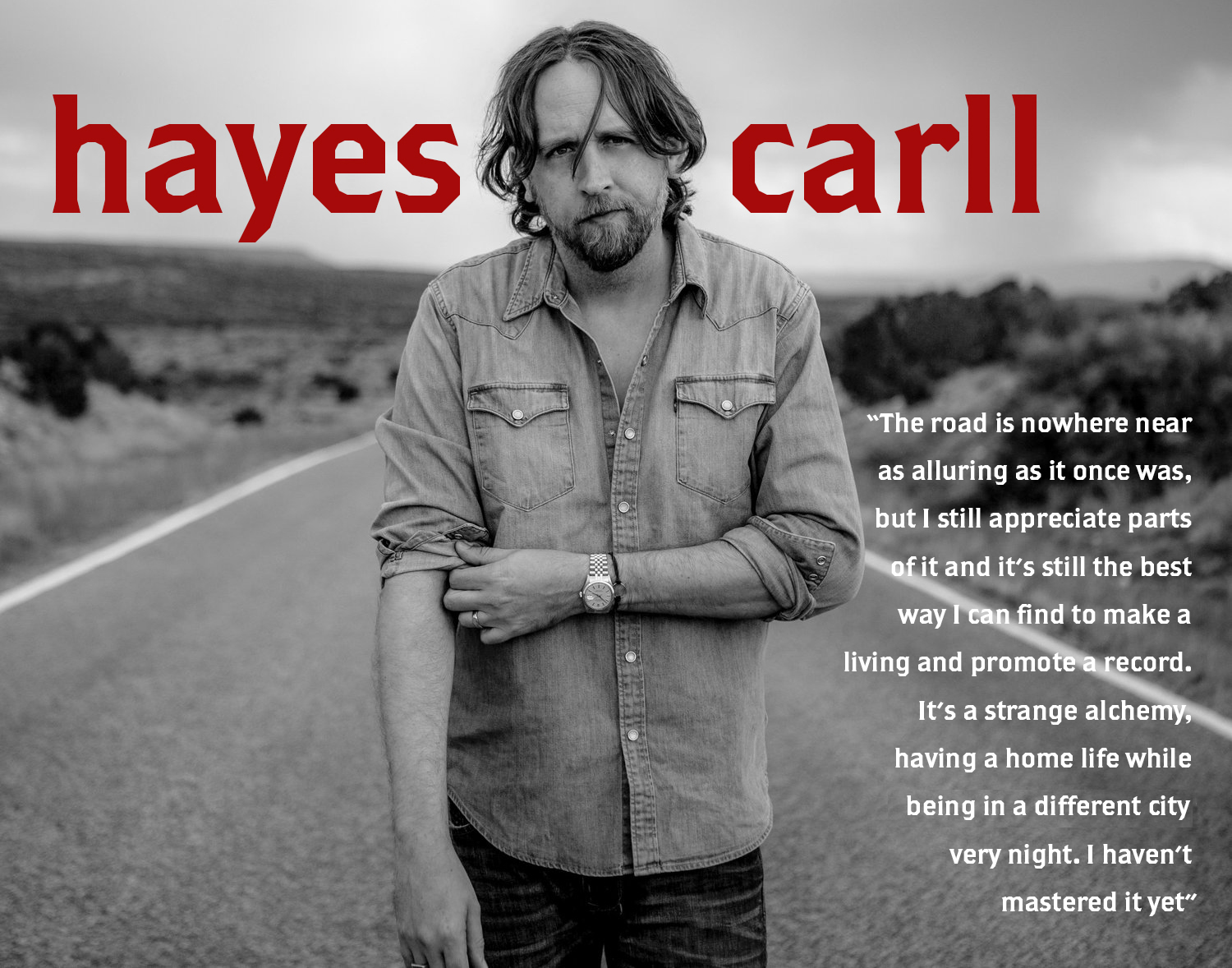
← Newer Posts Older Posts →

Hardcore Country, Folk, Bluegrass, Roots & Americana since 2001.