• Radio
  • Interviews
    • Music Reviews
    • Live Reviews
  • Features
  • About Us/Contact
  • Search
Menu

Lonesome Highway

Street Address
City, State, Zip
Phone Number
Hardcore Country, Folk, Bluegrass, Roots & Americana

Your Custom Text Here

Lonesome Highway

  • Radio
  • Interviews
  • Reviews
    • Music Reviews
    • Live Reviews
  • Features
  • About Us/Contact
  • Search

Addison Johnson Interview

April 28, 2021 Stephen Averill
AddisonIntro.jpg

Inspired by his love of traditional country music, North Carolina born artist Addison Johnson packed his bags and headed to Music City to record with the sounds of George Jones and Waylon Jennings uppermost in his mind. Ten years later and with a lot of water under the bridge, he has released his latest album DARK SIDE OF THE MOUNTAIN. This is a hard-hitting compilation of stories that he’s justifiably proud of - and it has attracted lots of love from fans of this genre. We tracked down Addison in Nashville for a Zoom chat about the album and life during and after lockdown.  

 What were your ambitions leaving North Carolina for Nashville?

I didn’t come from a lot of money and never really had a goal when I moved to Nashville. I loved to write songs and I wanted to be a part of trying to pursue that. I moved to town with about fifty bucks in my pocket and took out a student loan to Middle Tennessee University. I was probably somebody who was never meant to go to college, but I went anyway and majored in beer and girls for a few years. I also worked every small job in Nashville. I moved here to be part of country music because it is something that I have always been passionate about. There is not another person in my family who is a musician, so the direction was never really there. I came down to see if I could figure it out and ten years later they still have not kicked me out. I grew up listening to country music in North Carolina. My grandmother played old 33 records of George Jones and Merle Haggard and guys like that. That is where my love of story songs came about but finding my own musical direction is something that I had to do on my own.

I understand you gave up drinking a few years back. Had you fears that your creativity might suffer as a result?

A lot of creative people and artists are possibly not that structured a lot of times. We often come across criticism on a daily basis. More criticism that many people would see in their entire lives. And that hits on self-confidence and the like and that’s where a lot of the drinking starts. So, it was one of those things that when I really knew that I wanted to quit drinking I was scared, because I thought that it would be like superman taking off his cape. I would lose my powers to write and to bring that inspiration. But once I was able to think clearly, I actually found the opposite. Within the first few months when I quit drinking, I basically wrote the entire DARK SIDE OF THE MOUNTAIN record then. Being sober also helped me to think more clearly and not give up on songs as much I used to.

There are a lot of dark and hard-hitting songs on DARK SIDE OF THE MOUNTAIN.

I just love dark music. It’s not that I am opposed necessarily to love songs, but how many different ways can we write a love song that has not already been written. That’s why I got into story songs and songs about things that people do not talk about a lot. I prefer stories a bit darker: about guys running moonshine or a guy running from the police and things like that. I never sit down and say ‘I am going to write a song today.’ It just happens. I am more the type that will sit down when I’m ready to write and I’m practically in a coma for thirty minutes, and when I come around the song is just about written.

How autobiographical are the songs on the album?

There is a lot me in some of these stories, especially Blue Eyes Red and Black Leather Red Letters. When I first moved to Nashville I went out and had a lot of fun. Being on the road and touring most of the time was really part of growing up for me after moving here at twenty years of age. I had to learn things the hard way, I was a big drinker and I had drank heavily since I was probably sixteen years old. It’s something that I struggled with a lot but through that I was able to have different experiences, some good, some bad. Some of the songs on the album came from those times and experiences. I ended the album with Black Leather Red Letters because I’ve also been a big fan of having a gospel song at the end of a record. It’s a number of things, firstly to pay tribute to the faith that I have but also to pay tribute to the country music legends that used to close their albums with a gospel song.

When was the album initially due for release?  

I had actually planned on releasing it in the spring of 2020. By January of last year, I could see the writing on the wall and that something wasn’t quite right and that it was going to be a crazy year. So, I thought why not hold off on until the summer and see what happens. And what ended up happening was that we decided to delay it all together and not put it out until 2021. I got back to writing again and was feeding more into the songs that had already been recorded. We started going back under the hood and stripping stuff out and putting new stuff in. We actually finished the record before Thanksgiving of 2020 with all the new stuff that we had added in.

You’ve resisted the temptation of writing and recording a formulaic Music Row pop /crossover album masquerading as country?

When I first moved to Nashville, I signed a publishing deal immediately and I thought ‘man this is really easy.’ The more that I got into it, the more I thought of how much I had sacrificed leaving North Carolina and my family and my grandfather, who was just a giant. He was my inspiration and I missed the last years of his life. I had to make so many sacrifices. I finally came to the realisation that I did not want to write crappy songs for money. What was more important to me was to try and build a legacy that I could be proud of and would make the sacrifices worthwhile. That is something that I have truly stuck with instead of just going ‘beer, truck, girl’ songs all the time. That’s what really frustrates me with this industry. In my opinion we have the most talented songwriters in the world right here but many of them are being handcuffed by corporate greed to make the quick fast buck. That’s not at all what country music is about. I like a pick-up truck and back in the day I liked a cold beer and I like pretty girls, but that’s not reality for most people that listen to country music. That’s a fantasy. Country music is about the ups and downs, the pressures and the successes of what happens in a real person’s life. For me it’s all about trying to continue on that legacy the best I can, for the people that have meant the most to me. That tradition is so important to me, so I don’t go and try to make a lot of money sitting with five guys in a room writing songs every day. I do this my own way and it’s something that I can be proud of when I go to sleep at night.

As an independent artist in a competitive industry, how do you go about marketing yourself?

I market myself by any means possible (laughs). We try to use every avenue. I am not a huge fan of the streaming stuff and I feel that as a music industry we have pickled ourselves financially by doing that. But it’s something that if you do not embrace you will be left behind. We’ve had very good success by way of streaming. I was pretty late to the game on streaming. I found it hard to go and spend $15,000 and record and two years of my life of writing, and then I get to give it away to someone who pays a $9 subscription. Rollin’ Stolen from the new record is approaching 100,000 streams and that’s a really big step for us.

I understand that you also use your passion for fishing as a means of self-promotion?

The fishing goes back to my grandfather who was a huge fisherman and bass fishing particularly, which all my family were passionate about. I got the passion but maybe not as much of the talent. Most outdoor people, whether they fish or hunt or just like being outdoors, like traditional and old-time country music. So, I thought it would be a good idea to combine the two. I reached out to a number of local companies in that industry and offered to share their stuff with my fans and by return they might share my country music with their clients. So, we both support each other’s products. That’s kind of how this whole thing came about, simply out of my love for fishing and it’s a little niche to go along with my music. I got in touch with a bunch of people from companies who want to hop on to the idea which is really cool because they are fans of what I do as much as I am fans of what they do. I always say that they support me on the water. So, when we had the new record coming out you had all these fishing pages on social media plugging this record. When I am playing at shows some people want to talk about music and some people want to talk about fishing. I’m just a good old boy from North Carolina, there’s nothing special about me and sometimes I think people feel comfortable coming up to me and speaking about things that they are comfortable about, like the outdoors and fishing. It’s been a really cool connection because I have a passion for fishing anywhere with water. If you fill the bathtub up, I’ll probably have a shot there, too. I’ve got a hitch on the back of my van and if I’ve got a couple of extra days on the road, I’ll go play the show and go fishing the next day. It’s been a lot of fun to do.

Where do you place yourself in the country music genre?

I don’t know if I’m an outlaw country singer, I might be an introduction to outlaw country for some people. I think I sit in between traditional and blues music. I hear all the time around here people saying that country music is dead. It’s not dead, you just have to look for it. If you want to take your significant other one out to eat you can find McDonald’s off every exit, but if you want to go and have a nice meal you need to look it up on your phone, check the reviews and do the research. If we can do that for a good meal, why can’t we do it for music? I consider myself to be somewhat a part of the Americana genre but I think Tyler Childers does have a point by calling Americana ‘the basement with all the cool kids who are hiding from country music upstairs’.

I see that you are getting back on the road and playing live shows again?

Coming out of Covid, everybody wants to open up but it’s like sticking your toe into the pool to see if the water is cold or not. So, at the moment I’m keeping it quite low-key. I’m playing solo or with duos and trios, but as time moves on, I’ll be bringing out a full band. As things have gone for me lately the need to bring a band is growing.

How have your shows been received coming out of lockdown?

I think it’s a combination of things with people stuck in the house for the past year and also musicians having some good records out there. But the response of the shows has been incredible, every single show seems to be better than the last.  When you’re used to being out on the road one hundred and eighty days a year, you have your road family out there, people that you see in various places always turning up. It’s like seeing your family getting on the road meeting these guys again.

On a personal basis have you any positives to report from the pandemic?

Absolutely. If I were to talk to you in March 2020, I would’ve told you that the world is ending. In the end I probably have to credit 2020 with one of the best years of my life. It was purely because I picked myself up off the floor after years of feeling sorry for myself. There is no industry or person on this earth that this pandemic doesn’t touch. Artists needed to get back to work and we were probably able to accomplish a lot more than most people. I was very fortunate in that I was able to get a record down and had platforms like social media to reach out and get in touch with my fanbase. Being off the road presented an opportunity for me and my small team to work at stuff like promotional pictures and the website, to set myself up to be more successful. Also having the extra time to write songs was extremely valuable to me.

Interview by Declan Culliton

The Shootouts Interview

April 15, 2021 Stephen Averill
Pulp_western.jpg

The Shootouts’ music shows a deep love of traditional country music. This forms the bedrock of their signature sound. The roots of these band members have since grown into the solid blend of vintage Nashville, Texas swing and Bakersfield bravado. Just a number of influences that are part of the band’s DNA.

This is obvious from the release of their debut album Quick Draw from 2019. It gained a nomination for Honky-Tonk Group of The Year at the 2020 Ameripolitan Awards. They have just released their equally impressive second album Bullseye. Having been highly impressed with these two albums, we caught up with founder and lead vocalist Ryan Humbert to ask him some questions about the band’s history and all that being a real country combo entails these days.

As a band you seem to be invested in the culture of traditional country music. When and where did it enter into your consciousness and then become the music of choice?

For me, it goes back to my childhood. My dad’s record collection and my mom’s love of country radio in the 90s is really what sparked my interest in the genre as a whole. I picked up a guitar my junior year of high school and that was it. When I was first learning how to play, I’d sit with my grandpa in his basement and play old country, bluegrass and gospel tunes while he sang. 

All that being said, The Shootouts wouldn’t exist had I not met Brian Poston (The Shootouts guitarist) in 2013. We were introduced by a friend and ended up bonding over our mutual love of traditional, classic country and talked about the idea of performing it on our own terms. We finally decided to give it a shot, just as a fun passion project – a side project, even. We recruited our drummer Dylan Gomez and played our first show in October of 2015 in Cleveland. From the downbeat of the first song, I knew there was no looking back. I finally felt like I was doing what I was meant to be doing. 

It’s pretty inevitable that a myriad of other influences are there before or after the conversion to that centre. How do they affect the way you approach your particular blend of country?

Our sound has always been a big melting pot of the various forms of country music that we love – countrypolitan, honky tonk, Americana, Western swing, Bakersfield and more. And there’s no doubt it’s all filtered through our Ohio “Rustbelt” roots. It’s been really rewarding for us to play this music and put our own mark on these classic sounds. 

It would seem the notion of fun is pretty important in the overall approach. Was that always the objective?

Absolutely. I love ballads just as much as I do novelty tunes – but I’ve always been drawn to the artists that can blow you away with a tongue-in-cheek barnburner. Many of the bands that we love have that same thread running through their catalog. There’s a long standing tradition of humour in country music, which I think is a really unique characteristic of the genre and one we like exploring from time to time. I think country music is at its best when it’s fun for the listener and the musicians.   

Tell me about your current line-up?

The band consists of myself on guitar and vocals, Brian Poston on lead guitar, Emily Bates on background vocals, Dylan Gomez on Drums and Ryan McDermott on bass. We’ve had the same lineup since before our debut album Quick Draw. 

In your choice of Chuck Mead for producer you have made what would seem a fairly obvious choice of someone steeped in the music but also a man who knows how to get the best out of the band and the songs?

Working with Chuck was a real honour for us. We’ve been fans for a long time, so we were obviously excited when he was interested in working with us. When we started The Shootouts, BR5-49 was a major influence on us. He was definitely a perfect fit for us. He just instantly understood what we stand for. He brought a lot of knowledge of the country music genre to the table. He was honest yet encouraging. His enthusiasm was contagious and that’s so helpful in a studio setting. 

Chuck’s longtime friend “Cowboy” Keith Thompson engineered, and we cut live in his studio. I think you can hear that energy in the recordings. It’s a real band playing real instruments together. You just can’t convincingly replicate that feeling any other way.

We started the album on March 8, 2020 and by the time we were done eight days later, the pandemic had set in and the world was drastically changing for everyone. We were watching it play out on our cell phone screens during the whole making of the record. It was very surreal. When we started the album had someone told us things would be so different eight days later, I don’t know if I would have believed it. Who knew?  

The overall all-encompassing nature of the Americana tag would seem to have left the door open to such a wide selection of musical genres and blends that there is a feeling that hard core country is getting lost. How would you feel about that?

Part of what I really love about the Americana genre is the diversity. Sure, it can be hard to describe what “Americana” means sometimes, but to me—you know it when you hear it. The traditional country genre, and all the subgenres of it, have long been a part of Americana, and I don’t think it’s going anywhere anytime soon. Of course, styles change, things come and go – but I think the bedrock of the genre will continue to be traditional roots music for many years to come. 

When it comes to songwriting and choices, what do you want from a song that fits The Shootouts brief?

In one sense or another, the song has to be incredibly sturdy. Country music is deceptive. It may seem simple but it needs to be able to tell a story, make you cry, make you laugh – sometimes all at the same time. The sad songs better be really sad, and the fun songs really blow you away. 

Do you also, on that subject, feel that the heartbreak, hangovers and hang-ups are the essential make-up of a good country song. Can you describe a perfect country song from the past and one for the future?

To me, heartaches, hangovers and hang-ups is what country music is all about. One of my all-time favourite country songs is “The Green, Green Grass of Home.” The Shootouts perform it often. Talk about a song that covers a lot of bases: beautifully written, with a simple story that ends up throwing you a curveball in the last verse. To me, that’s about as perfect as it gets. That would be my choice for the past and future. If someone asked me to present them with just a few songs that define country music, that would be at the top of my list. That song will hold up long after we’re all gone. 

Do you feel that the reaction to your live shows and recorded music indicates that there is a younger audience who appreciate the music?

Absolutely. One of our favourite compliments we receive after folks see us live is this: “I don’t like country music, but I really like you guys.” That really means a lot to us, because it really confirms that we’re on the right track by following our hearts and carrying the torch for the genre and music we love. Ideally, we’re able to help people of all ages understand there’s more to country than just what you hear on corporate country radio. So far, we’ve had a really positive experience with that.  

Do you therefore need to have a day-job in order to survive on something different than gig money and CD/Vinyl sales?

I think a lot of independent musicians have side-hustles these days. Especially when you’re still getting your footing in the music world. All of us definitely have other forms of income to help pay the bills. But we’re working towards transitioning to a full-time working, touring band. 

Which format works best for you?

I’m a vinyl fanatic, so seeing our albums on vinyl is exciting to me. And it definitely seems to be selling well these days for a lot of folks. We’ve seen a lot of success with it as well. I’m still a big fan of physical media. About two years ago I really got into coloured vinyl. I went to school for graphic design, so everything about it appeals to me—the oversized artwork, the individuality of each coloured pressing, listening to music differently than you would an MP3—it’s all a part of the vinyl listening experience.

Can you talk a little about that part of the graphic aesthetic and heritage?

As a designer, I’ve always been drawn towards retro and vintage artwork – especially pop and comic art. It seemed like a natural fit to me – graphics that are reminiscent of vintage pulp comics with a band that takes a vintage, retro approach to their music. I think they go hand in hand. 

Somewhat in tandem and aside from the obvious importance of the music, how does such aspects the style and heritage of the associated style of dressing play a part in how you present yourselves?

I was always told that you should dress for the job you want. Putting on the vintage style clothing not only helps us present the music in a more formal way – honouring those that came before and the bright, unique stage clothing that they wear – but it also helps us “get in character,” if you will. There’s just something about playing this music in jeans and a t-shirt that wouldn’t feel appropriate at all. 

Does Europe feature in your long-term goals?

We’d certainly love to play Europe if the opportunity arose. 

In that light BR5-49 used to be regular visitors to the UK and Ireland but haven’t made it back in a good while. Is that simply down now to the costs and logistics of travel for an independent act without label support?

I know it’s definitely a tricky prospect, and sometimes the finances just don’t make sense. It can certainly be hard to do something that far-reaching without support – but that doesn’t mean it isn’t doable. There’s so much that goes into putting something like that together and also having it make sense from a business standpoint. 

It seems strange that Music Row and mainstream radio commentators often herald the death of country music in favour of a pop/dance mutation of the form, yet it survives and thrives. Can you offer an opinion on that?

There’s a lot of heart in traditional country music and those who are still presenting those types of songs to the world. That heart and soul will always shine through and connect with people. It will always have a home. As I said earlier, times change. Things come and go and come back again. Country music helped birth rock music and has helped people through some difficult times. It’s truly the music of the common man. It connects people and tells stories that are relatable to so many people. That type of music will always survive—and thrive. 

What does the future hold for the Shootouts and what would be your ambitions?

We plan on continuing to carry the torch for traditional country music, in all its forms, for as long as we can. We’d love to continue to make records and play shows that support that mission, and spread the word to all of those who are interested in hearing it – and hopefully converting a few folks along the way. 


Interview by Stephen Rapid Band photo by Jamie Escola

Melissa Carper Interview

April 7, 2021 Stephen Averill
Mellissa Intro.jpg

You could be forgiven for assuming that DADDY’S COUNTRY GOLD, the recent release from Melissa Carper, was a re-release of a recording dating back to the 1940s or 1950s. It’s a blend of old-time country and jazz that pays homage to legendary names who have influenced Melissa’s vocal arrangements throughout her career, such as Kitty Wells, Billie Holiday and Jimmy Rodgers. That career kicked off as a child in her parents’ family band The Carper Family and continues today with her roots duo Buffalo Gals, the four-piece band Sad Daddy and her present day acoustic trio version of The Carper Family, alongside Beth Chrisman and Jenn Miori. We chatted with Melissa recently via Zoom and she spoke proudly about the album, the musicians that feature on it and her other projects.

I understand you started your musical journey at a young age?

Yes, I started playing the clubs when I was about twelve in The Carper Band.  It was my mom on guitar and two other brothers and myself. I had a younger brother than me on drums, my older brother was on lead guitar and vocals and we all sang a little bit. My mom and older brother did most of the singing back then. My dad was not a musician but he was the manager.

Having been raised on a diet of traditional country music when did your love of jazz kick in?

I liked jazz before I went to college in Nebraska to study music and got to love jazz vocalists at college. I used the school library to listen to all kinds including Frank Sinatra, Billie Holiday and Ella Fitzgerald. I would say that over time they all influenced my own vocals. Any music that I love I listen to over and over again, and often sing along. I probably pick up some vocal phrasing from that. I also love the blues and listen to a lot of Lead Belly. I’ve probably tried to imitate him as well (laughs).

I believe that you’re also lover of Jimmie Rodgers’ music?

Yes, absolutely. My dad bought me the complete collection of his songs. They came in six or seven tapes that had every song he recorded on them. I listened to those tapes over and over, I just could not stop listening to them. And when I first started writing songs, I would have been subconsciously copying his form. I’d sometimes even deliberately start thinking ‘I don’t know how to start this song’ and would make it sound like Mule Skinner Blues or one of his other tunes.  I picked up a lot listening to Jimmie Rodgers’ songs and I suppose I tried to copy both his and Hank Williams’ vocals a lot. We can’t help being influenced by what we listen to, consciously or not. I listen to so much old music and I think I developed the style for my vocals from all of those influences.

What was the motivation behind the DADDY’S COUNTRY GOLD album?

 I had been planning that album in my mind for several years. I wanted to gather my best tunes for a compilation album.  I had a whole lot of tunes written that I had played with other bands over the years. I only have one other solo album and wanted to represent my best songs on an album. When I write a country song, I often add a bit of swing and the song ends up being more of a Western swing tune. For the album I just put together what I thought were my best songs that would fit together. I had been dreaming of putting this album together for a while and that was one of the reasons why I moved to Nashville.  I felt that it would be the place to do the album. I spent two years living in Nashua from 2017 and spent most of the time just going out and listening to a lot of the folks I had admired, and becoming part of that musical community. Organically it worked out by being able to invite a lot of those folks to work on the album. It worked out perfectly. 

How did you come to work with Time Jumpers bassist and session player with so many big hitters, Dennis Crouch?

Shortly after I moved to Nashville, I got to meet Dennis. My girlfriend Rebecca, who plays fiddle with me, was playing a gig with Dennis. She had been hired to play fiddle in a band that he was playing bass on. They happened to be having a rehearsal in one of the rooms in our house. I came home from somewhere and there was Dennis Crouch in the house. I ran into him around town a few times after that and I asked him if he would give me a bass lesson. He said he didn’t really do lessons but asked me to come over to his sometime and we can talk bass. So, I went over to his house and he gave me some tips and allowed me to play his bass. Dennis is from Arkansas and even though I’m not from there I have spent many years there. I felt that we also had that connection. I asked him out of the blue if he would help me produce an album. He didn’t really know my music that well but came to a couple of our shows. He then told me that he would help me select some musicians for the album and also recommended Andrija Tokic to produce the album at his Bomb Shelter studio in Nashville. 

Was there any conflict with those two producers and yourself all working on the songs?

No, we all worked really well together, there was never any conflict. Dennis and Andrija both had different inputs and pretty much everything they suggested worked out fine. It was just so much fun working with them and to be in the same room as the people that Dennis brought in to the studio, it was amazing.

There’s a pretty amazing list of musicians credited on the album?

Yes, there is. Dennis played bass on most of the tracks. Chris Scruggs played guitar and pedal steel, Jeff Taylor was on piano, accordion and organ, Billy Contreras was on fiddle, Rebecca Patek played violin and strings, Matty Meyer was on drums and Lloyd Green also played pedal steel. Rebecca, Sierra Ferrell, Brennen Leigh and Ranger Doug all added backing vocals.

I understand that Andrija Tokic has a reputation of getting things done quickly?

He is fast at what does, he doesn’t waste any time. He is so fast at the tape, even though it’s an old-fashioned way of doing things. But the musicians were so fast also. They had never heard my tunes before and I had written charts for them before they came in to the studio. Basically, we started at 10am in the morning and worked until 1pm. On the first day of recording, in those three hours we had the basic tracks for six songs done. The following day we did the same thing, and had six more tracks down. This was with the musicians never having heard the songs before. We all recorded live in the same room and by the second or third take, that was it. It was all so surreal and magical for me. I had never before experienced anything quite like it. The only over dubs were fiddle, steel and harmonies. Everything else was live, all of us in the same room: bass and drums, rhythm guitar, piano and myself singing. 

Did Dennis playing bass take the pressure off you and allow you to concentrate on your vocal styling?

Yes, it really did. I’ve never done that before as I am usually playing bass and singing at the same time. It really freed me up on vocals and I know I phrased things differently because I had that freedom. Also having Dennis on bass was great, because he is such an incredible player. I would not have been able to come close to what Dennis added to the songs. He kept encouraging me to play bass on a few tracks. The only reason I’m playing bass on three tracks was that he was pushing me to play.

Did you have a particular market in mind for the album?

I guess I didn’t give it much thought. With the bands that I’m in, we have always attracted more older audiences. It’s funny because little kids seem to like our music as well, when they hear us play. I’ve never had music that seems to appeal to a younger hip crowd. I probably did not know what my market was (laughs). Yet some of my friends in that younger age bracket have bought the album and really like it, which is great. I think more of that that younger age bracket might find the music refreshing, if they get the opportunity to hear it. 

I believe that you finished recording before the pandemic kicked in?

We did. We recorded in January of last year and did the over dubs in February. I feel lucky that we got all that in before things hit. I had thought while recording in January that the album would be out sometime in 2020. I think it was wise to take advice to wait to the spring of this year.

Have you had the opportunity to play a live launch of the album? 

Yes, on March 19th we had an outdoor show in Austin, Texas. That was a lot of fun, we played everything off the album and I had a great band with me.  Emily Gimble played piano, Jen Miori from my other band The Carper Family was playing guitar and singing, Rebecca Patek was on fiddle and Jason Baczynski on drums. A lot of folks came out for the show that had not been out for a while. It felt really good.

I also have a Nashville album launch show on June 17th at the Station Inn. They stream the shows from there so anybody can watch. I’ll have a bunch of the players that featured on the album – Dennis Crouch, Jeff Taylor, Matty Meter, Rebecca Patek and Brennen Leigh – on stage with me. I’m excited about playing The Station Inn.  One of the great things about living in Nashville for a couple of years has been getting to go to shows there.

 Are you taking a breather now or still writing?

I have to wait and be inspired by something to write. I have been inspired by living on this farm in Texas for the last while. My creativity has come back after a bad year in 2020. I have written a few new songs this year and me and Brennen Leigh have also co-written some songs.

Interview by Declan Culliton

Bobby Dove Interview

March 30, 2021 Stephen Averill
BobbyDove_Intro.jpg

‘Being a musician is the one time in my life that I really fit in to anything. I’m probably an outcast to everyone except musicians, regardless of what music they play. That’s my tribe, for better or for worse,’ confesses Bobby Dove.  I hooked up via Zoom with the spirited artist whose current release HOPELESS ROMANTIC has deservedly been earning killer reviews. After an introduction to Bobby’s cat (‘my tour manager at the moment’) we chatted about the album, the talented bunch of musicians playing on it and its predecessor THUNDERCHILD.      

What’s a typical day in Manitoba during lockdown?

Try to get out of bed (laughs). Only joking, I do karate, which is probably the only scheduled part of my life right now. I’ve barely seen anyone for a year, haven’t seen my family. Haven’t seen my mother’s face since last May, I really miss her. My dog, that was living with my mom, died back home.I’m one of the people that during this pandemic has done nothing by way of physical movement and involvement in any kind of project. I haven’t even been in an empty club with a sound person.

Before we talk about your new album HOPELESS ROMANTIC, tell me about your debut album THUNDERCHILD, that blends, honky tonk, ballads and some full-on roots tunes. The title track is particularly wonderful.

It wasn’t at all intentional but I think that album back in 2016 just happened naturally. Sometimes you just bring someone on to a project and it really works. I brought Bob Cohen in to play guitar on that one song, the title track. He used to be Jesse Winchester’s guitar player and he rocks out. What I think about the THUNDERCHILD album is that it shows my versatility as an artist and a songwriter, and that I don’t just write country songs. I do love country music and country music arrangements, and old-time country music has had a huge influence on me. On that album the songs did not come from a certain place in time, I also reached back for songs I had written ten years earlier. I had written Cowgirl Bob when I was nineteen, just as I reached back for a song on the new record Gas Station Blues, which I wrote ten years ago. 

I can identify a lot of country artists and bands on HOPELESS ROMANTIC from Emmylou and The Hot Band on that song you just mentioned Gas Station Blues. Am I also hearing John Prine on the song Early Morning Funeral?

You’re one hundred percent right and you’re not the first person to mention John Prine with that song and I really appreciate that. When we were recording that song, I said ‘let’s do this like a John Prine song.’ The song has that John Prine swagger. It was also different to most of my songwriting because I had a co-writer on that one who does not even consider himself a singer/songwriter. He’s a guitar player named Eric Sandmark, who used to play for Ray Condo and used to be my drummer. The song was about him so I called him up to get some background information about his day job as a pallbearer, so I could put that into the song. I was on the phone to him back and forth and he ended up injecting a couple of rhymes into the song. I said to him this is as good as a co-write. I don’t normally write songs with other people but this was as close to a co-write as I have ever got. So, I gave him credit for that song. The musicians I had in the studio knew exactly what I meant when I said ‘let’s do this John Prine style.’ 

Tell me about those musicians and how you came to co-produce with Bazil Donovan of Blue Rodeo.

I put the band together individually with musicians I had played with and met in Toronto. I had Burke Carroll, the pedal steel player, on my last album. I found guitar player David Baxter playing with Corin Raymond and I asked him to play a gig with me. Singer songwriter Doug Paisley hooked me up with Basil Donovon. I had seen Doug open for Lucinda Williams at Massey Hall and he had seen me play in some little bar. He sent me an email telling me how much he appreciated seeing me play at that tiny hole in the wall and he put me in contact with Basil. It was crazy because when I put these players all together, I didn’t realise that all these guys were actually already in a band together called Hey Stella, who backed up the singer songwriter Lori Yates.  Michelle Josef, who plays drums on the album, is also in that band with them and it made perfect sense to also use her. So, I’d put together a band that were already together. I co-produced with Basil. Sometimes he didn’t like my ideas. It was funny, he’d say ‘no we’re not ending the song like that, it’s not professional.’ I was nearly in tears. Making a record is such an emotional experience but it worked out perfectly well in the end. At that stage I had played about twenty shows with the different players in the band in Toronto. We never rehearsed because I was driving back and forth from Montreal to Toronto. I was fresh off the highway, six hours on the road, get to the club, change my shirt, put on my sunglasses and I was ready to play. So, the things that we would nail would be the old-time country songs, because they had been playing them for years and knew them so well, and I knew them from the records.  Then we’d get to my originals and they didn’t come together as easily. But when we got into the studio and had the time to play the songs a number of times and record them it was another story. 

When was the album recorded?

We started in September 2019 and there were a few things added later, like Jim Cuddy’s vocal on Chance In Hell. He added that just before I mastered the album last November.  Most of the album was done in September 2019 and and most of the vocal tracks are the original recordings from the studio with me tracking acoustic guitar and singing with the band. There are very few overdubs.

Is classic country where you see yourself as an artist or are you more of the Daniel Romano school, where your next album might be from a completely different direction?

I not sure if I’m locked into classic country. I don’t know what’s going on in Daniel Romano’s head but I wish I did because I love that guy. I met him five or six times in Nashville at AmericanaFest and the guys from the record labels were all over him. He knew my debut album and was saying ‘you need to meet Bobby’ and trying to give me a leg up (laughs). I’m more of the ‘who knows what they’re going to do next’ because I have a foot in different worlds. My background is not country, that said, I am a diehard honky tonk listener and that is going to influence everything I do and whether I like it or not, I’m going to be some sort of country artist for as long as I can imagine. You can never be too sure because the magical thing about art is the X Factor. However, I’m definitely more Daniel Romano than Dwight Yoakam. 

Before Covid-19 was it possible to get numbers out for country music in Canada?

Yes, it was. I was just at a point in my career when I was going to set up some shows supporting the album and selling tickets, when this pandemic happened. I have been building on the street credibility that’s been growing for me. Some festival directors had started noticing me and I got to play some major Canadian Folk festivals on the West Coast like The Vancouver Folk Music Festival. I also got to open for Irish Mythen, who’s a powerhouse singer and a solo artist. She definitely took me under her wing at a couple of festivals and got me to open for her at sell out shows in great rooms. 

I would try and organise roots and country music shows in Montreal, where I come from, but Montreal is a large city in a French province and the bigger music scenes there are more indie, electronic and even world music.  If like me, you’re a small fish in a very large pond, it can be difficult. Montreal isn’t easy and it’s ironic because one of the most famous singer songwriters Leonard Cohen is from Montreal. I grew up in the same neighbourhood as him, a Jewish kid, listening to his music as a little kid. I’m a songwriter and only discovered country music when I was twenty-five and not from a front porch in Alabama. I don’t pretend to be from the Southern States.   

What was your musical background prior to releasing THUNDERCHILD? Were you playing in bands or a solo artist?

The answer is both. I played my originals and country covers in a band with Eric Sandmark on drums and a punk rock bass player, and I would usually lead with my telecaster, sometimes hire a fiddle or steel player. Folks were calling it "cowpunk"! When I dissolved that band, before recording THUNDERCHILD, I played mostly solo or in duos with instrumentalists for a year or two. I have, and will always be invested in playing solo shows, but I also love duos, trios and any combination that works for the event. 

Since the release of that debut album have you been touring and playing solo or with a band?

I have been touring mostly solo for financial and logistical reasons and because I did not have one or two musicians that could constantly play with me.  I had a band for my shows in Toronto. Also, I did not want to have the worry about accommodating other people all the time. If you can support your own music with a guitar and a suitcase it becomes the logical thing to do. So, if I went to Toronto I’d play with a band and if I went to Alberta, I had a band there that I would use. There were other times that promoters would hire me solo specifically. So, even though Vancouver Island Music Festival could of course afford to hire me with a band, they preferred just me and a guitar, playing my songs and telling stories.

Interview by Declan Culliton Photograph by Jen Baron

Esther Rose Interview

March 23, 2021 Stephen Averill
estherroseintro.jpg

HOW MANY TIMES, the third studio album from New Orleans-based singer songwriter Esther Rose, deals with emotional scars not altogether healed - and it’s a striking listen from start to finish. With delicate and almost fragile vocals matching the project’s theme and assisted by some of New Orleans finest players, Esther is undoubtedly heading for a place in the best records’ lists at the end of the year. We caught up with her via Zoom to learn more about this winning song collection.

Hopefully we will get to see you perform in Ireland in the not too distant future?

I hope so, I have not been to Ireland. I was in the UK in 2019, that was as close as I got to Ireland. I was on tour with Pokey La Farge’s band, supporting them. I’ve toured with these guys a lot in the past, they’re great friends. I remember being massively intimidated by how tall everyone was in Glasgow, everyone was six feet tall and super tough (laughs).

 With your latest album HOW MANY TIMES due for release in the coming weeks, do you get anxious prior to a release and how the album will be received? 

There is a lot of anticipation. This is my third release and it does get easier. I have more of an understanding now about the nerves and the waiting. It really is correctly named as a ‘release.’ I also think that people are not going to tear down the underdog in their reviews. In some ways when you start getting more super critical reviews you might be getting to the next level. I often think the people that are reviewing albums like my own probably already like it. We’ll get to find out soon. 

Your writing is particularly personal. Do you need to be emotionally moved for inspiration when writing songs?

I guess I’m emotionally moved all day long. I’m an introvert. That’s the way I am in the world. Songwriting is an incredible tool as it allows me to do something that I think I’m good at.  Getting deeply into people’s feelings and situations. I’m so glad that I found songwriting because I didn’t come to it until I was twenty-seven. It was a great discovery to find something that I want to do, can do and am good at. 

Given its very personal theme and with the album written and recorded over a two-year period, did that prolong your sensitivities or did writing the individual songs give you comfort? 

It’s not that I was emotionally stressed for two years straight, but each time I wrote a song I was dealing with a specific situation. I’m always trying not to write the same song twice. I use songwriting to explore certain situations. So hopefully when I’ve written the song, I’ve also gained an insight into how I’m feeling at that time. It’s really a way of being present with reality. 

How important was the song sequencing on the album?

The sequencing is very important. On this album time the songs are not in chronological order, which was the case with my first album. With my first album I wanted to share the developments as they happened. On this album I wanted to take the listener through the flow of how the songs tell stories of heartbreak and processing, from being at home alone depressed versus finally going out on the town again. Maybe seeing the person I was writing about again, all these little stages that you go through. It couldn’t be chronological this time. 

I sense that the song Keep Me Running is a reminder to take care when you may be vulnerable, don’t get sucked into another relationship?

Definitely, that’s well said. I feel that since I’ve written that song, I’ve come around a bit. I’ve an impulse to walk, run, keep moving, a fight or flight sort of thing. It’s important to have that energy and momentum to pick yourself up. Nobody is going to do that for you, we have to be able to do that for ourselves.

The musicians on the album really breathe life into the songs. I’m particularly impressed with the fiddle playing by Lyle Werner.

Lyle is a wonderful person. He was the first person to join my band. I met him on the levee in New Orleans. He was jogging, probably the only time he has jogged in his life. I’d heard of him and knew he played fiddle, so I just stopped him and asked him if he wanted to join a band. He literally ran home and got his fiddle. My projects are always changing with new musicians coming in and I have a ton of people around the world, in San Francisco, New York, the UK that are trained up on my songs. I had the same band for this record which was super special. It allowed us to really develop our sound together. Lyle just really cares about the tunes and you can feel it in his playing. All the guys that played had a deep understanding of the tunes. 

I can feel the New Orleans influences on the album. Is that something that you aimed for?

Many of the musicians I play with are from all over the world. They’ve all come to New Orleans to play music because of the culture there. You can play on the streets, and maybe play three times in one night with different bands. The sound on my album comes from having such a diverse bunch of musicians to work with. 

Tell me about the recording process for the album?

It took exactly one year with two recording sessions, a year apart. We started in January 2019 and bookended in February 2020. We finished before the pandemic and on the first day of the two-week span of Mardi Gras. It’s a very special day with gorgeous blossoms everywhere and a sexy parade that kicks off the two weeks before Mardi Gras. It’s so specific in my mind to finish on that day and be loading out from the studio on a day when the city had all this momentum.

Had you intended the album last year?

It got pushed back a little bit with Full Time Hobby, my awesome label in the UK coming on board, but it was always scheduled for around this time. I have a strong songwriting push within myself and my US label likes to slow me down a little bit and give it a full year before I’m back in. 

How did you handle the lockdown and did any positives emerge for you from the enforced quarantine?

I went to live with my sister in Vermont during lockdown. I live alone in New Orleans and I was not keen on going through the quarantine experience alone. My sister and I are incredibly tight so it was a great experience to be close to my family for the first time in a long time. We hadn’t spent as much time together since we were kids in high school. We’re always looking for positives and that was my feeling at the beginning of the pandemic. I was lucky to have a safe place to land and also getting to know my nephew, who is a budding songwriter. I got him interested in guitar and he knows every word from all of my songs by now (laughs). But it’s also important to realise exactly how difficult this situation is for many and what’s happened in our lives. It’s almost like it’s still so close that we can’t really see it.

Have you considered when you’ll be back touring?

I’ve had to put touring out of my mind to just get on with my life. I just put it out of my mind because it was so devastating to make plans to tour or play live and see them go away. I think it’s important now to just stay hopeful and appreciate the things in our daily lives that are bringing us joy. 

Have you been taking a break from writing?

No breaks. I love writing and recording, that’s what I do. I have a new collection of songs and I’m trying to find the right place to record them. They’ve all been written in quarantine and never performed live and I feel very excited about them.

Interview by Declan Culliton Photograph by Akasha Rabut

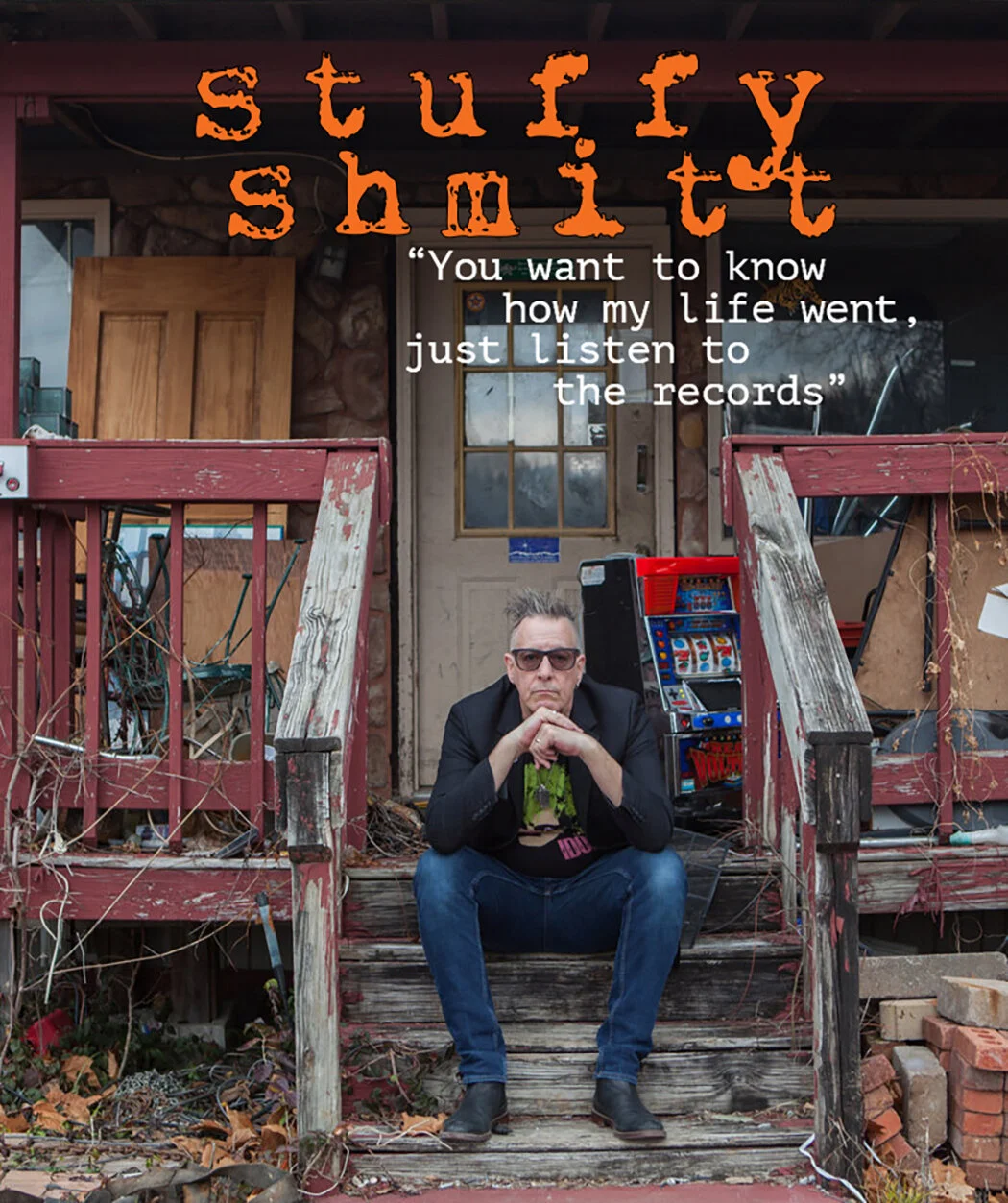
Stuffy Shmitt Interview

March 16, 2021 Stephen Averill
StuffyIntro.jpg

Stuffy Shmitt relocated to Nashville in 2014, leaving behind a self-destructive lifestyle in New York, while struggling with bipolar disorder. He’s a larger-than-life character, with over half a dozen cracking albums under his belt, while remaining somewhat under the radar. With a renewed zest for life, Stuffy regaled us via Zoom about his latest album STUFF HAPPENS, his forthright writing and his love of East Nashville. 

A lot has happened in East Nashville over the past twelve months?

The tornado struck this day last year. Myself and my wife Donna were left alone but three or four blocks up it was total devastation. It’s mostly fixed up now but you can still drive down Gallatin Avenue and see places still boarded up. Not everybody had insurance, so there are still remnants of the tornado.  

Your CIRICULUM VITAE is most impressive. Names like Willy De Ville and Levon Helm, among others, are listed as people you’ve recorded with.

I released an album called OTHER PEOPLES STUFF. I had always wanted to do a covers record for fun. I got a bunch of rock stars on it. The bass player that I had been using on a couple of other things was Catherine Popper, she used to play with Grace Jones, Jack White and lots more. She’s also in the band Puss n Boots with Norah Jones and Sasha Dobson. She had played with me in most of my bands and had recorded with me on all my records. She asked if I wanted Levon Helm to play drums on a tune on the album as she knew him. I replied that I wanted him on two tunes. So, she called him up and he said he’d love to play. Here’s a good story. He played on Crazy Mama, the old J.J. Cale tune and a gospel song called So Soon In The Morning. I played him the original of that gospel song, which has all these fills and stuff and I said: ‘let’s do it like that’ and pay homage to the original recording. He did, but he didn’t need to do one fill in the entire song and the groove is just dynamite (laughs). It’s sexy and cool and makes the song just chug along. No fills, not one.

I used to throw Willy De Ville out of a bar where I was bar tending. Him and Gordon Gano from The Violent Femmes. I used to throw them out of that bar repeatedly and that’s how we became friends. That was back in 2003, that’s how long ago that was.  Willy was so wild, sometimes things just got out of hand. He was so dramatic and flamboyant. He’d wear features in his hair and he’d go round all the tables in the bar commenting on the tune that was playing. Sometimes it just got too much.  I really miss Willy, he lived just down the street from me. When I look at his early shows on You Tube, wow they are dynamite. 

Eventually you needed to get out of New York?

What happened was it changed for me. I always use the analogy that New York was like a lover to me. When I got there first, I really loved it there but it changed. I didn’t like who she turned into. I lost all my favourite clubs and bars, and big steel buildings were going up all over. It just didn’t seem as funky and dangerous anymore. It was great when it was scary and rocking, broken glass in the streets, drag queens running past you, rock and roll man. Now its all nice and neat and I just got pissed off at it. 

Why move to Nashville?

Because all the places I played live in New York closed down, except The Bitter End. That stayed open. New York just got too straight, I wanted some wild and wacky place. I lived in Hollywood for a while but one of the only places for me for real music is Nashville. It has the greatest musicians of anywhere in America, including New York. 


I believe your first gig in Nashville was at The 5 Spot and that you brought your own audience along?

That was completely nuts. First gig in Nashville, nobody knew who I was. I had neighbours who are real rednecks, I mean they have a complete Trump mug collection with a different member of the family on each mug. I don’t have a lot in common with those guys. So, I got talking to one of these neighbours and told him I was playing my first gig in Nashville at The 5 Spot. At the time of the gig there was a rainstorm and it was pouring down. The gig was at six o clock or some ridiculous time, because I was new in town. So, I went down thinking the place would be empty but it was packed with soaking wet eighty-year-olds. My neighbour had called all his friends and told them they had to go down and support my first show. There were some younger guys there but mostly the oldies. I went up to the bar tender and asked him how he liked my crowd and he just turned to me and replied ‘Well, they’re drinking.’ 


How did the connection come about with Brett Ryan Stewart, who worked on your latest album STUFF HAPPENS?

I didn’t know him before I moved to Nashville. Part of my bi polar fun is my habit of getting in peoples faces from time to time. Sometimes it works out and sometimes it doesn’t (laughs). He was in The 5 Spot and he was sitting at the counter. I walked up to him with this goofy hat I had on and said: ‘didn’t you push me off a Ferris wheel once.’ I stole that line from Steven Wright.  He came back with some really snappy reply and we started talking. At the same time my wife Donna was at the other end of the bar talking to this guy called Chris Tench, who ended up producing the record. He was really colourful and she said: ‘you’re probably going to love my husband.’ I didn’t know that Brett and Chris were close and worked together. So, they came to a gig and we talked and after a while we decided that we had to work together.

Had you written the songs for the album prior to hooking up with them. What did they bring to the recordings?

Some of them are older songs, some newer. It was magical working with them. I’d always produced all my records myself. I wanted to be the boss, didn’t want to kiss anyone’s ass, including record companies. I did a bunch of pre-production with Chris, which I’d never done before. In New York I just went in to the studio and it was one, two, three, four and play. It was different with Chris, who told me we needed to work all summer on these songs. So, he sat in my house with me and we went over and over them, arranging the tunes. When we went into the studio and it was magical. Brett is a brilliant engineer and also a great songwriter himself, a super guy. He gets sounds that you would never believe and has a world class studio. Chris could play guitar like nobody I had ever seen and is so naturally brilliant, almost savant. So, it was like, you tell me what to do and I’ll do it, though we did all produce it together. I trusted them, which was the first time I’d ever trusted anyone with my music. 

Are all the songs written on personal experiences? 

Oh yeah, you want to know how my life went, just listen to the records.

You don’t hold back on songs like The Last Song and She’s Come Unglued. Has your writing caused friction and have you lost many friends over the years as a result?

Yeah, all the time. The Last Song is about a girl called Mary. We were living in the village and had split up at that time. There’s a line in the song ‘Mary what happened’. Her reply was ‘do YOU want to know WHAT happened’. That was time for me to slam the phone down (laughs). The unglued song is about my ex-wife. I don’t make stuff up. I just tell the truth. 

The song It’s Ok, was written in exasperation or forgiveness?

Exasperation. It’s sarcastic and cynical. After a while I could not do any more for that girl, so I just shrugged my shoulders and said ‘It’s Ok’. It’s also the most accessible ‘hit’ (laughs). 

I believe your neighbours Aaron Lee Tasjan and Brian Wright both played on the album?

Yes, they both played on that crazy rock tune Sweet Krazy and also played on Scratchin’ At The Cat, which might be my favourite track on the album. I have an instrumental track of that song that’s even better. 

You also have some cool videos of a number of the songs from the album?

The people that do my videos and also Brett’s videos are a couple from Georgia, not the State, the country. A husband and wife, Anana Kaye and Irakli Gabriel, they’re super talented and also have a band. They’re also the best video makers I’ve come across. 

Tell me about your previous album titled 12 SONGS?

12 SONGS is like a greatest hits collection, songs lifted off other albums. I made it before I moved to Nashville to be able to show people the width and breadth of what I do.

The track Nothing Is Real from that album is exceptional, almost frightening. I always hit the replay button when it finishes.

I’ve really happy to hear that. That song is the title track from an earlier album and a lot of people think ‘what the hell’ when they hear it. It’s also a true story, I saw all those things. I wrote Nothing Is Real after I nearly died from pneumonia, I actually saw all those things that are in that song. I had morphine in one arm and ativan in the other arm. They put me in a self-induced coma and I saw all those things. I wasn’t supposed to survive but I did. 

Are you writing at the moment?

My writing comes in spurts. I’m not exactly what you’d call prolific, though every day I’ve got a lot of stuff written on cocktail napkins. I need to be really emotionally moved to be creative unless somebody gives me a deadline, that’s different. I wasn’t getting my shit together for STUFF HAPPENS until Brett came up to me and said ‘Ok, June 28th we’re going in the studio.’ Time to write something. 

What are your hopes for STUFF HAPPENS without being able to tour the album at the moment?

The whole shutdown has changed people’s moods, not being able to play live. I intended selling a million copies of the album and It’s OK is going to be a major radio hit. Local radio likes me, they actually played the Last Song yesterday. It doesn’t usually get airplay. We’re on a bunch of other stations around the country. You’ve got to tour, get on TV, have a soundtrack to a popular movie from an album. It’s hard. 

Is Nashville home for you now?

Yes, I’m going to stick around. I’ve done New York and Hollywood. I’ve got a real house here with a backyard which I never had before. 

Interview by Declan Culliton


Cristina Vane Interview

March 11, 2021 Stephen Averill
NewVaneIntro.jpg

It’s quite likely that the name Cristina Vane may be new to you. Currently residing in Nashville, the Italian-born artist’s debut album, NOWHERE SOUNDS LOVELY, will undoubtedly turn a few heads on its release in April. Having studied classical music as a young girl, Cristina later became enthralled by country blues and old folk guitar styles. She mastered fingerpicking acoustic and slide guitar skills as well as clawhammer banjo technique. Her splendid album, which is an exemplary cocktail of traditional and modern roots music, highlights how adept she is as a songwriter and vocalist.  We spoke with Cristina a few weeks prior to the release of the album.

Congratulations on the new album NOWHERE SOUNDS LOVELY.  It’s a great listen and a perfect blend of traditional and modern country roots music.

Thank you so much. “A blend” is very much what I am going for in my original music.

You studied classical vocals, music theory, piano and flute in your younger years. Did you have ambitions of pursuing a career in music at that stage?

I did not have ambitions to be a performer or rock star, although I always was passionate about music. I had a lot of interests throughout my childhood and wasn’t sure which direction they would lead me in, and I secretly also didn’t really think being a ‘musician’ was realistic or attainable for me. It seemed like such a vague concept - how did one chance into being a musician outside of choir and band?

You have described yourself in the past as a ‘‘a rock kid who is obsessed with old music.”  What sparked your appetite to explore American culture and music?

It started in London, when I was home for the summer and performing at a bar in Camden. I saw Sam Green playing lap slide and I had to have that sound but didn’t want to turn my guitar sideways so I settled for bottleneck. After graduating college, I found the music of Skip James and Blind Willie Johnson and then my interest was captured forever more. Working at a folk guitar shop in L.A. for a few years also opened up my world to clawhammer banjo, travis picking, and lots of other interesting things. 

After graduating from Princeton University, you relocated to Los Angeles and worked at that store you mention, McCabe’s Guitar Shop. Was this pre-planned to further your education in developing different guitar skills?

I moved to Los Angeles because as a city kid I couldn’t think of another metropolis besides New York that I would enjoy and be able to pursue music in, and I didn’t want to be in New York–half of my school was there after graduating, so L.A. felt far away and a fresh start. My brother and cousin lived there so I had family, and all I knew was it was sunny, the food was great, and there were a lot of opportunities in the music industry there. Getting a job at a guitar shop was not “pre-planned” to help my guitar playing, it was just a logical step for me to be around more music and more like-minded people while earning money to do something I enjoyed very much. It was one of my many jobs while I lived in Los Angeles and at the time when I was working there, I had three other part-times. McCabe’s remains my favourite by far.

You worked with guitar instructor Pete Steinberg there. What did that experience bring to your playing technique?

Pete taught me how to fingerstyle. He taught me alternating/stride bass style picking, as well as the coolest riffs from different classic tunes. He worked with me every week for at least a year and a half because he believed in my passion for it, and even entered me in my first ever fingerstyle category competition at the Topanga Banjo & Fiddle Festival, working up a whole solo and coaching me through it for months. Pete taught me the foundations of excellent fingerstyle playing, but also taught me some patience and discernment, and also, how to be totally insane and still well liked.

Did you have regular gigs in Los Angeles and what type venues were available to you?

I started gigging about a year or so after arriving in L.A. – at first at tiny coffee shops and in the back of bars where I went to open mics. Little by little, a friend would hire me for a party, or I’d play a bigger bar and then I got my first band together. We played a lot of local Venice bars and also really random, far-away gigs. Basically, anything I could book. I remember my first big band show with a different line-up at the Mint, when we got 53 people there. That was a huge deal for me at the time and really warmed my heart.

You then basically booked your own five-month long tour. What States did you visit?

I went through California, Oregon, Washington, Montana, Wyoming, New Mexico, North Dakota, South Dakota, Iowa, North Carolina, South Carolina, Tennessee, Alabama, Louisiana, Florida, Texas, Arizona, Utah, Colorado, Mississippi, and Georgia.

You wrote the bones of NOWHERE SOUNDS LOVELY while touring that summer. Explain the title of the album for us?

Totally. In the song ‘Travelin’ Blues’, the refrain goes “onwards and upwards, well this path leads to nowhere / nowhere sounds lovely, well I’d sure like to go there”.  I felt that the sentiment in those lines, but even just those words, reflect how I felt about traveling that summer. It was wonderful to have destinations but to be totally honest, it was the act of being alone and doing what I loved for five months that really changed me more than having checked off a new place. 

Did visiting and playing in certain places give you the ammunition to write particular songs for the album?

Absolutely. Even though I am half American, I grew up overseas and it was my first time seeing some of the most stunning and impressive natural phenomena across this vast country. There is nothing quite like the Rockies, the prairie, the southwest, the deep south. It was such an inspiring time, and I was so stimulated by all of these new scents, people, accents, foods, and sights.

Any particular locations or experiences that stand out?

The Dakotas are dear to my heart, Asheville was a very special time for me, Taos New Mexico also captured me. Camping in Utah for two weeks on my August break was amazing and definitely a highlight of the trip, as well as my hikes there and at Glacier Park. One of the absolute top experiences of my tour was my time in the south specifically, Clarksdale, Mississippi, and all of the nearby gravesites I visited of my blues heroes. 

You knocked on Cactus Moser’s door to produce and play on the album. What drew you to him?

Cactus not only is a killer drummer, but he had also produced Wynonna & The Big Noises’ latest record at the time. I loved the way he balanced folk and contemporary influences, which really is why I went with him as a producer. And because he has great banter.

Artists such as Jake Xerxes, Rhiannon Giddens, George Mitchell and Art Rosenbaum are folklorist as well as recording musicians. Do you see yourself following a similar path?

I am obsessed with Jake Xerxes Fussell. I would be honoured to even be in a similar path to any of those folks, but I don’t know if I really will be following a similar one to be honest. My intentions with Instagram are simply to share my musical journey and shine a little light on whatever influences pop up along the way. However, my interests don’t lie so much in reinventing traditional songs as writing my own material that may have been inspired by these songs.

You appear highly organised, what are your career plans?  

Oh gosh, I am glad it looks that way because at this end it often feels like I have no idea what I am doing and am late on everything. I would like to get to a level of touring where I can comfortably pay my band to come on the road as well as take care of my needs. I would like to expand my playing abilities for sure – trying to work on my playing on the guitar, banjo, and recently the mandolin. That’s a never-ending hustle. Other than that, I guess just keep making more music.

Is Nashville home now or just another stop on your life journey?

For now, Nashville is home, but I am starting to wonder if I’ve gotten so used to moving that I need to do it. Either way, I plan to be in Nashville for the foreseeable future.

Interview by Declan Culliton Photograph by Alex Skelton

Aaron Lee Tasjan Interview

February 16, 2021 Stephen Averill
TASJANintro.jpg

 Since arriving in East Nashville in 2015, Aaron Lee Tasjan has established himself as one of the most interesting and versatile artists in that thriving music community. His genre hopping escapades have gifted us with a catalogue of music that encompasses Americana, folk, power pop, rock and more. His recently released album titled TASJAN! TASJAN! TASJAN! is a treasure chest of poppy glam rock gems alongside a few heavenly ballads. It also contains the most personal and candid writing of his career. We chatted with the ever engaging and charming artist via Zoom recently.

Last year must have been an incredibly difficult period for musicians. Setting aside the negatives, did any positives emerge for you in 2020?

That’s a good question. Yes, there were. My partner Erica Blinn, who is a wonderful artist, has been making an album here in our house. She’s been recording and playing all the instruments herself for the album. It’s been a real gift during this time because the house is filled with incredible music and powerful artistic statements. That has been something that definitely improved the mood a lot last year. For me personally, I think I’ve been able to connect to my home life, which I haven’t had the chance to do before. I have been living with Erica for three years but we both tour constantly. We have known each other for a very long time, probably ten years before we got together. Normally we were only spending two weeks together here and there. So being at home together really felt like having a home life. It’s been grounding for me in many ways.

The new album TASJAN! TASJAN! TASJAN! is deeply personal and unguarded. Was it always going to be a ‘this is me warts and all’ type project?

At times in the past when I had made records, I kinda realised this passion that I had for creating records with intention. But at a certain point you have to leave room for the record to reveal itself to you and actually guide you, in terms of what it is you are actually saying on the record, which tracks are connecting, are really sparkling and lifting the music to the best place it can be. I did not start with the intention of writing and singing only about myself, but I noticed over time that the songs, where I was actually doing that, felt like the ones that were really compelling. In a lot of ways, I think it felt like something that was newer for me. It was a territory that I had not explored in depth before on previous records. I think there is a piece of me in every song I write, but that lyrically my tone had previously been more observational than on this record. This one is really about me and I think that these songs seem to just leap out of the speakers, and really feel exciting. So, it was an easy road to go down but there was a moment when I realised ‘I see what I’m doing, this is going to be a record where I’m singing about myself’.  So, the songs are directly about me and out of my life.  It did actually become that record about myself, which was not intentional at the beginning.

Did you have reservations as to how the material would be received, in particular the references to sexuality? 

Yes, a little bit.  Reservations might not be the correct word but you are aware of the fact that you are going to be categorised differently than in the past, due to the nature of some of the things that I am singing about on this record. Any time you sing about things that are super personal people often want to apply that label to you in a broad term. It is human nature to do that. We are all trying to figure out where each of us is coming from so that you know how to relate to each other. But we need to remember and acknowledge that people are many things, and it is not always that easy to use a wide brush stroke to describe an artist or music or whatever. We need to leave space for what that artist is becoming or about to become. I feel that if you are living life in the right way, it’s unlikely that you are going to be the same person in ten years’ time that you are today. That’s a little bit of what I’m trying to say on this record, to hold a space and allow people to become who they are over time.  But also, to recognise the things about them in that moment, things that we can point to and say ‘that’s really interesting, I can relate to them this way unlike before’. It is a process, very much like a song, it’s a story that is slowly unfolding over time and that is why it is worth paying attention to.

Do you feel that honesty in writing is generally received with open arms, notwithstanding how difficult it may appear at the time? 

Yes, I think you’re right. It’s interesting how those things that feel really scary at a certain time, but after you’ve gone through them, they turn out to be beneficial moments for all of us because it takes real strength to be vulnerable, I think. At least in America, I feel like our society has almost come to treat vulnerability as a liability. Whereas it’s actually an enormous strength, because it does allow us to relate to each other in a really intimate way. I think you make a really good point about how honesty and vulnerability tie right in with that sentiment.

With the song Don’t Over Think It, are you pointing at yourself or at the rest of us?

Oh, definitely at myself (laughs.) But I figured it is probably something that others have considered also. It was a recurring thing in my life, to the point where I finally said: ‘I have to write a song about this’ (laughs). I am always doing it to myself. For me, songs can be like a mantra because as a performer you sing the songs every night. So, you want to make sure that these words that you communicate every night have a meaning for you and that you can delight in, find your humanity in and be able to share that with people. I am sure there are people who might approach their art as more of an acting role going on stage. I can appreciate that, but for me I just couldn’t go on stage and actually fake it. 

Are you generally very hard on yourself?

I traditionally have been but I have been trying very hard through different approaches including therapy to hold myself with a little bit more tenderness. I think I recognised on this record that when I am too hard on myself it gets to the point where it goes beyond just being a critical eye and gets to a place where I am actually undermining what I am doing. That is a pitfall that I try to avoid. It is about holding myself in that place where I don’t become overly self-critical and allowing myself the space to go: ‘I don’t have to be perfect and in fact what I currently am hearing as being wrong about this, is the same thing that may very well endear it to somebody else’. It’s a fine line. I think. as an artist, you’re always walking a lot of fine lines. I think it was John Lennon who said that an artist is the one that has the biggest ego in the room and then can turn around and be crushed in a second with one sentence from somebody. I do think there is some truth in that, it is a kind of tight rope walk.

You recorded once more with Gregory Lattimer who also worked with you on KARMA FOR CHEAP in 2018. How did the recording process compare this time around?

Some of the songs  were done piecemeal from the beginning this time. Those were Now You Know, Got What I Wanted and Not That Bad . Interestingly, those tracks sort of stood as they were when they were finished. We felt like we just put them together piece by piece but the full picture was already there and we did not need to do anything else with those songs. It was more the ones that we played live from the floor that we ended up doing multiple versions. Some had different time signatures and different tempos, there was a lot more experimentation when there was a live band there. Simply because you can do it more efficiently when there is a group of people there.  

I presume you played a lot of the instruments yourself on the album. Who else contributed?

I did yes. I played a lot of the instruments myself but I also had some great drummers. I had Dom Billet who plays with the wonderful Yola and others. Jon Radford, Devon Ashley from The Lemonheads and Fred Eltringham from Sheryl Crow’s band also played drums. Erin Rae and Andrew Combs also contributed and we had a super special guest player on Up All Night, the great bass player Keith Christopher from Lynyrd Skynyrd.

New West were not exactly on board from day one I understand. You waited for some while to break the news to them that you were working on a new album?

(Laughs). God bless them. They were apprehensive. This was the record I particularly wanted to produce myself having not done that before. I ended up co-producing it with Gregory (Lattimore) simply because he is such a good creative partner for me. New West were a little apprehensive, simply because I didn’t have the experience of producing myself. There was nothing for the record label to look at and say ‘well he produced that album and it went well’. I did have to prove myself a little bit to them but for an artist like me a challenge like that ultimately ends up being a good thing. I do have a certain level of ambition for myself within what I’m doing. I always want to try and create something that has elements to it that my previous work may not have had. Sometimes you need people to push you to do that. New West were honest and were not sure that they saw me as a producer. Rather than trying to change their minds, I thought why not record a few songs, send them to the label and they may be more apt to allow me to finish the project myself. So, I sent them four songs I had basically completed recording, Another Lonely Day, Sunday Women, Don’t Overthink It and Now You Know was the other one. I sent them those tracks and they listened to them with an open mind. They thought about it for a while and came back and said ‘actually we really like this direction and think you should keep going. Let us know if you need anything else’. That was really down to Kim Buie, who is A and R at New West and was in a position to make that call. She was the one who stepped up to the mark and believed in the project. Much respect and love to her for that.

Have New West and others tried to point you in a particular musical direction over the years?

New West signed me having seen me play a set acoustically and solo, very much in the vein of artists I had seen doing that and admired like Todd Snider and Ray Wylie Walker, Tim Easton, Mary Gauthier. It seems logical to me that New West would have perceived me as a folk singer. I feel comfortable playing an acoustic guitar by myself, but I feel equally at home playing in a band scenario playing electric guitar, sometimes very loudly and other times very quietly. I like the dynamic range of being able to go from solo to a full band arrangement. Allowing myself to remain open to my folkier inclinations, gives me a wide dynamic range musically and allows me to do all sorts of things, which is exciting for me. Bands like The Byrds and Bob Dylan’s mid 60s records combined those elements of folk music and rock music and that to me feels like a tradition and freedom that should exist in all kinds of music and cultures.

I understand you’re playing the 3rd & Lindsley to launch the album shortly. How long has it been since you’ve actually performed live on stage?

Since last March at the start of the pandemic. Unfortunately, because of COVID-19, the 3rd and Lindsley show is a solo stream without any audience. 3rd AND Lindsley ON SUNDAY NIGHT is the name of the event put on by the Radio Station Lightning 100 here in Nashville every week.  They are a tremendously supportive Radio Station of local artists. They just debuted the full new album on the radio show the other evening. We are very grateful to them for all the support they offer. There will be an in-store event with a full band that we are going to do at Grimey’s record store in East Nashville in the coming weeks. It will be without an audience but with a full band and streamed everywhere free of charge.

Unlike the vast majority of today’s artists, you have a unique and individual fashion style. How important is this to you?

To me it’s really a part of my art. I create those looks for each record that’s based on the music that I’m writing, performing and how I’m feeling at the time. A lot of times I will start wearing certain styles to the studio when I am recording a record, because it helps me inhabit the space where the music is coming from in totality. That’s what I want to do: be a walking breathing piece of art. A lot of these pieces that I’m wearing on the record covers, I’m creating and making myself. It’s hard to find fashion for men that seems interesting to me. I love all kinds of fashion but I’m also not an artist in a position to spend $1000 on a pair of pants. (laughs). Instead, I can go to the thrift store and buy a suit for $10, come home and decorate it and make it something that it wasn’t before. That’s what I also do with my music as well, taking things that have already existed and putting them together in a way that feels interesting to me. So, there are parallels to be drawn between my music and fashion.  It allows me to embrace the full identity of what I am making or creating.

When do you see normality returning for you career wise?

I’m certainly hopeful that it’s sooner rather than later. I honestly don’t know what the reality of that is. We did book a tour for November and I’m hoping that will happen. If it doesn’t, we are just going to keep doing everything we can to bring music to people in a way that we can for now.  It’s not just about being monetarily compensated for my career or whatever. For artists like me, playing to a couple of hundred people, I love to get talking to those people after the shows, hear their stories how they relate to the music and get a depth of understanding of how they connect to the music. You cannot really do that via your phone or computer.  There’s also the feeling of standing in a room with people in an audience and everyone is feeling the same experience together. That is very special to me too. And we will get back to that when it’s safe to do so. But safety is paramount and I hope that folks have started to realise that the more that we do now to wear masks, to be safe, to socially distance, to not go out except when necessary, the sooner we are going to get back to the life that we all love so much.

Interview by Declan Culliton Photograph by Curtis Wayne Millard

Jason Ringenberg Interview

February 9, 2021 Stephen Averill
JasonIntro2.jpg

I can’t quite remember the first time I met Jason Ringenberg but it was at one of his early solo shows in Dublin. There was an immediate kinship that was revisited each time he came to play here in Ireland and we spent some time together, which he did on many occasions. Ringenberg has alsways been a dynamic performer with The Scorchers or equally in a solo capacity. He is the focal point of any performance he gives and his ability as a songwriter should not be underestimated. He has recently released a new album after taking time off from his musical endevours. Lonesome Highway caught up with him recently to ask one of our most interviewed artists a number of questions about his current musical situation.

After STAND TALL came out you have mentioned that you decided to take time out from playing music to concentrate on other aspects of your life. Did this break give you the necessary breathing space to recharge your creative batteries?

STAND TALL was a major event in my life.It essentially pulled me back into a world that I hadn’t existed in for 15 years. From 2002-2017 the whole focus was on my children’s music character Farmer Jason. The creative and commercial success of that record inspired me to continue making music in the adult world. After a year of solid touring and promotion work in 2019, I had planned to take a break for a few years to recharge and write new songs. Then Covid hit and everything changed.

The lockdown was a catalyst for creativity flowing and new songs emerging however the songs were largely not directly related to the pandemic. Was that deliberate?

At the beginning of the lockdown I was suddenly faced with unlimited time to concentrate on music. I immediately created the Barnstorming with Jason Ringenberg video program to stay connected to my audience.  I had some songs left over that didn’t quite fit STAND TALL (Nashville Without Rhinestones, Stond on Rhinestones, Keep That Promise) so I decided to open myself up to writing a new record. Songs poured out pretty fast. When I finished Once I Rode with Crazy Horse and The Freedom Rides Weren’t Free I knew I had a solid record and immediately began recording. It was intentional to NOT do a record about Covid, although it certainly affected the process.

Again, as in the past, your subject matters are often steeped in history and particular people. Do these songs stem from your reading matter or do you get the idea and then do some research?
History and me are very old friends. I have been into history since my primary school years. As a 10 year old I knew more about the American Revolution than my teachers! What subjects to draw from is more an instinctive thing. For example, people think I must have written The Freedom Rides Weren’t Free in response to the summer racial unrest in the US. I actually wrote that in April before the George Floyd murder I simply felt a pull to write a song on that subject.

Has it been easy to ignore the recent particular political situation and are you hopeful for the future?

As an American it is impossible to not take political stances at this point in our history. It is very similar to the 1850s over the slavery issues. There are certain fundamental core American questions that everyone faces now. The storming of our Capitol forced everyone to take a side. For all its faults, I would rather live under our established historic democracy rather than some sort of neo-fascist personality cult.    

RHINESTONED also, in a couple of instances, makes reference to those adorned garments that were part and parcel of Nashville and country’s past glories. These days they seem to set apart those who have a knowledge of a rich heritage rather than a pop influenced future. Would you agree?

Absolutely. You either get the history and glory of Rhinestones or you don’t. Rhinestones were a symbol of freedom, an affordable escape from the grinding poverty that most of the classic country singers came out of in the 40s and 50s. When those country singers of the 50s and 60s wore rhinestones, they were making a statement. “I am somebody worth paying attention to.” 

Related to that looking back how do you now view your role as an innovator and catalyst in the re-emergance of country music’s roots?

I am proud of the influence Jason and the Scorchers had on Country Music and the broader music business in the 1980s and ‘90s. There were others making big statements as well, but we made our with a whole lot of volume and noise...

In relationship to that much discussed topic do you believe each to his own or do you think country music as currently played in the mainstream has lost its bearing?

Oh golly, much of what is played on commercial country radio really isn’t country. It is marketed for drunk rich frat boys. The format schism is complete now. Artists like Margo Price and Jason Isbell have nothing in common with commercial country singers like Jake Owen or Luke Bryan.  

You write one some with Arty Hill an artist you have admired in the past. Are there other artists you also root for?

Yes Arty Hill and I have always had a great co-writing relationship, starting back with Beat on the Mountain, then Lookin’ Back Blues, and now the RHINESTONED opener Before Love and War. Arty is a fantastic country singer-songwriter. I usually discover new artists on the road. Given the lockdown I don’t have any underground talents to talk about now. 

I think that the tour you did with Chuck Mead, Jim Lauderdale and yourself seems like an ideal billing. Do you miss touring these days?

Surprisingly, I am not missing touring too much. I found other creatively gratifying ways to create music and share it with my audience.

The role of George Bradfute is pivotal in the creation of your recent musical endeavours hoe did that relationship start?
When I went solo in 1999, I faced the challenge of making records without Jason and the Scorchers. Yea it was scary. I needed a producer who could not only handle all the technical aspects of the process, but also could create the entire music arrangement! Had I not connected with George Bradfute in 1999 my Jason Ringenberg and Farmer Jason phases would never have happened. He has been absolutely essential to my solo career. He is the perfect producer for me. He has an uncanny ability to sense exactly what a song needs, along with the musical chops to make that vision a reality. I never feel rushed or pressured around George. Recording there is always a creative process. I believe he is one of Nashville’s most talented musician/producer/engineers. Interestingly, for all his accomplishments and talents, he has no giant ego or showbiz veneer. He simply digs music and the process of creating it. 

You also have such friends as Kristi Rose and Fats Kaplin involved. That reminds me of the tour you did in Ireland with both of them plus Paul Burch. Do you have fond memories of that time?

Yea brother Steve, I believe that is when I meant you as well, during the Kilkenny Festival in 2001. I remember it was raining buckets and I said to you: “I love your country but you have the damndest weather.” You simply smiled and nodded your head.

Regarding Fats and Krisit, they have played a huge role in the creation of my Jason and Farmer Jason records. Kristi appeared so many times with Farmer Jason that she had become part of the story line. On Rhinestoned she once again played a major role, dueting with me on The Carter Family'sThe Storms Are on the Ocean plus harmonies on several other tracks. One of the many aspects of Kristi's work that I dig is that she doesn't try to "blend in" like a Music Row harmony singer. Her power and personality are like a second lead singer added to the mix, much like Perry Baggs did with Jason and the Scorchers. I can offer no higher compliment than that.

I have worked with Fats Kaplin since 1996 when he did that amazing steel part on The Scorchers track I'm Sticking with You. He has played on every record of mine since then, using a myriad of instruments ranging from county steel guitar to a Turkish Oud. This is a cat who has played with Manhattan Transfer, The Judds, Jack White, Hayes Carll and countless other hit artists. I am enormously blessed to have him on my team.

Given the release of this new album are you revitalised to get out there and play when that is possible?

I do hope so, but science will drive the decisions.

For, obvious, economic reasons you tend to tour solo. Is that something that gives you an additional freedom in performance ?

Playing solo is an enormous challenge and enormously gratifying. Yes, I do have complete freedom to either soar or hang myself.

Equally however I have been fortunate enough to see you with Warner and your fellow Scorchers. Are there any plans to reunite the band? 

There are no Scorcher tours or records planned at present.  

There are several covers on the new album and you have often included outside material on your albums. How do you decide which songs you feel suit you?

My choice of covers is always an instinctive thing. Something draws me to the song as a performer. I have never been able to explain how it happens, but it does work. 

Finally, you have two of your daughters involved in the album. That must have been a rewarding experience all round. Do you play together at home and will you encourage some further collaborations?
Music is a big part of our family life. My youngest daughter Camille is in fact studying to be a music teacher. I got the idea to record the old hymn Christ the Lord is Risen Today while listening to Addie and Camille sing it in our church choir.

Interview by Stephen Rapid

Photograph by Greg Roth

Michael McDermott Interview

February 5, 2021 Stephen Averill
McDermottImageIntro.jpg

I first met Michael McDermott at a gig upstairs in Whelans, Dublin in December 2016 where he played a set of songs that captivated the small but attentive audience despite travel weariness and a heavy cold. We spoke afterwards and kept in contact. From the Westies to his recent solo albums I have been an enthusiast for his music (as are others) though he still exists largely under the radar. His performances at the Kilkenny Rhythm & Roots Festival (2019) were very well attended and the very well received. They showed that while his albums feature a full band, in the live setting he has been playing in a solo capacity with just guitar, harmonica and piano - all he needed to deliver his songs with a clear intensity and passion. We did an interview at that time but looking back many things within the world had changed and so Lonesome Highway decided to catch up with him to discuss life and living in these stressful times.

A visit to the Michael McDermott website michael-mcdermott.com is a welcome window into his music and more including his last album What In The World … at a special download price.

Your reflections on where your life was at the time was the backbone of What In The World … Has the lockdown been detrimental to your writing?

I think the mood or the energy we felt as a nation here was palpable. I think everybody saw this was a slow moving train for destruction. Racism, bigotry was on full display from Pennsylvania Avenue to Main street. The dye had been cast. We will be recovering from these four years for a while. WHAT IN THE WORLD … was a culmination of a lot of things. It was something I heard myself saying more and more. Personally I had lost two family members to suicide in the span of 3 days, which was a shock. It was the feeling of life getting harder and harder to understand. Even when I was a lunatic drug addict and drunk, there seemed to be certain social structures that kept things in place. Now, everything was topsy turvy. I think people are really feeling that. Suicide is becoming a reasonable option for people, and that is a stunning revelation. Without having to travel my writing has been really in a good place. I’m disciplined about it. Being at home all the time, has really been great for the work.

You have played a number of online concerts in recent times. Has that acted as anything close to a substitute to in-person live performance?

It was a bit of a learning curve. I have a wonderful base of fans and we are really interactive. This has made it much more possible to make people a part of the show. I feature fans and people who want to be heard or have something to say, can be on my shows. I’ve levelled the playing field, so if anything, we have strengthened our bond with our audience, which has been an unforeseen gift to this whole process.

Are you, given the current political and pandemic situation, hopeful for the future? 

There is a great historian, Jon Meacham, who explains that we have been here before as a country. 100 years ago in America, President Woodrow Wilson, locked up newspaper editors and 50,000 KKK members marched down Pennsylvania Avenue. What makes this different is the way we are communicating and spreading information or disinformation … Hopeful? Hmm, I’ll use a James Baldwin quote, “I can’t be a pessimist, because I am alive.”  

We last had the opportunity to speak when you played at The Kilkenny Rhythm and Roots Festival but I know circumstances changed since then. However, where you happy with the reaction on that tour? 

I was thrilled with that. I loved it. I loved the town and the people. It was really a highlight for me over the last several years. I certainly hope to get back there someday.

You largely play solo these days. Do you any plans to work with The Westies as a unit again as many of those musicians are featured on your solo albums? 

No real plans for The Westies. I love most everything about that band. It’s writing from a different part of my psyche, that has caused the delay. So much has been going on in the world and personally, that the writing has turned rather inward. I need to get back in touch with the criminal part of my head, that I assure you still does exist, but rather, has just been a bit dormant. My old guitar player Frank Root was murdered back in 1998, he was executed in a drug deal and I couldn’t watch violent movies for quite some time. Movies like that, I had loved in the past. With Trumps’ criminality on display and documented 24/7 that identifies that his was in essence a crime family. I have kind of recoiled in some of the same way from those topics or investigating them further, I will again, for those criminals I find very fascinating. It’s a life I saw up close, what people are pushed to and what people are willing to do, that intersection has always been one that fascinated me.

We have talked in the past about the elements of negativity of your past which led to addiction. You have overcome that now but do you feel that your music is now a positive element in your life and also for others? 

Wow, great question. I guess you’ve just forced me to consider that. I think that even in “the old days” I never was interested in writing hopeless or downtrodden songs. I always wanted to believe there was a way out … or a way through rather … I do think the tone of the songs has changed. I’m still a drunk and a depressive drug addict. As they say, “Once you’re a pickle, you’ll never be a cucumber again.” But as we know, you need the darkness in order to see the light.

There are songs where the subject is redemptive like Until I Found You. Are they easy to express or easier that the more angry material? 

They are much, much harder. It’s so easy to become sentimental or overly romantic. So it is a real challenge to write something about relationships or love that doesn’t make you wanna puke. Love songs are tricky. Anger, resentment, disappointment and shame - those are my defaults. Those are my wheelhouse. It’s the vulnerable stuff that is scary.

As a writer you are always moving forward so do you then stockpile the songs you have written (I know a previous album Orphans was a collection of songs that didn’t fit previous albums) or do you tend to compose new material for a particular project? 

I feel like a shark. I work quickly. I’m always moving forward. I have pulled some older songs forward, although it feels a little like cheating. I tinker at songs, words, maybe a line or two but most of it is written quickly. If it’s not working, they get abandoned fast. I’m manic about moving forward.

So how does inspiration come to you? 

I’m from the school where you have to find it. Even if I’m just sitting at my computer and the well is dry. I need to sit and wait. Sometimes just write a bunch of crap, because you never know when you might punch a hole in the wall and then suddenly there is light.  If I’m in the other room in front of the TV then those moments might happen and I won’t be there to witness it and go exploring. Some songs are lucky but you have to create your own luck. If I’m on the couch on my phone I know I won’t be writing a good song in that time. That fear of knowing a good song might be floating by in my studio and if I’m not there to let it in, that is terrifying. 

As a professional musician who can’t currently work in the same way as in the past are there ways that you can foresee any possible alternatives to get your music across? 

I feel a little guilty in saying that I have enjoyed this new arena. Creating a streaming show that feels more like a TV show. It’s a more controlled environment. You’re not exhausted getting there and the club doesn’t have the Air Conditioner cranked up and there’s no distracting chatter in the back of the room. Now I realize that sounds rather vacuous, but right now, I’m enjoying it.

What In The World … was released at a time when you could really tour behind it. None-the-less did it sell as well as previous albums? 

It didn’t sell as well. You need live shows to move records, to people that came with friends, people that never heard of you, Without that exposure, it was only very hardcore fans.

How have you been filling your time in the last few months. Do you read a lot or have you found inspiration in other ways? 

Reading a ton, and I’ve loved it. Stuff I read a million years ago, went and redid all classics, Hemingway, Chandler, Fitzgerald, so that was fun. I also reread Catcher In The Rye, I tried to learn French and have been meditating. I’m writing my memoirs about the insane life I’ve lived. Which has been rather harrowing, having to relive it all, yet therapeutic in some ways. I’ll be glad when it’s finished.

Since the days of being in a band that had a major label deal and moving to an independent process has that given you the freedom to do the music you want? 

I was always lucky to be able to do the kinds of records I wanted. I never had that pressure. Of course I’ve had heads of labels say “ Why can’t you write another, A Wall I Must Climb, and want to punch them. Oh you want an 8 verse song with no chorus? I can write ten a day … It gets a little lonely working alone all day every day so on days when I get Heather to come sing or play or get my guys to record even remotely … those are happier days.

A song like Shadow In The Window seems to be something of a powerful exorcism onstage. Is that therapeutic overall for you? 

I have to be careful with a song like that. I have to use it to somehow to (which might seem grandiose) help others. That cheque’s in the mail for all of us. So I really try and be careful not to make it too much about me and my father. Sometimes it does but then I feel I have let people share in the experience. I’m on stage for a collaborative experience with other people. When it starts just becoming about me then I’ve lost. I have gotten caught up in that song and just started blubbering on stage … some days … I just can’t help it, I think the audience is empathetic. That’s a kind of drama I don’t want. I want them to shed the tears - not me.

Such material can be something that evokes so many feelings in others that it must be a satisfying experience to have achieved that? 

It is, but I want to write the next song that is gonna do that. Maybe its my junkie mentality, but I want the next hit (a dopamine hit, not hit record). 

What do you see as the way forward for you in the next months and year. Any plans for a new album? 

Yes, I’m so excited about this one … I can barely stand it. When I’m done typing here, I will go back to work. No release plans or anything but I’m hoping late summer/fall 2021.

At these times I imagine that, like for so many of us, family is a vital. Has this been a good time for you as you have been at home much more than usual? 

You’re absolutely right. It’s been amazing. I haven’t been home this much ever. Frankly, I’m a little worried about when the time comes to leave again. I might go kicking and screaming.

MichaelLive.jpg

Interview by Stephen Rapid

Above photography by Kaethe Burt O’Dea


James Ellis Interview

January 26, 2021 Stephen Averill
EllisIntro.jpg

The majority of acts we feature here at Lonesome Highway are American or Canadian, but we’re constantly on the lookout for artists and bands that fit our template from other countries and continents. Australia has provided us with quite a number of interesting acts in the roots, Americana and country genres with James Ellis and The Jealous Guys the most recent. Their striking second album released last year, COUNTRY LION, is a fusion of traditional and contemporary country music by an artist who sticks close to first principals in both the song writing and musicianship. We spoke recently with James about his country music origins and the album. 

 Tell me how James Ellis and The Jealous Guys came about?

In 2016, my old band, The Bitter Sweethearts, a country-rock group, came to an end. I went to the US for the first time and spent a few weeks in Austin going between the honky tonks (White Horse, Donn’s Depot, Continental Club etc) and decided I wanted to go back to Melbourne and put together a band to play classic country and honky tonk.

What was your musical background prior to forming the band?

I’ve played guitar and sung since high school. Mostly, though, I’ve focused on writing songs over the past 20 years or so. 

What drew you towards classic country?

I love the emotion of the songs (heartbreak songs are my favourite). When I was in Austin, I also understood for the first time the important connection between honky tonk and country partner dancing. I love that and we’ve got a pretty good two-step scene in Melbourne.

New South Wales is considered to be the capital of country music in Australia. Has the genre a large following in Melbourne?

Tamworth (NSW) is usually listed as the country capital of Australia but what we’ve seen is a bunch of bands playing good classic country and honky tonk in Melbourne. Melbourne is unquestionably the live music capital of Australia so it’s no surprise lots of people are interested in it. 

We’re loving COUNTRY LION at Lonesome Highway. How do you think your sound has evolved since IT AIN’T TEXAS (BUT IT AIN’T BAD) that came out in 2018?

There are two main differences in the development of the band’s sound between the records. The first is that we’ve been playing so many gigs since that first record. We got a honky tonk residency at a bar in inner Melbourne in 2018 so we play classic country all the time. Secondly, we organised to have two Nashville-based producers (Micah Hulscher and Alex Munoz) involved with COUNTRY LION. They brought sounds, ideas and styles which we would never have developed on our own.

The latest album features some East Nashville royalty with appearances from Lillie Mae, her brother Frank Rische and Erin Rae. How did those connections come about?

In 2017, we played a festival in Melbourne called Out on the Weekend. Lillie Mae was playing with her brother, Frank and guitarist, Craig Smith. We became friends, played some gigs together, continued to hang out in Melbourne and Nashville and I really wanted to have them involved in COUNTRY LION because I felt like the development of the band was linked really strongly to meeting them, learning from them and hanging out. At Craig’s recommendation, we organised a honky tonk residency for the band at the start of 2018. Playing a regular gig and focusing on classic country has been one of the most important aspects of this band’s life and development. 

I understand that Lillie Mae introduced you to Micah Hulscher and Alex Munoz who co-produced the album?

It was actually Craig Smith, Lillie’s guitarist at the time, who made the introduction to Micah when Micah was touring Australia with Margo Price in 2018. We hit it off when we hung out the first time, talking about classic country and I invited him to produce. He recommended having Alex involved as well. They’re a killer team.

What did they bring to the project?

They brought an incredibly deep knowledge of classic country and other American roots styles. Micah is also an incredibly talented pianist and helped with some of the piano on the record. Alex provided a lot of the tasty overdubbing (baritone, dobro, other guitars). Alex also engineered the record in Melbourne. 

The vocal arrangements on the album are wonderful with Kelly Day, Lillie Mae and Erin Rae all adding support vocals. Was it your intention from the outset to put so much emphasis on backing vocals?

I’ve sung with Kelly Day for years and she has an incredible talent for arranging and layering vocals (the outro on I’m A Fool, Records with Our Friends on the new album; and Xmas Lights on our first record). Great backing vocals are an integral part of a classic country record so yes it was always our intention to have lots of backing vocals. We thought it was a good way to collaborate with our Nashville friends, too.

When and where did the recording take place and were the guest parts recorded remotely?

We did all the band tracking in Melbourne in March 2019 and then a few of the overdubs and backing vocals were completed in Nashville in April and May that year. 

Was the process a challenge with the producers and some of the contributors working on a different continent?

The remote recording wasn’t really a challenge at all because Micah, Alex and I were all on the same wavelength and had the same vision for the tracks. I also trusted them to record great parts. 

I understand that Chuck Meade can take credit for influencing the choice of the album’s title.

Ha yeah. I met Chuck briefly at a party in Nashville and ended up handing him a download card for our first record, It Ain’t Texas (But It Ain’t Bad). He looked at the picture and said, “You’re the Country Lion!” I thought it was a great title immediately and said I’d use that if he didn’t mind. He didn’t. 

There’s no shortage of heartache and love lost on a number of the tracks. Was this a case of following the tried and trusted template for classic country songs or are some of the tales autobiographical?

All the songs come from my experience; some are embellished but they all reflect the essence of what I know. Most of my favourite country songs are heartache songs and it’s the type of expression I naturally write about. 

Do you see the musical direction of your two albums as one that you are locked into or do you intend experimenting in different trajectories?

I think we’re refining the sound but my intention is to continue to play more and more classic country. I’m not interested in other styles. While Country Lion contains a few songs which I wouldn’t call classic country, I think they fit within the broad banner of country music. The next record (which I’ll finish in the coming months) will be much more traditional.

With the current restrictions, have you had the opportunity to perform the material to a live audience yet?  

No, that’s been one of the main challenges of releasing an album recently. We’ll have our first band show when our honky tonk residency starts again this week and we’ll play a few of the tunes. 

With hopes and expectations that the world will be back to some degree of normality later this year, have you got tentative plans to tour locally and / or outside Australia?

We’ve been lucky in Melbourne to have very hard restrictions in place for many months since March 2020. Those restrictions have so far brought COVID transmission under control but it’s also meant there’s real uncertainty about the ability to play gigs and travel (from a safety perspective of course, but also from a travel and logistical perspective). We’ll be playing shows around Melbourne for the foreseeable future but we probably won’t play many shows outside of Victoria until the vaccine is completely rolled out and there’s greater certainty around our ability to travel freely. I’d love to travel outside Australia to play the songs as well but our ability to do that is even more difficult to predict. Hopefully I’ll be able to come to Ireland soonish.

You played at Americana Fest in 2018. Have you hopes of a return to perform at the festival?

We played at Americana Fest in 2018 and when I was in Nashville in 2019, I did some shows around town (5-Spot, American Legion). I’d love to get back to the festival sometime and play more shows. 

 Interview by Declan Culliton

Gordon Barry Interview

January 20, 2021 Stephen Averill
gb.jpg

Gordon Barry is a very talented singer songwriter who grew up in Wexford, a beautiful County located in the South East of Ireland. His early instincts to follow his own path and explore his creative muse, has led to steady success over the years and with the recent release of a new EP, ALL THE LIVE LONG YEAR, Gordon finds himself perfectly placed to build upon the momentum gained. Lonesome Highway caught up with him during lockdown to ask about his reflections on the journey thus far and his thoughts on the road that lies ahead.

You grew up in Wexford and was there a busy music scene to influence your formative years?

Wexford has always had a healthy music scene. I’ve always been a bit of a lone wolf though. As a solo artist that’s kind of the way it is, but there was a core group of musicians and songwriters that I used to play weekly sessions with for a couple of years, that looking back now, did motivate me to write more at a time when I needed it.

When did you start playing and who were your early influences?

I started playing late enough. I was 19 when I bought a bass and started to sing, I borrowed my brothers guitar shortly after and learned that. Early influences would have been Counting Crows, REM, The Wallflowers & Neil Young.

Have you always written your own songs and where do you draw the inspiration from?

Yeah, as soon as I started playing I was writing but, like anything, it takes a lot of time to hone a craft. It took me a few years before I was really happy with the songs I was writing. I draw inspiration from everything around me, books I read, films, things I’ll hear people say, stories I’ve heard, whatever music I’m listening to and of course the wellspring of human emotion. There’s always more than enough down there to draw from.

In 2014 your debut ep, ​SOJOURNING,​ was released. Included among the 5 tracks was the song, ​Devil & St Jesus,​ a catalyst that would later kickstart a lot of interest in your career. What do you remember of that project when you look back?

Yes indeed, that was the start in a lot of ways. There used to be a beautiful open mic night in Wexford called The Red Chair, a lovely communal place where I would go and perform weekly. I was asked to record a song for a collective album they were releasing of artists that played there. I had just written Devil & St. Jesus on Christmas Day while out for a walk and so I recorded that for it and then decided to make an EP then while the iron was hot. I recorded Sojourning at home with no knowledge or experience of recording. I bought a Mac, an interface and a 50 euro mic and learned on the fly the very basics of what I needed to know. Then I took it to a local studio and with the help of a couple of mates, we added some more harmonies and instruments and came out with a nice little project. But yeah Devil is where it all started to step up.

You recorded in New York and also played gigs in the city. Is that where you first met Steve Earle?

I first met Steve in upstate New York, near Woodstock but my first encounter was when I was living in Manhattan. I had seen him playing a Woody Guthrie benefit concert. The next day I spotted him on the street outside The Noho Star and slapped him on the shoulder and said hello, he threw me daggers and I kept moving swiftly along. He wouldn’t remember that of course but I would because he was a real hero to me.

He became something of a mentor having heard you play and invited you to his song-writing boot-camp. You received the kind of praise that could derail many aspiring artists (“Gordon Barry is the best songwriter that’s come out of Camp Copperhead, but make no mistake he was already a special songwriter when he got there”). How did you find that strong reference impacted your career arc?

Only positively. It gave me hope that I was on the right track. As an artist you have doubts, that’s the game we are in, it’s a flaky industry but when your greatest song-writing inspiration pays you a compliment like that it’s so heart-warming and personal. It meant a lot. His albums, The Mountain and Transcendental Blues changed the way I began to look at and write music. I’ll be forever grateful to him just for that.

In 2017 you released your debut album, ​THE BEST WAY TO KILL A MONSTER​. Nine songs and a decision to use the talents of Seattle producer Steve Fisk. An unlikely choice, given his reputation with acts like Nirvana and Soundgarden. How did that come about?

A mutual friend of mine put us in touch. Of course I knew his name from his early work with Nirvana and Soundgarden etc, being a fan of all that stuff. He is known for his involvement with that heavy Seattle scene but he has put his hand to a diverse array of different styles of music. I was also a fan of his own band Pigeonhed, with one of my favourite singers in Shawn Smith, so I was thrilled to work with Steve. I was very pleased with the end result.

Your song, ​Devil & St Jesus,​ won top prize for lyrics at the 2017 International song-writing Competition in Nashville. Who was on the judging panel that year and how has the award changed your standing in the music industry?

Tom Waits, Chris Cornell, Rickie Lee Jones, Donovan, to name a few. I would like to think it would have some standing to a listening audience at least, because that’s all that matters in the end. If people listen to my work and consider it to include good songs and good lyrics, then that’s all I would have hoped for when I wrote them. The win obviously is great and opens doors too that previously may have been shut, it’s an advantage. Tom Waits is a master lyricist, one of my all time favourites, so that was such a massive compliment to have him deem my song worthy of that. And Chris Cornell too, make no mistake, behind all that incredible music he made, he’s an incredible lyricist, very visual and descriptive, He was a major influence on me starting out. Sadly the same day I was told I won the prize, was the day that he passed away. He was so good.

With the release of your new ep, ​ALL THE LIVE LONG YEAR, ​we have four songs to add to your growing body of work, including a cover version of a Jolie Holland song, ​Old Fashioned Morphine.​ What was the motivation to include this cover song?

I had been performing that song for years and it being a little less known, people would comment on how they loved my song, Morphine. I would remind them it was a Jolie Holland song, so then they would go listen to that and come back and say they liked my version, so I decided to record it. The original version feels jazzy or like something you might hear in a dark basement lounge. I wanted to give it a bit more of a kick up the arse so I used big drums and Hammond organs. I’ve heard it described in a recent review as a swampy New Orleans funeral anthem which I loved.

You recorded in Camden Studios, Dublin with Cian Boylan and Conor Brady. Also, in New York and Wexford, which suggests that the project evolved over time, between travel?

It did yeah. I recorded half of my album and EP in Wexford, then when I was living in America I recorded half in Coney Island, came back then and finished it with the lads in Camden. Morphine was initially recorded in Cork with Christian Best. It’s fun for me to listen to & remember recording some of those tunes in the winter in fingerless gloves and some in the sweltering summer in shorts.

There is a Country/​G​ospel vibe running through the new songs. Are you pleased with the response to the release, even if touring to promote it is impossible right now?

Yes it has been great. This EP has garnered the most attention from all my releases except for maybe Devil And St. Jesus. Which did surprise me a little seeing as I couldn’t really go out and plug it live.

With Covid-19 lockdowns, have you been based in Ireland and how has it impacted on your creative process?

I have been here yeah. It probably has made a lot of people get more creative I’d imagine, with being stuck in with a lot of free time. Personally I haven’t written much music during all this but that’s fine, I have a healthy backlog to draw upon when needed.

It’s hard enough to try and make music your full-time career. How has the lack of gigs and income had an impact on your resolve to carry on regardless?

It has and it hasn’t. As you said it’s hard enough to make a full time living from it anyway so it doesn’t make that much of a difference. I believe If you’re patient enough and want it enough and are prepared to put in the work, hopefully that will come for you regardless. But it certainly is a major pain if you gig full on, yeah.

With streaming services paying little or nothing to artists these days, if you could change anything in the music industry, what would be your plans?

I have my own personal views on the streaming services. I bite my tongue a bit cause I do see musicians give out a lot about that stuff on social media and that’s never really a good look in my opinion. In one way they give you the opportunity to get a reach on your music that you wouldn’t have got before. On the other hand, it’s not right for musicians to make a pittance on something they’ve created, while corporate companies make all the income from subscribers. Honestly, if I could, I would change it to at least let the listener listen to a song or an album they like a couple of times but then it locks so you have to purchase it at some price. I think that would be the fairest compromise for the times we live in. I doubt that will happen though, unless I take that idea to dragons den and make my money that way.

With the new vaccine rolling out, what are your plans for 2021 as we look towards the return of live gigs later into the year?

I would love to record album number 2 and get out there with that. I have a really strong set of songs waiting to go so we’ll see what happens there.

Do you see a combination of reduced numbers at gigs, mixed with online streaming attendance as a practical solution to social distancing challenges?

Yeah I think that’s the only way at the moment really. I played a gig in December and that’s how it was done and it’s the best and safest way for now.

What has the last 12 months taught you in terms of having to slow down activity and take stock?

It taught me not to take the simple things for granted and also it made me grateful that I wrote like a man possessed for years, cause when the muse isn’t visiting, that might have been a cause for concern had I not.

Your song, ​Roll With the Punches,​ is a strong message for these times. Keep positive and this too shall pass. Any final thoughts?

That’s it. Tomorrow is another day. A fresh start to go again in the face of whatever shit we seem to be facing. If today has been crap it’s alright, get up and go again, it might be better tomorrow.

Review by Paul McGee

Becky Warren Interview

December 19, 2020 Stephen Averill
WarrenIntro.jpg

One of the most loved albums at Lonesome Highway this abysmal year for musicians has been THE SICK SEASON from Nashville resident Becky Warren. However, 2018 proved every bit as exhausting for Becky as she was floored by a debilitating depression that did not respond to medication and resulted in her being practically housebound for sixteen months. Out of that dark period has come a brutally honest and deeply moving album. We spoke with Becky about that difficult time and the songs it yielded.   

Congratulations on your recently released album THE SICK SEASON. It is outstanding and getting lots of plays at Lonesome Highway.

Thank you and thanks so much for playing it on repeat.

At what stage did you decide to open your heart and write such personal material, and did you write the songs while you were at a low point in 2018?

The idea really developed over time, as I realized I was going to be fighting the depression long enough that I wasn’t going to be able to write about anything else for a while. I’d say about half of the songs are from that 2018-19 period of depression, and half are songs I wrote about my struggles with depression at other times. 

Was the process helpful in dealing with the illness at that time?

 It was helpful to have something that still made me feel like me. When I’m depressed, I feel really far away from myself and my brain bombards me with constant negative thoughts about myself. But writing songs is definitely at the core of who I am, so it was good for me to feel like I could still manage that sometimes in the midst of the depression.

You’re renowned as a prolific writer. Did these songs evolve quickly?

 I do tend to use a strategy of writing a whole lot of songs with the idea that even if 50 per cent are terrible, 40 per cent are okay, and only 10 ten per cent are good. That 10 per cent adds up over time.  It’s harder for me to make myself sit down and write when I’m depressed, because it’s not enjoyable for me to spend time in my depressed brain. That’s probably why I ended up pulling some songs from further back for the album.

What was a typical day during 2018 when you were unwell?

 Well, like I said, I don’t like to spend time in my depressed brain, so typically I try to distract myself by doing as many mindless tasks as possible at one time. I sleep as often as I can; it’s the best way to turn off my brain completely. When I have to be awake, I usually find that a combination of engrossing but mindless TV plus games on my phone is a pretty good combination. During my 18/19 depression I watched all 39 (at that point) seasons of the US reality show Survivor, and played over 1500 games of solitaire on my phone. But mostly I got through each day and made it to the next one.

Was it difficult to find the motivation to write at that time?

 Definitely. I owe a lot of my ability to write at all to two things: the internet and co-writing. On the internet, I participated in a couple of challenges where songwriters try to write a lot of songs in a short amount of time. I don’t think I made the goal number of songs, but it did help push me to write. And on co-writing, I still made plans to write because I kept hoping I’d be better by the time the co-writing appointment came around. I wrote several songs during that time with my friend Noel McKay, who’s such a great writer. I could never turn down a co-writing invite with him no matter how I was feeling.

I expect you felt that you had to write the album for yourself. In hindsight do you appreciate how helpful the writing must be for others suffering with mental illness?

 I know that hearing my own depression reflected in other people’s songs has made me feel less alone so many times, especially before I was ever diagnosed or treated, when I just felt weird and terrible some years, and wasn’t sure why. I would feel incredibly honoured if my songs have played that role for someone. I have been really moved by emails from people who’ve trusted me with stories about their own struggles - that definitely makes me feel less alone too.

Your writing, even when dealing with sensitive subject matter, always includes an injection of humour. Was it particularly difficult to follow that pattern with this album?

 Not really. I think in general I don’t take myself too seriously, and I like songs with a sense of humour (John Prine is a long-time hero of mine). Plus, there is a lot of ridiculousness to depression. It’s absurd that I have seen so much Survivor. Even in the moment, I knew that was absurd. There’s a lot of absurdity.

Tired of Sick, from the album, is such an emotional song and one that I always hit the repeat button when it ends. It must have been punishing to construct, particularly recalling your carefree childhood days?

 Thank you. Yes, I wrote that one really fast and I intended to revise it, but it was impossible to revise because I didn’t like putting my head back in that space.

Including your mom in the recollections brings the song to an even more heart-rending level. Did you agonise about that and how did your mom react to the song?

 I didn’t agonize about it as I was writing it, but I agonized about it after I decided to put it on the record. I was worried it would be hard for her to hear, so I sent it to her with a warning a few months before the album came out. She reacted beautifully of course, as she always does.

 Emily Saliers adds backing vocals on that song and her partner in The Indigo Girls Amy Ray featured on We’re All We Got on your last album UNDESIRABLE. How did that relationship develop?

 I was, of course, a huge Indigo Girls fan as a ‘90s kid in Atlanta, who loved songwriting. So, it was pretty amazing when Amy got in touch with my band, The Great Unknowns, in 2004 and signed us to her Daemon Records label. My band opened some shows for The Indigo Girls, where I met Emily. I stayed in touch with Amy over the years, and 12 years later Amy and Emily invited me back out to open some of their shows after WAR SURPLUS came out. That led to some more shows, and also getting to open some of Emily’s solo shows and Amy’s solo shows. Now I feel lucky to be able to call both of them friends and mentors. It’s meant a lot to me that they were each willing to sing on my records.

I sense a connection and similarity between your albums and Amy Ray’s solo work in particular? 

Thank you. I’m a huge fan of all of Amy’s solo albums and her Amy Ray Band recordings. Many of her band have become friends of mine. Or at least, they don’t tell me to get lost when I follow them around at their shows talking about how much I like them.

You also had Ben de la Cour, an artist much loved by us at Lonesome Highway, provide harmony vocals on Good Luck (You’re Gonna Need It). I understand that he did not expect his contribution to end up on the album?

I’m glad to hear you all also love Ben’s music. He’s great. We’ve been friends for around six years and we’ve sometimes tested each other’s patience as friends but we’ve always been fans of each other’s songwriting. Ben recorded several totally normal vocal takes of this song but I asked him to try one at a higher pitch and he sent back a ridiculously high falsetto as a joke, and I fell in love with it and used it. This is why you should never send anyone for a creative contribution as a joke.

Birmingham and Tommy, two killer songs, deal with relationship issues and are slight variations on much of the album’s main theme. Were they both written at the same time as the other songs or were they previously written and on the back burner?

Interesting. I hadn’t thought of those two songs together, but you’re right that they cover some similar themes. They were actually written very far apart. Birmingham is a pretty old song I wrote in, I think, 2011, and first recorded with my band The Great Unknowns in 2012. Tommy, I wrote during the 2018/19 period of depression.

Brooke Hamlin’s MOXE studio and retreat outside Nashville would seem to be the idyllic setting to record, particularly an album so personal. How long did the recording take?

We did all the basics (drums, guitar, bass, most vocals) in less than a week and then Jordan put in several days after that recording overdubs of other various instruments she plays. By that time, everyone was in self-isolation, so friends of mine recorded their backing vocals from home.

Your last album was released to rave reviews at a time when you were at a low point. Did you have much opportunity to play the album live?

Not really. I’ve never really been a road warrior, touring-wise, but for UNDESIRABLE I think I only played shows I was invited to play - I didn’t book any proactively - which isn’t a great way to support an album.

 I get the impression that you may be your most difficult critic. How satisfying is it personally for you that THE SICK SEASON – and your previous two albums - has been so well received?

I’m always just grateful that anyone listens to my records at all, especially this year, when everyone’s routines have been upended and a lot of people are hurting financially. I know how lucky I am that there are people in the world who still seek out and listen to independent artists and I’m grateful some of them like my albums.

I sincerely hope that 2021 is a great year for you and that we get to see you perform at Americana Fest next September, when things have hopefully returned to some degree of normality. 

Thank you. I hope so too.

Interview by Declan Culliton


Rachel Brooke Interview 

November 27, 2020 Stephen Averill
Photograph by Jess Varda

Photograph by Jess Varda

Hailing from Michigan, Rachel Brooke has a voice that’s perfect for authentic country songs. However, she has never been content with treading a straight and narrow path, consistently straying outside the margins.  From her self-titled debut album back in 2008, Rachel has infused her music with dark and edgy undertones alongside her trademark imaginative lyrics. On her latest album, THE LONELINESS IN ME, she is once more the sweet-voiced author of a most impressive batch of songs.  What the album also boasts is affecting artwork and  there are also some striking videos to support various tracks. We caught up with Rachel to chat about the album and her musical journey since childhood.

Congratulations on your latest album THE LONELINESS IN ME. We’re loving it at Lonesome Highway.

THANK YOU so much. I’m really happy people are digging in to it. 

You have music in your veins having grown up in a family with both parents musicians. What is your first memory of playing to an audience? 

My very first memory is playing a piano recital when I was around six years old. I also have this very vivid memory of playing my first show with my dad, performing at a northern Michigan country fair. I was about 18 and I didn’t know half the songs we played. But I learned quick. That’s how my dad was. He always just expected me to know how to do it.

Did you feel under pressure to perform or was it an adventure?

Sometimes I felt pressure, sometimes it was just more fun. But I like playing under pressure. Usually it equates to a better performance.

You played in an all-girl punk band as a teenager. Was that a phase of rejecting the country and bluegrass you grew up with, or purely experimental? 

I love a lot of different music. The punk stuff was a lot of fun. But I always loved a good country song. So, I never really rejected it, just having fun doing something else for a while. 

What did your parents think of the venture? 

Both my parents were always supportive as long as I was doing something creative and expressive. Of course, my dad probably didn’t want to hear that music but one time he let us use his minivan to play a show out of town. I’ll never forget that. He had just come back from salmon fishing and the van smelled so bad of fish. Like awful. But, hey that’s punk rock. We had places to be.

Many of the artists loved by us at Lonesome Highway followed a similar musical path, travelling from country to punk and back to country. Did that venture flavour your songwriting approach?

I would say It helped me find my footing as an independent musician. I really fell in love with the DIY approach, and still feel like that’s really who I am. I mean, I would accept some help in some areas, but I’m the boss.

You approach your art with a much wider lens than simply writing and performing. Your fashion sense and the artwork on all your albums, going back to your debut record back in 2008, suggest an artist that embraces much more than just music. How central is this to you?

It’s pretty important. I obsess over everything, including the artwork. But I think you have to do everything you can to get people’s attention to listen nowadays. And that includes having some good artwork/covers.

The videos for both The Loneliness In Me and Great Mistake are also typical of this.  They both give the songs additional life and vivid interpretation. The settings and production in both are also quite spectacular. When and where were they filmed?

Great Mistake was filmed by Mike Cullen. He’s a very talented videographer animator. We went down the road from my house to this weird little western town to film that one. It felt like an old ghost town being there, and we thought it would be the perfect setting for that song. 

The Loneliness in Me was filmed by Nick Gasho/Media Potion in a few different places, and actually a lot of them are from the real places that I worked at and played at while writing these songs. I played at the Cheboygan Opera House with my dad and brother once. I also regularly play Tinker’s Junction too. It is pretty spot on, which was really important to me so I could tell my story.

How autobiographical is the title track and in particular reneging the opportunity to pack your bags and head to Nashville and be remodelled there?

It’s somewhat accurate. I have been presented with opportunities in the past that I have rejected. I won’t go into detail but I trust myself and know what I want. However, I wouldn’t turn down the right one, if it ever came along. 

On the album you co-wrote nine of the tracks with your husband Brooks Robbins. How did the experience of co-writing work for you by comparison to writing on your own?

Well when I write by myself there is no one to argue with so I liked working with someone else. But really, I enjoyed collaborating. I really found it very rewarding, even more so than writing on my own. 

You had recorded THE MISANTHROPE FAMILY ALBUM from your side project Modern Mal in 2017.  How different was it working with your husband on this album and creating an altogether different sound and direction.

It was great. We are both big country fans, so even though Modern Mal is not really a country record we are both really into writing country songs. I also think The Loneliness In Me is where we really connected as co-writers. We just seem to work well together. 

Any domestic fall outs or did you get the last word!?

I always get the last word. Check out my old song “The Barnyard” 

There’s also lots of humour in your writing, even if the songs attract nervous giggles rather than laughing out loud. Having said that, your characters are more likely to end up at the bottom of a well than live happily ever after. Is your creative writing inspired by traditional and real-life tales that created the folk and country music of yesteryear?

These songs are all real. Or at least inspired by something real. The sadness and darkness are real things in my life. I just like to package them up pretty. But I also really admire those old country sad songs, and want to write songs like them. They really inspire me.

It’s nearly eight years since you released your last solo album A KILLER’S DREAM. Did you deliberately take time out and work on collaborations during this time, rather than recording under your own name? 

Yes and no. I like to try new things. I like to work on different projects because it’s fun for me. But I also had some major life changes that put music on hold. But I’m right where I need to be right now, I think. I’m working on some new songs for the next hit record, so it won’t be another eight years this time around.

You’ve never sold out or strayed too far from your quite unique core sound and styling since your debut album. You’ve also gathered and secured a loyal fan base on the basis of the reaction to the album. How satisfying is that for you?

I’m always glad when people like my music. I make it for me, but knowing that other people can relate, and that they buy it, support it, and come out to shows really means everything to me. 

In the absence of opportunities to perform material from the album to a live audience are you intending a streamed album launch in the near future?

Yes. I’m working with a band now and we are working on our live set. My goal is to get back out on the road with a band next year, as long as everything opens up. Until then, I’d like to set up a full-band live stream. I think folks are gonna dig what we are doing.

Thanks for chatting with us and well done once more on one of the standout albums of this crazy year.

Thank you so much! It was my pleasure.

Interview by Declan Culliton

MICHELLE BILLINGSLEY INTERVIEW

November 19, 2020 Stephen Averill
Photograph by Lyndon French

Photograph by Lyndon French

Raised in small town Michigan, a musical career was not Michelle Billingsley’s intended life journey. As a young aspiring actor, she headed to Los Angeles with stars in her eyes and dreams of leading roles and Oscars. Things did not go to plan and she departed L.A. with broken dreams, and quite distressed. She changed artistic direction and rebuilt  her confidence, committing her life experiences to song on her excellent debut album, NOT THE MARRYING KIND. Her tales of dysfunctional relationships, depression, toxic parent issues and heartache are superbly written, often shocking, and occasionally hilarious. Michelle explained the background and history of the album when we caught up with her recently.

Was music a part of your life as a child in Michigan?

No, I didn’t get that storybook upbringing. If the radio was on, it was NPR. I’ve had to do a lot of catching up, which is great fun. I remember hearing George Jones for the first time. I had to look him up. My grandfather said he was going to get rid of the piano he’d bought for my mom and aunt as children, the same one I played growing up. Years later, I asked if I could take it, and he made me a deal – Poppi said I could come get the piano and, in return, when he passed, I had to play He Stopped Loving Her Today at his service. 

Tell me about the move from small town Michigan to Los Angeles. What were your expectations and how difficult did that period of your life become?

I remember no one could talk me out of it, I was going. I moved out with some friends from the same small theatre program at University of Michigan, so we were pretty optimistic. Then you go to that first audition where you’re in a hallway full of girls who all look like you but are prettier, younger, sing better, and have better boobs. And you realize what a very bad idea it was being out there without connections. 

I had a rough time out in L.A. and ended up in a traumatic situation, which was devastating. I forgot who I was. She was gone. I had to put myself back together, so I left. When I got to Chicago, I started up auditions again like I’d done for years. I used to love doing them. But then I’d have panic attacks and would leave before my name was called. I’d never had stage fright before and I didn’t know how to handle it. I cried in a lot of alleys and parking spots. It took years to put myself back together despite the chorus of doubt that’s now always in my head. That’s what L.A. gave me - doubt. 

When you moved from L.A. to Chicago, were you performing live gigs there?

I didn’t start performing in Chicago until I found the cabaret scene. I put on a couple of my own cabaret shows before I realized I hated not having anything to do with my hands. I saw a sign at a bus stop to learn guitar at the Old Town School of Folk Music, so I pulled my guitar out from under my bed and marched over and took every class I could find. That’s also kind of how I got started in songwriting. I decided I wanted to, so I just did it.  

How would you best describe yourself as an artist?

It’s hard not to go to a fantastic show and say that’s what I want to sound like. I tried so hard to be everyone else before I gave up and ended up being myself. Which is hilarious advice: stop trying and give up.  

I’m not good at lead guitar, and I can’t belt out but I can tell a story and maybe make you laugh. Being in the studio really helped me figure myself out. I liked getting on the mic and telling it all of my problems. There’s that advice in film - make the camera your friend. I figured making the microphone your friend would work, too. 

Your album NOT THE MARRYING KIND has hit the spot with us at Lonesome Highway. What was the driving force to look in the mirror and write such personal material?

Since everything’s been locked down due to the pandemic, artists aren’t getting the kind of feedback we’d normally get at live shows. So, I really appreciate hearing how much you like the album. Celebrating an album release with a livestream when I had a whole big release party planned is a big difference. Now, you release it into the void and hope someone hears it.

There’s that old line: write what you know. That resonated with me. I could do that. I’d been in a long relationship that I ended up leaving when a lot of these songs were being written, so there was plenty of upheaval to draw inspiration from. “She’s Gone” is one of those. I realized I wrote that before I even thought about leaving, but it’s obvious now that my subconscious was ahead of me. 

We described your writing as poetry in our review of the album. Did you write the songs with any particular melodies in mind or simply get the lyrics down and then consider the music to accompany them?

I write lyrics and music concurrently. They inform each other. If I start with a phrase, there’s a rhythm built in, and I figure out the melody to suit, which then gives me a hint of where to go lyrically from that. I’ve never been able to write just one or the other first.

Did you actually have much interest in what was expected of you in making the album or had you a clear perspective of exactly the sound you were looking for?

I’ve never really been interested in what’s expected of me. I had a hunch that your first album can be whatever you want it to be. It was a wide-open horizon. I knew I didn’t want to recreate anyone else’s sound, so I felt free to let these songs be themselves.

Some I had a lot of fun with like Portia, which didn’t make sense until the last piece was added. There was one song I was specific about - Then I Remember. That poor song.  I knew it was going to be a little out there, and completely in its own world. I had to re-cut it every time I went into the studio until it felt just right. We ended up doing that one live, with everyone in a different room. Now ask me about what album two and three are going to sound like, that’s the hard part.

Did you expect the album to shock or amuse the listeners?

When you perform live, people are there to have a good time, they’re a few beers in and they just want a song to dance to. I felt free to write some lyrics that I wouldn't have dared if I thought anyone was listening closely. Then they became part of the song, and now I forget they’re there.  

I can tell you exactly the moment I realized that was going to get me into trouble. I was visiting with my dad and grandmother and played them a mix of Mom Jeans. We get to the chorus and I almost die when, “I can’t come, unless my heart’s breaking,” plays for the first time, and I thought “OH NO NO NO.” I’m not sure I even breathed until the song was over. Thankfully neither of them has ever said anything about it.

Do you think you’ve ruffled feathers with the characters in some of the songs?

That’s the downside of writing what you know. I was really worried that my mom would be hurt by what I wrote in Mom Jeans thinking it was about her. It wasn’t, it was an amalgamation of many people, but I can see how easy it would be to make that assumption. Or what if my dad thought that line of Drink ‘Til I’m Pretty is about him. If something resonates with me, I’ll write it, but I do feel like I have to qualify each song before I play it to someone: It’s not about you, I promise. 

Your writing and delivery style is quite unique. I can only identify a few other artists, Minton Sparks and Sam Baker, by way of comparison. What directed that approach?

I fell down a Leonard Cohen hole a few years ago, hard. That’s where I saw that the simpler the delivery, the more devastating the effect. And his songs were really funny, but you wouldn’t know until you listen.  He doesn’t usually make songs you dance to while folding laundry. I admire that.  

I like holding back on my delivery so the listener can slip it into their own story. Especially with Once In A While - I was specifically unspecific on that song. I wanted there to be a lot of space, and I did not want to direct the listener in any way. A good many of us have had that same complicated conversation with ourselves, where you really want a relationship that isn’t working so you think, how can I change myself to make it work?

Are your lyrics ‘first takes’ as ideas come to you or do you revisit and refashion them?

We all wish for those songs that come out fully written in minutes. I’ve had one or two like that, that came out very fast. Most of the time, it’s weeks of me holding a pencil in the early morning before work hoping that maybe today, I can write a couple words. Then it’s rewrites and obsessing over each word. It’s drudgery.

The hard part no one talks about is when you come up with a great line that just doesn’t fit the song. You spend days trying to cram it in there until, finally, you have to take it out and bury it in the lyric graveyard of good ideas in your journal just in case you can use it somewhere else. Those hurt.  

Some of the songs are direct with an instantly recognisable message, others less so. Tell me the story behind Kangaroo Court.

You know when you replay a conversation that happened earlier over and over again in your head? And in the rehashing, you make your point so clearly that the other person obviously has to agree with you?

That’s how it started. The narrator of that song is a wronged woman, but not completely innocent (“when she loves, she loves like the back of a hand”). But this is an old story, it’s been done to death. Maybe if it took place in a courtroom, with a Greek chorus, and never allowed the defendant to speak. But in the telling, you discover she doesn’t want him punished for what she knows, but for what he won’t tell her. She gets to the end of the whole spectacle only to discover that what she wants from him is something so small and specific and insignificant. It doesn’t wrap up all tidy in a bow - I liked leaving it open and odd. 

Drink ‘till I’m Pretty is also hard hitting, featuring the lines, ‘Old habits die hard, dreams die young, and nothing changes but my face.’ An ‘in the moment’ observation or an ongoing opinion?

Both. There’s so much pressure on women these days to stay young, there are so many industries profiting off of it. We’re all well aware of the clock ticking – we’re reminded all the time. I had the first part of that line down, and it took a while trying to think of the most poignant thing that could be said. It had to hurt. So, when I was brainstorming and wrote down “but my face,” it hurt to write, so I knew that was the line.

Engaging Matt Brown to produce and play on the album was a master stroke. How did that relationship develop and what did he bring in terms of the musical support to your lyrics?

Matt was kind of the whole spark to the album. I knew of him from Old Town School of Folk Music where he teaches banjo and fiddle classes. We were at a retreat in Colorado, the American Roots Program, and one day he asked if I had thought about doing an album. Until that moment, I hadn’t. So, he was there the whole time encouraging me to think larger, to provide a different perspective of these songs that I wrote by myself on the floor in the dark at 5 a.m. before work.

Studio work is stressful but so much fun. Money is just flowing out the door and you’re worried about a million things. Each take feels like life or death, but sometimes an idea pops in your head, and you jump in the booth and lay that down and the smallest addition makes the song.

Final question. How on earth can you follow that album!?

I have no idea! 

Interview by Declan Culliton

Great Peacock Interview

November 13, 2020 Stephen Averill
PeacockIntro.jpg

 Nashville-based Great Peacock’s latest and third recording FOREVER WORSE BETTER provides an insight into the unquestionable talent of the band. Whether they’re labelled as Southern Rock, Americana or Heartland Rock, this self-produced release – funded by the band – has been collecting positive reviews since its release in October. We tracked down frontman and guitarist Andrew Nelson to chat about the album and much more. 

LH: Like many others, you were presented with the dilemma of having to decide whether to proceed with the release of your third album FOREVER WORSE BETTER, or to delay it. What were the overriding factors in the decision to go ahead with launching it in October 2020?

 AN: We were honestly trying to release it at a time when we had hoped COVID numbers would be going down. Fail on our part, ha-ha. We were trying to get it out in just the right time before bigger artists start dropping albums as well. The real overriding factor though is that the songs are personal, and it didn't feel like it was doing them justice to just sit on some hard drive for no one else to hear.

 LH: You’ve evolved as a band since recording MAKING GHOSTS in 2013. At what stage did you move from a more acoustic-driven outfit to your current status exploring a more Southern rock band sound?

AN: I wouldn't call us a "classic" Southern Rock band. I don't mind Southern Rock being applied to us, but we are definitely much more than that. And, we aren't as guitar solo or blues-driven to be that in my opinion. But I could be wrong. After Making Ghosts we were forced to pick up electric guitars more for our touring band. That naturally led to us become more interested in energetic music.

LH: Like so many other bands you’ve been placed in the ever-broadening Americana genre. Has this been helpful or does it in fact limit your market? 

 AN: I think it's very helpful from a radio standpoint. There aren't any stations that are just Rock and Roll anymore. But I hope it doesn't give people that are unfamiliar with our music a notion of our sound that isn't true. 

LH: As a band that has toured relentlessly over the years and performed on large stages and small bars, have you a handle on what your core audience is?

AN: I honestly don't. I don't think enough people know about us yet for us to determine that. 

LH: Similar to many artists, you’ve combined your art with other work between tours to survive.

 AN: Yeah, I drive long distances around the Southeast delivering food to restaurants. It gives me time to really think and come up with ideas.

LH: Does that isolation on the road stimulate you as a writer?

 AN: I think I'm naturally stimulated. The isolation gives me clarity and quiet, to find what is in my heart and mind, that needs to come out in song.

LH: Certain themes on the album suggest loneliness and detachment. Does your time spent away from home present difficulties in forming lasting relationships?

AN: Actually, I think being in a band and in Nashville did that to me for the longest time. I would never recommend anyone move to Nashville if that is what they are looking for.

LH: Issues of honesty are addressed on the album with some of the songs reading like an open wound, not yet healed but gradually becoming less painful?

AN: I think the way the album starts and finishes as a whole ends in the exact emotional space it needs to. For me, the final statement on the album (the song ‘’Learning To Say Goodbye’’) is one of existential peace and acceptance. 

LH: The single High Wind craves freedom and an uncomplicated subsistence. Yet the album in conclusion suggests an acceptance to ‘work with the cards you’re dealt with’ as best as possible. Was this a reflection of different mindsets during the writing process?

AN: Not really. I think you can be ok with both. I want it all. But I'm ok if I don't get it. That's the idea. A detachment from the pain of desire, but acceptance and embracing of the desire as well. 

LH: Were all the songs on FOREVER WORSE BETTER completed pre- COVID?

AN: The album was recorded and mixed before COVID really hit America. 

LH: You purchased your own recording equipment and chose to self-produce the album with your colleague Blount Floyd giving you complete freedom. Was it difficult to settle on the final mix for the album?

 AN: We spent so much time with the mixing engineers giving our opinions that once we knew those were the final mixes for each song, we weren’t far from the sound we wanted. We were and still are very excited about how the album sounds.

 LH: You also invited some heavy hitters to guest on the album. I believe Duane Trucks (Hard Working Americans, Widespread Panic) was to play drums but couldn’t?

 AN: Duane hurt his back really bad the week we were set to start recording. Nick Recio came in and knocked it out of the park. Nick is a long-time musical collaborator. He actually comes up with drum parts for my songs better than anyone else. It's like he can read my mind!

LH: The album also features Adam Kurtz on pedal steel, Leslie Jackson on saxophone, and Sadler Vaden of Jason Isbell & The 400 Unit on guitar. Did they join you in the studio or add their parts remotely?

 AN: All of those were done in different locations. I hesitate to say remotely though. Blount and I were still there giving input, with Blount engineering. Also, a fantastic guitarist named Steve Daly played on a few songs as well. Some of his parts are integral to the songs they are on. Steve is a beast of a player.

LH: No doubt you’re itching to get back on the road. Had you dates booked for 2020 that will resurface next year?

AN: I have no idea what's going on with touring right now. I'm just staying as hopeful as I can.

Interview by Declan Culliton
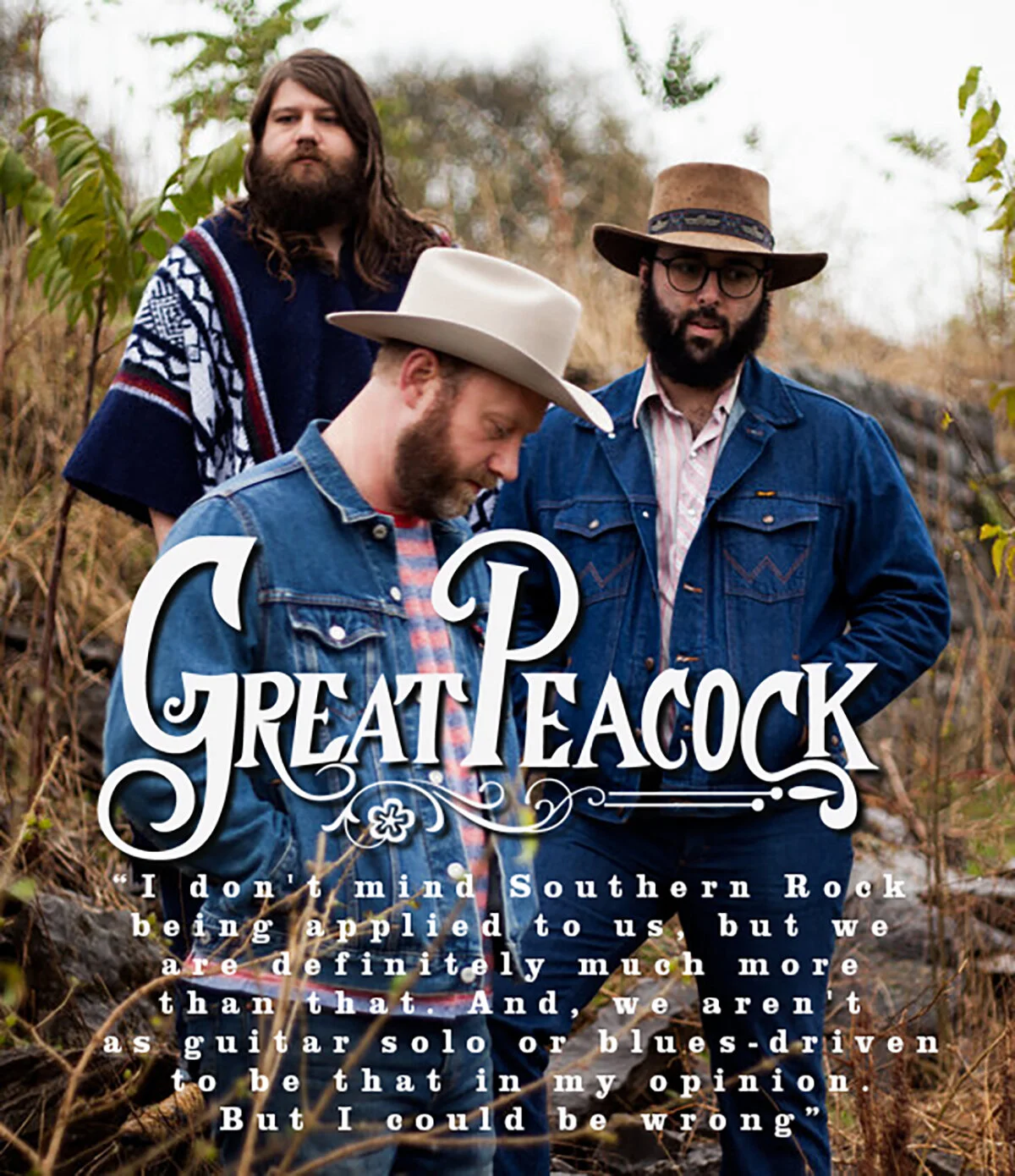
Diana Jones Interview

October 31, 2020 Stephen Averill
DianaJonesIntroPic.jpg

Diana Jones has long written empathic songs for the historically displaced and abandoned - and her current sensitive release, SONG TO A REFUGEE, is devoted to the contemporary plight of people and the real issues of today.

This is the New York-based Diana’s eighth album. Adopted and raised in the Big Apple, she was unlike most teenagers who were drawn to commercial music. Instead, she had a passion for country music and explored the work of artists such as Johnny Cash, Patsy Cline and Dolly Parton. 

Her inclination towards this musical style was explained and consolidated when she was reunited with her birth family in eastern Tennessee and learned that her grandfather was a singer who had played in a band with Chet Atkins. 

We spoke recently via Zoom with this most affable of singer songwriters about the album. She explained, quite emotionally at times, its history and her delight to be able to contribute in her own way to highlighting the plight of refugees and asylum seekers in the 21st century.   

Congratulations on SONG TO A REFUGEE. You must be delighted with the positive response it continues to generate. After you’ve done the spadework and got your music out there, are you generally anxious as to how it will be received?

I was especially with this record. There was this road that I followed after I found my grandfather’s family of exploring the music of the Appalachians and also the music of England, Ireland and Scotland, and the roots of where that music came from. I’d finished that cycle and I wasn’t sure what I was going to do next. Everything just happened in 2018, with the borders and also with the horrible situation with our Government, everything seemed to be getting worse and worse. It was a response to all that and a bit of a departure, simply a reaction on my part. When I looked at the songs after I wrote them, the songs were what they were, there was no way that I tried to make them anything but the stories that they told. So, I think after all that I wasn’t necessarily worried, more curious, because they are political from my perspective and I also think the songs are immediate. I’ve written songs before about social justice but they were about people that had died two hundred years ago (laughs). These songs are about what is actually happening. There’s a kid in a cage with his brother. I was so devastated. It’s not that I wanted to feel better by writing the songs. I just wanted to give respect to the humans that this was happening to. 

You managed to suppress your anger in the manner that you deliver the songs on the album. Was that difficult?

(LONG PAUSE) I was angry for sure. There were times when I cried myself to sleep that summer. I suppose a lot of people did the same at the sheer inhumanity of what was happening in our country. It’s about how I approach writing and when a song excites me. When I get into a character, the story becomes about them and my anger does not become part of it, I get freed of it in a way. 

Think about a woman coming in from Guatemala with her child and how it must feel like to be that terrified that you would walk for months to a border. On some level she trusted that things would be better because she did that so her child would not die. She must have been traumatised on every step of that journey.   

How did your chance encounter with Emma Thompson influence the direction of the album? Had you got the concept for the album prior to meeting her?

To meet someone like Emma Thompson, that you admire so much was amazing. She has such a beautiful light inside of her and she is such a humanitarian and that’s where our paths met, and I got the inspiration to follow that path.

I had just come back from the U.K. having been on tour for my live album. I hadn’t been writing a lot and became ill due to a gas leak in my apartment. I was just getting around to thinking what I would do next. As a touring artist, when tours are over and records are finished, it’s like you reinvent yourself. Anything is possible at the moment and I thought, maybe I’ll do something different. Funnily, I had been watching YouTube videos of Emma, because the way she talks about writing is so amazing to me. I’ve always been a fan of hers, particularly as a writer and a generator of context. So, to see her in my local park was kind of miraculous. We had a lovely encounter and when I told her what I did she said we must go and listen to some music sometime. I went off on tour and she was staying in that area, close to where I live, doing a movie. I came back from tour and the first day I was back I did one of those prayers where I don’t know who I’m praying to, but I was asking for a small sign of what to do next. The refugee situation had always been something that I’ve been concerned about, most people that have a heart would be.  So that concept came to me, and I actually ran into Emma that day and we ended up having a two-hour lunch. We spoke a lot about the refugee situation. Emma is President of the Helen Bamber Foundation and she said that I must go to the website and listen to the stories of some of the asylum seekers and refugees. One of the stories was about a woman from Sudan who left her country for the U.K. and had to send for her children, when she got asylum. It was a terrible situation. She told the story of being in the detention centre and how much she missed and loved her children.  It nearly broke my heart and I literally sat down that afternoon and wrote I Wait For You.  A couple of days later I sent it to Emma, we talked about it and she suggested it could be the start of a song cycle. I thought it would be a great idea. We then talked about possibly doing interviews in England with victims. Literally within a few weeks everything started happening in America with the borders and the stories were coming in so fast that the songs just came to me. I had done some interviews and one of the songs I had written, The Life I Left Behind, was about a friend of mine, who has since passed away and had come to America from Syria when she was seven. 

Over what period of time was the album completed?

So, I met Emma in May. Started the writing in June, finished the writing in September. I then thought of who I wanted to work with on the album. I had met David Mansfield through a friend and realised that he wrote the score for a movie called Songcatcher, that his wife Maggie Greenwald directed. I actually had the music from the film on my phone, that’s how much I loved the guy’s work. When I met him, we both spoke of how we loved each other’s work. A few years later and I’m walking down the street with my dog and I actually bumped into him. I told him how I’d love to work the album with him and he actually had the time available in a few weeks. So, I sent him the songs and we talked about producing it together. The Songcatcher connection was funny, because I felt like I was literally catching everything I needed for the album. Everything about this record just seemed to happen! After the record was nearly done, I realised that Richard Thompson was only two towns away. He showed up in his shorts and little hat and put some vocals and guitar on the recording. When we were finished with everything, I wrote We Believe You and we thought it should feature on the album. I also thought it should be something that that people I admire should join me on. 

So, you approached Peggy Seeger and Steve Earle to sing a chorus on that song?

Yes. Peggy is the closest thing that I’ve had to a mentor. I’ve spent a lot of time with her over the years and always make time to spend a few days in Oxford with Peggy when I’m in the U.K.  I met her some years ago when I opened for her and she’s the most gracious and lovely person. I connected with her instantly and she’s a person I never want to let go as a friend.   I had always wanted to do some sort of project with her, which we were not previously able to pull off in real time. This was the mother verse for Peggy to sing. I love Richard (Thompson), he had let me tour with him and he has introduced me to his audiences. Steve (Earle) had produced an album for Joan Baez with one of my songs on it. We’ve done some television together and got to know one another and so I thought of him to also sing a verse. Everyone was so gracious to say yes.

David Mansfield was an inspired choice as both a producer and musician. His Curriculum Vitae can boast working with Bob Dylan, Johnny Cash, Lucinda Williams, T Bone Burnett and Dwight Yoakam, to name but a few. Having self-produced previously how did sharing the production duties work on this occasion?

I always think of production as a joint effort anyway, I could not work with someone who wasn’t open to my ideas. I’ve never worked with anyone that I didn’t trust. I had an input at stages but I trusted David’s musical ideas and instincts. There were times when I would leave things up to him and others times when he would put a few parts on and we would choose which path to use. 

With limited opportunities to perform live in New York, how do you intend working the album?

Nothing is happening here in terms of live performances. What I have been hoping to do based on my idea about this record is interesting.  When I was booked to play any city, in the middle of the set, we were going to invite someone in to talk about the local refugees. So, if people at the show were moved by the songs, they would have a particular person as a reference, which might lead them to the Hearts And Homes For Refugees website, if they wanted to volunteer or even donate. One of the things I felt myself was that I was so helpless. I wondered what I could give, so my contribution was to write the stories about these real people. I started doing shows that way and It was so powerful and started a conversation between myself, the audience and the point person. People got involved immediately and were asking how they could help these families in their community, because it was very grass roots. It just made me feel so happy. I do what I can do, but if it helps to start a conversation and connections, that’s magic. But then unfortunately everything shut down with the pandemic.  Hearts and Homes then called me and asked me if I’d be interested in doing an online benefit. I said sure and I contacted Richard (Thompson) who had recorded his song called A Heart Needs A Home, which was perfect given that it was a Hearts and Homes project. I did my own sets, I actually recorded them with my iPhone! We put it together, sent it to them - you can find the show on YouTube - and it raised $10,000, which is a lot more than I could raise at a live show. When Hearts and Homes got the money, they bought food cards to feed families and buy furniture that very night, it was that immediate. What we are thinking about now is doing more benefits like that, particularly in places like say Australia, where people know my music but I’ve never got to perform there. That’s the plan right now since I can’t play live at the moment and I’d like these songs to be heard as much as possible. 

One of the things that has interested me is what the people who work with refugees have told me. It is also traumatising for those workers and many have thanked me for putting words to feelings they have but have not always been able to express. It’s very nice to know that it’s helpful for them also. 

Had you considered delaying the release of the album?

March was the first idea we had for release and had a tour arrange for April and May, along with festival dates that were coming in. It was really exciting but then everything shut down and we had to regroup and see if we could re-book later dates in the U.K. for November, which also got cancelled. So, we decided to go ahead for the September release. With the release and the positive press and the momentum the album was getting it’s a pity that I can’t tour, but I do think this record will do other things, particularly with the chance to involve refugee organisations.

With time on your hands at present, have you been putting it to good use?

I’ve actually written a new record. I’ve a new toy, a pandemic toy. For the first time I’ve actually got a great microphone and I can record myself. It’s maybe not studio quality but it’s good enough. I’ve written nine songs so far and David (Mansfield) and myself might work on them together at some point. I’ve worked on a few other songs like I Can’t Breathe, that I wrote a few years ago. There are some moments when I do feel a bit uninspired, but I do have a few things on the back burner. 

Globally we seem to be at a tipping point politically and emotionally at present. What are your hopes or, more realistically, your expectations looking back at 2020 in twelve months’ time?

My dearest wish and hope are that Biden is our president and that the exchange of power is handed over peacefully. There are just so many things that might happen now. I just think we can get someone elected that’s not a narcissist and a fascist, and can lead us in some way. What has happened with the death toll due to the pandemic is unforgivable. We simply need a leader on a very basic level. Someone that can simply say: ‘Wear a mask, it’s for your neighbour, your neighbour’s grandparents, it’s for all of us.’

Interview by Declan Culliton
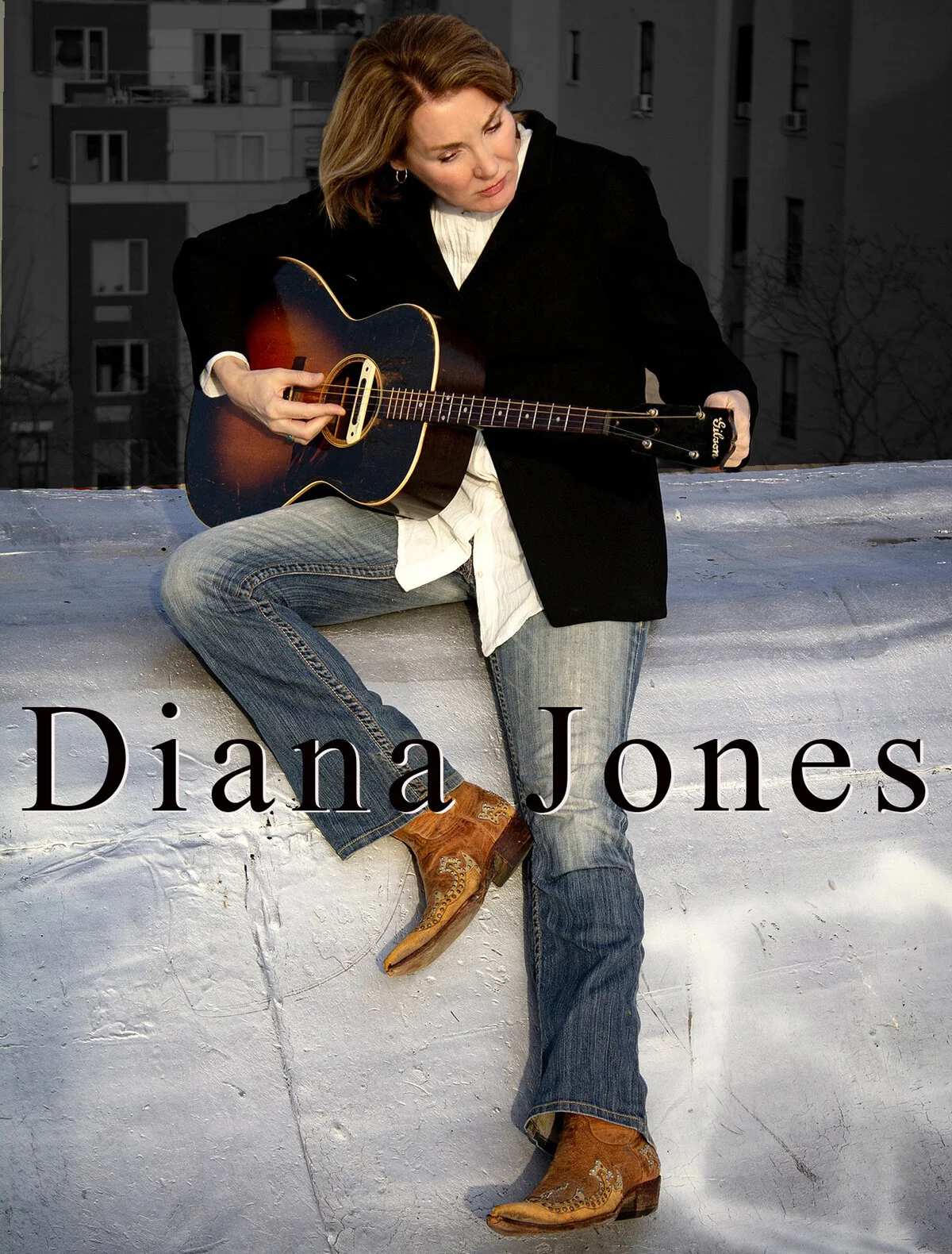


Zephaniah OHora Interview

October 21, 2020 Stephen Averill
OhoraIntroText.jpg

It’s all too easy to apply the cliché ‘modern day classic’ when enthusing about an album that brings to mind a definitive sound or artist of yesteryear. It’s an assertion that is frequently over used, over stated and often wide of the mark. When tempted to use the description while reviewing an album, I check myself and apply a simple logic. Will I still be drawn to the album over the next few years and will my opinion remain? 

THIS HIGHWAY, the debut album released in 2017 by New York resident Zephaniah OHora, is a case in point. The album was much more than a recreation of the Bakersfield and Nashville sound of the 1960s. I was impressed by the song writing, vocals and playing, with OHora composing all but one track. This very much suggested that he had more than a classic voice and was capable of creating material to match his musical role models’ output. Three years on and my opinion has not altered. I’m enjoying the album as much as ever and returning to it regularly. It does, therefore, justify the accolade of ‘modern-day classic’ and it’s set to be joined in that file by his second album, LISTENING TO THE MUSIC that came out in August.

This album is further proof that classic country music is alive and kicking and not confined to Music Row, Nashville. OHora joins a host of artists such as Jesse Daniel, Charley Crockett, Victoria Bailey, Jaime Wyatt and Brennen Leigh, who have recorded stunning country albums this year.

Your surname suggests some Irish blood in your veins. Is this the case or have you researched your family tree? 

It’s an Irish last name but I haven’t done any major research.  On my mother’s side is Croatian heritage, which there is more documentation and photographs of in my family’s archive. 

LISTENING TO THE MUSIC has been attracting rave reviews since its release in August of this year. Many of those reviews, including our own at Lonesome Highway, are by writers that were drawn to you from your debut album THIS HIGHWAY. Do you sense that you’re reaching a much wider audience this time around?

 I think so. It’s much appreciated.

You decided to launch the album during the pandemic rather than wait until touring opportunities presented themselves once more. What were the factors that most influenced this? 

I had already been sitting on the album for a long time. It was time to release it. Plans were in order before the pandemic, and I’ve been saying since April that the pandemic will last much longer than most people I knew were saying. No sense in waiting around for the pandemic to be over. 

How different was the recording dynamic when compared to your debut recording THIS HIGHWAY?

The dynamic was different this time around. It was recorded largely with a totally different group of players alongside Roy Williams and Jon Graboff, who were in my band the 18 Wheelers. All of us had spent many hours playing music together. So, it was a breeze.

The selection of Neal Casal to produce was inspired. He did not let the instrumentation get in the way of your vocal, yet every note on every instrument is crystal clear. How different was it working with him and how did you hook up with him in the first place?

I met Neal at the album release show for THIS HIGHWAY. We became friends after hanging and talking for a while after the show. We kept in touch and when I wasn’t sure who should produce the record, Neal’s name came up and I realized it was likely a very good musical match. Neal was a very special guy who lived for music, so It was hard not to have fun in the studio with someone like that. We had so much fun and we talked about working together on another record in the future. 

Your sound is unconditionally traditional country. What drew you in that musical direction and which artists and era particularly influenced you?

I’ve listened to it all. I’ve been a long-time student of country music. First and foremost because I genuinely love it. It’s only natural if you’re seeking out great music, you are bound to stumble on country music. 

When recording both albums did you consider them, notwithstanding their individual qualities, as a pathway for a younger generation of listener to explore the classic artists of yesteryear such as Merle Haggard, Buck Owens and George Jones? 

Honestly, I never considered that during the process. I’ve just tried to make great sounding and well written albums that I would want to listen to many times over, if they weren’t my own records. 

Brooklyn is not necessarily renowned for music involving fiddles or steel pedal. Is there a growing underground Country music scene there? 

There was a moment in time from around 2013 to 2018, when it appeared that way. A lot of people have relocated to Nashville, Los Angeles, and elsewhere. New York can be a hard place to survive as a musician. And all of the great musicians are constantly growing and evolving, so New York is just one stop on their journey. 

Did you get sufficient opportunities to gig locally before the lockdown or was it essential for you to tour in order to get shows?

There were plenty of local gigs. Touring is an investment for artists at my level. It’s not a big money maker. Not if you’re touring with a band anyway.

A lot of musicians favouring Americana and Country music have relocated to East Nashville looking to breakthrough to the next level. Has this been a consideration for you? 

I love Nashville. So sure, I hope to wind up there someday.

A number of artists in recent years have released traditional country albums but moved more towards country soul and mainstream for future recordings. Do you consider yourself locked into the classic country genre going forward? 

Time will tell. I’m not sure what’s next for me. 

There is quite a healthy following in Europe for what you are doing. Scandinavia, Germany, The Netherlands, UK and Ireland spring to mind. Are you intending bringing your live show to Europe when the world returns to normality?

That’s possible. Again, it’s an investment and huge undertaking to hit the road across the pond with a band. Things appear so uncertain at the moment. It’s not even something I’m seriously considering to be honest. 

 I’m aware that you also worked as a booking agent at the Brooklyn bar Skinny Dennis, which reads as the ultimate role for a musician like yourself to sustain a living. Is that bar still functioning as a music venue? 

No. It’s been closed since New York went into lockdown. 

 Where do you foresee a full-time sustainable career in music going forward for artists like yourself? Given what we are living through at present or do you think the whole career model will change?

 I have no idea. A lot of things need to change. It’s about time venue promoters started doing what independent artists have been doing long before Covid-19. If you want to survive and keep your festival or venue going post Covid 19, you need to offer artists enough money to cover expenses to play that one show. So many artists at my level have been booking tours knowing that we may lose money or break even, if we’re lucky. We’re told it’s what we have to do to invest in our careers. Festival promoters need to invest in independent artists, if they actually care about that corner of the industry. People need to buy music again. You can’t exclusively stream all your music and expect this shit to keep going. 

Have you a career master plan going forward and if so, where do you see Zephaniah OHora in ten years’ time?

Hopefully I’m still alive and releasing music professionally.  

Many thanks for taking the time to talk to us and congratulations on what is for me one of the best albums I’ve had the pleasure to hear and review in 2020.

I appreciate you taking the time to review the album and telling other people about it. Thank you.

Interview by Declan Culliton

Interview with Victoria Bailey

October 15, 2020 Stephen Averill
VictoriaBailey_03_PhotoCredit-StefanieVinselJohnson.jpg

 From the opening track and first single from her debut full length solo album, Victoria Bailey nails her colours firmly to the mast. That song is titled Honky Tonk Woman from the recently released album, JESUS, RED WINE & PATSY CLINE. Together with the album title, it leaves you in little doubt where her heart lies. It’s one of nine tracks that introduce another fledgling artist with the skillset to become a flag bearer for traditional country music in the coming years. The songs are well structured and mature, the playing is top notch and the icing on the cake is a stunning soprano vocal that recalls the classic female country vocalists of yesteryear. We spoke with Victoria recently about the album, her passion for music and her side project Little Folk Club.

Congratulations on your recent release JESUS, RED WINE & PATSY CLINE.  We're loving it at Lonesome Highway.

Hi, guys. Thank you so much for the support on this album. I am over the moon to have it out in the world and excited to talk to you about it. 

I understand you grew up with a lot of music around you at home but not necessarily country. Was there a defining album, artist or occasion that won you over?

I was surrounded by so much music as a kid. My dad is a drummer and was always in local rock bands, and my mom has a huge heart for folk music, which all really inspired and sunk in at an early age. My first true love in country music was the queen, Emmylou Harris. Her albums, and who she is as a human overall, had a huge impact on what I wanted to emulate as a songwriter and performer. I started singing Gram Parsons and Emmylou Harris duets with a friend at shows, which kind of gravitated towards our little local country-loving scene of musicians in Orange County and LA.  

JESUS, RED WINE & PATSY CLINE has its foundation in The Bakersfield Sound rather than Music Row Nashville. What drew you initially to that sub-genre?

A few local legends around here have told me so many great stories about the “Bakersfield Sound” and taught me a lot about all of the country magic that has come out of California - Buck Owens, Merle Haggard, and Dwight Yoakam, to name a few. I really dived in deep and listened to podcasts and read a lot about this time in country music and the Bakersfield scene in the '50s, and I really wanted to pay tribute to that on this record, which led me to write the track Skid Row.  

It's a killer album title. Namechecking Patsy Cline was a brave move but it's certainly justified by the quality of the album. Did you harbour any doubts about the title or were you confident that the music would vindicate the decision?

The title purely just sums up the three most important things that inspired this album, and what I hang onto very tightly as an artist. It’s also a line pulled from the first track, “Honky Tonk Woman,” which was the first song written for the album. So, it was always in the back of my mind as a title, as well as what I wanted the rest of the record to represent.  

Jeremy Long nails the production on the album, together with playing great pedal steel. Had you worked with him previously?

Jeremy has been a long-time friend and mentor to me. He’s truly a legend around here. We started playing together when I was just dipping into the country genre. He has not only been my greatest teacher, but also has exposed me to so many great country records and has always encouraged and supported me as an artist. We were super in-sync with how we wanted Jesus, Red Wine & Patsy Cline to sound, and it was purely so fun and natural bringing it all to life together.  

You tip your hat to a honky tonk bar in Los Angeles on the song Skid Row. Was there a country music scene at that bar before the pandemic?

Absolutely. The bar is called The Escondite, and it rests right in the middle of downtown LA’s “Skid Row.” This is one of my favourite little honky tonks, as well as one of the only country bars we have here in Southern California. There is a great little country scene in LA that gathers around a summertime event called “Grand Ole Echo,” which is honestly one of the things I miss most during this wild year. It’s such a great community of musicians paying homage to a traditional country sound and gatherings and culture.  

What tracks on the album are personal favourites for you?

Honky Tonk Woman will always be my favourite to play with my band. Spent My Dime on White Wine is another favourite. Both of these songs just put me in a really good emotional place and are probably my favourite, production-wise, on the album. 

How frustrating has it been to release the album and not have the opportunity to perform the material from it live at present?

It’s so bittersweet. It honestly was tough to grasp at first, but once we were a few months into the pandemic and life looked so different overall, I’ve realized how much the world needs music and the new albums that I have listened to this year have been my saving grace. It will never be too late to travel with these songs, so I’m okay with being patient, and I will definitely tour once all is safe in the world to do so. 

How would you compare the album with DREAMER credited to Victoria Bailey and The Victoria Bailey Band from 2014?

Oh, my gosh, ha ha! I always describe DREAMER as my 18-year-old self’s diary entries. I am so proud of that album because I recorded it with my dad and was playing shows and singing in front of crowds for the first time ever and learned so much. My sound and style have changed a ton since then, so I really just see the two albums as two completely different parts of myself and my life. 

There is a steady resurgence of classic country music emerging in recent times with artists like yourself, Zephaniah OHora, Michaela Anne, Jesse Daniel, Kayla Ray and Jason James - to name but a few - recording excellent albums. Do you feel part of a revival of sorts?

There is definitely something special going on in the Americana/classic country scene, and I feel really lucky to be playing music during this time. It's so beautiful to see a lot of history and classic sounds being pulled back into this era, too.  

Prior to the present restrictions, were there many outlets and opportunities for you to perform locally and did you tend to tour outside California?

I’ve been playing solo around town for years. You kind of just get creative at some point with gigs, and prior to the pandemic, I was playing a ton. I even had a residency at Whole Foods (yes, the grocery store, ha ha!) every Friday for years.  We have a few great venues in Orange County like The Wayfarer and The Coach House for bigger shows, but also little beach-side bars, and LA, of course, is endless but there is a lot more competition for gigs. I also host a kid’s music club, so I’ve put on a few family concerts around town, too. 

Had you booked a tour in anticipation of the album release before lockdown?

We had one in the works, which is just on hold at the moment. It was nice to be able to focus on the release in a different way, though, and to connect with fans and family through different outlets like livestreams and such. Of course it doesn’t compare to playing to a live room, but my team has been incredible and still poured so much love into the release of the record. 

Tell me about your side project Little Folk Club?

Little Folk Club is such a big piece of my heart. I started this “mommy and me” music program about five years ago, and it grew into something bigger than my wildest dreams for it. I started the club to share my love for traditional folk songs and wanted to expose this younger generation to songs that I hope can be preserved forever. Pete Seeger and Joni Mitchell were a big inspiration for the tunes I started playing for the families. We have a jam circle open to all ages and instruments, and I perform little concerts for the community. I have had moms bring little ones as young as three weeks to soak in the music and energy of the community, and it is truly such a joy to see how powerful music really is at any age. 

Does the project target country music specifically or a wider range to capture the children's attention?

It’s really a good mixture of all genres. The root of it is folk, but we also do a lot of nursery rhymes and play newer folk artists, too. Kids love interactive songs, so getting them to play drums on the ground or to clap along to beats and dance is what they love most, whatever song or genre it may be. 

It's an impressive and practical blueprint to have a side project alongside working as a professional musician. Do you see yourself expanding the scheme / club going forward?

I will always coincide both of my music endeavours. It’s always been a dream to be a pre-school teacher alongside me performing, and Little Folk Club would tie into that perfectly, of course. I think it’s such a blessing to be able to educate in the smallest way with my music and will always continue to share my love for the music that I was brought up with. 

Are you finding the present restrictions demotivating as a writer or are you using the downtime productively?

Yes and no. I’ve been recording a lot this year which has kept my creative heart happy. I write best though when I’m traveling and experiencing new places and cultures and stories, so that part isn’t flowing as well as I’d like. But that has kind of settled well with me, and I still know what’s to come next as far as song concepts and little ideas flowing here and there. 

Many thanks for taking the time to talk to us and hopefully we will get to see you play either in the U.S.A or Ireland in the future. 

Thank YOU guys, so much. Thank you for supporting musicians in such a special way, and for listening to my record, and for the super kind questions. Much love to all of you, and stay healthy and safe.

Interview by Declan Culliton

Photograph by Stefanie Vinsel Johnson

Juliet McConkey Interview

October 9, 2020 Stephen Averill
JulietIntroPic.jpg

You may or may not have come across singer songwriter Juliet Mc Conkey. If not, you’re well advised tracking down a copy of her debut album DISAPPEARING GIRL and giving it a listen. Since moving from the Blue Ridge Mountains in rural Virginia to Texas in 2018, she has established herself as one of the primary emerging players from a State that’s not short of gifted artists. She chose her career path under no illusions about the inherent obstacles and challenges that awaited her. However, based on her positivity, pragmatism and abundance of talent, her calling is most likely going to continue on its upwards path. We caught up with Juliet recently, having reviewed her debut album at Lonesome Highway.

Was the decision to relocate from rural central Virginia to Texas driven by an ambition to further your career as a musician?

Partly, yes. I knew that if I didn’t go somewhere with the intention of taking my music more seriously, I’d probably just piddle around and half-heartedly dream about it for too long. A musician enchanted with the mystique of Austin isn’t exactly a novel idea (laughs), but what I wanted to do was get out and play, so it sounded like a great place to do it. But I also had a fascination with that region of the world in general and a desire to go live somewhere I’d never been and experience some life. People from Texas really LOVE Texas. I thought it looked like a lot of fun, so I went and fell madly in love with it. Worth it a thousand times over! 

What determined the choice of Texas rather than Nashville, Tennessee?

I just really wanted to live in Texas. The easy explanation I gave to (the many) people who asked me the same question was that I wanted to get out and play as much as I could and that I thought Austin was a better place to do that than Nashville. I feel that turned out to be true for me. But it wasn’t really about choosing one over the other so much as just wanting to go somewhere I thought I’d love living, regardless of career aspirations. I’d just graduated college with the realization that my heart was not in what I’d studied and a yearning to play more music but not really knowing where to start. I felt guilty for “wasting” a degree and was floundering around in search of some semblance of purpose. Somewhere in that headspace I got the idea I’d like to go to Texas and then I just decided why not. I hear people all the time saying “oh I wish I could go live/do/see this or that” but they never end up following through. I thought, ‘there’s no reason why I can’t do this’, so I did!

Was music part of your childhood and at what point did you decide to pursue it as a career?

Music was very much a part of my childhood to the credit of my father. He’s been a songwriter for his whole life and played in various great bands over the years. Most family gatherings still wind up turning into a jam session reminiscent of what I imagine the radio sounded like in the early ‘70s. I got a guitar and started writing songs around age 12 and though I dreamed of doing it for a living, I don’t think I really thought I could. I thought I wanted to be a physical therapist and planned to do just that until right around the time I actually had to make that choice and and I knew I wasn’t that passionate about it. I think I really decided to give music a shot because I didn’t want to spend the rest of my life wondering about it. I’m nowhere near it being a fully financially sustaining career (although in a twisted way it is technically my only job at this present moment due to Covid-19), and while that would be wonderful if it ever happens, I know I can be perfectly happy if it doesn’t. I’ll never stop making music because I love doing it. But I believe something that personal is done best on your own terms and I think I’ll be one happy 75-year-old lady if I can look back knowing I didn’t compromise in ways that made me unhappy. I have other interests too and I don’t mind working a straight job and making music too.

What music would you have been listening to as a teenager?

A lot of stuff that has since lost my interest (laughs), whatever was on the modern pop and country stations, which these days I can’t stand. When I got an iPod, my friend put his whole music library on there which consisted of a lot of Jack Johnson and Guster and many more I can’t remember. My first real introduction to country was the music of The Chicks (of the formerly Dixie variety) and that love has remained true. Through it all the music my parents raised me on has never lost its shine and is still a favourite now. Lots of the Beatles, Beach Boys, Sam & Dave, Diana Ross & the Supremes, James Taylor, Linda Ronstadt … I’ll stop or I’ll just keep listing. But my favourite radio station growing up was called Superhits 102.3 and it played all the hits of the 60s and 70s. My taste has changed plenty over the years but that stuff will always be timeless.

You made quite an impact in Texas in a short space of time. Did winning the Blue Light Singer/Songwriter Competition in 2018 in Lubbock, open doors for you?

It definitely did. The Blue Light is run by some really kind folks and it’s a tight-knit, supportive community. They gave me a lot of great gig opportunities following the contest and have just been generally very supportive. I entered the contest because I didn’t know any musicians in Texas and thought it might be a nice way to make some friends. Which was a tad silly considering Lubbock (where Blue Light is) is a solid 6-hour haul from where I was living in San Marcos, but it worked out and as a result I did end up connecting with a lot of wonderful folks making music in Texas.

You also earned opening slots for Kelly Willis, Jamie Lin Wilson, Jaime Wyatt and LeAnn Rimes. Apart from the exposure these slots would have afforded you, what did you learn from playing in the same shows as artists like these four?

I learned what a pro looks like. They’re all artists worth looking up to and those that I had the pleasure of meeting were so gracious to me. Especially Jamie Lin who’s gone out of her way more than once to help me out. I felt incredibly fortunate to have been able to share a stage with them.

Much of the material on your debut album DISAPPEARING GIRL appears to describe characters and events from your life in Virginia. Had you written much of the material prior to moving to Texas?

None of it actually (laughs), it was all written within the first year and a half of living here and consistently spread out within that time. River Run was the oldest I think and Like A Rose the newest. But you’re definitely right that much of it is influenced by my upbringing, directly or indirectly. Intentional or not, I think your roots are gonna find themselves woven into your art.

Are the individuals and happenings fact or fiction?

Both. Individually and mixed together. DISAPPEARING GIRL is essentially all true and came about while pondering what makes people bad people. Hung The Moon is completely fictional. Good Times is inspired by an old co-worker and imagination took over from there. I guess most of the songs are born of observation and subsequent thought, which usually winds up somewhere between fact and fiction.

You hooked up with Scott Davis to produce the album. How did that come about?

I first met Scott very briefly when I opened up for Kelly Willis and he was playing in her band. The more musicians I met in Austin, the more I realized how much everyone deeply respects Scott. He’s not just one of the most talented people I know, he’s one of the all-around best. I loved the sound of Jamie Lin Wilson’s JUMPING OVER ROCKS and once I learned he produced it, I got the idea I might like him to do my record, whenever I felt I had a record to make. At least a year after that, James Steinle helped me actually sit down and hash it out with him, and in few months, we were in the studio. I trusted him completely and got out of the way (laughs). He assembled the wonderful group of Steve Christensen, whose studio we used and who engineered and mixed everything, Richie Millsap on drums, and Trevor Nealon on keys. And Scott multitasked everything else. They never made me feel like the absolute rookie that I was, I consider myself mighty lucky to have worked with them.

The production focuses very much on your vocal with the instrumentation complimenting your voice rather than competing with it. Were you particularly seeking that balance in the recording?

To me that’s a testament to the players ability to emote along with the lyrics of the songs. Scott is an incredible songwriter and understands the importance of words so he’s not just gonna make noise for the sake of noise, he’s intentional. Richie’s percussion in I’ve Got A Dollar sounds like sticks on a plastic bucket because he listened to the words. All three of them are wonderfully tasteful players who know how to add to the story without drowning it out.

The album thankfully avoids slipping into country/pop crossover territory. Were you conscious to avoid it heading in that direction or was there a temptation to look for a more mainstream sound?

I told Scott from the beginning that I was not at all concerned with fitting any sort of genre mould and quite honestly wouldn’t mind if we happened to do the opposite. To quote James (Steinle) when asked what kind of music he plays: “I just write songs, man.” I’ve got these songs, they sound how they sound, let’s make ‘em pretty and not worry about anything else. We made a real melancholy batch of tunes and while I couldn’t be happier with how they turned out; I understand if they’re not everyone’s cup of tea. Maybe my next record will make you dance a little faster, but I don’t worry about that too much (laughs). We all agreed it’s best to just give the songs what we thought they needed.  

Given the lack of opportunities to perform live at present, we’re you tempted to delay the release until a degree of certainty returned?

Not really. I initially wanted to release it in May 2020 but that was before I knew how long it would actually take to get all my ducks in a row for a release. Looking back, I was comically unprepared for most aspects of what it takes to put out a record. Live and learn! But in the grand scheme of things, nobody knew who the hell I was, so there really was no reason to put it off.

I believe you’ve packed your bags and are enjoying an alternative lifestyle in the medium term rather that sit around waiting for normality to revisit us?

Yes! Super excited about it. I moved in with James in Austin in July and after a few months of sitting around wondering what to do, we decided to get out of town for a while. We’ll be spending extended chunks of the next year or so with family, doing some work on his family’s ranch in New Mexico and my family’s fruit tree nursery in Virginia and wherever else we might end up. Hopefully a little bit of normal works its way back into the world, but we’ll just take it as it comes.

Interview by Declan Culliton

← Newer Posts Older Posts →

Hardcore Country, Folk, Bluegrass, Roots & Americana since 2001.