• Radio
  • Interviews
    • Music Reviews
    • Live Reviews
  • Features
  • About Us/Contact
  • Search
Menu

Lonesome Highway

Street Address
City, State, Zip
Phone Number
Hardcore Country, Folk, Bluegrass, Roots & Americana

Your Custom Text Here

Lonesome Highway

  • Radio
  • Interviews
  • Reviews
    • Music Reviews
    • Live Reviews
  • Features
  • About Us/Contact
  • Search

Erin Viancourt Interview

August 7, 2023 Stephen Averill

Photograph by ALYSSE GAFKJEN

The name Erin Viancourt may be new to you in country music circles as it was to Lonesome Highway until we received a review copy of her recently released debut album, WON’T DIE THIS WAY. The Cleveland-born artist has spent the past eight years in Nashville steadily and deftly growing her profile from playing small dive bars to more recently playing arenas while touring with Cody Jinks. The first signing to Jinks’ Late August label, her debut album is forged from both traditional and modern country roots, while avoiding anything that approaches the pop/crossover sound currently dominating the airwaves.  A maturing artist with a crystal-clear career trajectory and mentored by one of the most successful independent country artists in Cody Jinks, Viancourt is set to move swiftly from the ‘one to watch’ category to the ‘one that has truly arrived.’

Was there more rock and roll than country music surrounding you growing up in Cleveland?

Yes, lots of rock and roll of course being in Cleveland, but my family also listened to a lot of Jerry Jeff Walker, Asleep At The Wheel, Patsy Cline and John Denver. Lots of Irish music too, we’re a bit of Scotch, Irish and French, we have a heavy Irish bloodline.

You headed to Nashville when you finished school. Was that daunting at the time?

Not at all, it was wonderful. It was ‘get me out of this town, I’m ready to go.’ I had a very supportive family. My dad drove me to Paris, Tennessee, before I moved to Nashville as I had a cousin living there. That made it an easier move. It was fun telling my high schoolmates that I was going to Paris to sing country music. I didn’t tell them which Pari

Did you have contacts in Nashville?

I did not. I just wandered into the first bar that would let me play and played to nobody for a long time. I played Your Mother’s Bar and Grill and I met people that are still some of my very best friends there, including the guy that plays guitar in my band on the road with me. He was one of the very first people I met in town in this little hole-in-the wall bar. People that were playing to nobody with me back then are now getting to do all this fun stuff together.

I understand that you worked at 3rd & Lindsley for a number of years. Was that a conscious decision to work at a music bar with the opportunity of networking?

I worked at a few BBQ places before that but it was better to work at 3rd & Lindsley and get to see The Time Jumpers play every Monday night. If you’re going to be a waiter or a bar attender you might as well listen to good music too.  As well as filling my soul with good music and resetting my brain if I was getting a bit down in the dumps, the owners and promoters there were kind enough to believe in me from a very young age. They would put me up as an opener for acts when they had the choice to do so. They let me open for some wonderful names like Paul Thorn, Travis Meadows, Mikey Guyton, and Alex Williams. Alex actually played a big part in connecting me with the people I’m working with right now, which helped me get my record deal and make this record.

You recently had your album release show at 3rd & Lindsley which must have been particularly pleasing for you.

Yes, I got to do my album release show there. It was really full circle for me back playing there and we had a good turnout.

When did you make your first formal recording with the debut single, Playing Old Records?

I opened up for Alex Williams at 3rd & Lindsley in April or May of 2019 and released that single, Playing Old Records, in September of that year. The team that I have behind me now reached out and told me that they were paying attention and asked me to come to Texas and talk to them, which I did. Then the world shut down, but I stayed with them and as soon as things opened up again, they had me opening up for Cody Jinks and Travis Tritt, and they kept asking me back to play more shows with them. They also told me that I needed a record out and that’s what we did.

You had already written a number of the songs from your early days in Nashville. What were the first and last songs that ended up on WON’T DIE THIS WAY?

Yes, I had. The first song, Beautiful Night For Goodbye, was written in 2014 and the last ones, Some Things Never Get Old and the title track, Won’t Die This Way, were both written in 2021.

Is that title song, WON’T DIE THIS WAY, tongue-in-cheek or factual?

That is a very literal song. When you’re in a situation in your life when you are so heartbroken and you think ‘This can’t be it, this isn’t how I want to live only knowing this feeling. I got to do something about it.’


The album is truly modern country. You avoided going down the more mainstream pop/ country crossover road.

I won’t die singing pop-country music. I tend to like old country music and not the mainstream country. There’s room for all of it, although I don’t necessarily listen to the crossover stuff. I want to make the kind of music that I’m a fan of. You don’t know what the end result is going to be like while recording an album, as much as you attempt to make it the way you want it to sound. My goal while recording is always to make an album that I would love listening to.


You have blended the classic country sound of yesteryear on songs like B24, Old Time Melody and Beautiful Night For Goodbye, alongside the Brandi Carlisle-type anthem, Should’ve Known Better, which is a show stopper.

That’s a song that I get a lot of messages about, people saying that they’ve screamed that line from the top of their lungs many times. That song can be about so many things. It’s the classic thing that most people can relate to, ‘I knew better but I still did it.’

You are the first signing to Cody Jinks’ Late August Records. How did that come about?

When I played that show with Alex Williams at 3rd & Lindsley, Cody’s management team heard what we were doing and asked us to come down to Texas, which we did. From there we signed on as a team with them and after Covid, we went down to Austin and opened up for Cody Jinks and Travis Tripp. They were kind enough to ask us back continually and we did a good amount of touring with them from last year. We spoke a lot with Cody about music and protecting the integrity of your own music in this business. He’s just a good guy that not only wants to help young artists to get their music out there but to also inspire them to keep making music and writing honest and authentic music, and to be aware of protecting it. So, I’m very proud to be on Late August records and have that team around me. I consider myself to be one of the luckiest people in Nashville.

What has it been like touring with Cody and playing to large audiences?

The most fun thing about playing shows with him is the variation.  Some days we walk into an arena or a large amphitheatre but there are also shows where he goes back to small dive bars that only fit a couple of hundred people and they’ve got them packed in there. I know that’s what fills his soul, playing those smaller gigs where you get to be up close and personal with the audience. We’ve played to fifteen hundred people, twenty-five thousand and a couple of hundred people. It’s really sweet to watch him weave in and out of that and loving what’s he is doing. As well as opening, I get to do a couple of songs with him during his set. We sing his song, We Get By, which is one of my favourite songs of his and also cover the Bob Seger song, Still The Same. We actually recorded that song and will be releasing it sometime this year.

As the opening act, how does playing in large arenas compare to smaller rooms?

I’ve only played once to twenty-five thousand, so I have a long way to go to get there for my own shows. When you’re the opener in a show you can be playing to a lot of empty seats sometimes. It’s almost like a challenge to find those people that are there that don’t know who you are. But, you can see some that are enjoying themselves and also tune out the people who have got up to go and get a beer.  You also find people that are singing along and they are the ones that I’m singing to. For smaller crowds, you just play like there are twenty-five thousand people singing along to your songs. As well as a support act we’re slowly making our way to headlining shows, where I get to pretty much play the whole album out on the road.

A lot of artists like yourself comment on how hard it can be to get regular shows in Nashville away from the commercial tourist scene.

Yes, you wouldn’t think so, but it can be hard to find yourself a spot to play in and get paid in Nashville. There are many wonderful spots in Nashville where the locals go and not really tourists. So, if you want to hear good country music there are a lot of community-based places like The Underdog, Honky Tonk Tuesday at The American Legion, Dee’s Cocktail Lounge, where you can meet your friends and play music.

I get the impression that you’re a very structured and goal-driven person. Where would you like to see yourself in ten years’ time?

My ten-year plan is to be consistently touring, ideally with a full band that I can pay handsomely, still making music and being able to pay the bills doing that. I’ve dreamt of places that I’d love to play like The Opry, The Ryman, and Red Rocks. Coming over to play Europe and especially Ireland and maybe making ten more records.

Interview by Declan Culliton

Charley Crockett Interview

July 31, 2023 Stephen Averill

With the music industry these days appearing to control the market and attempting to regulate the public’s listening choices more than ever, it’s very tough for independent artists to survive in a meaningful way. Charley Crockett’s career progression has not been dependent on the industry moguls. Instead, his trajectory has been based on an entirely different model. His early days of busking, wayfaring, train hopping and self-education, set him on a path of self-sufficiency, and an awareness of the possibility of existing in the industry without selling his soul to others. Eight years into a recording career that has yielded thirteen albums to date, his hard graft, patience and astute self-management, means Charley has carved out an effective survival path. His busking times are far behind him. These days he’s sharing stages with Willie Nelson and Chris Stapleton, playing The Ryman in Nashville and enjoying his days on the road. He was in his usual engaging and buoyant form when we chatted recently prior to his return to Ireland to play Vicar Street in Dublin on 5th September. 

When we spoke in August 2020 at the height of the pandemic, you were still pretty upbeat and resolute telling me ‘They better watch out in country music, because I’m just getting started.’

That sounds like me alright.

They are the words of a positive man.

It all depends on where you’re coming from. People are always asking me if I’m doing ok out on the road, touring all the time. If you start out on street corners, hitchhike, ride trains and walk across this country the way I did when I was a younger man, riding around on two buses, having a crew and people that are taking care of you, which I do now, that’s a fantasy. I’m being honest when I say that the way that our business was paralysed during the pandemic was an advantage for me. It levelled the playing field a bit.  I hadn’t been getting the money and resources that a lot of people in the business had been getting. While others were financially paralysed in the pandemic, I made a play, wrote my songs, and got to record them.  

You have certainly been true to your word. Since then, you’ve been on stage with Willie Nelson and Chris Stapleton, played The Ryman, and recorded and released your most commercially successful album, THE MAN FROM WACO.

That record is interesting because I recorded it live to tape with my road band The Blue Drifters. The songs that we recorded were being viewed by business people around me as nothing but demos, but I took those so-called demos and we put them out. I was writing those songs on the increased visibility that my other records WELCOME TO HARD TIMES, MUSIC CITY USA, 10 FOR SLIM, and JUKEBOX CHARLEY, had got me. But more than that, I think that the song writing and magic of my band on THE MAN FROM WACO translated to people in a way that those messages would probably not have come across on a lot of really well-recorded records. It’s not necessarily how perfect a record sounds; it has a lot more to do with capturing the performance of the band and how somebody feels when they listen to those songs. You could take those same songs and build them piece by piece in a studio and it might not have the same effect as the live recording. I think that’s the main reason why that album did so well. Also, because it’s a concept album, where I was telling one big story about a character’s life, that also seemed to really connect with people.

You co-produced it with Bruce Robison and recorded it at his studio outside Austin. Was he surprised that you put the tracks down in one or two takes?

I think he was surprised but he was really laid back. I got to know Bruce from running into him on the old country circuit that we were both working for many years. We met in Oklahoma at a festival a bunch of years back and he invited me down to his studio to record. Both times I ended up down there to record, I was really surprised and pleased with how warm those recordings sounded after coming in and throwing down songs without hardly thinking about it. We’d do one or two takes, hear the playback from that two-inch tape on that old board of his in the control room and every single time I was completely surprised at how good it sounded. The thing I love about Bruce is that he went with everything I wanted to do with THE MAN FROM WACO production-wise. When I was sure of something I wanted to do with that record, he would follow me. If I had interfering record label business people around me, I would not have been able to record the way I did.

Had you road-tested the songs with your band before you recorded them?

No, besides the song, Trinity River, those boys hadn’t heard any of the songs. They were learning them as we were recording them.

That song, Trinity River, seems to be very special for you as your latest single is a live version of it from your show at The Ryman.

It is. I wrote that song standing over a small bridge over the Trinity River. That river forks above the Dallas Forth Worth area. The west fork runs through downtown Fort Worth and the east fork runs south of downtown Dallas. When it floods that river can be as big as the Mississippi and it has these huge levees on either side of it to try and control it. Without those irrigation systems that area would be nothing but marsh. When I was coming in and out of that area, I would spend a lot of time hiding out down there between those levees, down at the river writing songs. One day, probably ten years ago now, I sat down there and that song came to me and it really felt like the river gave that song to me. I put it on A STOLEN JEWEL, the first official album that I put out.  Over the years the song became a staple in my live shows and I decided that I should record it again for THE MAN FROM WACO, when I realised that I actually knew what I was doing. That’s something that I learned listening to guys like Willie Nelson or even Jimi Hendrix. He would rerecord the same songs all the time because he was progressing so quickly. A lot of jazz and blues guys also do that.

As you mention Willie Nelson, tell me about playing with him in Central Park, New York, last year, very close to where you used to busk early in your career.

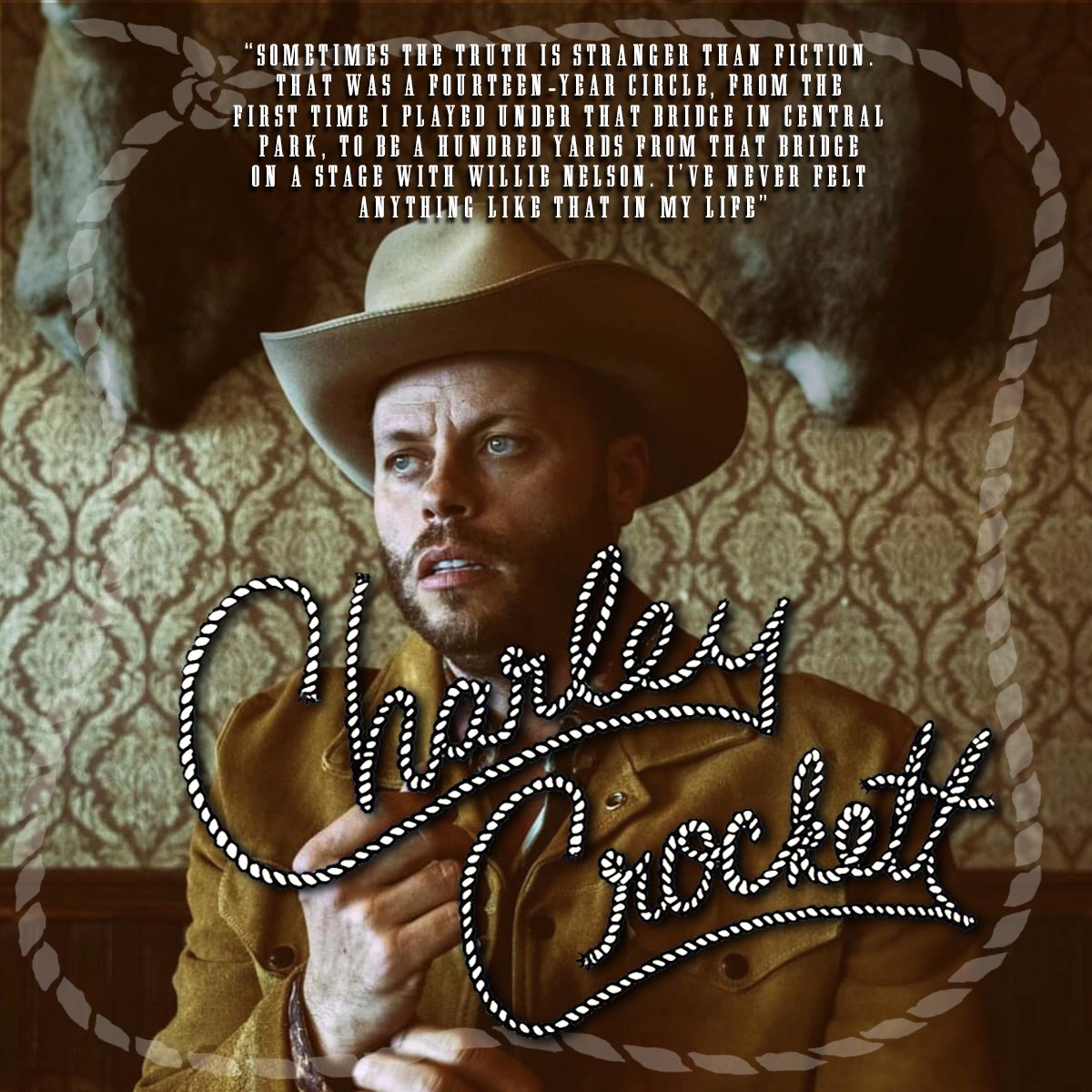
You can’t make that kind of stuff up. Sometimes the truth is stranger than fiction. That was a fourteen-year circle, from the first time I played under that bridge in Central Park, to be a hundred yards from that bridge on a stage with Willie Nelson. I’ve never felt anything like that in my life. Willie saw how important that was to me that night and I saw one of the greatest of all time. Even after his eight-decade journey, I could see his appreciation for the crowd that night when he was finishing the show and taking his bow. I had never stood next to a man like that, a man so far into an eight-decade life journey who had done it his way and it worked. I’ll be eating from that plate for the rest of my life. I had gone to the Warner Music building that afternoon and shook the hands of some record executives and gave them a little wink and a ‘no thanks’, and then walked back to the park to play with Willie Nelson.

That journey for Willie Nelson and Waylon Jennings wasn’t over night success either. They had to deal with an industry just as unsupportive in their early careers, in some ways similar to what you and others face today.

There are a lot of things that are similar now to the period from the 60s leading into the early 70s. There are similarities between how the country music charts worked then and how the Americana charts work today. Waylon Jennings talked about that. He said that when he was on RCA in the 60s, he was often at the top of the country charts but it was a broke deal. He’d be at the top or near the top of those charts and playing seven nights a week, and he couldn’t keep his head above water. I was reading about him talking about that at a time that I was at the top of the Americana charts, but could still be shut out by the broader business. Even if the DJs and programmers were spinning you on Americana radio that didn’t necessarily translate to making ends meet or being able to sell tickets to a broader audience.

Eventually, those guys pushed their way into the forefront with the Outlaw movement, as it was called at the time. The industry had to take notice because their popularity was steadily growing. Do you see an almost identical pattern emerging with artists like yourself, Sturgill Simpson, Tyler Childers and Colter Wall, and women like Summer Dean, Sunny Sweeney and Brennen Leigh?

All those guys talk about what they’ve experienced and it’s also like what I’ve gone through.  Waylon said that ‘there’s always one more way to do it and that’s to do it yourself,’ and he was right. I’ve experienced this in the way I’ve had to come up and the path I’ve used. That’s the way it was when I was playing street corners, if you were walking up to a subway platform waiting on your train, I was in the way and you were going to have to deal with me. I was lucky in a way because I went from there building my chops up firstly as an itinerant and then getting into the bars. When I finally transitioned to Thirty Tigers, I was making my records for next to nothing, getting my repetition in, and cutting my teeth as to how to properly make records. As hard as that old record label model was, at least back then if you did get signed like Willie and Waylon did, you’d be ok.  One of the very big struggles that I see today is how a Willie Nelson or Waylon Jennings type is going to arise in a system that is built around discovering artists that are pretty much naïve and inexperienced. The industry blows them up and milks maybe the one record for three to five years and then moves on with another artist. That’s something that I became aware of very quickly while I was making records cheaply and putting them out fast. I just knew that I needed to do that. So, very quickly I’ve managed to get to a number of records, twelve or thirteen now, maybe more than that with a couple more that I’m sitting on.

With all those recorded albums, another couple in reserve, and a hectic touring schedule, do you write on the road or when you get time away from touring?

It works for me either way. It’s a constant thing, writing on and off the road. The one thing that I need to finish songs is to book sessions. That gives me a deadline and a reason to finish songs, otherwise, I would just continue to start more and more stuff. I need those deadlines.

Another recent milestone for you was performing at The Ryman in Nashville, despite having a dig at Music City on your 2021 album MUSIC CITY USA.

As Texans, you always feel that you’re on the outside in Nashville. The regionalism of Nashville is obviously going to heavily favour Appalachia, that’s just natural and makes sense. But in truth, the industry, business, and the parlour floor in Nashville is bigger now than it ever was in its heyday. In its heyday, it was strictly country music, and country music from a Nashville point of view. RCA and those big studios were spending huge money on music back then. Those walls have been broken down and Nashville is now the international entertainment capital of the world, and in a way that I never thought would happen. Nashville didn’t previously rival New York or the West Coast, but it does now.  Its business is throughout and across the genres and entertainment, beyond solely the music business. I’ve got a song that I’ve recorded that isn’t out yet and I have a verse in there that says ‘They laughed at me in New York City, called me a fool in L.A., I doubt that Nashville saw me coming, besides the bar folks working late.’ But really, I’ve never had a problem with the working folks of Nashville, and all the business people that have become good partners of mine are pretty much all based out of there as well. The people working in the bars when I was playing street corners there, open mics, and jams down in Printer’s Alley, I found nothing but good people. Like any kind of business when you start getting into the real scene, the music can become something besides the music, and that can be the jungle that is Nashville. So, to get to the stage at The Ryman and have that experience, I think people were looking at me from the outside in, because I’d put out that record MUSIC CITY USA that is critical of Nashville, but I found that people actually identify with that and that’s why they’re showing up.

You seem to be making all the right business decisions, have a killer band, and are steadily growing your career. Are you getting good advice from your team? I was struck by how you came over to Ireland with a full band last year, which must have been a loss leader. But, as a result of that, you’re due back over here and will be playing in a considerably larger venue and to hugely greater numbers.

I hear everybody out and then I usually don’t do anything that they say. To be honest with you, they wanted me to come over to Ireland as a solo act because they didn’t want me to lose money. I said ‘no’ because I can’t be told that I’ve got a big future over there and then shoot myself in the foot by cutting corners.  I can play great by myself but I’d rather roll the dice, invest in myself and bring everybody over, which I did and which is a policy that I have. It’s the same with Australia and Canada, anywhere we’re going, I’m bringing everybody. If people are coming to see me, I want them to get their money’s worth and not feel like they are only getting a piece of me because we’re crunching numbers on some spreadsheet.

You’re about to play more shows with Chris Stapleton, performing to very large crowds.

I’m really grateful for that. I wasn’t too sure what to expect going out with Chris. The first night I played with him, I was really overwhelmed. Playing in front of twenty-five thousand people is not the cult world that I’ve come out of. But by the third night, I shook that off and figured out what I needed to do playing in front of a crowd that size.  It was, and is, a wonderful opportunity and I’m the kind of guy that will try and make it work anywhere. There are a lot of people that we could be playing in front of where it wouldn’t make any sense, so we wouldn’t just go out and play in front of anyone. I’d be just spinning my wheels. Chris Stapleton is somebody that deserves to be in the outlaw conversation that we spoke about earlier with those other men and women. When I was playing on street corners in New Orleans twelve or thirteen years ago, there was a guy that would stand around on the corner with us collecting our money and keeping some of the gutter punks away from us. This guy kept showing me this video of a guy playing this song that he said I needed to cover. It was a song by Chris Stapleton when he was in the band, The Steel Drivers. It was a You Tube video of Chris playing the song If It Hadn’t Been For Love, under a ten-by-ten tent with nobody paying attention.

Your vocation has been described as ‘a last resort career opportunity that’s going to go on for a lifetime.’

Yes, it is. This is not America’s Got Talent, this is not a TV show model, which unfortunately is the way most of the business behaves right now. They look at finances, they look at strategy, promotion, and investment in artists, much like those game shows and reality shows. It works well for the industry but not for the artists. That’s why you always need the breed of artists, like you said that can push their way through that.

Interview by Declan Culliton

Milly Raccoon Interview

July 25, 2023 Stephen Averill

‘Music & Art for Magical Nerds, Weird Western Swing, Cosmic Country, Fairy Metal, Cowboy Goth, Space Shanties, Stop-motion Animatrix, Quantum Court Jester.’ That is how Nashville-based artist Milly Raccoon describes herself on her Instagram page. It’s a wide-ranging and accurate representation of a free spirit whose fiddle playing and vocals have journeyed from classical violin from a young age to her current musical position as a somewhat left-of-centre country artist. Her most recent recording, FRANKINCENSE AND MYRRH, is a genre-swinging delight, moving from Celtic - influenced traditional music to classic country folk. She’s also very much at the heart of the thriving bohemian musical scene in East Nashville – fiddle virtuoso Lillie Mae and her brother, and splendid guitarist, Frank Rische both play in her band and contributed to her new album.

You’ve played in a variety of bands with diverse backgrounds from psychedelic rock, bluegrass, traditional Irish, and even Turkish and Egyptian music. That is quite a mixture.

Violin is a very versatile instrument and people in bands often want the sound of a violin for all kinds of things. As a child, I played classical violin in school. I didn’t really play any folk music growing up other than songbooks that I found around the house. I didn’t play in bands until late high school when a couple of my friends got a Grateful Dead band together and I got a taste for improvising with that type of music. After college, I moved to Seattle, Washington. That city has a very diverse music scene. I found a bluegrass jam online there and started going to those jams but I also just kept meeting people that were playing different kinds of music and wanted the violin with their music. Because of the versatility of Seattle, I got into a lot of different music genres.

I’m aware that you have travelled quite a bit. Was the move to Nashville to further your professional career?

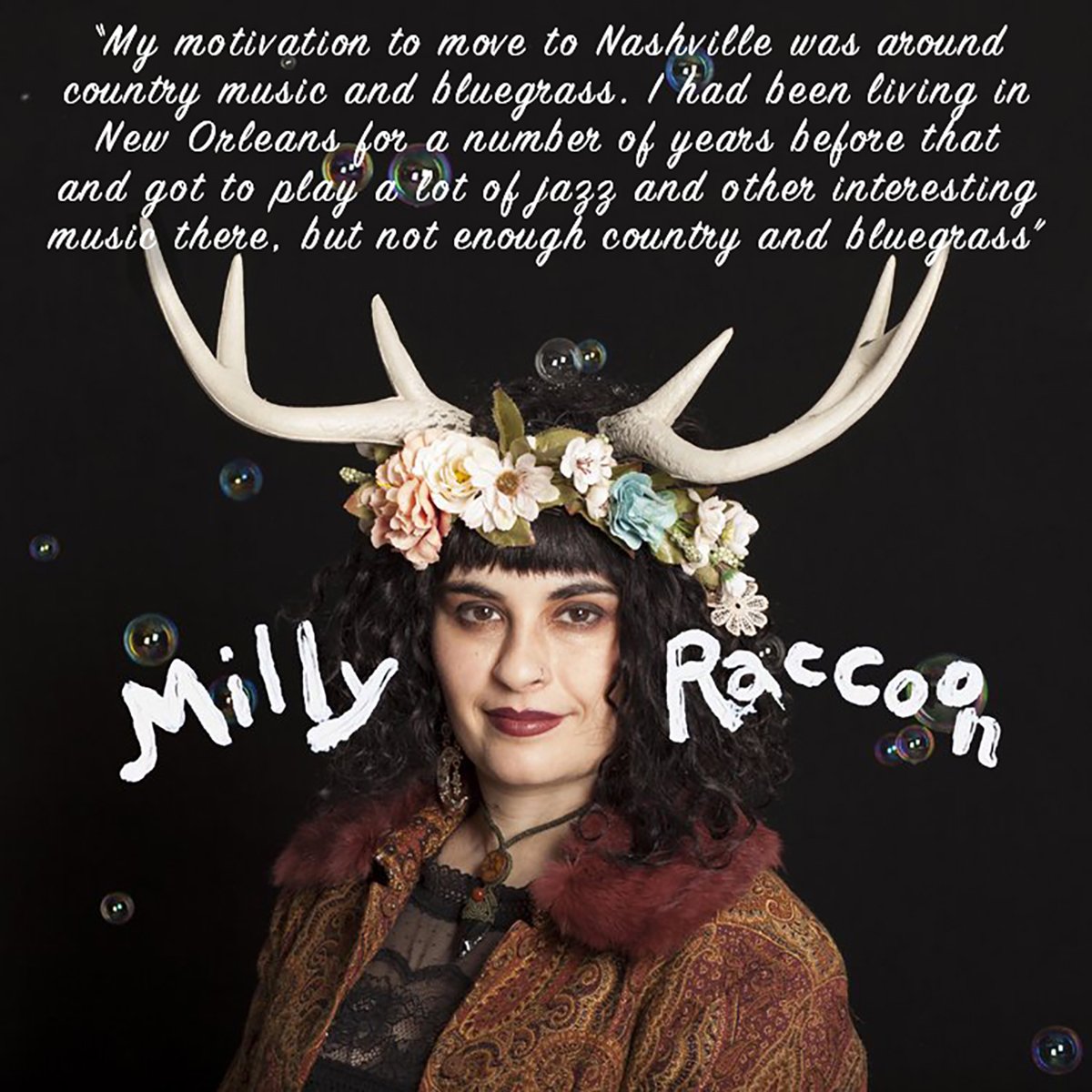
My motivation to move to Nashville was around country music and bluegrass. I had been living in New Orleans for a number of years before that and got to play a lot of jazz and other interesting music there, but not enough country and bluegrass. I wanted to get to the heart of where people were really serious about those genres and improve my playing. Also, people really focus on the culture of expanding their careers in Nashville, more so than in other cities. So, I was attracted to the career possibilities of traditional country and bluegrass music. I’ve been here almost four years which is hard to believe. The pandemic makes it feel more like one year, or maybe two.

Was it easy for you to integrate with like-minded artists in Nashville?

It’s one of the more conservative places that I’ve ever lived, although some people from around Nashville would probably disagree. I’m coming from places like New Orleans and Seattle that are super wild and free, so I had to reel it in a bit until I understood how I was going to authentically represent myself here. I think I’ve gotten over a lot of those hurdles and found a balance and how to be my wild self without losing all of my community.

Do you enjoy a full workload?

I keep my workload full but in terms of paid work, it’s hard. I’m always working on art and music but not necessarily always for any commission or pay. There are a lot of avenues you can take to have a full workload here if you want to play music full-time. You can get involved in the Broadway touristy scene downtown where you can play for thirteen hours a day. That’s not for me right now. I’m building my particular art form and working on what I eventually want to be.  

Your 2018 album – YOU’RE IN COUNTRY COUNTRY – had a jazzy feel to it alongside the country elements. Was it a conscious decision to seek a more country and traditional folk sound with FRANKINCENSE AND MYRRH?

I don’t think it was that much of a conscious decision. I recorded YOU’RE IN COUNTRY COUNTRY in New Orleans and there weren’t as many country players there as there are here in Nashville. For me, it’s like a half-country album. In some ways, I feel that FRANKINCENSE AND MYRRH, despite its different genres, is more country because of a lot of the players that played on it. I wasn’t moving away genre-wise. Whenever I make an album, I’m really showcasing my latest songs for the most part or rerecording songs, which I seldom do. My song The Fine Art Of Taking It Slow, is one I rerecorded and it’s on the last album but with a different style. The latest songs that I had for the new album included a few more swingy things. The songs often depend on what city I’m in when I write them. I was in New York when I wrote the more jazz and swing tracks.

You co-produced the new album with Grammy Award-winning producer Misa Arriaga. How did that connection come about?

I met Misa through Frank and Lillie (Rische). They had worked, recorded, and played with him and were very close to him. It was really a friend connection and the way that this album came together wasn’t really a clear plan that we executed. I originally recorded half of it at another studio and ended up not using that half. I had self-produced all my past albums but I learned so much from Misa about what producing actually means.  I didn’t know exactly who he was and intended only going to do a song or two with him. I didn’t realise what he could do when I started recording with him, but once I started working with him, I saw how he could take a song’s idea and turn it into something I could never even imagine. I thought that I should do this with all my songs and make it continuous across the whole album. Misa allowed me to co-produce the album with him and that was a great learning experience.

Did you record in Nashville?

Yes, Misa has a home studio in Nashville and it was recorded there. Sometimes you think that a home studio is not state of the art but Misa has some amazing equipment at his studio.

I detected some wonderful Celtic influences on a number of the tracks.

One song that does sound Irish is The Offering To The Fae. I wrote that song right after my grandmother died. I was back in Pittsburgh, Pennsylvania, where I grew up, for her funeral. I wanted to write a song that had some Celtic influence to it because my grandmother was English and Welsh – her husband and my grandfather were Irish. I thought writing a song with her heritage and my own heritage would make sense at the time.  A lot of the heritage of American country and bluegrass music comes from Irish and English music so I think it was a fairly natural progression.  Also, when I researched the song, The Girl I Left Behind Me, I found that it was related to an old Irish tune.  

I understand that the album’s title is a reference to the collaborative nature of the project.

Yes, it does. Those two herbs, frankincense and myrrh, are traditionally used together in a lot of sacred churches and holy ceremonies. That goes back to ancient times. They are related plants and their resins alchemise together to create a new experience. I’m just interested in incense and herbal things and the title connected with the whole idea of collaboration with Misa as producer and Frank, who plays on every song and also has a co-written song on the album. In the past all my albums, even though I hired other players, it was just me putting everything together, whereas this album felt much more like reaching out to the community for ideas and ways to do things better.

One of the most intriguing and interesting songs on the album is Walk Down The Stairs. I watched your YouTube video (readers should really check it out) where you explain in detail the background of the song and how personal it is to you. It touches on karma, missed opportunity and fixation quite spectacularly.  Did the writing and recording of the song put closure on the matter?

Yes, writing and recording that song helped me get that out of my system and there’s even a lot of detail I left out of that story. But that song was a healing process for me. The fact that I co-wrote the song allowed me to get out of my normal patterns of how I explain things in a song.

It must be a source of encouragement for you and your peers to see like-minded artists Sierra Ferrell and Billy Strings doing so well at present.

It is encouraging for all of us bluegrass and roots musicians to see Sierra and Billy Strings doing very well, people that I’ve played with and been in the same circles when we were younger. It’s great seeing them loved by such a large audience. I do think that they both have something very special. A big part of their success is how unbelievably talented they are. Not everybody doing that kind of music would be able to be that successful, so they are in bringing so many people to roots music which they might not have heard otherwise.

You held your album launch at our favourite bar in Nashville, Dee’s Cocktail Lounge.

Yes, the launch was there on July 1st. I like playing there. It feels like a real local scene and you know your friends are going to come out and see you play. I have to think about which venues are more open-minded when it comes to my particular type of music and know that they are going to be open to what I sing or talk about. I can’t say that for every venue, so I feel comfortable and accepted there.

Have you been on tour much lately playing music from the new album?

I’ve been touring a little bit recently, mostly near my state of Tennessee. I’ve gone to some nearby states like Ohio, Illinois, and Iowa. Not too far from home lately. Sometimes I play solo and sometimes with my regular Nashville band.  Both Frank and Lillie Mae Rische, and Misa play in my band. Frank and Lillie also play regularly with Jim Lauderdale.

Is Nashville a permanent home for Milly Raccoon now?

I seem to stay in each city for around five to six years. It’s possible that Nashville might go the same way but I don’t have any immediate plans to leave Nashville right now. There is a very supportive music community here and I feel that I’ve been accepted by and have worked with a lot of like-minded musicians, I would miss that if I were somewhere else.

Interview by Declan Culliton

Roseanne Reid Interview

June 28, 2023 Stephen Averill

Edinburgh-born Roseanne Reid’s sophomore album, LAWSIDE, moves slightly away from the Americana sound of her 2019 debut, TRAILS and closer to a more traditional folk direction. TRAILS revealed her to be one of the most promising, emerging artists in the Americana genre, outside of Canada and the U.S.A., and featured a duet with Steve Earle, a declared admirer of the Scot, who shared the lyrics on the song, Sweet Annie. With the recording taking place close to her adopted home of Dundee, LAWSIDE finds Reid embracing her Celtic origins on a number of tracks with the inclusion of fiddles and bodhran drums. The result is an altogether more confident and relaxed sound that will, no doubt, attract growing numbers to the song writing of an artist successfully and steadily moving up the industry ladder.

Was music a large part of your life growing up?

It was, there was a lot of music and it was a good mix, to be honest. My mum played a lot of country music, so that’s what I grew up listening to. My dad loved rock and roll, and punk, so there was a really good mix going on. I then found my way into folk music; I was drawn towards folk and the storytelling side of things in my teen years.

Was that American or UK folk music?

Both really, but I first landed on American acts before UK or Irish music. I was listening to bands like Peter, Paul and Mary and I loved Woody Guthrie and Bob Dylan, that type of acoustic stuff. But I also loved listening to Luke Kelly, The Dubliners and The Pogues.

Do you recall the first-time venue you attended that you dreamt of performing at?

The first venue I was at where I thought that I would love to be on that particular stage one day was The Usher Hall in Edinburgh. I went to see Rufus Wainwright there when I was twelve and as a twelve-year-old, it looked absolutely gigantic. That was then but now I would love to get on The Grand Ole Opry stage in Nashville. That’s probably the pinnacle for me, but to be fair, it’s probably the dream for most Americana acts. Though I don’t see many acts from outside The States or Canada getting on stage there though there are more opportunities for grassroots artists and not just country artists to play there.

The title of your new album, LAWSIDE, sounds like it was inspired by a hard-boiled crime novel but nothing could be further from the truth.

The title does sound as if it could have a crime-associated background all right. LAWSIDE is the title of the area where my wife and I now live, and it represents where the majority of the songs were written. We’ve settled here in Dundee and the title is paying tribute, in a small way, to the area where we have settled as a family.

You recorded the album locally under the supervision of David Mcfarlane, unlike your debut album TRAILS, which was recorded in the States.

The recording of TRAILS was very exciting. It was recorded in The States in four or five days and working in that Brooklyn studio was a whole experience in itself. LAWSIDE was recorded half an hour down the road in Perth with David. It fitted my schedule a lot better having become a mum in the last year. We started recording it when my wife was pregnant and it didn’t involve having to go over to the States for a couple of weeks, which I didn’t really want to do. With this album, I could go into the studio for six or seven hours and come home, which was much less pressurised and suited my state of mind. I also like having familiar surroundings around me so it all felt a lot more relaxed and I hope that comes across on the album.

Were you working to a deadline?

I wish. Deadlines with me go out the window, whether that’s down to time or budget restraints. After TRAILS came out, I would have loved to have released another album within a year, but the pandemic happened and I became a parent.

Were the songs all written before your son was born?

They were all written before he was born. Since he’s been born, I haven’t had the time or creative headspace to get anything written. All the songs were written over the past three or four years.

Why did you pick Call It Love as the first single to be released from the album?

It’s always a bit of a dilemma choosing the first single to be released. What my audience is used to is very much acoustic, I don’t go out on the road with a band. With Call It Love, the release time was coming into spring and it’s quite a light sounding track. In many ways with its atmosphere, it felt like the natural single, and looking at it from a commercial standpoint that song was the most likely to get a bit of radio play.

It’s also a happy song and I also get that upbeat vibe from the album in general.

Absolutely, we’ve been here three years now, and the adjustment of moving from Edinburgh to Dundee was a big one. Since we’ve settled here it has given us a new state of mind, we’ve started a family here and we are very fortunate to be where we are. I do think that comes across on the album.

The vocals are out in front on the album as if to ensure that the lyrics are clearly heard.

Definitely and that’s something that we did differently from TRAILS, where the vocals were more blended with the instruments. We were very clear from the start that the vocals should be front and centre this time, but not just to emphasise the lyrics. With the touring and the gigs I’ve done since TRAILS, my voice has changed and I’m more confident with it now – so I was happier to have it on display and not hidden as much.

The lyrics are also very personal, do they generally come to you prior to adding melody?

It varies, to be honest. I do tend to prioritise the lyrics every time, whether that’s writing for an album or an EP. Although I can seldom write a full song without getting some melody behind it. I classify myself more of a songwriter than a poet for sure, writing poetry is a totally different skill.

I’m getting a definite Celtic feel to a number of the tracks, Something Broken and Mona Lisa in particular. Were you intentionally introducing a more local feel to the instrumentation?

Yes, that’s definitely emphasised with the instruments we’ve used on those tracks, which are both quite Celtic folk-sounding.  We’ve got the bodhran drum on Mona Lisa and the fiddle is on quite a few tracks. That’s something we didn’t really have on TRAILS, which was more Americana sounding. I think the new album is more varied and eclectic sounding. I was quite adamant that the Celtic roots would come through this time.

I do feel that by adding that dimension, and also that you sing in your natural accent, is particularly beneficial to attract attention in the States.

I would like to spend more time in America. I’ve only done a handful of shows over there but the appreciation and enthusiasm for Celtic music really comes across and they do want to hear your accent coming through because there are so many American and Canadian artists doing this sort of thing. If you can have something that sets you apart a little bit it actually goes a long way.

You recently toured with Steve Earle. How did that relationship develop?

Steve runs an annual song writing camp in Upstate New York called Camp Copperhead and I went along in 2016, the first year that he ran it. Thankfully he liked what I did and what I was writing, and he has been a great supporter and advocate for me since then. However, I hadn’t envisioned getting to support him on tour so it has been a dream come true in every sense. I’ve loved his work since I was ten years old and this is a real milestone for me to support him.

The added advantage is that it’s a solo tour for him.

It’s a totally different experience because the venues he’s playing, which are mainly seated shows, reflect the fact that it’s an acoustic tour. That suits me really well because I’ve done shows where I opened for a full band and the audience is set up to hear something totally different from what I’m doing and it doesn’t always work. This tour is just such a good fit across the board and I can’t wait for it.

Are you a forward-thinker in terms of your career?

No, I’m struggling to think ahead to next week at the moment. The nature of this job is so unpredictable and precarious a lot of the time. To be at the point where I’m releasing another album is such an achievement in itself so I am just going to enjoy that for the time being and whatever happens next will happen, I’ll cross that bridge when I come to it. For now, it’s just nice to have new music coming out and be touring and on the road with my family is so exciting. I’m just going to enjoy the days as they come.

Interview by Declan Culliton

Ags Connolly Interview

June 26, 2023 Stephen Averill

Ags Connolly from Oxfordshire, England. Oxford isn’t exactly known as a hotbed of traditional country, especially for an artist delivering original material that stands easily alongside the work of many of his contemporaries from the U.S. His debut release HOW ABOUT NOW was released in 2014 and received a lot of praise from the right quarters. The online review site Saving Country Music declared that he “deserves to be considered right beside his Stateside counterparts as one of the carriers of the country music holy ghost”. He continued to garner positive reviews with NOTHIN’ UNEXPECTED in 2017. Throughout that time he toured in Europe, including the UK and Ireland. The next album WRONG AGAIN was issued late in 2019, with BBC2’s Bob Harris saying it was “modern day traditionalism of the very, very best kind.” And the long-term dedicated country music publication Country Music People labelled him “the best ever UK country artist.” They have also called his latest release SIEMPRE his "best album to date."

This all goes to show that, when it’s done right, original country music with a traditional basis will receive recognition for that in itself (if not, at this time, from particularly large audiences). Lonesome Highway has been a fan of Ags Connolly for some time too and we took the opportunity to pose some questions to him about this new album and more.

What were your musical leanings growing up in Oxfordshire?

I was brought up on 50s rock and roll, plus The Beatles and The Stones, essentially. My parents moved out here from London, and my Dad had been a regular at the old Marquee on Wardour Street. That was his era. My mum liked country but it was never played around the house. I got into Buddy Holly at a very young age though, and looking back I think part of the reason I liked him was the country sensibilities that he had. It appealed to me even then.

Tell me a little of your journey from a fan to a performing artist?

I spent a long time going to watch my heroes like Loudon Wainwright III and Ron Sexsmith while knowing I wanted to be a songwriter. Eventually I discovered country and realised that that was the kind of songwriting I loved. I started out playing covers gigs doing 50s rock n roll, mostly because I like that stuff, people know the songs and it's easy to play. But really I was just waiting til I had enough material to play full sets of my own stuff. I was never concerned about the getting on stage bit but I was always aware of trying to do too much too soon, so I'm glad I took the approach I did.

There are now, and have been in the past, a number of credible artists performing original country music. Acts like My Darling Clementine, back to a country-rock band like Cochise. Were any of these an inspiration to you in the way that Wes McGhee was?

If we're talking British acts, then mostly I would say no. Hank Wangford was someone I liked, but I wasn't trying to follow him. I shared a label with My Darling Clementine just after their first album came out, but I always thought we were doing something quite different from each other. I discovered Wes shamefully late so he wasn't on my radar when I was starting out, unfortunately.

Your heart lies, to a degree, in the varied aspects of country/roots music emanating from Texas and especially from the border regions. Was that what appealed to you the most?

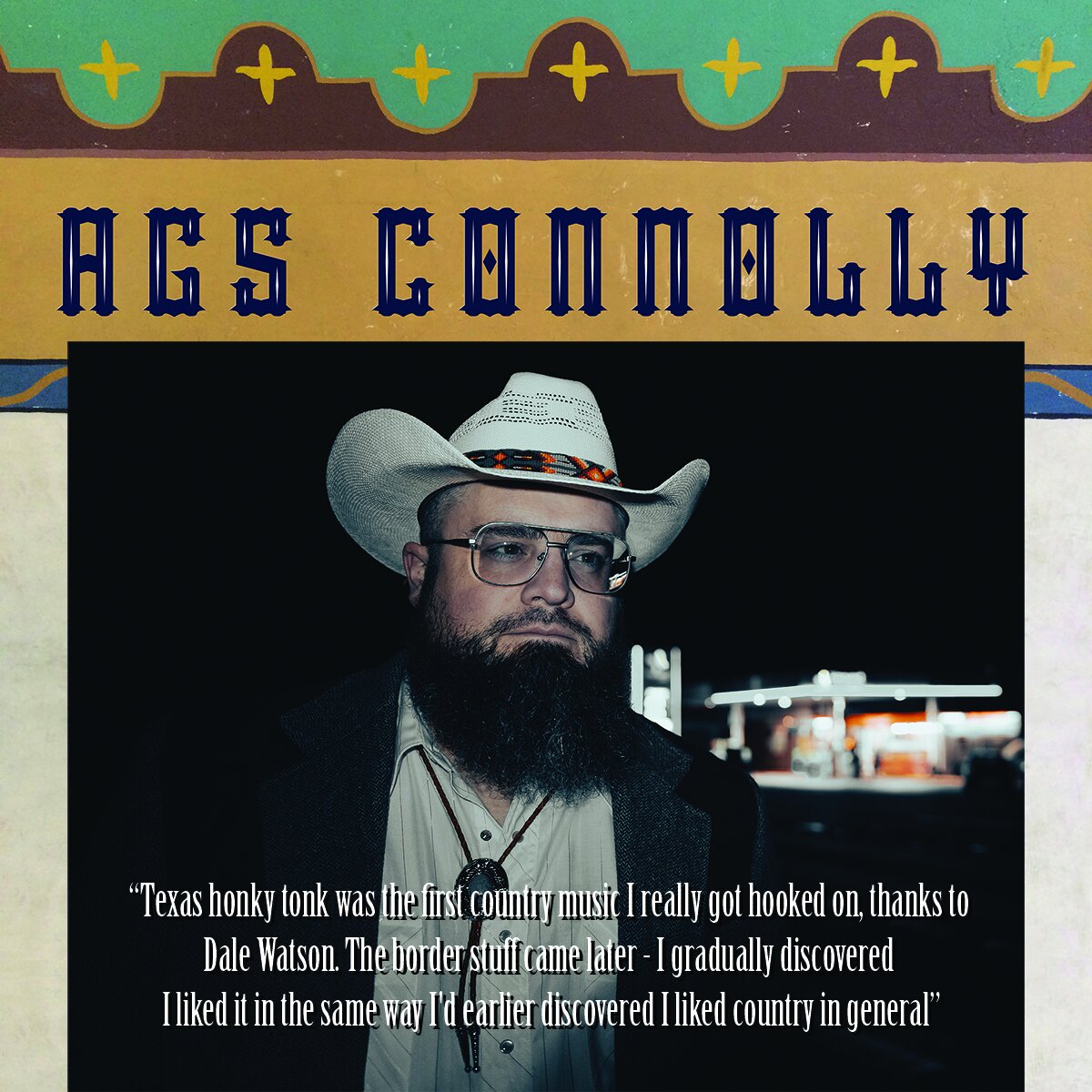
Not always. Texas honky tonk was the first country music I really got hooked on, thanks to Dale Watson. The border stuff came later - I gradually discovered I liked it in the same way I'd earlier discovered I liked country in general. There's a huge amount of depth to the country music that comes from Texas.

Do you have any ambition to move your base to the States rather than in the UK and Europe?

No. That's something I might've considered if I'd started out earlier. Austin was a place I used to visit regularly, but it's changed and the music has been edged out to a degree. Plus moving there to work as a musician is much harder now than it was back when Wes McGhee did it. I've never wanted to move to Nashville. 

Covid has been difficult for many artists, not performing live but using the time to write and record. How was that for you?

Tough. There was no inspiration for writing because there was very little travel and human interaction. Although I did actually begin recording something then which I'm aiming to pick up and finish soon. 

Do you feel the landscape for original country music has changed a lot in recent times, or is there still that media resistance to the more edgy acts as opposed to the more mainstream, more pop oriented acts?

I'd say there's been some resurgence of more traditional-leaning acts. But almost always those acts end up going in a different direction, either because they want to expand their audience or because they were only doing country to capitalise on a trend at the time. On the opposite side, mainstream country is now further away than ever. The Taylor Swift explosion made it OK for pop country to not bear any resemblance to country music at all, and that's how it's stayed. I will say that streaming and the internet has allowed a lot more people to delve into the lesser-known artists - you could say I myself would never have found some of the stuff I did without it. But the mainstream manufactures and ringfences its acts mostly now, so there is very little path out of obscurity for most.

Tell me a little about the recording process and how easy or not it was to bring in your important non-resident guests for that process?

It was fairly easy but I'd done it before. I started with the core band in the studio for a couple of days to get the main tracks down. Then Stuart Jones (the engineer) and I sent the tracks over to Michael Guerra (accordion, in San Antonio) and Billy Contreras (fiddle, in Nashville) and they recorded their overdubs. You can do that easily enough with exceptional players - it's not something you could rely on everyone for. Michael and Billy sounded like they were in the room with the band. BJ Cole also recorded his dobro part from home, which again was very easy.

What is your writing process, do you continually jot down notes or do you need a dedicated time and place to access inspiration?

I occasionally jot notes down. Mostly I let ideas go through my head - if they're any good I find they stick around or come back a lot. Once I've got a handle on the idea I might sit down with a guitar briefly and see if it goes anywhere. If not I'll leave it to gestate for a bit longer. I've never spent whole days writing loads of different outlines of songs. I find most of them will be crap and it feels like a waste of time. There's no place that brings me inspiration exactly, but when I'm committed to writing something I go up into the attic with no phone, no clock or anything to allow me to focus on it.

Would you have changed anything about the process?

Not that I can think of. I don't like to drag things out any longer than is necessary. I've so far avoided becoming a tinkerer who goes back and changes things for the sake of it.

You have always shown your love and understanding of the real roots of the genre and that obviously makes it easier for other musicians you meet on your travels to see your genuine love for that music. But was it hard at first to gain that acceptance?

Only in the UK. People just didn't (and some still don't) understand what I was doing or why. I mostly put it down to the fact country music has never been a huge part of the culture here, especially in England. Still now, I think a lot of promoters and other industry people are wary of booking a UK country act. That's true on the continent too, although I've recently managed to get a foot in the door in a couple of places. In the US, I find most people just love the fact an English guy is obsessed with their music.

Part of the recording and I imagine in creating the right sound was learning to play the bajo sexto yourself. When you did that did you feel that that was a major step forward?

Yeah it was important, and I've got Wes McGhee to thank for that. He said if you're going to play Tex-Mex you need have to have that authentic sound from the bajo sexto or bajo quinto. I never wanted anyone to be able to say I wasn't doing this album properly. I could've asked Michael Guerra to play bajo sexto, because he's a very good player, but I felt I needed to make the effort. He did show me a few things though just to make sure I was on the right track ...

You have credited the Texas Tornados as, perhaps, your favourite band - one that had its music based on 60s rock, as well as country and regional influences such as Tejano - is that amalgamation of sounds something you would like to explore further?

I'm not sure I would directly try to emulate those guys. It was a very special sound emerging from the Sir Douglas Quintet, through classic country and into Tex Mex. It's great fun and I don't think anyone can do it like them. That said, I think I'll always have the Tex-Mex/country crossover thing in mind and people may even come to expect it from me.

It’s been something of a journey to get to the release of SIEMPRE and its release on CD and vinyl - plus the promotion of the album. How big a learning curve has that been?

Somewhat I guess. Crowdfunding campaigns are quite a big undertaking because you're assuming the responsibility for all the money people have backed you with. You need to deliver both musically and in terms of rewards. People are very understanding though: I've backed a few fairly shambolic campaigns by others in the past, but I was aware I needed to hit my proposed targets. What I will say is that making an album has got more expensive just like everything else, and it's harder than ever for independent artists to produce work that competes with everything else in the market.

The opportunity of playing some gigs with a band, how does that compare to your solo gigs?

It's fun. I really wish I had more opportunity to play with those guys, but the money is hardly ever there to make it viable. I do enjoy playing solo, mostly because I don't have the anxiety of messing things up for the other players ... there's no denying that people react really well to a band though.

You also do some gigs with friends like Pat Reedy that must be fun also?

Yeah it is. I'm fortunate that people like Pat, Todd Day Wait, Dylan Earl and others have accepted me as their peer in the UK. I don't take that for granted. Pat and I have spent a lot of time on the road so we're ensconced in each others' lives, whether we like it or not.

What about the time spent in the studio bringing these songs to life, is that a very different reward than playing live?

Very different. The reward comes much later. I'm not someone whose idea of a good time is fiddling with a kick drum tone for hours. I find recording a very intense and pressured experience, but that pressure mostly comes from within. Once the recording sees the light of day is when I can enjoy it (or attempt to).

You have played in Europe a lot. How does that compare to the UK?

It's different and as an artist you have to respect it as such. I think it's important to learn what works and what doesn't depending on where you are. I've been in Sweden recently and country music seems to have been a bigger part of their culture than it ever has been in the UK, but it's not just about country music. I like to try and understand generally what makes people tick in whichever country I'm playing.

Did you feel in any way that your faith in the music you love has been restored with the wider acceptance of your (and others’) take on country music?

I don't know. A good friend of mine, who has been following country in the UK and beyond for a lot longer, says the traditional stuff always comes back around. People always gravitate back to it because it's so primal.  I think that's how I expect it to go, that if I keep on the path that I am, there will always be someone interested in it.

What does the future hold now for you and what do you want to achieve with your music?

Good question! This current album was a long term plan I had, but at the moment I don't know exactly what the next original album will look like. I have a few ideas and none of them involve abandoning country music. All I've ever really wanted in music is recognition; recognition that I'm doing it the right way, that my output is consistently good and that I've stayed the course. I've always believed if you do those things for long enough, people will notice. And I can't afford to stop doing them yet.

Interview by Stephen Rapid

Eliza Gilkyson Interview

June 21, 2023 Stephen Averill

Taos, New Mexico is home to Eliza Gilkyson. She relocated from Austin during the Covid lockdown when she purchased a “rambling 100-plus-year-old adobe” in the town that was founded back in 1615. She has just released her new album, HOME, and it is right up there with her best work across a career that has seen her revered as one of the leading lights in Folk music. We caught up with Eliza recently to get her thoughts on the new album and much more besides.

Congratulations on the release of the new album, HOME. If my counting is correct, this is your twenty-sixth official album? 

I’m so glad that someone is keeping track because every time I try to do it, I forget something. There was that MORE THAN A SONG album (2021) with Iain Matthews and Ad Vanderveen, plus the Red Horse project with John Gorka and Lucy Kaplansky. It’s adding up, and I guess when you divide it into my seventy-two years, it’s not that many records. 

With your previous album, SONGS FROM THE RIVER WIND, you started a process of returning to the places of your youth and falling in love with the environment that shaped you. There also seems to be a sense of returning home as a theme that runs through the new album.

That is so true, I think there is a sense of settling into myself and my environment, my home, and my relationships. My circle has gotten smaller in that sense, and I’m enjoying it, and I think there is a peace that comes from that and an appreciation of what is exactly around me, and the people that are around me. My love life is good, and I think that comes through in the love songs and, indeed, a sense of place. 

Unfortunately, I’ve had long Covid for a year and a half now and I fear my flying days are over. I’ve been pretty well grounded for almost two years, but I’ve ended up making a bunch of records so that part has been fun. I just can’t tour. 

Looking back at your earlier album, 2020. It was a very socially and politically aware album and written on the cusp of the Covid lockdown. How did you find the immediate aftermath? 

Well, I had to stop touring and it was like ‘Here’s my record, but now I can’t go out on tour.’ There was a feeling of frustration because the whole purpose of making that record was to have a statement about the election year, even if I didn’t have the chance to get out there and rally my troops and like-minded souls. I felt that we were all on the same page anyway, so didn’t feel that I didn’t do my duty. The songs got out there, they went where they could go and for me personally, I felt satisfied that I had gone on record during that really important election year. 

There is always a thread of service that runs through your albums. I know that you have reached out in support of many activist groups and causes over the years, and I wondered if this was still very strong with you?  

I feel very grounded by my illness and there has been an element of surrender involved with that. I don’t feel that I am an activist anymore, I probably wasn’t the most front-lines activist, as I was older. But I always felt that I could show up at places and be on stage and talk about projects that were important to me. Even if I can’t tour much anymore there are still things here that I care about. I’m much more involved with the New Mexico Acequia Association and our own little DITCH* group of four hundred and fifty people. I’ve just gone local, and if I’m needed to do a benefit for a project around town, I’m available, and have just become very home-based. I’m fine with that and I think that the young people are doing a killer job getting out on the front lines and I think they are energetic and have good politics and they don’t need an old white woman like me shouting ... “this way” (laughs). I don’t think it's necessary and it’s timely and appropriate for me to back off now. But I still want to make music and I still want to write, that part is really fun for me. I do love touring, but I just can’t. 

You live in the little town of Taos, New Mexico, which has a large Hispanic community and is home originally to many Native American tribes. It also has a strong artistic community.

It really is a very artistic community and the Anglos are not the majority population. It is Native American and Hispanic. It is interesting to be in such an egalitarian community and it feels very good to us, we love it. Even our DITCH association is an egalitarian society where water rights are involved, you have to put in ‘x’ amount of work and you get back ‘x’ amount of watering days in a season. It can be very loaded and emotional, but everybody has to work it out, and it’s kind of a socialist organization and I find it very satisfying. It’s a great microcosm of how those systems can work. I love the cultural thing; I love the art scene here. It’s not as much of a music scene as I had in Austin, and I just can’t compare the two music scenes, one from another. I do miss the music scene in Texas. I had so many friends there and started a women’s musician group with all these young women whom I love, and I do miss them. But overall, this has been the right move and, in general, I’m pretty satisfied. 

Back to HOME, the new album. Co-producer Don Richmond has joined you for the second album in a row. 

Yes, he has a studio in Southern Colorado which is only an hour and a half from me. It's only a hop up the road and a beautiful drive so it’s really easy. When I said earlier that there’s no music scene, he is the music scene in this part of the world. He is an amazing person and an amazing instrumentalist and just a lovely human being. That has worked out really well for me, we love working together. 

You used other studios as well in the process of recording the album.? 

It was all file sharing which can be tricky. Sending it out to Nina Gerber in California for guitar and sending it out to Cisco (Ryder) to do a drum track. It’s tricky but we’re all doing that now, it’s pretty much how we roll right now. It’s not as much fun for me to say ‘ok here’s the song’ as opposed to being there and involved in the song’s direction and as a producer it’s more fun to work in the studio with the artist. But I’m working with artists that are so good that I can trust that they're going to nail it, with a couple of tries back and forth, so it networks all right. If we didn’t have file sharing for recording, I don’t know if I could have moved here to Taos. 

Has that been the key change in the music process for you when you look back? Has technology freed you up to be more in control of the music now? 

I do like that control, I really do. I’m older now and I know what I want. I like starting with just me and Don in the studio and I play the guitar part first, and then I start adding on. I want to keep things centered around ‘What does this song sound like if it’s just by itself?’ I think especially in folk music and we’re also hearing it a lot in Americana too; that things can get really stripped down now and get right into the song. If I’m writing good enough songs, I don’t want to put too much stuff on there. I’ve got to get it straight right on that track when I lay it down and that is very different from the old days when we all went into the studio at the same time and I could lose control so fast if the band went off in a different direction. Nowadays Don and I are in control, like riding the herd!  

The album does sound like you recorded it live, off the floor in one studio. There is such an intimacy in the music. 

Well, that has a lot to do with really connecting with that first track when I lay it down. Sometimes I’ll go back and think ‘That didn’t really work, let’s try playing it a whole other way’ and I love that freedom. Because on that first track, I lay a rough vocal on top and I can say to myself ‘this sings and this works’ and the players can really tune into that and it’s not a myriad world of options, they’re tuning into what I got there initially, and they can play off that.  

Your brother, Tony, plays on a few songs and he is such an intuitive guitar player. You also channel your father, Terry, on the album and even invite some of his old music friends to play along. The song Man In the Bottle is especially poignant. Did it bring up childhood memories? 

So much so, it’s been almost painful. With that Man In The Bottle song, I had that idea twenty-five years ago, I found it in a notebook and I’m so glad that I’m doing it now as opposed to then. I cried when we recorded it, it just brought me back to him doing that song and having Rod Taylor (The Rifters), sing those parts of my dad’s band. It just killed me, and I once again appreciated what a great writer he was. I picked three songs of his that not everybody knows because he has his hit songs but there’s a great back catalogue of amazing songs and I picked those three. It was a way to honour him but also the grief around him and the alcoholism, how that affected me as a child, and how badly the child of an alcoholic wants that relationship with their parent but it’s so complex. This record goes back and forth between the child longing for something and then the adult, his genius, and his weakness. It was a tricky thing to try and pull off.  

You reached out to some old friends to join you on certain tracks. Robert Earl Keen sings on How Deep and Mary Chapin Carpenter appears on Sparrow, which I believe is a tribute to your fan base? 

Sparrow is a tribute to my fan base, thank you very much, not everybody got that. When I write songs, I imagine my fan base listening. It pulls the songs out of me and until the fans witness the songs, they don’t really come alive for me. I know that Mary Chapin Carpenter really relates to that too.  

During the Covid lockdown, you did a lot of live streaming. How enjoyable was this for you? 

I had no problem with the live streams. I loved them and I’m going to keep doing them because I can’t tour. It meant a lot to me to set up a stage, with lights, a monitor speaker, and working on getting the sound really good. My husband worked the computer side of things and I ended up really getting into it. People would check in and type ‘hi’ and the revenue stream has been fairly consistent for me. I have friends that did them every week which I did at the start of Covid and it always paid some bills and I made sales. It also let me reach people that I’m obviously never going to see again in person, so I’m going to keep doing them and hope that people will continue to check in on Facebook or get on my mailing list because I post them on YouTube too. I really think it's an essential part of my having to be semi-retired from touring. I love it, I feel I’m making a connection, and it makes me feel good. After a show, I get the same old thrill, which is satisfying. Let’s hope I can keep it going (laughs).  

The intimacy of your performance still comes through in these live streams. You did a memorable stream with Nina Gerber which was such a highlight. 

That Nina Gerber stream that you were talking about, that’s where we did that song World Keeps On Singing. Nina is a one-off player, she never does anything the same way twice but I have on record what she did that day and it was so pretty that when it came time to do the record, I called her and said to her ‘this thing you’re doing here I can build a whole song around it. So, when you go into the studio give me that as a foundation’ and she did it beautifully. It just came out of the top of her head in a live stream show.   

The new record starts with the song True North which I see as a love song to us all. A beacon to guide us. You finish the album with the title track, Home. Coming home to the source. 

Home is such an amazing and timeless song. It works through any age; may we all write one timeless song like that. I couldn’t decide whether I should open the record with Home and close it with True North and I played around with it for a while, but it felt so right to start with True North and end with Home, which is really getting back to that sanctuary. I love the song and the original writer,  Carla Bonoff, has been very supportive of me doing the song.  

I also get a feeling that there is a greater acceptance and forgiveness of all the wrongs you see in this world in these new songs?

I’m not a radical leftie anymore. Over time I’ve become more of a centrist. I still believe in the leftist principles but I don’t think they can get the job done, and we have to work with what we know we can actually do. That does change the narrative a bit for me and I think that maybe I’m not as angry, but I am sad. It’s more down to this environmental catastrophe that is coming down the pike so that’s more of a concern for me. Because I’m coming to be more accepting of my own mortality, I’m also becoming more accepting of this huge cycle that’s happening in nature that I’m powerless to stop, so there is an acceptance in that. The song Here Comes The Night is about how, perhaps the earth will find a way to deal with what we have done to her. It’s coming, and it’s scary but there’s something upbeat about that song because I trust that the earth can deal with it. I don’t know how that’s going to play out, but that’s where my hope lies. 

Your empathy and hope ultimately win out in your songs, despite your concerns. Do you ever think that the moral and environmental bankruptcy we face in society is at times overwhelming? 

They are overwhelming, but your life is too, and I always want to write redemption into my music because that is who I am. I look for redemption even in the worst of human nature and the stories. I don’t want to write stories about the end of everything, without the angels of human nature figuring into the equation. That’s just me, I don’t think I’ve been entirely doom and gloom, but I do have a sense of foreboding about the future, but I do believe in the redemption of the human spirit and I believe in the earth’s redemption. That’s what I cling to. 

People find great strength and joy in your music and the willingness to go on. Does this give you great satisfaction? 

That would be my sense of service which I pretty much have to maintain in my records and which satisfies my natural desire to serve, and maybe that’s more realistic. I can’t go out there and do anything but from this little place here I can make my small way in the world and that should be enough for me.  

The cover of the new album shows a painting of a lovely Adobe building. Is this your home? 

I thought about doing that but my home is so rambling. My granddaughter had actually fabricated a gingerbread construction that was of our house and I was going to have that as the cover but it was so weird and we were desperate with only a week to go to hand in the cover. So, I went on eBay and put in ‘vintage adobe house’ and there was this little painting that was old school from the 1980s. Someone’s grandmother did it, I looked her up but couldn’t find her, she’s an amateur artist. She nailed it, the cottonwood tree, the red vines on the old adobe wall, and the turquoise blue trim. I got it on eBay for seventy-five bucks and tried to find her because I wanted to pay her royalty for it but I couldn’t find her. Little did she know she was going to make it onto an album cover. 

Interview by Paul McGee 

*Acequias, or community ditches, are recognized under New Mexico law as political subdivisions of the state. Owners of water rights can govern the neighborhood ditches.

Michelle Billingsley Interview

June 19, 2023 Stephen Averill

Photography by Into The Black

Chicago-based Michelle Billingsley has returned with her sophomore record, BOTH SIDES OF LONELY, revisiting the   themes of loneliness and rejection of her 2020 debut, NOT THE MARRYING KIND. The new album’s direction is more vintage country than its predecessor as it follows a growing resurgence in 2023 of classic country recordings by artists dipping into the sounds of the late 60s and early 70s for inspiration. It’s been a busy time for Michelle between recording and promoting the new album, planning to tour in Europe in September and, most important of all, her upcoming marriage.

What were the timelines between the release of NOT THE MARRYING KIND and the new album?

We ended up releasing NOT THE MARRYING KIND in June of 2020 which was a bummer because of the timing: the shows we had planned didn’t happen. I went back into the studio in February of 2021 and we started recording it very slowly during that year. Some of the songs were new and some of the songs I had written around the same time as NOT THE MARRYING KIND, and which we reimagined. We spent all of last year mixing and mastering the album and waiting for the right time for it to come out. I had planned to realise it earlier in the year but with various moving parts the album launch ended up happening at the end of April. 

You’ve headed down a more classic country road with BOTH SIDES OF LONELY.

Definitely. I got the Americana and Folk feeling out of the way with the first album and I wanted to do more 60s and 70s vintage country feel with this one.

There is a noticeable recognition of albums recorded this year that hark back to that era. Brennen Leigh and Summer Dean have both recorded similarly themed records.

I love both Summer Dean and Brennen Leigh’s work. The sound of the 60s and 70s is so cool and it’s really worth making albums now that relate to that period. It was such a glorious time music wise. 

Jilted lovers, hangovers, one-night stands and lots of regret dominate the album. That’s surely not your life story.

No, it’s not all personal experience. The songs are stories that I find interesting or characters whose point of view I find interesting and so I like to explore this in my writing. It’s not all me.

Those themes were, and still are the backbone of classic country.

Yes, though gender roles have progressed a little bit since then but a lot of the personal themes of that time are still relevant today.

The first single and final track from the album, JOSHUA, is a departure from what goes before it. I believe it was inspired by Cormac McCarthy’s novel The Road.

It was inspired by that book. I’ve always been into the sci-fi genre and that book really stuck with me for a long while and there are overlaps in that book of post-apocalyptic themes. There were so many descriptions of how your life changes in Cormac McCarthy’s novel and in another novel by Larry Niven called Lucifer’s Hammer, which also deals with the same issues. That was in the back of my mind when I wrote Joshua. I also included it on the album because it was more like the material on NOT THE MARRYING KIND for anyone that liked that album.

It's a stripped back recording with only vocal, acoustic guitar and cello.

I didn’t want to turn it into a band number. I wanted to keep it small and quiet with my vocals and guitar but also wanted to add one more instrument. Cello is such a beautiful sound and its low sound on a song can wonderfully complement the vocal.

The opening track I Love The Way He Says He’s Sorry sets out the regret that follows on the album with its change of tense toward the end of the song.

Yes, the first chorus is in the present tense and then as the song moves through the last verse and chorus it goes into past tense ending with, I Loved The Way He Said He’s Sorry.

You had your regular rhythm section of Brian Westfall on bass and Jordan Snow on drums in the studio and guest player Brian Wilkie, whose guitar and pedal steel playing is all over the album.

Brian is part of The Hoyle Brothers who I would call ‘the house band of Chicago’ in terms of the country music scene here. He also played guitar and pedal steel on my first album and he’s all over this album too. He’s fantastic and a local mini-celebrity in Chicago.

Is there a healthy roots/country music scene in Chicago?

It’s tiny, much smaller that you would imagine. The pandemic took away a number of opportunities venue wise. There are a bunch of excellent roots bands in Chicago but not that many places to play. 

I understand you plan to play dates in Europe later this year.

Yes, I’ve planned some dates in Germany and Austria in September. Some of the shows will be a duet with Wild Earp and some will be solo. I’m looking forward to getting to Europe because I’m told people really listen to the artists there and don’t talk like they often do here. I do love playing in honky tonk bars but that’s a whole different of vibe but it’s also nice to have people listen to the words.

You balance your musical career with a full-time job. Do you have ambitions of ditching the nine-to-five job at some stage?

I’d love to do this full time but it’s so difficult to find enough work to not only pay yourself but also pay a band. There’s also the administration part of the job, the social media posts and bookings take up so much time. So having a day job can leave you behind everyone else that might be full-time, it’s a whole juggling act.

We are loving the new album and hopefully many others will too. Keep spreading the word.

It is so hard. I actually took a week off social media last week as I couldn’t think of anything else to say. I know a lot of people are extroverts but I’m actually an introvert so sometimes I just need to take time out. There’s so much new music coming out every week that it can be difficult to find a voice among the crowd.

Despite the title of your debut album, I believe congratulations are in order and that you are the marrying kind. When and where is that taking place?

It’s on July 22nd and there’s so much work to be done. We’re getting married in Michigan in a little barn. I grew up in a small town there and it was nice to find a place close to my childhood for the wedding.

Interview by Declan Culliton

Laura Cantrell Interview

June 14, 2023 Stephen Averill

Two decades into balancing a career as a recording and performing artist, radio host, writer and mother, Laura Cantrell has released her sixth full-length album, JUST LIKE A ROSE: THE ANNIVERSARY SESSIONS. Originally intended to celebrate the 20th anniversary of her debut record, NOT THE TREMBLIN’ KIND, the pandemic and its aftermath delayed the recording and release. Laura recently told us about her latest project, growing up in Nashville and the roots music scene in her adopted city, New York.

Unlike many of your peers who gravitated to Nashville to follow their dreams, you left for New York but ended up with a distinguished career in country music.

I left for New York City to go to college many years ago now. It is an odd trajectory. If my parents, who were paying for me to go to university, realised that I would end up doing something related to country music, they might have been more sceptical about university in New York. But if you think about what many artists have to do to get their perspective, it's not that unusual to have to leave a place to actually put it in perspective. That is what I feel happened, leaving Nashville and Tennessee and my family's culture. They were very much country music fans of a certain typical era, listening to the Grand Ole Opry. I loved all the greats of the 40s and 50s but I'm not sure I would have been able to understand how different it was from the experiences of country music for other people in other parts of the country if I had stayed in Tennessee.  I also do have, what my husband and I call, the advantage of dual citizenship. We have family and friends in Nashville and we’re there very often and feel really much a part of a community.

Were you drawn to country music growing up in Nashville?

Yes, I had an interest in country music. This is just goofy, but you know how little children get attached to certain songs and certain music. It happened with my daughter with a couple of different songs she would ask us to play over and over again. When she was ten years old, she went headlong into The Beatles and knew everything about them. My parents tell me that I had a similar thing as a toddler when the Folsom Prison record came out. My parents said I was mad about Johnny Cash and I went around talking about Johnny Cash as if he was my boyfriend. Going back to the first thing that I was exposed to in terms of music, they really stuck with me in middle school - and going into high school I realised that I really liked Patsy Cline and I really liked Ernest Tubb. I thought about the classics of the Opry in a way that my friends didn’t. They were all listening to new wave and what was on the radio at the time, there was not that same kind of fascination with country music with my friends. That’s when I realised that I was a little bit different. Then as I went to college, even though I wasn’t in Tennessee anymore, I found a group of friends who were as interested in that music and we were finding out all about it, and deepening our knowledge of it and connecting it to other music. I got lucky to find those kinds of allies along the way.  

How does the Nashville of today compare with that of your childhood?

Well, it's a double-edged sword and I think this happens in every place. The development boom has brought a lot of energy and different people to Nashville, not all coming just because of music and there are a lot of positives in that. However, the classic thing that happens is the raising of real estate values and people get pushed out who've been there a long time.  I know a lot of long-time Nashville people and they really feel like the development has favoured the people extracting the value and not necessarily bringing the gains to Nashville in terms of better education, better services and transportation for the town, all of those things. Of course, there's also the increase in traffic and a lot of people who live in Nashville, including the music makers, don’t want to be associated with the bachelorette parties coming down Broadway. It has brought in tourists, which feels like the town has gone in that direction and is chasing the immediate dollar. I see those tensions but I also think that it's a very vibrant time in Nashville.

When I think of the roots music scene in New York, Cliff Westfall and Zephaniah OHora and you come to mind in particular. Is there a vibrant roots community in New York to perform live to?

Well, there definitely is but New York hasn't gotten any easier if you're a musician. It’s getting harder and harder for all of the places that have music to make money. So, they figure out a way to cut corners and one might be that instead of there being a sound man to properly mix your set and have it sound like it should after you've worked on preparing and crafting the music, they've got an iPad and they tell you to do it yourself. There are all these kinds of challenges for musicians and there are not as many music bars here. There is a really lovely place that Zach and I are booked in called Skinny Dennis in Brooklyn. Cliff has also played there and I just went to see Sunny Sweeney play a show there.  Even for my own record release in the next couple of weeks, I chose not to book Joe's Pub or City Winery, rooms where you have to sell 250 tickets. If you just want to play to get experience and to keep your chops up, and have that connection to a live audience, you might just want to go somewhere smaller. It’s like a feast or famine. Do you play to a room of 40 or 50 people and be barely able to pay the ban? It’s kind of a catch-22. The present scene is not the most hospitable environment for live musicians. Having said that, there's definitely a community of people that show up to gigs, people who like honky tonk shows and have a sense of the history of it - that audience for country music is still here and that's one of the reasons it's still satisfying for me here.

The pandemic delayed the completion of your new album, JUST LIKE A ROSE: The Anniversary Sessions. What were the timelines from start to finish?

I did think at a few points that it would never get finished as it was taking so long. We actually had just started raising funds to record it at the beginning of the pandemic.  I was assuming we'd be right in the studio then; my plan was to do short sessions with the different producers and we did eventually do that, but we had to do it more spread apart because of the pandemic. We started in November 2020, that was the first time I went in the studio with musicians. We were all masked and stayed far away from each other, which is not a great way to make music together as a communal thing.  But we managed to get through that session and then over the course of 2021 had several other sessions. We went to Nashville and did more sessions there with Paul Burch and then ultimately with Rosie Flores and Kenny Vaughan for the last set of recordings, which was very early last year. So, it spans from the end of 2020 to the very beginning of 2022. Every time we felt that in two or three months it'll feel better, then there would be Delta, then Rubicon. Musicians playing in front of people, even though it’s their livelihood, didn't want the risk of getting sick from possibly somebody flying in who has been on an airplane and who was maybe bringing in germs. So, it was a little tricky and it did take a lot longer. Normally you go into the studio to make a record over two weeks and maybe take a few months to mix it and finish the art, but this was a much more extended one.

Despite the interruptions and particularly with the input from five different producers, the tracks flow seamlessly from one to another throughout.

Thank you for saying that. That was my biggest worry especially because we were up and down and often didn't know which way it was going. When we eventually went for the mastering with the sequence, I thought the mastering engineer was going to have my hide, because there were so many different sounds. But when we got the first few songs down, I started to relax. I thought ‘that’s a really pretty good Side A’, thinking of it in terms of a vinyl record, even if the songs were recorded in different places and times.

The first two songs, Push The Swing and Bide My Time, are co-writes with Mark Winchester. How did that connection come about?

I met Mark when Paul Burch introduced me to him at a gig of mine in Nashville several years ago now. It was before my Kitty Wells record came out but I've written the song Kitty Wells Dresses. I was doing a programme at the Country Music Hall of Fame that showcased the music of Kitty Wells. In fact, as I had learned that set of Kitty Wells songs, soon after that and having a band in Nashville, I decided that we should go and record them, so that's how that record actually came about. So, I met Mark as part of that concert and, ultimately, I hired him a couple of times to play with me in Nashville. As he was learning some of my songs, he told me he was also a songwriter, which I didn't realise. I then saw his name on some credits for songs that he had written for a Carlene Carter record that came out some years ago, so we did a few writing sessions together and really clicked, and had a lot of musical simpatico. I really enjoyed working with him a lot and, of course, because he is also a great bass player. He plays in the Brian Setzer orchestra and knows the sort of slap style of bass and he brings a kind of musicality that is a little different than other people that I've worked with as a writer. We really enjoyed working together. In fact, we have one song that is not on this record that I'm hoping to do for the next one. He’s a great resource and a great talent.

Two co-writes with Mark Spencer also feature, the closing track AWM Bless and my favourite track Just Like A Rose.

Mark and I have toured together a bunch probably starting in about 2003 or 2004 and consistently since then. I've also worked in Mark’s studio in Brooklyn. The couple of songs on this record that we wrote together were our first attempt at working together that way. But I've done every other kind of musical thing with Mark, recording, traveling around in a car just the two of us. We’ve travelled to the UK to play as a duo, we’ve played as a trio and we’ve played with him fronting a rock band. He's a very versatile musician and also sings beautifully. Any band is lucky to grab him. My longest musical association at this point is with Mark.

 How did it feel revisiting the song When The Roses Bloom again and particularly with Steve Earle’s vocal contribution?

Steve is one of my major inspirations and such an amazing writer and artist. An arc of his whole career going back to the 80s has been consistently excellent. So, as particularly as a writer, I've often thought of him as a standard bearer for Americana, though he’d probably hate to be called just an Americana artist.   I do think he's one of our finest songwriters in the United States and over the years, I've opened a few shows for him. When he moved to New York, we were in somewhat the same circles and would see each other at some of the same events.  I had in mind to ask Steve to do something that I was working on and when we were working on this project, because it was to celebrate an anniversary, I thought it wouldn't be a bad thing to take one old song of mine and just do a new version of it. I had been thinking about When The Roses Bloom Again because with the soldiers talking in first person in the song, I thought that while it’s not quite like a duet with two characters having a dialogue, but it's like two storytellers telling the story. We settled on that idea and thankfully Steve got it right away. He was like, ‘oh, yeah, that makes sense. I can do that.’ The one thing he told me to do was change the key so it could be a good key for him to sing in. And then he gave me a long lecture about how I should have been singing in higher keys my whole career.  We've actually just made a little video for that song; it'll be ready later this summer.

You have numerous dates lined up in the UK shortly including an invitation to play Glastonbury. Had you played that festival before 

No, I have not, this will be my first kind of jump into the fray. I’m very excited, to be honest. For me, as a person who started coming over to Europe and the UK. over 20 years ago now, the idea that I get to go back and get the opportunity to play events like Glastonbury is just amazing to me.  It's really an honour. I’m just very excited to reconnect with our fans in parts of the world. Unfortunately, I’ve no dates in Ireland this time.

Do you recall the first time you played in Ireland? It was in Whelan's and Holly Williams was the support act.

I do remember that because it was the last day of a tour with Holly and we had plans to celebrate in Whelan’s with a little Guinness and a little whiskey of some kind. Then about a month later I realised I was pregnant. You're not supposed to do that but I didn't know I was pregnant and so gave my daughter a little taste. She's 17 now, so she’s turned out ok.

Have you also been working on your parallel careers as a writer, radio presenter and in the corporate world?

I still do a show on satellite radio here. We are actually doing a George Harrison-based show on SiriusXM called Dark Horse Radio, in conjunction with the George Harrison estate. They actually provide the contents and a calendar of what's discussed on the show. That's been an amazing learning experience for me. I mentioned before my daughter had a very hardcore Beatles phase and George was her favourite Beatle, so it's amazing to get to do that programme. I've done some other short-term radio work; I also do some writing. During the pandemic, I couldn't do much as a performing musician so I did go back to work in a corporate job. What I realized in all of that is that there are artists who just, write, record and perform. They put out a new record every 18 months or so, that's their cycle. And there's a lot of folks that say that if you're not in that cycle, then it's not really legitimate, it's not really somehow as professional.  So, I'm really grateful that we're coming back around to having a new album and having the chance to come and perform and play live, and can look back at all of those agonizing moments during the pandemic when I felt like this might not even happen.

Interview by Declan Culliton

Drake White Interview

June 10, 2023 Stephen Averill

Collapsing on stage due to a hemorrhagic stroke in 2019 could have proved fatal to the Hokes Bluff, Alabama-born country singer Drake White. Fortunately, the collapse occurred five minutes from a Level 1 Trauma Unit, which effectively saved his life. His latest album, THE OPTIMYST, co-produced with Cadillac Three frontman Jaren Johnston, was born out of his recovery and rehabilitation. We caught up with Drake in Nashville, prior to his scheduled trip to Europe to play The Black Deer Festival in the UK, together with shows in Dublin and Belfast.

Did you have previous health issues related to your collapse on stage?

Yeah, I was battling what is called an AVM or arteriovenous malformation. It was something that I was born with and I wasn't aware of it until I got a really bad headache and got an MRI. I was in good shape and I felt really good, but there was a very, very slim chance of what happened to me actually happening, a two percent chance. But it did and I'm lucky to be alive. But it's just part of my story. It gives me an opportunity to have the authority to talk through resilience and talk through this chapter of mine and show people that you can keep going as long as you have hope and as long as you have desire.

Did the stroke have an effect on your speech?

Luckily, it affected the mobile cortex of my right side, it didn't affect my speech or cognitive ability, which is a huge blessing. So, it actually felt similar to how a blind man may hear better than most other people, it helped me concentrate more on my writing. Taking the guitar out of my hand, I wrote songs in a very different way. With no guitar and just maybe a melody in my head, one thing led to another and I ended up with a full album of songs. We worked hard to push through the release of the album independently against all odds, with the pandemic, me getting back on my feet and learning how to walk again. We kept writing and kept playing in our barn, and that's the record that you're hearing right now.

Were you surrounded by music growing up?

Yes, I grew up in North Alabama, just south of Tennessee. My grandfather was a preacher, so gospel music, bluegrass, storytelling and folk music were ingrained in me and part of my growing up. I was getting music from all directions. My dad listened to classic rock, my mom listened to modern pop and rock music, and she will now also listen to classic country, while my grandfather listened to soul music. So, music kind of hit me from all directions and I kind of mixed it all up in a pot.

How big an influence was the music coming out of nearby Muscle Shoals?

Muscle Shoals is kind of my North Star. I’m influenced by the sound that was coming out of there in the 70s and even before that, the 50s and 60s. I consider myself an old soul and that sound coming out of Muscle Shoals is something that that I still really sonically gravitate towards today. They built this cinderblock studio in this little town, the stars and the moon aligned, and it just became the right spot. Everyone from Aretha Franklin to The Rolling Stones came and recorded there, writing and creating great music. There's a magic to it and I was very lucky to grow up around there. 

Tell me about your approach to writing the songs for THE OPTIMYSTIC and some of the co-writers you worked with.

There's never any rhyme or reason to what I do. I have been here in Nashville since 2007 and I have a lot of relationships with people who are very successful writers. Some of them are writers that a lot of people don't know about, people like Kelly Johnson, who has four co-writes on the record. She moved here from Alabama with a bluegrass band called Distant Cousins when she was forty.  Jonathan Singleton and Randy Montana are on the album, and Allison Veltz Cruz, who everybody knows about. Nashville is like Florence in Italy, the melting pot of art and diversification. You’ve got to be here if you're a songwriter. You can write songs in different parts of the world but the best songwriters in the world, in my opinion, are here. That's what this town offers you, that inspiration. I'll probably write a song this afternoon.

You then got Cadillac Three frontman, Jaren Johnston, on board to co-produce the album with you.

Yes, Jaren and I have been friends forever. We've had many beers together, many whiskies, and many late nights. It was something that we wanted to do for a while. I tried a couple of other well-known producers but I just wanted to make the music that I wanted to make, not what a producer wanted to make. Jaren and me are cut from the same cloth, we both like the gritty storytelling type of thing.

You had the songs and the producer in hand. How did the recording process develop from there?  Did you call up musicians that you played with previously?

Like with Jaren, the musicians were people that I really like playing with and people that I had nurtured relationships with. I just went into the studio, closed my eyes and explained that I’m a kid from the South of Alabama, south of Muscle Shoals, and I’m in that triangle of Muscle Shoals and New Orleans, so let’s play with that character of soul, pop and blues. I just told them what I was going for and to play like you’re in my band and not playing for yourselves.

What’s the background to the song Fifty Years Too Late?

That song has been around for over twelve years. I wrote it in my kitchen when I first moved to Nashville. I’ve always been an ‘old soul’ since I was a kid. My grandfather said to me a long time ago ‘you were born fifty years too late.’ I was always worried about the weather, concerned about crops, wondering if the fish were going to bite, and hanging out with old people. I’ve also always liked old music and old things; I’ve got a 1969 Bronco at the house right now. That’s where that song came from. 

Given what you’ve come through it’s not difficult to surmise who the song Angel Side of You is directed towards.

My wife is extremely humble. She taught me how to walk again by duct-taping her leg to my leg and she has this unbelievable ability to nurture and I needed that. So, yes, Angel Side Of You is all about her.

The album’s strongest song, for me, is Hurts The Healing.

It's one of the most important songs that I've ever written. It’s about struggle and an honest take on what I was going through, I was struggling really hard. It was one of those songs that I needed. I wrote it on a Zoom with Allison Veltz Cruz and Aaron Chafin. Aaron started a conversation about how his mom and dad had had a car wreck that landed them in intensive care for eight months. What most folks didn’t know was that they had been on the brink of a divorce and they had been in a dispute in the car when the accident happened. They landed in hospital beds side by side and now they’ve been married thirty-five years and they’ve got five kids. After that story, Aaron told me that he’s been watching me limping across the stage, not being able to play guitar. I just thought that maybe the hurt and the pain is the healing and that you have to go through pain to heal and grow. That song sums up the last three or four years and it’s special for me.

Would you have written as strong an album without the rehabilitation that you've gone through?

I don’t think so. The reason that Aretha Franklin wrote so well is because of the struggles she went through, the blues are the blues because of the struggle.  Good music comes from when you're vulnerable.

You’re due over in Europe to tour with your band later this month. How has The Optimystic tour been going for you in The States?

We've been touring the album for the better part of a year and it has been extremely successful in building things back up. We're selling more tickets over in the UK and in Ireland now than we ever have. We're playing for bigger crowds and bigger rooms. It's working. I don't write stuff for necessarily commercial success. I write stuff that I want to get out there, that I want to put out there and it’s great to see that it also resonates with folks and friends over in your neck of the woods.

Interview by Declan Culliton
Tim O’Brien Interview

June 5, 2023 Stephen Averill

For over forty years, multi-instrumentalist, vocalist and songwriter Tim O’Brien has been a dedicated disciple of the founding father of bluegrass, Bill Monroe. Tim has recorded numerous albums, both solo recordings and as a member of the bands Hot Rize, Red Knuckles and The Trailblazers, NewGrange and The Earls of Leicester. He also released recordings with his sister Mollie O’Brien in his early career. A two-time Grammy Award winner, he has collaborated and worked with Kathy Mattea, Allison Krauss, Hal Ketchum and Darrell Scott, to name but a few.  His latest album CUP OF SUGAR, is his first recording of entirely original material and it includes co-writes with a host of talented writers alongside songs penned solely by him.

Four and a half decades into your recording career, CUP OF SUGAR is your first recording composed of all original material. Was that a conscious decision?

It just came about. I've come close with some other records but this happened and I'm really happy about it actually. I think it's a well-rounded, nice group of songs.

Were all the songs specifically written for the album?

There are a couple that I wrote prior to last year, but mostly they're all coming from the last year when I decided to make this record.

You have some interesting co-writes on the album.

Yes, I felt like I had some good song writing partners. I had never written with Ronnie Bowman before, and we did three songs together. One of those songs, Thinking Like a Fish, was aimed at The Davisson Brothers, who are a country and rock and roll band from West Virginia, but they never did record that song, so I did.

I understand that the opening track, Bear, came about after you read about the history of dancing bears.

I was reading about dancing bears and how they get them to dance and how they train them. It’s a little bit of a gypsy thing in Middle Eastern and Eastern Europe. But the song is about just waking up and your environment is gone, your world has changed while you were asleep. It could be anybody. It's like you wake up and things are just completely different and you have to roll with the punches but you know, it pisses you off sometimes.

That is particularly apt in the times we live in.

It is a distressing time in general when I wake up and read the news every morning. But I'm an optimist, musicians generally are optimists. Every show is like ‘this could be the one and I'm still optimistic that we'll pull some positive stuff together’ (laughs).  I think things are going to break down a little bit more before we build something back up. It's really weird at the moment, people have lined up on one side or the other on certain issues. There are points of view that are fed to people on social media. It’s funny because with the internet everything is at our fingertips now, yet we’ve isolated ourselves, we’ve got the blinders on.

Where did the album title come from?

I was just writing this song with Jonathan Byrd and we were writing about neighbours and how you may not really like them much, but you want to build trust between you and them. If there's something you need like a cup of sugar you can borrow that from your neighbour. You can borrow from each other and help each other out. It’s almost a cliche, I don't know if they say that in Ireland.

Tell me the background to the song She Can’t, He Won’t and They’ll Never?

My wife and I were visiting with some folks who are locked into a seemingly unworkable situation, a kind of co-dependency. Anyway, we were driving away and shaking our heads. I think Jan was at the wheel and she said,’ she can't’, I said ‘he won't’ and we both said ‘they'll never’.  I wrote it down on something and we both wrote that song a little while later.

I believe that the song Little Lamb Little Lamb was inspired by a visit to County Kerry.

Yes, Jan and I were down there playing at a festival in Baltimore West in May of 2017. As it was the springtime, the lambs were jumping around in the field.  I think the first time I saw that was probably 1975 up in Wyoming. It's just such a wonderful, beautiful thing. The creativity of the universe or the fertility of the universe and nature keeps things going on regardless of how difficult it may seem as we go through life. We saw so many little lambs jumping around and actually still had some of the videos of them on our cell phone which we made into a video for the song, which was fun.

Were all the songs written and had you got the basic structure for them before you went to the studio?

Some of the songs I thought were lending themselves to what I often do with electric guitars and drums, that kind of thing. I toyed with that a little bit, but in the end, I stayed fairly acoustic and it just felt right that way. It has nice additions from Jamie Dick on the drums and Mike Rojas on keyboards to spice things up and a couple of tracks with Russ Pahl playing steel to broaden it out. My stuff is always a little bit eclectic, it's like one from column A, one from column B, and one from column C, and then kind of mix them up together as you go.

Were the tracks recorded live in the studio?

In general, it's live except for harmony vocals, though Del McCoury sang live on Let The Horses Run. It’s better for me to have the most of the elements that I want there, and be able to work with each other in real-time as opposed to trying to figure out what somebody thought at a certain time. You know, it's like the second guy doesn't get to hear what the first guy plays beforehand and reflect on that. It really helps to everybody together.

With the calibre of players you had, did you give them a freehand in terms of the development of the songs, or do you have complete control over the direction it's going musically?

I gave them some tips, ‘maybe play here, don't play there.’ But mostly we kind of found the sound naturally without talking about it too much. I come to the studio usually with the form of the song pretty well established, but that can change as well, really quickly. With the song The Anchor, I had it in a completely different key and it was way too low. We had a key change and added an extra chorus and it just happened on the fly. And I think it worked pretty well. Getting ready to record is about me really knowing my stuff, being able to sing the song convincingly and play it solidly. That gives everybody enough to go on and then they just ride on top of that. Nashville is a great town for people to record because they've done it over and over every week. When you first come here and go into the studio with players like that, it can be a little intimidating.

Having started your musical career in contemporary bluegrass, how do you think the genre has evolved with the introduction of sub-genres like ‘jamgrass’ and ‘newgrass?’

There are different definitions for bluegrass. It's sort of assembled out of various elements from the music that Bill Monroe invented.  And then there was a business side of it, where it became separated from country music. The sort of pop music of its day became more electric and bluegrass was shunted off to the side. There's a certain crowd that sort of stayed with it and it's remarkable that the music has, at its core, stayed the same. Artists like Del McCoury or more contemporary ones like Po’ Ramblin’ Boys and High Fidelity are really doing the traditional style, the way Bill Monroe designed it. Everything else is like branches on a tree and the roots are deep and still strong. I came up through the traditional bluegrass world and you play for an audience who likes acoustic music, and they like the fact that the artists are not that divided off from the audience, you can talk to them after the show, it's more informal. You’re often playing at a festival where fifty per cent of your audience might be players. I think the music is safe and kind of growing in all directions. The jamgrass is really good, it's great to see Billy Strings reigniting the traditional sound like so many of these jam groups. Some of them might go out on a limb and don't really have the traditional footing, but Billy String does. He's bringing traditional music to larger groups of people with a different way of presenting it and that's helpful.

He’s certainly introduced bluegrass to a younger audience. Are you noticing younger age profiles coming to your shows?

I don't notice it that quite that way but I know this. I know it's happening.  I play for the same crowd most of the time over and over again. In a couple of weeks, I'll play at the 50th annual Telluride Bluegrass Festival in Colorado and that's where I started playing in 1975 and meeting people like Sam Bush and John Hartford soon after. That same audience is still there, a lot of people my age, but then there's also their kids and the grandkids who are there, people that have never been there before. They may have latched on to this music because they might have heard Gregory Alan Isakov or somebody like that. It's great because the older artists also gain these new fans now and again.

Would you be inclined to encourage younger people to enter the bluegrass world as a career now, given how the industry has changed over the decades?

I would encourage them. If they're enjoying doing what they're doing, I think they're going to find a way to make their livelihood in the music. I think it's challenging right now, because of the way recorded music is marketed, a lot of the writers and performers are not paid much because of streaming. Streaming revenues are not what they could be. But I know that there are going to be people that want to write songs and want to tell stories and want to get up on stage and connect people together, which is what music does. And we need that now more than ever. The one thing that can't be reproduced and stolen, from either the audience or the artists, is live performance, it's a thing that people still need.

You are about to head out on tour with the new songs. Will you perform with your regular band?

Yeah, I'm playing with Mike Bub on the bass, Shad Cobb on fiddle and Corey Walker on banjo. Jan will be playing the mandolin and singing the harmony parts. So, we have a pretty solid bluegrass-looking line-up and bluegrass-sounding, even though some of the songs are from country and rock and roll fields, every now and again. We’re on the road a bunch and have got some nice shows lined up.  Jan and I play as a duo as well, when the indoor shows start to outnumber the outdoor shows when colder weather comes along. It works really well, we're a married couple we can play together and not miss each other. For instance, we can go to Ireland and if we have some days off, we’re side by side and can go to a nice place and watch the lambs jump around (laughs).

Do you get the most satisfaction from composing or performing?

I like both. There's nothing more exciting than coming up with a song that you think is vital, it's an experience like no other really. It's funny because it's not like you're making something out of thin air. You're just like a mirror to the world and your own particular mirror is going to reflect it back a little differently than somebody else's. But every once in a while, you get a better picture. But then when you have the songs and you're in front of an audience, you want to share them and you want to try them out. So that's kind of a fear factor, you may be pretty sure it's good, but you got to trust yourself and sing it for people. So, I'm just about to try a whole new bag of songs on people which is always kind of fearful, but it's also exciting. You kind of walk the plank. 

Your 2017 album, WHERE THE RIVER MEETS THE ROAD, drilled into a number of social issues. Is this something you are more inclined to focus on in your more recent writing?

I seem to be more inclined to cover those social issues now. I'm not so worried about where I fit in as a musician anymore, so maybe I'm not worried about making people mad. But also, I feel like I need to take a stand and say what I believe in, it seems almost immoral not to respond to certain things. I feel like I have a perspective on things, maybe it's a little distorted and a bit one-sided but I try to look at all the angles. I try not to lay down a law, instead just remind people to think about the basic things and ask themselves the questions that maybe they need to ask.

Interview by Declan Culliton

Brennen Leigh Interview

May 30, 2023 Stephen Averill

Twenty years into her recording career, North Dakota-born Brennen Leigh continues to be one of the leading lights and highly respected artists representing what can be simply termed ‘real country’ music. She has remained steadfastly loyal to traditional roots music, whether that be classic country, western swing or bluegrass. Her latest album, AIN’T DONE HONKY TONKIN’ YET, is arguably a career finest and follows on from two splendid albums, PRAIRIE LOVE LETTER, which was an album of the year at Lonesome Highway in 2020, and OBSESSED WITH THE WEST from 2022. The new one is a throwback to a golden era in Nashville when many of Brennen’s all-time favourite albums were recorded. It was co-produced by her close friend Chris Scruggs who also played guitar alongside a ‘who’s who’ of Music City session players. Tommy Hannum (pedal steel), Aaron Till (fiddle), Micah Hulscher (piano), Alec Newman (upright bass) and Nate Felty (drums), all joined Brennen and Chris in the studio. Collectively, they have created an album brimming with the qualities of music from a bygone era but is very much at the heart of the resurgence of classic country music.   

AIN’T DONE HONKY TONKIN’ YET plays out like the last leg of a trilogy following the release of OBSESSED WITH THE WEST last year and PRAIRIE LOVE LETTER from 2020.

No one has said that yet, but that's a really interesting way of putting it. To me, it was just the next kind of thing I wanted to do. I've had all these country songs that didn't have a home and I wanted to make this record with my friend Chris Scruggs, and we just found a hole in our calendars to do it. I consider everything I do across the board to be country music.  With this album, I was having a long-term obsession with a certain era in Nashville, which was around the late 60s,1967/68. Some of the best records in history were made here in Nashville at that time, records by people like George Jones, Melba Montgomery, Tom T Hall and Connie Smith. That era was when some of the greatest songs ever were written by the greatest songwriters who were walking around in Nashville. And, with some of the greatest musicians to ever have walked the earth, they all just combined powers. I'm fascinated and smitten by that era and I wanted to channel that a little bit on the album.

That certainly was a golden era, though it also divided opinion among many purists who felt that country music was heading in a more commercial direction.

Chris Scruggs, who produced the new album with me, could probably tell you more about that than I can, but I feel like there were two things happening in Nashville at that time. There was the more cosmopolitan sound, pushing things into mainstream pop, a kind of smoother sound that was happening. And then there was the hillbilly side of it, which is the side that I like. If you listen to records by somebody like George Jones in 1967 it was just so great because you'd have a solo break with two parts to it. The first part would be steel guitar and the second part of it would be dobro, it didn't get any more hillbilly than that. So, to me, they were introducing their own level of defiance making those records. What was so good about the 1967/1968 era in Nashville was the creativity that was around. I think producers, players and singers looked at each song as an opportunity to say something new, it wasn't a conveyor belt. I liked the hillbilly side, I don't get as excited about the more polished cosmo side, the Billy Sherrill stuff. I like the hillbilly stuff that people like Melba Montgomery were making.

Were the songs on AIN’T DONE HONKY TONKIN’ YET specifically written for the album?

I had been coming to Nashville for a decade before I moved here in 2017 and so I had a relationship with the town. I had a publishing deal in my first year here and was writing with different people every day. I had hundreds of songs that were sitting around that I had collected over the years and I simply selected the ones that I thought fitted the best. I also had the pleasure of writing with lots of people I admire and collaborating with some of my heroes for a number of songs on this album.  The funny thing is that no matter what I write, it comes out country. It really doesn’t matter though, a great song is a great song. I don't think Kris Kristofferson ever sat down and said ‘I'm gonna write a country song.’ Maybe he did, but it was just his vernacular, his way of speaking and his medium that made it country. If you’re writing from life and what you know and channelling it, you don’t really need to think about genre. You need to find truth in a song. I care about writing in a natural sort of way, natural speech to me is at its most beautiful when it's undetectable, like having a conversation.

You have an A-list of players and backing singers on this album alongside Chris Scruggs. Tommy Hannum’s pedal steel is particularly noteworthy. How did the selection process for the players and the eventual recording of the songs evolve?

Firstly, Chris and I sat down with songs and started to work on the sound we wanted, and who we thought could do that the best. Tommy has playedwith me a lot around Nashville. I love the way he plays because he's so emotional, he's creative, but he also knows the steps. He's got the foundation and his steel playing is wonderful. He really thinks about the songs and I try to find people that are emotionally involved in music. To me, that makes a big difference because you don't just want some machine. So, to answer your question, we were all in one room in The Sound Emporium, we recorded it all in one room and just overdubbed some of the harmonies.

Tell me the background of the track Carole With An E. Is that based on a real-life character?

Yes, it is.  I wrote that song with a wonderful artist from Oklahoma, Mallory Eagle. She had a neighbour named Carole who was a long-haul trucker. We were both just so fascinated by Carole. Mallory came to me in Nashville a couple of years ago and said she wanted to write a song about her neighbour. So, we just got all the info we could about Carole and wrote her a little ballad, an ode to her.  We recently made a video that's coming out very soon with Mallory playing Carole in the video.

Dare I ask if the song You Turned Into A Dragon was directed at someone in particular?

I wrote that a number of years ago with Noel McKay. It’s about a person we both knew that we thought turned into a dragon. I had that melody in my head forever, it was sort of like a fake Asian melody.The song Sukiyaki, which was a big hit about a half-century ago, was floating around in my head at the time and that’s where the idea for the melody came from.

You totally embrace the Western culture not only in your writing and playing but also in your personal style.

Thank you, I love it and I've accepted it. You know, growing up, I used to think ‘why should I have to look a certain way?’ There's a lot of pressure, particularly for women, to look a certain way, be a certain body type. None of that should really matter but if you're having fun, why not? Clothes have been a part of country music culture for a long time, going way back to Rose Maddox and Lefty Frizzell. If you make fun out of it like a hobby then it's less stressful in my opinion and works alongside the music at the same time.

That attention to detail also comes across in your album’s artwork.

The visual and artwork side of it is something that we have paid more attention to, to make the albums beautiful. You have to put something in a pretty package if you want people to open it.

We are heartened by the progressively increasing numbers of younger people getting into real country music in recent years. Have you noticed this dynamic over your performing career?

The audiences have gotten different over my career. Not to brag or argue my legitimacy, but I've been playing traditional country music since I was a teenager. So, my audience for a time was my grandparent’s age, and then my parent’s age. They have an appreciation and their minds are never closed. Ironically a lot of folks at my dad's age, are rock fans. They still like the rock bands from the 60s and 70s, but they have that appreciation, their minds were never closed. I met a lot of people quite a bit older than me over the years who had an appreciation for real music and they didn't really care what you called it.  I had some fear for a time that eventually I'd outlive my audience, but now I'm seeing less and less evidence of that. I think it's maybe because of the internet, I don't really know, but there's an enthusiasm for country music and that's wonderful to see – it's validating.

You have been playing as a trio fairly regularly with Kelly Willis and Melissa Carper. Are you intending to record with them?

We have a project that we take out on the road a few times a year. Those trio shows have really been fun as those two are both just a delight to travel with and play with. We plan on doing some recording, either an EP or an album.

Interview by Declan Culliton

Eilen Jewell Interview

May 18, 2023 Stephen Averill

Eilen Jewell has bounced back from a gruelling period when everything was falling apart with a stirring album, GET BEHIND THE WHEEL. The Idaho-born singer-songwriter, on top of general pandemic-related problems, had to come to terms with the break-up of her marriage to Jason Beek – he was also her drummer, band manager, and the father of their young daughter – as well as the deaths of family members and some close friends. In an attempt to overcome her plight, Jewell temporarily moved to a small cabin in the Idaho mountains and spent some time alone there, hiking, embracing her surroundings and writing daily. This new album was conceived in that period and it includes the most personal and heartfelt writing of her career. Bringing those songs to the studio, she called on Will Kimbrough to co-produce, the first time she had outsourced a producer. With her trusted band of Jerry Miller on guitar, Jason Beek - returning to the fold as drummer and band manager - on drums and Matt Murphy on upright bass, Jewell has delivered an album of strikingly evocative songs to add to her impressive back catalogue.

In our recent review, we described your new album, GET BEHIND THE WHEEL, as your bravest and most personal album to date. 

Yeah, it was. Previous albums have always been a mix of autobiography and fiction. This one is the most personal, the closest to the bone. In a lot of ways, it was just a really difficult time for me in general.  But at the same time, it was my favourite writing process of all the albums I’ve written even though it was really difficult. I had started to wonder if I was ever going to be able to tour again after the pandemic and if there would still be venues open. I just kind of started to realise that I couldn't take anything for granted, so the album is very meaningful.

To deal with the issues you took time out for reflection in a cabin in the Idaho mountains. Were all the songs written during that time? 

I was reading a lot while I was up in the mountains. I wasn't really necessarily writing songs but I was just writing something every day just to keep myself sane. I honestly wasn't sure if what I was writing would someday become songs but I hoped that it would.  Most of what I wrote up in the cabin did eventually become songs.

What was the timescale between writing and recording the songs for the album?

I started writing in the cabin when I went up to the mountains in 2020 during the pandemic. My husband at the time, was also the band’s drummer, and I had separated and I continued to write like crazy for two years, I guess. When it suddenly became apparent that I could get back into the studio in the summer of 2022, I had those two years of writing for the album.

Rather than self-produce, as you have done in the past, you brought Will Kimbrough on board to co-produce this album.

I've always wanted to work with a producer. I never really had and always produced albums with my band or on our own. But I always thought it would be interesting to get another set of ears on a project. I just could never really think of anyone who would be a good fit and then someone suggested Will Kimbrough. I remembered meeting him at a festival some years ago when he was playing with Emmylou Harris, and just thinking he was so down to earth, easy to talk to and a really normal person. So, when his name came up, I thought, yeah, let's reach out to him because he seemed like a person who would be a good fit. And he really was, he played all kinds of great stuff on the album and I think he was a real asset to us.

What did he bring to the album that would not have happened had you produced it yourself?

He did this cool thing that I had never heard of before where he played a baritone guitar in a certain way and when he ran it through a certain kind of pedal it sounded just like a horn, like a saxophone. That really blew my mind, I would never have come up with that and I don't think anyone in my band would have either. He also played some really cool slide guitar and we don't do a lot of slide when we’re left to our own devices. That kind of pushed us in not an entirely different direction but just gave it a new flavour that I thought was really cool. He had great ideas for the first song on the album, called Alive. It's a cool song and we did it in one take and were making it up as we went along.  It kind of meandered along for a while and then came together. It was just really magic and it wouldn't have been even half the song if it weren't for Will.

Fats Kaplin’s pedal steel on the tracks Crooked River and Winnemucca emphasises the raw emotion in both of those songs. Did Will Kimbrough bring him on board?  

I agree, that was exactly what I wanted to hear in those songs. That was Will, he and Fats go way back a long way so he roped him into the project, and I'm so glad he did.

There is a sense of sadness and distress on the album but the overriding signal is one of defiance and rebirth.

I think defiance is a great word for it and I did get a sense of rebirth from it. But there is a lot of sadness on the album. too, but I don't think it dwells on that, it doesn't just get stuck there. At least that's what I hear. I hear the full range of experience you know, there is some bitterness in there on some of the songs. The Bitter End for instance.  There's also a lot of grief in it, but I think there's also a lot of joy. I think of the album as a circular piece, it starts pretty defiantly and it ends kind of cynical and bitter – it's all part of being human, the whole experience of all the joy and all of the difficulty. Now I feel like I've been through a lot more than I ever thought I could survive and that’s what I wanted to address.

You have nearly two decades behind you with, essentially, the same band which is quite unusual these days. Could you imagine ever playing without Jerry Miller and Jason Beek?

I can't really imagine that. I thought about it for a while during the height of the pandemic and if we were ever going to travel again. I thought that there was a very real possibility that we wouldn’t get to do this again, and it just seemed very bleak.  I wouldn't want to try playing with others. I think that we really have crafted a sound together and the way we've done it, it's just been so serendipitous.

Your vocals and Jerry Miller’s guitar playing is your signature sound across all your albums. You seem to work hand in glove alongside each other.

Isn't he amazing?  I taught him everything he knows (laughs). A lot of people mix him up with the Jerry Miller from Moby Grape, but I don't want to get that Jerry mad, so I better be careful what I say.  Jerry and I are the ones in the band with the fewest words, we're the quiet ones. We don't like to give each other much direction and we don't communicate about what we want to hear, we just do it. We don't even need to discuss what direction we’re going, we just kind of get it instinctively and that’s the kind of thing that you can't force. We just click.

What was it like getting back on the road after all the uncertainty and stress?

It was really exhausting at times at the start.  I think we might have tried to get back on the road a little too soon. Looking back, it was kind of scary. We were still wearing masks and Jerry worried about COVID even though we were vaccinated as there were still breakthrough cases. So, our numbers were down but the cost of everything was up and for the first time it wasn't working financially, and that was really stressful. I lost a lot of money on touring at that time. But it's now getting back to normal and so there’s less stress about money.  I know it's probably in poor taste to talk about money in an interview, but we have mouths to feed.

You also have to deal with motherhood as a touring band in recent years which must also be difficult.

Motherhood has changed everything about life for me. At first, it was pretty doable because we could just bring my daughter along and she didn't know any other way. Now she’s older and really loves her school, she really excels at it and doesn’t like to miss school.  So, we have to leave her for most tours with my mom.  I'm happy they have a good relationship, but my heart just aches the whole time I'm away from her. 

One of your idols, Loretta Lynn, sadly passed away last year. Was it her vocals or fearlessness as a writer and performer that drew you to her?

Definitely a bit of both. At first it was really just her voice when I heard Honky Tonk Girl for the first time in a cafe in Boston. I just froze when I heard that., I just thought that's the voice for me, that's the essence of classic country. Then, the more I got to listen to her stuff, the more I noticed that she wrote so fearlessly. She just kept rocking the boat and was a genius, sassy songwriter. It was so sad to lose her last year.

Your first trip to Ireland was to play at the Kilkenny Roots Festival in 2008. Any recollections of that?

Oh yeah, I remember that one. It was memorable because we had a problem getting the bass over on the plane from England. There was this whole piece of drama where we had to borrow one at the very last minute and our tour manager had to ferry it over from England.

You’ve played Ireland a number of times since then. Any ambitions to get back over to us?

Yes, Ireland is honestly one of my favourite countries. I'd love to get back and hope to in 2024.

Interview by Declan Culliton

Sam Munsick Interview

May 7, 2023 Stephen Averill

Sam Munsick has just released his excellent second album JOHNNY FARAWAY, an album that fits with a growing number of artists who are proud to reattach the “Western” designation of their music to the broader “Country” definition. This generally denotes a sense of authenticity within the music. Lonesome Highway took the opportunity to catch up with Sam and ask him a few questions about his music and lifestyle.

Sam, tell us a little about how music came into your life and your involvement with your father and brothers in the Munsick Boys?

Music has been a part of my life since I can remember. My father is one of the best musicians I know. He plays fiddle, guitar, piano and basically any other instrument you can imagine as well as writing his own music. We have been playing music together as a family our entire life. It is just in our blood.

Growing up you most likely heard country music at home. Were there other forms that you listened to?

Traditional country music is obviously what would be playing around the house the most growing up, but we were raised to listen to everything. I played piano for many years as well as fiddle. So with both the fiddle and piano I was taught the classical method. I still love classical music to this day.

How important is the landscape and heritage of where you were raised in your music?

Growing up in rural Wyoming on a ranch the landscape has been a huge factor in my life. I have worked on ranches all over the western United States in different landscapes from mountains to the deserts. I love them all. When you aren’t surrounded by people and just have horses, cows and nature, you learn to really appreciate what is around you. 

Do you consider the musical aspect of your life to be your career or are their other working considerations?

Just over the last few years I have started to take my musical career more seriously. I have a wife and 2 children and I own a fence contracting company in our hometown, so music is not necessarily my first priority but it feels great to be back on the road playing music and making a supplemental income doing so. Right now I am on a plane flying to California to perform with The Munsick Boys for the next three days. 

You all seem to be steeped in the Western tradition of country music. Who are your influences?

My father would have to my biggest influence. He is such a great story teller and has mastered the art of putting stories into song in such vivid detail. Along with my father there’s Ian Tyson, Tom Russell, Merle Haggard and the list goes on …

There seems to be a growing number of younger artists drawn to the stories and lifestyle of the west. How aware are you of these?

I try to keep up on the new up and coming artists as much as I can because I love finding new western music to listen to. Wyoming is developing a very good western music scene that several of my friends are involved in as well which makes it really fun. Colter Wall is knocking it out of the park lately and I sure enjoy his music. 

You released your album yourself does that make it easier or more difficult for you?

It was kind of a difficult process because I am not real tech savvy nor am I good about pushing my music on social media, but it feels very good to have the album out and I plan to keep them coming. 

You recorded the new album in Texas and brought some top players into the studio. Were you nervous at all about how the recording would go?

That was the first time I had ever been to a professional recording studio. It was a very awesome experience getting to play with such high caliber guys. I definitely felt like the weak link! 

The use of the full band certainly opens the album up to a wider listenership than some western themed albums that are more acoustic and campfire. Is that the kind of music you personally love to play?

I generally just play acoustic solo shows so the use of the full band on the album was just something I wanted to do once in my life and I’m very glad I did. 

Are you a writing regularly or how does inspiration come to you?

I always have song ideas rolling around in my head and at any given time have multiple songs I’m working on. Usually a line to a song will pop into my head and from there I will try to develop a story. 

The song 1922 evokes an earlier time through a painting of C.M.Russell. Does that kind of evocative depiction of the west still connect with you?

1922 is probably my most popular song. I love Charlie Russell and all his artwork and stories. I really just love the west and wish I could have been a part of the old west. 

Were you a fan of western movies grown up?

We were raised on old westerns. John Wayne and Clint Eastwood. 

Authenticity seems to be a key word to many who listen to this genre of music. Was that further helped from being raised in Wyoming?

I think that is absolutely true. Being raised out in the country in Wyoming just creates an authentic person. I sing about what I know. 

What are your plans for the future as regarding promoting the album?

I have been playing a lot of music and traveling a lot with my music lately. The album has been getting quite a bit of attention and seems to be getting me better gigs in awesome places. I’ve been to Florida twice, San Antonio, Arizona, Nevada, Montana and now California. All within the last few months, so I’m just going to keep rolling with the flow. 

Will your and that of you brother Ian’s career mean that the Munsick Boys is on hold for a time?

All of us have our own individual music scenes going on but we still make time when someone calls wanting The Munsick Boys.  Ian lives in Nashville and his touring schedule keeps him pretty busy but my older brother Tris, my dad Dave and I still perform multiple shows a year together, which is always fun. 

Interview by Stephen Rapid

Amanda Fields Interview

May 4, 2023 Stephen Averill

The resurgence in traditional country music is gaining pace in recent years with artists such as Charley Crockett, Sierra Ferrell, Jesse Daniel, Brit Taylor, Kelsey Waldon and Joshua Hedley, to name but a few, all challenging the crossover pop music that is seeping out of Nashville, masquerading as ‘country’ music. Another name that can be added to that list is Amanda Fields.  Her recently released album, WHAT, WHEN & WITHOUT, is a classic example of an artist with the ability to combine themes of sadness, joy and closure, across ten songs that play out like a movie soundtrack. Produced by Megan McCormick and backed by some exceptionally talented players, it marks the arrival of an artist with one foot in the past and one in the present. We spoke recently with Amanda and learned of her passion for bluegrass and country music, and her career in music that was launched at a very early age.

I understand that you are currently living in Nashville

Yes, I live about ten minutes north of downtown in a neighbourhood called Pleasant Acres in Madison, Tennessee. Three houses down from me was Loretta Lynn's first house when she moved to Nashville. If you go down the other side of the street and take a brief ride it's about maybe a half a mile to June Carter's house when she was married to Carl Smith. And just on the other side of that property was Mother Maybelle’s house. Kitty Wells was a mile away as was Patsy Cline and Hank Snow. I had no idea about all this when I got this house. I started discovering that after the fact and it's just it makes me so happy to be here.  

You should be conducting country music tours in that neighbourhood.

(Laughs). I thought about that because I tell everybody about the area. I just love country music so much and country music’s history. 

You are not originally from Tennessee.

No, I was born in Salem, Virginia and I lived in various locations in southwest Virginia during my childhood. It’s about six or seven hours from Nashville towards the Appalachian Mountains.

I expect your move to Nashville was prompted by your love of country music.

Absolutely. I always wanted to be a country singer growing up and I always wanted to be in Nashville and that's absolutely what brought me here.  I came here right out of high school and then I spent a few years traveling and I moved out to California for a couple of years. I've always been somewhat of a rambler type of person, a traveling spirit.  I would say that was from my upbringing, my family moved us around quite a bit. I've been in Nashville now for about ten years and I’ve got roots here now.

Was bluegrass your initial exposure to music?

 That's right, bluegrass and gospel music, actually.  My family had a Pentecostal church in Virginia and my first taste of performing was in church.  I don't know if you're familiar with that sect of Christianity but the music in that church was very lively, there were tambourines, drums, guitars and bass guitars. It was just a very high-spirited environment and so that kind of led me into bluegrass and then country music.

Was your introduction to performing on stage at a young age?

It was a pretty young age, about ten or eleven. My aunt taught all of us to play guitar, we would learn the chords, about two or three chords at home and then go to church and she would teach us in church while she played piano. She would lean over and call the chords out to us to play, it was really neat.

Was the single Brandywine, which you released in 2021? Your first recording?

That was not my first recording. I've actually been recording since I was about eighteen in various capacities. When I was that age, I bought a little tape machine that I could record on and make my own demos of songs I was writing. I actually went to school for music business here in Nashville and so I did a lot of recordings at school. My first recordings where the music was released with my voice on it was a series of albums called PICKIN’ ON. It has tons of albums and it's bluegrass versions of popular songs.  I was on a couple of those records, maybe seven or eight years ago. I've also recorded demos and printed up CDs to sell at my shows but officially Brandywine was my recorded introduction to the bluegrass world.

There is a definite connectivity with the songs on WHAT, WHEN AND WITHOUT. Are they based on personal experience?

I would say that most of it is personal experience but then some of it is secondary personal experience of things that other people that are close to me have experienced and where I felt a great deal of empathy for their story. I wrote it from first person but also telling somebody else's story that maybe didn't have that outlet.

The tracks play out very much like a movie soundtrack. 

It's very perceptive to have you notice that as it did play out like a movie in my mind.  That's exactly what I was thinking with the sequencing.

I can visualise the credits rolling on the last episode of the TV drama Twin Peaks on the closing track Without You.

That is so funny. Do you know what inspired that song and what I was watching during that time, Twin Peaks?  I just caught wind of Twin Peaks a couple of years ago. I love that show and love the music in it.

The three words in the album’s title are represented in the names of the opening, closing and middle songs on the album.

I really don't know how the title came about; it just came out of nowhere. It was a coincidence that the first words of the songs in the beginning, middle, and end were ‘what, when and without.’ It's a play on words because in the song Morning Dove, I asked the question ‘what went without a goodbye?’ which is something that came to me through thinking about the grief that can come when you're not able to have closure and we're not able to say goodbye to somebody before they leave.

Over what period was it recorded?

There were four sessions in total. Chris (Contreras) came and added piano and sang one day. Ryan Culwell, who sang on Trail Of Unforgiveness, came and sang another day. The band and me all tracked live except for the piano and there just weren't very many overdubs. I wanted it to be authentic and I wanted it to capture the moment and what felt like the magic of us all coming together and playing that music. It happened very organically and it was an incredible experience to work with those people.

The pedal steel playing by Russ Pahl captures the atmosphere perfectly in the songs.

Yes, I love pedal steel and it’s one my favourite sounds.

Given your bluegrass background was it a conscious decision to record a traditional country album?

Yes, it was. I wanted to make a country record. I've played and recorded a lot of Bluegrass through the years and I love it, and I'm sure I'll play more and record more bluegrass but I wanted to make a country record.

Despite Country Music Radio being dominated by strictly ‘pop’ music, there is a noticeable increase in the popularity of traditional country music. Are you finding that?

Definitely. I think I think that traditional country and 90s country is making a big comeback. It is really nice to see it growing and I think a lot of that is down to people like you all at Lonesome Highway, Saving Country Music and other people that are shining a spotlight on independent country artists who are making music more traditionally and more organically.

That is also down to the growing popularity of Honky Tonk Tuesday at American Legion Post 82 in Nashville. Have you played there?

I've been going on and off going there for some years now but I haven't actually played Honky Tonk Tuesday.  They do a bluegrass night on Wednesday nights and bluegrass was primarily my community for some time, so I have played bluegrass Wednesday nights there quite a bit.

There are a number of issues in Tennessee presently that are not at all positive. The recent expulsion of two politicians in Tennessee for their gun protest and the anti-LGBTQ bills come to mind. You posted recently on social media about cancelling a show at The Station Inn. Do you want to speak about that?

Well, it's a sensitive situation. I've known the current owner of The Station Inn for many years, and I've played music with him. I spoke to him directly about my decision to pull away from that gig and he and I left the conversation with ‘I love you and I care about you.’ I'm not sure that I would say too much about it other than that if I feel like a place is not safe for any marginalized group of people, I'm not going to go to that place. If I know that there are guns inside of a venue, I'm not going to go to that venue. If I know that there are people that are openly homophobic or transphobic, I'm probably not going to go to that. The purpose of my creating music is to heal myself and to hopefully heal other people. I feel that music creates a safe place to do that. And I don't want it to ever feel otherwise to myself or anybody else that listens to my music.

Megan McCormick had quite an input on the album as producer, player and backing vocalist. I believe she is also part of your live band.

Yes, she is. She's musical director in the band and plays guitar and sings. We wrote quite a few of the songs from the record together: she's my primary writing partner. I can't imagine writing without her now. I write on my own every day, but there's a synergy between her and me when we make music.  She's also a very gifted producer and I was grateful that she took on my project, and I'm hoping that she does more records because there are not very many women producers, especially in Nashville. There's only a handful of women producers that I know of and I think that Megan has such a special gift to bring the musicians together, bring the songs together, and is just an incredible musician.  She was born into a musical family and her grandparents are in the Western Swing Hall of Fame.

With a number of your peers like Sierra Ferrell, Brit Taylor and Kelsey Waldon getting signed to established record labels, were you tempted to knock on a few label doors?

I haven't reached out to any record labels. I think that they keep an eye on what's going on anyway.  If they were interested, I think that they would find me.  My record was put out on Meghan McCormick's record label, Are and Be, which she just started and is building. She wants to approach it more like a collective than a traditional record label. I like to kind of take the alternate route anyway as I'm really more after the intrinsic benefit.

I know the album has only been released for a few months but are you already planning more recordings?

I've already started working on something else, so we'll see how long it takes to get another album together. I've got about half the songs ready but, as you know, the biggest obstacle is financial. There are ways to get it done. Where there's a will there's a way, so hopefully, it won't be too long.

Finally, will we get to see you perform your songs on our annual trip to Americana Fest in September?

Yeah, I think I've got one show lined up for that. As I said, I'm more into the alternate route of things and a little bit of an outlaw spirit, so I didn't even submit to play as an official artist. A friend of mine puts on an event during Americana Fest, you might be familiar with him, but I won’t spill the beans now. But, I hope to play at that.

Interview by Declan Culliton

Diana Jones Interview

April 27, 2023 Stephen Averill

Released in 2009, BETTER TIMES WILL COME, was a masterclass in roots and Appalachian music. The song writing, instrumentation, and Diana Jones’ vocals remain timeless on the eleven songs with their tales of hardship and struggle. The recently released, reimagined and remastered version of the album marks the 15th anniversary of its recording. Under the guidance of studio engineer Steve Addabbo, the project has resulted in the inclusion of an additional song, Call Me Daddy, the resequencing of the running order and a version of the title track that included an additional chorus. We spoke recently with Diana about the album as she prepared to embark on an extensive tour of Europe which includes a show at The Workman’s Club in Dublin on 4th May.

You are about to start a tour to coincide with your most recent release, BETTER TIMES WILL COME – REIMAGINED AND REMASTERED.

 Yes, that seemed like a good idea for a title in 2009 and even more so now.

Revisiting the original recordings must have been an emotional exercise, in particular the songs that the late Nanci Griffith sang on.

It was really interesting going back into the studio with my friend, Steve Addabbo, who's such a great engineer, has wonderful ears for a song and is such a tender guy. We were sitting there and when we called up the title track and the different versions of the mixes that we had done, we both had tears in our eyes at that point when Nanci comes in.  We found one version with an extra chorus and so that's the one we used for the album. The way that Nanci comes in on that one and you hear her voice it just felt was exactly what I wanted, just more of that beautiful voice and spirit, and to remember that she was with us and that she gave us that gift.

You have altered the track sequencing also. Appropriately, given the issues at large with gun control, If I Had A Gun follows the opening and title track.

If I Had A Gun is a hard song to sing. It is an anti-gun violence song and because there isn't an actual gun in the song it's meant to be a song about domestic violence. The main issue is, if there's no gun, then no one gets shot, a very simple equation. I had a whole row of people in California once in the wine country, walk out when I started to sing that song, I don’t think they got it. That song came from a conversation that I had with my co-writers, Rebecca Folsom and Celeste Krenz. We were meeting up to share some songs and a couple of bottles of wine had been opened before I got there. We were talking about ex-boyfriends and girlfriends and husbands. The real conversation was that we had all experienced that moment of passion, mixed perhaps with anger, and discussed what might have happened had there been a gun around at that moment. All of us might be in a different place, which is a great argument in itself for gun control.

You also included the song Call Me Daddy, which was not included in the original release.

It had been recorded but it just didn't make it onto the album because it didn’t seem complete at the time. But it was great to hear it again in the studios and it did sound complete.  I think at the time we also thought that maybe there were enough songs dealing with women’s safety already with If I Had A Gun and Evangelina, and we were saving it for another record. But I when I heard it again, I thought ‘let’s put this one out into the world.’

There was a sense of optimism on the album when it was released, yet fifteen years later things have not moved forward. Does that upset you?

I try to take things in small increments in my life at this point. My dad always used to say ‘a day at a time’ and when I was a kid that frustrated me because I wanted everything all at once. And now I realise the wisdom in those words, sometimes there's only so much that we can do and if we take things in a twenty-four-hour period, it seems more manageable.

You mentioned to me a few years back that you were writing your memoirs, is that an ongoing project?

I actually took a break from that and worked on another book, which I've just finished.  Working on that book helped loosen something for me in terms of the memoir and I'm ready to revisit it. I think these things have their own time and there's no way that I can impose my time on it. I have given myself over to it but I can't really say when it will be finished. I would also like to make a record that has collaboration. I had that idea before the refugee record and it’s still in the back of my mind.

How difficult is it to survive as a professional artist and songwriter today?

We just do what we can. Being a songwriter and a storyteller, in general, is just a way of life for me. It is interesting in that it's easier for me to play in Europe and in Ireland than it is for a British person these days, which is really tough on my friends in England who are musicians. There are parts that are tough for all of us. There are different platforms like Patreon, which I think helps artists a lot and then there is Spotify, which has always been a struggle. For me personally, I’m putting out vinyl right now, I've also made mugs, tote bags, tea towels and some really nice posters. I’m finally taking the plunge into merchandising because I think ‘better times will come’ is a good thing to have in front of you with your cup of coffee in the morning or something.  

Your tour brings you back to Ireland with a show in Dublin alongside numerous dates in the UK. 

I'm really excited and so happy to be back in Dublin. I've got some time between being in Ireland and my next gig which is back in England and I’m hoping to spend some time in Ireland because I found my birth father about four years ago now. If he had been my acting father and not just my birth father, I would have been a Murphy as his whole family was from County Cork. I know he passed away in 2005 and I now know his whole family in New York, all my cousins. I don't think anyone from the family has been to Cork so I really want to go and explore some of that.

Were you aware of your ancestral background when you majored in American history in college? 

No, I had no clue about my heritage at all or where anybody in my family was from. I found them the year after I graduated from college. It's an old family line that goes back to the Mayflower ship that transported families from the UK and back to other early settlers in Virginia, Connecticut, and New York. It’s kind of crazy because I don’t feel particularly proud of that colonial background at this point. I have always felt very close to the Irish culture when I’m over there. It’s funny because when I’m in Ireland people always ask me for directions.

When we last spoke back in 2020, I recall your parting comment that your dearest wish would be that Biden would be the next president and that the change of power would be trouble free. You got one of your wishes but certain issues remain volatile in America at present.

Yeah, it's hard being an American right now. I think we're going forward with certain things, but the gun laws are getting less and less. With the ongoing school shootings, you open the paper and you just expect something awful now. You have to brace yourself for it all the time; it just wears you down after a while.  The three politicians who protested against the NRA in Tennessee recently, look what happened to them.

You were particularly upbeat following the release of your album SONG TO A REFUGEE in 2020.  The lockdown denied you the opportunity to tour that album but you still managed to get its central message out there by other means.

I did a lot of things online, including benefits for different organizations and we did the best that we could. I think that the release date was timely given what was happening at that time, but then COVID took centre stage worldwide.  But I feel that when I finally did get a tour - I was one of the first artists over in the UK and also in Europe - I think people were just so grateful to be in a room together that we listened in a way to each other that we hadn't before. That intimacy was really an experience that I wouldn't trade.

The album’s content resulted in your continuing involvement with The Hearts and Homes for Refugees organisation.

Absolutely. I’m doing all that I can do for them, all the time. It’s a grassroots community-based in New York and it's amazing the work that they do. I had a small part of helping to rehome a family at one point, which got me in touch in a really special way. That was before the pandemic. I’m still involved in raising money for them and getting their name out there as much as I can, and for other organizations as well like the Helen Bamber Foundation in the UK.  I make sure to mention these organisations at my shows, so people have something that's fairly local that they can contact if they want to help.

I was recently reminded by one of my colleagues in Lonesome Highway of an interview with you on one of your first visits to play Dublin. You were proudly showing off a recently acquired pair of red boots for the photo shoot and were anxious that they were featured in the photo. Do you still have them?  

I do believe that they're in storage somewhere from the time I moved from Nashville to New York.

Interview by Declan Culliton

Diana Jones plays The Workman’s Club, Dublin on May 4th. 

William Prince Interview

April 17, 2023 Stephen Averill

Canadian singer songwriter William Prince was born in Winnipeg and at a young age relocated with his parents’ to Peguis First Nation Reserve in Manitoba. Growing up, he shared stages with his father, who was a musician and a preacher, and his love of music was further fuelled by his parent DJ business which opened his eyes up to the music of Johnny Cash, Paul Simon, Merle Haggard, alongside the gospel songs performed and recorded by his father. Despite writing songs as a young teenager, Prince did not record his first album titled EARTHLY DAYS until 2015. The following year he won the Western Canadian Music Award for Aboriginal Artist of the Year and subsequently won a Juno Award for that debut album. He released two further albums in 2020, RELIEVER and GOSPEL FIRST NATION, and his latest recording STAND IN THE JOY, produced by Dave Cobb, is a joyful and impassioned stockpile of songs. The album is also a reflection of an artist brimming with contentment and positivity which was quite evident when we recently spoke with him.  

You made quite an impression at your AMA UK show in Hackney earlier this year.

Yeah, it's really nice over there. I love the UK and I love Ireland. I bet you get it all the time but Ireland is truly some of the most gorgeous countryside you could see. It’s a really nice feeling having the Ireland and UK support growing, it’s like a second home to me. Going over there has been very rewarding each time.

Outside of your native Canada and The States, did you deliberately target Europe?

You have to build your audience in other places besides Canada.  It's important that we extend our reach to other places that appreciate this kind of music. I found that the people in Europe have just been so receptive. I got such a huge break when my song Breathless was the Vodafone hold music for a couple of years and that kind of brought me over there ahead of time.  I think especially the Irish just have a real love for storytelling and songwriting, it’s a part of your tradition. It's also a part of First Nations culture, to tell stories and sing in this way and I think that's why we connect the way we do.  I actually started building over there before I started building in the United States. It continues to grow in a really great way and that excites me for the future because it's a beautiful place and I love the culture and I love a lot of the people. When people come to shows over there, it feels very respectful and it's just like shows in Canada. That’s the beauty of it.

I understand that you were playing tambourine on stage with your father from a very young age.

My dad started teaching me guitar when I was about eight or nine years old and before that I took to the tambourine. That’s the way I could play in his country band as I didn't have enough proficiency on any other instrument at that stage. But it taught me rhythm, which was really important. His influences are always felt around me, I still love all the music he loved when he was alive. And he taught me so much about singing, about how to string a guitar and all those things. My foundation was very much built around his love of music.

I believe if your parents also had a side-line DJ business. That must have given you the opportunity to listen to a lot of music.

Yeah, they would go and play music at weddings and different receptions. I guess that was an unknown privilege to me at the time to have a house full of music where I could pick anything off the wall. They say not to judge anything by its cover, but that's all I was doing when I was a kid. It was like ‘this album cover looks interesting.’ I'm thankful for that. So, I guess music has been a part of my life since I was just a kid.

As a teenager, did you rebel against the music your parents were listening to and playing or did you embrace it?

Largely embraced it.  I was a teenager when I was part of what would have been my dad’s church country band that he was leading and singing. He was a preacher when he was alive and that was my first exposure to song writing, song structure and traditional music.  And then, of course, when I wasn't doing that, I would have been playing Metallica and all the hard rock stuff that teenagers would do, but he was really great about that, he wanted me to explore it all.

Were you always going to pursue a career in the arts rather than an academic direction?

I was actually very much geared towards an academic career, I wanted to be a doctor. That was my first dream because I thought of the financial stability that comes with something like that and the respect that comes with a position like that. It would also kind of take care of a lot of that stigmatism that comes around being First Nation, and Native American, and I wanted to take care of my family in the future. By the time I started to get better at my instrument, I envisioned ‘wouldn't it be great to do this all the time.’ I was really young and wanted to play in the band because I was writing songs for my dad at a young age of thirteen or fourteen years old, writing gospel songs that he could sing on his records. From there, it just became the thing I found myself doing all the time. Since I was that age, it's been years of always thinking about songs, always writing songs, and it's just the thing I do now.

There appears to be a great amount of support for the arts in Canada. Was that beneficial to you as you built your career?

Of course. When you're starting out, exposure is gold at the beginning, but it's also nice to get paid, and Canada allows for both. Both of those things happen because we have so much grant funding for the arts because we value it in our country. We recognise that art is life and I'm happy that we have that here. I've toured the States just on tickets and you’ve got to pay the sound guy at the end of the night and you might walk away with a hundred bucks, which, if you're lucky, will get you to the next show. What's really great about the Canadian system is that we have a great folk community that will present shows so that you can show up to a city and play to that city's audience, rather than having to bring your own. I owe a lot of my growth to those folk festival communities presenting shows all year round, the Calgary Folk Festival also does a winter version, and a summer and spring concert. It’s the same in every province across the country. And it allows you to go and grow an audience rather than having to bring one to your show and then you get paid on top of it. So, that's a pretty great system that they have going on.

Dave Cobb produced your new record, STAND IN THE JOY. You worked previously with him, that obviously was a rewarding relationship?

Yes, I love his musicality and his sensibility for song. He's just such an easy hand too, which is really good for me presenting the songs to him. He's always excited about new songs and he's very keen in making music in a certain way, has a very set intention and a clear vision for each artist that he works with. He will always meet you in the middle. We had done things in the past together and it felt like the right move now to go make a full-length with him. I just love the music he makes; he makes most of my favourite records these days.  He understands that we're not here to make hit music all the time. We're here to make really great music that resonates with the people that are keeping that music alive, he cares about that a lot. You feel that when you're with him, he's just a very down to earth guy. We're both just country boys with a love of music. Our friendship has grown and it's conducive to good music.

Tell me about the background to the songs on the new album?

This album is about my love, a love letter to my wife-to-be. It’s about how I feel right now, in a place where I feel joy and happiness. I'm just obsessed with the concept of how much time we have left, while still enjoying life. Legacy is a word I've used a lot while talking about this record and I think this is a definitive collection of songs for me.  It reintroduces me, aside from songs of grief and having to live through a lot of hardship that I’ve written before.  It's not just about surviving, we're thriving, and it's truly the joy in my life that I get to do this record. I have a really great family so why not share what makes me happy and make a record that's still very serious with its intention. That is exactly what I wanted to do. I think that's what we accomplished here.

You’re about to embark on an extensive tour with The War and Treaty. Their country/soul sound is very similar to that of Yola, who you previously toured with. Is that purely coincidental or by choice?

It’s coincidental. On one of my first big tours, Yola brought me to that beautiful theatre in Dublin, The Olympia, what a place to be. She's so great and I think we are all kin when it comes to that country soul sound. The War and Treaty were kind of the natural fit because they had just finished making a record with Dave Cobb when I arrived in Savannah, Georgia, to work at his new studio on my record. I actually made friends with Michael and Tanya (The War and Treaty) in Germany, I love what they do and I'm blown away by their shows. So that was an easy ‘yes’.

Interview by Declan Culliton
Spencer Cullum Interview

April 7, 2023 Stephen Averill

 It’s 10 am in Las Vegas when Spencer Cullum joins my Zoom call. He’s coming to the end of a three-week residency playing pedal steel guitar in Miranda Lambert’s band in Nevada’s Sin City. It’s a different world to Romford, Essex, where Spencer was born and bred but a pointer towards his professional progression following his move from the UK to Nashville. Alongside his stage and studio work as a sought-after hired hand, he’s also a member, alongside Jeremy Fetzer, of the Nashville-based psychedelic instrumental band Steelism. A further string to his bow in recent years has been his self-penned COIN COLLECTION records, the first of which was released in 2021 and is about to be followed in a few weeks’ time by a further selection of alt-folk, psychedelic rock and free form jazz.

How are you enjoying Las Vegas?

I'm not the biggest fan of it, to be honest. It's a bit of a rough town. We’ve recently had a shooting at the hotel. I was playing a show two nights ago and we had a lockdown at the hotel and a fourteen-year-old kid was murdered. I was chatting to people in the band and they're like: ‘Oh, that is the norm now.’  

You play there regularly in Miranda Lambert’s band.

Yes, Miranda has got a Vegas residency, which is really fun actually. The best bit of Vegas is the ninety minutes on stage. We do a three-week residency here three times a year.  It’s great being able to balance what I’m doing with Miranda and my own music and tours.

How did the Miranda Lambert connection come about? 

Ian Fitchuk, who is now a producer - he has produced Kasey Musgraves’ records - was the drummer who played on Miranda’s studio records. I was working with him in the studio a lot and he gave Miranda my details. She was looking for a steel guitar player to tour with and her band leader gave me a call and I’ve been with her for quite a while now.

I recall seeing you play with Jeremy Fetzer in Steelism at an in-store show in Grimey’s record store in Nashville when it was located on 8th Avenue South about eight years ago. Is Steelism still alive and kicking?

Yes, but we haven’t done too much recently. We took a bit of a break; I was touring a lot and Jeremy was doing other things but we’re planning to get together again towards the end of the year.  It’s really good fun playing live and we’ve done a few records. Instrumental music is freeing but you also want each record to feel a bit different so we need to think of what we want to do next.

Tell me about your initial connection with pedal steel. I don’t expect that Romford was the hotbed for the instrument.

No, it’s not exactly the mecca of pedal steel.  I got obsessed with pedal steel guitar after hearing Torn And Frayed by The Stones and hearing pop and rock from the 60s and 70s that had pedal steel. I actually bought my first pedal steel guitar from a guy called Ted Nesmith, a steel guitar dealer in Drogheda in Ireland. I bought this old showboat from him. I was going through all my vinyl records looking out for pedal steel players and I came across the U.K. steel player B.J. Cole. I tracked him down at a London show and asked him to teach me. From then on, I just got sucked into it.

What were you listening to at that time? 

Humble Pie, a lot of Beck and the Burrito Brothers were a big thing for me. They were my first sort of inkling into the West Coast Country sort of country. 

Had you been playing guitar before pedal steel?

Yes, I played guitar beforehand in a number of bands around London. There was one band that allowed me to practise my pedal steel in a few pubs in London which was a start because when you start playing pedal steel it can sound like you’re killing cats.

Did you take formal lessons with B.J. Cole?

Yes, formal lessons. He really helped me out and we became good friends. I gravitated towards playing traditional steel but using it in different types of music. BJ always pushed me forward in that direction. I then started playing in a lot of Nashville bands that were touring Europe. That led me to move to Nashville and having to learn more country pedal steel stuff.

You toured the States with The Deadstring Brothers before moving to Nashville.

I did. I would have done anything to tour and play pedal steel in a band so I got to tour in America with them. I was much younger then so it was fun, sleeping rough wasn’t a problem as long as I was playing music.

Was relocating to Nashville a conscious career move?

Yes, after playing with The Deadstring Brothers I moved back to Whitechapel in London for a while. I started playing with Caitlin Rose, she was doing really long tours in Europe and getting a lot of good press. Her guitar player Jeremy Fetzer and Caitlin convinced me to move back to America and Nashville because she was recording there. I moved in with the singer songwriter Andrew Combs and it felt really encouraging in Nashville as there was a nice group of people and I was getting a lot of work. It seemed to be easier than lugging my steel guitar around on the tube in London – it’s a heavy instrument.  

Was being from the UK an advantage or disadvantage in getting work in Nashville?

I feel it was a little bit of an advantage because I think they liked my sort of approach to the instrument as it was similar to BJ Cole. I definitely had to quickly learn Nashville country numbers and to play quicker to get more work. When I was playing on records that I could branch out on, they definitely liked that. I think they were more intrigued by my playing than the typical Nashville player, no disrespect to that wonderful world of Nashville players. I think that adding pedals and adding effects and whatnot, is still frowned upon in some circles there but it worked for me. But definitely moving to Nashville made me learn more about the traditional steel guitar world to have in my pocket.

 COIN COLLECTION 2 is being released in May and is in a similar vein to your debut album as it explores a wide range of musical styles but in particular UK classic folk. Were you listening to that genre growing up?

When I was about sixteen, I definitely loved my Canterbury scene sort of music. I was a huge Soft Machine fan and loved bands like Gong but also a lot of folk artists like Bert Jansch, David Graham and Fairport Convention. I had been touring before the pandemic and feeling a bit homesick and lost in the States and I became intrigued in writing that style of music and trying to create an identity for myself. When the pandemic hit, I would meet up with a guitarist in Nashville called Sean Thompson and we would hang out and listen to and play a lot of that music. 

As well as Sean Thompson and others, you’d had Erin Rae and Caitlin Rose record on your albums. Can you take the credit for introducing that music to those artists in East Nashville?

Surprisingly, no. Erin and others were already into it, which was great. I had seen Erin play at The Fond Object and I thought she really had a Sandy Denny-type voice. Caitlin has amazing musical influences so it was easy to get them to play that music because they were already into it but hadn’t actually played it before. 

 The track Betwixt and Between, on the new album, is classic U.K. late 60s folk.

We had a Halloween fun horror night in Nashville with Erin Rae and Andrew Combs and covered The Wicker Man soundtrack. It was so much fun that I decided to write Betwixt and Between along those lines. Even though Erin is from Tennessee and can sing amazing country songs, she can also do Sandy Denny and Shirley Collins well.

Given the personnel involved did you record the songs on COIN COLLECTION 2 piecemeal?

It was tracked in two days with the band.  We got the drums, bass, flutes, clarinet and guitars all down in those two days. It took me some time to get the overdubs because I had to reach out to Tokyo singer Yuma Abe to record over there and it took some time to get the other singers to overdub as some were touring. 

 Have you toured the new material in The States yet?

I don’t really tour in The States so it will be April and May in Europe. I’ve done one-off shows in Nashville, Vegas and L.A. but I’m more intrigued to tour in Europe, it’s so much easier. We’re doing quite a long run. As well as Ireland we’re playing London, Brighton, Leeds and Glasgow. Before that, we’re doing Cologne, Copenhagen, Hamburg, Paris and Belgium. It’s a lot of driving but over here a short drive is nine hours, so I’m looking forward to it. I’m also back over to the UK in August to play The Green Man Festival in Wales and I’ll probably do some shows before that festival. I’m actually terrified of being a singer songwriter, it scares me a bit. I’m used to hiding behind the pedal steel.

 Who will you have on stage on tour?

It’s me, Sean Thompson and a guy called Rich Ruth, who is an ambient free jazz composer. I’ll play pedal steel, guitar and sing, Sean will be on electric guitar and Rich on synths and also guitar. It’s different instrumentation but it’ll be fun, we’ll bring an Eno aspect to the music. I’ll try and fit a few of Sean’s songs in the set too, it’s an opportunity for him to do his Jerry Reid, Richard Thompson thing.

Is Nashville home for you now?

Yes, Nashville is home for me, my wife and our two dogs. My wife runs a really cool bookstore in East Nashville that just opened recently and I’ve been helping out a lot with that, sanding floors and doing some woodwork.

Interview by Declan Culliton

Spencer Cullum plays Kilkenny Roots Festival on Friday 28th April and Whelan’s Dublin on Saturday 29th April

Brit Taylor Interview

March 14, 2023 Stephen Averill

‘Well, everybody plays with the cards they're dealt, everybody's gotta work it out for their self, and I wouldn't wanna be anybody else but a workin' girl,’ announces Brit Taylor on Rich Little Girls, one of the standout tracks on her recently released album, KENTUCKY BLUE. No throwaway line, it’s a truthful reflection from an artist who has experienced the highs and many lows of surviving in the cut-throat and unforgiving music industry in Nashville. Like many fellow Kentuckians beforehand, a music publishing deal soon followed her arrival in Music City. But her career soon turned sour when she became disillusioned with the controls being placed on her writing. Ditching the deal, Taylor also had to confront a broken marriage, losing her band and the prospect of also losing her house. Rather than close up shop and head back to Kentucky, she dusted herself down, regrouped and financed her independently released debut album REAL ME by hard graft and long hours cleaning houses and churches. A deluxe version of that album followed a year later in 2021 and in February of this year came the release of her David Ferguson and Sturgill Simpson co-produced album, KENTUCKY BLUE. The icing on the cake for Taylor has been an invitation to perform at The Grand Ole Opry, a further indication that her talent, combined with a steel-edged work ethic, is finally yielding the rewards she truly deserves.   

Firstly, congratulations on your new record, KENTUCKY BLUE, which is my most-played album of this year so far.

Thank you so much. I'm so glad you're playing it and that you like it.

Apart from recently releasing the album, you also had a resident DJ slot on Gimme Country which I enjoyed. Is that a side project you intend to pursue in the future? 

No. I was so nervous. Jimi Palacios from Gimme Country was really sweet to help me out and teach me how to do it. I'm not much of a DJ.

Loretta Lynn, Patty Loveless and Crystal Gayle are country music royalty from your home State of Kentucky. Kelsey Waldon, S.G.Goodman and Brit Taylor are the current women flying the Kentucky flag.

Yeah, I love S.G.Goodman and Kelsey Waldon. I just got to go on tour with Kelsey for a few shows and it was a lot of fun. She's really talented.

Tell me about your journey from Kentucky to Nashville.

I moved to Nashville to follow in the footsteps of Loretta Lynn and Patty Loveless. I had started writing songs myself but when I would take the lyrics out of the jewel case from the CDs I was buying from Walmart, I noticed that there were names under all the song titles. So, I quickly learned that there were songwriters that were writing the songs and that it wasn't always the artists.  I thought, I really want to do that, too.  I really just wanted to learn how to write great songs and get other artists to cover them and cut records for myself.

You got your publishing deal but after a while, you realised that to quote yourself: ‘You’d rather clean shitty toilets than write shitty songs any longer.’

Yeah, I think that Nashville eventually just became something that I don't think I would have moved to that town for. I probably would have stayed with my family in Kentucky if I'd known Nashville was going to change like that. I don't mind music being different and music that I don't like, because there are obviously a ton of people that do like it. But it came to a point where there was no room for anything else but a certain sound and no room for women all of a sudden and that's the thing that bothered me. I don't care if things that I don't like get played, if other people like it, that's fine, but everybody was just aiming for the same sound and it just got monotonous and really boring.

Did you ever reach rock bottom and feel like packing your bags?

Multiple times. Nashville is just a crazy town and one minute you feel like you're on top of the world and somehow simultaneously you feel like you're sinking in quicksand. The meltdowns are a daily occurrence and it's just a matter of being able to get your mind straight and really focus on the things that are happening, the things that are really important. The important thing to me right now is that I've made a record that I love, I've done it the way that I've wanted to and people are hearing it. I'm proud of that and I'm just thrilled. I know how lucky I am to have been able to do this.

Fortunately, you did brave it out.

Yeah, something said to me, stay here. At one point I made a phone call to a buddy, a long-time mentor of mine and asked if this was the time to pack my bags. He said ‘no it’s not’ and actually happened to be in town from LA that day. He said ‘let's go to lunch, I got somebody I want to introduce you.’  He introduced me to the producer Dave Ferguson that day.

Have you felt pressurised to go down the commercial pop/country crossover that is the mainstay of country music radio in America?

Not anymore. In my early 20s, I really felt pressured to do that, because when I got to Nashville Spotify wasn't a big thing, and releasing your own music wasn't really a possibility. Around 2015 and 2016 I figured out that the power was kind of back in the artist’s hands and out of the label’s hands, because all of a sudden, there was nobody there to say no.  It's still hard, there are lots of excuses you can make not to record your own music because it's very expensive. It's a lot of work and terrifying because it doesn't pay you back immediately, if ever. It’s a big risk and a big investment to believe in yourself. But I knew that I had to do it because I wasn’t finding that big record label that was going to do it for me.

You self-released your debut album REAL ME in 2020. It was written at a time when you were dealing with a number of personal problems including a broken marriage. What were your expectations for the album?

I didn't really have a lot of expectations for it. I just knew that I moved here to release music that I loved and I made a record that I loved, and I was going to release it, whatever happened.  My main goal was just to be in control of my own career and the music that I write, how I want to release it, and how I want to introduce myself to the world. My main goal was just to be authentic in who I am and see what happens from there.

KENTUCKY BLUE has been released three years after REAL ME. Are you working towards a three-year cycle for releasing records?

I always want to release records and I feel like I can never get them out soon enough.  We actually finished tracking Kentucky Blue back in 2021 and then everything kind of slowed down.  We were trying to find the right time for the release when you’ve got all these other album releases coming out. We stalled for a year but I think that everything happens for a reason. It came out exactly when it was supposed to and now I'm itching to make another one already.

Stuart Duncan’s fiddle playing is all over KENTUCKY BLUE. It kicks in within seconds of the opening track Cabin in the Woods. It instantly reminded me of Tyler Childer’s wonderful album COUNTRY SQUIRE and very much a Kentucky statement on your behalf.

Yeah, I love Tyler’s record. Stuart Duncan is the man, he's the go-to guy. He’s just so great and I grew up on Patty Loveless and Ricky Skaggs, songs with fiddle all over them. I just wanted to get back to my roots and some of the stuff that I love. I really love that retro sound and I wanted to combine all the things that I love, some of that retro pop country from the 50s 60s 70s, and then some of the Appalachian bluegrass vibes too.

The combination of David Ferguson and Sturgill Simpson producing was also a master stroke. Sturgill tends to be quite experimental with his own recordings. Was he totally committed to the musical direction that you wanted for the album?

I think that's what makes Sturgill such a great producer. He is experimental on his own stuff. If he wants to make a country record, he’ll make one and if he wants to make a rock record, he'll make a rock record. I was very clear that I wanted to make a country record and that's why he and David Ferguson worked so well together. They knew exactly what my record needed to be. I don't know if there's any way you could even make those songs anything other than what they are. They're just written that way, they might sound a little silly if we had put some crazy beats or rock and roll guitar on them. It just wouldn’t really fit the lyrical content or the feel of the songs.

The track Rich Little Girls on the album sounds like it was written from real-life experience for you.

Oh yeah, when I was putting out that first record, I was cleaning churches in the middle of the night and getting up early in the morning to write a song and then going back to clean something else. It was just a really frustrating time. But it was also a big blessing to have that work because that's how I paid for my record.  That song, Rich Little Girls, is my life in a nutshell. I think if it were in the 90s Patty Loveless would have recorded that song.

You appear to be pointing a finger at Nashville on the song No Cowboys.

I was with my husband and we were on our way to Music Row to write a song with our buddy Nick Autry early one day. We passed this pickup zone for a pedal tavern downtown and there was one of those pedal taverns full of bachelorettes and they were already drunk and hollering. I just looked to my husband and I said, ‘I hope they didn't come to this town looking for cowboys because there ain ‘t none left.’ Adam started laughing and said, ‘Honey, I think that's the song we're supposed to write today.’  So, we wrote it and it quickly became one of my favourites.

You brought Matt Combs on board to oversee the strings on a number of tracks, giving them that classic 60s Countrypolitan sound.

Oh, yeah, definitely that Bobbie Gentry sound.  Matt Combs was my first call for the Christmas song, Lonely On Christmas. I released it with Mike Harmeier from Mike and The Moonpies and my husband and I produced it. I sent Matt a few Bobbie Gentry references for that song – I even sent those references to Nick Autry who mixed the song because that was the sound that I wanted.  I love that sound on Glen Campbell and Bobby Gentry records and it's a challenge to really try to blend that with the Appalachian things that I love.  I think Sturgill and Ferg did a really good job of blending it all together on the album.


There were some heavy hitters in the studio alongside Matt Combs and Stuart Duncan. Dave Roe, Myles Miller, Russ Paul and Mark Howard all contributed. Was it a collective decision to get these players on board?

Yes, we all had people in mind and then we just kind of threw all the names in the hat and decided together. 

How important was having the support of the Thirty Tigers label for the album?

Thirty Tigers is a dream. When I put out my first record I would have loved for them to have put it out but I didn't really have a way into them as I didn't know anybody over there. When David Ferguson said he’d produce my record he said he’d ask Sturgill to co-produce. I just said ‘I can't afford you guys, I have no money after I put that record out last year and will be paying for it for the next 30 years.’ I was like, ‘I can't pay for it. I don't know what to do.’ And Ferg told me not to worry and that we’ll figure it out. Next thing Sturgill got on the phone with Thirty Tigers and told me we're all just going to figure this out together. Thirty Tigers have been a dream to work with, so supportive and real cheerleaders for the record. I always tell everybody at my shows that there are so many people in Nashville that will make you big promises and I mean, huge promises. ‘I want to make you a star.’ I think that they mean well and obviously want to do those things, especially when they've invested in you, or signed you to a publishing deal, or signed you to do this or that. They want that stuff to happen and make these big grand promises with the best of intentions but they can't do shit about them. Sturgill and Ferg and Thirty Tigers can.

The album’s front cover has Loretta Lynn era 70s all over it. Your costume, the rocking chair, the guitar, and even the dog on the front porch reflect that dynamic. Was that your intention?

Yeah, I wanted it to be very Appalachian very Loretta, but a little darker than Loretta. I wanted it to be almost a little scary, like a kind of Appalachian witch woman. That's what I told the photographer and the stylist and they nailed it. The number one rule was that my dog was going on the cover, so he’s there. His name is Whiskey, he’s my baby.

There appears to be a growing audience and appreciation for authentic country music amongst younger people in recent years.

Oh, definitely. I think that the more traditional style of country with this fresh new twist is growing and I think it's unstoppable.

Your album launch was at The Basement in Nashville last month. How did that go?

It went great. I was so afraid that nobody would come. I was so tempted to just play it for free but my agent was like ‘No, you need me to charge for tickets, let people buy tickets, then you'll be able to pay your band and you won't be so stressed out.’ I was afraid that we'd have twenty or thirty people there, but we sold the place out. I feel like I have a really good support system in town. I'm really involved in the song writing community and I feel very lucky to have a lot of friends that show up for me and I show up for them. There's a community of really awesome people in town right now. 

What plans have you got in hand to tour the album in the short term?

We’re doing a run at the end of March and one in April with Brent Cobb. I'm so thrilled, I've been such a big fan of Brent ever since he had that Lee Ann Womack song come out, Shot On A Rainy Day.

Any plans to get over to us in Europe?

I hope so, I have actually never been to Europe. I cannot wait. I'm just itching to get over there.

You also have a booking to perform for the first time at The Grand Ole Opry

Yeah, it’s a dream come true. It’s the one thing that I've dreamed about forever.  I know most girls grow up dreaming about white dresses and getting married and walking down the aisle. I’ve just always dreamed about singing on the Opry stage.

Interview by Declan Culliton

Interview Archive: JP Harris (first posted on 29th May 2015)

March 11, 2023 Stephen Averill

In the light of JP Harris’ latest tour of Ireland promoting his most recent album Don’t You Marry No Railroad Man, which he recorded with Chance McCoy, it was suggested that we repost an interview we did with JP when he first toured with his honky-tonk band. Picture below taken during this recent visit where he played with John R Miller and Chloe Edmonstone.

He was born in 1983 in Montgomery Alabama, which claims it is Hank Williams’ Snr. hometown. “You know the song (Kaw Liga) about a wooden Indian statue? Well my parents used to go to a diner where they had that wooden Indian that he wrote the song about standing outside”. But it was in punk rock where JP first made a musical mark and that experience was a formative one. “I’m still a punk rocker at heart. I think that the DIY ethos of punk music and culture is what really stuck with me in my later life. It drove all the decisions I made outside of music. I feel fortunate to have grown up in my teenage years in punk. I gained a lot of useful life skills from it”. I wondered; was he influenced by the 80’s cowpunk movement at all? “Well my whole crew listens to a lot of different stuff and there was so much of that hillbilly/outlaw stuff crossing over into what we did. There was a peripheral rockabilly scene but we were really into a more 70s and 80s stuff from England and Sweden. I’d heard country music a lot when I was growing up. But it was when I left home at 14 that I started to identify more with the Johnny Cash and Hank Williams message. It started to make sense to me a little more”.

We talked about our respective musical paths and my involvement with punk through my band The Radiators from Space. I told him of my journey to country via punk and electronic music. JP explained how for a time he moved away from loud electric guitars and listened to a lot of old time music. “There is an inter-connectedness with all times of music, but there was a time when I was disillusioned with punk. I think I grew out of some of it while other parts of it I still absolutely loved. It was more I grew out of the culture of inaction in the scene. There was a lot of rhetoric that wasn’t backed up. So when I was 16, I left cities for good”. He spent the next 13 years living in the country where he did a variety of jobs including logger and carpenter as well as working with heavy machinery such as bulldozers, and also a time sheep herding for some Navajo ladies. In the live show he spoke of an injury sustained while trying to multi-task - hauling a bulldozer balanced with logs while trying to text a girlfriend!

He listened to lot of early country music and immersed himself in old time string bands and at 18 he started to play the banjo. He also then worked with a banjo maker learning how to build them. “That became an all consuming life for me. All I wanted to do was go to fiddler’s conventions all summer long and play music till the sun came up. So, at that time, I was really opposed to plugging anything in, even people putting pickups on their guitars”. He played at a lot of square dances playing around the single condenser microphone the way it had been done in the past. “I reset my musical clock. I’d started with music from the Civil War and earlier and progressed through the Carter Family. It’s a very powerful community and I basically forged my career out of that old time music. The more I became a singer the more I began to get into the country and bluegrass stuff and that progressed into the kind of country I play now”. That sound incorporates some western swing and 70s country as well as Bakersfield, outlaw and truckin’ elements. It is an overview of classic country at its best.

JP began to notice that many of the people he played with also played with other bands. He has toured as a duo with Chance McCoy opening for Old Crow Medicine Show. “I became aware that they played old time as an inner passion but had other options to play”. He knew that he had a base of people who potentially would come and see him because of his reputation in the old time music scene. That spurred him back to the idea of playing electric music again. He misses that side of his music but will doubtless revisit it again. I mentioned how JD Wilkes had balanced his work as a solo artist with the Dirt Daubers and The Legendary Shack Shakers. “Over the years people have asked if I’m ever going to incorporate any of the old time stuff into the set. But while I love that stuff, it was more to do with the community aspect and [while] I do appreciate the people who perform it professionally, it has never called to me although I had an old time band just before I started this”. He had realized that in playing the acoustic music outside of that community, he was beginning to water it down. “We were used to playing banjo tunes for 5 to 10 minutes and now they need to be around 2 minutes. When me and Chance got together to tour that was a way to step back into that, but with his schedule with Old Crow it’s a little harder”. But it was an opportunity for both to step away from what they were doing with their main bands. “It was a way to reconnect with that music”.

Bluegrass and old-time have obvious similarities but JP reasoned that bluegrass was more of a performance format while old time was meant more for dancing to. Both, for him, are more oriented to a back porch setting that to bars and smaller venues. He sees the music growing as an important part of the music developing and noted the inclusion of drums to the Old Crow lineup as adding a new dimension to their sound. As is the bringing in of pedal steel - an instrument I have seen but not heard in the mix at recent more mainstream acts gigs. “Jimmy Martin used have a snare drum but then there was this weird new traditions thing that didn’t allow it”.

Much of the old time music was used as dance music and what he does with The Tough Choices is similar. Indeed back in the States people nearly always dance at the gigs. Not so here though, as we are often more reserved at gigs and being seated doesn’t usually help. But there is another side to what JP is doing. “For me playing country music is that it is just as important that it be a community function as it was when I played old time music”. He thought that musicians often evolve by pushing the limits of what they do, and try to reach a broader audience by branching away from traditional county which is something that, at this point, he has no intention of doing. We discussed the current crop of major label acts who add rap and soulless rock to their definition of country, while alt. country acts should also shoulder some responsibility for taking the music away from its roots. Some of those albums were really just singer/songwriter style, which may have included a banjo or steel guitar, but that didn’t make them country. Country really can’t stray too far from its roots before it becomes something else. There’s nothing wrong with that, but it belongs in another genre. JP thought that “over the last three or four years I have really softened that edge, it’s the same detriment to a style of music that to reference it by name but to water it down by bringing in a lot of other influences so it barely resembles the original thing. Adding a Telecaster doesn’t make a country band in itself, that would be like saying that the Drive by Truckers were a traditional country band which they weren’t. The same thing is true of modern pop country. It would be great if we could name what we do as hillbilly rock or something”.

“The biggest crime in the whole thing and I’m not going to feel bad for myself about it is that there are a ton of people for whom it is almost a family tradition to be country music fans. Their parents and grandparents listened to country music so they’ve just grown with it and they don’t hear it”. He knows that there are a lot of people coming to his shows who tell him they are so sick of what’s being played on country radio, that 1 in every 40 songs is a country song. But he also feels that there may be recognition of the fact that there is an audience for something truer. The success of Sturgill Simpson is an indicator of that. As is Jamey Johnson, who he feels makes music that is very commercial and modern. “There’s a message, a vocal style and a song writing capacity, that is very true to the original themes of country music in what he does even if he has a glossy Nashville production and some rock guitars in there. I think that the doors are going to have to slowly swing open”. Amen to that. JP hopes for a time like that when Dwight Yoakam got through the cracks and showed that there were alternatives to the mainstream that could still sell a lot of records.

There was a time in the 90s that he felt the older generation could hear in Alan Jackson or Randy Travis a continuation of the music they loved, but would now not recognise it at all. I know from experience when you went down to Robert’s back in the day, there were couple in their 90s dancing along side 19 years olds which is something that wouldn’t happen now outside of some small local honky tonk when the right type of band is playing. “Nobody’s grandparents particularly want to listen to Jason Aldean” he opines.

I asked JP about the sort of country he felt most at home with and he said that he’d been aware of the 40s and 50s music for a while and there were a number of bands that reference that era very closely in sound and who were perhaps a little stagnant. He never wants to be pinned down in any one sub genre of county music and he felt that in some ways he has ruined old time music for himself. He explained “Once I went on tour with this old time band in bars and clubs and I realised that while this is the environment I wanted to be in, these instruments don’t have the power to hold their own in these places”. He had been listening to a lot more of the 60s and 70s country and it had opened his mind up to that music. “I feel that the 60s are really the heyday”. We talked about Buck and Merle and that Bakersfield sound. (JP Harris has in recent time become friendly with the great Red Simpson and plays Simpson’s songs in his live set). “You had hillbilly bop and honky tonk two-step which then led, at the tail end of the 60s, to the outlaw sound”. The airwaves were open to hard Buck Owens next to the Beatles next to Otis Redding on the radio; an openness that now, sadly, for the most part has been lost. It was an era he felt that revolutionised and revitalised the music. Times were changing and that was having an effect on songwriting too “the lyricism then became a little deeper, people were better educated so writers could be a little more analogous about the stories they were telling”.

On his new album there is one song he said the band call the “arena hit” because it could be a George Strait song from 1983. Then there are songs that sound like they could be from 1962. He doesn’t feel the need to pigeonhole himself to one sound. He hopes that the recent success of the indie label which released Simpson, an act whose music he really admires, might become even more so when his next album on Atlantic Records is released. “I think Sturgill covered a wide range of topics and sounds on both his albums. County music often recycles sounds and themes and there’ve been psychedelic country records in the past, but no one has done that in so long and he did it with a cool, individual approach. He and I had several conversations about the music”.

He concluded by saying “my music is personal and is current. I’m not just trying to recycle the same ideas. The title track of my first record is about an answering machine. Back then in 1960 when the sound of that song was set, an answering machine didn’t exist”. In other words this is an evolving music, one that remains true to JP Harris, his life and the language and mores of today, yet it would be recognisable to someone who was a fan back in the 1960s. That’s the way it should be.

Interview by Stephen Rapid   Text editing by Sandy Harsch  Photography by Ronnie Norton

Additional Photograph by Kaethe Burt O’Dea


Kaston Guffey Interview

February 28, 2023 Stephen Averill

Photography by Will Payne Harrison

My Politic is the Folk/Americana duo Kaston Guffey and Nick Pankey who grew up together in Ozark, MO and started creating music at High School. With the release of their latest album, MISSOURI FOLKLORE: SONGS & STORIES FROM HOME, the duo has taken their talents to a new creative peak. This is music for the mind and the soul. We recently caught up with main songwriter Kaston Guffey and asked him to reflect on the journey that has taken My Politic to their current status of one of the most promising bands on the circuit over recent years.

Congratulations on the release of the new album - MISSOURI FOLKLORE: SONGS & STORIES FROM HOME. It was released in December last year and I wonder about the timing. Was the media response impacted by the clash with the Christmas festivities?

You know, it’s always hard to decide when to release something. This is an album that we had planned to record back in 2020 but things went in a different direction with the pandemic and everything shutting down. We ended up writing, recording and releasing a whole other kind of album (SHORT-SIGHTED PEOPLE IN POWER) and waited on this one. It ended up working out for the best and I think I had written three to four more songs that ended up on “Missouri Folklore,” some of my favourites on the record actually. We recorded it in March and April of ‘22 and felt like we ought to get it out that year, so we picked December. I figured we’d have a couple weeks before outlets turned to holiday fare but given the year, it seems like the cut-off was the week before. Win some, lose some I guess. All that said, the album has been received very warmly and we appreciate everyone that’s been listening and spreading the word. We are as independent as they come and every person listening/talking about it is vital, so eternal thanks to all those that have helped spread the word.

This represents your ninth official release. The new album includes fourteen songs across very expansive fifty-plus minutes. How long was the project in delivery and were the songs written over a lengthy time period?

I’d say maybe nine of the songs on Missouri Folklore were written between 2017-2020 and another four were written between 2020-2021. A couple of the last songs I wrote that ended up on the record made the concept of the whole thing much clearer. Those songs, Cursing At The Night & At The Morning and Vanishing Vapours really gave us the idea to kinda set the whole album in the Ozarks where we grew up and have it be kind of a tapestry of different fictional and non-fictional characters and stories with varying degrees of autobiographical material running throughout.

It’s a reflection of growing up and the ghosts that linger in memories. The songs are both personal and also highlight local characters that impact on a typical rural background. How connected to your upbringing and youthful memories did you feel in the writing for the album?

I’ve always written a lot about where we grew up and how I grew up. I think some of that has to do with the fact that writing has always been part therapy for me. A way to deconstruct lots of different ideas and things that have happened in life so in that sense I don’t think Missouri Folklore is much different... but I do think over the years I’ve gotten a little better at it. I also started writing this album in my late 20’s. I think it’s just a naturally reflective time in a person’s life, trying to figure out how you ended up the way you have. Of course the last seven-plus years in this country have been very eye opening in so many ways. I was certainly grappling with growing up in an area that was/is extremely conservative and evangelical from this new vantage point, post 2016.

Your early releases; A Few Words I Couldn’t Find Yesterday and Not Gone, Just Asleep were released back in 2008/2009. Can you reflect on how your song-writing has changed from these early recordings, and how does the journey look from those early releases to where you are now as a songwriter?

Nicholas and I started recording albums in high school. I think we started on the first one before I was even 16 back in Ozark, MO. The songs aren’t good by any means but we did learn a great deal. A friend of ours, Blake Brandell’s step dad had a basement studio & he taught us so much about recording our own stuff. Jamie Carter is his name. We did three albums of original stuff down there and he taught us not to wait on other people, to just do the work, record the songs and just keep at it. So we did. With song writing, at least for me, it’s been a long process to get halfway decent at it. All those early songs aren’t good but they allowed me to understand my process early. I kinda see all that early stuff as the material you have to get through in order to get to the better quality stuff. I’ve always been really prolific so I think learning how to write, record, release a whole project at that age really helped us get better, on our own time and in our own way.

You followed up the early albums with the ongoing momentum of YOUNGER STILL (2010), AMERICAN WILL (2012), and LOVE AND A MOTOR HOME (2013). That’s five albums over a six-year period. Was it at this point that you decided to move to Nashville?

AMERICAN WILL and LOVE & A MOTOR HOME were the first two albums we made on our own. Nicholas was hitting the buttons/engineering. We moved to Boston in 2010 and immediately started writing & recording in our 400-square foot apartment. We started singing a lot more harmony at this time and started to listen to a lot more songwriters that had become extremely influential to us. Diving deep into John Prine, Towne Van Zandt, folks we’d not been introduced to as much when we were in junior high/high school. These two albums get a little better, song writing-wise but it’s definitely a period I look back on & see that we were still very green. We had no formal training of any kind so just had to learn what we could, when we could. This is also around the time we started booking tours and getting on the road. Then we moved to Nashville at the end of 2013.

ANCHOR, in 2015, seemed to be something of a breakthrough album. Did you see it that way and did it result in increased media attention?

“Anchor” was the first album we recorded in Nashville. We recorded it at our pal Josh Washam’s home studio and we were basically finding little windows of time to record after I wrote songs and over a few months time, we ended up with nine tracks and released it as ANCHOR. That record feels like the first record of pretty decent songs, we even play God Vs. Evolution and Nobody To Blame on the road, still. It definitely felt like a turning point for us both in terms of the quality of the writing and also the harmonies & instrumentation were more fleshed out. It’s hard to say how much attention it got but it certainly felt like the strongest project that we’d put together up till that point.

TWELVE KINDS OF LOST followed in 2017 and I wanted to ask whether you actually felt somewhat “lost” in the Nashville music scene around this time?

It can be a tough city in which to get noticed. I’m sure that was a part of it... we had basically a full band on that album and if memory serves, I remember actively trying to write songs that were a little “bigger” just to make a fuller sounding album. I think for the most part we succeeded. We tracked it all live at The Sound Emporium and that was a really fun experience.

SHORT SIGHTED PEOPLE IN POWER laid your political frustrations on the line in 2021. It was very much a home recording, during Covid, and I wonder whether your criticism of the Republican Party led to some challenging fallout and closed doors in the very much ‘Red’ state of Tennessee?

That album is such an interesting case. We had plans to record what became about 80% of Missouri Folklore in 2020 but of course everything went out the window in March. Nicholas and I were still living together at the Mad Valley (our house south of Nashville) and since we had no idea when we could record or get back on the road, we decided to lay down songs as I wrote them and release a little ep. I was doing nothing but consuming the news and going to marches. We recorded all of it in Nicholas’ bedroom and it really turned out exactly like we wanted. A kind of document that reflected the craziness of that moment. It was only after; when we actually played these songs in front of folks that we’ve had a few tense situations on the road in the south, but nothing too bad. We play a lot of house concerts in rural areas and get folks that disagree with us but it’s been mostly civil so far. We will see if that continues.

The innate conservatism in Tennessee must have been hard to reconcile with your deeply held political and personal views at that time?

We grew up in the Ozarks, a very conservative, extremely evangelical area and Tennessee feels very similar. I’ve never particularly seen eye to eye with this worldview... The thing is, there are a lot of folks in red states like that that aren’t of that political persuasion. We certainly grew up that way so I like going into places like that and singing songs like ours.

Your song-writing craft has been likened to the legendary John Prine. Whereas this is the ultimate compliment, I have to wonder about the weight of expectation that you feel regarding such comments?

Well, I absolutely love John Prine. He’s certainly had an undeniable influence on my writing. While I appreciate that comparison it’s never crossed my mind that it could be true. I just care a great deal about the process and I want to keep grinding at it and getting better at the things about song writing that I think are deeply important. I’m an atheist, science-y kinda person and while that is true, it is also the case that this song writing/creativity thing feels very close to magic. So I’d like to keep getting to the bottom of that. Nicholas and I talk a lot about the deeper philosophical nature of the whole thing and it’s something that keeps us very bound to the work.

Your heart-on-the-sleeve approach to song-writing has gained you many admirers of your craft. Do you separate the personal from the observational in your writing?

So often, I’m not exactly sure what the song or the line means in the early stages of the creative process...the discovery or the untangling, all of that can reveal something deeply personal or observational or maybe a character sketch or some kind of metaphor. So it feels like it’s all tangled up and I’m just trying to reveal whatever it is. So I guess I would say that I don’t separate the personal and the observational at first. After that, ideas start taking shape and then I can usually see a little of my “personal” self in the thing but hopefully it’s turned into something else as well.
Does the growing popularity for your music in Europe excite, or is it a sense of frustration given the constraints that travelling to new audiences brings since Covid?

Gosh, if our music is growing in popularity over there, we wanna come hang out! I hope that can happen sooner than later.

You recently moved to a new life adventure in Pittsburgh. How has that been so far and having spent close on ten years in Nashville, how do you look back on the experiences gained?

Me and my Fiancé Georgia English (fantastic songwriter and music educator) moved to Pittsburgh at the end of October last year and we are absolutely head over heels for it. Nashville has become so expensive and after Covid, we consistently felt less and less like we belonged there. I mean, one could argue that we never really belonged there … My Politic hasn’t been about playing the game or trying to fit whatever new fad is being fed through the machine. It’s also going in the absolute wrong direction politically. It’s illegal for women and people that can get pregnant to seek an abortion. They are passing law after law criminalizing LGBTQIA+ folks. A lot of wealthy far right media types and bad faith messengers are moving there. It’s just getting worse by the day. Pittsburgh on the other hand… I find myself having so many more intellectually stimulating conversations and stumbling into more alternative art spaces. We’ve met so many songwriters and musicians already. The city and our neighbourhood of Millvale are very inspiring in so many ways. I think the future here is very, very bright for us.

Interview by Paul McGee

← Newer Posts Older Posts →

Hardcore Country, Folk, Bluegrass, Roots & Americana since 2001.