• Radio
  • Interviews
    • Music Reviews
    • Live Reviews
  • Features
  • About Us/Contact
  • Search
Menu

Lonesome Highway

Street Address
City, State, Zip
Phone Number
Hardcore Country, Folk, Bluegrass, Roots & Americana

Your Custom Text Here

Lonesome Highway

  • Radio
  • Interviews
  • Reviews
    • Music Reviews
    • Live Reviews
  • Features
  • About Us/Contact
  • Search

March 27, 2024 Stephen Averill

John Miller is a first and foremost traditional country singer and songwriter. That he comes from Scotland makes it that much harder to be accepted in certain circles but there is no denying the love and authenticity in his music. He first came to prominence with the band Radio Sweethearts before releasing a number of albums under his own name. All are recommended including the about to be released Loser’s Hall Of Fame. Lonesome Highway have long been fans of Miller’s music and had the pleasure of working with him on one of the rare gigs we promoted. So it made sense to take the opportunity to catch up with Miller and talk about the past as well, as what should be, a promising future

You started out with Radio Sweethearts back in 1996, with an album produced by the legendary Kim Fowley, not a name that may immediately spring to mind to produce a country styled album. Was the experience a memorable one?

Ha! Given that Mr Fowley was involved it was definitely a memorable one.

Kim was in town to work with BMX Bandits whose drummer, Frank Macdonald, was also a Radio Sweethearts member. Frank had the idea of getting Kim into the studio to produce a single for his (Frank’s) Shoeshine Record label. The night before we were going into the studio I was summoned to Frank’s house and confronted by Kim who made me sit with a guitar and sing him every song I had written. He then ranked them all out of 10 on a piece of paper. The day of the recording we were all gathered in the studio with no idea what was happening until Kim sent a Fax (remember them?) to say I want you to record these five songs; two of which the band had never even heard.

We set up and awaited Kim’s arrival. First song we recorded was one of mine, the title track New Memories. After a few nervous takes someone decided we should play a few covers to get us relaxed. After that we no sooner finished a song when Kim would shout ‘NEXT!’. Unknown to us he was throwing everything on to tape. We ended up with 18 tracks recorded and mixed in a one day session. A few weeks later Kim called from the USA to say he had a deal for our album. What album, we asked? And that’s how NEW MEMORIES the debut album came about. I still have that piece of paper somewhere.

There followed a second Radio Sweethearts album that featured another well know name in Alex Chilton. How were those albums received at the time?

Alex was a lovely guy on the occasions I was in his company. We had a great time recording with him and he added some killer backing vocals and guitar to the ‘Lonesome Blue’ record. I confess that, at the time, I had very little knowledge of who Alex was; but I wasn’t long in learning.

Both of those Sweethearts albums were generally well received by the public. As for reviewers, the strange thing is that US reviewers loved them but a few of the UK ones were a bit shirty about them.

Next up there were your first three solos albums 2002, 2003 and then the gap to 2010s Still Carrying A Flame. Now in 2024 comes the next instalment in Losers Hall Of Fame. This all suggests that, as an independent artist, it hasn’t been an easy road to get those albums out there?

It certainly hasn’t been easy. I paid for all of those records out of my own pocket with no funding (or crowdfunding) whatsoever. I was extremely lucky that I have a generous, loving and supportive wife ha ha.

I was also lucky to have a very good friend in Frank Macdonald who agreed to license the first two records for his new Spit & Polish outlet. That gave me the impetus I needed. The records were very well received both critically and commercially and I soon managed to recoup my costs on POPPING PILLS which funded ONE EXCUSE TOO MANY, for which I also recouped my costs.

There then followed a period where for personal reasons I wasn’t very active on the music scene. Then in about 2007 or 2008 I started touring again which inevitably led to me making STILL CARRYING A FLAME.  At that time, it was very difficult to get any kind of record deal so I decided I would do it as a self-release and I sold it mainly at gigs. It was a bit of a struggle, but I was pleasantly surprised by how well it was received, critically and commercially, and even without record company backing, I was able to recoup my costs once again.

I had a bit of a falling out with music after that and never touched a guitar for about 7 years. I was persuaded to come out of my self-imposed retirement to play at a fundraiser for a sick friend. I got such a great reaction that, after the show I had a chat with the guys and, we decided to give it another go. That inevitably led to me wanting to make another record which brings us to where we are now. 

It has to be said that there was often a negative attitude to UK traditional country music, especially playing original material. Do you think that has changed?

No, I don’t think it has changed. The Country press is generally supportive and, I have to say in my case, probably always has been. The early response to the new record has been very positive and hopefully that will continue after the April 15th release date.

It’s when you get out to the more general press that you need to be armed with your big boy pants (or a hankie) as some of them can display enormous ignorance of the musical road you’ve travelled and be unnecessarily cruel. If you don’t hail from Texas or any other US state beginning with T, then you’re probably wasting your time. Having said that there are a few European friends of mine who are opening doors, although one of them had to move to Austin to do so.

In your own body of work, given the financial restrictions that come with the territory, did you ever feel that it wasn’t worth it?

When you’re an independent artist I think it’s only natural that you occasionally have periods where you wonder if you’ve done the right thing. In the past I’ve sometimes thought I was banging my head off a brick wall. Then one person comes up to you and tells you how much they love ‘that song’; that it means so much to them and made their life richer. That’s when you know it was worth it. I’ve had one or two eye opening experiences hearing people’s stories and a lot of love from folks. That honestly means a lot more to me than the financial return. It is a vicious circle really and, yes, of course, recouping your costs and a bit extra means you can then think about making another album. I’d love to have no financial restraints and I think if I had a big lottery win I’d probably write and record a new record at least once a month, rather than every ten years.

On the other hand, your standard of work hasn’t faltered. The new album being no exception and perhaps the best yet. Would you agree?

I really love the new album, not because it’s the latest one. I like all of them, but this is the first one I’ve made with, what I would refer to as, ‘my own band’. I think it’s the first complete record I’ve made that accurately illustrates where we are musically as a band. If you catch us live nowadays this is the sound you will hear.

Is it difficult to gather and perhaps retain a studio/live band locally these days?

We are no different from a lot of independent bands in that we all need our day jobs to survive. I work shifts and the guys work regular hours and it’s amazing how much that clashes, not to mention the commitment of family life too. It can be very hard to get us all in the same room at the same time but when you do magic occurs. I have such great musicians around me who will put work in at home, so the show comes together very quickly. For a great number of years I didn’t have a regular band, which is why they were called the Country ‘Casuals’ but now I do and it’s a wonderful thing. Occasionally we have to bring in someone to deputise but basically we have our core members and that’s it.

Personally, I feel that there has never been a better time for original music with My Darling Clementine, Dean Owens, Daniel Meade, Ags Connolly and yourself releasing such strong recordings and playing gigs. Do you feel a part of that?

I do know some of those guys and am happy to see them doing good things. I actually contributed to the fundraiser for Ags’ last album. I’ve never really given it any thought but I guess we could all be part of some sort of UK scene even though we are all doing our own thing.

For a long time it seemed like no-one else in the UK was playing my kind of music. I was on the fringe and I often struggled to find good shows. Like my old pal Dale Watson once said I was probably “too Country now for Country” and didn’t quite sit with the Hillbilly/Rockabilly scene. I think people get it a bit more now and the lines have blurred slightly. There are some younger guys than me who have come through and changed things for the better.

Of course, that is true in the wider context in Europe with artists like Sweden’s The Country Side of Harmonica Sam and French singer Theo Lawrence and in the USA. The acceptance for the genre seems to be widening do you think that’s true?

I think Country Music has always been accepted. What’s more accepted now is that you don’t have to be from North America to be an authentic country artist. Take Theo Lawrence, for example. He had written a bunch of songs for my friends The Country Side Of Harmonica Sam so I thought I’d check him out. The first two snippets I listened to, as well as the album cover, made me think he was some kind of doo-wop 50s throwback which didn’t appeal to me. How wrong I was. I was introduced to him and caught his show in Spain. I was immediately smitten and very quickly purchased his entire back catalogue (which I can recommend).

The strange thing is that the Americans have always accepted good Country Music wherever it’s from. It’s people outside the USA who have a problem with it.

With the new album, how difficult is it gain exposure in media terms. Has social media had a big effect on how you go about a release?

When you release your own music it’s often very hard to get decent exposure. Of course, if you want to spend money there are people who will offer to do the work for you. I’m currently trying to work out who would be best placed to do that for me. It’s a difficult choice.

Some people have been enormously successful as a result of social media exposure, but I don’t know if that’s by luck or design. I have a Bandcamp account and a Facebook profile but I really need to get more on the ball with social media. Again, I believe there are lots of folk who could help with that. I just need to stop being lazy and do my homework, (laughs)!

What particular era and artists are your listening preference?

Oh, what a loaded question. Where do I begin? My listening today could be different tomorrow. I obviously listen to a lot of Classic Country music; mainly from the 50s and 60s. Hank will always be my number one, but I like all the old favourites plus some lesser-known artists. Wynn Stewart, George Jones and Merle Haggard are particular favourites.

On the contemporary scene I guess my friends Dale Watson and Big Sandy should get a shout out as well as the previously mentioned Theo Lawrence and my pal Harmonica Sam. I’m a big fan of Nick Shoulders too, you should check him out.  I’m an old guy who fought in the Punk Rock Wars and I have a very varied musical taste. I listen to a lot of non-Country stuff, The Beatles, Bowie, Radiohead etc. My current favourites include Tim Smith’s Harp and Michael Kiwanuka.

In terms of your writing, which adheres to those time-honoured themes, are you a constant writer or do you need a specific project?

Since I made the new record I’ve been working on more songs but I’m not a constant, prolific writer except when the occasion demands it. I’ve always assumed, wrongly, there was no point in writing songs if you had no outlet for them. Then I was asked to write for some other people and left it too late. I’ll try to avoid making that mistake again.

Are there any standouts on the new album for you?

The whole album stands out for me. I’d really be hard pressed to name a favourite. I do have a soft spot for My Side Of The Bed which was never scheduled to be recorded and only came together in the studio. A sad song but a happy accident for me.

Vocally I think you have gained depth since the last release are you enjoying playing live?

It’s nice of you to say so. I guess getting older will do that to your voice. I always love playing live, especially to my own audiences. Sometimes it can be hard living up to the challenge of selling yourself to a new audience but I rise to the challenge. It’s great to get your music heard but when folks are actually listening to the songs and there is a lot of love in the room it just becomes a magical thing.

I hope the next album won’t take another fourteen years but I’m well aware of the difficulties involved. What are you hoping for yourself?

What I’m hoping for is that people get to hear and like and, hopefully, buy the new record. I’ve only pressed a limited number but, on paper, the sale of those would allow me to recoup my costs with enough left over to start the whole process again. For the independent artist it all really comes down to finance but, yes, I’m hoping it won’t be too long before we can add another volume to the Country Casuals collection

Thanks for taking the time to talk to me. I really appreciate the support

Interview by Stephen Rapid

The John Miller solo back catalogue is available at https://countrycasuals.bandcamp.com
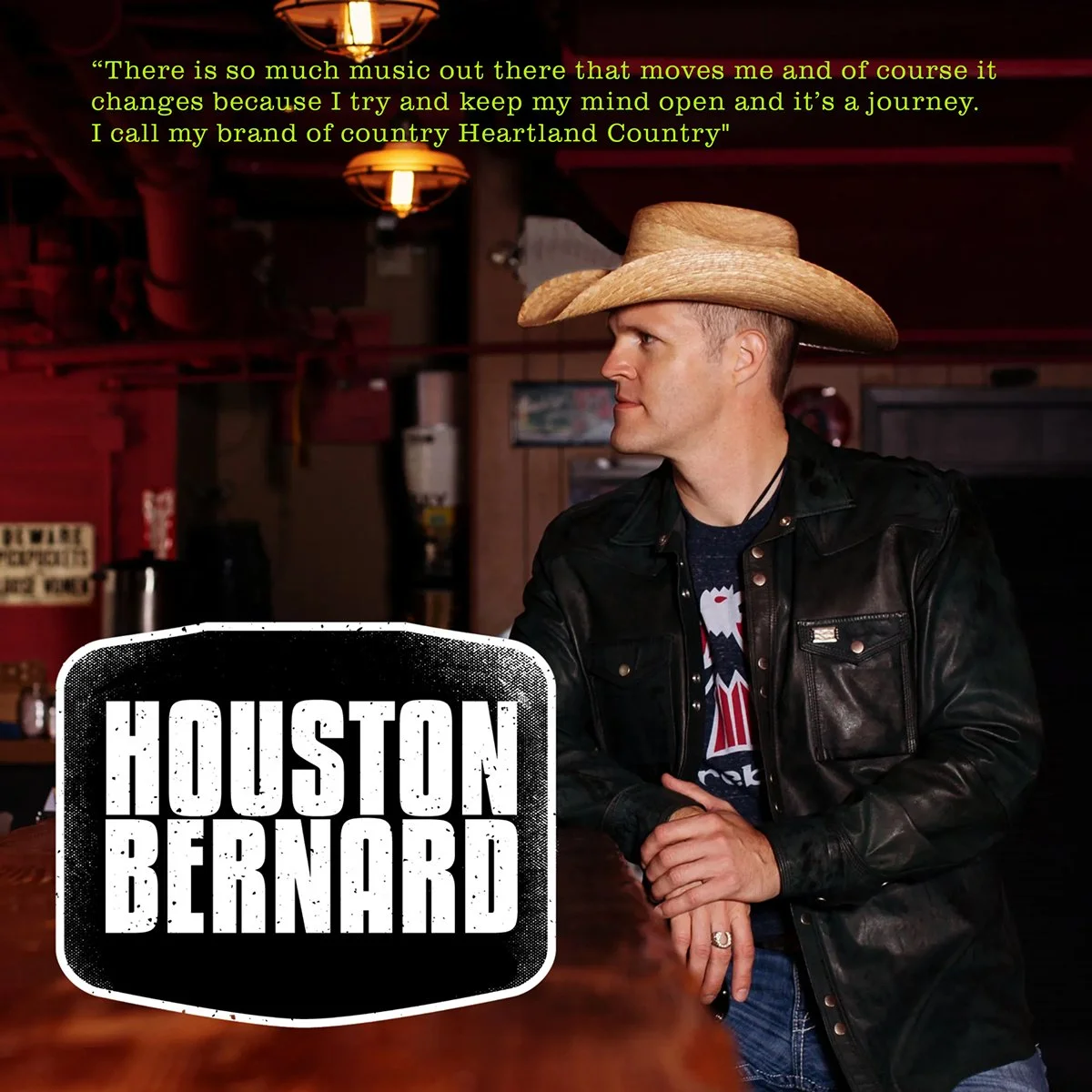
Houston Bernard Interview

March 15, 2024 Stephen Averill

Having just released his seventh album, DITCH THIS TOWN, Houston Bernard has upped his game and intends to promote this new album and his own brand of country music, one that mixes storytelling with some forceful rock energy that was inspired by the likes of Bruce Springsteen and John Mellencamp, with numerous live shows over the next couple of years. Lonesome Highway took the opportunity to talk to him about his own past and that of his family and notorious outlaw ancestor.

Music played a large part in your background growing up in Oklahoma, with both your father and uncle being musicians in the 70s. What lasting influence has this had on you?

I didn't get to grow up with my dad and my uncle because my parents split up, but once I joined the Army at 18 years old, I was able to travel a bit more and finally meet him. I feel like I am fulfilling my destiny as a human. I am following in my family's footsteps and doing it my way. It is fulfilling, and I have a purpose. It's not just songs either, I am digging deep and making my art from my heart and soul.

There’s also the story of George “Bitter Creek” Newcomb, a member of the infamous Dalton gang. He was a distant family relative and an outlaw. Was that any influence on your musical outlook in any way? 

Yes and he was also a member of the WILD BUNCH of which the Eagles did a concept album about, Desperado and track 10 is a song called Bittercreek. Having a legendary band like the Eagles do a song about your Great-Great Grandfather is pretty awesome. Musically I have always followed my heart and I have written and performed in many styles, I honestly never thought I would have 6 albums of country music that I am so proud of. Colouring outside the lines is definitely In My Blood.

Your family then moved to Alaska, which is quite a different location. Did that also affect your future? 

Hell yeah it did, my dad was a broke musician so he rejoined the Army and they sent us there. Eventually my parents split up and my mom remarried. That step father is the source of a couple songs on the new album, I didn’t want to write about it but my writing partner encouraged me to, I am semi-glad I did, there is a lot of rage and pain in the new album you will not hear in any other albums I have put out since 2012.

When did you move to your current location? 

My Dad met my mom touring, he is from Norman, Oklahoma, where I was born and met my mom in Massachusetts. She is from Worcester. Eventually, she moved us back to Worcester, by the time I went to high school. Leaving everything you have ever known had a profound effect on me and the only ways I knew how to express myself was either through music or fighting. 

You were also a specialist in the army for nine years. Did you put the music on hold during that period? 

Not at all, I kept writing since I was 11 years old. I would write and record on tapes. I have a lot of my songs cataloged. I performed at soldier shows and when I left the Army and graduated college I moved to NYC and got involved in the underground scenes there, I toured all over the States, Canada and some places in Europe.

Some of your named influences run from Dolly Parton to Queen. That would seem to be twin points in the way you make music now, a mix of rock and country. What is your favourite era for listening in the main? 

There is so much music out there that moves me and of course it changes because I try and keep my mind open and it’s a journey. I call my brand of country "Heartland Country" A lot of it is 1984 Springsteen/Mellencamp/Bryan Adams era. Though the new albums is more of like the Into The Fire album by Bryan Adams in the sense that is pretty gray and dark in some spots.

How much time is taken up with your musical career now? 

24/7 - I'm constantly thinking about it, prepping for shows, writing, doing shows, traveling and when you are independent and you don’t have a financial backer you have to figure it out for yourself. And when you come from literally nothing, everything takes longer and you make all the mistakes and things keep changing. If you don’t enjoy the journey and the challenges I would have got burnt out years ago. It's a fire in me that has not seemed to burn out yet, so I keep riding that wave. It's like air for me.

Do you largely gig with a band, or is it a mix of that and solo gigs? 

Both, I love both in a different way. To try and get the attention of a room as a solo acoustic takes some serious skill and I am always trying to improve in connecting with others. That is what is all about for me.

In the current climate, how long did it take to record and release DITCH THIS TOWN? 

It took me about 4 years and more investment than I will probably see back. But, it is extremely fulfilling.

Did you enjoy the recording experience and working with Bill McDermott, or do you prefer the live experience?

For me, they are two different animals. I enjoy the recording process and also the live experience. Bill is great to work with and we had a strong working relationship from the start. He hears things I don’t, and I am able to add a lot of my own spice, and he encourages it. 

You often co-write. Is that the method that works best for you? 

it is, I love a good co-write. When you put a few creative people together it can only improve the song. I love the process. This is the best work I have ever done. I was a writer on 10 of the 11 songs. The 11th song I loved so much, it spoke to me. That song is Come Undone by Ezra Hale.

How difficult is it for a relatively new musician to gain attention nowadays? 

I wouldn’t know, I have been doing it professionally since I was 12 years old and Im not even close to that age now. But if you mean a relatively unknown musician? All markets are saturated, there is a lot of quality but if you don’t have investment or a passion for social media to blow up, it’s a passion project. At this point I do music for me, not because I want to be famous. I love connecting with people who are moved or entertained by my music. Life is short and I get so much back from people being affected by the art I make.

Have you ambitions to play in other territories?

I’d love to perform everywhere people want me. Go where you are loved is what I always say. I watch my analytics and see where people are playing my music, it’s literally all over the world, so I'm hoping to get more opportunities to share my music and meet more people.

What are your plans for the future after this release? 

I think for the next couple years I will be promoting this album, making content to support it and sharing it with whomever wants to listen. But I have already started writing for my seventh country album. I recorded 5 new songs last week.

Interview by Stephen Rapid

Louien Interview

March 12, 2024 Stephen Averill

Louien is a singer/songwriter based in the Norwegian capital, Oslo and a leading light in the Nordicana genre, which has given a voice to artists and bands embracing their style of country, folk and roots-based pop music. She is a member of the band Silver Lining (performing under her actual name, Live Miranda Solberg) alongside her solo career, and that’s where she came to our attention after the release of her stunning 2019 debut album, NONE OF MY WORDS. FIGURE ME OUT followed three years later and earned her a Spellemann Award (Norwegian Grammy) nomination. Her recent release, EVERY DREAM I HAD, is a compelling collection of songs showcasing her full vocal range and, in true Nordicana style, refuses to be framed by any one genre. 

The last time we spoke was in March 2020, weeks before the pandemic. You had just released your debut solo album, NONE OF MY WORDS. How did you manage during that time?

Probably better than I would have anticipated. In Norway, we have grants you can apply for, so money-wise, it worked out, not perfectly, but it was okay. I like being at home as far as the isolation goes, but it was difficult, and we did not have the opportunity to tour NONE OF MY WORDS. We did get to play a few scattered gigs, but we did not have that tour feeling. We had a lot of plans for the album, which we did not realise and did not get the opportunity to go abroad and play.

Where did the name Louien come from?

Actually, it's from my mother. Her name is Louise. She grew up on the west coast of Norway, where people often shorten their names into nicknames, and Louien was her nickname growing up. It seemed natural to me to use that name.

There appears to be no end of outstanding vocalists, particularly women, in Norway and Sweden. Did you have vocal training in your early years? 

I had some formal training in my early twenties, but that was more about learning breathing techniques and conveying emotions. I grew up singing a lot; I was in the school choir, my dad was a great singer, and we would sing a lot of harmonies at home together. I went to Christian summer camp when I was young, where we had gatherings and would sing. Singing has been part of my everyday life since I was little.

You are also a member of the quartet Silver Lining. What was the driving force behind your decision to pursue a solo career?

I wanted to express different parts of myself, which was not possible as part of the group in the same way where there are compromises which are good. But, sometimes you have other things to say. I also wanted to challenge myself and see what it is like to be on my own, and it feels good to be the boss sometimes. 

Is your solo career commercially more successful? 

It is difficult to say, but in Norway, probably yes. Louien has been easier to sell to more people than Silver Lining because the band appeals to people who like traditional music, which is a smaller scene in Norway and possibly worldwide. We can see in the streaming numbers that Louien is currently reaching a few more people, though that may be because Silver Lining hasn't released new music in a while. 

How would you describe your new album, EVERY DREAM I HAD?

I would say that it leans towards melancholic pop music from the '60s and '70s but also approaches Americana and singer-songwriters. It makes me happy, but I'm unsure if it makes others happy. I have tried to make this album a happy listen and not as conceptual as my debut album, NONE OF MY WORDS.

That debut album was written at an emotionally challenging time for you. Is writing easier or more difficult when you are in that frame of mind?

I think that the songs come more forcibly when you are depressed or have really strong emotions. When I wrote NONE OF MY WORDS, I hadn't written that much before, and in the beginning, it can come to you more easily because you have storage that needs to be emptied in terms of writing. I don't feel that way anymore, and I feel that the ideas come to me quite easily, but I have to work harder to conclude and make an actual song out of the ideas now. That is also because I have become a lot more aware of the songwriting process, am stricter with myself and have higher standards than I used to have. 

The members of your regular band play on the new album. Given that they are also all songwriters, did that create any conflict? 

There was no conflict. We did have conversations, but in the process, it was quite easy because I was the leader of the project and had the last word. The band members are all very creative and open when it comes to sharing their ideas, but they do not take it personally if I don't like an idea and vice versa with me. All of us have become more mature working together over the years. I tried not to be too protective, as that can really kill the process. 

Did the others have any input into the songwriting?

I brought the songs to them, but I hadn't put them all together, so in some cases, they had input in rearranging songs and putting the chorus first. They might not have written the songs, but they definitely made them come to life, and I would not have recorded some of the songs if it hadn't been for them. 

Does the album's title reflect the inspiration for the songs?

Of course, the album is not about every dream I have had in my life, but it reflects on some of the years I have lived. The title comes from the second track on the album, Please. I usually look through my songs for a line that I like, but mostly because I'm a daydreamer, I spend a lot of time in my head – it's my way of escaping. 

Where did you record the album?

We did some live recording in an incredible studio in Sweden just across the border from Norway. It's called Silent Studio, an old-school building that they converted, and it has been in use since the late 70s. The guy who started it still lives there. He set up all the gear and microphones for us. He also put in mouse traps as there are a lot of mice there. We spent five days there playing music and putting together the basics for the songs. Something about the room made it feel like we were back in the 70s while we were recording there. It was magical.  

The artwork is very different from your debut album, which was quite psychedelic. You have shown your face on this album's cover.

It was really scary for me to release that first album. I felt I needed to hide away, not so much to hide, but some camouflage. I don't feel that way anymore and we had so much fun taking the pictures for this album. Also, the record label thought it would be nice to have my face on the cover. It probably makes sense for me to show my face this time round. 

Are you aiming for a local or more international market with the album?

We have been pitching it towards Germany, Sweden, Denmark, The Netherlands, Belgium, the UK, and Ireland as well. Touring in all these areas can be difficult, so we've had to limit the reach to these areas because I can't tour everywhere. 

Can you get radio play for your music in Norway?

I've been really fortunate as my songs have frequently been on the radio for the past three years. We only have one radio channel that is not for industrialised pop music. It's a small channel, but it is connected with our national channel, The Norwegian Broadcasting. It is run by five or six music journalists who control what is played and they are open to mainly Norwegian music. 

What is the most popular music in Norway?

Pop music like AURORA and Sigrid. They are Norwegian females who make big, flashy pop music. Country music is huge here, but it is more the easily accessible Nashville type of music. There is also smaller community support for alternative music like Americana. After the pandemic and with the financial difficulties that everyone is facing now, people are not going out as much anymore, even though there is support for different types of music here.

How helpful has the Nordicana brand been for you, and was that term consciously created to give artists like yourself a category?

I'm not sure where the term Nordicana came from. It might have come from a journalist or someone outside the music community. Die With Your Boots Records started as a group of people who loved listening to country music and have released artists like Signe Marie Rustad and Malin Pettersen. They opened a club in Oslo, and it took off from there. A lot of people were listening to roots music and came out of the shadows. It's more of a coincidence, really. Sometimes, I feel astonished by the whole thing. You make your music in your room, and suddenly, a whole community of musicians, some of whom I have grown up with, come together and work together. It is an uplifting and warm community. 

We will get the opportunity to see you perform at Dietmar Leibecke's Static Roots Festival in July. Will you be performing solo or with a band?

I'm super excited to play at that festival and will be bringing my band with me. I have toured as a trio in the past, but I want to represent the music in the best way possible. The bass and drums are a huge part of this album, so I will have my band with me. We met Dietmar at the Americana UK Festival last year, and I played in Oberhausen with Silver Lining last year. 

Intreview by Declan Culliton Photograph by Julia Marie Naglestad

Kimmi Bitter Interview

March 8, 2024 Stephen Averill

Traditional and old-time country music is enjoying a revival in recent years despite being ignored by the industry trailblazers who consider acts like Morgan Wallen, Luke Combs, Zack Bryan, and, more recently, Beyoncé to represent country music. Ignoring the trends, mavericks such as Charley Crockett, Sierra Ferrell, and Tyler Childers enjoy increased popularity on their own terms, which is an endorsement that quality music away from the mainstream will be supported if it gets the required exposure. San Diego-born Kimmi Bitter is also making strides in that direction and taking things a step further with her particular brand of traditional country music by recreating the classic sounds of the early '60s. Her debut full-length album, OLD SCHOOL, due for release at the end of March, totally evokes the signature vocals of Patsy Cline together with prime harmonies and killer instrumentation. It has not been overnight success for Kimmi, but the album's release and the expanding exposure it's likely to generate should endorse her dedication and commitment to her art and open many more doors for her.

When did your love of old-time and traditional country music come about?

I was a late bloomer discovering older country music. I learned to sing by imitating country singers of the 90s at that time. Country music was always natural in my voice, and in my late twenties I started diving deeper into more traditional country, Dolly Parton, Patsy Cline, Loretta Lynn and Jessi Colter. I knew of those artists but did a deep dive into their music through Spotify because my voice was best suited to traditional country. The more I dug in, the more I knew that this music suited my voice. I'm also obsessed with the '60s; I think music really peaked then, and I'm always chasing those '60s sounds, whether that be Patsy Cline with The Jordanaires and their really cool harmonies, also the twangy and psychedelic guitars of that time; I love everything from that decade.

Your vocal is ideally suited to the style of that decade. Did you receive formal training?

No, it's been a long road; I just taught myself. I worked hard and watched a lot of YouTube videos. I've been performing with my band for almost ten years, and I've honed my skills simply by going out and doing it. I sometimes wish I had some formal training to have a better technique, but who knows, it might have changed the tone of my voice. 

There appears to be, however slowly, a greater audience and broader age demographic growth for traditional country music. Are you experiencing that in your live shows?

This year, in particular, has definitely seen a lot of momentum; I'm starting to notice the growth in the fan base. It has been a slow burn for many years, but this year has seen a lot of change. I'm from California and have a strong fan base there, but we do a lot of touring across different States, and I'm starting to notice an expansion of the fan base nationwide. That's undoubtedly new, so I'm excited to get my new album out because we've been touring without an album; it has really been grassroots so far. I do look at my stats on Spotify and YouTube, and I have a strong male fan base, which surprises me because my music isn't rowdy, and my pre-order sales are eighty per cent male. As far as age demographic, it is definitely my peers and older, which makes sense as my music is old-timey, though there is an increasing number of younger people coming out, which is good.

Acts like Tyler Childers, Sierra Ferrell and Charley Crockett have forced the industry to take notice of that growing trend?

Yes, it started as an underground movement, and now it's blown up with some of the people you mentioned. It's really like an 'F-you' to the mainstream country industry, whose music is so watered down. I love that these underdog artists are coming along and playing different music, not what the labels tell them to do. It's also working on a more international level and gaining a lot of mainstream attention, which is cool. 

Apart from the music of the 60s, you also pay particular attention to the fashion of that time. Do you feel that that ticks another box profile-wise for you?

Absolutely, I love branding, and it's so much fun. As I mentioned earlier, I'm really obsessed with the 60s, not just the music but art in general. Also, cool cars and appliances that lasted forever. I love the fashion and the style from the 60s and spend a lot of time researching the dress styles back then, and with my stage image, I bouffant my hair, wear 'go go' boots and a mod dress. Nanci Sinatra would be a real style icon for me. It's something that I'm really conscious about, and I enjoy playing a character that I want to play on stage. I want to transport people to a little snapshot back in time.

You have patiently worked on and developed your individual style over the best part of a decade. I get the impression of you as a very structured person.

Yes, I have everything planned and organised; that's how my mind works. I do pretty much everything one hundred per cent myself, I've started to work with a radio promoter but aside from that I book all our shows, do my graphic design, manage my website as well as writing a lot of music.

That's a full workload. Where in particular would you like to get assistance in the future?

I would love help for sure. I work on music 'twenty-four-seven' both on the artistic and business side. I would love help on the booking side, which is very time-consuming; I don't know if and when we will come but, in the meantime, I'm going to continue what I'm doing. I don't have free time but I'm very grateful that it has grown to a place where I'm at now.

Your debut album, OLD SCHOOL, follows the release of several singles. Was this your attention to test the waters with the singles and progress to a full album?

No, I wasn't even thinking of doing an album. I was actually at a point where I wasn't even sure if I would continue doing music because I was working so hard, spending so much time on the road without getting very far and being really tested in the industry. I recorded the song, My Grass is Blue, and it had about fifty streams for the first month or two. Trigger from the publication Saving Country Music found it and showcased it to his demographic, and everything changed after that. My music is such a niche, and for a specific kind of listener, and Saving Country Music nominated it for Single of the Year. That single doing so well inspired me to do a whole album. The guy who co-wrote My Grass Is Blue with me, Michael Gurley, absolutely nailed what I wanted to do and what I wanted to accomplish. So, we worked on this whole album together. We have been working on writing a whole bunch of songs for nearly two years, trying to pick the best ones. We then spent a whole year in and out of the studio mixing the songs to get them right. 

Where did you record the album and what players featured?

At a guy named Enoch Jensen's home studio in Los Angeles; he is an amazing engineer. Nothing glamorous about the studio but we had a really glamorous team dedicated to making something of quality and not putting a deadline on it, we were done when the album felt right. It wasn't like I booked ten days in the studio; the album was done when we all gave it the stamp of approval, which took about a year. My co-writing partner, Mike Gurley, played some guitar on it, and then Willis Farnsworth, who has been playing guitar with me for nine years, played guitar on most of it, and my upright bass player, Ben Neal, also played. I had a drummer, Phil, from back home who is an incredible drummer across all genres. Through Mike Gurley's connection, we had an awesome pedal steel player, Christopher Lawerence. Mike also did all of the backing harmonies.

You have a hectic touring schedule. What are the main negatives of life on the road for you?

Lack of sleep is the main thing (laughs). Touring is tiring, and sometimes, I miss being part of my community back home. We love what we're doing and choose to do it. I get to see a lot of the country and make a living in music, and I'm really grateful for that.  

How difficult is that financially?

Well, we make it happen financially. I pay my band, and we get by, though I don't personally save any money; I use anything I make to reinvest, particularly in recording, which is a huge expense. We spend six months on the road, so I have to figure out how to make it work, how to negotiate my guarantees and how many shows we have to play to make ends meet. We cook many of our meals on the road and eat at In-N- Out, which is really cheap and of good quality.

Interview by Declan Culliton. Photograph by Willis Farnsworth

Jesse Sykes Interview

March 6, 2024 Stephen Averill

‘Unique’ is a well-worn and often overused expression in the music industry. However, defining the output of Jesse Sykes & The Sweet Hereafter with that term is not out of place. Their four studio albums RECKLESS BURNING (2003), OH, My GIRL (2004), LIKE, LOVE, LUST and the OPEN HALLS of the SOUL (2007), and MARBLE SON (2011), although planted into the Alt-Country genre, were psychedelic cinematic vistas, raw in emotion and quite unlike anything else before or since. The good news is that a fifth album from them is on the horizon and likely due for release this year. They are also touring again as support act to drone-metal band Sunn O))) and play Dublin’s Concert Hall on 25th March. We spoke recently with Jesse about her music, the band, the intervening years since their last recording, and her latest venture as lead vocalist with Dave Alvin’s project, The Third Mind.

Hi Jesse. You appear to be busier than ever at present, touring as a member of The Third Mind and about to play dates in Europe, opening for Sunn O))). How are you coping with that workload? 

I’m very excited for the adventure, thank you for asking! Lord knows I’ve been long overdue for some heavy workload;) 

In terms of the coping aspect, I think now it’s become less about the trials and tribulations of touring itself, but trying to cope more with the reality of how fast life is moving, and how much I don’t want this (or anything for that matter) to be a missed opportunity. 

I just hope that I can deliver, and be inside each moment, so that I can give all of myself. That’s all I ever really am concerned with—the transcendence aspect. 

So yeah, just knowing that I can hopefully find "that" sweet spot each night on stage makes all the logistical nightmares of travel fuckery worth it. 

Our review of the excellent THIRD MIND 2 album describes your artistic marriage with the band as 'made in heaven.' How did your involvement come about?  

That’s very sweet and a lovely compliment, thank you. Well, I’ve known Dave Alvin a long time and I was always a fan. He and I got to know each other years ago when my band opened some shows for the Knitters—and we remained friends. So back in 2019 when Victor Krummenacher called me and asked me to sing a song on the first Third Mind album, I, of course, said yes.

I think Dave just thought my voice would be a good match for the song, Morning Dew. (Which is on the first album.)

Then when this next record rolled around, Dave wanted to focus more on just playing his guitar vs. singing—so I was invited back, and I ended up becoming the main vocalist. It was a sorta, “let’s just see what happens” vibe—and honestly, it was nice to step out and away from my own constraints, and in essence not have to call the shots—and just simply sing. 

I just have to add, too, that it’s been a real privilege and honour to play with such top-notch musicians.

Being described by Dave Alvin as a vocalist 'that sings like Sandy Denny meets Grace Slick' is about the highest compliment for me. Did you develop your vocal styling after being influenced by any particular artist? 

That's a huge compliment, and it truly means the world to me —but I’m going to explain why I feel like I’m not worthy, in what’s hopefully an interesting way;)

These influence questions always stymie me, because I’ve lived a long time, and to answer this I have to go back to being thirteen!

I mean, many of my earliest influences (and the list is honestly too long) were extremely powerful soul, R&B and blues singers (both men and women.) I mean influences, in that they made me want to dedicate myself to music.

I definitely don’t have a powerful voice or range… I’m not a belter….and early on I’d get psyched out of course, because technically I couldn’t come close to singing like them.

But what I did come to understand or intuit (luckily), out of the impossibility of ever having pipes like, say, Aretha Franklin or Janis Joplin or Lead Belly, was the understanding that it more often than not, was about the emotion left behind in the actual wake their voices created, that I was being emotionally struck by—and sometimes less about the raw psychical power of their singing.

I just really honed in on how they might sing one word, or one note, and for me it became about chasing that feeling I’d get from even just a whisper perhaps —which eased the burden early on of thinking I had to be a “technically great” singer, to be a singer at all. 

I just quickly came to understand that you had to embody the song, and there are different paths to doing so.

Of course I was also obsessed with a lot of singers who weren’t technically great and were very idiosyncratic … I mean this is kinda par for the course in the rock n’ roll canon….and when I finally started to listen to more singer songwriters in my 20’s vs classic rock bands etc., I definitely finally let go of the trappings of thinking I needed to belt it out. Leonard Cohen was a game changer for me this way.

I just found the voices that can convey an inherent sorrow with just one note, or even the subtle space between notes. I mean not all music allows for this either —that space that’s needed to cradle a voice—and sometimes those micro nuances, or the mournful ache of a voice can get overcome by its own sheer power, or the music itself.

So it’s the “in betweens” — the cracks and fissures that I respond to—the actual “sound” of vulnerable desperation—which is exceptional when it’s juxtaposed to great fortitude of spirit and soul.

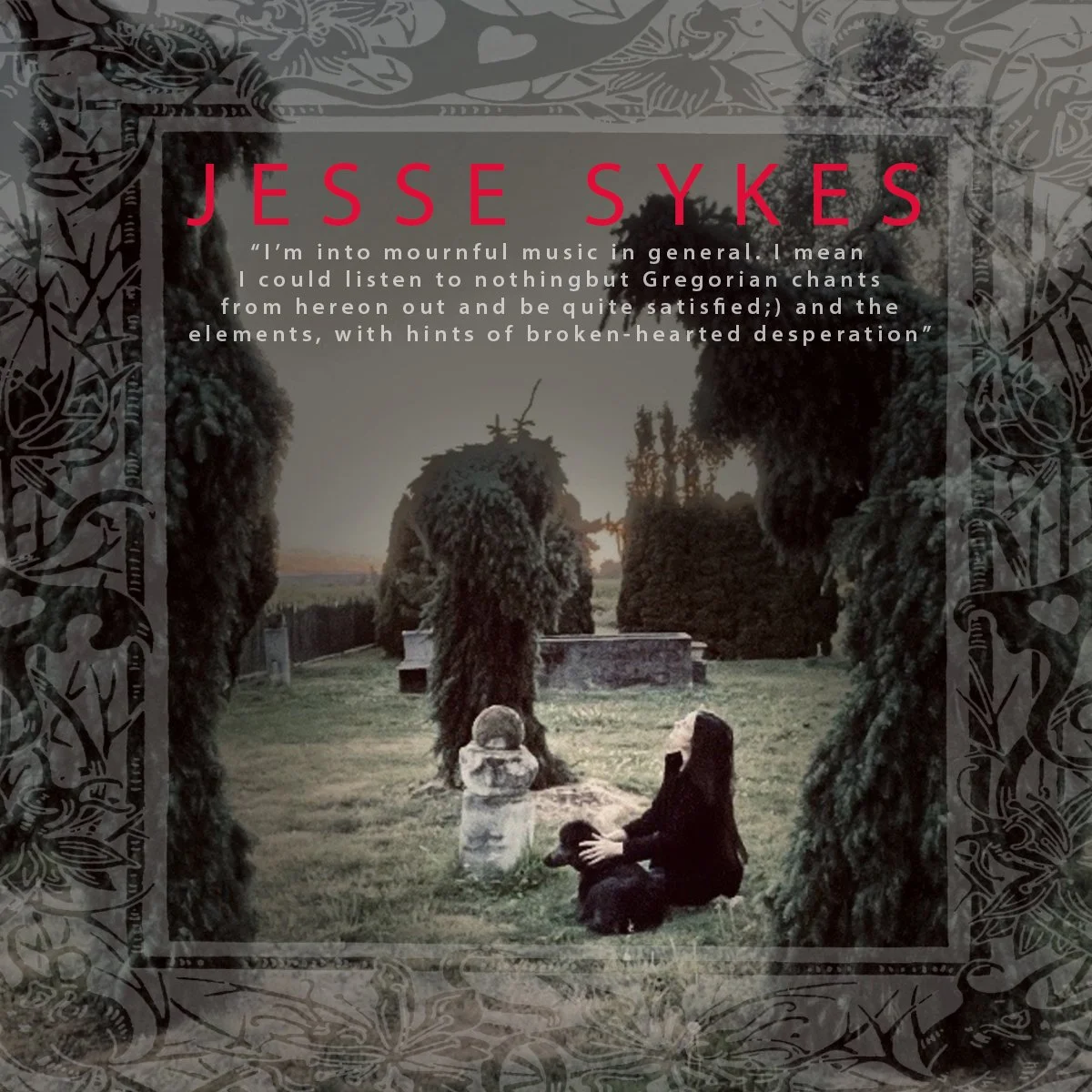
I’m into mournful music in general. I mean I could listen to nothing but Gregorian chants from here on out and be quite satisfied;) I need a bit of death and a sense of nature and the elements, with hints of broken-hearted desperation. Love.

Sounds cliche, but funeral worthy music;) That’s what my influences all share! You could be buried to them;)

Townes Van Zandt is another that comes to mind of course, in that his voice was all cracks and fissures with light coming in from all over. In his last years, his voice literally sounded broken… it was unbelievable to behold. And it embodied pure love.

Anyway....it’s important to add I’m speaking from the perspective of myself as a fan. This is what I’m touched by from others. This is what inspires me. Moves me.

I am not saying I have achieved this myself.

But of course it’s what I strive for. I’m still trying to reach this “place” with my voice as the “go-between”. But I’ve yet to. And I may never.

Sandy Denny, she had it all. Honestly, I’m not worthy of comparisons, nor do I come close to the timbre and richness her voice had - the warmth. No one comes close (in my opinion) to the rarity of the purity of her voice.

Grace Slick too was so distinctive and out of the box, ahead of her time in so many ways. Always was a huge fan… but I see her as an artistic singer (whatever that means;) Maybe just in the sense that her voice was like looking at a piece of Modernist sculpture in a grand museum hall… It was important, it stunned—but it wasn’t soulful …It was beautifully sculpted and defined but a bit cold. I don’t think I’d play Grace Slick at a funeral;)

Anyway, to try and summarize my thoughts… 

My voice, or my goal as a “singer”, was to simply occupy an emotional space — and the singing itself was almost secondary to this space —which is why I started writing my own songs. The songs were forged out from my many vocal limitations—so the songs made it all make sense as a cohesive expression —in that it wasn’t about being “a singer” at all, but more an interpreter of an internal world that was, for better or for worse, needing to come forth—with music being the vehicle to do so.

How’s that for explaining my style;)

As far as the last couple of decades, I can tell you my favourite singer songwriters that inspire me (in that I’m just a huge fan of them.) 

Marissa Nadler, Will Oldham, Nicolai Dunger and Jason Molina.

But I’ll close by saying this (and I think I said it before in an interview once) that my biggest influence was probably my mother’s voice…. humming a lullaby to me as a child at night. The sound of her voice through her chest, next to her beating heart was everything. Love.

How were the recordings for the albums THIRD MIND and THIRD MIND 2 structured, and at what stage were your vocals added? 

All the songs were cut live, so I was there at the get-go for each one. We’d basically just run a few versions of each song, and you'd just hope you'd nailed it. 

Were you familiar with the song selections before recording them? 

Yes. On the second record a few song choices were actually mine. ‘In My Own Dreams’ by Paul Butterfield, which is an all-time favourite from my teenage years, and “A Little Bit Of Rain” by Fred Neil ….and then of course “Tall Grass” (which was an original Dave and I co -wrote together.) 

I actually was not familiar with the Gene Clark song. That one’s a good example of a cover being completely reimagined.

Is performing live with them a different experience than fronting Jesse Sykes & The Sweet Hereafter?

Yes. I mean The Sweet Hereafter is my DNA, my forever unreachable Sistine Chapel ceiling, (that I will be reaching for from beyond the grave, eternally ;) and It’s my sole reason for being. So, therefore the live shows have a specific emotional context and sonic timbre.

The Sweet Hereafter is my and Phil's songs and vision (which is a dire and desperate vision.) And it’s also Phil and I on our emotional journey as two people who share the same heart, on full display. 

The Third Mind for me is an extension of what I’ve come to learn from the Sweet Hereafter, but it’s more light-hearted onstage. I mean the Third Mind’s music isn’t sombre the way ours can be at times—and I suppose it’s a bit more of an exercise in "letting go" vs holding on. Especially because there is a lot of improvisation— it’s literally about letting go. 

I enjoy finding new ways on stage to embody the songs with The Third Mind, because they didn’t come from me, so I get to be free from them, and I get to be an observer too—and I enjoy never knowing where it’s going to go because I’m learning as I go.

On a side note—I’m learning too, that it’s ok to fall in love a little with new musical relationships. I guess I’m poly “band” erous now;) But seriously, I am very loyal to a fault—so there is a true freedom to belong to something else that doesn’t belong to me (if that makes sense?) 

Also, onstage I’ve gotten over feeling like I’m cheating on Phil;) 

Your relationship with Sunn O))) goes back almost two decades, and you contributed to their collaboration with the Japanese band Boris. Were you familiar with both bands and was that association a stimulant for you to be even more experimental musically?

I was familiar with Sunn O))) because our bass player Bill Herzog introduced us to Greg Anderson and Stephen O'Malley way back in the day—that’s how they found me and asked me to come write and sing the words and melody for what became ‘The Sinking Belle’ (from the album Altar), which was the Sunn O))) Boris collaboration.  

Boris I met during the actual recording, and I was just blown away by them. Their presence, their whole gestalt. I mean they have all the elements. True artists. 

So yes, working with those bands in the studio and then performing with them made us feel like we needed to step it up as artists. We felt like what we had done til then was child’s play.

One night after we performed at ATP with them all, Phil came up with the intro to Hushed By Devotion, the song that opens our last record, Marble Son…and I remember thinking we have to start a record with this musical movement (cuz it really is a movement, or a “piece” vs. a song.) So that intro set the template for what became Marble Son. 

Had it not been for Sunn O))) and Boris, I don’t think we’d have gone that far into (what for us at the time) was left field…a real departure—or an arrival—depending on how you care to view it.

Does the support slot touring with Sunn O))) herald a rebirth of Jesse Sykes & The Sweet Hereafter? 

Yes, we are definitely in a rebirth. Or we are getting ready to be born;) But….it remains to be seen how that will translate.

Sunn O))) have given us a huge gift by taking us on this tour, because it’s allowing us to re-emerge in a very elegant and gentle way. 

I mean to be invited to set the tone each night that guides the audience into Sunn O)))’s intense sonics, isn’t just a huge honour— it just makes sense somehow in context to our journey—as we are still kinda caught between worlds until the new record is released. And these performances are all about being between worlds.

As strange as it sounds, their music feels very quiet to me, very calm…. Like being beneath the ocean or sort of like being in the eye of the storm… gentle in the middle…and I relate to that stillness, and I need that stillness, now more than ever…. it’s like a sonic shroud….and I’m lucky to play for people who get this, and understand that this is a kingdom you enter. I know it sounds overwrought perhaps to describe it so majestically—but it warrants this description.  

So again, it makes re-emergence feel gentle….and reverent. And perhaps dare I say, relevant.

You've hinted that we may be presented with a further album by Jesse Sykes & The Hereafter. With a gap of over twelve years since the release of MARBLE SON, what can we look forward to? 

Well, there is a record and it’s done and in waiting. This record is a little bit like if you were to put all our records in a cosmic petri dish. 

It’s funny cuz we started recording it eight years ago, but I’m proud of these songs, because they sound like what life felt like this past decade, for better or for worse—in that the songs seem to exist outside of time, much in the way we all have (perhaps) existed outside of time.  They might not have made as much sense had they been released eight years ago. Who knows. I’m probably too close to make this call.

For me the songs really seem to have grown into the zeitgeist of this modern era—which is one of great fragility. I think this moment in history is best defined by the collision of the collective unconscious, pressing against the sinister digital construct we’ve all seemingly allowed ourselves to become bound by. 

How does one quantify this? For me it’s shaped every aspect of life, and I have to be very careful because dipping into the internet pipeline can ruin me for days at a time.

Anyway…. Phil sings a song on this record too, and honestly, It’s my favourite song. It’s like we’ve come full circle and it’s almost irrelevant who’s singing what at this point. But for the story of this record to make sense—this song had to be sung by him. I think it might be a eulogy.

That hiatus we were on, from which this new record is born out of (and which was still in an acceptable range at the point when we started recording eight years back) was all about living outside of the indie music world’s goings-on because aside from other things I was dealing with in life that were monumental, I had felt it all got tainted and made worse by social media and the internet in general. It all finally culminated into this moment in time where I just needed to shed all aspects of persona and expectation and associations—which were all an unwanted part deeply entangled with any kinda musical pursuit. 

It’s hard enough to pursue music in the purest way imaginable (i.e. not caring about money—because I really don’t) but then to have to be continually demoralized each day with the dog and pony show of social media —well that was just killing my soul. I just needed to leave it behind. So I did.

I didn’t even have a computer for many of those years. I just revelled in the mundane and the beauty of the day, and kinda let myself get lost in life without overarching goals, and often without music in any form. 

At first it nearly killed me “letting go” of everything ….and I had to grieve big time …. but eventually it became a life. 

A beautiful one. A life where music stopped being— everything.

Instead, silence became everything.

I’m leaving out a lot of background;) I mean we as a band lost a lot of our machinery right after the last record came out, in that labels folded, people quit, Spotify took over, Seattle rents went way up…but it’s too vast to go into in a cohesive way;) Let’s just say Phil moved five times to four different cities during the hiatus.

But if there was a bright side to all the changes taking place, I think it just forced us to take a long view with making this record….and in doing so it seemed to be an almost protective entity. Like going to the studio over that long time frame kept us on track emotionally, while parts of us evolved into whatever it is we needed to, in order to carry on.

For me, just going into my own world, allowed me to kinda re-enter that “Theta” stage of childhood —which was an unexpected cherished outcome of everything seemingly falling apart around me at the time.

During this period I also obsessively made a bunch of little surrealist documentaries (on YouTube), because I tried to capture this beauty and its ache and the melancholy, through story telling. Luckily, the process of creating these mini documentaries eventually helped me fall back in love with music and life…. And some of the music for our record came out of these storytelling vignettes. 

Bottom line, these little YouTube movies are important companion pieces to the new record.

So I feel like in hindsight it was all necessary, the hiatus, and the eight year on again off again recording sessions. It was the only way to continue in this adventure in a pure and authentic way. 

I’m just hoping the new record has a bit of that childlike melancholic beauty I’ve alluded to, and evokes the feeling of how hope feels, before you ever knew that it was a thing you could lose. 

Does that make sense?

It’s aptly titled, “Forever, I’ve Been Being Born.”

 In 2011, MARBLE SON arrived after a traumatic time for you and the band, and that disorder adds to the album's brilliance. How difficult was it for you and the band to create that album collectively? 

In truth I just think it’s always been hard for us to make records, even at the beginning when our records were quite simple. I mean Phil and I have an intensity—and well, you mention a “disorder” and I’m laughing, cuz I think I have one in this regard —when it comes to making records. 

I just think aside from the music actually not aligning to my vision at times, and the frustration of clashing viewpoints, I have a kind of sonic dysmorphia, and it’s hard for me to hear the music played back outside of the studio sometimes. It’s like I won’t hear it played back the same way twice… I lose trust in my own perception…. and that just makes mixing a nightmare. 

The first time I encounter a mix at home to review it, is pure hell. I used to get in the bathtub and cover my ears with the water running, while Phil would take a listen in the living room, and tell me “Yay or nay” while I was still in the tub. Then I’d eventually work my way into stomaching a listen —if he liked it.

If he didn’t, or worse if I didn’t like it —it could really send me spiralling. I’ve had bedridden depressions over mixes.

I end up (especially in the case of this new record) having to step away for long periods to forget what I thought I heard;) Honestly, hearing what might be your very soul played back, for me can be traumatic and disorienting. If you really think about it, it’s not that far-fetched— to go a little crazy;)

Because again, in my mind it had to be right, or close enough to the internal world from which it came. 

I don’t have any other excuse really. I just seem to be a bit of a victim of my own undoing in this particular circumstance (i.e. the circumstance of my own recorded music;)

But I also think depending what’s happening in your life at the time, record making dynamics are gonna be a crap shoot - I mean it’s hard to make a record during a major life transformation I think….

With Marble Son it started out brilliantly… the recording process with Mel Dettmer was magical…But yes, Phil lost his dad during mixing and he and I had just broken up ….and then we didn’t like the mixes —so we took it to like three different people before we finally cracked the code. 

Plus, it was clear at the time we were going to lose crucial members, because they weren’t able to tour as much as we were required to. 

Fatherhood, motherhood…. Marriage. It was kind of the beginning of the end of that incarnation.

And soon after I lost my mind;) 

I mean it’s so much more complicated than we have time for. I’m not able to do this question justice;) I’m making myself look insane. 

Someday maybe we’ll make an easy record!

Songs such as Hushed By Devotion and Be It Me, Or Be In None are like open wounds. Can you perform them live, or are those memories best parked? 

We still perform “Be It Me, Or Be It Non’’ but “Hushed by Devotion” needs a full ensemble. We are definitely wanting to get a full band back together, and yes, I’d play that beast in a heartbeat! 

No one ever had to twist my arm to play most of our older songs! I mean even the new ones are old now;)!

 Your intrigue with mortality comes across in your writing and, indeed, in your band's title. Is that drawn from anxiety or fascination, and has that tempered over the years? 

Oh Yes, death was always my muse and as a child it was my constant play date you might say;) I came into the world knowing it belonged to us all and it was just a crap shoot who would be called upon. As a very young child I had a great amount of anxiety because death was very present early on, so it shaped me into who I was then and who I am now.

I guess as one would expect, my relationship to it has deepened. Meaning it’s less novel in terms of its elusive ways, and less conceptual and closer to home--more hands on.

As far as hands on, I now care take my ninety-year-old mother much of the time, and at night she has what I can only describe as visitations. When they started it was easy to write it off as dementia or a side effect of medication…. But now I’m convinced she’s just living between worlds where she can see things we can’t. People, old pets. She has many phantom cats in her apartment that she’s always in search off—hiding in closets etc. One night I heard a ruckus and she was throwing newspaper pages into the air and I said, “mom what’s going on?" "Why are you throwing this newspaper everywhere??!” 

And she responded, “I’m throwing them at the people.” 

I think she and I are at a point now where she no longer fights them, and I no longer tell her they aren’t real. (But honestly, I always knew they were real;)

So I’m in it… deep. And it’s every bit as beautiful as I might have expected, but even more sad.

You have spoken previously about the intensity associated with the band and how that can lead to ruination, yet despite numerous collaborations, you have not recorded a solo album. Was that ever on your radar, or are you committed lifelong to Jesse Sykes & The Sweet Hereafter? 

Sometimes I joke that I make music not so much for music’s sake, but more for the notion of having an excuse to sleep in a motel room with 5 people;) 

I just always loved the familial aspect of it…. I mean maybe not so much motel-wise anymore;) But I think I truly needed a family, and Phil (and the others) became my family through music. Plus he and I just have such a shared internal braille. We read each other’s minds and hearts —and I know it’s too precious of a relationship and that life’s too short to think I could find that again. The musical trust as well. 

It’s a love story, and I don’t need to always be falling in love. 

Solo records often sound too engineered. (i.e. The soul gets sucked out) Sometimes the metaphysical nature of the relationships between people is not taken into consideration enough. Those relationships lend some kind of extra juju we can’t quantify. Even if there is great friction. The friction might be necessary. Might be the magic bullet. 

I mean, I know there are many exceptions where magic occurs in solo records— but the thought right now makes me think of lawns with fake grass;)

Yeah. I’m just not interested. And at the end of the day, a solo record at this point in time, with so many band members having come and gone (with the exception of Phil) would ultimately mean “no” Phil…. and it’s just not going to happen. He’ll probably roll his eyes if he reads this, but I know he gets it …at least from my vantage point

Your show in Dublin is advertised as Jesse Sykes with Phil Wandscher and Bill Herzog rather than JS and The Sweet Hereafter. Is that anything to be read into, or is it a faux pas by the PR people? 

 It was honestly just that we didn’t want people to think it was a full band and then be disappointed. It can get confusing. I think of Jesse Sykes and The Sweet Hereafter as the full band experience, with drums etc….

This tour is us stripped down. No drums. In the early days it didn’t matter if we showed up as a duo, trio or five-piece, cuz the first two records were so minimalist. But after Marble Son, which is such an epic journey of an album, the distinction started to really matter, in terms of what form of the band you were getting (because so many songs on that record require full band.)

Man, now I’m thinking I probably should have billed as JS & The Sweet Hereafter after all— and just surprise people! 

Lol;)

Either way, with Sunn O))) also performing, it promises to be an exciting double bill and a welcome return to Dublin for you. We are very much looking forward to the experience. 

We are beyond excited Declan! And I cannot thank you enough for giving us a voice (out in the vast sea of it all!) See you soon my friend.

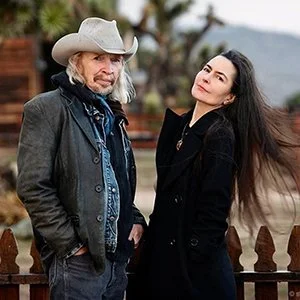
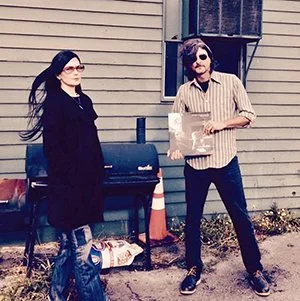
Interview by Declan Culliton Photography by Harrison Kadwit (Main Image and Jesse with Phil) and Steve Dewall (Jesse with Dave).

Jeffrey Martin Interview

January 23, 2024 Stephen Averill

Portland, Oregon is home to singer songwriter Jeffrey Martin. He first appeared on our radar back in 2009 with the release of his debut album GOLD IN THE WATER and he has gone forward into a career that has steadily built upon his insightful and sensitive songs. Having made a hard decision to give up a regular job as an English teacher in High School, Jeffrey has used his talents to reflect upon the human condition in all its guises and to hold a mirror up to our humanity, our deeds and insecurities. He speaks for those on the margins of society and frequently captures the quiet dignity and the hidden depths within everyman. We asked Jeffrey to share some thoughts with us recently while visiting Ireland and his wisdom shines through in the words. 

Congratulations on the new album. Thank God We Left the Garden has received very positive media feedback. Are you happy with the results of your labours?

Of course.  People have been really kind to the record. I’m glad folks are connecting with it. 

The feel of the album is one of quiet intimacy. Is that what you were aiming for originally – almost a fragility to mirror our troubled times?

Yes that’s very much what I was aiming for.   This batch of songs was a direct response to my anxiety about the pace of the world.  

How long did the recording process take?

Not sure exactly. Three months?  Or 7 years.  

Was the backyard shed you used always meant to be a studio during construction?

I built it so I could have a dedicated place for writing. I definitely didn’t build it with any acoustic recording function in mind.  Just built the cheapest thing I could that would keep the rain and rats out. 

You recorded late into the night to avoid neighbourhood noise. Did you get any strange reactions from the immediate neighbours who must have wondered what was going on?

I think my neighbours are perpetually curious what I’m up to. Strange sounds. All hours of the night. A few know what I do. Others I leave to wonder. 

Your producer on the album is John Neufeld. Can you tell us more about your working relationship with him?

Jon is a music friend. And a crucial part of the Portland music scene. Working with him feels like working with a kind and humble sound guru. He’s talented on another level.   

The songs seem more personal and internal in comparison to your earlier writing. Was this a conscious change of direction?

It was the opposite of conscious.Writing these songs was one long exercise in getting out of my own way. It’s just what came out. 

When you were growing up, who were your favourite artists and bands?

It was a constant and ever-changing buffet. Every kind. But I always come back to the songwriters whose lyrics feel like finding a light switch to a dark room in my mind that I didn’t know existed. I don’t really care about genres. I care what people are trying to say. That can be Nina Simone. And it can be Dave Matthews. And it can be Blaze Foley. And it can be The Black Diamond Heavies. 

Did you play guitar from a young age?

I started playing casually when I was maybe 16 or 17. I taught myself just enough to write to.  And there it’s remained. 

Do you intend to release your earlier albums in physical format?

I haven’t decided.  I think I’d like to revisit those songs and release those albums as “then and now” double records. 

Going back to 2014 and the DOGS IN THE DAYLIGHT album. When you look back  do you see much change in your writing process?

I’ve moved away from some folky Americana tropes.  Fewer trains and less heartache for the sake of heartache.  In previous albums there were a lot of dark and sad songs, but I didn’t offer much of myself.  I discovered that a certain amount of vulnerability, some honest telling of my own story, in a song can help balance the melancholy with some solace. 

ONE GO ROUND  (2017) is an album that carried on your leaning toward story songs. Did you record this in a friend’s home in preference to a studio setting

I recorded it with Tyler Fortier in his home studio.  He’s got a very legit studio space with great gear.  I liked working with him because he was willing to build the songs out in a really organic way. Slowly  and mindful of what might be too much.  

Do you prefer to perform in a live setting or would you choose to stay home and simply be seen as a songwriter today

I absolutely love the live show.  There is a magic there that can never be contained on a recording. For me, recordings are deeply secondary to the live show.  Both are important, but if I had to choose one it would be live shows every time, forever.  

When you tour, is it hard to make any real profit when you add up the cost of flights, hotels, meals etc?

It’s hard for anyone these days, doing any job, to make any profit.  My goal is sustainability, and so far that’s working.   Money kills everything and the more you have the more you sacrifice to it.  My goal is to make enough money to keep playing music for a living. Whatever exists beyond those margins I don’t really care about.  I try to be intentional with that mantra. It’s too easy to start feeling like you need more.  Or worse, that you deserve more.  

So many artists cannot make ends meet with poor royalty payments and increasing costs of living. However you gave up a regular teaching job to devote your time to music. How difficult was that decision to make?

It was only difficult in that I was trading a conventional job that was somewhat reliable for the infinite expanse of working for myself.  But art thrives on a healthy amount of uncertainty.  Every creative moment comes alive with real stakes.  

 Do you write slowly or do song ideas and words come to you quickly?

It’s both. All at once for some. Over the course of years for others.  If a song doesn’t come quickly, that usually means I need to do some more living. I try not to fight that equation.  

Your partner Anna Tivel is a very successful singer and songwriter also. Do you regularly communicate song ideas to each other or how does your creative dynamic work?

We write very separately from each other, but live together in constant shared space of ideas and reflection.  We’re two deeply internal minds who were lucky enough to find each other and fall in love.  There is a common unspoken understanding that we both need mounds of time alone. 

The new album wrestles with some big concepts such as ‘who are we, and what are we doing here.’ Have you resolved that heaven already lies within us, if we would just wake up?

Well put.  I’ll never understand why religious communities seem to be so fearful of this concept. Especially considering that it’s written in their bibles in black and white. There is the sandbox of the material world, where all of our politics and capitalist dreams and inane social constructs reside. And then there is the infinite expanse outside that sandbox, where compassion and wonder permeate and go on forever.   

You sing of intolerance and homophobia on the song Red Station Wagon. Do you think that prejudice can ever change or is the mountain of hate too big to climb?

I believe things like prejudice have to be overcome on the individual level, life by life. Society can offer helpful tools (education being a key one) but will never be able to compensate for a fearful and ignorant mind that has no desire to find a better way.  

The division that we see today in our world makes me think that humans are the greatest blight upon the planet. In writing about a higher purpose do you see a light at the end of the tunnel?

I don’t agree. While certainly other creatures are conscious, I believe that human conscious specifically brings a profound value to the universe that nothing else does (that we know of so far.) One that allows Existence to ponder itself and be awestruck by the infinite depth of minds and hearts.  The destructiveness of humans isn’t the fault of our awareness, but rather the result of those who choose to remain unaware.  I could stab someone to death with a paint brush, but it wouldn’t make sense to blame the brush. I hope we can become increasingly aware that our humanity is a powerful tool, not a passive fact of our existence that we are slave to, and it needs to be protected and wielded with immense care. Not to say that our human nature doesn’t contain some truly horrifying potentials, but that with awareness and compassion we can choose our better natures. 

Interview by Paul McGee 

Nora Jane Struthers Interview 

December 1, 2023 Stephen Averill

Singer-songwriter Nora Jane Struthers is a Nashville-based artist who lives with her husband and fellow musician, Joe Overton, and their two young children. Her recently released record, BACK TO CAST IRON, is another album brought to pass under the ‘pandemic umbrella,’ albeit with the caveat that it was also written while Nora Jane was heavily pregnant and expecting their second child. Given those elements, you would be forgiven for expecting a profoundly unsettling and worrisome theme to prevail across the album. The outcome is quite the opposite, with positivity and hopefulness at the core of the song’s subject matter. We spoke recently with Nora Jane about her move to Music City to follow her career dream and the new record.  

You were born in Virginia but moved to New Jersey. At what age did that shift take place?

At the beginning of my memory, it was about four years old.

I understand that your father was a musician.  

Yes, my father still is a musician. He is a saint. He plays the banjo and the guitar and, during the pandemic, he learned to play pedal steel guitar and is quite good at it, quite an accomplishment for a seventy-year-old to take up a new instrument.

Did you play on stage with your father or just at home?

Up until college, it was just in the living room. I was writing songs, and they were pretty bad. In my teenage years, I would play them at open mics. But in college, my dad and I started playing together at these folky venues in New Jersey and then dive bars in Brooklyn. We named ourselves a father and daughter duo, Dirt Road Sweetheart. You can find some of our music on Spotify. It's very sweet, honest music that sounds like a brother duet style.

I expect that you got your love of music from him.

Yes, my whole musical foundation was bluegrass and folk, and country. And then, as a child of the '90s, I loved grunge and many bands like Pearl Jam. I also loved many women artists coming out in the 90s, like Annie De Franco and Tori Amos. I went to this festival that happened in the early 2000s called Lilith Fair. It was a collection of female artists:  Jewel, Sarah McLaughlin and The Cranberries, who toured and played the biggest arenas. Being around all those women making music and writing their own songs was inspiring.   

You completed a teaching degree in college. Did you put that into practice?

Yes, I taught in high school for three years and loved it. It was so much hard work. I thought I was working so hard and still broke; I could move to someplace that is less expensive, work hard, and try to be a musician, which is what I always wanted to do.

That led to a move to Nashville.

Yes, I moved there 15 years ago, in 2008. I made my first record in the fall of that year and released it a year later.

Did you integrate easily into the musical community in Nashville?

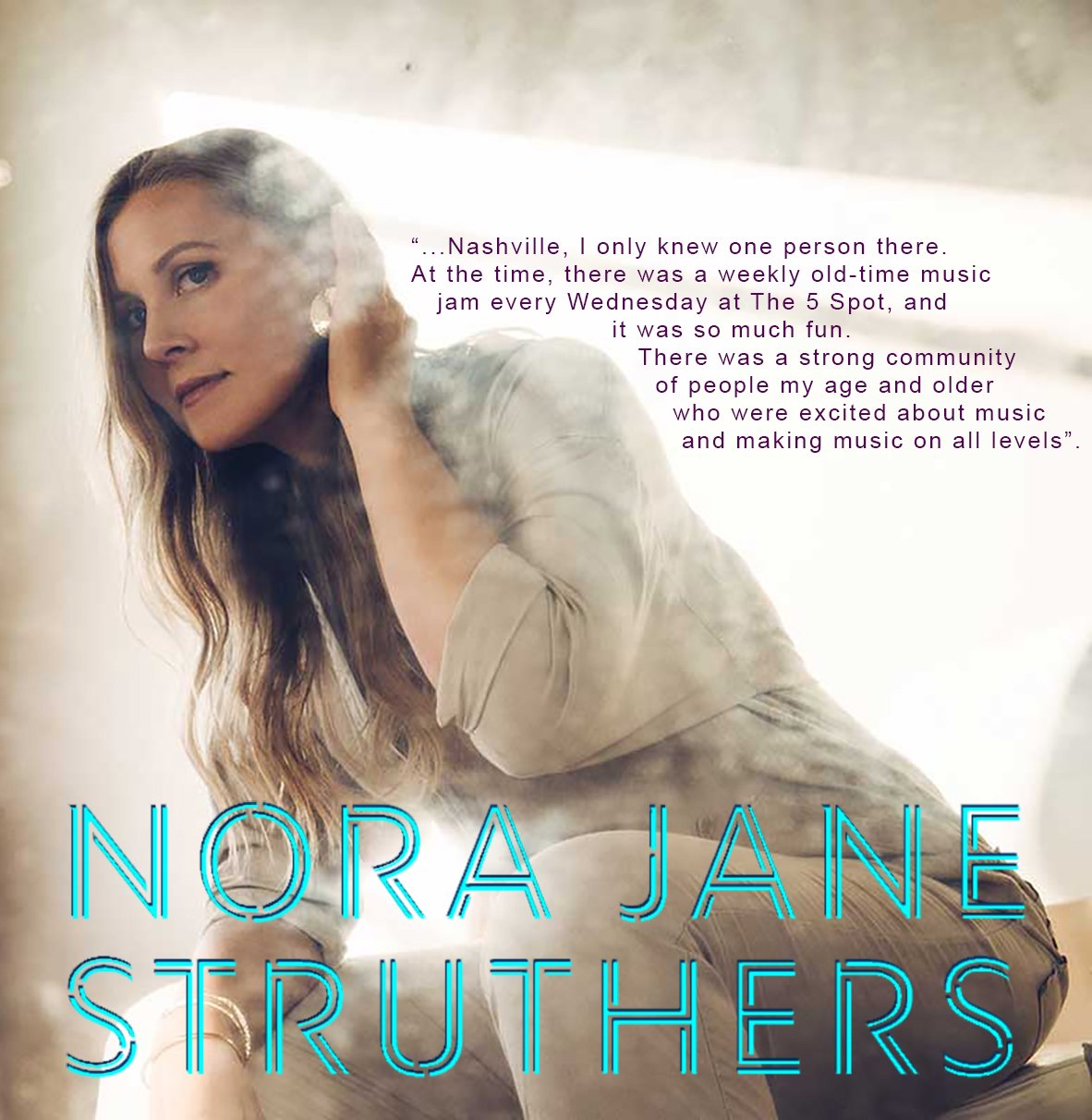
When choosing a city to go to, Nashville, I only knew one person there. At the time, there was a weekly old-time music jam every Wednesday at The 5 Spot, and it was so much fun. There was a strong community of people my age and older who were excited about music and making music on all levels. I stayed for a week for my first visit. I wrote a song, met a producer, and the song was pitched to an artist. And I was like: ‘This is where I want to be if I'm trying to make a career out of music, this is it.’ So, the move was great, and it was exciting. I made many friends, many of whom are still my friends today. 

The 5 Spot is an iconic venue in East Nashville, as is Dee’s Cocktail Lounge in Madison.

I'm thinking about doing my album release show at The 5 Spot. I haven't played an album release show yet in Nashville, so I’m still trying to decide when and where I want to do that, but The 5 Spot would be great for old-time’s sake. But I've also played at Dee’s every two months for the last year. I love it there, too.

For obvious reasons, you didn't get to tour your 2020 album BRIGHT LIGHTS, LONG DRIVES, and FIRST WORDS.

Oh Lord, I think I got to play seven shows. We put it out in February 2020; I think I played two weekends and then we came home, and stayed at home. It was pretty rough.

And that led to you writing the songs for your new album BACK TO CAST IRON, which we described in our review as a ‘series of diary entries.’

That's accurate because, as an artist, I process my life through songs, and it certainly makes sense to me that those would feel like diary entries. I was, at least for some of it, heavily pregnant when writing the songs. I was pregnant a lot of it, although some of it was written after my son was born. 

Did that condition work itself into the songs?

Topically, certainly, but the physical condition is in there too. In one of the songs, I talk about my shoes not fitting, and certainly with sleep and how erratic that is when you're both pregnant and have a baby, that’s in the songs. Because that affects the way a person's brain works.

You open the album with Is It Hope and bookend it with Back On The Road. Despite the times they were written, they suggest an extremely optimistic author. 

I'm a hopelessly optimistic person. What my husband called me the other day is relentlessly optimistic. That’s not to say that I haven't had my downtimes, of course, but my natural state, my baseline, is an optimistic state. I think that comes through in my writing, and it certainly comes through in my shows when I can connect with the audience. I want them to feel that it’s part of the Nora Jane experience, that you leave believing in yourself and that things will be okay.

Did that track sequencing come naturally to you?

That's a tough question to answer. Initially, I had a different opening song. My first sequence was Back On the Road first and I presented that to my producer, Nielsen Hubbard. He said that he’d hate to put Is It Hope so far down in the sequence because the intro in that song is so strong and in case some people didn’t get that far with the record. When I was in the studio singing that first verse of Is It Hope, it felt so magical to me. I knew when I had done that take that it had to be the opening track. In a way, once Neilson gave me that perspective shift, ending with Back On The Road made sense because the whole record is about me not being on the road, and I couldn’t wait to get back out there. It just seemed to make a lot of sense. 

I particularly love the lyrics in the song Something Wild when you say: ‘Because you can’t make something wild grow in your garden.’ What is behind them?

The song's first verse is based on my mother, and the second is about my experience. My mother loves Queen Anne's Lace. It's a weed that grows on the side of the highway all over this country, in all parts. It's related to the carrot and the person in the same family. My mother was an avid gardener, and she would always pull over and dig it up, put it in her beautiful soil at home, and it would always die. It wanted the rocky, craggy highway soil. The second verse is about motherhood and a tolerance for mess and uncontrolled actions of people. To a certain extent, it's about control. And being aware that there are many beautiful things that are not only within our control, but they should not be within our control and just allowing them to be wild and beautiful.

Children They Need You (All of the Time) is a beautiful country song whose title speaks for itself. 

Thank you. I love that song. It just tickles me wherever I get to play it live. 

I have always wanted to write a song with parentheses in the lyrics, so mission accomplished.

You mentioned your producer, Neilson Hubbard, earlier. You’ve worked with him on your past three albums, haven’t you?  

I have. A lot of people that I know operate on the basis that you make three records with a producer and then it's time to move on. This was my third record, but I don't know if I was ready to move on as I love working with him. He's so laid back and smart and has such great taste. He is flexible but firm when he really believes in something  and he's just so much fun to be around. I love the records I've made with him; every record I make with him is a notch above the last. Part of that is my own personal development and growth and hopefully, I’m getting better and deeper, but it is also his personal ability to magnify that.

The songs were written during an unprecedented period with COVID-19, pregnancy and your child being born. When you went to record over a year later, was there any temptation to revisit the songs or include others?

There was no temptation. I did have many more songs from that period that didn't make the album. That was part of the fun of making this record, going into the studio and with all the work tapes I had sent Neilson. I didn't always know what we would be tracking on any day. I just left it up to what I felt like playing that day. There were a couple of other songs that are really good songs that I'll probably never record. I won't go back unless I relate it to this album in some way. 

The album has been getting great reviews. Do you read your reviews and if so, do you approach them with trepidation or curiosity? 

I do read them. I'm always curious to read reviews. I know what I've made and how I feel about it. It's interesting to see how other people relate to it and what others take away from it because what I'm going to take away from it will always be different. That's the whole part of making art; it's going to be different for everybody. 

Your husband, Joe Overton, features prominently on the album, playing pedal steel guitar, banjo, and adding backing vocals. Is having two professional artists in a marriage supportive or testing?

It's just so supportive. If you knew Joe, you wouldn't even need to ask that question because he is the loveliest, laid-back, calm, easy-going, even-keeled kind of person that it's lovely to be around. I bring to the partnership decisiveness, grand vision, and other things, and he is great at just making things happen. There are so many fantastic musicians here in Nashville. What I love about Joe is that he sounds like Joe on every instrument, and he has a unique voice. I'm just crazy about it. 

How do you balance motherhood with your professional career as a recording and touring artist?

Because my children are young – I’ve got a two-year-old and a four-year-old – I am looking at this as a season of life to be at home mostly. I love playing live shows, and I don't know how many I played last year, but it certainly wasn't a high number. I play one solid weekend a month and usually bring the kids or at least one kid with me. Sometimes, I do the shows without Joe. I did a weekend in Texas this summer where I flew with my two-year-old and played some shows solo, which I wasn't comfortable doing years ago. Being a mother has increased my flexibility, which is good. At the moment, it’s mostly a season to be home. I take the gigs that I know will be fun and that pay. Later in life, if I want to tour a little harder again, maybe I will, but this isn't the moment for that. 

Interview by Declan Culliton

Jaime Wyatt Interview

November 26, 2023 Stephen Averill

Three years after the release of her last album, NEON CROSS, Nashville-based artist Jaime Wyatt has shifted somewhat from the country nuances of that album with her recently released album, FEEL GOOD. Jaime’s songwriting has consistently been autobiographical, and that continues to be the case with the new record. Sonically, it travels in a more soulful direction than her previous recordings and finds her writing about issues such as sexism, personal relationships, gun violence and environmental collapse. Not afraid to challenge the tried and trusted, producer and band member of Black Pumas, Adrian Quesada was brought on board by Jaime to oversee the arrangements. The result is a fuller, warmer and more harmonious sound that reaches the sweet spot between modern country and soul. It’s also a triumphant move forward by an artist whose career appears to take giant steps forward with each of her albums. 

Are you at home in Nashville this morning?

No, I’m in California, it’s 10 am. We’ve just played an album release show here and also Orville Peck’s Rodeo at Pappy and Harriets; it’s a cowboy hang where they filmed part of Easy Rider; it's lovely. I’m hanging out with family for a while and taking some meetings in Los Angeles. 

How is your relationship with Nashville progressing?

I love Nashville; it has made me good at music. When you come to Nashville, one good assimilating thing is ‘getting good.’ I love Nashville but miss my family on the West Coast. It’s home for me now, my band are there, and they are like family to me, and we tour out of there. I’ll have my base in Nashville for years to come.

Congratulations on your recent Grand Ole Opry debut. How did that go?

It went really well; I was surprised it went so well. I got to sing with my friend Butch Walker and Trey Binkley from my band came and played with me. It was really fun to share the experience with people, too; Trey had never done the Opry, Butch had done it before but was so supportive and sweet. I played Ain’t Enough Whiskey with Butch and also played Moonlighter. 

Our review described your new album, FEEL GOOD, as more Dusty and Bobby than Loretta and Dolly. Did you lock yourself in a dark room and binge on soul music to get into that groove?

I did lock myself in a dark room and listen to music. I have this deal with ADHD called hyperfocus, and I use it. I’m obsessed with music. I would write a few songs for this album and then study Motown, Soul, Isaac Hayes, Curtis Mayfield, and Grateful Dead. I listened to their records because I knew that the grooves I was writing were different from my last record, NEON CROSS, and could be really powerful if I learned more about their music. 

You recorded in both Los Angeles and Nashville.

While writing and compiling the songs, we would go into different studios and jam and improvise with melody ideas that I had. The players would be jamming, and I would be looking through my notebook for words. We were recording everything, and after a session in L.A. I went back to the drawing board, listening and writing more. I then took my touring manager and a group of guys to a studio in Nashville, and we did the same thing, demoing again. After that, it was up to me to really cue in, finish the lyrics, and select the songs. We then ended up working with producer Adrian Quesada to finish the album.

How did the connection with Adrian Quesada come about?

I was talking to my friend Nikki Lane and asked her if she knew who Adrian’s manager was; he happened to be a former manager of mine. I really wanted Adrian to take the project on and was surprised when he did because my last two records were very country. I told him I wanted horns and strings, and I knew he could do those arrangements. He was brilliant, his Electric Deluxe Recording studio was impeccable, he has great tape machines, and his engineer is a genius.  

 You wrote on the piano for this album. Was that the first time?

I did write many of the songs on piano this time and play piano in the live sets quite a bit. I had written two songs on piano before for my last, NEON CROSS.

Is the Album’s title, FEEL GOOD, a statement of your frame of mind or advice to others? 

That’s a good question; it’s both. I write about things that I feel but question whether they are relevant and whether people need to hear them. I believe that we are living in a toxic society for the most part, and I’m trying to highlight healing, both for myself and others, because I know that it is needed. So, the title means ‘permission to feel good.’

You open the album with World Worth Keeping, a reminder of the current environmental ruination.

I wasn’t sure how that would go down, and I think most people do love the planet. But we can’t ignore what’s happening at the moment with the weather, and we’re not going to have any clean air for the next generation at this rate. But I have immense faith in the young generation; they are very well educated about the environment. I grew up in Washington State, where environmental issues were encouraged and taught in schools. I appreciated that but did not realise that not everyone learned that way. Moving to the South, I found that in Nashville, they don’t even recycle glass and recycle very little. I’m not mad at any single working-class person for the state of the planet; what I talk about in that song is billionaires who are destroying the earth without having to pay for the damage they have done. 

We recently selected the track Hold Me One More Time to feature on our radio show as one of this year's favourites.

Thank you. I wouldn’t say I like listening to my own music, but when the album came out on Spotify, I actually listened to that song. I’m really proud of it and think it sounds beautiful sonically. 

I understand that the song Fugitive was written while you were feverish.

Yes, I was down with Covid; that song is a fever dream. I was reading about life in America at the time, and that song is about gun control. That’s my ‘fever song.’ My dad always told me to write songs when I had a fever because Neil Young wrote Cowgirl In The Sand with a fever. 

You recall your dad on the album with the inclusion of the Grateful Dead song, Althea.

Yes. My dad was friends with Bob Weir when we were kids, and he would be stoked that I recorded that song. I grew up at Grateful Dead shows with my family as a baby. I started seeing young people wearing Grateful Dead shirts a few years ago and just dived back into their back catalogue and discovered how amazing that song, Althea, is. Robert Hunter’s lyrics were so cool because he left them open-ended. I follow Bob Weir on Instagram and watch him working out, which he does so that he can still play heavy guitars. That’s why I work out, too, to be able to stand up and hold a guitar, play better and sing better.

Were all the songs written specifically for the album?

Two of the songs were around for a while. I had been playing Ain’t Enough Whiskey on the road, but it didn’t make the last record. I’m glad it didn’t now because it works with the flow on the new record. Also, Jukebox Holiday, which I originally pitched to Charley Crockett when I wrote it.  

You are due to tour the album in early 2024.

I start a headline tour on January 17th at The Troubadour, California, and it ends on February 24th in New Orleans, with twenty-five dates in total. Riddy Arman does the support on the West Coast, and on the East Coast, we have an upcoming young man, Joshua Quimby. I’m excited to hear them both each night.  

Will you get back to Europe soon?

Hopefully, as soon as possible. Playing the 3 Arena, Dublin, with Dropkick Murphys in January was incredible. It was so powerful to see a whole room of Irish people singing Dirty Old Town; I was crying; it was so beautiful. 

Interview by Declan Culliton

Josh Gray Interview

November 2, 2023 Stephen Averill

Establishing yourself in the over-crowded singer songwriter genre is no easy task and demands - alongside no end of talent - forbearance and good fortune. Josh Gray’s recent album, WALK ALONE, explores a broad canvass of issues alongside personalised plights. In a recent interview with Josh, we learned of his somewhat late entry to his professional career, his move to Nashville to follow his career path and his new record.

You were a late starter as a professional musician. Was there any particular inducement for you to go down that career path?

I never saw music as a career path until recently. I've always loved music, but my main focus was writing. I started with a lot of bad poetry, and that eventually became lyrics. My parents got me a guitar when I was around sixteen, and I enjoyed playing without the intent of performing live. What I think made performing a possibility for me was discovering what I would call accessible artists. Artists who convey deep emotion without having a perfectly trained singing voice or being a virtuoso on guitar. It's important to listen and learn from great artists. But it's equally important to find artists you enjoy that make you feel like you could do that too. One final thing that encouraged me was that my favourite songwriter, Leonard Cohen, released his debut album when he was 33.

What was the music scene like in Frederick, MD, before you moved to Nashville?   

Frederick was founded in 1745, and you feel that when you see the historic row homes downtown. I miss that small-town feel of walking down the street and seeing friends going about their day. The music scene was small but very welcoming and creative. I attended the open mic at The Frederick Coffee Company for around a year before performing, just enjoying the music and learning. I think it surprised a lot of regulars when I got up and played for the first time. Mainly because they knew me as a listener and never realized I played guitar. Going to open mics early on was essential to me writing albums, and hearing other musicians inspired and pressured me to write new songs instead of playing the same ones week after week.

Nashville is the epicentre for singer-songwriters and musicians at present. How have you integrated into that scene, and have you found it overwhelming at times?

The main reason I moved down here was to surround myself with talented people, challenge myself, and get better. When I first moved to Nashville in 2016, I continued going to open mics. There was one open mic in particular that was my favourite; it was at Café Coco, a 24-hour hangout for local musicians. I met several great songwriters there who I'm still friends with. I think that's what you do: you find your friends and then start playing a bunch of shows together. I feel that I've integrated into the scene well enough. I'm kind of reclusive, like many songwriters, so I could be better at networking. But really, it's a city full of talented people all doing their own thing. There's no room here for big egos; it's true what they say about Nashville; even the mailman is a better guitarist than you.

Did you avoid the 'paying gigs' playing downtown when you first arrived or used that scene for an opportunity to play and generate some income?

When I moved here, I already had a full-time job. Playing hours and hours of cover songs for drunk tourists never interested me. The pay is unpredictable and largely dependent on tips. I always gravitated more to venues in East Nashville, where original music was more appreciated. Nashville is for networking and being near career opportunities. As far as getting paid, it's hard here unless you're a big name, due to the surplus of artists willing to play for free.

Is the title of your new album, WALK ALONE, a statement on the industry, labels, and radio station's lack of support for anything not seen as readily marketable? 

The title is a statement on how I've felt within the industry to date. Overall, artists had it a lot easier back in the day. You grow up hearing stories of famous artists being discovered in some small club, that just doesn't happen anymore. It can be argued that now you can reach anyone in the world via the Internet. But we all know that cutting through the clutter of the internet isn't possible without putting money behind your content. Being a good artist is important but less important than your Spotify or Facebook numbers. You're expected to be a great songwriter, musician, expert in social media and marketing, and booking agent, and you also need thousands of dollars to record.  I'm not trying to be negative; I'm just saying it's hard out here. I feel that very few chances are taken on artists anymore. I also feel that with proper promotion in the US I could be a lot bigger than I am. 

You speak for the multitude and yourself with the album's opener, Radio Stations. Money or Blood is equally forthright. It rages sonically and lyrically against the unscrupulous employer, gun control and the Government. Another song that commercial radio will definitely not play?

I don't think I'm unique when I say that to me music is a form of therapy. With that being said, if I can't speak my mind in my music, then where can I? The more songs of mine that you listen to, the better idea you get of who I am.

When you're writing a song and the thought of commercial viability enters the conversation, it's time to throw that song in the trash. Are you trying to express yourself and advance the art form, or are you trying to impress your shareholders?  I've become good friends with several radio DJs over the years. Many of them have the freedom to program their shows based on their own personal taste. But yes, heavily commercial radio will never be a friend of mine. I just don't ever see myself having the money or lyrics vague enough to ever compete in that arena. I have had friends spend more money on radio promotion than they did on recording their actual album.

 The quieter moments on the album also work exceptionally well. The closing track, a classic duet with Morgan Connors, Building Paradise, offers hope and simplicity and bookends the album with a sense of positivity. How vital was the track scheduling for you?

Thanks so much; I think track order is extremely important. It's an art that has gone by the wayside in the age of Spotify and releasing singles without albums. I wanted to arrange the songs in a way that displayed the variety of styles on the album. I like the idea of getting a listener's attention by creating peaks and valleys with songs of different tempos. I also think that when vinyl eventually comes out, the shock of going from Cheyenne at the end of Side A to Money or Blood will be really cool. I made it a point to put the song about my daughter She Thinks the World of Me right after Money or Blood where I talk about school shootings. It's my way of saying look, this is personal for me; we need change.

Where did the character on the track, Cheyenne, come from? Fictional or based on real-life individuals? 

I always have a bunch of different CDs in my car. At the time of writing the album, most of them were Texas Country but one of them was this compilation of songs produced by Lee Hazlewood. There's a song on there performed by Duane Eddy called The Girl on Death Row. So, I think that was part of the inspiration for sure. The character is fictional but when writing a story song, I try to put myself in that place. I've explored the loneliness of the open road in songs before but that's a kind of lonesome freedom. I wanted to illustrate a story of someone coming to terms with their fate. The drums are the slow shuffle of routine, the reverb is the echo of the cold concrete walls, and the steel is the lonesome cry of hopelessness drifting into the midnight wind.

Tell us about your decision to record at The Bomb Shelter in Nashville. It can boast classic analog recording equipment and has been the studio of choice for many of our favourite artists' recordings in recent years.

When I was looking for a place to record my second album, SONGS OF THE HIGHWAY, I started by listening to modern albums I enjoyed. I put on Hurray for the Riff Raff's Small Town Heroes and loved the sound. Looking in the liner notes, I found the studio was amazingly only ten minutes away. I contacted them and took a little tour with the band before making the decision.  The Bomb Shelter feels like home to me, and I think that's extremely important. You want a place that feels comfortable because there's a lot of vulnerability to recording, especially for a vocalist. You need to be around people you trust to have the patience and honesty to get the best performance out of you. Sure, there are a lot of big-name studios with crazy rosters of artists. But when you walk in the door and see their fancy décor many of these places feel sterile and egotistical, like a place where songs go to get all the life polished out of them.

Alongside your regular bandmates, Julio Matos on bass and Jason Munday on drums, you also brought Sean Thompson on board to play guitar and Brett Resnick on pedal steel. What drew you towards those two players?

Sean was recommended by the Bomb Shelter when I told them the sound I was going for. We hadn't met previously, but he came into the studio and killed it. He's a badass guitarist who also writes his own music and plays with Erin Rae, one of my favourite artists in Nashville. 

Brett has been on my short list of people I've wanted to record with since probably 2016. For this project, I decided to reach out and everything fell into place. He's an amazing player but even more importantly he listens and plays off the lyrics.

Congratulations on the album's artwork. Album cover design work should be given more attention with the current emphasis on downloads. Who can take the plaudits for the artwork?

Thank you, I'm going to just start by patting myself on the back here a little bit. My family and I are lucky to live near this huge wooded park that we spent a lot of the pandemic exploring. Knowing this area so well I scouted out several good locations. I then contacted Kristin Indorato about doing a photo shoot. It was early in the year and freezing outside; we met up a little after 6 a.m. to catch the sunrise, not to mention she was pregnant. I felt a little bad, but we got some amazing photos. I found Nikhil Dafre on Instagram and loved his design work. I reached out and I don't think he'd ever designed an album before. But that didn't matter to me; I believed in him, and he was up to the challenge. We went back and forth with a ton of layout ideas and fonts. He made everything look pretty and put up with a million messages from me. Design skills are important but without patience, nothing moves forward.

Designing an album is a hell of a lot of work, especially when you're dealing with a lyric booklet. There are a million little details and corrections. I'm thankful to everyone involved.    

You teamed up with Continental Record Services in Europe. Is that, for you, as it is for many of your peers, a concentrated effort to target the mainland Europe market?

The partnership with CRS to distribute throughout Europe has been going well. Friends in the Netherlands first brought my music to Europe and I'll always be grateful. When I say in the first song on this album "See I don't have the money to hire a publicist" that's not just a lyric, that's real. So, when I see that more people are listening and buying my music in Europe, I'm going to dedicate more time to Europe. I'm one man but I'm doing the work of five. I'm handling a large chunk of my own marketing so I have to identify where my time is best spent and focus there. 

Congratulations on WALK ALONE. It's a great listen, and hopefully, we will have the opportunity to see you perform the songs over here soon.

Thanks so much for the great review and this great interview. Also, thank you to everyone buying, listening, and sharing my music with friends. I don't know all the details of the European tour yet, but one is definitely in the works for next year! 

Interview by Declan Culliton

Summer Dean Interview

November 1, 2023 Stephen Averill

PHOTOGRAPH BY SCOTT SLUSHER

Turning her back on a secure teaching career in her late 30s to follow her dream, Summer Dean launched herself into a full-time career as a recording and touring musician three years ago. Her current album, released earlier this year,  THE BIGGEST LIFE, is a gilt-edged collection, following on from 2021’s BAD ROMANTIC. Her impact on the music scene was further recognised in February when she was voted Honky Tonk Woman of The Year at the Ameripolitan Music Awards. In our recent chat with Summer, she was overflowing with enthusiasm and positivity – and we expect to hear a lot about her in the coming years. 

You recently toured Australia for the first time. How was that? 

Yes, I just got back. I left Sydney at the same time and the same day that I got back to Texas. I had a wonderful time. I had a complete Australian band there who were fantastic pickers. I'd love to bring my own band, but it's so expensive. Sometimes it's hard to trust other players that you've never heard play before, and I felt that way going to Australia but I spoke with Dale Watson and others that tour overseas, and they all said that these guys are great, so I just went with it and was pleasantly surprised. We played two great festivals, one in Melbourne called Out On The Weekend and another in Sydney called Groundwater. I had eight shows and eight flights in ten days. I didn't see anything except the venues, airports and hotels, but it was great. I really need to go back and see more of Australia because the people were fantastic.  

Asleep at The Wheel, Brennen Leigh and Joshua Hedley also played at those festivals.

Yes, Brennen Leigh and Joshua Hedley were special guests as members of Asleep at The Wheel. They both got to do some of their own songs with Ray (Benson) and Asleep at The Wheel.

Tell me about your family's ranching background in Texas.

It moves generations. When I was a little girl, my momma's daddy was running it, and my parents run it now, so next, it will be my brother and me. It gets passed down, so we didn't all live there. 

That ranching lifestyle is similar to that of a musician; retirement is not an option, is it?

No never. When my grandad died and it was time for my parents to take over, they had already retired from their own jobs, and they are busier now than they were before. They are both in their 70s, and I think that activity keeps you alive. They are moving every day and have problems to solve every day. It keeps their body and brains in tip-top shape. It's a blessing. I'll have my turn. 

You launched your professional career as a musician at a relatively late stage. Was there any one motivating factor for that?

People ask that a lot because it's unique to start full-time a little later in life. I don't know if it was one instance; I did have some realisations. The reason I didn't do it in my younger years is that I didn't think it was feasible. I was raised right by my parents, and I was scared. My parents wanted me to get a salaried profession. I have good parents, so they wanted to make sure that I was all right. I also didn't think I was good enough, either. In my late 30s, I was doing a bit of both and saying 'yes' to everything. And finally, I got to the point where I couldn't do both anymore. I was so tired. I was a school teacher and I was taking naps under my desk while the kids were at other classes. My brother is a successful businessman in Texas, and he said there are people in this world who do things, and there are people in this world that do not. I did not want to turn 40 and be unhappy, and I'm proud of myself that I made those changes. You can always make changes but you cannot go backwards. I don't know where I got the gumption, but I guess all the ghosts of my loved ones who had died before me just picked me up and said: 'go for it.' And I'm so glad that I did. In country music, it was never about the girls; it was always about women, grown women and women my age. If I'd done it in my 20s, I would have probably messed it up. 

Have your expectations been realised since turning professional?

Yes, I am living like I'm 23 and I am 43. Again, just like my parents working on the ranch, it keeps you young and keeps you going. I also have a lot of things to say with my songs and things to say about mistakes I've made already that I can put in perspective. It was all meant to be. 

You worked with Brennen Leigh, Colter Wall, Matt Hillier and Robert Ellis on your albums. Are they people that you reached out to? 

They were all friends that I had before. Back in college, I played a little music and I always had friends in the industry. I did a little bit without completely jumping in. So, I always had my toes dipped in songwriting and performing. They were all gracious enough to lend their names next to mine and help me, and that has helped me so much. Especially Colter. I'm not ignorant of what a duet with an artist like Colter can do for the career of a small artist like me. I know what that meant and I know how flat-out lucky I was to do that. I can stand on my own, but I'm forever grateful that Colter let me sing next to him because he is a big deal and a good man, and I'll appreciate that forever.

 It has to be so difficult for emerging artists with the depth of talent out there.

It is. You're out there trying to get the gigs, trying to get the right producers, trying to get a spot with an agency and trying to get a label. There are a lot of people looking for those spots. It's easy to get wrapped up in the competition of it and everybody does. To shoot an arrow to go forward, you have to pull it right back. It's those times when I sometimes question myself: 'Am I not doing enough? Am I not working hard enough?' I just say I have to pull my arrow right back again. 

You took a different direction with your latest album, THE BIGGEST LIFE, than on your previous albums. It's lyric-driven with many highly personal songs.

They are real stories and I'm glad you recognised that. Thank you. That is exactly what we meant. I was concerned that it might disappoint some of my hardcore traditional country fans because it wasn't, in my opinion, a hardcore traditional country record. That's where my heart was, and this album was about lyrics, stories and songs from a grown woman's perspective. It was risky to put it out because it's so vulnerable, but I'm very proud of the songs and writing, and recording that album all analogue. It changed my life and changed my goals also.

Lonely Girls Lament, She's Not Me, and Other Women are seriously open-hearted songs. Was it challenging to pour your heart out to that extent?

Yes, they are all real and it is a little embarrassing pouring your heart out like that. I seldom do the three songs live because it can be so heartbreaking. But what makes it a little special is that when I do one or all those songs at a show, and I'm not exaggerating, they speak to people, and I get a lot of tears and not happy tears. There is power in positivity and power in pulling someone up from their despair, but there is also power in relating to somebody else's despair. When people hear someone that they think is the happiest and luckiest person and they hear real thoughts come out from that person, it's validating – and having your feelings validated is powerful. I didn't know any of this was going to happen when I was writing those songs, but I am really proud of them. Because the album is often quiet, I have been doing a lot more solo shows to showcase the writing.

How did the connection with producer Bruce Robison come about? 

Bruce actually emailed me. All songwriters would love to make an album with Bruce, but I wasn't thinking about that then. In fact, I had a three-album plan: a rocker album, a songwriter album, and a covers album that I wanted to do. It was a three-album plan over five years. I was trying to find a producer and a record label that would help me out with that, and then I got an email from Bruce. I had to scratch my eyes to see it was from Bruce Robison. We then talked about the songs and decided to go ahead and make an album. So, I didn't seek him out, but I am so glad that it worked out the way it did. Having a songwriter like Bruce tell me that my songs are worth his time and money was a game changer for my confidence. I was just another lucky girl getting the right email at the right time. It hadn't even been my plan at the time, but when you get a green light like that, you have to follow it.

Did you write the songs specifically for the album?

Yes, I write a song a week and when Bruce called and said he liked my songs, I just started sending him what I call 'kitchen demos.' I was literally in my kitchen singing into my phone and then texting them to Bruce. I didn't actually realise there was a theme there until we put all the songs together. But those songs are what I knew and felt at that time.

Next stop, Bruce Robison's Bunker Studio outside Austin, Texas.

Yes, it was the right record to do with Bruce Robison in his analogue studio out of Texas. We let the lyrics lead everything we did. We let the lyrics and the stories lead every decision that we made.

Did Bruce bring the players on board?

I knew people who worked in Bruce's studio quite a lot, and we agreed to use those people. For example, Jeff Queen played steel and guitar. I'd worked with Jeff before, and I knew he worked a lot with Bruce, so that was an easy decision. I also wanted Emily Gimble on the keys and harmony, and I knew she'd worked with Bruce before in his studio. We then collaborated on using different drummers and bringing in other people for certain songs.

How did you find the experience of working with him?

I trusted Bruce to produce the record; he drove that, but it was the two of us making decisions. We made decisions based on what was feeding right, and I trusted him when he thought he had an idea on a particular player or an arrangement, and I'm glad I did.

Was it a challenge vocally to work in an analogue environment without the option of tweaking the vocals after they were recorded? 

I was focusing on my breathing, getting the words right, and doing the best that I could, but at the same time, letting go of perfection. When any artist focuses and does their best, you'll get some pretty good and interesting work; it was a cool experience. That's how they do it there, so if anybody wants to do a record with Bruce at The Bunker, you'd better be ready. The way they describe things there is 'no digital shenanigans.

How does that compare with recording in a studio where overdubs are an option?

There is something to be said for those beautiful, cleanly produced records; that's a whole different challenge. Making those records can be fun because you can actually do whatever you want, but it's another type of fun making an analogue record. All artists should do both in their lives, although I particularly like the analogue option for a singer/songwriter record. If I want to put out a rocker record, I would probably want to put some cool effects in there. It's 2023 so we can't knock computers. We love them, they're our friends.

Are you noticing a younger age profile coming to country music shows in recent years?

We are noticing that okay, but it is baby steps; you have to give it to them a little bit at a time. It was interesting being out with Asleep at the Wheel. They've been around for 50 years, and they have an older audience. But there were a lot of younger people at the gigs. They are the target audience, 25 to 35-year-olds, as they're the ones that you need to get on board business-wise. They're the ones who buy the tickets, go to the festivals and buy the records. It's going to take them a while for them to find everybody in country music, but if they go to a Charley Crockett show, they might find out about James Hand, and that may lead them to Merle Haggard, Connie Smith and Johnny Bush.

You mentioned earlier that a covers album may be something you would consider.

I would love to do a covers album, and it is in my plan. Right now, I'm just telling people who I am. I'd love to put out a record of all Johnny (Bush) and Connie (Smith) songs, but that would only be relevant to a few people. You have to make artistic decisions, and you have to make business decisions. And you have to navigate where those go. I'd love to get to a point in my career where I could say, 'Well, I'm a big enough deal now. You think this is good; well, listen to some Connie Smith and Johnny Bush songs.' I did that Leona Williams song, Yes Ma'am, He Found Me In A Honky Tonk on my BAD ROMANTIC record so that I could talk about your every night at my shows. A good cover can do a lot for your career. Charley Crockett is really good at that, as well as a lot of other things that he's good at. He can really pick cover to suit him and sound like it's his own song. 

Are you heading back on the road when the jet lag from the Australian tour passes?

Yes, I'll play around Texas for a while. We usually play at the weekends, that's how we work. We go out for a month and then back home to Texas for a month. I never want to leave Texas for more than a month or two. I also have some solo shows in the UK coming up. Ags Connolly will be opening up for me and driving me around, so that will be fun.

Interview by Declan Culliton

Chris Stamey Interview

October 25, 2023 Stephen Averill

Musician, songwriter, composer, record producer and author Chris Stamey has been involved in every facet of the music industry for over forty-five years. A founder with Peter Holsapple of the indie rock/power pop band The dB’s, in his early career, Chris also played with the renowned Alex Chilton, lead singer of Big Star. He founded the independent New York record label Car Records and has recorded over twenty albums, including solo recordings, The dB’s recordings and numerous collaborations. His most recent record, THE GREAT ESCAPE, is a splendid blend of power pop and West Coast country rock. As part of his upcoming European tour, Chris is scheduled to play shows in Dublin and Waterford, his first trip to Ireland.  

You moved from North Carolina to New York at a relatively young age. Was that primarily to further your education?

The answer to that is a little complicated. I had done everything required for a music degree at North Carolina University but did it out of order and needed to take certain things. I was also eager to go to New York and get a degree in philosophy in a semester. Although I studied music composition in North Carolina, my degree is in philosophy, and it is from New York University.

What was the music scene like in North Carolina before you headed to New York?

Much like Big Star and Ardent in Memphis, we were Anglophiles; many people were. Not so much The Beatles; The Move was the popular band. There was such a lot happening back then; I was a huge fan of Cream; also a band called the Hampton Grease Band that later became Colonel Bruce Hampton’s thing. In our town, we were encouraged to play original music; the churches had coffee houses, so we didn’t have to play cover songs, the biggest influence on all of us was our friends and the songs we were trying to write and how we were trying to gather and decode how that is done. 

You embraced the CBGB scene in New York. 

I had been going up to New York in the summers before that and had seen Television up there and had an idea of what was going on, which made me interested in going there. It was a pretty crazy time; New York had devolved to a certain point where it was a bit like the Wild West without the horses. There was a small arts scene centred around Soho and Tribeca, and there were a lot of musicians who were really only artists who took up a guitar, but they were doing interesting things. The same thing happened later in Athens, Georgia, around REM and the big Art School there, so people there also had that sensibility. 

The sound of your recent album, THE GREAT ESCAPE, has a late 60s West Coast groove.  

I remembered seeing The Byrds during their time with guitarist Clarence White and how great they were live; we all loved what they were doing. I hear some of that on THE GREAT ESCAPE. 

 Where did the title come from?

There is of course a Steve Mc Queen movie with the same name. The song and album title talks about a guy in desperate straits but trying to put a brave face on it. I don’t know if it’s the perfect title; there wasn’t a deep meaning to using it, it was the “placeholder” title that morphed into the real title, I guess.

Unlike the vast majority of current albums, it sounds out of its time. It's hook-filled and melodic, so easy on the ear yet with deep and often sad lyrics.

Generally, at any given time, there’s a lot of music that is just ok and then five per cent of stuff rises above that. I’m sure that’s true of my music too; I try to jump up to that higher standard, though. This album started with a group of maybe five or six songs, and I thought I should work with them and make a complete record. I write a lot of different types of songs, and I selected some choices from them. I did a tour as music director with Alejandro Escovedo; we had strings on the tour and Eric Haywood on pedal steel. I would be up all-night writing parts for the string quartet, and Eric would sit down and wiggle his fingers, and it would sound as good if not better, so I thought I’d like to get in to a studio with Eric. We did that and cut some of the tracks on the album, and that was really the spark for the record.

Had you worked with pedal steel before?

Yes. BJ Cole played on a Peter Blegvad record that I produced. Do you know BJ Coles Debussy record? He plays the orchestral writing of the impressionist French composer Debussy; it’s wonderful. There’s a guy here in NC named Allyn Love, who I’ve played with before; he is also great.  

Eric Heywood’s playing on the track The Catherine’s Wheel borders on prog rock. Was that the direction you asked him to go?

I guess it is prog. That song is a bit of Crosby, Stills and Nash turning into Led Zepplin. I didn’t think of it as prog then, but I’ve heard that said since. I just asked Eric to play something epic. Eric, like many good musicians, may be known for one thing but can do all kinds of things. 

Sweetheart of the Video is a particular favourite track from the album for me and one that regularly has me pushing the repeat button. It’s cinematic in its lyrical content. What is the backstory to it?

It’s written about a friend of mine who killed herself. I changed the facts slightly, but I’m just telling her story. I tried to make it feel right, and I had a very hard time singing it; I sang it once and broke down; it was so close to me. I’ve gotten to where it is just a song for me now, and I can sing it, but it was very hard for a while.   

Is there connectivity between the two deeply melancholic songs, Dear Friend and (A Prisoner Of This) Hopeless Love

Dear Friend was written much earlier than Hopeless Love and is very simple; the lyrics are very sparse. I just wanted to have a song of reassurance for a friend who was going through a hard time. A version of that song was actually recorded by the dB’s in 2007, but we never finished it. Peter Holsapple and I were singing it together, and I thought it would fit nicely on the record. With Hopeless Love, I just love The Carter Family, Louvin Brothers, Everly Brothers, that kind of church harmony. I went to the piano and pretty much wrote that song in about fifteen minutes; I was thinking of pictures of the Carter Family’s homestead and what they might sing on the porch. I did not feel imprisoned by a hopeless love; I’m a songwriter, but that one song is really simple, Sometimes, when I played it before the record came out, people would come up to me and say, ‘I want to buy or stream that right now.’ That’s the reason it ended up on the record.

You also include your take on She Might Look My Way, a throwback to your time with Alex Chilton. It fits seamlessly on the album.

I had already done that with Terry Manning some years before; I had started that track and gave it to him to finish. When I was making this record, I kept going back to that song, and I liked what Terry had done to it and would use it as a sonic touchpoint for the record. In the end, I went back to it so often to refer to it that it ended up seeming to fit on the record for me. It was a reference point, and I had played that song a lot with Alex Chilton; we recorded it for Elektra Records as a demo, but they never put it out. 

Given the number of musicians credited on the album, how much of the recording took place in the studio instead of remotely?

Like everything these days and particularly a record that was worked on during the pandemic, some of it was remote. Mostly people came to my studio, which is at the back of our house here. 

We cut many of the tracks with three or four people playing together, however, and did all the strings at my place. Some of it was also done at Mitch Easter’s and at Compass Point, Nassau, for the song She Might Look My Way that Alex (Chilton) wrote.

Alongside the West Coast sound to the album, there is also a considerable amount of New York references. Back In New York, in particular, has a Lou Reed feel to it.

It’s weird, I had two-thirds of the record done, and I wanted to figure out what songs to include. I had a big list of songs to narrow down, which is normal. I don’t mind records that are all over the place, whether musical or geographical. I included the Back In New York song on the album, but I was thinking more of California than New York generally when making the record. 

(The One and Only) Van Dyke Parks is laced with humour but also a genuine ‘star-struck’ ode to the legendary producer.

The funny thing is that I’ve gotten to know him a bit, he’s done some conducting for me. I go over to his house now when I’m in Los Angeles. I’m still star-struck; he’s still pretty chipper, sharp, and very funny. I wrote that song a long time ago, I just had never recorded it. I told him I was going to put it out and had another line in the song, and when he heard it, he corrected me to make it more accurate. I’m pretty sure he liked it. I played it in Los Angeles two weeks ago – he was originally going to come and play the gig with me but unfortunately had to cancel – but the audience in Los Angeles was very aware of him and sang along. It was fun; I like a lot of the lines in that song like ‘it was 8 am, I was still in my sleep attire.’ I was also thinking of a New York writer, back on the Lou Reed thing, I guess, named Jeffrey Lewis, a very good narrative songwriter, and his style affected me when I was writing the song.

In your book A Spy In The House Of Loud, you address the New Wave/ Punk explosion in the 70s that followed the overblown arena rock that dominated the industry then. Do you foresee a possible similar challenge reoccurring in today’s market?

The world keeps making left turns, I imagine there is still more change to come. The thing about being a musician is that you paint these imaginary worlds and people think that wisdom comes with that, and it really does not. I encourage people to do what I try to do, which is to keep learning more about music theory and how all types of songs are put together. There’s such a demand to promote yourself and be on social media today that takes away from the lonely hours in the bedroom. I want to point out The Lemon Twigs as an example of something that is exciting to me. I’m just finishing another record called ANYTHING IS POSSIBLE, and they are very kindly singing these amazing harmonies on it. Thay are so old fashioned but the thing about them is that they are serious musicians who can really write and play; many people I know are seriously taken by them. Every record by them is an evolution. There is a lot of incentive in show business to, if you find you are doing something an audience likes, just repeat it and stay there, but the Lemon Twigs keep changing and expanding. 

Change can be challenging, particularly if an artist or band are being pressurised by their record label.

When I was growing up, the model was more that you never stay in the same place, and you wanted to buy the band’s next record to see where their evolution was and, where they had gone, and if they take that further. That may not be the way to make a living, but it is a good way to go deeper into what drew you to the art in the first place. I always value anyone trying to take it further. With Carla Bley dying recently, I thought of her album, ESCALATOR OVER THE HILL. It made me also think about Jack Bruce. He did well in Cream and had a lot of incentive to just sit around the house and play revival shows. Instead, he made the record HARMONY ROW, which is in its musical and lyrical language, trying to take it far beyond anything he had previously done. A lot of my heroes were restless and constantly changing, I think a lot of people should get off their laptops and go deeper into their art.  

Are you playing in The States with an entourage these days? 

It’s all different, I often write the music, and it takes less rehearsal if people read music well. That concert in Los Angeles two weeks ago was French horn and trumpet, banjo and mandolin, a string section and flutes, acoustic bass and drums, and a backing singer with me; it was a big group.

Will you be playing solo on your upcoming dates in Europe?

I’m thinking of just doing it myself, I do like how personal that can be and being able to connect more directly with the audience. I don’t know if audiences in Ireland are going to know anything about me; I’ve never played there. I haven’t been to Europe in a long time, and I’d like to see a little bit of light of recognition from the audience if they hear something they know. Maybe a few unusual choices, but three-quarters of the set will be from the dB’s and my solo records from a long time ago, and then about a quarter will be things from the new record. I’ve run out of quarters but I’m also going to do some brand-new songs from the record that will come out next year. I also have three dates in London, then Glasgow, Stockholm, Malmo, Leiden and Antwerp, of course Dublin and Waterford. Before London, I’m in Paris for a week for a concert with Matthew Caws [Nada Surf] and this recording supergroup called The Salt Collective, I recommend that your readers check them out. After Ireland, I’m going to Spain for a week to play with Mike Mills, Jody Stephens, Pat Sansone and John Auer. We have an unnamed group that is playing the Big Star catalogue. Jody was in Big Star all along and John was in the later version of the band. Mike and Pat are wonderful musicians and everyone sings, including Jody, who is sounding wonderful these days; we really like being able to bring those great arrangements to life.

Interview by Declan Culliton

Sean Burns Interview

October 22, 2023 Stephen Averill

Sean Burns was the host of radio show Boots &. Saddle on CKUW 95.9 FM in Winnipeg for over 230 episodes spanning between December 2016 to May 22. The Northern Report Podcast was launched in 2021 as an arena for Sean to interview artists from local legends to regional stars and the cream of the Canadian crop. To date he has had a number of albums and singles released of which LOST COUNTRY is his latest. It is an outstanding album that pays tribute to some of Canada’s finest traditional country music singers from the past.

In 2022 Burns become the bass player and newest member of Corb Lund & The Hurtin’ Albertans. When he’s not on the road with Corb, he regularly performs around Winnipeg and across Western Canada, solo or with his band, Lost Country. Which is currently a lean and mean trio with Sean on upright and electric bass, Grant Siemens on guitar and Joanna Miller of drums and vocals.

Your deep love of traditional country is obvious from your recorded music. When did you initially become interested in that traditional genre?

 Country music - traditional country music - is the earliest music I recall hearing but it wasn’t until I was 14 or 15 that it really took hold of me. 

How was life growing up, obviously with a name like Sean Burns, there is likely to be some Irish heritage in your background.

 Yeah, we’re a blend to be sure. Mix of Scottish, Irish, English, French. It wasn’t until I was in my mid-20’s that I was really exposed and dug into the traditional music and literature from over there. 

You are currently touring, and recording with Corb Lund. How is that experience?

I’m so grateful and thankful for the opportunity to play in that band. I’ve never met anyone as dedicated to their craft and to this life as Corb is. There’s a high expectation every night and that’s the kind of pressure I’ve always wanted. We tour often and we tour hard, and when we’re out there, it’s typically 6 shows a week, so it can be a grind, but it’s very rewarding. He’s got a strong and dedicated fan base and every night is a meaningful show. We cut a record in the Spring that’s coming out in February. He wrote some really great songs for that. 

Is it much different from your own gigs, and do you play mainly solo or with a band?

The primary difference is in the size of the fanbase and venue. In Canada, especially in Western Canada and in the American West, we play some fairly large rooms. In my solo work, my audience is a little humbler in size. But often the same kind of venues. This year I’ve almost exclusively operated as a Trio; sometimes a 4 piece. Less solo gigging these days but it’s something I still do and do consciously. I had a nice little solo tour in Saskatchewan & Alberta earlier this year. It was nice to make sure I could still do the thing.

Your new album is full of nuggets from earlier country acts. How big a scene was that through the years? Hank Snow might be the best-known from the early days.

 Big in some sense. There was plenty of work to be had in the taverns and bars for about 30 years. You could stay home and gig constantly, earning a middle-class wage. Or you could stay on the road for 50 weeks a year. On stage 6 nights a week. So, from that comes all of these great artists and musicians and most of them, you’d never know of if you didn’t live in their town. Hank Snow was, and is a legend, no doubt. He moved South and was a big star, as we all know, but the fellas we covered for Lost Country, well they were mainly local legends, some who didn’t tour at all. The Honky-Tonk, Country music scene was thriving in Toronto from the early 1960’s-90’s. Western Canada to even out in the Maritimes where maybe the money wasn’t as good, always had country music happening. As it goes though, folks flock to where the people, jobs and money are so the larger markets, especially places like Toronto and Calgary had heavy infrastructure and support for working musicians. Tons of working bands, pickers and singers.

Did you have to scour second-hand and thrift stores to find original albums, or is it now easier to find the songs online?

It’s extremely difficult to find some of the music online. I spent a lot of time on discogs.com doing research when I was hosting Boots & Saddle (on CKUW) and didn’t take long for me to start ordering copies of whatever I could find that I was interested in. You pay a ton for shipping, but it’s worth it. 

What is the attitude to hardcore country over there?

I think there will always be fans of hardcore country music out there but in terms of the broader interest, accessibility or understanding from the music business and consumers here, I’d suggest it appears there’s a disinterest. 

My own experience with country music from Canada was limited to the few acts who released in the US such as Prairie Oyster and Blue Rodeo other than an album by Scotty Campbell. Would they have been considered more mainstream?

Of the acts you mentioned, Blue Rodeo “crossed-over” the most in to the mainstream. Not to say that I’m not a fan or appreciate them, but it’s not the kind of country music that moves the needle for me. Prairie Oyster was a favourite of mine from a very young age. They were the LAST actual Country Music band to be regularly played on commercial radio in Canada. They have some great records. Scotty, who we covered on this record, falls more into a similar category to me and my path in my solo career. I mean, I still regularly play some of the same rooms Scotty did 20 years ago... Scotty is certainly the most old-school honky-tonker of the groups mentioned. 

Where do you draw inspiration for your original songs, from listening to older material or creating something from your own experiences?

I try to draw on my own experiences or relay stories or scenes I’ve observed. I look back to the classic country songs to remind myself that you can tell your story with simple, relatable language. Doing that correctly and doing it well is more difficult than it seems.

Canada is a large country; I would imagine that presents difficulties for a touring band.

Touring Canada is a serious grind. It’s not uncommon for a 6-8 hour drive to happen on a show day. In America, you often have a major or semi-major market every 2-3 hours. It just isn’t like that here. We don’t have the population or as strong a culture surrounding live music as our neighbour’s downstairs do.

Do you have a particular favourite from the tracks on Lost Country?

Less on favourite tracks and more on favourite moments. Grant Siemens solo on The Final Word, Mike Weber’s Pedal Steel playing on Destroy Me and Drinkin’ Me Six Foot Under, Dennis Conn’s guitar solo on Drinkin’ Me Six Foot Under, Redd Volkaert’s guitar solo on The Same Old Thing Again, Sean O’Grady’s perfect drumming on Before She Made Me Crawl, Paul Weber’s vocals on Me And The Old Promised Land.

But if you're making me choose ... Drinkin' Me Six Foot Under, Souvenir, Before She Made Me Crawl.

Have you had opportunities to travel overseas or tour in the USA much?

As a solo artist, not overseas but a little bit in the USA. A ton in America as part of Corb’s band. We’re down there more than anywhere.

How did the pandemic and recent events affect you personally as a musician?

Well yeah, I mean, it was crippling emotionally. Beyond the financial hit it was the absence of connection and the loss of release you get performing live. That said, I got a lot of shit done. Made a lot of content for Boots & Saddle and The Northern Report Podcast. Put out a solo record, recorded and released the TRUCKIN’ album with the Lost Country band here in Winnipeg. 

At that time, for those artists, was there a particular sense of clothing and style which related to the music they played?

I’d have to say no; there’s no adhering to a sense of style. These folks we covered were in the trenches and we’re a little more blue-collar and didn’t wear (or couldn’t afford) nice suits like Webb Pierce or Porter Wagoner would’ve worn in those years. In terms of visuals, it was the album art and design that I wanted to ensure could capture that feel and look of yesteryear.  

What’s next for Sean Burns as a solo artist and as a band member?

 We’re playing a show at our hometown spot, the Times Change(d) High & Lonesome Club (234 Main Street, downtown Winnipeg, Manitoba, Canada) the night the album comes out. I’m on the road with Corb for all of November and have a handful of local shows with my band in December. Busy year ahead touring with Corb in support of his new album. When Corb touring slows down, we’ll likely do some touring with my band to bring the new album out to the people.

Interview by Stephen Rapid

Dylan LeBlanc Interview

October 18, 2023 Stephen Averill

For his fifth full-length album, Dylan LeBlanc headed to Fame Studios in Muscle Shoals, Alabama to self-produce and record COYOTE. Dylan spent over three years of his childhood in Muscle Shoals, where his father worked, brushing his young shoulders with industry legends such as Rick Hall, Spooner Oldham, David Hood and Jimmy Johnson. An album that is most likely to cement his reputation as one of the standout artists in the Americana genre of the past decade, the collected stories in COYOTE are rich in detail and content, and feature Dylan’s most personal writing to date. When we spoke recently with him, we heard of those early years in Muscle Shoals – where he currently lives – his absolute passion for his art and the recording of his latest project.

As a child, you spent some years there while your father worked at Muscle Shoals Sound Studio. Did you appreciate the importance of that studio at the time, or did it go over your head?

It definitely did not go over my head because I was obsessed with music. I moved in with my father in 1999, and we moved to Muscle Shoals shortly after that, I lived there for three and a half years. I pretty much lived at Muscle Shoals studio because my dad worked there. Back then, he would write a song and record it at that studio, and I would sleep on the couch there a lot late at night, and all these guys would be coming in to play. I did not know who they were or what they had done because when you meet people like that, they do not talk about their accolades and also, I was so young. It wasn’t like ‘Hi, I’m Spooner Oldham and I play with Neil Young,’ people don’t do that. As a kid I only listened to what was on the radio and it was only later when I started paying attention to older music. I remember when I was twelve or thirteen hearing My, My, Hey, Hey from the live version of RUST on a classic rock radio station. I asked my dad who that was, and he told me it was Neil Young. Right after that, Babe I’m Going to Leave You came on by Led Zeppelin, and I thought: ‘who are these people?’ I just started diving in and started talking to people like Spooner who told me he had been on the road with Neil Young for years. It was crazy. So, the whole Muscle Shoals thing didn’t go over my head.

Did your father encourage your interest in music?

Absolutely, he was almost like a coach and very intense about it. He’s an intense guy period and old school in a way that if you’re going to dedicate your life to music, go all the way, don’t waste my time or anybody else’s time. If you’re going to write a song don’t write half of a song. I made the mistake of doing that one time and bringing him half a song. He just said: ‘I don’t want to hear half a song – bring it to me when it’s finished.’ He’d then tell me to play it to him or someone else. He was all business about it in ways and that was good for me because it disciplined me to take things seriously, and treat things with respect if I was to choose to do this as an occupation.

I understand that the legendary producer at Muscle Shoals, Rich Hall, used to practically foster you when your father was on the road touring.

The Hall family were the only family that I really had in Muscle Shoals. They had grand-daughters, Rebecca and Mary Elizabeth and I was really close to them, and also Rick’s son Rodney. Mr. Hall was like a surrogate grandfather to me and they all treated me really good. I stayed with them a lot, and they were really kind. It was a lonely time for me in many ways because I was on my own in Muscle Shoals, well my dad and me. The secretary at the studio would pick me up from school and take me to Wendy’s to get a hamburger and she would help me with my homework. I was not a good student as my head was always elsewhere. Rick’s wife still runs the studio. Just yesterday I was recording there for a live video session. I just love them all, they are still a big part of my family. Like my dad, Rick was also a very intense guy. I was surrounded by very intensely passionate people about music. Rick could be downright militant about music sometimes. I remember when my first album PAUPERS FIELD came out, he called me to his office and pressed play on that record. He had a killer stereo system in his office, it was amazing. I was sitting across the desk from him and it felt like I was sitting across from Don Corleone. He was sitting back in his chair and looking at me and he said: ‘I want to talk to you about this recording.’ My blood literally ran cold because he was ‘the man.’ He basically told me he would have done things differently. He would have put a different mic on me, but he also told me that my voice was interesting and that the song he played from that album was a really good one. I had never played Mr. Hall my stuff because I was too scared to because he was a bit intimidating. So that was a terrifying experience for me. But it was cool to hear him go through the album and he didn’t mince words. He would tell you if he didn’t like something but there was also a lot of encouragement.

You had people with serious work ethics around you. Did that rub off on you because a work ethic isn’t necessarily something you’re born with?

It’s a silly thing to think that every time you sit down, you’re going to write something great. Young people often get discouraged if it’s not happening for them. I’ve always written alone, which can be extra hard because that well of creativity has to be refilled. It simply gets drained and has to be refilled. The hard work is sitting there when it’s not happening and just doing it. That’s simply discipline and that got bred into me. I always wanted to be a songwriter and I wrote every single day when I was eleven years old.  I was always told that to have songs you have to build the foundation before you can finish the house – and I had to learn how to crack a song. By the time I was nineteen, I had written a ton of songs, not all of them very good, but I just wrote all the time. I did the work then and I still do the work and, as you say, work ethic is not naturally bred. It comes with discipline. I don’t write as much nowadays. I write when I’m getting ready to make a record. When you’re on the road a lot its hard it’s hard to write so a year or so before I make a record, I’ll write for that project.

Regarding your latest album, COYOTE, was it always your intention to record a concept album?

It didn’t start out like that. A lot of those songs, like Dark Waters, are deeply personal. I had the idea for this character Coyote, but I didn’t solely focus on making the story come together because I kind of knew that that would happen naturally by the ways that the songs were set up. Sonically, it was working out pretty much the same the whole way through.  I really started putting it together as the songs were playing themselves out and that built the central character even more as I went on. I love writing through a character because you can say things from that character’s point of view that maybe you’re uncomfortable saying because they are so personal to you. So, on the album I used the character as an outlet in some ways to express my own feelings. It’s a personal album as much as it is a concept album for me.

How much of Coyote is Dylan LeBlanc?

A lot of it is, especially Dark Waters and Forgotten Things – those are things that I’ve lived through. So much of life is getting through the pain to find the beautiful experiences, it’s up and down as life can’t be beautiful all the time. A lot of the album has to do with expressing my own feelings through the eyes of the character, plus I wanted it to be exciting. I feel I can be more dramatic writing through a character and also make it more cinematic through the music. I just love the idea of that.

The title track emerged from an extraordinary and bizarre encounter, didn’t it?  

Yes. I was with a friend of mine in Austin, someone whom I always seem to get into trouble with. I’m from Shreveport, Louisiana, which is a dangerous city; there’s a lot of gang warfare and a lot of poverty there. I always used to lean into the more dangerous things in life, they’re the things that excited me. I was due to play at Anton’s in Austin and I was hanging out with this buddy, who had moved there from Shreveport, and we were walking through the Green Belt, which is a fault line that runs through Austin. Every time I hung out with this guy, I got into some sort of trouble, we always seemed to get into a fight when we hung out. So, he started climbing the face of this rock wall – I didn’t want to do that, first of all, because I don’t like heights. So, I started climbing and following him up and he got up to the top, which was like a steep hill where you had to hang on to the trees to pull yourself up to get to flat land. He was already gone; I couldn’t even see him at this stage and I was trying to pull myself up to the safe zone. Next thing I could smell this really musty animal smell and I saw this racoon fly by me while I was still barely hanging on. Then, this coyote comes to a screeching halt and just stares at me. His bottom jaw was literally hanging off and he looked as menacing as shit, and he starts walking around me and started growling at me. I didn’t know if he was rabid or not. I thought, ‘Now you go around me and I’ll stay where I am, you don’t try anything and I won’t try anything.’ But he just took off and went somewhere else for his meal. It was unreal, like a cartoon.

You engaged Jean Paul White and Dave Cobb to produce your last two albums. Did you feel you had enough studio experience to self-produce this album?

No, I was going to work with another great recording engineer and producer in Memphis. I had wanted to work with this guy for a long time but we were going to have to do this in Memphis. I asked if we could do it at Fame, but he didn’t want to. I had a budget set aside and he wanted quite a bit of money and I also wanted to hire really great A-list session players for this record. I’ve never had the opportunity to do that before. I wanted this record to be the best I’d ever done, a really world-class record musically, not that the musicianship wasn’t great on my other records, but I wanted the best for this new one. My budget didn’t allow for both that producer and those players, and it was taking a long time to negotiate back and forth. So, I called John Salter, who is the head of ATO.  I didn’t expect him to say ‘yes’, but I told him that I could book ten days at Fame, hire incredible players and that I’m a pretty good producer, and can do this myself if you give me the budget. He told me that he’d called me back and he did an hour later and agreed to do this but added: ‘you’d better deliver.’

You indeed hired the best, bringing Fred Eltringham, Jim ‘Moose’ Brown and Seth Kaufman on board.

They are A-list session players from Nashville who play on everything from pop country music to Willie Nelson – their resume is huge and wide. When I’d hired that level of professionalism in people, I didn’t feel that I’d actually produced anything, because they were so good.  Fred is an incredible drummer, and drums to me are so important, and he nailed it. I’m a huge J.J.Cale fan and I was referencing a lot of his records and also all that Tulsa, Oklahoma mix and Laurel Canyon sonically. I always think of those people when I write and draw so much inspiration from that era. They were all incredible players; Moose is an incredible keyboard player and he got it, as did Seth on bass. They just took one listen to the demos and they all just got it. We did seventeen songs in four days; that’s how good those guys were, but only thirteen made the record. 

You are due to tour Europe for six weeks at the end of this month. How important is the market for you over here?

I started my career in Europe with PAUPER’s FIELD and spent a lot of time laying groundwork in Europe. My girlfriend and my daughter are both European and I want to continue to build and have a steady career in Europe.  I’ve been doing this for thirteen years and desperately need to get a step up. I’m hoping that this record will do that.

I expect that the shows will be as passionate and full-on as usual.

They will. I‘m not the type of singer songwriter that stares at the floor and talks about how sad I am when I’m playing. I like to rock.

Interview by Declan Culliton

GracieHorse Interview

September 25, 2023 Stephen Averill

 A former member of the Boston Indie-band, Fat Creeps, Gracie Jackson released her debut self-titled solo album under her stage name, GracieHorse in 2015. Working as a full-time travel nurse restricted the time she could dedicate to her art, but the combination of recovering from a neck injury and the pandemic gave her the space to complete her new record, L.A. SHIT. The album is loaded with left-of-centre alt-country gems and has been regularly pouring out of the speakers at Lonesome Highway HQ since its release a few months ago. We got the insight into the album and the change in musical direction from Gracie when we recently spoke with her.

When I think of Boston, bands like The Pixies, Passion Pit, and Aerosmith come to mind, rather than country or alt-country bands. Did you play country music growing up there?

No. I definitely always liked country music but I didn’t play it in Boston, I didn’t really feel confident playing country music until I came out here in L.A. I’ve always listened to a lot of different types of music and when I lived in Wyoming for a while and I heard so much great country music there, I really got inspired. When I moved to L.A. it seemed that people were also playing country music here and I felt that I could at least perform more of my country songs here.

What artists in particular inspired you?

I started with Hank Williams, Johnny Cash, George Jones and Loretta Lynn; I really like sixties country and was also listening to Waylon Jennings and Jessi Coulter. I like a lot of soul music too, artists like Betty Harris, Professor Longhair, Dr. John, Mistress Mary and also folk artists like Karen Dalton. The Gun Club was another band that had a kind of country thing going, that I loved.

How did the album L.A. SHIT come about? Was it a conscious decision to go in a country direction sonically?

I let a lot of songs and stuff just stew around in my mind for a number of years and when I had all those parts together, I started figuring them out. During my time in Wyoming, I had A lot of these songs stewing but I just didn’t have enough time to work on them because I also work as a nurse full time. I got a neck injury back then and had nothing to do for a few months and I just started to think a lot more about those songs, mostly to help me stay calm. My neck injury meant that I had difficulty doing things with my hands, I was getting this shooting electricity sensation. So, I got my procedure done, started to feel better, and worked on all these songs that were playing around in my mind. They all just happened to be country-ish type songs.

When and where did you record them?

During the pandemic at our house, my husband has a studio and we recorded it there. We could only have a couple of people come over at a time to limit the exposure, so we got everything together slowly. We had one or two days of full tracking with bass, drums and guitar, and the others would come in one at a time and we would add their track.

The album’s title suggests a degree of frustration with your time in L.A.

It has taken a lot of time to get used to living here and a lot of the songs are about being homesick.  I’m so far away from my home base in Massachusetts and hadn’t expected to stay in L.A. for so long and a lot of the songs on the album are about people and situations, generally me trying to get used to life here. The album’s title refers to some of the more superficial and slimy aspects of L.A. It’s like ‘I hate it here, but I’m not going to let you take me down.’ I did hate it when I moved here first but I do like it now, I just had to learn to communicate differently. In Massachusetts, it’s very direct, whereas here in L.A.  it’s more like an earthquake culture and you have to tip around things in a specific way to say things. It’s like a more complicated dance here. It’s just so different than the East Coast, I’m sure the rest of California is probably not like that. But there is a great music scene, I also sing in my husband’s Jonny Kosmo’s band, which is more soul and funk, fairly eclectic.

My favourite song on the album is the opener Hollow Heart, which seems to point a finger at less-than-genuine and condescending people.

That song is not about L.A. in particular, it’s really about a few different people over my life. It’s a song that is very special to me and the lyrics really speak for themselves, probably better than I can explain.

If You're Gonna Walk That Straight Line Son, It’s Only Gonna Hurt is a great title and song. Where did that one come from?

That song is about a friend’s partner who was going around town. Everyone knew that he was playing around but didn’t want to get caught up in the middle of it. I didn’t want to be too direct about what was happening, so I wrote the song and I showed it to them. They both were like ‘cool, what do the lyrics mean?’ When I heard that, I just gave up!

By the Light of His White Stetson is another interesting title.

That song is from my time in Wyoming. I had never been to a honky tonk bar before where people would two-step and this was my first week in Wyoming. The song is about one character that I met at that bar one night who was just too much. I didn’t want to dance with him but I thought if I gave him a couple of dances, he would leave me alone, but he didn’t. He had no sense of rhythm, was just whipping me around, was way faster than the music, and was getting really sweaty, even though two-stepping does not require that amount of physical effort. This other guy saw that I was having a hard time and just said ‘Mam, if y’all want to come sit with us, you’re welcome.’ I was glad to join this table of random cowboy guys, who became the first friends that I made there. It was really nice and that is how people in small communities look out for each other, even people that are brand new to the area.

Is the album a one-off or will you continue down an alt-country path going forward?

I do think there’s going to be an L.A. SHIT part two. I have fun with the country thing, I think it’s great for storytelling and I really love the sound of pedal steel. I was just so shocked when I got to play with pedal steel players for the first time. I just love that sound and look for any way that I can include that vibe in my music. Pedal steel and sitar are probably my two favourite instruments.

How do you balance your professional career as a nurse and your artistic career?

I worked as a travel nurse because it’s hard to live off music and you have to support yourself. A travel nurse contract is like a temporary assignment which means you can pump up your coffers and then play music for a while. I like working as a nurse but I have periods of time when I feel that I want to focus more on music. As I’ve gotten older, I’ve switched to less physically demanding avenues of nursing. Times when I was working full time in hospital, I had no energy for what I needed for music and writing and things have got easier for me since I switched to less physically demanding nursing jobs and that is where I’m at now.  

You are due to go on tour with your band including a show at The Basement in Nashville on 24th September.

Yes, this is the first full-length tour that I’ve booked myself. We will be playing as a quartet; I’m bringing two friends with me that were in my band in Massachusetts and I have a friend from Nashville joining us on pedal steel. We are playing alongside Sean Thompson’s band in Nashville, we played a show together before at SXSW. It will be cool to play with him again, I really like his music.

Interview by Declan Culliton

Victoria Bailey Interview

September 21, 2023 Stephen Averill

Your 2020 album, JESUS, RED WINE & PATSY CLINE, arrived during the pandemic. Do you feel that you didn’t really get the opportunity to adequately tour that album?

I don’t really feel that I did. It just took so long for things to feel normal again and I never really hit the ground running with a tour for that album. But I’ve been playing those songs for a few years now and that developed into writing the new record. I’m moving forward on a more normal path with this new record, I’ll be touring this one in October and also next year. I still feel that the first record’s songs still got a lot of light in shows that I did.

That album was very much an appreciation of the Bakersfield sound of your home state. You have gone in a more old-timey, gospel and bluegrass road with A COWGIRL RIDES ON.

I didn’t grow up with country music, it was something that I fell into in later life.  So, JESUS, RED WINE & PATSY CLINE sprung out of my first steps into writing country songs and fully embracing it. For that album, I was learning about all the country music that came from California. Learning about that really fascinated me, I just loved the sound and I then formed my first country band. Fast forward to this record and I feel that the sound is also what I love about country music, the bluegrass, gospel, and old-time sound. I really wanted this record to feel different from the first album and to sound very raw and live, I think the songs really deserved that. We recorded the new record live and all together in one room with a four-piece band and I wanted all of that to come through on the record, as I felt that was very important for the genre of the record and the stories that I had to tell. Both records are very different, but I feel that they are both true to my sound.

What were your pointers towards the sound of the new album?

When I first started thinking about this record, I was listening to an Emmylou Harris album, I just can’t think of the title now, but it was not necessarily labelled as gospel but a lot of the songs have religion and gospel tied into them. I think Emmylou has often done that on her records, where she sneaks a gospel tune in from time to time. I kind of did that with this record, half gospel and half bluegrass. Another big influence was the Ricky Scaggs album, SOLDIER OF THE CROSS, we actually cover a song, Waiting at The Gate, from that album, on the new record. My producer and good friend, Brian Whelan, who co-wrote the record with me, when we sat down the first few times, we also just kept referencing O BROTHER, WHERE ART THOU, the way that it was recorded, and the artists on that album. We wanted it to feel raw and live, just like that album.

I feel that the new album really reflects your maturing as an artist and songwriter. The lyrics are less playful and more soul-searching than the last album. You open the album with these lyrics from the title track, ‘She’s a drifter, miles from it all with no one around her or a place to call home.’ I believe the song was inspired by Melissa Chapman’s book, Distant Skies, but is the song also somewhat autobiographical?

Yes, definitely. It’s an intertwined story about myself and the author of the book that inspired it. The book, Distant Skies, is a book about a woman who rode cross country on horseback in the mid-70s. I was really moved by her story and her truth and heartache, and the song just poured out as two stories into one. Something really cool then happened. Her book publisher got wind of the song and she ended up reaching out to me and we’ve become pen pals writing back and forward which is the full circle from reading that book, writing the song, and gaining a friendship out of it.

I also particularly like the song Sabina on the album.

I’ve had that song for a long time now. It also came about from a book that I read years and years ago by Anais Nin, called A Spy In The House Of Love.  I pulled some inspiration from the character in that book who actually would be vastly opposite to me and I’ve been playing that song for years. I had recorded it before this record but never felt at peace with it and never felt it was recorded the right way. I used to play it when I had a jazz band project for a few years and it didn’t fit the glove then. So, bringing it into this room and this project, it finally felt right as a bluegrass-type song. It just feels it has finally found a home because I’ve been singing it for five to six years. 

You also include a break-up song, Forever, You and I. Was it difficult to open up your heart and write that one?

I hadn’t really done that before and it was a weird way of closure, writing that song. I was afraid that singing it every time would be a big deal, but it’s the song that I’ve had the biggest reaction to. I’ve had messages from people telling me that they can really relate to it and that meant a lot to me because it’s one of my favourites on the record. It was actually the last song I wrote for the record.

You mentioned previously the Ricky Skaggs cover, Waiting At The Gates. What attracted you to that particular song of his, given his vast back catalogue?

I had that song on repeat for so long, the harmonies reminded me so much of Brian Whelan, who produced the record and sang harmonies on it. I just had a clear vision that we were supposed to do that song together. It’s also a feel-good gospel song and it was super fun doing it. It also went on to inspire the song Snake Trails on the record.

Tell me about that connection to Brian Whelan and how you got him to produce the record.

A few years back I got asked to do this filmed Merle Haggard tribute show. There were a few artists asked to play and I hadn’t met Brian before, but he was doing a song after me and I was so mind blown, I just loved his voice and his style. We had a quick interaction but that stuck with me for a while and I looked into his background, the records that he has made and the people that he has worked with. I pretty much cold-called him one day and asked him if he’d be interested in co-writing with me, which is something that I had never really been comfortable with before. We met up, it went really well, we had a good connection and he completely lifted my songs up and so I just asked him ‘do you want to make a record together?’ All the stars aligned, as if it was always meant to be.

Where did you record?

We recorded in L.A. in the Station House studio. In the past, I had worked with my own circle of musicians and bandmates down here who I love, but for this project, I was ready to try something new and out of my comfort zone. I let Brian hold the reins in far as pulling in most of the musicians at that studio, where he works with the engineer Mark Reins. I stepped into that scene and immediately fell in love with it. It was so meant to be in that setting, in that I was uncomfortable in a very good way, which helped me a lot to grow into that situation of having other ears and eyes around me in the studio.

Alongside the playing and your vocals, the harmonies are wonderful on the record. You got Leean Skoda on board to record backing vocals and harmonies live in the studio.

Yes, I feel that Leeann is the Emmylou Harris of the L.A. scene. She is known for that and is everyone’s first call for background vocals and has toured with a lot of great musicians. She brought great energy into the studio.

Interview by Declan Culliton

Broken Radio Interview

September 19, 2023 Stephen Averill

Broken Radio is a solo project by Klaus Patzak who started making music under that name back in the early 90s. With a background in folk, rock and country, he also discovered a preference for pop and electronic music. A combination of traditional songwriting and contemporary ingredients became the DNA of Broken Radio's complex and eclectic sound - from pedal steel to synthesizers, from campfire guitars to drum loops. In 2010 Patzak released his first full-length album HIGH FIDELITY. It had been a few years in the making and featured Texan guitar wizard Phil Hurd and Klaus’ long-time buddies Thomas Ganshorn and Axel Ludwig who were also part of the recording sessions. Now Broken Radio is back with a new album DIRTY COUNTRY. Lonesome Highway took the opportunity to ask Patzak about the background to the album and his journey to making it.

Germany, has links to country music going back to Army Forces Network radio which played traditional country music for the GIs stationed there post World War 2. One of those, of course, was Johnny Cash. You are well aware of this I’m sure, but when did country music enter your life?

This was in the seventies when I was a kid. I used to listen to Armed Forces Radio, which played very different music than the local radio here in Bavaria. It was mostly rock, but also country, which was new to me. I heard classic songs by Johnny Cash, George Jones and Merle Haggard as well as contemporary artists like Tanya Tucker. I loved the melodies and the mood that came out of this music, and I was captivated by it. My English was not good enough to understand what was being sung. Only much later did I realise what great stories were often being told here.

Much later I learned that Johnny Cash worked as a radio operator in the early fifties just two miles from where I live today. I can't help but think of that when I drive by the former air base guard station today.

Another major influence that brought me to country music was Neil Young, who was a very formative artist for me. His 1977 album American Stars And Bars has some great country songs with great vocal harmonies. Neil was largely responsible for me learning to play guitar in the first place.

What part did it play after that in your musical journey?

I consider it my home base. I listen to a lot of different music myself, some of which has nothing to do with country music at all, like electronic music. But those are just detours into other areas and I always come back to country music. It's the same with my own work. Country music is the real thread in my musical world.

You lived, for a time and played, in Austin, was that also a pivotal part of creating Broken Radio?

Broken Radio already existed when I moved to Austin. I had recorded a song for a Hausmusik label compilation, but didn't pursue the solo project because I joined a folk-rock band.Working in Austin has been an opportunity for me to spend an extended period of time in this wonderful city. The reason I came there in the first place was for the music, of course. I've never experienced anything like it here in Germany. So many great bands and artists of different styles in one place, so many live clubs. It seemed like this city was all about live music. I felt like I was in heaven and enjoyed it as much as I could, only to come to work in the morning totally exhausted.

After my return from Texas I was invited to play a festival in Austin with my band at the time. Friends who ran a record store there organized everything for us and even got us together with a lead guitarist. Our actual guitarist couldn't fly with us because he and his girlfriend were expecting a baby. After the festival a few more gigs followed, including one at the famous Gruene Hall. It was a great experience.

Dirty Country, is your latest album. Tell us something of its creation and who was involved with you in its recording. Did you bring other musicians in?

I produce my music mostly independently in my home studio. I see myself first and foremost as a songwriter and producer. The recording artist comes in second. I cannot play all the instruments you hear on Dirty Country. I work a lot with virtual instruments, which I play via a midi keyboard or in extreme cases even program note for note. This gives me the opportunity to add a fiddle or a pedal steel to the arrangement. I do have a pedal steel, but my skills are limited. Using the virtual instruments, I can get very convincing results. From time to time I also work with samples or add a drum loop. The most important thing to me is that the result sounds real and natural despite my computer-heavy approach. The real should be the foundation of country music. I'm pretty happy with how I've done that on Dirty Country.

I think I have made a virtue out of necessity with the way I work, because I can realise my musical ideas without any limitations. Of course it would be great to record and work with a real band again.

Most of the songs on this album were written and recorded during the pandemic. It took me about three years to get it all done and ready for release. That seems to be my rhythm, so far there have always been about three years between albums. I write all the songs on guitar. It's usually a hybrid of writing and recording at the same time.

I often struggle with my vocals, so I'm very happy to have found two singers, Lois Walsh and Teodora Gosheva, to take Dirty Country's recordings to a higher level. They are both the icing on the cake. I hope there will be more to come.

You have made a number of YouTube videos of the tracks on the new album. How are they conceived and produced?

If I have an inner movie running in my head while I'm writing or arranging a song, then the song is working for me.

If I'm lucky, these initial ideas can be captured with simple cinematic means. Actually, I just use my smartphone and an action cam. I then edit the scenes together in a way that best highlights the music. Most of the time, though, that's not enough and I need additional footage. I love to dig through archives for old public domain footage, or even use stock footage if I like the images and they enhance the music.

I never have a script or a set process. I just try to create and find footage that might fit and then put it together like a puzzle. I let the images guide me. That's why it's always a particularly beautiful task to begin with the realisation of a video, because the images add new facets to the finished music recording. Sometimes I even hear and understand the song in a completely different way than it was originally intended. Actually, it's like a movie score, but unlike a movie score, the images serve the music and not the other way around.

How has your music been accepted in your home territory and further afield in the America?

To be honest, it's pretty hard here in Germany. Country music has an absolute niche existence and the fact that all my lyrics are in English does the rest. When I look at various statistics, be it streams on Spotify, sales on Bandcamp or hits on my website, it is mainly people from English-speaking countries who listen to my music. UK, USA, Sweden, Canada, Brazil is the order, then Germany.

But I am very happy that there seem to be no borders and that I get great feedback from all over the world, even from the U.S., where this music actually comes from. Feedback is the most valuable thing of all, it motivates immensely and is the real reward for the work.

As you are not living in the States, although you have visited , where do you draw the inspiration from?

My musical coordinate system is of course shaped by what I hear myself. As far as inspirations for the lyrics go, I'm not fixated on the USA. The content and the themes are usually universal.

Of course I sometimes use metaphors that are more or less common and typical of the genre. But, for example, interpersonal themes are the same everywhere.

Also, there is a lot of rural area here in Bavaria. Tow Truck Driving Lady, for example, is a true story that happened to me here a few years ago with my old classic Chrysler. So you don't necessarily have to be in the Texas Hill Country to get the inspiration.

Did film and literature play a part in that?

Of course, movies and literature round out the picture, providing inspiration and influencing one's world view. I love classic movies, especially westerns. I really enjoy old grindhouse and B-movies. I definitely have a taste for the absurd. As in music, I love a certain simplicity, a good story, interesting characters and no frills. The simplicity you can find in a three-chord song.

What do you think of the emerging more traditional country artists in the States now, and also your thoughts on the more mainstream acts?

I'm a big fan of those traditional artists. Artists like Charley Crockett, Sierra Ferrel, Melissa Carper, just to name a few, but also artists who have been around for a while like Dale Watson.

I'm not really into mainstream country, but I'm sure there are some interesting songs and artists out there. I usually don't notice it until a few years later when I think to myself, "Wow, this is pretty good, why didn't you like this before?

Given this and previous album releases are you able to tour to promote them and do you play solo or with a band?

Not really at the moment. I definitely want to play live again and try out the new songs on stage. But I don't want to do solo performances any more. I don’t consider myself the greatest performer, and I can't get across what my music is all about the way I'd like to on my own. I would really love to have some gunfighters at my side. I'm currently planning something with a friend, but we're still in the early planning stages.

How big is the home grown scene in Germany, I know there is a thriving scene in Scandinavia?

As already mentioned, the scene for this kind of music in Germany is quite small. And especially here in the south it is really dead. The interest seems to be not that big and there are only a few booking agents who book country bands. The live club scene is also difficult and there are only a few clubs where you can see live country acts. The local country bands are mostly just cover bands. Things are a little better with the neighbouring genres, Rockabilly for example has a real scene here.

Are there other acts you can recommend and indeed acts with whom you see yourself aligned in the rest of the world?

It's all pretty scattered around here and I, at least, have a very limited network. But I'm sure there are some very interesting bands and artists that I don't know. One pretty well known singer/songwriter is Markus Rill, who I'm sure some of you have heard of.

There is another band on my label by its owner Wolfgang Petters called A Million Mercies. He is releasing a country double album at the end of September called Unten im Süden. It is a collection of western poems by Franz Dobler, who is a very cool German writer. The music is pretty raw and unconventional, sometimes bluesy, but really good. The great lyrics are in German though.

Are you a prolific writer and do you see yourself getting back to record in the next while, or has the process of recording and releasing become more difficult?

Yeah, I think it's getting harder and harder to put out good new material. I try very hard not to repeat myself, but on the other hand to keep a certain “brand core”. It's not that easy. And also, of course, the demands on yourself increase with time and I want to try to have the feeling that the next album is the best I've done so far and what I can do at this point in time. It wouldn't make sense to put out something that falls short of what I've done before.

I'm writing and recording all the time. I have to try things out, get a feel for the new song ideas. At some point it clicks and I know what direction a song should take. Especially because I'm working without a band, I need a lot of takes with different instruments to get a picture. So there are already some very concrete ideas for the next album. But it is still a long way to go.

You also seem to identify with a certain cowboy/outlaw look. Is this a part of the whole package for you?

Well, it's not a masquerade for me. I don't slip into a certain role and play something I'm not. It's all real, although I don't usually jump around in a cowboy hat. I went a little overboard for the videos and the artwork, just because it was fun for me.

Likewise what part do you play in the creation of the artwork?

I do all of that myself. I have a certain affinity to graphics and also to photography due to my daytime job as a web designer. Similar to what I said about the videos, it's really fun for me when the music is produced to put it into a picture. For example, the cover of Dirty Country is an old black and white photo I took somewhere in Wyoming many years ago. Somehow I was always waiting for an opportunity to use it. I recoloured it on the computer, which gave it a wonderful vintage effect. The Cowboy Motel with the pickup truck in front of it, almost kitschy. Somewhere along the way I got the idea to insert myself into the picture with a recent photo. I admit I was inspired by the Elton John cover of Tumbleweed Connection.

Finally. is it easier to keep the mystique of a band name rather than release under you own name?

I don't know if it's easier, but maybe it gives you more options. Broken Radio hasn't always been a one-man show, we've been a four-piece band in different lineups. It's easier for new band members, who I hope will be around again, to play a weighty part and identify with the band name if they're not under somebody else's name.

But honestly I never thought about it that much, I just always liked the name and I didn't see any reason to change it, especially since I reached a certain level of popularity at some point. By the way, the name Broken Radio comes from an old song by Green on Red, a band I've always admired.

Interview by Stephen Rapid

Jobi Riccio Interview

September 11, 2023 Stephen Averill

It can take a decade of commitment, frustration, endless hard work and a lot of good fortune to make a breakthrough in the crowded music industry that is Music City, Nashville.  Not so in the case of Colorado- born singer, songwriter and musician, Jobi Riccio. Having moved to Nashville after completing her studies at Berklee College in Boston, in a few short years Jobi has recorded and released two records, got signed to the Yep Roc label and earlier this year was awarded the Newport Folk John Prine Fellowship. Her first record, STRAWBERRY WINE, was loaded with catchy tunes and was a reflection of her childhood, surrounded by classic country and bluegrass. Her recently released record, WHIPLASH, is an entirely contrasting affair. Jobi’s unflinching lyrics tackle thorny matters such as sexuality, the transition from adolescence to adulthood, vulnerability, and rejection. Forged from both modern and traditional roots, and with a splendid production and a host of great players, the album is one of the standout recordings of the year for me. Jodi’s enthusiasm, commitment to her art, and overall positivity were very much to the fore when we recently chatted with her.

Were you part of the Colorado bluegrass and country scene growing up?

The first musical community that I found was when I started playing mandolin at eight or nine years old after hearing Nickel Creek on the radio, but I didn’t actually start taking mandolin lessons until I was fourteen. There is a pretty strong bluegrass scene in Colorado and they were the first people that took me under their wing and thought that I was good and could have a career in music. I still have friends in that world and still go over there and jam with those friends from time to time. 

I understand that you were awarded a scholarship at Berklee College of Music in Boston.

Yes, I ended up getting a scholarship that helped me finish at Berklee, it was through the family of the blues singer and Boston artist, Lee Villiare, who had passed away. The scholarship meant that I was able to finish debt free which is pretty incredible.

How did you find studying at Berklee? Was it an enjoyable experience or did you find it overwhelming in any way?

I had a mixture of both. I did find it overwhelming at first but did eventually adjust. I had never been in an academic musical setting before; I didn’t grow up with a music theory education. Where I grew up did not have a great musical or arts programme in the schools, nor did the private Catholic school that I ended up attending for high school, there wasn’t an emphasis on arts or music at all. That adjustment was really hard at first for me but once I felt that I could catch up and hold my own in the more rudimentary music classes, I quite enjoyed it. It was stressful but I feel that I found a great community there, both through the school and outside in the greater Boston and New England folk scene that I came to be a part of by working at Club Passim, which is a great folk club in Cambridge, across the river.

You then shifted two hundred miles from Colorado to Nashville.  Had you contacts in Nashville before moving there?

I knew a lot of people there and also friends of friends and music people that I had connected with through social media. The social transition was not too hard but Nashville is a completely unique place in that it is so transient with people coming and going a lot.  It can be super hard to feel connected here, simply because people are on the move so much. And those moments of connection do help me to feel good about being part of the community here. I won’t lie, it is tough because in the heavy touring season in the summer, Nashville becomes a ghost town.

Did you have many opportunities to play during your early time there?

I was relatively fortunate because I knew so many folks here that really helped me. I actually had more trouble getting gigs back in Denver, in particular gigs where I could play my original music. I did a lot of cover band and bluegrass gigs back in Denver and Colorado as a teenager and I continue to do those because they are fun but at the end of the day, I have studied songwriting and had this record I was working on and I was really excited about my original stuff. Nashville is a more nurturing scene because there are so many people looking for places to play their original music and looking to write and collaborate. I think I had an easier transition coming here because there are definitely gigs to play in Nashville but it can be hard to find what you would call a really solid gig when you first move here, so it’s important to play in rooms even if you feel it’s the worst gig ever and everyone’s yelling over you and you make literally no money at all, because you meet other people on the bill, other musicians just like you, and you become connected to your community that way.

What venues in particular gave you the space to perform your own material?

I’ve played The Basement a lot, I really like that venue and think that it’s really intimate and can take on energy from the audiences they get in that room. It can also be both a listening room space or a raucous rock club. I also love playing at The East Room and Dee’s Cocktail Lounge, I played there a good amount and there’s a real party vibe at Dee’s.

You were awarded the Newport Folk Festival John Prine Fellowship earlier this year. How did that come about?

That was something that I wasn’t even aware of at the time. My manager briefly mentioned it to me as something he was thinking of recommending me for. I hadn’t met John’s wife Fiona Whelan or his son Jodi, so I didn’t know Jodi when he came to one of my shows at The Basement this Spring in Nashville. He heard my music and my songs and soon afterwards I heard that they had chosen me for this Fellowship. I was over the moon; it is the biggest honour of my lifetime and it’s been amazing meeting John’s family.

Your first recording, STRAWBERRY WINE, was very much a reflection of the bluegrass and country music that you grew up with. Did you feel pressurised to go down that road with your debut record?

I didn’t feel pressurised, I was just really interested in that sound at the time. That was the music I was studying at the time, I was a complete music history nerd into decades of roots, folk and country music.  I was just devouring all that music in early college around the time I released that EP, STRAWBERRY WINE. I put that together so that I would have something to sell at the merch table and have something physical that was representative of what it might sound like if you came to my shows, which at the time were centred around a string band. That then developed into a country band and from there I feel like it has become less about what the genre is and more about ‘here are the songs, here is my story, here is what I want to convey and connect with.’ I’m taking inspiration from other genres and not just classic country or bluegrass, and I feel like making that first record was a great introduction. It doesn’t feel like who I am anymore but it is definitely a part of me and where I come from. I sold out of all the physical cd’s so people obviously bought them.

Your new record, WHIPLASH, is most certainly ‘here is my story.’ It relates your journey from adolescence to adulthood exceptionally well and with no holds barred. Did you have any hesitation opening up to that extent?

I didn’t have any hesitation because it was what I was writing about and songwriting has been a process and tool for me for a long time. This record is relatively personal and is really me coming into my own as a writer in different ways. A lot of my favourite artists’ music is pretty personal. I’ve always loved Joni Mitchell and her music is very personal, she just lays it out there, she is the original one to do so. I’ve also always been touched by vulnerability; it is a powerful thing. The shows that I go to and remember are ones where I can share in the artists’ vulnerability, be moved by, and go home afterward inspired to write.

Getting signed to the Yep Roc label is an endorsement of the album’s quality. How did you make that connection?

One of the co-producers on the record, Gar Ragland, is from North Carolina, based in Ashville. He knew some of the folks at Yep Roc through that North Carolina connection and brought the record to their attention. The album had been recorded at that point, I co-produced it with Gar and Jessie Timm, who is a friend of mine from college. A patchwork of friends from all over the country play on the record because we did the bulk of the recording in 2020 and 2021. Mike Robinson, who played pedal steel and electric guitar and also played on STRAWBERRY WINE, is on the album. Josey Toney, who played the string and fiddle parts, was also on my first EP.

The production is also very impressive and quite nuanced and experimental. Who co-produced with you?

At the very beginning of the process, it was just myself and Gar Ragland and we had endless time to think about it because of the pandemic and lockdown. We were thinking about records that we were really excited about and the ones that played into the strength of my songs which come from different influences and genre fluidity, as so many of my favourite artists also do. A friend of mine from college, Jessie Timm, has worked on my music with me and is someone that I have taken my songs to since those days in college, we used to write literally side by side in the dorms. She has worked very closely on my arrangements for a long time and is a creative partner of mine. She was pushing me to think about the artists that I really love, like Anais Mitchell and the work she does with Bonny Light Horseman, because there is so much being played with in those songs and arrangements. That was certainly an influence, we listened to that Bonny Light Horseman first album a lot. I was also aware of Isaiah Beard, he had also gone to Berklee, he was a year ahead of me so we never connected at school. He had done a record with two of my friends and I thought the production was super moody and had this indie and contemporary spacey touch. So, bringing him on board took the project into the more experimental place that it is, with all those super spacey interesting reverbs and playing with mellotron, having woodwinds, different ways of having my voice doubled in more of an Elliot Smith and Phoebe Bridgers way, and still using pedal steel. We also had country songs like Relief, which was part of weaving together this tapestry of a record thanks to that creative team that all worked together and brought different strengths to the project. I just think I got so fortunate to have worked with all those people.

The lyrics are so clever yet honest and revealing. I love the lines on Sweet, ‘I’ve squeezed these hips into someone else’s jeans and I have said I’m sorry when I didn’t need to be.’

Thank you. Sweet is being played on the radio a lot over here on different folk and Americana stations

For Me, It’s You, is a super classic love song. I could imagine that song being covered by others and making you a lot of money.

Thank you. Hopefully, it will, I need the money (laughs).

Is that song based on personal experience?

It is based on a personal experience and I was moved to finish that song as it’s also based on universal experience. Like I say in the song, everyone has someone who does not love them back and experiences that pining and longing at some point or another. It is a personal song, but it’s also inspired by classic songwriting and specifically classic country songwriting. 

What songs are getting you the most feedback so far?

Probably the two you mentioned, Sweet and For Me It’s You. Those songs are such a contrast to each other. They are both lead singles and I think both songs grab people because of the personality, attitude, and lyrics. I was also looking to write some classic songs, so it’s very affirming to hear positive feedback from people. I’m really interested to hear about other songs on the album because it’s difficult to get people to listen to a full record. I have some sleeper favourites on the record and I’m interested to see if they also have an impact on people.

The ’Queer Country’ community in Nashville is booming at present with artists like Jaime Wyatt, Brandy Clark, Brandi Carlisle, to name but a few, leading the charge. Do you feel part of that community since moving there?

I definitely feel part of that community and it is a very special thing and expands beyond Nashville, even if it is a hub here because people are always travelling through here. It’s all about queer artists taking up space in folk and country music, which used to be totally rejected and particularly in mainstream country, and now that community is having a bit of a moment. It’s great to see music as a whole become more diverse, social media has allowed more interesting and diverse voices to be heard, voices that I think we needed for a long time.

Interview by Declan Culliton Photograph by Anthony Mulcahy

Interview with Edie Carey

September 9, 2023 Stephen Averill

From her debut album, released in 1998, Edie Carey has built a career in music that has seen her gain much recognition and praise for her songwriting. She performs on a regular basis throughout North America, filling venues and playing house concerts for her growing fan base of admirers. Her previous releases have shown her to be a singer-songwriter and guitarist of enduring appeal and her songs are rich in worldly insight when it comes to matters of the human condition and our search for real meaning and lasting love. She brings together both compassion and empathy with an honesty that marks her as an artist of deep integrity. Edie’s new album, THE VEIL, recently received a European release and is currently the forerunner for my album of the year. Lonesome Highway caught up with the very eloquent and engaging Edie Carey for an enjoyable conversation that touched upon many interesting moments in her career to date.

Congratulations on the release of THE VEIL. Have you been pleased with the media reaction to the album so far?

I think that there’s always different factors that weigh into how you feel about how something has been received. There’s the fans reaction to it, and there’s the publicity reaction to it. I feel like it’s been one of the best, of the records that I’ve made, so far. I think that your fans tend to be on your team most of the time but people also like what’s familiar, so when you make something new it’s like they want to hear what’s new but they also want to just know what they know and what they feel connected to. So there’s always that seal that has to be broken for listeners who have been listening for a long time.  But I have been getting very positive feedback from people who say that this record has gone up a big notch from the previous ones. I also feel that it did, in as much as Covid was such a horrible, scary time and continues to be in so many ways; it was the first time I really had space to stop and stay home for a long time. I could go and do a deep dive, to really polish these songs, rip them apart and sew them back together again. I was able to learn piano and there are four piano songs on the record. Guitar has always been my home and so, what I really hope is that people see that I put every ounce of myself into this record because I had the time and space to do that, being home and unable to tour. And I have gotten that precise feedback from people, both on the press side and on the fans side. It’s been really wonderful.

How vulnerable do you feel in the writing process. Many of these songs are very personal and although they can also be viewed as universal themes, there is the risk of being too honest. Is that a line you have to be conscious of?

If it were something that I was supposed to be conscious of, then I’ve never been particularly good about recognising it. That’s the space I always naturally go to in my writing. It’s not that I want to be overly indulgent in how personal it is, because a lot of these songs are written through other peoples’ points of view. That’s one of my favourite things about writing, taking on other people’s stories even though many of the songs are also personal. But I feel like the music that moves me the most is music that tells a really deep and honest, and sometimes, uncomfortable truth. Because music that makes you feel less alone in those vulnerable moments, what a gift that is. I know some people don’t want to listen to music like that and all they want is a celebratory sound and to have fun and dance, and I love all of that too. But I want to create music that emulates the music that makes me feel so deeply and also know that I’m not the only person that feels this way. So I have always been drawn to songs that make me feel in that way and therefore I’m naturally drawn to songs that go right to that place of vulnerability. I’ve always wished maybe I could be a little more mysterious and write lyrics where nobody really knows what’s going on. But it’s just not who I am. After I get offstage sometimes I think why did I just sing that song in front of all those people and be struck by the vulnerability of it. But then people will come up to you after the show and share their experiences and what a cool exchange that is. It’s like ‘I’ll show you my heart, if you show me yours.’

If we go back to your debut album in 1998, THE FALLING PLACES, the opening song, Margaret, begins with the lines ‘Hearing your voice was like hearing the future.’ There is a sense of wanting to break free and to live your own life in the song. As your career has grown, is there a fear of writing the same song over and over?

I’d say that maybe on a superficial level I could worry ‘am I circling the same drain again and again.’ But I don’t think that you really can because, hopefully, you’re growing and changing and evolving over time as you’re seeing the same people in your life and you’re experiencing the same situations. You’re not the same as when you were 20 or when you were 30, and I think that your perspective and your experience changes, so I feel like as long as you are evolving somewhat as a person then I don’t think that you really can write the same song twice because hopefully you are growing and learning. You have more trauma that informs your experience but you also have more wisdom that comes from that trauma that informs the experience. That song Margaret was written when I was living abroad for a year in Italy and the song references my mother in seeing the struggle that so many mothers and daughters have to face as you separate out to become your own person. Seeing the hard stuff about your parents and then seeing the hard stuff about yourself, and then becoming a mother yourself  and having a lot more compassion for your parents than maybe you had when you were young.

Your next album in 2000, CALL ME HOME, has an interesting song titled Emma and I was wondering if this was another person that influenced your early development and journey?

Emma came from a dream I had about having a daughter one day and I always liked that name. It was a stream of consciousness thing that happened when we were making the record. And it felt like a perfect outro to me for the album, so it was really just a fictitious little girl.

Another song, Black Wool Dress, has an interesting lyric and the lines ‘Cause I am your mother and it should have happened to me’ got me thinking that this was a song about bereavement?

I really love writing stories in the first person through another person’s experience. This song was inspired by thoughts of a mother having to say goodbye to a child. I wrote it just a couple of days after John F Kennedy Junior died, together with his wife and her sister, in a plane crash back in 1999. I remember thinking about what the mother would have been going through after losing two daughters and a son-in-law on the same day. And trying to understand what it would be like to be that person in the middle of all that noise and people swirling around trying to comfort you, but ultimately feeling completely alone in your grief.

On the new album, THE VEIL, the final song You’re Free seems to capture that sense of a chance to be reborn, letting go and of having a clean slate?

That was inspired by a friend of mine who lived in NYC and she was moving out of her apartment. She had everything in her life packed in a van and she ran up to give the landlord back her keys, but when she came back down the van had been stolen. She literally had nothing left, everything in the world was gone and it was obviously deeply traumatic.  But it ended up being this unbelievably freeing thing. She hated her job, had no regular boyfriend and she wanted to have a kid. After this happened she quit her job, she started her own business and had two children on her own. She felt so light and said that she could make anything of this. There is something so freeing about losing all your history, all the photographs from your childhood and all the things that you carry from place to place as you move in the world. It was devastating to lose it but she also felt so light. I found it so interesting how material things can really hold us down in so many ways and be emblematic of the internal things that we carry. But it could also equally be a song about a person moving on from a relationship.

Given your surname, do you have any Irish roots?

I know that my Carey family name has roots in Donegal, but also British and Scottish on my mother’s side. I have travelled in Ireland but never played there. I visited a few Irish pubs but I don’t have the chops to sit in on a traditional Irish session! I would love to go back and actually tour there, it’s something that I want to do.

Have you played much in Europe over your career?

I lived in Italy for a year and I have toured in the UK and Belgium and the Netherlands. Mostly I play in America and Canada but I’m hoping to do more touring now that my children are getting older.

Your song The Middle says that you can be funny when you talk, but too damn serious when you sing. Do you get a great outpouring from people when they see you live?

Yes, it can be very funny when people come to my shows and I sing my more serious emotional songs, and then I tell idiotic stories in between as a kind of palate cleanser before the next song that may make you weep. Also, I have long time fans who bring friends to shows and I can see their friends crying. When they come up to me afterwards and say that they didn’t expect to be doing so much weeping, I say that is the best compliment you can give me, that my song resonated and makes you feel seen and less alone with whatever feelings you may be having. I had a neighbour who came to a show and he made up all these labels and tissues that said “I ugly cried with Edie Carey” and I started giving them out at shows – it was very cute. It’s a normal reaction at my shows and it seems strange to want to elicit that but I write the songs for myself so what an incredible gift to have people join you in that moment of vulnerability. It’s such a privilege to get to meet people that way.

How do the songs come to you?

I think early on I would wait to be struck by the muse or have some kind of terrible break-up that would spur a lot of the songs. I write a lot of commission songs for people as another part of my income. Those are assignments that I get, maybe for a birthday or a wedding, and I have one coming up shortly for a woman on her 75th birthday that has been requested by her daughters. So right now I have all the material and photographs that I’ve been sent and I’m marinating myself in her story and the information that I’ve been given. I will set my alarm clock for 4.30 in the morning – I really love that time of the morning, sort of a liminal space between sleeping and waking, and get up and  free-write for an hour. I have a whole process through which I do that and I like a deadline to work towards. Usually those song commissions don’t turn up on my records even though there a couple on THE VEIL where I asked permission to use them. For my own songs, I tend to develop thoughts if I wake up at night and I will quickly get ideas and play around on my guitar or piano until a mood comes and I can start weaving them together. 

You did release an album of these commissioned songs; PAPER RINGS: 8 LOVE STORIES, in 2016.

Yes that was all commission songs but I always try to put some dark into the songs in order not to make them too saccharine. I think that mixing a hint of the dark with the light allows for the love story elements to mean that much more. My goal is to have every word reflect the stories that I have been given.

Your guitar playing is quite superb and the synergy between your vocal and guitar is quite beautiful. Did you start playing at a very young age?

This is probably the thing that I feel most self conscious about. I was always a comfortable singer and I loved to write, but so many of my peers started playing guitar when they were about ten years old. I started when I was about nineteen so I always felt very behind the ball. I’m not a dexterous player where I’m playing tons of melodic lines with my left hand, that’s not what I do. Patty Griffin is one of my favourite songwriters on the planet and she plays pretty straight-forward, simple guitar and it doesn’t matter because you believe every word she’s saying and what she’s playing supports what she’s doing really well. So I think I’ve come into my own in feeling comfortable in my guitar playing, but it’s only been in recent years that people have been saying “you’re a really good guitar player.” I still feel like I just started playing last year, but it’s been interesting to learn how to play piano in the last few years and to start a new instrument which feels so scary and nerve wracking. I’ve come to realise how at home I am with my guitar playing, so it’s funny how your perspective changes over time. I do love guitar and I’m so grateful for the way in which it allows me to write songs and grow whatever story I’m trying to tell.

All your albums have been self-released. Do you also handle all your own management and tour bookings?

Yes, and it can be a lot, but I love knowing how to do all the parts of my career, because if someone left my team then I wouldn’t be totally lost as to how to carry on. I once had a manager but when he went off to law school I just never managed to find someone else. I did consult with people over the years but I am really happy running my own ship, even though it’s only a tiny little row boat. If I want to take time off then I can, and I’ve had booking agents and they’re wonderful, but I do so many house concerts that those relationships come directly from my fans and we become friends over the years. I have a constellation of people whose homes I have played at and when I go back they have invited new friends to come and hear me play. So it’s word of mouth and I don’t really need an agent for that. I only tour one week a month at the moment, and I also play venues when I know I can fill them and I will do media and press around those. Building my fan base is always the aim and I sometimes wish I were driving a bigger boat but then I really love that I’m self-contained and in control of running it how I want it to be run. I also do all fan fund raising for my records and have done so for the last 20 years .

You have tended to use different producers across your albums. What do you find that different producers bring to your sound?

I think that after doing this for so long, I know of what my sound is and what feels authentically me. My focus is always to have the story and the voice at the centre of what is happening. I want my voice to sound like it’s singing into your ear and that it’s a very connected and intimate experience. And then that the production supports and underscores that and it’s not like a wall of sound with my voice off in the background. So a very singer- songwriter type of production. I have fans saying the they love just the voice and guitar and that they don’t care as much for the production, and I totally get that. But as an artist I love having the layers of production and I’m hearing the cello and the bass, the piano and the guitar. It feels like what I do when I’m solo and when I’m live is like a line drawing and when I make a record it’s a different animal and here are these songs fleshed out, flooded with colour, and my hope is that the songs stand alone and are strong enough in their bone structure that they work both ways. I like changing-up producers and I have always had very positive experiences when I’m working with different producers. I fell in love with Scott Wiley’s production when he produced the album 'Til The Morning: Lullabies and Songs of Comfort (2014), that I recorded with Sarah Sample. He also produced The Veil and I had such a great time working with him.

Interview by Paul McGee

Hannah Aldridge Interview

August 29, 2023 Stephen Averill

DREAM OF AMERICA, the latest album from Alabama-born, Hannah Aldridge, found her leaving her comfort zone and taking inspiration from unforeseen sources. While many of her peers’ thought processes and writing were driven by personal soul-searching during the pandemic, Hannah’s inspiration came from an entirely different place. She had already exhausted many more private issues on her previous records, so why revisit them? Her debut album, RAZOR WIRE, tackled the demons that haunted her at that time and GOLD RUSH, which followed three years later, was tinged with a degree of self-doubt and depression. Instead, the catalyst for DREAM OF AMERICA came from the movies, podcasts, and books that she devoured during the lockdown, coupled with an irregular, dream-inducing sleep pattern.  Hannah gave us the background to the album, her chosen career, and an insight into her childhood in our recent interview.

When we spoke back in 2018, you commented, somewhat tongue in cheek, that some days when you get to a venue, you have plotted a whole new career but by the time you play the show you are re-energised and want to keep going. Has it got any easier in the intervening years?

Well, since then we've gone through a pandemic, signed a record deal, and released a record or two, so things have certainly changed. One thing I've learned about the music industry as I go on - I solidify this thought in my head more and more - there are periods that are almost critical when I feel like I want to quit because of circumstances. I think: ‘Oh, this is the last record I'm going to ever do’ or ‘This is the last tour I'm going to do.’ And then you find another reason to keep doing it. I've learned that this is part of the process for me, feeling that way. There have been several times that I thought I was never going to do it again. Certainly during COVID-19, I felt that way about it, but you slowly get back on the saddle, as we say, because you realise what the reality would be like without that life as a musician. If you really are dedicated you can't quit even if you want to and even if you do quit, you're going to sit at home for a month or two and then go: ‘I think I'm going to go back on the road.’ If you don't feel that way, then you shouldn't really be doing it.  But things, I have to say, have not gotten easier. I just did one of the hardest tours I've ever done in my whole life this summer. I was in Europe for seven weeks and the shows were absolutely incredible. However, everything behind the scenes was a total disaster, a nightmare.

In what way? 

Every single flight was a disaster, either cancelled or delayed. My guitar got destroyed on one of my flights, my bag got lost on the first flight. It's that part of it that is difficult, coinciding with the fact that travel has gotten very expensive and the money for shows has not gotten better. But it is a labour of love and I wouldn't do anything else in the world.  I certainly wish it was easier sometimes and I think it will get easier. I do think things are going to level out again.

How has signing to the Icons Creating Art label helped you?

They do all the heavy lifting regarding distribution and publicity and all that kind of stuff. I absolutely love them and I have been so lucky to just magically run into them because they are such a perfect match for me. They're a metal label and a part of a bigger metal label out of Stockholm and they're completely into dark rock kind of stuff. So, they've been absolutely a perfect match for me. 

Do you still manage yourself and book your own shows and tours?

I still book nine out of ten shows that are on my schedule. I book them myself and if I don’t book them myself, I micromanage the booking agent to the point that they're probably ready to kill me. I think that even if I was signed to a massive booking agency that did all my booking it would drive me nuts. I think it would give me major anxiety not knowing where I was going. I would have a really hard time hopping on a tour bus and just go with the flow.  I like to do it myself because it gives me a sense of control over my career and my schedule. For example, I've got some shows in Ireland that I'm putting together for fun in the first week of December. It’s on the tail end of my album release tour in the UK in November.  I just haven't been in Ireland in a while and if I wasn't in a position where I was able to do that, then I wouldn't have as much control over what I choose to do with my schedule.

Your new album DREAM OF AMERICA is a departure from the more personal themes of your previous work.

The whole record was written, produced, and created during COVID-19, which was a time when I literally felt so uninspired. I felt like I did not have anything to say or anything to write. There were a handful of people that were able to be very poignant during that time and I was not one of them. I had nothing to say about anything because we were all going through the same experience. It's hard to write about what everybody else is experiencing and making art about the same thing. I didn't really mean to do this project until it had snowballed to the point where it was actually a record. I started writing about the books and podcasts and movies that I was consuming. The song Dorero, for example, is based on a podcast called Root of Evil. And the song, The Fall, was based on a podcast called S Town.

DREAM OF AMERICA as opposed to AMERICAN DREAMS?

Yes, exactly, it's a spin on that. It's like the idea of something not being exactly what you thought it was going to be and it also came from that whole sort of lucid dreaming feeling that I had during COVID, where I was in and out of sleep.  I really have enjoyed putting out something weird and dark, and it's been a bit of a conversation piece. It's interesting even for me to listen to as I'm like ‘Do I love it or not?’

That song you just mentioned, The Fall, is my favourite track on the album. It also has an Irish dimension as it’s a duet with Ben Glover, who is also credited as co-writer.

Yeah, I love Ben as a person but also his voice has always really creeped me out.  I was like, ‘I want to write a duet with this guy’. So, we got together and talked about that podcast, S Town, and how much both of us were really moved by it. So, it just naturally fell into place. That whole song was just something that could only have been created at that exact moment. And with Ben’s particular voice in mind, I was really glad we were able to get him in to sing on it, even though it was during lockdown.

That theme of darkness and mysticism is all over the album.

There was a lot of unsettling dark literature around me during that time as well because I finished my film scoring degree, and I had a minor in Gothic literature.  I was reading a lot of Faulkner and stuff like that and a lot of that imagery came from there. It is a very sort of lucid dream kind of record because my sleep schedule was completely upside down and I felt very aimless at that time. I think the record is very reflective of that mindset. It was one of those things that could have only happened and only been produced during that specific time and scenario. That’s what I love about that record. That whole experience was unexpected for me. It was a weird and unique time for me, and I don't know if I could ever recreate something like that again.

You also had to overcome recording the album remotely.

The whole record was recorded with all of us in separate spaces. I still haven't even seen some of them, so it was it was a really weird situation because of that. Everybody had to just do whatever felt right for them creatively because we couldn't sit in a studio together. I just sent the tracks to them and they sent something back, what they felt was the right thing to put on there. So, that made it a really unique experience, as there was no guidance at all for me or the producers as to what anybody should do.  I would just send acoustic tracks to Lachlan Bryan and Damian Cafarella, who produced the album, and a couple of days later they would send me back a whole track. I loved that whole vibe, it was interesting.

Tell me about the origin of some of the other tracks.

Beautiful Oblivion was written about suicide. It was written with a guy that I co-write with, and we both talked about the concept of feeling suicidal. And then Unbeliever was a song that was written about my personal experience. The Great Divide was literally written in my bedroom about being divided from people that I loved and were separated from at that time.

The song Unbeliever is the one particularly personal song on the album. I presume it reflects your growing up in a fundamentally Christian environment?

Yeah, it is the only song that was written before COVID-19. Actually, I wrote that song in Australia with the two producers, Lachlan and Damien. We were just writing a song that started out very tongue-in-cheek. Lachlan and I both have a very dark and dry sense of humour and both of us relate to the idea of not being believers, and being unbelievers. I started thinking about that word and how my whole life I've been taught to be a believer, and what that really required. You have to unbelieve some of the things that you've been taught whenever you're young, and that can be anything from religion to Santa Claus. So, we tried to relate that song to being a chronic unbeliever but also finding the positive side of that.

How difficult was it for you growing up in that environment, given that you obviously had doubts at an early age?

I went to Church of Christ schools and that requires that you go to church every day at the school and your whole curriculum is based around that. That belief system, school, and everyone around you and their families were not just Christian, but Church of Christ. That denomination meant people wanting me to be involved in youth groups and go to Christian summer camps, the whole thing. There was no room for doubt in any of that. I didn't have a choice to go to a public school or anything like that. I try to be careful when I talk about this not to totally throw my parents under the bus, but that being said, I do things very differently with my son.  I've never said a word to him about religion or God, because the truth is, I don't have a clue what the truth is, and I can't tell him that he has to believe in something. So, I'm going to let him figure that out. And if he were to say: ‘I’ve been studying Buddhism and that resonates with me,’ that's totally fine with me, every bit the same as people’s choices in sexual orientation.

That pressure to conform had no doubt also been enforced on your parents.

My parents were doing the best that they could in their defence. It was very much about appearances and people being judgmental. I felt that my whole extended family and all of our friends and their families would be judgmental if we didn't conform. I think it was more like a peer pressure kind of thing. My grandfather was a Church of Christ preacher on my mom's side, and all my dad's family were Church of Christ. I just think it was one of those things that they felt that they had to do for their family.  

You obviously rebelled at some stage.

Yeah, at some point it was very clear and very obvious that I was not like the rest of the kids in my friend groups or the kids at my small Church of Christ schools. I was very arty, I questioned everything, I was always one of those people. I was very, from day one, not on board with it and that was definitely difficult. In a way, I'm really lucky that I had my son when I was nineteen years old. I was lucky in two ways because I think my parents and my family at that point, stopped pushing me to fit into a mould because they were like: ‘We'll just let her go to hell.’ I think it really helped me gain perspective on my life and what things you should, in my opinion, teach your kids and what you should not.

 On the live front, you are due to perform with your band on September 17th at The 5 Spot leading into Americana Fest, prior to heading off on tour again.

Yes, I love doing that show.  I always try to put something together right before Americana Fest because so many people are coming into town that haven't been able to see me play in other places and it's such a fun night.  I’m really excited about it actually - it should be really good fun. I don't really participate in the Americana Fest, I don't feel like I need to be a part of that, although I love a lot of musicians that are involved in it.

Interview by Declan Culliton Photography by Amanda Chapman

Lillie Mae Rische Interview

August 23, 2023 Stephen Averill

A multi-instrumentalist, singer, songwriter, and more recently, mother, Lillie Mae Rische has been playing music and performing from the age of three. Her career started as a member of her family band alongside brother Frank and sisters Scarlett, Amber Dawn, and McKenna Grace, but Lille Mae soon established herself as one of the most talented fiddle players in Nashville. Recognising her talent, Jack White invited her to his Third Man Record studio, where she contributed to a number of soundtracks he was undertaking. That relationship led to Lillie Mae playing on three of White’s solo albums and being a member of his touring bands. She recorded her first solo album, RAIN ON THE PIANO in 2015 and followed that with two albums on the Third Man Record label, FOREVER AND THEN SOME (2017) and OTHER GIRLS (2019), both of which charted in the US Country and Heat charts. Her most recent record, FESTIVAL EYES, is due for release on 8th September. Lillie Mae is also currently a member, alongside her husband Craig Smith and brother Frank Rische, of Jim Lauderdale’s band The Game Changers. 

Firstly, congratulations on the birth of your daughter. You were heavily pregnant the last time I saw you on stage with Jim Lauderdale. How is motherhood treating you?

It couldn’t be better; my daughter Aberdeen is ten months old now. I’ve been so lucky with the help from my sister and my mom to be still able to play gigs.

I recall seeing you play in Dublin over ten years ago as part of Jim White’s band and also appearing on The Jools Holland Show at that time. What are your recollections of those times as a very young artist?

I had such a great time working on the road back then, it was such a weird time and I was so young. Touring with Jack White was such a unique thing to be part of. Travis Stevens, who is now Lucinda Williams’ tour manager was the first person that told me about the Jools Holland Show. He used to watch every episode.

Unlike many of your peers who headed to Nashville after college to find their way in the music industry, you’ve been part of it since childhood. Do you ever think what life would be like away from music?

It’s not an easy business to be in and it’s unfortunate that the business aspect is such a big part of it. As an artist when you’re writing a song you shouldn’t have to think about the business end of things, like album sales. You might be creating something that you think is larger than life and you’re not thinking about anything else, but what it boils down to is more about the business than the product that you’re investing in. There have been moments when I’m thinking ‘why am I doing this.’ But I’ve been doing this for so long, practice, get in the van, roll, play, we know how to do that and put the show on. Sure, when things get crazy you think of other things, maybe do some farming or live simpler but whether I like it or not, I’ll be doing this forever.

You were touring and performing in the family band from childhood. Did you ever resent that lifestyle?

No, I was always chomping at the bit. After my dad left town and the band when I was eleven, playing with my brother and sisters was all I ever wanted to do. There was never a moment when I was unhappy.

Do you still perform as The Rische Family band alongside your other projects?

We still play together but it’s an ever-changing thing. We haven’t made a Rische family album for a long time but we still play gigs. My sister McKenna Grace is an unbelievable artist, singer and songwriter, and my other sister Amber, Grace and I often play together, sometimes with my brother Frank, too. My husband Craig (Smith) also plays with us, we play every Saturday when we’re not out of town. 

How did the Jack White connection come about?

I started working at Third Man when I was nineteen. Jack was looking for a fiddle player and a mandolin player, and my buddy Joshua Smith, who is an engineer at Third Man, called us. He got our numbers from Joshua Hedley and he called me and my sister Scarlett in to do some recording. We did our first sessions over there at Third Man playing on soundtracks. The Lone Ranger soundtrack, which Jack composed for Disney, was the first thing that we did. They kept calling for me to work on several other things after that and one thing led to another.

Your latest album is FESTIVAL EYES. Where did that title come from?

The album title track was written during covid, and I wrote it on the piano which I don’t often do. We were having a discussion about playing festivals during the summer season and how there’s no grosser feeling than when you’re hot and it’s one hundred and twenty degrees out. That’s where the idea for the title came but also in multiple ways it also came from the shiny and sparkly excitement of playing festivals at a time when no festivals were happening. We were all missing that and thinking about what fun it is to get to play them.

Your cover of Neil Young’s Razor Love is stunning, as is the YouTube video of the song.

Thank you. We were going to do a live video for each song on the album but reckoned that we couldn’t do eight videos in one day and also that they all would visually be the same. We did that video for Razor Love in my sister’s house. A guy that lives three houses down the street and someone that I’ve known for a long time, his name is Jace Kartye, he did the video for us.

There is a connection between that song and your Mom. I understand that her maiden name is Razor.

That was actually just a coincidence, the song was something that the producer Beau Bedford brought to the table. I hadn’t actually heard the song before but because mom is a Razor and the song is Razor Love, I thought ‘well that’s cool.’

You recorded this album in Dallas rather than Nashville.

Yes, we did the project in Dallas, where Beau Bedford is based. We were on a tour for a few weeks and it ended in Texas. I had met Beau long before that and agreed to work together at some stage and since our last show was close to Dallas we thought it was a good opportunity to record there. There are eight songs on the album and we did the first batch of five songs in one day and finished the others in another two days. We came back to Nashville and ended up going back to Dallas for one more session. We did some more vocals late in Nashville at Creative Workshop when Beau was in town here.

Who played on the recordings?

My sister Scarlett, brother Frank and husband Craig were there.  The rhythm section was my buddy Aaron Goodrich who was on my tour on drums, our friend Geoffry Muller was on bass and then our long-time bass player Brian Zonn played the second time we went back to Dallas.

My favourite song on the album is Love Is. The vocal harmonies are stunning.

That’s my favourite track, too. It’s hard for me not to do harmonies, that’s my favourite style of recording. On this project, I didn’t want to do what I did in the past by singing the harmony vocals myself, because it never gets recreated live, or at least until I could afford to have another singer or two on stage with me. We’re not quite there yet.

You open the album with Cold June. Surely there aren’t cold Junes in Nashville?

There aren’t too many but there was that year. Nashville weather can be funny.

Where does the writing for your songs come from?

The songs come from everywhere, sometimes in the middle of the night. I’m always jotting things down and taking notes on my phone. I was kicking myself the other day; it happens so many times that some idea comes to you and you don’t jot it down. I had a good one the other morning before I was up and I missed it. I’ve also been co-writing a bit lately and I had one of my favourite co-writes the other day with a woman named Grace Adele, who I have known for a long time. She has a band with her husband called The Farmer and Adel. The idea was that the song would be about the music industry but the song ended up being about a guitar, which was cool.

Are you more comfortable out front leading your band or playing in Jim Lauderdale’s band, The Game Changers?

It all just goes hand in hand. One of my favourite things to do all my life is to sing harmony. Getting to do that and playing in Jim’s band has been one of the great pleasures in my life. The band The Game Changers with Jim is unbelievable. Craig and Frank on guitar together are amazing and Jay Weaver on bass, who’s been with Jim a long time and has also produced his last few albums. He’s the best bass player on the planet. The whole band is just so tight and it’s a great honour to get to play with such great musicians. We are just back from California where one night I played and sang in Jim’s band but also got to do my own set beforehand. The next night we did some songs that we’ve been working on with Jim where my brother Frank, Craig and I sing the songs, which was such fun.

Fashion has played a major part in the music industry forever. You and your family have always had a very individualistic style.

I am becoming more and more aware these days of fast fashion, which is changing the game. I’m really conscious these days and aware of clothes that are eco-made. Otherwise, you just get rid of a gigantic amount of what you have shopped for. We’re actually setting up a sewing room at my sister’s house where we can create our own pieces because fashion has always been a big interest for us.


You’re heading to Europe with The Game Changers shortly.

Yes. I haven’t been over there since long before the pandemic, so we’re long overdue to get over there. I’m really grateful to get back there although it will be really hard to leave the little one for two weeks. She’s going with my sister and my mom to Canada to visit my other sister and her twin cousins so she gets to use her passport for the first time.

Interview by Declan Culliton

← Newer Posts Older Posts →

Hardcore Country, Folk, Bluegrass, Roots & Americana since 2001.