• Radio
  • Interviews
    • Music Reviews
    • Live Reviews
  • Features
  • About Us/Contact
  • Search
Menu

Lonesome Highway

Street Address
City, State, Zip
Phone Number
Hardcore Country, Folk, Bluegrass, Roots & Americana

Your Custom Text Here

Lonesome Highway

  • Radio
  • Interviews
  • Reviews
    • Music Reviews
    • Live Reviews
  • Features
  • About Us/Contact
  • Search

Kiely Connell Interview

July 30, 2024 Stephen Averill

Raised in Hammond, Indiana, but residing in Nashville for over a decade, Kiely Connell’s sophomore album, MY OWN COMPANY,explores emotionally raw terrain.  A relationship falling apart, the suicide of a close friend, unwelcome lewd advances and alcohol and substance abuse are candidly addressed. With lyrics drawn from often bitter personal experiences, Connell’s powerful vocals, combined with a hand-picked supporting cast of musicians, the album shows remarkable growth from her impressive debut 2021 album, CALUMET QUEEN. ‘I feel that we really did something special with this record,’ she expressed to Lonesome Highway when we recently spoke. We couldn’t agree more.

What was the music scene closer to home for you before moving to Nashville?

You had a lot of blues happening in Chicago, but I wish that it had a better music scene because I may not have felt the need to come to Nashville. I’m glad I did though, because moving somewhere like this encourages you to be the best writer, singer and performer you can be. When you’re in an environment where music is all around you and there is a lot of competition, it forces you to sink or swim.  

However, you are proud of your home scene, having titled your debut album CALUMET QUEEN.

I am. It’s funny being from North West Indiana; when I play elsewhere in Indiana, people will come up and say, ‘You’re not really from Indiana,’ because you are that close to Chicago. Even when I attended University in Indiana, people would say, ‘Well, you’re from the region,’ and call you a ‘region rat,’ which I was proud of because it means that we are scrappy and resilient people who keep going no matter what.

Your songwriting is very personal, dealing with matters of the heart and real-life issues. I don’t expect that came from attending songwriting classes and writing with strangers. 

I never did songwriting classes. I’ve never been a person who thrives in a writing room. I want to write with people who inspire and deeply understand each other.  I think that is how you come up with the most authentic and truly heartfelt material. When I first moved here, there was a small publishing group that I started co-writing with, having never written a song with another person before. By doing that, I met other writers who would become some of my best friends, and over the years, it became common for us to call one other up and share ideas, come over for coffee, talk about it and maybe something really cool would come out of it.

When we recently posted a review of your new album, MY OWN COMPANY, we also featured two other albums released by Nashville-based women that were similarly confessional. Is it a coincidence, or is there a movement developing?

I think that is probably coincidental. I remember something you wrote about in your review, wondering if it was brought about by the pandemic, where people seek emotional comradery to feel that they are not alone in what they are experiencing. That is certainly true for me, and that is what I try to do as a songwriter by speaking from a place of struggles that I have gone through or awakenings that I have had, hoping that that might help someone else.

You name-check the author Neil Gaiman and also John Prine as inspiring your writing.

I have read more of Neil Gaiman’s work than any other author. He has this wonderful way of weaving reality into a fantasy world I can relate to. There is so much metaphor in his work. His book NEVERWHERE is an incredible read, classic Gaiman. He talks about this whole class of people who live in a society called London Below, a place that exists below the surface. All of these people have slipped through the cracks, and the whole book is not only entertaining but also poignant and really touching. I have always been drawn to the heavy issues that he addresses; I love his word choices and phrasing, which get my brain working thinking about how I can express certain things differently in my writing. How could you not be influenced by John Prine? Back in April, I was touring with John Prine’s son, Tommy. He’s also a great storyteller, and I recently listened to a bunch of John Prine’s records again, which are classic songwriting that teaches you everything you need to learn.

Tell me about the song Restless Bones on the album, which deals with the suicide of a close friend of yours many years ago. Was that a song you always intended to write but needed to wait until the correct time?

I had the realisation a long time ago that the event influenced how I viewed my life and how I navigate things. My friend Jake Anderson, who wrote that song with me, we realised that we had lost friends in the same way. Sometimes, when you are writing songs, you will just reel off titles for songs, and strangely, it was Jake who had the title Restless Bones.  I immediately said, ‘ Do you know that makes me think of my friend who I lost in high school.’ From there, we just talked about the type of people that they were, and there was a strange overlap of this shared trauma. It was such a painful thing.

Through To You is a reality check of wasted lives in an industry that can quickly draw artists down a dark road and one that not everyone recovers from.

Originally, that song was written with one person in mind, but over time, it evolved into the realisation of the many people I know who are that way, especially in this town. People begin to get some success, and all of a sudden become used to drinking their lives away, and there is not a drug at the club that they are not going to do. It’s extremely unfortunate; I have watched a lot of people lose themselves. Truth be told, it’s even hard for me. You’re bonding with the listeners and want to bring people together; I truly feel that is my calling. People may come up to you and wax poetic about a specific moment in your set and want to buy you a beer. Suddenly, you’ve had a lot of beers, and if you have a gig the next day and may have a six- or eight-hour drive, you have to learn how to say no. Otherwise, there is no longevity in it. Personally, with all of my anxious and depressive tendencies, drugs are something that I have very much stayed away from. I know alcohol is technically a drug and depressant, but the other things make me really uneasy, and that’s probably why I am not exposed to it. maybe I give something off, and people know that.

The song Damn Hands comes bursting out of the speakers and finds you spitting fire in the direction of persons that show zero respect towards women. Does that phenomenon still regularly occur from your experience?

Unfortunately, it does still happen. It’s not just the music scene but just in general. If I need to decompress and have a bite and a beer after a show, I want to sit there and be left alone. Sometimes, people come over to you, and just because they talk to you for five minutes, they think you’re going to want to go home with them. It’s an assumption with no respect for boundaries. 

The track listing on the album is most impressive. Bookending the album with On The Mend and the title track My Own Company, are well-placed and honest statements of where you are at presently.

Thank you. Honestly, I spent hours going through the track listing to put all the songs strategically in order so that the story made sense. You’re quite right because the first three tracks and those last two tracks relate perfectly to each other. I wrote On The Mend last winter when I was on the road touring alone through a lot of the Midwest. It was my first holiday alone, which the song Anaesthesia is about.   I was trying to put a lot of things behind me, sort through all of my thoughts and, hopefully, heal myself. To me, there was no other way that I could end the album but with My Own Company, and it also needed to be the album title. 

Tucker Martine came on board for the production. How did that come about?

I wanted to work with Tucker for over a decade. When I first moved to this town and was going through many changes trying to meet friends and trying to prove myself, I heard the record THE WORSE THINGS GET THE HARDER I FIGHT by Neko Case, whom I am a huge fan of. That record was so heavy and relatable; she had gone through all of these big moments in her life at that time and was horribly depressed, and I related to that. Not only that, but the way that the whole album was put together, there’s a song on the album called Nearly Midnight in Honolulu, and she practically chants the whole song, and the way that song was put together was incredibly impressive to me. I love all her albums, but I thought there was something special about that album. It stuck with me to the extent that if you knew me at all, you would probably be forced to listen to that record, so when I was thinking about producers, even for my first record, I wondered if I could ever afford to get Tucker to produce. I had looked up the work that he had done, and I thought that he would never be in my budget; he had done all of The Decemberists’ albums, whom I love, Sufjan Stevens and Madison Cunningham, who I had toured with. Over the years, I would joke with people that Tucker Martine was going to make my next record. When I met up with Thirty Tigers, we talked about producers, and they said they were thinking of something not traditionally Nashville for you and asked me how I felt about Tucker Martine.

That must have come as a pleasant surprise.

My jaw dropped, and I asked, ‘Are you kidding me? Is that an option? They sent him some demos, and he immediately responded. We had a phone call, which was probably meant to last about thirty minutes but ended up lasting about two hours, talking about all the things that we loved sonically and TV shows. I knew then that we would get on as we had similar musical tastes and a sense of humour. The whole recording was magical. I ended up having Nate Query from one of my favourite bands, The Decemberist’ on bass. I had been crammed into a room in Chicago watching The Decembrists about a decade ago in Chicago and never thought that I would be playing music with him. Andy Borger, who has toured and played records with Tom Waits and Norah Jones, played drums; it was an amazing experience. We recorded in Portland in the spring, although it was raining, andeverything was growing, lush, and alive. You feel so inspired, and I feel that we really did something special with this record.

Did Tucker bring the players on board?

Yes, he brought Andy and Nate, and I brought my longtime musical collaborator and friend, Drew Kohl, who also played on my first record and comes on tour with me. He plays everything, any guitar, organ or piano you hear on the record, he played. What I love about him is that there are a million guitar players in the world that can come in and play something nice but may not be quite right for the song. Drew is incredibly thoughtful; he will listen to a melody that you sing and all of a sudden, he will be playing a lead guitar part that sounds like he was there when I wrote the song; he’s very gifted that way.

How did the connection with Thirty Tigers come about?

They got on board because Trigger, at Saving Country Music, sent David Macias at Thirty Tigers, my name. He listened to my music, and within a few days, I had an email from David saying that we needed to talk about working together. I thought, ‘Do they really mean me.’ They are the largest independent record label with so many acts that I love from every genre. I learned that my project manager at the label was also the project manager for Mary Chapin Carpenter and Dwight Yoakam. The whole thing was magical.

Interview by Declan Culliton Photography by Alysse Gafkjen

Keri Latimer (Leaf Rapids) Interview

July 17, 2024 Stephen Averill

Leaf Rapids is a four-piece band of very talented musicians who are based in Winnipeg, Canada. Over the years, chief songwriter Keri Latimer has crafted superbly structured music and words that represent the unique sound of the group across three albums. The music they make is insightful, inspiring and lovingly layered with a natural grace and elegance. It is also hugely enjoyable and sprinkled with lots of magic dust. Keri is also involved in many other creative projects and Lonesome Highway spent some time with her recently and put these questions to her regarding her career in the music business and the evolution of the band.

Congratulations on the release of your new album VELVET PAINTINGS. Have you been pleased with the response from the media and the public to the new songs?

Thank you! It’s really sweet to hear that something you’ve put much work and love into is resonating with people. The album reviews have been thoughtful and positive, and people have been kind enough to let us know how a certain song maybe comforted them through a tough time, or just to offer encouragement. We even had interest from a couple of labels, so it’s all been super validating and heartwarming.

It’s been five years since the previous release CITIZEN ALIEN and had you been writing during the Covid crisis towards this new release?

Oh boy. I was supposed to be writing during the “Pandy” as my friend likes to call it, but like a lot of folks, my brain and heart were all OVER the place. It got a little dark at times around the ol’ household, with our 2 teenagers ready to spread their wings and taste independence only to be locked down with the very people they are wired to rebel against. I think I used a lot of my creative energy just trying to keep it together, so there wasn’t a lot of poetry. I mean, I tried to write, in fact the song, Starling to a Starling, went through about 14 versions of itself. It just couldn’t land, but it wouldn’t let go either. Thankfully I did finally find my way back to songwriting just in the nick of time.

This time out you co-produced with John Paul Peters. How was that as a new experience?

I can’t say enough good things about JP.  He really threw his heart into this project, and kept the whole process inspiring and stress free. He is a wizard in the studio, and can comp tracks, set up a mic, massage your ego and order banh mi sandwiches all at the same time. We had actually booked 2 weeks for tracking and ended up only using 1, since we used a lot of the bed tracks live off the floor. They had such a good relaxed vibe, and the band just seemed to be ‘on.’ A lot of this is due to JP making us feel so comfortable in the studio, which is not always the case. Co-producing with him felt really natural and surprisingly we were able to accomplish a lot in a short amount of time. I say surprisingly because we’d often get caught up in conversations about all kinds of things and have to reel ourselves in.

What is your creative process – a little and often, or more like waiting for the spirit to visit you?

A bit of both. I think we all probably have a little gear secretly spinning in the background of our brains, picking up frequencies from the ether, processing, then randomly tossing out little nuggets here and there. The trick is to capture them before they disappear. I have a lot of embarrassing audio clips of melodies with gibberish-temp-lyrics in my iPhone, and texts and scribbles on scraps, which eventually get sifted through when I make the time to write.

Are your songs rooted in personal or observational experience?

I’m having trouble answering this question! I guess I would say both. Most of it is made up, imagining what observations the characters are making, but definitely drawing on personal experiences to keep it real. So, I guess I don’t write songs specifically about my personal experiences, but they are interwoven into the songs for sure.

There is a playfulness in the lyrics of songs such as Fast Romantics and Silver Fillings – they are sprinkled with a gentle sense of fun. I wondered if this was something you were striving towards?

Striving to not strive was kind of the theme of the album. As I mentioned earlier, I was really struggling to find lyrics for the past while, and as the recording deadline loomed (our provincial funding for the album was about to expire) I had to make a conscious effort to just get over myself, and let go of any imagined pressure I was placing on the project. They’re just songs and I have an amazing band, so with them in mind, I reconnected with my love of songwriting.  Where it feels more like discovery than creation, and you let the songs go where they will, and try not to get in the way.

In looking back over your career as a songwriter and performer what are the key perspectives that now stay with you?

I think I have always been a slow developer. I didn’t start learning guitar until I was in art college studying graphic design. I didn’t start songwriting in earnest until after college, and I didn’t start understanding how much performing is a give and take experience until recently. I would be so nervous about not screwing up on stage that I wasn’t always aware of the energy coming back. I wish I could go back and point that out to my younger self, but maybe that just comes from experience. It feels much less about me these days, and more about tapping into that beautiful energy with my band and the audience. I have to keep reminding myself of it, though.

In 1996 you released an album with Christine Fellows as a duo, Special Fancy. What was that like as a first experience of the music industry and the release of KING ME?

This was a hugely formative time for me musically, and I was really lucky to be playing music with the calibre of musicians that were in Special Fancy at that early stage in my songwriting trajectory. I kept moving around from city to city back then, looking for my people, I guess. I was completely smitten by Christine’s singing and writing, and still am, she is brilliant. When she suggested we start a band together, I moved to Winnipeg for keeps. She kind of took me under her wing, and Special Fancy was my introduction to the interconnected music community here, which is a beautiful thing that I’m grateful to be a part of.

In 1999 you form the band Nathan and over the next eight years, you release three albums. What are your strongest memories of that time?

The Nathan days feel a bit like a fairy tale. We recorded our first album, STRANGER, in a studio used for teaching audio courses, with a friend who gave us a great deal. We’d go in after work a couple times a week and fool around until we had an album. It landed in the hands of Nettwerk Records who called us up and said they wanted to come to Winnipeg and hear our nerdy little band live. That’s probably the strongest and most cherished memory. We couldn’t believe it, and the show was jam packed with our music community rallying around us in a tizzy. Those were exciting times, as signing with a label was the dream back then. We were super fortunate to catch the tail end of the record label heydays.

Is this a time when you first met your future husband, bass player Devin Latimer?

I had met Devin in the Special Fancy days, but he wasn’t a bass player then. He was and still is a chemistry prof, and had cool scientific looking thingamabobs for a music video we were making at the time. As we spent more time together, he started learning the bass so we could jam. By the time Nathan was forming, he was getting pretty good and it seemed the most natural thing in the world that he be a part of the band. My parents would often caution me not to lure him away from his teaching position at the university, which is pretty funny, but it’s so romantic, right?

In 2012 you released a solo album, CROWSFEET & GREYSKULL, and did you see your career at this point going in a new direction, with Nathan starting to slow down activity?

Yes, I think we were all realizing that being a full-time touring musician was not all it was cracked up to be in terms of maintaining good mental health and balance, especially with children. Devin and I were fortunate in that we could tour together and even bring our family with us, but for most musicians, this is not the case, and leaving your loved ones to go on tour is stressful for everyone. Our bandmate Shelley went back to school and got her doctorate in nursing, and is doing incredible things for under-served people in Winnipeg. I was looking for ways to be musical without having to go on the road, and was dabbling a bit with composing for film and television. And since the songwriting bug was still biting, I also thought I’d try my hand at engineering and producing a solo album.

When Nathan decided to break up in 2015, you had won a Juno Award in Canada (2008), in addition to other industry recognition.  Can you recall the key pressures that resulted in the decision to part ways?

Devin and I didn’t even attend the Juno Award ceremonies where we won the award because I had just given birth to our second child a few days before. That’s pretty telling in terms of how our lives were changing. In the music world it seems like you work hard and hustle while you’re young and ambitious, and if you’re lucky enough to have finally built a sustainable music career, you’re most likely touring constantly by the age you might be ready to start a family, and something has to be sacrificed. I know so many musicians at this crossroads and it’s tough.

Your label at the time was Nettwerk and had they been supportive of your career to that point?

Nettwerk was really a great label to be on. They gave us creative control, a feeling of legitimacy, and amplified our music in ways we never would have been able to. When we started having babies, it was also the time that labels were struggling and fizzling out, so not a good time for us to be slowing down the machine. It was a mutual parting of ways and I have only good things to say about the experience.

You form Leaf Rapids with Devin and release a debut album as a duo in 2015, LUCKY STARS. It includes a cover of Bowie’s iconic song The Man Who Sold The World. As a song that questions the price of fame, I wondered why you included this choice - was it a reflection on your personal experiences within the music business at that stage?

Oh, I didn’t know that was what that song was about! And even more embarrassingly I initially thought it was a Nirvana song until Devin set me straight. I just have always loved the brilliant lyrics and composition of it, and it feels more relevant than ever during these cut throat times. I love how it’s surreal but you get a sense of the greed and consequential loss without really knowing what it’s about.

CITIZEN ALIEN followed in 2019 and dealt with topics such as the shame of Canada’s Second World War-era Japanese internment camps and the shocking fallout that saw the confiscation of homes and land from innocent people. Where did the ideas for the songs on the album come from?

Most of the songs on this album stem from the stories passed down from Devin’s and my  Canadian settler ancestors. Smallpox quarantines, Japanese Internment, sexual harassment by frisky lumberjacks. It’s incredible the challenges they had to endure to survive in this harsh country. I wanted to try to write from their perspectives and document some of the stories in a way that would highlight their love and resilience.

Your maiden name is McTighe which suggests some family roots in Irish/Scottish heritage. Is this the case as I thought that your roots reach back to Japanese immigrant ancestors?

My mom is Japanese and my dad is an Irish/Scottish/British/German/French blend. I’ve only been to Ireland once a long time ago, and I kept seeing versions of my dad everywhere, it was freaky, so there must be a very strong Irish contingent. Apparently the McTighe name originated in Galway, and means poet which is kind of neat. Though from the family stories, I come from a line of crooks and cheats.

I believe that your great grandmother was a mail-order bride who travelled to Canada?

Yes, she was a picture bride who didn’t meet her husband until she emigrated to Canada. She travelled from Kyoto to Victoria, BC as a young woman and began working in a barbershop with her new husband. She was only about 4 feet tall, but incredibly feisty and didn’t take crap from anyone. She really did stab a lumberjack in the leg after being groped while cutting his hair.

I wanted to ask about your current extra-curricular activities. I believe that Devin is a chemist and still works in this field. You are involved in ongoing creative projects, in addition to raising a family, and can I also presume that the other band members have day jobs?

That is a very accurate assumption, as it is a tough slog to make a career of music these days. Devin still teaches chemistry for the U of W, Chris takes on sub-contracting work, Joanna is in high demand for her drum skills so she supports herself with her craft, and I sing backup vocals and compose music for film in my home studio, take part in music workshops and mentoring, and last year I was asked to coordinate an after-school free music program for at-risk youth, which was quite the experience!

Getting paid is increasingly difficult in the music industry. Download platforms and streaming services continue to reduce the revenue flow to original artists. Spotify does help you reach audiences that were never accessible in the past, but the poor rate they pay artists is a basic source of frustration. Where do you stand on this whole debate?

Yeah. Wow. Hmm. That’s kind of a massive question, haha! I can talk myself into seeing how having access to such a huge audience is an incredible opportunity, but you can’t ignore that a few fat cats are reaping the benefits from the blood, sweat and tears of the dreamers, who are not being fairly rewarded. This used to be shocking and now seems par for the course. We’re all chasing an illusion. It seems to me, and please correct me if I’m wrong, but you have to invest in ads leading to your Spotify profile to keep your numbers up, which ends up costing more than what an artist actually makes on the platform. Hopefully the larger profile translates into touring revenue, but that is also an expensive venture. I also wonder what toll it takes on a person to keep feeding the social media monster’s endless hunger for fresh content. It’s really hard to get over yourself and sell yourself at the same time. We actually took our last album off of Spotify in solidarity with Neil Young a few years ago, after hearing about the large sums of money they pay to conspiracy theorist podcasters like Joe Rogan. Then all the festivals we played at who made playlists of the artists weren’t able to include us, and we realized we were just shooting ourselves in the foot. After all this, I still did a happy dance when I saw that Velvet Paintings was almost at 35,000 streams, which is a record for us. I just did the math and that translates to about 140 Canadian loonies.

You are now a four-piece with the addition of both Joanna Miller and Chris Dunn. Does this change the band dynamic from a benevolent dictatorship to more of a democracy?

I love the phrase benevolent dictatorship. Honestly, I think we are all a bit older and have given up on any aspirations to ‘make it’ in the music industry. So, it feels like 4 good friends that have found a nice groove and are genuinely happy to be making music together. I do most of the business stuff, so I guess I am the benevolent dictator! If we make business cards, I’m going to use that, thanks.

But aside from business, I am so in love with my band right now. Joanna Miller is not only a brilliant drummer, singer, songwriter and whistler, but a hilarious and stellar human to boot. The song Night Shift on our new album is the first song she has written, recorded and released. We are massively proud of her, and also gloating a bit selfishly that it is on our record, it’s so good.

Chris Dunn is the real deal. When he plays guitar, you get that he has been in touring bands forever, has experienced the extreme ups and downs that go along with that lifestyle, and has landed in the arms of his true love. My husband Devin is our in-the-pocket and ever-so-sturdy base on the bass, and we lean on him hard because we know he can handle it and look handsome at the same time. We all have a really good chemistry together.

Many bands state that they gain more revenue from touring these days but I’m sure that travelling as four musicians is not cheap, with all the overheads of accommodation, flights, meals etc. How do you make it all pay?

We’ve always considered music as a kind of subsidized travel. Being welcomed into incredibly generous music communities across the world is the kind of payment that means the most to us, though it also means we’re in debt, so I am the wrong person to ask about how to make it pay. I fear that touring musicians may become a thing of the past. We are lucky, because Winnipeg has some of the best arts funding in the country, and a relatively low cost of living, so it’s possible for a musician to own a house and to eek out a living here. Without the album, marketing and tour funding, though? I don’t think we could swing it. Of course, we still dream of breaking even and, dare we say it ... maybe even squirrelling away a few dollars someday.

The songs on the new album concern themselves with many issues of our times but there appears to be an overriding sense of empathy that threads through the songs, especially Starling To A Starling and Paramjit’s Sonnet. Is this the predominant theme - the need for love as our guiding force, even if it can be hard to find in these divided times?

Oh, absolutely. Many people have commented throughout my career on how surprisingly dark my songs are, and yes, I definitely explore that, but hello, the world is dark! For the most part I’ve always tried to highlight the bits of beauty and strength within the bleakness, though, and not just wallow in the mud. I think you’re right though, this last album does tend to follow the threads of love and connection more than ever, and I’m more cognizant of how and what I want to sing for people. I have a song from our last album about a love letter being written from a smallpox quarantine, and then found that I have trouble singing it live, because it’s a total Debbie Downer. Maybe when the world evolves into rainbows and lollipops, I’ll bring that out to remind us of the tough times.

Your vocal has such a warm tone and is a signature sound that highlights the unique sound of Leaf Rapids. Did you take voice lessons as a younger artist and have you changed you approach to singing over the years?

Thank you, one thing I love about the internet is that I don’t have to call up clubs pitching for gigs anymore. Cold calling already made me nervous, but my voice also sounded like a 12-year-old, “Hi, I have this band …” It didn’t go well. Like most musicians I don’t listen to my own music, but I did hear a song on the local campus radio the other day, from an earlier album of ours, and I really noticed how differently I sing now. I will say I like my aging pipes better. I didn’t take voice lessons, but apparently, I never shut up and was always singing as a child. I still find myself experimenting with where in my throat certain tones can be found and I think I’m still trying to figure it out, maybe because our bodies are always changing.

You have been based in Winnipeg for many years now. What is the local community support like for your music?

I was just at the Winnipeg Folk Festival this weekend and was appreciating once again how lucky I am to be a part of this community. It’s a really tight knit and collaborative scene from an artist perspective, and there are many music supporters who you will see at every show, and not just your show, but everyone else’s! It is truly special and I can’t imagine being anywhere else, despite the freezing winters and plethora of mosquitos in the summer.

Are there any plans to bring your music to Europe in the near future?

Funny you should mention that, as the next item on my agenda is applying for a couple of showcases in Ireland and the UK that take place in January, and laying some groundwork for a spring tour in the UK, Germany and Netherlands. It would be so lovely to grow a touring route there and be able to keep coming back.

Any final thoughts that you would like to leave our readers with?

Just a hearty thank you for this interview! I love that your magazine exists when many are falling by the wayside, and I can tell that it comes from a genuine love of music and wanting to connect music to listeners. We appreciate the support, and hope to meet you in January!

Interview by Paul McGee

Emlyn Holden Interview

July 6, 2024 Stephen Averill

The Southern Fold is a Kilkenny-based band with its feet firmly placed in the Gothic Country genre. Fronted by founder member Emlyn Holden, their current lineup alongside Emlyn is Madeleine Leclézio (vocals), Stephen Doohan (guitar), Brian McGrath (bass), Peter Flynn (keys) and Gregor Beresford (drums). Taking inspiration from classic country male/female harmonies, the band has included a female vocalist from day one working in tandem with Holden, the latest being the Mauritius-born Leclézio. Holden’s songwriting recalls the lamenting and lonesome treatment of one of his inspirations, Hank Williams, but with an even darker undercurrent. Their debut full album, BIBLE FEAR, was released in 2020 and firmly established them as the standout band in Ireland in the Americana / Alt-Country classification. The overriding impression it made with us at Lonesome Highway was summed up simply as ‘a quality product that compares more than favourably alongside the darker side of roots music being recorded by well-established acts in The States.’ The band is due to release their next album later this year. On the evidence of the material from the album showcased at their sell-out gig at the Kilkenny Roots Festival in May, it promises to equal, if not surpass, its predecessor. What was initially intended to be a stripped-down acoustic album conceived during Covid has blossomed into a fuller recording, as Holden explained when we spoke recently with him.

Was country your 'go-to' music from a young age?

My taste has always been very eclectic, but I've loved country music since my early teens. I had a friend who was my dad's age and was a huge Hank Williams fan, and he got me into that. In my early teens, I loved Elvis; Sun Records and Elvis were major influences. From that, I got into punk rock, but I always found a connection between Hank Williams and punk, as well as the rawness and honesty of the songs. The spirit is in both: heart-on-the-sleeve writing, writing what you know and staying honest. I can't understand the formula in some modern music writing and how it can often take four or five people in a room to write one line in a song.

When did the idea for The Southern Fold emerge?

It started about ten years ago as a solo project.  I had a four-piece acoustic band a few years before called Oleo Strut Collective. We only had one of two gigs, and we didn't get very far. In late 2013, I started to write some songs, and I wanted to put a name on them, so I came up with The Southern Fold. At the time, I put four or five songs up on ReverbNation, but I wanted to go for something with a male/female harmony, like that Gram and Emmylou kind of thing. I was listening to a lot of Louvin Brothers at the time and felt that I had a few songs that would lend themselves to that sort of sound. In 2014, I got asked to do an open mic night at Cleere's in Kilkenny as part of a Kurt Cobain tribute night. I knew a girl in Kilkenny who was a good singer and asked her if she'd like to join me, and we started working on some of my songs. It all started there, and we've been through a few lineup changes since then; I've been the only constant presence in the band ever since.

Laura Hand was your co-singer for a number of years.

Laura was the third singer I worked with, having gone through others who hadn't worked out. I had reached the point that I thought I wouldn't get anyone who would work out, so as one last effort, I put an ad up on Facebook, and Laura answered. It just went on from there. She is a fantastic singer. We worked together for years.

Your current lineup includes Madeleine Leclézio as backing vocalist?

Yes, Madeleine studying at BIMM Music Institute in Dublin. Stephen Doohan, who plays guitar with us and is from the band Blackbird and Crow, is in BIMM with her, and that's how I got in touch with her. I was looking for a replacement for Laura, and Stephen recommended her. I sent her a few songs from my phone, and she came down to Kilkenny; we sang a few songs, and I could tell straight away that she was a fantastic vocalist; she's from Mauritius. English is not even her first language; she speaks French.

I understand that you are working on a new album. How advanced is the recording?

The songs are written and arranged, and some of them are fully recorded. We released the single, Nothing To Fear, a couple of months ago and have another single, Before The Fall, ready for release. A few more of the songs need a little more work but should be ready to go by August, and the album should be ready to be released in late autumn this year.

How long have you been working on the songs?

I had started working on some of the songs during COVID-19, having bought some home recording equipment. I had been thinking at that time that I'd make an album, even if it's just me and a cello, and put it up on Bandcamp. I thought everybody had forgotten about the band The Southern Fold at that stage. Still, our bass player, Brian Mc Grath, listened to the songs and liked them. He put me in touch with Gregor (Beresford) about a year ago and asked him if he'd been interested in putting some drums down on some of the songs I had already recorded. He went out to a local studio in Kilkenny for a day with Brian, and they put bass and drums on the songs I had already recorded. From there, I put some cello on the songs, Stephen did his guitar pieces remotely, and Madeleine did some of her vocals here with me and some remotely. It would be lovely if we could all go into a room and work together for a few days and get them all mixed, but unfortunately, it doesn't work like that.

Have the recordings been mastered yet?

A guy named Richard Dowling in Limerick is at the top of his game, and I've been sending the songs to him to master. Leo Pearson mixed the songs for me in his studio in Thomastown, Kilkenny.

Is Gothic Americana a lazy description of your music by us?

I love it when people call it that because I would never have come up with that description. I'm happy to go with that because it appeals to my dark side. It's almost embarrassing for me when I'm on stage with terribly dark lyrics; people must think that I'm manic-depressive. I couldn't put a term on our music, but it's definitely country-influenced, and everything I listen to is wrapped up somewhere in our music.

Are you an avid music listener, and if so, what would your daily music diet consist of?

Yes, I listen to music every day. When I was younger, I was literally listening to music every minute of the day. I don't have the time to do that now, but I still listen to stuff from all over the shop daily. I was listening to Creedence Clearwater and The Clash earlier. I love The Replacements and William Elliott Whitmore.

Do you have an overall game plan for The Southern Fold going forward?

My ambition since I was twelve years old was to do something great in music. At this point, I only want to make a few plans, as I learned along the way that they sometimes work out differently than you would like them to. Right now, it's all about getting the album finished, getting it out, and getting a few people to listen to it. Hopefully, it will resonate with some people out there and get some gigs. I want to get to tour Europe, so whatever opportunity arises, I'll grab it. Opportunities in the music industry don't come along every day, so if the opportunity does come along to tour in Europe, I won't let anything get in the way of that; I'll find another job when I come back (laughs).  

Interview by Declan Culliton

Kayla Ray Interview

June 26, 2024 Stephen Averill

Photograph by Julian Mendoza

YESTERDAY & ME, released independently by Waco, Texas-born artist Kayla Ray, was an ‘Album of the Year’ at Lonesome Highway in 2018. Showcasing Kayla’s crystalline vocals alongside profoundly personal songwriting and with nods to previous musical eras, it was a noble effort to keep traditional country music alive and kicking. She follows a similar template on her recently released record, THE WORLD’S WEIGHT, released on the Real AF Record label.  With the growing interest in traditional country music and the backing of a record label, this album should raise her profile significantly and introduce her to a much larger audience. She parked her touring van en route to Ohio to chat with us about her move to Nashville, the new album and other significant events in her life since we last spoke six years ago.

You are a resident in Nashville now when you're not touring. How does living in Nashville compare to your hometown Waco, Texas? 

I moved there in early September. I got an opportunity to release my new record and get a publishing deal, so I moved. It's been very different. I left Waco, Texas, about five years ago and have been travelling and moving around since then. Waco has grown a lot in the last five years, but the Waco I did know and the Nashville I'm getting to know are much different. Nashville is far and away the biggest city that I've lived in, but I like it. There's always music happening and no shortage of art, but traffic and lots of people at the grocery store take getting used to. I'm living on the Upper East Side, close to the American Legion, which is supposed to be the hip side of town; it's where I could afford. 

Congratulations on the publishing deal and signing with Real AF Records for your new album.

I'm really thrilled about that. My friend Bryan Martin, whom I've known for a long time and long before he came to Nashville, asked me to work on a movie project, which was really a fun way to write because I got to write from somebody else's perspective, which I'd never thought about trying before. We were working on that, and then there was a writer's strike, and the movie business shut down for a while, and that got shelved. But during that time, Bryan mentioned a few times that he was starting a record label. I was working on an album independently, which was crowdfunded two years ago. So, it's been a long in the works. The record was just done when Bryan started pushing, and since the record was really what I wanted to record, so I told him I'd come on board if he would take it as it was, and he did. I didn't hear from him for about nine hours, which was the longest nine hours of my life, but he took it. It was recorded in Oklahoma City, mixed in Austin and mastered in Nashville; I've never had a project to have been in so many different pockets. Real AF Records is under Average Joe's Entertainment, which is interesting because they pioneer an entirely different type of country music to what I do. But it's cool because they have this attitude of being the underdog and doing things a little differently. So, my publishing deal is just with Average Joe's Entertainment, and my record deal is with Bryan at Real AF Records.

So you had THE WORLD'S WEIGHT recorded before signing to the label?

Yes. As far as the recording went, we had gone into the studio thinking that the album would be independent; that was neat. I got to do exactly what I wanted. My good friend Giovanni Carnuccio produced the album; we had the musicians we wanted and a great room to record in. Because it was crowdfunded, we had complete control and the freedom to do what we wanted. As an independent artist, there is only so much one person can do, so I feel lucky to have the label behind me after the record was finished. Turning over song control has been hard, but they have been good; I can't complain. But of course, any help is a gift. It's hard to be everywhere as an independent artist. It's all part of a learning curve for me and them. The label has a few Americana artists, and that's closer to where I find my home with them than some of the pop/country acts they have.

Are you comfortable under the Americana umbrella? For me, the album is pure country.

I feel very much that it's country music. I don't want to be branded with what many people associate with country music today, but it does often make my music hard to market and find my niche, so I'm okay with Americana if that's what people want. For me, Americana is simply American music.

The album's production is striking. Can Giovanni Carnuccio take complete credit for it, or did you have an overriding input?

It's a joint thing, but he worked so hard on the record, so the majority is Giovanni. We spent months and months sending tracks back and forth to see what we both liked so that when we went in to record, we would have a unified idea of what the mix should sound like. Had he not had the patience to hear me out, it could have been totally different. His ear is impeccable, and he worked the files down to the most minute layers and built the arrangements from there.

Do the songs follow a similarly personal template to those on YESTERDAY & ME?

Yes, they are personal. That movie I mentioned that I worked on was the only time I wrote outside myself. Everything else to this point has been personal, very much so. Because it took such time to release, I got the pick from a big group of songs that spanned quite a few years, but yes, they all are pretty personal. I did include Diesel No.9, a kind of silly crooner swing song I wanted to do, but outside of that, they are all pretty personal.

Should we be worried about your well-being with titles like To Drink Alone, The Least You Could Do and the title track The World's Weight?

It's country music, and that's how it's supposed to be (laughs). But no, you don't have to worry.

Is the pendulum swinging back to traditional country music in recent years?

Yes, I do feel an overwhelming shift in that direction, and I'm happy to be a small part of that. I don't know the roots of that; we all speculate a lot about that. A lot of it is from emerging from the pandemic and listening to music that is real and relatable again. Maybe it is because younger people are getting to an age when they are interested in their grandparent's kind of music. Whatever the reason, I see it happening, which is exciting.

Have you been performing in Nashville since moving there?

I actually enjoy being on the road, and I don't want to be overly accessible in a market that is already so saturated. I enjoy living in Nashville and going to shows there, but so far, I've had no desire to go down to Broadway and play. I'm not above that, but I've worked hard to reach this point and don't necessarily want to go backwards. Right now, I'm focused on touring, particularly the east side of the country, branching out and playing a lot of rooms out there.

You're busy touring solo at present. Will you get the opportunity to bring a band on the road with you, or is that a logistical challenge? 

I'd love to tour with a band; that's my biggest hangup right now. I've been touring solo for six years now. The new album is such a cool 'band record,' and I'm friends with all the musicians, so it's really tempting to play with them. I may before the end of the tour, but for now, it's just me.

When you write, deciding how the material would work in a live setting, is that a factor?

No, that may be really bad business and might not be right, but I don't put much thought into that when I sit down to write. When the songs come to me, I try to latch on to them as they are. Maybe they won't work solo and I'll hold them for a band show later, or maybe I'll pitch some of them to somebody else or work out some funky sparse versions that I can play solo.

You are studying for a Master's Degree at the University of Oklahoma.

I am; it's nuts, and it feels like forever. I am getting right down to the end of it and should have it finished next year if I stay on track. I'm taking the clinical courses next semester, and it's about time to start my internship now. I've always told myself that I would not neglect music to study, so I've been chipping away at it for six years now while I've been on the road, and it's been fun; it gives me something to keep my brain occupied.

You also developed a music therapy course for inmates in Waco, Texas? 

I did that for about two years, most predominately with Waco-based inmates. I previously had a music management degree and came up to Nashville to visit my friend Erin Enderlin. She and I went to a symposium at Vanderbilt, where Rodney Crowell was playing for free. We went along primarily to see Rodney play, but the symposium was about music therapy, which changed my life. I loved all the studies that have been conducted on music therapy, and the progress that has been made since then is remarkable. I know what a huge healing music is for me, so I wanted to learn as much about music therapy as I could. So, I went back to school to study, and it led to this six-week curriculum where everyone brings in songs to inmates and discusses the songs with them. What I took for granted was my freedom to listen to music. Those inmates in there only get to listen to whatever music might be on the TV when they're allowed to watch the news. So, it ended up being a really emotional working with the inmates. Still, I stopped doing it when I could not be as accountable as I wanted to be and thought it would be more damaging where you might coax someone into a vulnerable spot and then leave. I did enjoy it, and the integration system at home in Waco still uses my curriculum, so somebody is still doing it.

Your social media fan club, Room 402—The Home of Kayla Ray's Family & Friends, is a great place for people to get to know you and your music and see you perform.

That's the place I get to be the weirdest. Willie Nelson said, ' If I can't get them all at once, I'll get them one at a time.' That's what Room 402 is, but the beauty of it is that many of the people there are also forming friendships, which is a joy that I didn't think about or anticipate. That group is a great place of solace for me, besides being a lot of fun. The Covid live streams led to the forming of this core group of oddballs that we are all in there.

Interview by Declan Culliton

Kaitlin Butts Interview

June 23, 2024 Stephen Averill

Photography by Thomas Crabtree

The latest album from Kaitlin Butts, ROADRUNNER, was inspired by the romantic Rogers and Hammerstein musical Oklahoma and may seem an unusual choice of inspiration for a country album. But, as Oklahoma-born Kaitlin explained to us when we spoke recently, it reflects her love of musicals from a young age. Also, it touches on themes of love lost and sought, murder and humour, all concepts that have been featured in her songwriting to date. A departure from her previous recordings, channelling country music down an altogether different path with this album works spectacularly well and should further broaden Kaitlin’s appeal and rising star.

Are you settled in Nashville now?

Yes, I live in Nashville, Tennessee. I lived here in 2019, moved home during COVID-19 to my mom's house in Ardmore, Oklahoma, a small town, and we moved back to Nashville in 2021.

Singing and acting have been in your blood from a very early age.

I started singing when I was four or five years old and did musical theatre growing up. I started singing music I loved at a young age, which wasn't always country music; I also loved pop music. As I grew older, the artists that were powerful to me and were starting to get a lot of momentum were The Chicks, The Wreckers and Miranda Lambert, women who sang their own songs, played instruments and had great stage presence. I used to sing their tracks onto my little cassette tapes and make CD's. My neighbour was a guitar teacher, and he would come over to my house and teach me songs on the guitar that I wanted to learn. After that, I fell in love with country music, its history and origins, and it just continued from there.

Your new record, ROADRUNNER, follows from your 2022 album WHAT ELSE CAN SHE DO. There are a lot of tracks on it, seventeen in total.

A lot more than the last one WHAT ELSE CAN SHE DO, for sure. I wanted to deliver a project I cared passionately about, not leave gaps, and tackle the concept well.

It's not quite as dark as WHAT ELSE CAN SHE DO, but it has its dark moments alongside humour.

Yes, there are a couple of dark ones on it; it wouldn't be a Kaitlin Butts album if there weren't some dark humour and moments on it.

That last album was highly personal. Does your writing reflect your mood and state of mind at the time of writing?

Absolutely. My last album was about what I was going through over the course of four or five years. I thought should I put something on that album that might brighten it up but that was not how I felt during that time. That album was about women struggling and trying to find their way.

The theme in ROADRUNNER is based on the musical Oklahoma, which is an interesting concept. What motivated that?

When we moved back to my mom's house in Ardmore, Oklahoma, in 2020, my husband made the mistake of saying that he had never watched musicals growing up. I was flabbergasted because musicals are such a core principle of who I am. So, we started watching Chicago, which is one of my favourites, and my husband loved it. He's a musician, too, so there was no way that he would not respect the quality of the songwriting, dancing and production. We then watched Oklahoma with its cowboy theme going on, and I realised that I had more than one song that matched the theme and visuals of the movie. I just picked it up from there, started writing more songs inspired by the movie, and ended up with ROADRUNNER. If that last album was very dark, this one is a 'daytime' album, much brighter, like the sun coming out in the song Oh What A Beautiful Morning from the musical's overture.

You open the album with that overture Oh What A Beautiful Morning renaming it My New Life Starts Today. Is that a statement of where you are at presently.

Yes, I'm glad you got that, and I hope that people understand that symbolism. When you're going through some of the things when I wrote my last record, the message is, 'Don't worry, there is light at the end of the tunnel, and good times are on the way.' I'm a perfect example of that.

The track listing is very clever, mixing the darker songs with more humorous songs and some ballads.

The listing was very important to me. I wanted to have 'up and down' momentum on the album and humour but also to be very country and dramatic.  I wanted it to showcase everything encapsulating me and what you get at my live shows. My last album was very much rock and roll, and that's not everything that I am. If you listen to this album and come and see me live, it's a great representation of what you will see.

The track You Ain't Gonna Die has shades of Loretta Lynn to it.

Yes, I love that song so much. Every time we play it live, it is one that everybody can relate to, someone to whom they want to say goodbye.

Vince Gill guests on the ballad Come Rest Your Head (On My Pillow). How did that connection come about?

I performed at The Opry, and he was playing the same night. Whenever you play at The Opry, and there are other celebrities on that night, you might walk by them in the hallway or even get to meet them. Vince Gill was sitting in the church pews during my performance, looking up at the stage stream, humming along, and playing at the back. I didn't know this until I came off stage and into my green room, and my team told me this. After he finished his performance, he walked up to me and introduced himself. I could have fallen on the floor; he's such a legend and iconic person. At the end of our conversation, he just said, 'I'm not that hard to get a hold of. If you ever need anything, just holler.' While working on the Oklahoma theme for this album, I thought of artists from Oklahoma who might sing on it. My manager suggested that we ask Vince Gill to sing on it and 'let's call him.' He didn't even need to hear the song; he immediately came on board 

Had you written that song with Vince Gill in mind?

No, I had not. I wrote that song because this woman at a festival had a tank top that read 'Cowboy Pillows' across her chest. I thought that was so funny, and in movies how, it's normally demonstrated that women are resting their heads on men's chests and being the comforting person, whereas in my experience, it's the other way around. It got me thinking about how women are a comforting place to land, and that's where the song came from. Vince is from Oklahoma, and I'm so happy that he sings on that song.

The album has a couple of interesting covers, one of which is Bang Bang, previously recorded by Nanci Sinatra and Cher.

That is one of my favourite songs; I used to walk on to that song in my shows. It's one of those songs I wish I had written; it's so dramatic. In Oklahoma, Jud Fry personally victimises himself; he has been rejected, and he's mad and seeks to murder. I feel like he's saying, 'My baby shot me down; she rejected me.' That's how I envisioned the song Bang Bang's connection to that, and I really wanted to figure out how to work the song into the album.

You also include a more modern country version of Hunt You Down by Kesha.

Yes. I wanted to mirror the Ado Annie and Will Parker's song All Er Nothing from the musical.  It's such a funny song, a tongue-in-cheek murderer; it's like everything that I think my audience knows me for. I also wish I had written that song.  For me personally, I'm not in a place where I'm in an abusive relationship where I want to kill my husband; I'm in a loving relationship. The song's theme, where if a guy does you wrong, he might get killed, works; I thought I like women to have that kind of empowerment.

You have co-written with three women for the album: Angaleena Presley, Natalie Hemby and Courtney Patton. Have you co-written previously?

These were not my first co-writs, but every time I do co-write with someone, it feels like the first time because I get so nervous. Writing with Angaleena was incredible; walking away with the song That'll Never Be Me with her was a dream. I'd been listening to The Pistol Annies since I learned to play guitar. I’ve played her and that band's songs so many times. We clicked right away, and it was so easy to write together. It wasn't as if we were trying to write hit songs; we wanted to write something that was real. I'm particular about who I write with because I like to write independently and take my time; I'd hate to be boxed into four or five-hour windows where I had to write a song. I brought the scene from Oklahoma that I wanted to write with Angeleena and brought it to her.

And the Natalie Hemby and Courtney Patton co-writes. 

I couldn't believe I got the chance to work with Natalie Hemby. Those two songs, Other Girls and You Ain't Gonna Die (To Be Dead To Me), are core moments on the album for me. They were the last two songs we wrote for the album, and they were the two final missing pieces that I knew I had hooks for but had run out of juice. I was stuck and could not think of another creative line; Angeleena had seen the film and got it right off the bat. Courtney Patton is one of my good friends; we wrote that song, Elsa, in 2016. It's a song that I wanted to draw out and tell her story in every way possible. Courtney sat with me while I cried for hours while I was working on the song. Those are the only co-writes, and I feel as proud of them as I am of the ones I wrote alone. 

How does marriage to a fellow singer and musician, Cleto Cordero, work out logistically?

It's all that he and I have ever known. He lived in Lubbock, Texas, and I lived in Ardmore, Oklahoma, four or five hours apart. It was always a long-distance relationship, which we are used to. Cleto understands what I have to do, and I understand what he has to do. The kind of responsibilities, the things that don't seem important to people not in the music industry, like a show poster or a setlist. Those things take time and can take away from everyday things, but we both understand their importance. We may not get to talk to one another until after our shows at one or two in the morning, sometimes when we're all buzzing and wanting to talk. It totally works; we leave the house and go our separate ways, but when we get together with a few weeks off, it's all the sweeter getting into a normal routine for a while. We then feel the need to get going and start on the road again.

Your touring diary is complete for 2024, with your final two shows before Christmas in your home state, Oklahoma. How fulfilling is it to play shows there as your career progresses?

I love going back to Oklahoma; it always feels like going home. I played there last New Year's Eve, and it was amazing to walk on stage and hear the roar. Everyone knows my music and my references; they have been there for me since the beginning, people who had seen me playing around town in little bars. It feels like I'm going to my high school reunion and that I'm throwing the party.

Interview by Declan Culliton

Corb Lund Interview

June 19, 2024 Stephen Averill

Canadian singer-songwriter Lund has been on the Lonesome Highway radar for nearly two decades. We first saw him perform with his band, The Hurtin’ Albertans, at the Kilkenny Roots Festival in 2006. His albums regularly feature in our end-of-year favourites. From a ranching background, Lund is a torch carrier for traditional Western music and has received numerous awards in Canada, America, and Europe. We chatted with him recently before his trip to Ireland later this month to play shows in Dublin and Kilkenny.

You are finishing some European dates before you come to Ireland for shows.

Yes. We’re opening for the Canadian band The Dead South, playing in eight countries. They’re much bigger than us, so it’s a great opportunity to get in front of people. I have my band with me on this part of the European tour, but my Irish shows will be solo acoustic story-telling shows.

Do you recall your first shows at Kilkenny Roots Festival back in 2006?

Yes, I do. That was super fun. We had plans to come over again before the plague hit, so I’m glad to be on my way back to Ireland. Ireland and the American West are my two favourite places to visit.

You come from a traditional cowboy family and environment but chose a music career rather than follow that path. 

I’ve had a meandering career path. My family have been cowboy ranchers on my mom and dad’s side for many generations. They first settled in Newton, Nevada, in the 1840s and moved to Western Canada to settle there and raise cattle in the Rocky Mountains around the turn of that century. I grew up on horseback, working with cattle and rodeo. I thought that was normal and what everyone did. I understand now that some people find that exotic and interesting, but to me, it just seemed like daily life. So, when I discovered Black Sabbath and Motorhead, that was exotic to me and opened up a whole new world, it was that kind of music that got me to pick up guitar in the first place.

Your first music venture was in a metal band.

Yes. I was in a metal band for most of my twenties, but I figured out shortly after picking up a Les Paul guitar that I could also play all those old cowboy songs that I grew up with, so I was also learning Western music when I was into heavy bands. I had already made a couple of Western records when the rock band retired, and I just jumped into it with both feet. I think that explains my writing style to an extent. The metal scene I was involved with was very fringe, indie, and underground, and the ethos of that scene was to find your own voice, be unique, and find your own style. My songwriting was forged in that kind of furnace, and when I started writing Western and acoustic songs, I brought a certain element of quirkiness and contrariness to my writing. That was a result of being introduced to an independent and fringe music scene to begin with. So, all these years later, here I am writing strange cowboy songs.

Was the metal scene typical of teenage rebellion?

Maybe in retrospect. At the time, I was not particularly unhappy with my surroundings; I just found metal fascinating and interesting, something fresh and new. That’s pretty common with kids; you hear rock and roll, and it’s a whole new world. Rebellious might be a little strong, but it was a way of finding my own path in the world. My family is very traditional, but to their credit, they were supportive even if it freaked them out a little bit. My dad, in addition to being a rancher, was also a doctor, a Western artist with watercolours, and a cowboy intellectual. If he didn’t totally understand what I was doing, he could partially relate to it on an artistic level. It all worked out, and they were thrilled when I started writing cowboy songs.  

You’ve continued on that career path rather than ranching.

My family still have the cattle ranch. I could barely have a dog; maybe I will someday if I finally retire from music, so I rent out my grass. It’s about five miles north of the Montana border, close to Glacier National Park, a wonderful country.

Your three latest albums have covered a lot of ground. AGRICULTURAL TRAGIC from 2020 was a typical Corb Lund album, SONGS MY FRIENDS WROTE from 2022 was a covers album and EL VIEJO, released earlier this year, was a tribute album to a close friend and mentor.

Although I wrote all the songs, EL VIEJO is a tribute album that is dedicated to and named after a friend of mine, Ian Tyson, who had passed away.  He was a famous folk and cowboy songwriter in Canada. EL VIEJO is Spanish for the old man, which was Ian Tyson’s nickname. The album was something that I had wanted to do for some time; it’s all acoustic, and there is no single electric instrument on the record. We recorded it sitting in a circle in my living room, there’s no computer trickery or layering, just the four of us playing the songs live in a room.

How was that experience compared to the traditional studio recording environment?

The more I do this, the less patience I have for perfect, shiny records. I’ve never been into super overproduced records, and mine are becoming less and less produced as time goes on.  This whole thing that we are doing as artists and musicians is communicating, so I really like it when I hear Johnny Cash’s bass player hit a wrong note, Bob Dylan screw up a melody, or Ramblin’ Jack Elliott start a song, stop and restart it, I love all that, it’s human. I don’t care for perfection anymore; I care more about rawness. That’s what we did with EL VIEJO. We did our best to play well, of course, but it was very organic, and that’s what I’m gravitating toward.

From being a hero of yours and having a huge influence on your career, Ian Tyson became a close friend of yours.

Yes. We did some touring and recording together. He was quite a luminary and presence in my area in Alberta. It was under those terms when I first met him, but as the years went by, it became more of a friendship. The folk music scene in the 60s was huge; it was at Elvis or Beatles level, and his act at the time was Ian and Sylvia. He wrote some of the quintessential folk songs of the songs, Four Strong Winds, Someday Soon and Summer Wages. Neil Young and Johnny Cash have recorded his songs. He was also friends with The Clancy Brothers, who would have been contemporaries at that time. 

The New West label has been very supportive of your music.

They’re great; I have been with them a long time, six records now, I think. I can’t think of a better label to be on for my lifestyle of unusual roots music. They give me a hundred per cent freehand. I think they can tell that I’m incorrigible. I’m fortunate that I’ve never had anyone in the music business try to direct me.

Though you seldom co-write, I’m interested in the people with whom you share writing credits. Hayes Carll and Jaida Dreyer come to mind.

Hayes and I met many years ago at a folk festival in Canada, which I think was in 2005. He’s a really good friend. We wrote one memorable song, Bible On The Dash, and toured together. Not so much lately. I’ve co-written a fair amount of stuff with Jaida Dreyer. She’s a transplanted Canadian; she lives in Nashville now, having grown up in Texas in the equestrian world. We’ve known each other forever and just get in a room and laugh a lot; I’ve written with her more than anyone else. Most of my co-writing, which hasn’t been a lot of it, has been with friends. I haven’t had much success doing official songwriting Nashville style, where you sit down in a room at 10 am with someone you don’t know.

I particularly love your co-write with Jaida, Redneck Rehab, on the new record; it’s hilarious and very clever. I presume it’s not autobiographical?

Jaida claims that it is actually autobiographical. That song was her idea, and I helped to flesh it out.  

Alongside yourself, artists like Colter Wall, Riddy Armen, Sam Munsick, Andy Hedges, Wylie Gustafson, and Chris Guenther are flying the flag for Western/Cowboy music. Are you aware of all those guys, and do you feel part of a movement to keep that genre alive?

Yes, I’m friends with all those guys; it’s a very small group. From what I have read, it was sometime in the 1950s that a radio deejay put country and western together. Before that, there were two distinct styles, country being Appalachian music, which shares some roots with what I do; I like it but don’t personally identify with it as it’s not my background. Western music, on the other hand, is very much in line with my heritage, balladeering cowboy songs. They both have Scots and Irish roots, of course. Not everyone makes that distinction, but there are a few of us still writing music that actually has real agricultural content in it, which is quite rare now. There’s also a guy and friend of mine from Wyoming called Chancey Williams that also writing western music. The biggest example right now is another friend of mine, Cody Johnson, a Texan who writes cowboy stuff and is quite big now.

Colter Wall is appealing to a younger audience, which is encouraging. When he played Dublin a few years back, all the younger punters knew his songs word for word.

Colter has done something magical and amazing. I grew up with a lot of the songs he sings, old traditional cowboy songs that my grandfather sang. I opened for Colter at The Paradiso in Amsterdam before Covid, and all these Dutch hipsters were singing along to these old cowboy songs. Everything old becomes new again. Colter also has his own vocal style, which helps, and he’s a really good writer, too. He also raises cows in Saskatchewan; he’s a good guy.

In a parallel career, you played the leading role in the movie Guitar Lessons. Does that art form appeal to you, and is it one that you may pursue going forward? 

That was an interesting experience. I’ve dabbled in acting but hadn’t done a lead role before. The producer and director is a friend of mine, and he strong-armed me into it. I was pretty freaked out, but it turned out well. It’s one of those things that if I had five lifetimes, I would love to pursue acting, but I have so many musical goals and don’t have time for acting unless it was something that would help my musical career, like Ryan Bingham. I’m also a visual artist, but I don’t have the time to put into that either. I’m actually the only person from my friend group who didn’t get music on Yellowstone, even though I have a lot of background in that world. Montana is right in my backyard, about ten miles from our ranch.  They mustn’t like me (laughs).

What are those music goals in particular?

I’m trying to work on my guitar playing because it sucks. I’d like to make another metal record one of these years, and I’m enjoying the acoustic stuff we did on the new record, and I may pursue that for a while. I’d also like to make another old-style honky tonk record. I have a lot of things on my agenda.

Interview by Declan Culliton

Freddy Trujillo Interview

June 6, 2024 Stephen Averill

Freddy Trujillo may be best known as the bass player with The Delines and previously with Richmond Fontaine. That aside, his three-decade career includes playing bass in the studio and on tour with some heavy hitters in the rock and grunge scene. He has also recorded four solo albums, the latest being I NEVER THREW A SHADOW. Written and recorded during the pandemic, the album’s subject matter is real-life experiences as a Chicano growing up in California. The title track from this album recalls an incident when Freddy, the subject of an attempted robbery, was subsequently treated as the transgressor based on the colour of his skin. Sonically, the album fuses Freddy’s love of Chicano and country-flavoured rock and roll. Freddy spoke about the album, his previous bands and employers, and his work with Richmond Fontaine and The Delines when we recently hooked up via Zoom

We know you from your work with Richmond Fontaine and The Delines, but you also have a solo career.

 As a bass player, you always put your eggs in someone else’s basket. I have a good career playing bass with other people, but it’s always up to them when they want to play, so I have also stacked up some solo records. I haven’t always gone out and toured them because I had a family to support, and I also worked for CD Baby, a cool company that allowed me to play bass with bands on tour. In my early career, I played bass with Pat Smear, who is now in Foo Fighters; he was also in Nirvana. I played with Alejandro Escovedo a few times, played in a band called I Love You, and was in a short-lived band called Federale with Mark Ford from The Black Crows and Luther Russell, who produced all my earlier records. In more recent years, I’ve realised that I really need to start taking my own music out there. One that I released, SKETCH OF A MAN, was just before the pandemic, so I lost a lot of steam with that, and the one I had paid a publicist for the album before that, but he was new at that, and nothing really happened with that one. I had another one before, which was called HAWKS AND HIGHWAYS.

Are those albums available to us in Ireland in CD format?

I’ve brought those albums over to Ireland and England on The Delines tours and get to sell them on the merch table. I have a good ally in Garry Kehoe in Rollercoaster Records in Kilkenny, who has carried my records in that record store.

How did the connection with Willy Vlautin come about?

That was through Luther Russell, who produced LOST SON for Richmond Fontaine in 1999. Richmond Fontaine drummer Sean Oldham, pedal steel player Paul Brainard, and I backed up a Texan called Ian Moore, so I got to know those two guys. When Dave Harding, who played bass with Richmond Fontaine, moved to Denmark, I came on Willy’s radar for The Delines, and I’m glad he asked.

Why did you relocate to Portland from California?

It’s funny; my sister accidentally became a pop star. She was singing for this guy called Elliot Wolff and also used to ghost tracks before autotunes for people who weren’t great singers. She would sing along with them, and Elliot would ghost her vocals and fix the pitch. She sang a song with him that became a hit, and I wrote some songs with her, and I probably made the most money I’ve ever made in the music business. But that all eventually went sour. I didn’t care where I went, but I needed to get out of California. I had some friends in Portland and moved here. I didn’t think I would stay, and now it’s thirty-something years later.

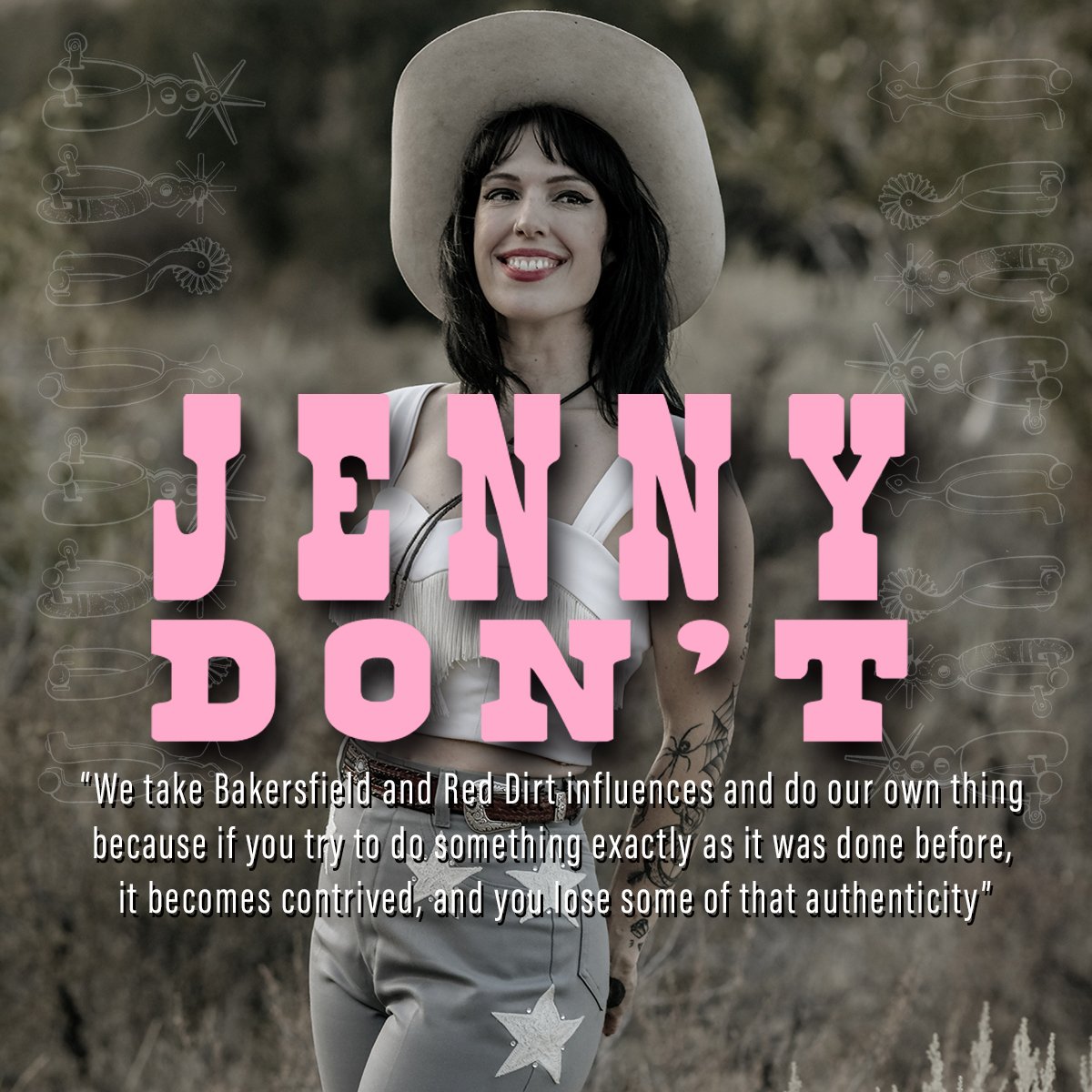
Portland appears to have a healthy music scene. Jeffrey Martin, Anna Tivel, Jenny Don’t and The Spurs are artists living there who we have recently featured in Lonesome Highway interviews or on our radio show.

Yes, I know them; I love Anna Tivel. Her music and lyrics are amazing, and Jenny is a good pal. Kelly Halliburton Jenny’s bass players used to play in Dead Moon, played in punk bands and had good connections in Europe. Portland has a good scene, and there are a lot of clubs. From my perspective, I feel that when I first met Willy (Vlautin), it seemed like there was more of a singular type of community, but we were all much younger then. The Delines don’t actually play in Portland, and I don’t know who I fit with or what age group. I am starting to meet some younger Latinos who seem to like my music, so I am trying to build a music community with some younger folks.  

How would you describe your solo music?

I would describe it as rock and roll under a big umbrella. I often term it Mexicana, sort of Los Lobos style. A lot of the younger Mexican artists are very straight ahead and doing Cumbia, a style of music from Peru, or Chicha, which is psychedelic guitar-based, and just doing that. I’ll have a little bit of both, and I can’t stay in one bucket; that’s probably where I shoot myself in the foot sometimes. When Spotify do my algorithms, they have me closest to Americana. 

I understand that the pandemic gave you the time and space to write and record your recently released album, I NEVER THREW A SHADOW AT IT.

It’s always been difficult for me to keep a band, and I have two great guitar players, Ag Donnaloa and Kenny Coleman. Sometimes, guitar players can be like roosters and don’t get along too well. These two guys get along great, and the three of us are music addicts. During the pandemic, I didn’t want to bring people to my house and practice in the basement, so we went to a store and masked up and played. I wanted to keep them engaged, so I started writing some songs and talked to Cory Gray about recording some. We just started piecing it together from there.

The album title and track recall that disturbing incident where you encountered police racism first-hand.

Yes.  The title song, particularly with the Black Lives Matter thing going on, reminded me of how traumatising that incident was for me as a young man, and I felt like purging it that way was a more beautiful way than maybe smashing windows downtown.  

Do you feel that racism in the police force has in any way reduced since that incident? 

It’s hard to tell as I get older; I was probably more of a target when I was younger, as you always are. I had to train my kid to be like Jedi in Star Wars, avoid the police, and not provoke them. That incident I had was just a month before the Rodney King trial when there was a lot of tension there. I was recently listening to a John Doe interview, and his stories were just as bad being a punk rocker back then as being a person of colour.

Your previous album, AMEXICO, also had political overtones but less pronounced than the new album.

A lot of my songs are not entirely political, but music has always been therapy for me, especially when talking about incidents in song.  I got a scholarship and went to college, and I took a lot of Chicano lessons and studies, which empowered me, giving me knowledge that I hadn’t known. I didn’t even know what the Treaty of Guadalupe Hidalgo was in 1849, where somehow America acquired Texas, California, Nevada, Mexico, and Utah, that whole territory we call Aztlan, which is the opening track on AMEXICO. In the Chicano movement, that is known as the forgotten land. In America, you see a lot of extremes; the African American movement was really outspoken and simultaneously, we had the Brown Berets and AIM, the American Indian movement. Mexicans tend to be overlooked, keep their heads down and keep working. I’m also a big fan of black civil rights music, Stevie Wonder, Sly and The Family Stone and having soundbites and dialogue in songs; we tried to do that with AMEXICO with spoken dialogue in some of the songs.

Getting back to the new album. The opening track, Corpus Christi, was initially written by Willy Vlautin for The Delines.

Willy always has way more songs than he needs, and it didn’t seem like that one was going to make it onto a Delines album. The reason I liked the phrasing of it was that it reminded me of Doug Sahm. Willy’s demo was a lot slower, and I decided to process it more like a Krautrock mix; that beat is straight up from that band Neu; there’s a big German influence in Texas, and Mexicans play accordion because of that. We recorded it, and I loved it, so it made the cut on the album.

I particularly like the track Remember Me. I get a sense of Carlos Santana in it.

I was trying to capture a Mavericks groove with that one. I love Raul Malo, and I wanted to have some countryish guitar on it, too. 

Have you plans to tour the album?

Yes. I’m actually leaving today to do a California run.  I’m opening for The Delines on the U.K. tour and will get to play some of the album then.

How do you compare playing in The Delines to your previous stint in Richmond Fontaine?

There’s a big difference. For one, I feel I’ve been a part of The Delines from the beginning. With Richmond Fontaine, I was a fan for so long before getting to play with them. It was fun because Dave (Harding) played bass a lot differently from me; he’s way more on top of the beat, and I’m more of a traditional bass player playing in the pocket. With one, I’m a ‘fanboy’; with the other, I’m part of the family. The two tours I did with Richmond Fontaine were really memorable. When we were playing in London at The Electric Ballroom to a thousand people, there was a moment there when I just got choked up. We were playing the song The Janitor and to see an audience hang on every lyric as they do in your country and the U.K. – that won’t happen in America, people talk over the music. It’s a really sad song that Willy was singing, and watching everyone just hanging on to every lyric felt like justice for a really good friend of mine. I just got caught up in Willy’s performance and choked up and had to look at my amp for a few seconds.

Is there a new Delines album on the horizon?

Yes. We have a whole record pretty much done, but because Willy is juggling two careers and promoting his new book, The Horse, he’s always writing new songs, so we might also do an extended version of the record, maybe a deluxe version. The regular version should come out in early 2025.

Interview by Declan Culliton

Nora Brown Interview

May 30, 2024 Stephen Averill

Still only eighteen years old, Nora Brown is something of a sensation in the American traditional music world, where she is steeped in the folk music of the Southern Appalachians. She has released three full length albums, CINNAMON TREE (2019), SIDETRACK MY ENGINE (2021) and LONG TIME TO BE GONE (2022), as well as her recent EP (with old time fiddle player Stephanie Coleman), LADY OF THE LAKE. Currently touring England with Stephanie Coleman, you still have a chance to catch one of those gigs, or at Cambridge Folk Festival in July. We caught up with the New Yorker before her sold out gig in the Duncairn, Belfast and gained some insight into what makes her tick.

Nora Brown was taken by her parents to ukulele lessons with veteran teacher Shlomo Pestcoe in Brooklyn, where they live, when she was just six years old. She quickly progressed to other stringed instruments, so that by the time she was ten, she had fixed on the open back banjo, played clawhammer or frailing style, as her instrument of choice.

So how did it work out that she became immersed in the music of Eastern Kentucky and Tennessee just a few short years later?

Nora Brown: I started going to festivals there and competitions like at Clifftop Festival and I was introduced to people like Lee Sexton and George Gibson. They are really welcoming people in that tight music community.

She also got to know the late John Cohen (musician, musicologist and collector of folk music) and the legendary folk singer Alice Gerrard (now 89), who produced Nora’s first album when she was just 13 years old.

NB: Alice is a super cool lady who is still really energetic, like certain people in that world who never lose their excitement about the music, learning about it and documenting it. It was nice to have her guidance at that point, when I wasn’t sure about my own opinions.

Nora also credits the Jalopy Theatre & School of Music in Brooklyn as being an influence and being important in promoting old time music in NYC. They have also issued all of her albums on their Jalopy Records label.

Nora’s voice is striking in its depth and her ability to convey emotion. Is her vocal technique purely down to luck or has she had singing lessons?

NB: I attended a NY public high school which specialises in music and I majored in vocals, so I had regular singing lessons there.

How do you make these songs your own and make them sound like you have lived them?

NB: It’s about being a ‘story teller’, I guess, taking something you learned and singing it to someone else. They hear it and they know it’s not about you, but it’s about people, and you get to help those people’s stories live on by talking about them.

I wondered how does she choose which songs to cover, what draws her to particular songs?

NB: Usually melodies are what draw me in, less often the words. There are definitely songs that I wouldn’t do, I suppose, if I feel that they are too specific to a certain identity, like songs from the perspective of an enslaved person, or a miner, for example.

Dirk Powell recently declared (in a song) that he won’t sing the likes of Pretty Polly and other femicidal murder ballads any more. What does Nora feel about this stance and what is her own position on these traditional but misogynous folk songs, which seem to glory in the killing of girls and women?

Stephanie Coleman: (who sat in for the interview) I don’t feel the need to stop playing those sort of tunes, although there are certain fiddle tunes that I just don’t play anymore if they have really unacceptable titles. I have more problems with the current culture of the music, with the lack of women playing festivals, some of them have 95% men on the bill.

NB: I agree with you on that and we don’t want to make anyone feel uncomfortable, but I guess it feels more potent or relevant to invest our energy in creating more female participation.

SC: It’s also more problematic for (someone like) Dirk to sing Pretty Polly than for two women to perform it - we are reclaiming the story and thinking about her memory.

This is your first tour of Ireland. Do you have any Irish connections?

NB: Yes, my maternal great-grandparents came from Donegal! They were from Glencolmcille - mainly Boyles and McGills. My family have joined me on this tour and we plan to visit our relatives there this week. 

And have you listened to any Irish music?

NB: Stephanie has introduced me to the music of Andy Irvine & Paul Brady and I listen to lots of Irish music now. We actually spotted Andy Irvine at Baltimore Fiddle Fair (which the duo played the previous week).

Any plans to study music more formally? What are you studying in Yale, where you have already completed your first year?

NB: I’ve been doing a bunch of introductory courses - I haven’t decided yet what I’m going to focus on, but I’m not really interested in going down the Berklee route of formal study of music theory etc, right now anyway.

You have already collaborated with Jerron ‘Blindboy’ Paxton (USA), Kris Drever (Scotland) and Eli West (USA). Are there any plans for future collaborations? 

NB: I play out with two NY based Irish musicians regularly - Eamonn O’Leary (The Murphy Beds) and Jackson Lynch - when I’m at home. Otherwise, Stephanie and I plan to record a duo album next, although we’re just in the early stages of planning that. 

We’ll certainly be keeping a close eye on what this talented young woman does next. 

Interview and photo by Eilís Boland

Kristina Murray Interview

May 25, 2024 Stephen Averill

Kristina Murray is a Nashville-based country singer and songwriter. Over her fifteen-year performing and writing career, she has remained steadfastly loyal to traditional country music, avoiding the temptation of crossing over to the commercial crossover county/pop music currently dominating the radio airwaves. Kristina is also the Administrative Director at The Nashville School Of Traditional Music, a project established to promote and preserve ‘real’ country music. She has recorded two albums, UNRAVELIN’ (2013) and SOUTHERN AMBROSIA (2018), and is putting the final touches on her latest record, which is due for release in early 2025. We recently chatted with Kristina as she enjoyed a family holiday at Edisto Island, South Carolina, before packing her bags for a fourteen-date European tour.

You are about to reach a tenth anniversary since moving to Nashville. 

Yes, ten years in mid-June. It feels like ten years in some ways, and in other ways, it seems like that amount of time hasn't passed. So much has happened in that time span. Sometimes I feel like, 'What's next?' but I also feel excited, and Nashville is my home right now. I initially moved to meet other like-minded musicians and songwriters who were writing and playing the type of music I was into. I've definitely met that goal, which has made me a better writer and musician. Making my second record here and now with my third record ready to be mixed has been great. 

I have only recently become aware of The Nashville School of Traditional Country Music and your involvement in the project. How did that come about?

I started working for The Nashville School in the fall of 2022, almost two years ago. My connection was through a friend of mine and the school founder, Meredith Watson; I knew her as a musician. She was in a band called Locust Honey. I was leaving my job at Belmont University and doing a lot of bartending work. I met up with Meredith, and we spoke about what the school needed in terms of administration. Meredith oversees the grander vision for the school, and in 2022, she had a non-profit charter for the school. In 2023, she applied for official non-profit organisation status, which we were granted just a few weeks ago. Adult programming is mostly the focus, but we do a lot of kid's programmes with the local schools, some private schools and home school groups in Nashville. It is focused on learning music through the ears and community instead of through formal lessons. So, instead of learning through reading notation or one-on-one, it's more like getting together and trading music, bluegrass jams, writing songs, and playing country music. 

It's promising to hear that those traditions are on offer when what we hear on country music radio stations is mainstream pop music.

Popular country or radio country goes way beyond the bounds of what was traditional country or regional folk music. The idea is to preserve the original sounds that have disappeared from commercial country music, like banjo and fiddle, dobro and pedal steel. They, alongside soulful singing, define what country music is to me.  It is exciting because there is a desire out there to keep our music alive. The concept of an organisation attempting to preserve types of music is not new; there are folk schools in Louisville, Kentucky, and Denver has Swallow Hill. Meredith was just surprised that there wasn't an organisation encompassing all that in Nashville and decided to start the school back in 2017. 

Your role as Administrative Director sounds very posh.

It's not posh at all, just a necessity that has to get done (laughs). At the beginning of the school semesters, I mostly oversee the school and kids' programmes. Last year, I taught songwriting classes, and J.P. (Harris) taught clawhammer banjo beginner classes; we also had fiddle classes. My role as Administrative Director involves emailing, overseeing our website, registration, contacting parents about the kids' classes, and thinking forward with Meredith about potentially what type of classes students actually want. 

You mentioned album number three. How is it progressing?

It's finished. I even have the cover; it's sequenced, mixed, and ready to be mastered. It's ready to go.  

Your last album, SOUTHERN AMBROSIA, often addressed downbeat subjects, although the overall sound was upbeat. Does the new record follow a similar template? 

There are a lot of sad songs on it, one happy song and also one love song, which is good. Someone close to me who heard it recently said, “There's no bullshit on it,” which I never want to do, so it's a lot of sad songs and some strange aesthetic mind-warping stuff going on. I hope it doesn't come across as too dark, more so just true. 

Who did you work with this time around?

I recorded the album in two chunks, and Rachael More and Misa Arriaga both produced it. A lot of buddies of mine play on the record, I didn't have as much of a hand in the production on my last record, SOUTHERN AMBROSIA, which I was fine with at that time, and we used a lot of session guys on that record. It was fun this time to hand-pick the guys that I wanted, and all of these players are friends of mine whom I really trusted. Guys from my band played, James Paul Mitchell and Sean Thompson played the guitars, Jonathan Beam played bass, Eddy Dunlap played some steel, John Mailander played fiddle on a tune, and a guy named Ilya Portnov was on harmonica on a couple of songs: Jamie Dick, Dominic Billet and Tim Kerr on drums. I've also got a couple of guest vocalists that I'm not naming yet. 

Are you fixed on a release date yet?

I would like to find a label home for this record and be able to elevate this record in a way that my last record was not, given that it was independently released. I'm still looking at options, and I had hoped to put it out by the end of the year, but realistically, I'm hoping for early next year and would like to do a single unrelated to the album by the end of the year. I'm telling myself to be patient and that even though the songs may be old to me, they'll still be fresh to everybody else when the album comes out. 

We spoke previously about the additional hurdles women face trying to establish themselves in the music industry despite recording some of the best country and American music in recent years. Do you see any change in that regard?

I would agree with you. Over the past four or five years, most of my favourite country and American albums have been by women; some are on labels and elevated, and some are not.  But having been in Nashville for ten years and playing music for fifteen years on stage, I'd like to say it's changing, but it is still such a boy’s club, and whereas there might be room for women in the industry, there is certainly not enough room for all of us. It's just something that has been in the industry for sixty or seventy years. If you look at the Instagram account BOOK MORE WOMEN, where they show the lineup at popular music festivals, and, on the next slide, remove the small percentage of all the bands that aren't women-fronted or have a woman in the band. They have shown this over a number of years, and it doesn't seem to be changing at all. It just looks so seismic, and I really don't know what the fix is. We have some women in engineering and production, which is why I feel very proud and excited to have had Rachael More work on my record. 

Are you aware if Zephaniah OHora has made any more progress in bringing the Skinny Dennis brand to East Nashville and opening another traditional country music venue?

It has been a while since I have had an update on that, but as far as I know, they have plans for a space that they have on the east side. I hope so, as the American Legion, which is and always will be close to my heart, is insane now on Tuesdays. I hear there are over a thousand people there now on Tuesday nights. You can hardly two-step with people swing dancing on the floor, so the people that go there to two-step can hardly dance there these days. When I moved to Nashville, I really grew up there and was one of the people that got the Tuesday nights started; it wasn't even called honky tonk Tuesday then. But it's more like Broadway there now, so to have Skinny Dennis would be exciting. We'd then have Skinny Dennis, Dees (Cocktail Lounge), The Underdog and The Legion for country music; I'd love that.

You are about to come to Europe to play fourteen dates in eight different countries, including a slot at The Black Deer Festival in the U.K.

Pat Reedy and Todd Day Wait go to Europe yearly, so I'm lucky to be able to go with them. They have great fans over there, and I'm hoping that this tour will establish me in as far as I can go over every year. I was over in Denmark and Sweden in 2018 and was playing a tiny country festival over there, and someone came up to me with my 2013 album with them to be signed; it blew my mind that someone there would have my CD and probably paid fifty dollars to get it shipped from Nashville. 

What will the format be?

We'll probably do three 45-minute sets, with me sandwiched in the middle. Obviously, it's a shame we can't bring a band; that's for future years. 

Interview by Declan Culliton

Sarah Gayle Meech Interview

May 21, 2024 Stephen Averill

Winner of the Ameripolitan Music Award for Best Female Outlaw and christened The Honky Tonk Queen by Rolling Stone magazine, Sarah Gayle Meech has recently released her third album, EASIN’ ON. The Nashville-based artist has been part of the traditional country music fabric in the Music City for over a decade; her twice-weekly four-hour shows at the legendary Robert’s Western World continue to draw huge crowds, both local and tourists. Her new album, directed towards self-examination and forged from modern and traditional country roots, is arguably her most impressive work. ‘Putting the songs out there healed me; I had to put the songs out for myself, get them off my chest, and get on with my life,’ she explained when we recently spoke with Sarah via Zoom.  

Hi Sarah, how are things in Nashville today?

It's raining today, and we're experiencing a cicada invasion. Cicadas are enormous insects that typically emerge in summer, but they've arrived early this year. They've taken over outside, and you can hear them everywhere, buzzing around in swarms. They look like little aliens.

Whereabouts are you living in there?

I live in Old Hickory, about thirty minutes north of Nashville, right next to Old Hickory Lake. I bought a house here in 2020. We have a half-acre of land out here, and it's quiet. 

You arrived there over a decade ago by way of Longview, Washington and Los Angeles; why Nashville?

I was playing country music in Los Angeles but was obsessed with Nashville. I wanted to be immersed in it, learn the history and be around the fantastic players and writers. I figured it was time to step up my game and move on. 

How long did it take to get booked for your twice-weekly residency at Robert's Western World?

Getting into Robert's took me about a year and a half. I first started playing next door at Layla's, and some of the guys who played at Robert's, like David Tanner and Chris Scruggs, started playing in my band. They introduced me to Robert's owner, Jesselee Jones. He came and saw me play, and I started filling in for other people and eventually got my own spot there. I've been there for about thirteen years now.

Have you noticed a change in the audiences over the years at your shows there?

I have, yes. When we're playing the late shows at Robert's, 10 pm to 2 am, it's usually very crowded, and there are a lot of young people there in their early to mid-twenties. I started to notice in recent years that they were requesting all these old songs, and that hadn't happened before so much. If all the young people want to hear old country music, it must be coming back.

Do you have a free hand to play what you like, both covers and original songs, at Robert's?

The only thing I'm expected to play is old country. I've been playing my original stuff  since I started there; the owner encourages me to. We've been playing some of the new album, and it's getting a good reaction. I could play my whole albums if I wanted to, but I don't have four hours of self-written stuff. I get requests, and when you're working for cash and tips, and someone wants to hear Merle Haggard, I'll play it.

Does the residency compromise your tour options?

No, If I want to go out and tour, I can. There are other artists there who also tour. Joshua Hedley does a bit of touring, and I've got some dates coming up with my new record. I haven't been on the road for a while because I hadn't anything to promote, and I've been going through some changes in my life. Robert's has always been cool. I can go out and tour, and I'll always have a slot when I come back.

Have you missed touring in the past number of years?

I do like being out on the road, but not all the time. I'd love to come to Ireland; I've never been there. I love going to new places, but it can be difficult if you're not getting a huge bunch of people out, as it's very expensive to tour. 

The new album EASIN' ON is your live journey over the past few years. It's an extremely brave and open project.

Well, the whole album is about moving on and healing. It starts with the track Time For A Change, which is about things that needed to happen. With the songs, I’m moving on, rocking on, finding love again, and experiencing the pain of losing love again. At the very end, I just decide that it's time to party again with the closing song, Come and Gone. 

Were the songs written at the time you were experiencing divorce, the death of a friend and other trauma or written retrospectively?

Both, some of them were written spontaneously and at a time when things were happening to me. Others were written retrospectively because some things were too hard to talk about then. I couldn't even bring myself to play some of those songs live at the time; I'd probably start crying; they were too emotional. Putting the songs out there healed me; I had to put the songs out for myself, get them off my chest, and get on with my life.  As a writer, I definitely felt that the songs were therapeutic, and I hope that someone else might gain strength from them. 

Your debut album, ONE GOOD THING, has similar titles, such as Unlucky In Love and Drink Myself to Sleep. Were they also autobiographical?

Most of my songs are autobiographical; There are always personal experiences flavoured with a little bit of imagination. With that first record, I was so hellbent on making a badass honky tonk, rough and drinking album, and that's what it was.

EASIN' ON is a departure from your previous albums sound-wise. You've gone for a richer and bigger sound with this one.

The sound is exactly what I wanted to do. I wanted to have a whole orchestra but couldn't afford that. I was listening to a lot of singer-songwriter stuff from the '70s and '80s and a lot of the countrypolitan stuff like Glen Campbell's music when he had string arrangements and Barbara Mandrell's stuff that also had strings and big arrangements back in the day. Eddie Rabbitt's ANY WHICH WAY BUT LOOSE, is also a hugely lush track; I've loved that sound since I was a kid. I wanted the record to have a big, lush sound but wasn't necessarily a honky tonk album per se; I was looking for something that involved the production more than my previous records. We recorded it all at my buddy Shawn Byrne's Great Hill Studio and got some great sounds without hiring an orchestra.

Billy Contreras can take the credit for that. 

Yes. What a phenomenal player; Billy has played on all my three records: ONE GOOD THING, TENNESSEE LOVE SONG and now,EASIN'ON. He is one of the most amazing musicians I've ever heard; he came in and did all the string tracks on the album, one at a time. There were twenty-five fiddle parts; he did it with three different fiddles and one viola; the guy is just a master at what he does. He created all those big string sounds on the record. 

Eddie Lange and Tommy Hannum also have some classic pedal steel on the record. 

Tommy is my regular steel player; he's been with me for thirteen years. Both he and Eddie played on different tracks. Some of what Eddie did is layered and sounds huge; he did double and sometimes triple tracks on Time For A Change and Love Me. Shawn (Byrne) played almost every guitar track; he played percussion and did some background vocals and bass on a few tracks; he's a proficient and very talented person.  It took about a year and eight months. It didn't happen quickly because we were working on a tight budget, and we had a setback in 2023 as I had back surgery, which took me out for a few months. 

You staged the album launch at one of our favourite bars, the 5 Spot at Five Points.

Let me tell you what happened on the day of the album release show. A tornado happened. There was a tornado watch, and it touched down in a few places outside of Nashville. There was flooding everywhere and road closures on the day of the show. Sirens were going off, and alerts were on TV. Thanks a lot, Mother Nature, but despite the weather circumstances, quite a few people came out and travelled for the show. I had friends from Florida, Indiana, and the West Coast come over, but a lot of folks couldn't make it because of the downpours and road closures. 

In addition to your twice-weekly shows at Robert's and your recording pressures, you've also been performing on music cruises that have become very popular.

Yes, we did the Outlaw and Country Music cruises last year, and we're on a new one next year called Boots On The Water with Big and Rich, Gretchen Wilson, Jo Dee Messina, Pam Tillis, Lone Star, and Suzy Bogguss. It's good to break up the winter, which can be the coldest time in Nashville, so it's nice to get on a ship and go somewhere tropical for a while.

Interview by Declan Culliton

Chris Smither Interview

May 16, 2024 Stephen Averill

When it comes to showcasing the wealth of Roots music and the Acoustic Blues traditions, there is no greater proponent than Chris Smither. Over a career that stretches back to the 1960s, when he first heard the Country Blues of Lightnin’ Hopkins and Mississippi John Hurt, Chris Smither has been a huge influence and at the frontier of change in promoting Folk music and highlighting the timeless heritage from its rural origins. Chris took time to speak with Lonesome Highway about his  new album and reflect upon his storied career.

Congratulations on the launch of your new album. ALL ABOUT THE BONES was released in early May and represents your 20th album in a career that spans five decades and counting. How do you keep the fire burning brightly after all this time?  

Well, it helps to have a team of people who know how to get me going, my wife Carol, and my producer David Goodrich are the most important actors ... but I really do want to keep it happening ... it's what I do.

You have been on the Signature Sounds label since the release of LEAVE THE LIGHT ON (2006). What is your relationship like with the label and how much artistic freedom do you have in working with them? 

We're friends ... I have every freedom, if I make a record they'll put it out.

On the new album, you continue to fine-tune your enduring relationship with producer David (Goody) Goodrich. He also contributes on various instruments and can you tell us about your special synergy together?  

There's a mutual trust that has grown for decades now ... there's a mutual stimulus arrangement in which I trust him to understand what I'm trying to do and he trusts me to come up with something he wants to work on.

The new album has a very authentic feel to the ten songs. The interplay among the musicians is very organic and spontaneous. Did you record live off the floor? 

Pretty much ... my guitar, vocals and drums are live on all of them, and there are only a few overdubs ... the harmony vocals, sax on the tunes that it appears on, David's guitar part.

The songs deal with a number of topics including the passing of time, personal relationships, the legacy we leave behind when we die and the world we are shaping for future generations. How long did these songs take in the writing and did you have others that are sitting on the substitutes bench for future use?  

They took a surprisingly long time to get started, at least the lyrics did ... the musical ideas were in place for a long time before I got any words down, but when they started coming it happened pretty quickly ... about 4 months.  There's nothing left, though ... everything I wrote is out there now.

Do you see a theme running through the songs selected?

If there is one it's probably the perspective that old age brings ... of course I've spent my whole life thinking that I was finally getting the answers, only to find that they keep changing.

I wanted to ask about the song In the Bardo. Were you ruminating on the cycle of life, as I believe that the word ‘bardo’ refers to the liminal state between death and rebirth in Buddhist teachings?  

I was scribbling words without a real sense of where they were going and I finally stopped and realized that I didn't know where I was, that I was lost, and I jokingly said to myself, "we'll call this Smither In The Bardo," then I took it seriously.

The inclusion of songs by Eliza Gilkyson and Tom Petty are interesting choices. Both Calm Before the Storm and Time To Move On could be taken as personal goals in keeping a measured path when moving into an uncertain future. Almost a focus to live every day in the moment?  

I'll buy that, but I don't think it occurred to me until you said it ... I just like the songs ... David suggested the Petty song, and as soon as I transposed it from G to A I knew it would work.

The harmony vocals of BettySoo are really engaging on the new songs, adding greatly to the colour of the album. How did you come to work with her?  

BettySoo is a performer in her own right, and has played support for me on many occasions...I heard her sing harmony with a few people, including James McMurtry ... she generates an intimate quality in the vocals, almost like she's crawled into my shirt to sing with me, and it has exactly the effect on the listener that I look for ... a sense that I'm confiding something to the listener.

The addition of Chris Cheek on saxophone is an interesting choice. He brings great character to the songs and adds a very resonant sound in his playing. His jazz background apart, there is a real sense of the blues of Missouri in his playing. He was born in St Louis and did you want him to bring a fresh element to the song arrangements? 

Chris is a friend of Goody's (David), and the addition was entirely Goody's idea ... he said " how would you like some truly world class sax on this record?" and I said ‘bring it on.” One of my better moves as it turned out. I agree with you. Not really my doing, but I'm glad I said yes.

Your rich baritone is sounding as potent as ever and when you hit that special groove I find the music almost meditative. I get a similar reaction with artists such as the deeply missed JJ Cale and I wanted to ask whether you find yourself in that special zone where you are playing purely from the subconscious?  

Now you flatter me in a most agreeable way, JJ Cale occupies a special place in my pantheon. I once had a conversation with a shrink who attended one of my shows, and he said that in his opinion I dis-associated while I was in the song, and he wondered how I got back to reality so quickly in between numbers ... I'm not sure I completely understood him, but I know that when I'm playing well it feels like another world ... I leave it reluctantly.

Looking back over your impressive career, what are the key touchstones that stand out for you? 

I'd have to think about that for a year or two.

You have always found good people to work with and tried to focus on the music. Growing up in New Orleans you must have been influenced by the melting-pot of musical styles there. At what point did you decide to focus on Folk Blues as your real inspiration? 

I was seventeen when I heard Lightnin' Hopkins and realized that he was playing rock and roll all by himself ... that's how I heard it ... and I wanted to do that. I've learned to work with other musicians, but in the beginning I was embarrassed that I knew so little about how music worked, I was self-taught, and I didn't want to expose my ignorance by being in a band.

I lose count of the many cover songs that are included on your albums, dating back to the debut, I’M A STRANGER TOO in 1970. What is your process for selecting a song to cover? 

Often I'll cover a song that I wish I'd written myself ... when that happens it's sometimes because I think there's something else in the song that I can bring out that wasn't emphasised in the original ... a chance to add something.

Can you remember when you first started to mic your feet in order to provide that tapping rhythm to compliment your fingerstyle guitar technique? 

I've always tapped my feet ... I can't NOT tap my feet, and if I can't hear them it messes up my playing ... I realized in about 1985 that if it was important for me to hear it, the audience should probably hear it too.

Was it a challenge to keep everything in time when you are picking those intricate guitar progressions while trying to keep the beat? 

Not really, it's just what I do.

You have always been prepared to bring new elements in the recording process, using musicians that can bring variety to the songs. When you play live the dynamic is so different however. Do you have to work hard at reinterpreting the songs for solo performance? 

Again, not really, if you could isolate my part on the recording you'd find that it's very close to what I do live, the genius is that of the other musicians who find a way to complement my part without stepping on it.

How did the Covid-pandemic impact upon your creative process? 

It stopped me ... I thought initially that it would be a great chance to get a lot done, but I got almost nothing done ... I had to get back out with people, with the world.

Is touring something that still brings you great satisfaction or do the years bring a sense of wanting to slow down the merry-go-round of airports, hotels, venues and continuing the lifestyle of a road warrior?  

I still love performing, the travel is more wearing now than it was, but I travel more comfortably now and stay in nicer places ... I still want to do it.

You have been honoured by your peers with the release of a tribute album, LINK OF CHAIN, back in 2014. As a songwriters tribute, how did you feel about the songs chosen and did you accept their acknowledgement of your talents with pride? 

I was amazed ... the songs are like my children ... they grow up and go out into the world, and it's amazing to see them come back home to brag about what they've been up to ... I love it. I'm happy for them, and I approve of the friends they've made.

In the past, you have had songs included in both film and television productions. Is this an area that can bring greater reward in the future or do you see these opportunities as more like a one-off? 

They're lucky happenings ... I don't see them coming, it's another world out there, I'll welcome them when they come along.

You are also a published author. Do you continue to explore this medium?  

I scribble some ... I don't like to talk about it because it raises expectations.

Are you working on other new projects that you can share with us? 

Nothing right now, but stranger things have happened.

Hopefully we can see you play in Ireland again in the future. I know that you were a regular visitor in the past and you also played a role in introducing a young Peter Mulvey to Irish audiences when he was starting out? 

Mulvey's still one of my very best friends and we still work together, and you will see me in Ireland in 2025, that's pretty certain.

Is it important to you to empower new generations of  young musicians that are looking for a foothold in what is a very difficult industry these days? 

I do my best to give them support slots and advice if they ask for it ... it's what was done for me, and I try to keep it going.

Interview by Paul McGee Photography by Joanna Chattman

Jesse Daniel Interview

May 15, 2024 Stephen Averill

Californian Jesse Daniel's devotion to the country music of his home state continues with his 'about to be released' fourth album, appropriately titled, COUNTIN' THE MILES. Jesse has been on the Lonesome Highway radar since his self-titled debut album in 2018, and his foot has remained firmly on that Bakersfield-sounding pedal on his subsequent recordings. We caught up with Jesse before he headed back on the road, crisscrossing across the country to support the new album. 

You are enjoying a short break before you get back on the road for another six months. 

Yes, we've just done the whole Western side of the United States. We're now gearing up for the Midwest, the South, the East Coast, and then back out West. We're zigzagging across the country a bunch of times. The West Coast is our best area to play because that's where I'm from. It's been really good to see that growing, and it's only going to get better and better with this new record coming out. 

You have some artists who are very close to our hearts supporting you on the tour.

Yes, Alex Williams is joining us on our Midwestern and Southern dates, Brit Taylor was with us on the last run, Tyler and The Train Robbers are going to be supporting us on some dates in their neck of the woods, and then we have Two Runner from California who are joining us for our east coast tour. 

Before we discuss the new album, I'd like to ask about your live album from last year, MY KIND OF COUNTRY: LIVE AT CATALYST. That must have been a milestone, given that you used to work as a stagehand at that venue in Santa Cruz.

That was one of those lifetime moments for me. A lot of people have the goal to play The Opry or The Ryman, and they are goals of mine too, but to sell out the Catalyst and make a live record there was up there for me because, as you said, I used to work there and saw my first concert there as a young kid. It's been a place I've been involved with for so long, and being able to go back there and fill it up and make a record there was a dream come true. 

Growing up, were you tuned into California country music, particularly the Bakersfield sound?

It was the kind of music I heard growing up in a small town near Santa Cruz. A lot of other types of music also influenced me. Punk rock was big among my generation, and my dad played in blues and classic rock bands and also played in some country bands. There was a time when I was young and into punk rock that I would look at country as 'my dad's music', but in high school, I started to really identify with country music in general; the songwriting was something I could relate to. I particularly loved the sound of Merle Haggard, Buck Owens, and all the Bakersfield stuff. When I realised that those guys, who were famous country singers, were from my home state and not far from where I grew up, that was a big deal to me. That gave me a lot of pride and encouraged me to make country music.

You've stuck consistently with that sound on all your albums.

That's important to me and makes me proud to represent my home state. Nashville, Texas, and Appalachia all have great music with amazing history. Great music is still coming out today, as well as in the past. They have plenty of representation and don't need an outsider like me trying to jump on their bandwagon. 

Is the age demographic of your audiences changing as the numbers attending your shows increase year on year?

I've especially noticed younger audiences and new fans coming out during this year's tour. People are starting to catch on to this music in their early twenties, possibly newcomers to country music or at least newcomers to old-school country music. A lot of them tell me that they used to mainly listen to what was on the radio but more recently have been discovering artists like myself and others. It started slowly back in twenty fourteen and fifteen when guys like Sturgill Simpson, Chris Stapleton and Tyler Childers began to turn the wheels in that direction. The tide is really turning now, and I'm trying to contribute to that. 

The first thing that struck me when I listened to your new record, COUNTIN' THE MILES, was the quality of the production. You took full control this time, having previously co-produced with Tommy Detamore and Henry Chadwick.

The production was a big deal for me on this record; I wanted it to reflect the Jesse Daniel sound and what people have come to expect from my music. I also wanted to return to the rawness and grit of my first record. I made two records with Tommy Detamore producing; he's incredible and taught me how to make a more complete-sounding record. With this fourth album, I wanted my true personality to come through, with a bit more rock and roll and punk edge while also having good production mixed with the Bakersfield realm of country music. I think that's exactly how it has turned out, with certain songs clean and polished and others with a bit more grit. I think it's also a cohesive record; one song blends into the next without any outliers. 

Was working with producers like Tommy Detamore and Henry Chadwick rewarding? 

It was. It was good working with them both because I co-produced with them, and there was give and take. They were both very cool to work with and would defer to me on a lot of the ideas; at the end of the day, it's my record, and they respected that. In other cases, I would defer to Tommy because he's been making great records, and I wanted my records to sound like one of his. It was nice to have ultimate control over the new record. There was one moment when we were tracking in the studio, and we all had our headphones on; I looked around, and I had George Strait's keyboard player directly across from me, my steel guitar player is across from me, my drummer is in the other room, Kevin Smith from Willie Nelson's band is on bass. We finished the song, and they all looked at me. I almost looked into the control room to ask, 'Was that good?' but I was the one who had to make that call. It reminded me quickly that this was all on my shoulders. 

You also had Gene Elders, who is now sadly deceased, play on the album.

Gene and I got in touch through Ronnie Huckerby, who played on my last record. Gene just played fiddle on one song, Comin' Apart At The Seams. He called and told me he was sick and could not do the rest of the record. He was extremely apologetic and one of the nicest and most professional guys I have ever worked with. He actually put me in touch with Jason Roberts, who played fiddle on the rest of the record. I'm very sad about Gene, and working with him in that capacity was a huge honour. 

In keeping with the Bakersfield tradition, Merle Haggard's son, Ben, shares the vocals on the track Tomorrow's Good Ol' Days. How did that contact come about?

Ben and I had been following each other on social media. I'd been a fan of his for a long time, back before his father passed away. I'm a huge Merle Haggard fan, and years before I started playing country music for a living, I would watch YouTube videos of Merle and video recordings of him and Ben performing together. I had been in touch with Ben in recent years, and when I wrote the song Tomorrow's Good Ol' Days, Jodi (Lyford), my songwriting partner, manager and fiancé, thought that Ben would be a great person to sing the song with. That clicked right away, and I texted the song to him. he loved it and came right back to me to say he'd love to sing on it. We made it, and it all seemed to come together in a way that was meant to be, and when I listen to the song now, I can't imagine what it would be like without him. 

How important has Jodi been both in your personal life and professional career?

She does everything. It's really hard to convey all that she does and has done from day one. Jodi and I have built our business ourselves; Jodi has been there co-writing the songs with me on every record, going back to the first record when I could barely afford the gas to get to the studio, staying up late after work when we both had day jobs to record those records. She moved out to Texas with me; we built our touring business together. She handles all the day-to-day management, which has become a big job; we have daily things to deal with. She oversees all the bookings with our booking agent, oversees the design of all the merchandise and ships it. She also tours and sings in the band; she really does everything. Without her presence in my life as a partner and as a business partner, things would not be the way they are without her. We're getting to the point where I'd like to delegate some of those tasks and take some away from her. Getting to travel together is a blessing; other artists don't get to be with their wives or partners when they're out on the road. Despite all the hardships and obstacles we have had to overcome, we've been all over the world playing country music.

Four albums in six years is a prolific output, given the time you spend on the road. Was it part of a game plan to release a record every two years?

We've taken it year by year, and as far as albums go, there was no real blueprint. I aim to just keep making music and increase the quality of my songwriting. Now that we have gotten into the routine, I would like to make records more frequently; it keeps me on my toes creatively and is beneficial for my career. We are at a time right now when there is so much output and competition, and it's smart to keep recording. When you look at artists like Merle Haggard, Willie Nelson and Waylon Jennings, those guys were prolific putting out two records a year. 

Will we get the opportunity to see you play over here in the near future?

We went to Europe last year and played Belgium, France, Spain, England, and Wales. We didn't have time to play Ireland and Scotland, but I want to play both of those next time. Nothing is confirmed, but we're hoping to be back in 2025.

Interview by Declan Culliton 

George Ducas Interview

May 8, 2024 Stephen Averill

George Ducas was born in Galveston, Texas. Later he moved to and performed in the Nashville area clubs by night and set about honing his songwriting skills by day. To date Ducas has released four studio albums: 1994's George Ducas (1994), Where I Stand (1997), 4340 (2013) and Yellow Rose Motel (2019). He is about to release his fifth album Long Way from Home. Produced by Pete Anderson (who is perhaps best know, in this context, as the producer of Dwight Yoakum’s earlier albums; as well as working with another roots/country artist Moot Davis). It is likely to be a high point today.

He has also achieved success as a songwriter gaining a hit as co-writer for Just Call Me Lonesome in the Billboard charts when it was released by Rodney Foster. Later he penned songs for the likes of Garth Brooks and George Jones, Gary Allan and Trisha Yearwood. He had a hit under his own name when Lipstick Promises made the top ten in the country charts. As an artist he has remained true to his personal vision and looks ready for continued acclaim with his latest album. Lonesome Highway took the opportunity to ask him some questions recently.

It’s great to see an artist like yourself continue to be engaged with the music process and to making such a strong album. Was there ever another option for you?

I’d like to believe there are always options for all of us to grow, learn, make mistakes, and go in a new direction. I know that isn’t always the case for everyone in the world, but for most of us in the US, the options are there if we really want them. That would be the case for me. But from an early age, creating and performing music has always been my first choice.

When did you decide that Pete Anderson was the man to produce the album?

Pete and I first met by phone during the darkest days of the pandemic. We hit it off immediately.

When did you start the pre-production and writing process on Long Way From Home?

Most of the songs I wrote for this album were created the past couple or few years. Pete and I started sifting through the songs with me sending a few tunes over to him one by one, and we’d set up a zoom meeting and talk through them, play through them. I’d send him songs all along the way, Pete with a guitar in LA, and me with a guitar in Nashville - talking through the songs, the vision for each, trying them on in different tempos and different keys. Looking back, I believe that unique remote process allowed us to really take our time, and crystalise our collective vision.

In the past you have often co-written with other writers. Do you prefer that to writing a song on your own?

I do enjoy the collaborative process - I also enjoy the solitude of creating on my own. I will say, when you’re creating with someone who is also truly on the same page, there’s a collective energy that’s hard to beat.

How hard is it to find a co-writer who is compatible with your aims?

I typically keep a fairly close knit group of collaborators; I’m aware there are so many talented writers out there, but not all have the same understanding of the musical landscape I prefer to traverse.

In the past you have worked with writers like Angelo, Kostas, Radney Foster, Tia Sellers and Michael P Henry - all are names you don’t see in the writes credits too much these days. Is that inevitable as trends and demands in music change?

Yes, and they are great writers, all. I do think growth and change is somewhat inevitable; popular styles certainly are. But I’ve always tried to maintain a sincerity and truth to what I record - not necessarily every single song I write, but every song that I choose to commit to as part of an album, part of my collection of recordings.

You co-produced your last two albums why did you decide not to do that this time?

I enjoyed the co-production process on previous albums, but when Pete and I met and began the discussion of working together, I really wanted to allow him the freedom to do what he does. Whether it’s been his work with Lucinda Williams, Jackson Browne, Dwight Yoakam, k.d. Lang, even heroes of mine like Buck Owens, Pete’s musical landscape, his recordings, guitar playing and production have been instrumental in influencing much of my own musical direction since I first heard his music as a teen.

You have previously worked with another excellent guitarist/producer for your Capitol Record releases in 1994 and 1996 in Richard Bennett. How would you compare those experiences?

As I’ve told Pete, I do see some similarities between him and Richard. Richard is a wonderful friend and an amazing, truly unique talent. And Pete is every bit of all of that as well. Both have an unrelenting drive for collaboration with a goal of revealing the artist’s and the album’s true self. I was fortunate to experience that with Richard at the start of my career; few artists have access to that kind of freedom and vision so early on in their career. I wasn’t aware of that at the time. Now as a more seasoned artist, as I collaborate with Pete, I’m able to appreciate that much more.

In a similar light, you released your next two albums independently. What are the main differences in those two options?

From a business perspective, the difference is marketing dollars. As a major label artist, you’ve got a million dollar marketing budget and immediate access to corporate radio, which is closely partnered with corporate (major label) music. I experienced the true power of that early in my career, during my first two albums on Capitol Records. The advantage is obvious - it’s all business.

You have had success in finding cuts with other artists, so was there a time when you were writing with other artists in mind or where you just continuing to write?

To me, writing is about serving the song. Always. I have never had any other artist in mind when writing a song. To me that’s entirely disingenuous.

Your body of work since 1994 has been to a certain allowing for the changes in the perception of country music. Yet in this new album you have chosen a sound more related to your 90s albums. Was that a very conscious decision given that there has been, recently, a shift back towards that era in sound?

Some might say there’s been a “shift back”, but then again there’s Beyoncé and there’s still the “bro country” thing happening, so I see it as more of a broadening of the genre than a definitive “shift back”. As for me, beyond some allowances for occasional production experimentation, I’ve never been one to chase trends - I see that as not being genuine. To emphasise that further, for this new album, I took it a step further, getting out of any Nashville mindset and choosing instead to record in Los Angeles. In doing so, I was able to connect even more with the roots of my earlier influences, ones I was so connected to when writing and recording my very first album for Capitol Records.

What motivates and inspires you now?

Motivation and inspiration are a funny thing. More than anything, I think we all have some level of internal motivation. How much of that we have is what determines how hard we are willing to work, to build - something. For me it’s always been creating my best self, musically speaking - country music but also just genuine music that’s able to cross boundaries that are too narrowly defined by labels and corporations, music that stands on its own and stands the test of time.

I’m not sure if you were able to play in Ireland UK and Europe that often in the past. I fondly remember a brief set in Whelans in Dublin during a CMA sponsored visit. Do you have plans to play outside the US again or is that a financially difficult option?

Financially difficult? No absolutely not, with a reasonable offer! Without that? Yeah, that’d be difficult to achieve, for any of us. I’ve really enjoyed touring abroad - I still fondly recall performing in Whelan’s in Dublin, along with Marty Stuart, Clint Black, Garth Brooks - even got to spend some time with Kris Kristofferson - during that CMA sponsored trip. My most recent performance in the UK was at Wembley Arena, along with Reba as well as a number of British artists. More recently I’ve enjoyed headlining festivals in France and Brazil - and most recently, I headlined a 3-day festival in Japan, along with Dierks Bentley and Asleep At The Wheel. I’d go back to every single country, in a heartbeat.

What were your major influences when you were growing up? I hear a number of different sources that sat alongside that of traditional country, as there was in a number of your contemporaries, at that time - something that made the music seem fresh and inclusive without being something that you would be hard pressed to identity as country.

Well thank you for that - fresh and inclusive is a great space to be creating in. Genres are rigid; I didn’t say it first but I certainly hold to it - good music is good music. And yes many of my influences are defined as “country” traditionally - guys like Willie Nelson, Buck Owens, Merle Haggard - but once you do a deeper dive, you’ll discover how Willie was influenced by jazz and swing, and Buck by his own admission was greatly influenced by Chuck Berry. Mr. Berry’s records, in fact, were an early influence on me as well. As were the blues greats, John Lee Hooker, Muddy Waters, Lightnin’ Hopkins. I see them all as a - dare I say the - foundational bedrock upon which modern day music has evolved - both rock and roll as well as country.

Finally, how does the George Ducas starting out releasing his self titled debut in 1995 relate to the man releasing his new album?

(Laughs) I would hope that the ‘90’s me would look up to the 2024 Long Way From Home me, and say “I’d sure like to make music like that...” But hey, kids like me these days, who knows, right?

Interview by Stephen Rapid

My Darling Clementine Interview

April 30, 2024 Stephen Averill

With a combined back catalogue of over thirty albums, husband and wife team Michael Weston King and Lou Dalgleish have been at the forefront of the UK's Americana, roots and country music scene for over two decades. They put their solo careers temporarily to one side and combined their talents to launch My Darling Clementine in 2010. That liaison has resulted in seven studio recordings from their debut album, HOW DO YOU PLEAD? in 2011 and, more recently, their interpretation of a selected of Elvis Costello songs, COUNTRY DARKNESS. After their successful run of shows last year, they come back to Ireland to play ten shows between the 2nd and 12th of May. Included in that roster is a return to Kilkenny Roots Festival, a relationship that goes back twenty years since Michael performed solo and where My Darling Clementine last performed in 2017. 

Your latest project, COUNTRY DARKNESS, is a reworking of Elvis Costello's songs. Your association with his work goes back several years including your play, THEY CALL HER NATASHA. 

Lou - Yes, it's funny how things have come full circle. I was working with a full band doing a show of all Elvis Costello songs, then Michael and I collaborated and wrote that play, which we took to the Edinburgh Festival. It was about a woman called Elsie Costello, and it was just an excuse back then for Michael and me to indulge in Elvis' material, which we then left alone for almost twenty years. Having done a few My Darling Clementine albums together, we thought it would be nice to explore some Costello songs with a very different attitude to back then. 

Michael, was your solo album CRAWLING IN THE USA from 2008 a spin on Elvis's track Crawling To The USA from his 1979 album TAKING LIBERTIES?

Michael - It was. I released three live solo albums in the early 2000’s and based this one on my live gigs and radio sessions in The States. That title does have a double meaning though, as I was literally crawling through the USA sometimes. I did a six-week solo tour over there with just a guitar and a hire car, which sounds fantastic. But by the end of that run, and after so many years of a solo career, I’d had enough, and I thought it was time to quit being a troubadour and ‘get back into show business’. I thought of who I knew who was a good singer and who could drag me from this hell I had descended into. Turned out to be my wife.

You were married for a number of years and enjoying successful solo careers before forming My Darling Clementine.

Lou - It did take a few years, yes. We were both happily planning our solo careers and then we decided to have a baby, which I took as an excuse to put my feet up and not do anything for a couple of years. I really enjoyed being a mum and left it to Michael to bring home the bacon. We then thought we should collaborate, rather than be constantly competing with each other. In some ways, it became very simple logistically,  as we both knew exactly where we would be and could never escape each other (laughs). 

What was your vision, a one-off album or a permanent career move?

Michael - It was a case of  'let's make a late 60’s Nashville sounding record’ and see what happens.  The whole Americana thing was really bubbling along, and in true fashion, having been part of the Americana scene for a long time, I decided to swim against the tide and embrace real traditional country music So, we made HOW DO YOU PLEAD? Which was steeped in classic country duets; I thought we would maybe play a few gigs and then carry on individually again. Or maybe it would take off? I had looked at Imelda May and Richard Hawley and what they had done with traditional older styles of music, Imelda with rock and roll, and Richard with his Roy Orbison ballad thing, which had resulted in successful commercial careers. Part of the thinking was that My Darling Clementine could take country music and fashion it similarly. Both Imelda and Richard would admit that their careers changed when they landed spots on Later with Jools Holland. When the debut album came out, we were booked to do that show, but the series was reduced from twelve episodes to ten, and we were one of the acts that got bumped. Who knows if that would have been the difference for us? Quite possibly.

Have you seen a change in your audiences' profile over the years, given that 'country' music has contracting definitions for different generations in the U.K. and Ireland?

 Michael - I'm not sure. I've been working in the ‘country world’ since the days of the emergence of new country acts like Dwight Yoakum and Nanci Griffith. In Britain, our generation has always taken to the better country music from America and rejected the Nashville pop country. Nowadays, a general wave of bro-country / pop-country is being embraced here, and we are as far removed from that as we are from Metallica. Our audience comprises people who grew up with ALt. Country and then Americana, older fans who love the whole Gram Parson, Byrds thing,  and others who just like 'our thing'; they like the 'act' although they possibly wouldn't know Tom T Hall from Tom Jones. I was in my forties when we formed My Darling Clementine, and the subject matter we were writing was and is, adult-themed, as it was with George Jones and Tammy Wynette, Dolly Parton and Porter Wagoner, so it music for older folks. 

Lou – I think the younger audiences think of country music as, what I consider, bland pop music because that is what they are being told is country music these days. 

What can we expect from your shows in Ireland?

Michael - we will be playing some brand new songs as we're working on a new record right now. There will be a few songs from the COUNTRY DARKNESS record, we do a ‘Costello set’ within the show, 5-6 songs,  and of course also plenty of songs, from the entire MDC back catalogue. 1-2 from my solo album (if Lou lets me). We also like to throw in a couple of more obtuse covers. At the moment it is the great Joe Henry song You Can’t Fail Me Now

Will the new album change direction from that of the previous ones?

Lou - With each album we make, we are moving slightly further away from our first album, not necessarily intentionally; you just try out different things. Potentially, with this album, we will be writing independently a bit more. We have always tended to do that, but we may be a little bit riskier this time in terms of not necessarily having to fit a particular brief. 

Michael - We are not singing all these new songs ‘to each other’ as we would with classic duets. Some will be conversational, but there will also be 'Lou's songs' and 'my songs', and it will be less 'country' than the previous records, more a mix of torch songs, power pop and singer-songwriter stuff. We are also producing this one solely ourselves. Two of our albums were produced by  Neil Brockbank, who worked with Nick Lowe for many years, and the other three albums, I co-produced them with Colin Elliot, who is part of the Richard Hawley band and also co-prodcues Richards albums.  Currently we are in the studio in Mid Wales with a wonderful young engineer and musician called Clovis Phillips; I made my recent solo album, THE STRUGGLE with Clovis, and the studio is ten miles up the road from where we now live, so super convenient, and it has a great sound. We will eventually take it to Sheffield, where Colin (Elliott) will mix it. It's a different process to other Clementine records where we would set up the band in the studio and record live. It's still a work in progress, and as yet untitled, (though I rather like “A Field Of Our Own”) and it should be out in November. 

Lou - we are doing this album in a more stripped-down way, going in more gently with our approach rather than setting up with a band and working on the songs as we have done in the past.

How much attention will you apply to the track listing given that the 'streaming generation' don't always play albums in full?

Michael - It's always the first two songs that get more plays and streams, no matter who you are. That wonderful process of putting the track listing together has nearly become irrelevant but as usual, we will labour over it. I still listen to cd’s and vinyl

Lou - And we will have endless arguments about the order of the tracks!

I believe you will be working again in the future with Elvis Costello's sidekick Steve Nieve, who contributed to the COUNTRY DARKNESS project. 

Michael - Yes, we are going to Japan later in the year to do some shows with Steve, which we're very much looking forward to. There are also 2-3 new songs which we’d like him to play on, so yes, expect more from the maestro on this album too.


You have a busy touring schedule ahead after your dates in Ireland. You have a strong fan base in Scandinavia in particular.

Michael - We go there a lot, especially to Norway.  The Norsk Americana Forum (www.americanaforum.no), the equivalent of the Americana Music Association here and in The States, are fans of ours and very supportive of us.  Also Germany, Holland and Spain are good for us. There is an audience out there and we are happy to travel. In fact the travelling, is part of the reward for what we do. Obviously, it would be nice to tour in a little more style, rather than splitter vans and people carriers but still. We enjoy the travelling together. When you're touring on your own,  you may be in the most beautiful place in the world but if it cant be shared it rather devalues it. And in fact it can be even lonelier, so the fact we can share and enjoy these experience is an added bonus.

Lou - Our daughter also comes with us some of the time which allows us to also have some family time on the road. She is a musician and regularly joins us on stage and as she gets older, we give her more and more work to do. She is coming to Ireland with us and will be on stage for some of the shows. 

Peter Case, who co-wrote the song Sugar, on Michael's latest solo album, THE STRUGGLE, will also be performing at Kilkenny. How did your connection with Peter come about?

Michael - I actually saw Peter play last night with Sid Griffin in Chester. We go back a long way, well over twenty years. Peter is a generation older than me, and I was a huge fan of him before I got to know him. We did a triple bill, trio tour - myself, Peter,  and John Doe of X, back in 2001, and we have always kept in touch. Just before lockdown I was in The States at a songwriting retreat in Lafayette. Peter was also there at and we ended up writing ‘Sugar' there. That was a thrill and I loved how it turned out. https://youtu.be/nuFmFP4Uin0?si=2yAT-zoSJuv1ILC0

Irrespective of our friendship, he is one of my favourite artists. He is criminally underrated, a hardcore troubadour who started out as a busker and has carried that on to this day, despite  flirting with fame, being signed to Geffen,  produced by T. Bone Burnett etc. He, of course, also played in The Nerves and The Plimsouls before going solo. Peter really has ‘it’, playing solo is not the same as playing without a band, there is a whole craft to it, and he is master-craftsman

Alongside the busy touring schedule and the next My Darling Clementine album, you also have a David Ackles tribute album in mind.

Michael - I've been pondering this for some time. I'm a big fan of David Ackles, he was a genius and hugely overlooked. A friend of mine, Mark Brend, is writing a biography of David at the moment. When I get the time, I want to get this album together to coincide with the book, due 2025. I have done it before, curating both tribute albums to old friends Jackie Leven and Townes Van Zandt but it’s hard work -  it's a bit like herding cats, trying to get everybody together to record their songs for the album. But, once done they are hugely rewarding, and it is always  interesting to see how different artists approach the songs - so hopefully the same will happen with this one.

Before then, and to  complete my busy workload, I am also one of three guest vocalists on an album called TREMULANT by Ghostwriter (aka Mark Brend), which comes out on September 13th.  It is an eclectic and experimental album  recreating and reinventing hymns and spirituals of the past 2 centuries. The other vocalists are Andrew Rumsey whose album Evensongs was a favourite from last year, and the folk singer, Suzy Mangion.

But first, and foremost, the My Darling Clementine Irish tour. Bring it on.

Interview by Declan Culliton with Stephen Rapid Main image by Richard Shakespeare

Jude Johnstone Interview

April 20, 2024 Stephen Averill

Jude Johnstone has been an influential songwriter for many years, having come to the attention of the music media in 2002 with the release of her debut album. Since those early years Jude has continued to build upon her reputation as an accomplished and sophisticated creative artist, attracting the interest of Trisha Yearwood, Bette Midler, Bonnie Raitt, Johnny Cash, Emmylou Harris, Stevie Nicks, among others, who have recorded her songs. She  sat down to reflect upon her career and her recent return to touring Europe where she received considerable praise and plenty of love for her intimate performances. 

I wanted to ask how the recent tour of Europe went for you. I think that it was the first time in a number of years that you decided to play in front of a live audience?

Actually, other than during the thick of the pandemic, I have played on a regular basis in and around Nashville, often with my daughter. This was the first tour abroad since just before the pandemic.

You shared the stage with Kevin Montgomery and his band. How did you come to meet him and how was the travelling between countries and venues?

I met Kevin on Facebook. He was familiar with some of my songs that Trisha Yearwood had recorded and contacted me when he saw that I was playing in London with my friend Daniel Cainer, in 2018. Although Kevin is from Nashville, he has lived for a number of years in England. So he sent me a message that he was coming to my show at The Green Note and that he would like to sing on Hearts in Armor with me, which he did. That was when we met. The traveling between countries was smooth as silk cause Kevin has done this for over 20 years over there. He books himself, he fills the venues, he drives the van, he books the hotels, the ferries, he literally takes care of everything and sings his lid off every night. He is a marvel to watch. I think the tour with Kevin was a great success.

Since your debut album in 2002 you have been very prolific with eight albums released over  seventeen years to 2019.  How did the Covid pandemic impact on your momentum?

The pandemic didn’t change my writing habits but the change in the music business did. The pandemic caused all the paying gigs I had booked for that year to be cancelled. And they were not gigs that I could re-book later. They were just lost forever.

The last album you released was LIVING ROOM in 2019. Can you bring us up to date with your song writing activity and can we expect a new album during 2024?

As for 2024, It’s a financial challenge to make another studio album, but I have a friend or two that might provide an opportunity for me, if need be. Or I may put out a collection of sorts with several new songs on it. Or a CD of all my Celtic songs or a duet album, I haven’t decided what I want to do yet. I want to find a way to put out a new record this year, one way or another.

You were championed at an early age by Clarence Clemons of the E Street band. What was that experience like and how did it shape your subsequent acceptance as a new artist?

On Clarence Clemons, that is a very long story which I tell in detail on the first two episodes of my podcast,  Book of Jude. But his influence on me and his friendship was immeasurable. I met him on an airplane when I was just 18 and I sent him some of my songs. He contacted me and flew me to New Jersey to watch Springsteen record The River and attend the famous “No Nukes” concerts at Madison Square in NYC, where I met some of my idols. In particular, Jackson Browne and Bonnie Raitt, both of whom would, many years later, sing harmonies on several of my own records and allow me the privilege of opening some shows for them along the way. Clarence remained my dear friend until he died at 69 years old.

The list of famous artists that have recorded your songs over the years is very impressive. Is the phone ringing in your Nashville home these days?

The first artist other than Clarence, to record a song of mine was Laura Brannigan, then Stevie Nicks … Bette Midler, Trisha Yearwood, Jennifer Warnes. I was in my 20’s in Hollywood when it started. As for my Nashville phone ringing, the answer is no, it does not ring much these days.

You initially write the songs for yourself and subsequently imagine other artists that they might suit. Can you remember the first time when headline artists started asking to record your songs?

Yes, both Stevie Nicks and Bette Midler. They were the first to ask back in the 1980’s.

You played piano from a young age. How naturally did song composition come to you?

Songwriting came at a very early age for me, around 8 years old. I think the first song that I thought might be a “hit” for someone was Cry Wolf which both Laura Brannigan and Stevie Nicks did. It wasn’t a hit for either of them but Stevie was my first Gold Record (The Other Side Of the Mirror in 1989). Music is always in my head, and lyrics too. 

Tell me about your creative process. Do the songs come easily to you and do you have a store of ideas that await completion?

The music comes almost by itself, often fully formed. The lyrics are what I spend all the time on, sometimes years. And yes, I have many notebooks with unfinished ideas in them waiting for the right time when I feel capable of finishing them.

Do you believe that the spark of creativity is ever-present and that access to it is the key challenge for all writers?

The spark of creativity is not always there for me. But I don’t sweat it. I just wait.

You like to teach song composition to other musicians and writers. How do you view the role of teacher?

I teach songwriting to students through Airbnb Experiences in order to help pay my bills.

Do you like to experiment with different music genres when composing?

I write in whatever genre presents itself to me at the time.

How difficult is it to get paid a decent royalty cheque these days with the onset of downloads and streaming services to the listening public?

I no longer get paid anything to speak of when my songs are recorded because people don’t buy the physical product anymore. They stream songs instead and make their own playlists, and the streaming companies charge them a monthly subscription fee to listen to anyone’s songs, out of which the songwriter gets nothing. That model destroyed my career overnight, basically. I don’t get paid much anymore, unless I were to write a radio hit for somebody or get a tv or movie placement.

When you reflect upon your career to date I’m sure it resembles a roller coaster of experiences, many joyful moments mixed with all the recognition that your talents have attracted. What advice would you give to a younger Jude Johnstone who is just embarking on her journey?

Don’t be too precious. Be open to collaboration. Don’t rely on others to validate your work. No one else has your story. Don’t be afraid to tell it. Always do work you’re proud of, whether anyone hears it or not.

Interview by Paul McGee

Sid Griffin Interview

April 16, 2024 Stephen Averill

Singer, songwriter, multi-instrumentalist and author Sid Griffin is a founder member of the Los Angeles band The Long Ryders and bluegrass band The Coal Porters. Alongside his studio output with those bands, he has recorded several solo albums and is the author of four books. Like many of their peers, The Long Ryders' album sales in no way reflect their significance in the alternative country music chain or their influence on numerous acts that followed their path of melodic guitar-driven songs. A statement of their status and esteem in the industry was the Country Music Hall of Fame including them in an exhibition titled WESTERN EDGE: THE ROOTS and REVERBERATIONS of LOS ANGELES COUNTRY ROCK in 2022. After a three-decade recording hiatus, they returned to the studio to record PSYCHEDELIC COUNTRY SOUL in 2019. They followed it four years later with SEPTEMBER NOVEMBER, both albums equalling the high quality of their earlier work. Griffin is about to embark on a tour of the U.K. and Ireland with his longtime friend Peter Case before heading out on the road with The Long Ryders later in the year. Lonesome Highway found him typically enthusiastic when we recently spoke with him at his London home. 

When we last spoke with you eight years ago, you were unsure if The Long Ryders would record again. Since then, you have recorded PSYCHEDELIC COUNTRY SOUL and SEPTEMBER NOVEMBER despite the logistical complications of where you all live and the pandemic. 

I didn't think The Long Ryders would play again after seventeen and a half years, but we got some offers from America, and the next time I knew it, we were back in the game; I didn't dream that would happen. We were going to do a 80s oldies show, but I didn't want to play Run Dusty Run or the same songs anymore. One of my good friends, Barry Shank, wrote a brilliant song called Ivory Tower, which is on the fabulous NATIVE SONS Box Set, but I had played that song hundreds of times, including rehearsals. We thought we really needed some new songs, and that's how we got into that. I was actually the last to succumb, Greg (Sowders) and Steven (McCarthy) were up for it. Now, at our shows, the set list is half and half old and new, and I can do songs like Ivory Tower. I realised that I had to have new songs on those first few reunion tours. 

How long did those albums take to record?

Those albums were literally made in a number of days. Three days doing the backing tracks and then we sang and did some overdubs, Ed (Stasium) mixed them and sent them to us. The Rolling Stones want to get one track each day done, so if they come up with a Brown Sugar backing track in one whole day, they'll all be happy. I was listening to The Beatles when they toured from 1962 to 1965, and those live shows were amazing. What went down on tape was not repaired or edited. Lennon, McCartney and Harrison sing on key, and Ringo finds the groove every time. It's incredible; they never speed up, and they never slow down. The Long Ryders had a similar understanding in the way that The Beatles incubated so well from playing in Hamburg. 

That adeptness must be beneficial when you tour, given you all living so far from one another.

It does. We don't have to rehearse a lot. Stephen, Greg and I have been playing together for so long, and there is a distinctive and unquestionable groove and tightness that we fall into. Greg literally knows what I want to eat for breakfast. Because of that, I find playing with other people more difficult because the bass player and drummer will have different ideas that I'm not used to. 

What age demographic is attending your show, and has your music filtered to a younger audience?

Primarily but not exclusively, seventy per cent male and thirty per cent female, mostly men our age. But the crazy thing about it is we have more kids between the ages of seventeen and twenty-five coming to the shows. It's a really growing demographic out of nowhere, probably because parents are starting to bring their fifteen- or sixteen-year-olds to the shows. With boys, it may be to see Stephen McCarthy play the guitar because he is a virtuoso; he is the country rock answer to Johnny Marr. My daughter, who is twenty-four, brought her friend to see us play in Brighton, and they loved it. So, the next time The Long Ryders were in Brighton, where she is at university, she brought twelve friends, and they had a marvellous time. I thought the young people listening to The Long Ryders would be at the back of the room looking at their phones; they were dancing and jumping around at the front of the room. That's been a joy, but it is primarily guys my age at the shows. My wife once joked, 'If you don't know where Sid's gig is, just follow the grey ponytails.'

Are you experiencing an acceleration in sales for vinyl for your albums at the merch desks and by the Cherry Red label?

Certainly, young kids want vinyl. The CD is not dead yet, but it's on the ground looking up at the ceiling, on its backside, breathing heavily. I don't know how all these different formats can survive: streaming, downloading, vinyl, CD and cassette. There are two or three cassette plants opening in the world right now. CD’s can be a wonderful package, but they're small. When you get a twelve-by-twelve-inch album, it's a proper piece of artwork. Even forgetting about the music, Sgt. Pepper's cover, by Peter Blake and his then-wife, was a piece of art, but when it was released on CD, you're asking, 'Who are all these people?' 

With the Americana brand expanding in all directions and losing its identity, do you feel that 'guitar bands' like The Long Ryders are being overlooked?

Because of the information highway and the digital world, we have a multiplicity of radio stations and streaming services. There needs to be a format, and Americana as a format has not taken off in the way that I thought it was going to do about eight years ago. It hasn't done what I thought it would, and we need a new name or format. The industry has taken over what Americana could have been to its detriment. It breaks my heart. I want to see new young bands with an immediate place or genre where they can go, but it's not there. With the streaming service paying such terrible royalties, why make music at all? You'd be a fool to go into it to make money, but you should at least get something back. There is a young band here in the U.K. like Eight Rounds Rapid and artists like Jack Valero, and I think, 'Where are these guys going to go?' We as a culture need a format of radio that has everything from guitar bands, riot girl bands, and pop/rock bands like Sleator-Kinney, Tom Waits, Wilco, and Ry Cooder; all these wonderful people, but they're not on the radio.  

Are you as enthusiastic these days about performing live as ever?

I don't know how it happened, but I like playing live more than ever. Jeffrey Lee Pierce from the band The Gun Club was the first person I heard use this funny phrase: 'I do the gigs for free; they're paying me to travel.' I really don't mind travelling, especially with someone like Peter Case, and I like playing live more than ever, and there are not many days off on this tour. I've known Peter for forty-two years, and we did this tour four years ago, just before Covid. I thought we'd be listening to music while driving around in the van during that tour. I think we actually only played any music twice. The rest of the time, we were chin-wagging like two old ladies hanging over the fence or having a morning coffee (what was the club in Sacramento, California, that didn't pay people? What was that girl's name that slapped that guy in the face? Did you hear about the fight one night in Denver? That guy from the band got hit on the head? So, I'm looking forward to the tour as well as the music. Also, many of my friends come to the shows; every other night, someone that I know and love will come to the show. 

What can we expect from your shows in Ireland with Peter Case? Will they be diligently prepared? 

No. Peter never does the same show twice. I've seen Jerry Lee Lewis play, and before playing a few hits at the end, he would play a completely different set each time. He'd play gospel, country, a Broadway show tune. Peter is a bit like that. I told him that my favourite song of his is Still Playing from 1995, and he said, 'I don't play that any more,' and then one night, he just played it, he's a bit like that. I open up for forty-five minutes, Peter comes on and does his set, and at the end, we do some songs together, which is always the highlight for me. I may have to borrow a banjo for the gigs in Ireland, but I'll have my mandolin, harmonica and six-string acoustic with me. Peter will have his twelve-string guitar, which he plays like Leadbelly. It's hard to do Long Ryder's songs because of their pounding backbeat, but I do some. But if someone yells out 'Ivory Tower or Run Dusty Run,' songs I've done a thousand times, half the time I'll play them because tickets aren't cheap anymore, so if someone yells out incessantly for a song, I'll probably play it. 

The Long Ryders will be back on tour in Europe later this year.

Yes, we're on the road in October, playing the U.K. and Europe. We also hope to reprise The Native Sons tour in March 2025 in North America and Central Europe, where we play that album from top to bottom. 

The core sound on the recent albums, PSYCHEDELIC COUNTRY SOUL and SEPTEMBER NOVEMBER, is business as usual, but the songwriting reflects the passing years. I couldn't imagine you writing Until God Takes Me Away in 1984 or Join My Gang in 2023.

Good point. I'm a little embarrassed about Join My Gang. It's a nice punchy rock and roll song, but if you listen to what I'm singing, it's baloney. It's a small, skinny Sid Griffin kid trying to sound badass and tough. I'd feel like an idiot singing those lyrics now. I'd also have been embarrassed back then singing Until God Takes Me Away to a woman. Now, with maturity and age, I can sing that song to a woman and not be embarrassed, but when you're in your teens or early twenties, you are embarrassed by that sentiment. Stephen and I do some acoustic shows and we always do that song.

The instrumental Song For Ukraine from SEPTEMBER NOVEMBER represented a political dimension to your music. Given what is going down globally, Is that something you have been drawn towards as a band in recent years?

I don't think we will be doing a Billy Bragg, but we had a stand-alone single that Stephen wrote called Down To The Well, which came out around COVID-19, and we will probably put it in an anthology. It's a great song about Trump, and as you get older, it is time to point out some of these things. People ask me how I enjoy London and one of my answers is that I can't go home to The States now, there could be a civil war, why would I want to bring a wife and two kids to that. 

Going back to your early days as one of the pioneering bands in what became the Paisley Underground, do you feel shortchanged that your music did not reach a greater listenership then?

It goes back to what we were saying earlier, there was no radio format at the time. We use Old 97s bass player Murry Hammond on tour. He's a great human being and musician, and they came out ten years after The Long Ryders. He's ten years younger than us, and they had a much easier ride because bands like ourselves and Green On Red, The Blasters, and X had laid down a sort of Americana marker and musical pathway to follow. But none of those bands I mentioned sold too many records. I'm not begrudging Old 97's their success, they're a terrific band and have a great new album out called AMERICAN PRIMITIVE. The best way to sum it up is to quote a prominent U.K. rock critic who said, 'The Long Ryders were the perfectly right band at the perfectly wrong time.' 

How do you compare your vocation as a songwriter to that of a biographer?

Songs are bursts of inspiration; sometimes, a three-minute song comes in fifteen minutes, and it's done and finished. I'm working on a book that is kind of an autobiography, and it's taking forever. It's a little different, I skip my early days because no one wants to know about my early days growing up in Kentucky. It is funny or poignant stories about the bands I have been in and some of the famous shoulders I brushed in L.A. I'm extremely proud of it, and I've just finished editing the second pass of the book. I need to edit it because no one wants to read one hundred and thirty thousand words about my life. I've done four books, and they take so much effort than any song or album; a book is like moving a mountain using a small hand shovel. 

You mentioned growing up in Kentucky. What music was around you at that time?

A lot of country and western, and a lot of bluegrass. In the U.K., Ireland, and continental Europe, there's usually a tavern nearby where some act is playing music informally. I go to a bluegrass session on Tuesday nights here in London because it's at a nearby pub. Back when I was growing up, there was a tavern called Bowers; it's gone now, but it was there from 1876; a German/American family owned it. They had a band there in the early1960s, four or five guys with a banjo, a stand-up bass and a fiddle. In the summer, they would have the windows open, and when I was a kid, I could see through the window and hear them playing. As a kid, to me, they looked like old men. One day, coming home from college, I went into the bar, and there were lads not much older than me playing, and I realised that back in Kentucky, these bluegrass bands doing Ernest Tubb and Bill Monroe songs were guys in their mid-to-late twenties. 

Did you reject that music at the time because you thought it wasn't hip?

Yes, I thought it was interesting but kind of stupid, hillbilly and hick. Right in my neighbourhood were these virtuoso musicians, fiddle and guitar players, but I didn't care at the time. Like a lot of young people, I had an infatuation with The Who, The Beatles and The Rolling Stones. It's funny because my sister and I were huge Motown fans. We had more records, singles and albums by The Supremes, The Four Tops and The Temptations, but it never occurred to me to be a soulful Motown R'n'B musician. 

Finally, I want your opinion on A.I. in the music industry. Does it worry you?

It does. A lot of people in the Orient make fake Beatles songs and post them on Instagram. They may superficially sound like The Beatles, but when you listen closely, they're more like The Rutles or a parody of The Beatles. But it is worrying. If they can do that to The Beatles, can they do it to James Joyce or Patrick Kavanagh or get some still photographs of Marilyn Monroe and imitate her voice for videos? It's scary. 

Interview by Declan Culliton Photograph by Phil Grey

Jenny Don't Interview

April 11, 2024 Stephen Averill

Winners of The Ameripolitan Award as Outlaw group of the year in 2023 was well-earned recognition for a decade of touring and recording for Portland, Oregon band Jenny Don’t and The Spurs. Ignoring industry trends, the band has remained faithful to the vision of creating its brand of high-energy country/punk crossover. Lonesome Highway chatted with Jenny before the band headed off on their customary hectic touring schedule across The States and Europe, where we will get the opportunity to see them perform live at The Static Roots Festival in Oberhausen, Germany, in July.  

Where did your devotion to Western style and music come from?

My mom was a rodeo queen in Wyoming in the '70s, and I was the only one among my siblings who had any interest in riding horses in that rodeo style. I did that during my youth, and my mom would always listen to Patsy Cline, Loretta Lynn and Hank Williams, so I grew up listening to a lot of that stuff. That was ingrained in me and my 'go-to' for my songwriting. 

Like many others, your entry into Western music came via punk bands.

Yes, I had a punk band called Don't in my late teens and early twenties. It was fun to get some aggression out there and have fun, but at the same time, punk was a bit limiting as to certain places where you could play, and I wanted to open up so that we could play anywhere. We have done that with Jenny Don’t and The Spurs, where we can play a louder, faster set in a punk or grunge setting and also play a winery or brewery and play a different set while still sounding cohesive and not like two different bands. 

Did some of your material come from those early days?

I was playing a lot of the songs that became Jenny Don't and The Spurs songs back then. Sam Henry, who died in 2022, was the drummer in the Portland punk band The Wipers at that time and would sometimes play guitar with me. We used to joke, 'Come and see the two worst guitar players in Portland play a show on a patio on Saturday night just for fun.' But we eventually decided to take it a bit more seriously. Kelly (Halliburton) was playing drums with the married couple Fred and Toody Cole, and he and I wanted to do a project together. We decided to do some of the songs I'd been playing on those patio shows. Freddie and Toody asked us to open shows for them, and it took off from there. Now, it's our primary project and has surpassed everything else.

You have been described as rebellious and independent. A fair depiction?

Even within the Western scene, it is rebellious because a lot of people expect you to play traditionally. What we do is our interpretation of that, and we're not trying to recreate something that's already there. We take Bakersfield and Red Dirt influences and do our own thing because if you try to do something exactly as it was done before, it becomes contrived, and you lose some of that authenticity.

How have you evolved over the past decade in terms of performing and recording?

We've hung in more on our own sound with each album and got inspiration from other artists. With CALL OF THE ROAD (2017) and FIRE ON THE RIDGE (2021), we established that we wanted to play these songs hyper-speed with lots of energy. Our latest album, BROKEN HEARTED BLUE, was recorded with Colin Hegna from the Portland band Federale, and he also plays with Brian Jonestown Massacre. He did a cool job because everybody had their own space within the songs. He captured my vocals, allowing me not to have to project as much as before; some of the earlier stuff's vocals have that punk rock attitude, but with this one, we've brought it down a bit and played around with influences like Lee Hazlewood, who has such a way of telling a story. His vocal tenor is so low, yet he really paints a picture with his songs. We also played around a lot more with reverb on this album and having open spaces within the songs. In previous albums, I would present the songs to Kelly and mainly have everything done, whereas this time, we collaborated a lot more in the song-building process. I mainly did the music and the melodies, and Kelly helped with the lyrics. This album is more mature. We've put a big effort into it. It's a good mixture of cowpunk, garage and western, and we're proud of it. It's also the first album we've had Buddy Weeks play drums on, which is good because it's something that he contributed to before the touring season starts.

 Had you worked with Colin Hegna before? 

We had played shows with Colin before but never had him produce for us. We really enjoyed the experience, and I believe we will work with him on our next recording project. He had great input on the guitars we should try and use and spent a lot of time on the rhythm guitar; on previous recordings, I just did my rhythm guitar parts with the drums, and they were done. Colin also spent time getting me to build on acoustic and having multiple guitars on the tracks, which I had yet to do before. We did a mix of recording live and building from that. Kelly also likes doing overdubs for his bass because he's got so many notes. Recording solely live by the end of the session, everybody is spent, and it starts sounding mechanical. For us, everybody gets their takes done in three or four tries. 

Had you road tested the material for the album on your last tour?

We usually play the songs live before we go into the studio to see how the crowd feels about them. The first few times is like a blind date for everyone. It's a good way to let things sink in

Buddy Weeks has replaced Sam Henry, who passed away in 2022 shortly after being on tour with you. That must have been devastating for you all.

It was awful and something that none of us had expected. Sam hadn't been feeling well, went to the doctor to be told he had terminal cancer. Kelly, Christopher and I didn't know whether we wanted to put the band to bed and do spin-offs after Sam died, but we also thought that it would be a disservice to all the work Sam had put into the band and didn't want all of that to be in vain. I had been playing with Sam since 2008 and had no other drummers. We told Buddy that we had a tour lined up in Europe and The States and was he prepared to jump in the van with us and essentially give a year of his life up. It has been great; he is a really good fit. We would never ask anyone to play exactly like Sam, but Buddy plays with a similar style; he also plays with a traditional grip and has his own flair in the way he holds tempos and his own embellishments. He's also fun to hang out with outside the shows; you're on stage for a few hours at a time, but you're together for the rest of the day. 

 The title track from the album, Broken Hearted Blue reflects those sacrifices and missed opportunities that touring presents.

Yes, it deals with being on the road and not having time for romance, and someone catches your eye; that can't be reflective of me, of course. But then you're off to the next town. 

Your touring schedule is hectic, to say the least.

We played a lot of shows last year at home and abroad. We played a bunch of shows in Scandinavia and Germany, and we also played in the Philippines, Malaysia, and Indonesia. My husband and bass player Kelly had toured there with some of his earlier punk bands and had made connections. He reached out to them as we were going to be in Australia, and it's cheaper to fly to those places from Australia than from the States. It worked out really well. We’re just about to head off touring the States and Europe again in a few weeks.

Can you make it stack up financially touring with a full band?

Kelly and I are a good team. He is good at booking and accounting, and I'll do the visually creative side of things. We've got to the stage where no one is out-of-pocket touring; it's a lot to ask guys to commit so much time because you're limiting yourself and sacrificing so much. So, when we go to Europe, we do a lot of shows to cover the costs.

How does touring as a married couple pan out?

It’s good. We are together 24/7, so many couples we know found it difficult when Covid happened, but it wasn't any different for us. It strengthens our relationship; we will have been together for fifteen years this summer. 

You have created a brand by pairing your outlaw musical sensibilities while embracing the genre's fashion side. How important is that to you?

We love to dress up and wear Nudie-style suits, and we’ve noticed at our shows that more people are dressing up that come to them. I make my own outfits from scratch, buy the fabric from the stores and find the patches that I want to use. I have an old-school hand crank machine, which I use. For Kelly's suits, I deconstruct old suits, take them apart and put them together again. I'm always trying to cram this together between tours because we only have so much time, but I like to have a new outfit for each tour. Some of the outfits get thrashed on tour, so I can't justify spending a huge amount to get outfits made for me. 

What designers particularly inspire you?

Manuel, who worked with Nudie, for one. I have a book called How the West Was Worn, which has visuals of old suits, who made them, and their inspirations. Ruth Franklyn has a self-learn embroidery and chain stitching video that I've studied. There's actually a huge embroidery and chain stitching community, and I've met a lot of others who also do it; it's another fun, creative outlet. 

The outlaw genre has been supported and furthered by Dale Watson and Celine Lee’s annual Ameripolitan Music Award festival that have given artists like yourselves deserved exposure. 

Outlaw is something that you can't totally characterise, and I appreciate Dale Watson doing Ameripolitan. He was facing the same thing where the industry wanted the mainstream country to sound a certain way. There is a huge underground country music scene that gets overlooked, so Dale and Celine putting that together every year is cool. They are also bringing together artists from all around the world and not just being hyper-focused on what is happening in the U.S.  

Interview by Declan Culliton. Photograph by Jen Borst

Dan Stuart Interview

April 5, 2024 Stephen Averill

Singer-songwriter, musician and author, Dan Stuart's career spans four decades. Over that period, he has recorded over two dozen studio albums; his back catalogue consists of his solo work as band leader with Green on Red and The Slummers and collaborations with Al Perry and Steve Wynn. His literary work includes the Marlow Billings trilogy of novels and his book of poetry, Barcelona Blues. In the early to mid-80s, Green on Red was at the forefront of The Paisley Underground movement in California, providing some of that decade's most essential music. He spoke recently with Lonesome Highway of that period in Los Angeles ('I'm lucky those guys even talk to me') and much more.

We are looking forward to your return to Ireland. What can we expect from your shows?

I'm not sure yet what is expected of me at all the shows, I think some are more literary-oriented than others. I'm also happy to play my songs and tell stories if that's what people want. If people are going to take the time and effort and pay money to show up, I have to honour that, which I didn't always do in the past. I used to be 'I'm going to do what I want to do.' With the way society and our greater culture are these days, and coming out of all the things we've been going through in this last decade, we really need to reestablish that beautiful contract between performance and audience and give mutual respect in both directions

You have two appearances lined up for the Kilkenny Roots Festival. 

Yes, the Kilkenny Roots Festival, like the Dylan Thomas weekend in Wales that I recently performed at, is something that I have wanted to do for quite a while, and I'm very pleased that I have been invited. I met Willie (Meighan) some years ago in Kilkenny and didn't understand how much he meant to that community at the time. When I did find out about his history, I was very impressed.

You will be sharing stages with two artists with a similar background to yourself, Peter Case and Sid Griffin. 

I don't really know Peter, which I'm a little scared of, to be honest (laughs). He's a hell of a musician with a great body of work. I've known Sid forever, and he's a sweet and caring guy who has enjoyed an interesting life in the U.K. He can go on to the BBC and do battle for all of us gringos back home. He's so light on his feet when exchanging witticisms, and he can do all the wordplay and the puns. Not all of us Yankees are that talented. 

I understand that your first exposure to punk was not MC5, The Stooges, or The Velvet Underground but Chris Bailey's short-lived Australian band, The Saints. 

Well, I was aware of the Velvet Underground, MC 5 and The Stooges when I was thirteen. We had a very good radio station in Tucson, and we got a lot of touring acts that played Tucson because of that radio station and that maybe wouldn't go to Phoenix and places like that. I would have heard all that type of stuff that people now consider the beginnings of punk rock. But I would say you've got to go back to the 50s to really get into that sort of basic sort of one-four-five chord change behind that massive backbeat. The punk rock thing is really interesting because I was bored of rock and roll around 1974. I went to Australia with my dad, who was Australian. He was a professor, and he went over there for a sabbatical. So, I spent a year in Australia on Maroubra Beach, of all places. So, I was living in Australia when The Saints' I'm Stranded was the number one hit. This was like 1975/76. But I also saw Radio Birdman at the Royal Easter Show, which was a big County Fair type thing in Sydney, and I was tripping on acid, so that was quite a shock. But when I got back to Tucson, punk had really just taken over, and I had already seen some of it. So, when I came back from Australia, everybody was talking about The Clash and The Ramones. I caught all that when I was about sixteen.

What are your earlier music memories?

You don't get to choose your era, and whatever you listen to, when you first fall in love, or when you first have your bit of independence from your parents, that will be what sticks with you. But I feel very lucky because in 1968 I was seven years old, driving around with my mom and in the car listening to great pop radio and the beginning of what we now call album-oriented rock or classic rock, which was dominant on F.M. radio back then. Then, in the early 70s, when I first started smoking weed, we listened to what we now call prog, but for me, rock and roll was getting a little bit too intellectual, with too many chord changes. I had the best with Burt Bacharach, The Monkees, The Doors, Bob Dylan, prog, album-orientated rock, and then punk. 

All those influences put you on your own musical path.

Yes. All that stuff leaked out when I started doing music with my friends. I wish I had been a better musician to take advantage of what I had heard. That's been a real struggle over the years to get the craft where you can really manifest what you're feeling. That was a long struggle for me; I wasn't, and I am still not, a very good musician. It doesn't have to be perfect, but you've got to be able to deliver. I have a saying that I always try to be the least talented in any collaborative endeavour. I've been really lucky with everybody I've worked with, from Chris Cacavas and Chuck Prophet, and right on until my very last record that I did with Danny Amis producing. I'm like Blanche DuBois, you know, I depend on the kindness of strangers. I've been very lucky that way, and with my writing, too, I've had a few really important readers of all my books that have helped me get better each time, which is a nice feeling. As a writer, it's nice to feel you're getting better at your work. 

Your early band days would have been part of an underground scene in Los Angeles.

Yes, and it's so much harder to be underground this century, the counterculture has gradually disappeared. Everything gets co-opted and sold back to a potential audience within minutes. I like to joke that all my references were last century, I used to think about what it would have been like to be alive around 1920. If you spent most of your life in the previous century, it must have been very strange to have all these references of a time and age that had disappeared. People ask me, well, what do you think about this? What do you think about that? I'm still trying to figure out, you know, 1985. I'm the wrong person to talk to when people want to know about that new Netflix series. I haven't even I haven't even worked my way through the French New Wave yet.

That underground scene most probably does exist. Unfortunately, there are not as many avenues for acts to advance from that as there were in previous decades. 

I'm with you on this idea that, regardless, there will be kids getting together in living rooms and basements who are figuring out how to interact with each other and how to play this thing that we used to call rock and roll. I don't think that's gone away, it's just maybe a little tougher to uncover than it used to be. It's a little more invisible. My son was in a punk band for a while as a teenager. He lives in New York City and they very much had their own little circuit. They had little places where they were playing, but the difference is that there was no New York Rocker magazine to talk about it. 

That absence, or lack of quality music press, in America is lamentable. 

What particularly hurts, and not just in music, is that we're out of the age of criticism and more kind of in the age of celebrity. There's also this egalitarian thing about deciding what's good and what's not. Well, I don't care whether we're talking about a Vietnamese restaurant or some new flick out of Turkey or whatever. I miss honest criticism and negative reviews, which I think are very important. It never bothered me when somebody took the time to give a nice burn to myself or Green on Red, and I appreciated that somebody cared enough to give us a wallop. But I'm a snob, not when it comes to politics or economics or things like that, but when it comes to the arts. I want to hear somebody's opinion, especially if it goes against my initial point of view. As we both know, a well-written piece of criticism is not about declaring something good or bad. It's deeper than that. Because life itself is so nuanced and complicated. I am fortunate to have experienced much of that firsthand and caught the last days of real publishing money and rock and roll criticism. I miss that; I miss the Lester Bangs and Nick Tosches of the world as much as I miss the classic rock bands. 

With Green on Red, did you feel part of a growing movement that became tagged as The Paisley Underground?

Well, we did get lumped into the quote/unquote, The Paisley Underground scene. We weren't friends with all the others; some of the bands we didn't even know, but we knew The Dream Syndicate and Rain Parade for sure. We would have parties and barbeques, go out drinking, and go to each other's gigs. We were all in our early twenties in L.A. having a blast. 

Did you view it as a path to commercial success?

I was too insecure to take advantage of what might have been lined up for us. Lee Hazlewood told me that These Boots Are Made for Walkin' put all his kids through college. But I wasn't thinking along those lines in my twenties and even if it would have been attainable, I would have been, and I'm taking responsibility here, the one to sabotage that simply because if it didn't happen, I wouldn't be disappointed. That's a common thing with a lot of young people, 'if I really admit that it would be nice to hear myself while I was grocery shopping, I might be disappointed if I didn't.' 

Was there industry support there for you to widen your appeal?

Green on Red got away with murder; we were given a chance after chance after chance and blew it. Then I went and fired the band, my best friends. I didn't even tell them all, they had to find that out through the music press. Anyone trying to help us was like trying to help a sociopath, it was not going to work. At the same time, I'm proud of Green on Red, and I'm most proud of the fact that the four of us, the surviving members, are still on a certain level like brothers. I'm not ashamed to say that I love them and that outside of my immediate family, they are some of the most important people in the world to me. It's like the Paul Thomas Anderson movies where your original family is not good enough, and so you start another one in your adult life. We're in regular contact, and they are far better people than I am; I did some really dreadful things. I'm not saying that to beat up on myself, and I'm not a big guy on redemption, but I did some crappy stuff, and I'm lucky those guys even talk to me. But that relationship of us all climbing into the van and going around the world was heavy stuff. It's deep, as Jack (Waterson) said to me recently, it's as close to going to war as you're going to get. 

You have all survived and are enjoying successful careers?

Yes, what about Jack and his hip-hop career with Adrian Younge? He has had the most interesting career of all of us because he is in a totally different world. Chuck and Chris have done extremely well, too; we took our experience and leveraged it into something that was more important to us as adults.

 How did you deal with the transition from band leader to solo performer?

I had to learn to do the 'folkie' thing around 2010. It's not easy though I've got a lot better at it. I did a book tour in September and October last year where I read a few chapters, sang some songs, and told some stories. Because it was neither fish nor fowl, it was easy to do and entertaining. This more recent fifteen-day tour with Tom Heymen was back to doing as Doug Sahm used to say, 'can't sing, can't writer' instead of singer-songwriter. Of course, it's much easier to go out with a decent rhythm section and play rock and roll than do the precious sort of folkie thing. Having said that, it can be lots of fun, and I'm happy that I've forced myself to do it, though it did take a long time to know how to do it. 

You recently expressed that you would prefer to have more novels and fewer albums in your back catalogue. Would you have held the same ambition in your early career?

Well, I also wanted to write back then, but I just couldn't do it. I've always considered myself to be a lazy writer, and that's probably why. Writing a song is like a fifty-metre sprint, it may take a year to finish, but you know you have something within minutes. A novel is like a marathon and takes a whole different frame of reference. I would say that half of my records are ok, and I feel the same sort of thing with my books. They all probably have something worthwhile about them, but I still need to do THE one (laughs). Coming off my recent U.K. tour with Tom Heyman, we were actually talking about 'add a word, get a third' co-writing. Writing a novel is lonely, and you're thinking, 'Is this worth anything?' One thing that is a huge relief to me now, because I'm not writing songs, which can be a curse, is that I can practice guitar without writing a song. I'm not saying I'll never write a song again, but I'm done with writing a collection of songs that become albums, that horse has left the barn. I don't think that collections of twenty minutes of music on each side of a vinyl record is something that is adhered to any more, even if the way I grew up listening to music. There is an expression in Spanish', No Tengo Ganus', and like that, I don't have the desire or passion for doing that anymore. That has been hugely liberating for me.

What project in your extensive back catalogue are you most proud of?

I'm proud of the last book, Marlowe's Revenge because I got out of the way of the story and let myself do something that the average person could read. That made me happy, but I'm not a big fan of myself. When you look at what's out there and the number of brilliant musicians, writers, artists, photographers and critics, I've got my own little corner that I sit in, and I don't want to take up all the oxygen in the room anymore. I feel very lucky just now, after my world fell apart in 2009, that I have to pinch myself. I've had a good run, getting invited to do shows and getting the trilogy of novels and records done. I do want to say to you and the audiences that get enjoyment from what I do, “That's a wonderful thing, and thanks for giving a shit.”

Interview by Declan Culliton

Ian M. Bailey Interview

April 3, 2024 Stephen Averill

There is every likelihood that Lancashire-based artist Ian M. Bailey has gone under your musical radar. That was the case with us at Lonesome Highway until we received a review copy of Bailey’s 2021 album SONGS TO DREAM ALONG TO. Aptly titled, that melodic and hook-filled album was a fusion of classic 60s Brit-pop and the sunny West Coast output of that era. That record represented a meeting of minds between Bailey and co-writer Daniel Wylie of Cosmic Rough Riders fame and one that continued on subsequent recordings. Hot on the heels of that record, YOU PAINT THE PICTURES (2022) and WE LIVE IN STRANGE TIMES (2023) followed a similar musical template and, like their predecessor, were recorded in Bailey’s home studio, Small Space Studio, with lead vocals and harmonies, and all instrumentation, except strings, credited to him. If you’re a fan of the instantly catchy tunes of The Beatles, The Byrds, Gene Clark or The Jayhawks, we highly recommend that you check out Bailey’s back catalogue, available on the Kook Kat Music Label. We zoomed into Bailey’s home studio recently to get the background into his passion for songwriting and recording classic and timeless-sounding songs. 

Where did your love of ‘60s and ‘70s music originate from?

My dad was an avid record collector; he collected 33s, 45s, and 78s and tapes and kept them all in a walnut cabinet that he made when he was in school, which I have now inherited. It’s got 45s by Chuck Berry, Del Shannon, Elton John, The Hollies, Shirley Bassey, The Who, Buddy Holly, Stones, Don Maclean, Raymond Froggat Bread, The Eagles, and many more are all in there. We often spend an evening playing the singles, covering the whole living room floor with records. I can always remember from an early age coming home from school and music being on in the house, The Moody Blues, Little Richard, Simon and Garfunkel. My mum and dad had this Binatone radio that they kept in their bedroom, and every Wednesday night, I used to take the radio into my room with a Beano annual and a torch and listen to Radio Luxemburg on medium wave under the covers. They used to play a Beatles hour and a 60s hour. The song America by Simon and Garfunkel really had a big influence on me as a kid. I just soaked all this music up as a youngster.

When did Ian Bailey, the ‘fan’, progress to being a musician?

One of my cousins had a guitar when I was about seven, and I used to try and have a go, but I was fourteen when I got an acoustic guitar for Christmas, which I still have. I eventually learnt an A chord, held the chord down and took the guitar downstairs to show everyone, eventually learning to play Amazing Grace; the first song I could play straight through. I began playing in bands when I was fifteen. We were heavily into The Jam, The Kinks, The Small Faces and The Who, and we played their stuff and some originals. I bought a Rickenbacker 12 string from Hobbs Music in Lancaster when I was eighteen, which I paid back at £10 a week and then I got into The Beatles, The Byrds and the West Coast sound through wanting to hear the different bands using Rickenbackers as part of their sound.

How would you best describe your music?

Melodic, soulful, passionate… I love well written and arranged songs. I'm influenced by lots of the classic bands and songwriters but I do find it's difficult to pigeonhole my own music. I have a lot of influences mostly drawn from the '60s and '70s. I often read a music review describing the music and think, 'Oh, is that it?' If the song moves me and can move the listener then I feel I’ve done the job.

Before your three solo albums in 2020, you released The Lost Doves album SET YOUR SIGHTS TOWARDS THE SUN, a collaboration with Charlotte Newman. Was that a one-off?

That was all just before the lockdown, and we just finished it before all the restrictions. We spoke about doing a few shows as a duo, but we both had other things going on musically, so we'll see what happens in the future; at some point, we might put something together.

Your three solo albums, SONGS TO DREAM ALONG TO (2021), YOU PAINT THE PICTURES (2022) and WE LIVE IN STRANGE TIMES (2023), found you working with Daniel Wylie of Cosmic Rough Riders fame. How did that connection come about?

We had been Facebook pals for a while. I love his music and we kept in touch. During the first lockdown, I shared a few tracks with Daniel that I’d recently recorded and he asked if I fancied doing some co-writing, which I thought would be great. He sent four song ideas over to me which would become the EP SHOTS OF SUN. We really enjoyed working together on those four tracks so much we agreed it would be great to record an album and here we are still going strong with album four in the pipeline. Working with Daniel is inspirational, his melodies are magnificent. We work completely as a 50/50 team.

Three solo albums in three years is quite a prolific output, given that you play most, if not all, of the instruments alongside lead and backing vocals.

I do all the recording and instrumentation myself along with help from my good friend Alan Gregson who may add orchestration and strings and other extras like slide guitar, dobro as well as the mastering. Alan’s West Orange studio is based in France and he’s worked with Cornershop, Badly Drawn Boy, Angie Palmer. He has two Gold Discs, one being for a UK number one single - Brimful of Asha for Cornershop. He’s also arranged music for some of the UK's top orchestras and produced music for film, radio and TV.

The three albums share a common theme, but I got a flavour of The Beatles’ REVOLVER in WE LIVE IN STRANGE TIMES.

Funnily enough I did mention to Daniel that there was a little REVOLVER vibe going on when we were working on that album, but not intentionally; that just happened. You don't intend to go out and make the songs sound like a particular band or album, but I suppose having all those musical inspirations that I’ve grown up with, it’s bound to come through in the music.

How do you market your music, given that you are self-managed?

Most of what I do is self-contained and self-managed. The three albums are released by American label, Kool Kat Music. I do the usual stuff to self-promote via reviews, social media Facebook and Twitter/X. I was looking at some streaming stats last night, and The Last Chime, the first track on WE LIVE IN STRANGE TIMES, had something like three and a half thousand streams in seven days all from Finland. Music is full of surprises.

You seem in your element recording at your studio Small Space Studio, given that you record all the instrumentation and vocals there. Live performances do not appear to be a priority for you.

I used to play in bands when I was younger, but my 'happy place' is recording and putting the music and albums together. The room is actually very small hence it’s title and I swear a lot there (laughs). I use basic gear; there are no computers; it's all done organically. The songs can be stripped back and played acoustically, but playing live with a band isn't something I had intended to do in the near future, but you never know. I don't play many solo gigs, though I have a handful of solo shows coming up, it's all about finding the time. I tend to be here in the studio recording, that's my passion and what drives me.

The artwork on all the albums is particularly striking. Who can take credit for that?

The artwork is done by good friend, John Washington. He does collages, abstracts, photography, and all sorts of things. I asked him to do the cover for the first album, which he did, and we've kept a similar theme on the last two album covers. There is something strikingly original about his artwork. He has done work for New Order and Paul Weller's drummer; Steve Pilgrim and his work is admired worldwide.

Many artists don’t enjoy the acclaim that their output warrants due to a lack of exposure. Does that concern you?

I often see a reaction in some reviews of 'why do more people not know about this guy.' I guess I'm just happy doing what I do, creating and recording, If the songs come across to somebody and they communicate in a way to them, then that's a good job done. That's success for me.

Interview by Declan Culliton

Amelia White Interview

April 1, 2024 Stephen Averill

Singer-songwriter and poet Amelia White has been at the forefront of the East Nashville folk-rock underground scene since moving there almost two decades ago. A prolific writer, she has recorded a dozen albums, the common theme being no-holds-barred fervid personal searching. Her latest album, LOVE I SWORE, produced by her like-minded peer, Kim Richey, delivers some sweet melancholic songs together with no-nonsense rockers. It's a full-blooded addition to her impressive back catalogue, stacked with songs that explore the everyday challenges artists face pursuing their chosen career path. 

Congratulations on your latest album, LOVE I SWORE, which we recently reviewed at Lonesome Highway. Do I get a sense of bitter sweetness throughout much of the album? Touring and relationships get both the 'thumbs up' and 'thumbs down'. 

Thank you! Honestly, it's very rare I don't write with a sense of bitter sweetness. I see life as full of ups and downs and challenges, and I'm a truthful writer, though it's not always as autobiographical as people think. It's challenging definitely to maintain a strong home life with a partner and even friends while touring regularly. I don't see it as bad or good, just the hand that's dealt to me, and I think writing helps me explore the shadows and sunlight of my life, and others lives. 

The album follows ROCKET REARVIEW from 2022 and typically follows a nearly two-year cycle between recordings. Do you attempt to achieve that discipline with your music? 

Good question, and in some ways it's a simple answer: I write a lot of songs, and I want to share them, so I do the work to make that happen. In the past I waited for someone to help me, but as time has gone on, I just do the work. It's full time, but I believe in my songs, and I also have to make a living… you know the dog's got to eat:)

That 2022 album featured songs written during the pandemic and lockdown. Did the enforced shutdown of touring options stimulate you as a writer?

The pandemic provided me space to dig into poetry writing. I self-published a book. My songwriting is nearly always stimulated, but it was interesting the topics it brought up and I loved the strangeness of that time. Being sort of a core introvert, I savoured that time, even though it was financially challenging, and scary. Maybe I like to be scared? Haha.  

Getting back to the new album, LOVE I SWORE. Are the songs 'written at the moment' reflecting present personal or imagined scenarios?

I'd say the songs off of LOVE I SWORE are mostly motivated by going through a dark valley in my marriage. But I never write completely personally, so there is a palette to them that is not just me. Sometimes something someone says to me in a bar, or even a bird flying can give my own story a different depth and angle. Co-writing also broadens my own story. I hope everyone can relate to what I write and feel it in their guts. 

Tell us about the background of the album's title.

The line in the title track song is "I Swore the love I meant and I still mean the love I swore" it's really a pledge and plea of a love going through changes. And I think people who are together a long time either sort of get numb, or they face and deal with the roller coaster of two lives together. I think there's a risk in a long love that in making it better you may lose it. In this song the protagonist was hoping not to lose it. It was written in Scotland. 

Outside the harsh realities and life's obstacles, there is irrefutable optimism in songs like Don't You Ever Forget and Time. 

Oh yeah, I'm an optimist and a dreamer. How can an artist not be? And I really believe in the beauty in humans and the love. And I like exploring people going through devastating things, because that's when they find that halo of hope. 

Can you tell us about your connection with Kim Richy, an artist who has been dear to our hearts for many years?

I have been a fan of Kim's for a while. I was friendly with her from seeing her at shows here in Nashville, and we shared some mutual artistic friends. My manager thought I should work with a strong woman, and Kim was on the top of my list and it was a real thrill for me when she said, "yes." I know she vetted me, and I know she dug my songs. I learned so much from her, and she really put her heart and soul into producing the album.

You also include poetry writing in your skillset. Is it more challenging to write the perfect poem or the perfect song?

Ha - I'm not sure I've ever written ANYTHING "perfect"… but poetry is harder for me, because I don't do it as much. I love it though, and I think when I'm not touring as much some distant day I'll dive in more. I paint too, and honestly these forms that I'm not as comfortable with have made me grow as an artist.

Having resided in East Nashville for many years and having first-hand experience of the often-unheralded talent in that community, would you recommend a fledgling artist to pack their bags and relocate there, given the current opportunities to connect remotely?

Honestly, Nashville has gotten so expensive. So that's an obstacle that didn't used to exist. However, there's such a rich pool of great musicians and songwriters of all kinds here, and I think it's still a supportive and beautiful community. I think diving in to all the opportunities, and lowering expectations is the way to go. You can't get that online. I always recommend new folks here lead with respect and kindness. It's pretty transparent when people are just trying to force their way here in Music City. 

You have a busy touring schedule over the coming months, including your album launch show at our favourite music room, The 5 Spot. Will you tour solo or with a band, and how does the dynamic change when performing the songs in both settings?

Good question. I've learned that to be an above average songwriter I need to embrace both playing with a band and playing solo. I nearly always tour solo just so I can eat and pay bills. It's not how I hear the songs I write, but it's got this freshness of how they were when I wrote them. And that's such a special place that if I can tap into that and give the audience the songs from that place, it really works. I've gotten to be a much better musician from playing solo. And playing with a great band is a total luxury and I've learned to arrange from doing that. It's such a joy here in Nashville to play with a group of incredible friends who are truly excellent at their instruments. 

You stand alongside Mary Gauthier, Gretchen Peters, Amy Speace, and Kim Richey, to name but four women who have worked outside the mainstream in Nashville, stuck to their beliefs, and successfully wrote and recorded their visions. Given the crowded marketplace and industry pressures, is that a possibility for younger artists presently in Nashville?

What a compliment, thank you. I admire those four women greatly. I think the obstacles you mention help to weed out the pretenders from the contenders. That may sound harsh, but you've got to want to live this life and be successful from your core, and I have had to make sacrifices, and more importantly DIG DEEP!

Thanks for spending the time talking to us, and good luck on the tour.

Interview by Declan Culliton


← Newer Posts Older Posts →

Hardcore Country, Folk, Bluegrass, Roots & Americana since 2001.